A Level Flashcards Tips: The Powerful Guide
A Level flashcards tips include using active recall and spaced repetition. Flashrecall turns notes into flashcards, automating study reminders for.
How Flashrecall app helps you remember faster. It's free
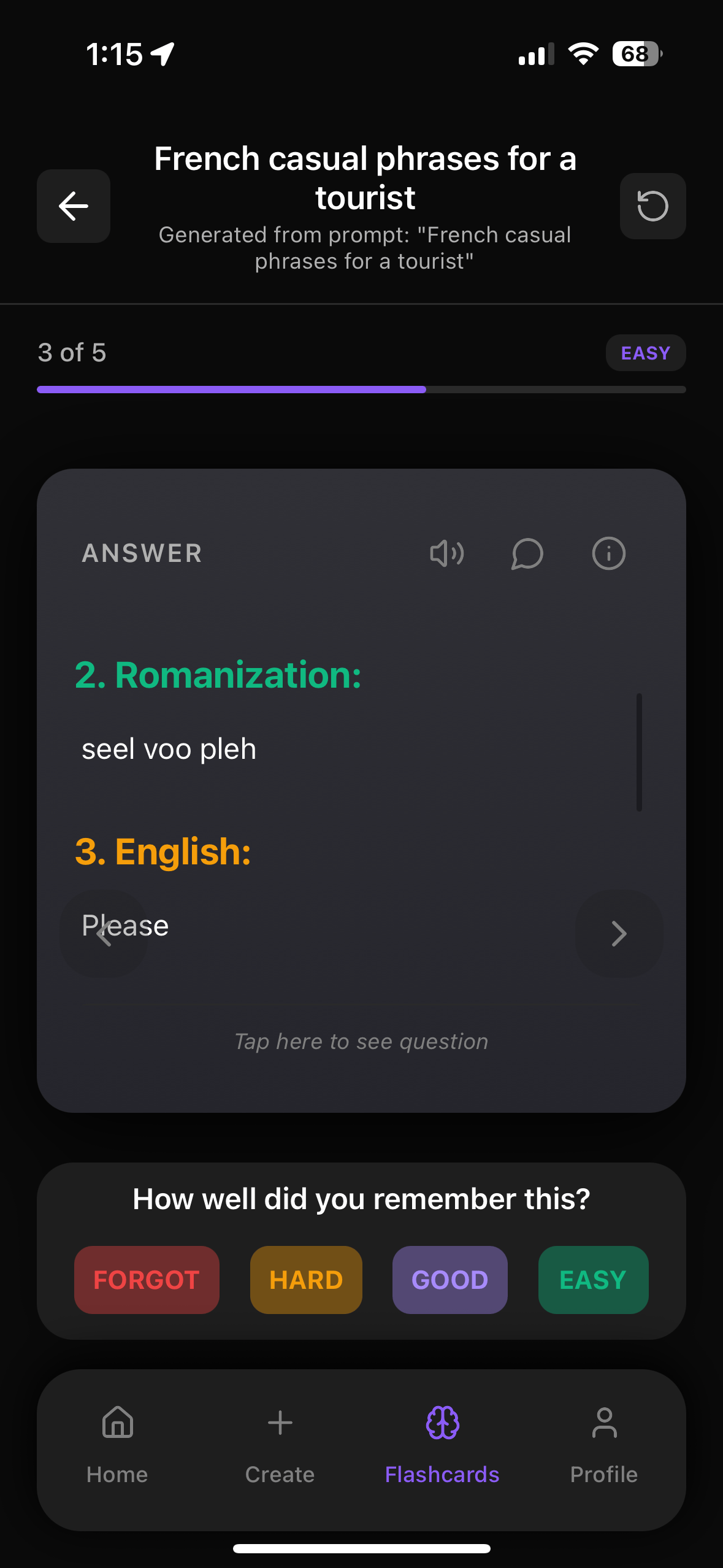
Stop Making Random Flashcards For A Levels (Here’s What Actually Works)
Trying to crack the code on a level flashcards tips? You're not alone! Flashcards are like your brain’s secret weapon for acing those exams or picking up a new skill. They break things down so you're not staring at a wall of info and thinking, "How am I ever going to remember all this?" The trick is all in how you use them—it's about active recall, spaced repetition, and making it a regular habit. That's where Flashrecall can be your best buddy; it takes your notes and turns them into flashcards automatically, even setting up the review times for you. Ready to dig deeper? Check out these 7 flashcard tips that'll help you breeze through your studies faster than you can say "exam success." Your future self will thank you!
If you're looking for information about a level flashcards: 7 proven flashcard tricks to smash your exams and remember more in less time – most students never use these simple study wins, read our complete guide to a level flashcards.
That’s where a good app saves you – and honestly, Flashrecall) makes A Level flashcards actually usable and not a time-wasting project.
You can:
- Turn notes, images, PDFs, and even YouTube videos into flashcards instantly
- Get automatic spaced repetition so you review at the right time
- Chat with your flashcards when you’re stuck on a concept
- Study on iPhone or iPad, even offline
- Get study reminders so you don’t “forget to revise” for two weeks straight
Let’s break down how to use flashcards properly for A Levels and how to set it all up in Flashrecall.
Why A Level Flashcards Work So Well (If You Use Them Right)
A Levels are all about:
- Huge content
- Specific wording
- Applying knowledge in exam-style questions
Flashcards help with that because they force:
- Active recall – pulling the answer from your brain instead of rereading
- Spaced repetition – revising just before you forget
- Chunking – breaking massive topics into tiny, answerable bits
Flashrecall basically bakes this into the app:
- Every card uses active recall by default (question → answer)
- Built-in spaced repetition with auto reminders so you don’t have to track anything
- You can chat with the card if you’re like, “Wait, what does this actually mean?”
So instead of staring at a textbook until your soul leaves your body, you’re doing short, targeted reviews that actually stick.
Step 1: Use Flashcards For The Right A Level Subjects
Flashcards are amazing for:
- Biology – definitions, processes, key terms, required practicals
- Chemistry – reactions, mechanisms, definitions, equations
- Physics – laws, formulas, definitions, key concepts
- Psychology / Sociology – studies, theories, evaluations, key terms
- Economics / Business – definitions, diagrams, evaluation points
- Languages – vocab, phrases, verb conjugations, sentence structures
They’re less ideal for big essays (like English Lit), but still great for:
- Quotes + analysis
- Context points
- Terminology (e.g. “anagnorisis”, “dramatic irony”)
In Flashrecall, you can just create a deck per subject:
- A Level Biology – AQA
- A Level Chemistry – OCR
- A Level Psychology – Edexcel
…so everything stays organised and exam-board specific.
Step 2: Stop Making Bad Flashcards (Do This Instead)
Most students make flashcards that are:
- Too long
- Too vague
- Too many facts on one card
A good A Level flashcard is:
- Short – one idea per card
- Clear – a question that has a specific answer
- Exam-style – close to how the mark scheme phrases it
Bad vs Good Examples
Front: “Photosynthesis”
Back: “The process by which plants make food using light, water and carbon dioxide to make glucose and oxygen in the chloroplasts.”
You’ll memorise nothing.
1. Front: Define photosynthesis.
Back: The process by which plants use light energy to convert carbon dioxide and water into glucose and oxygen.
2. Front: Where in the cell does photosynthesis take place?
Back: In the chloroplasts.
3. Front: Write the balanced symbol equation for photosynthesis.
Back: 6CO₂ + 6H₂O → C₆H₁₂O₆ + 6O₂
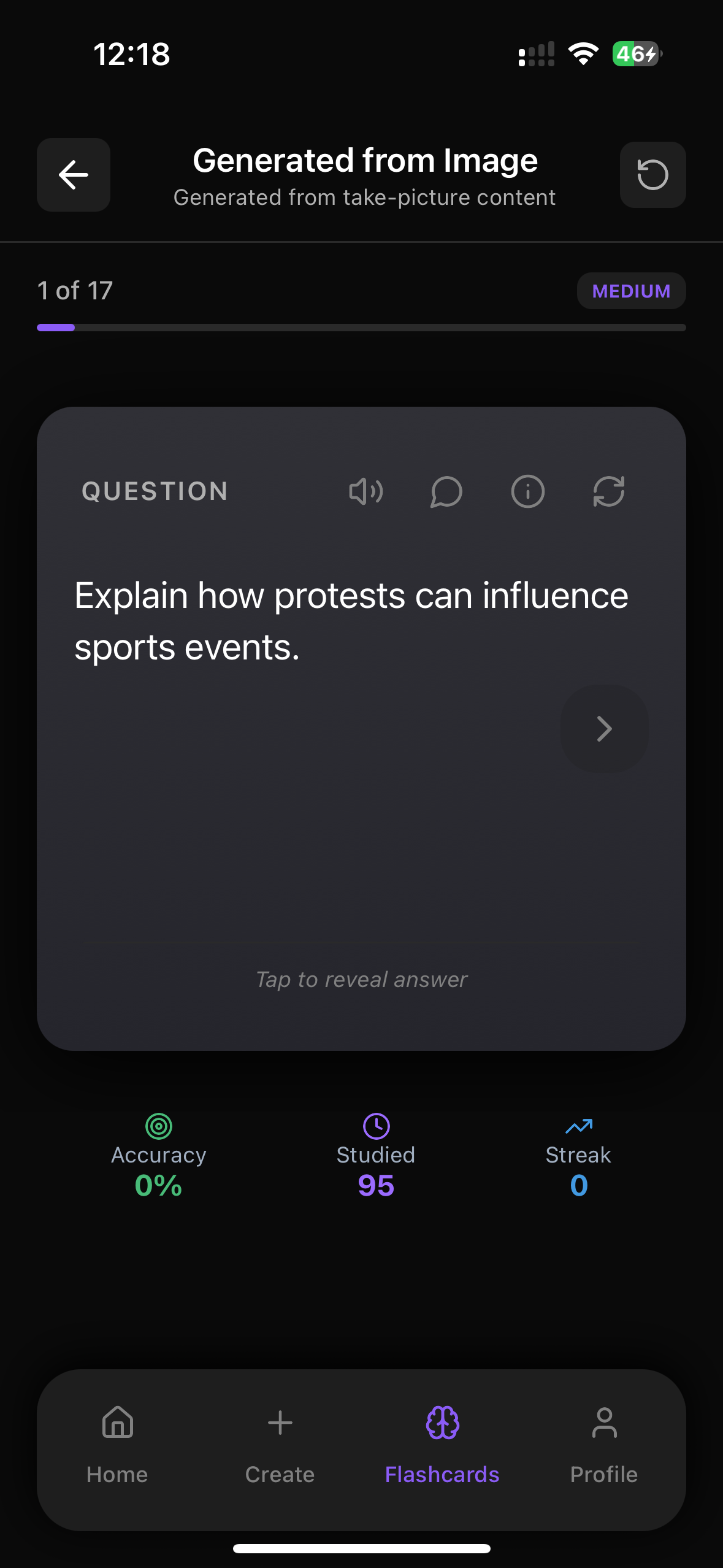
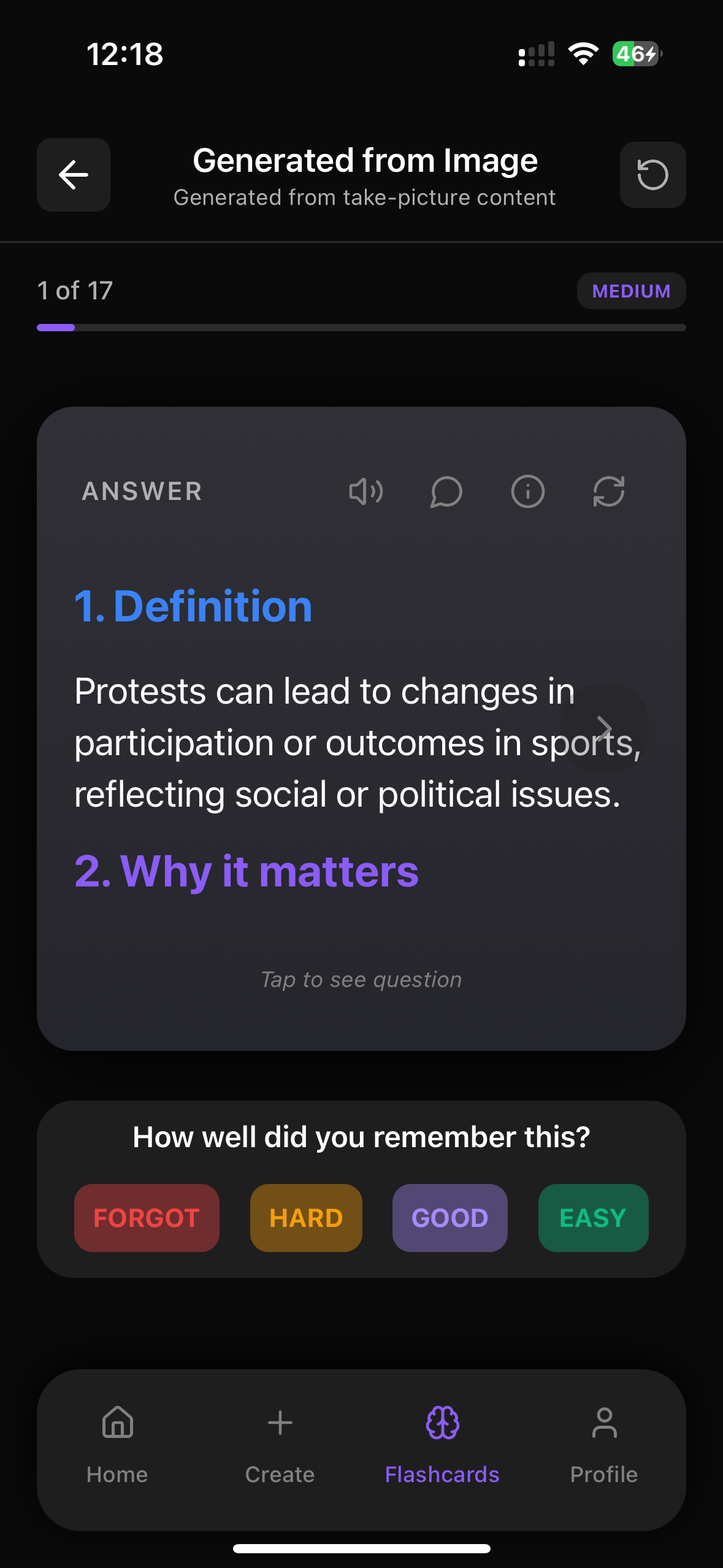
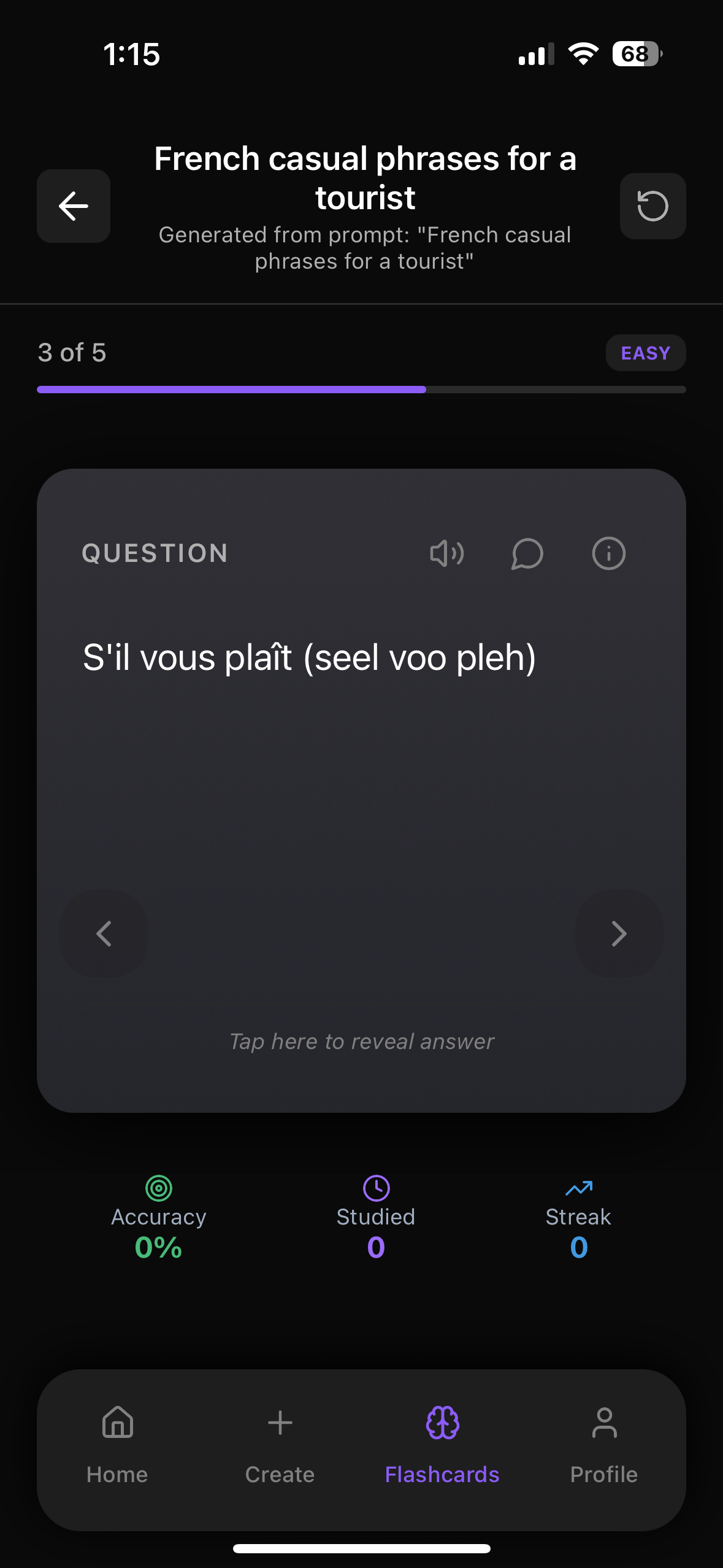
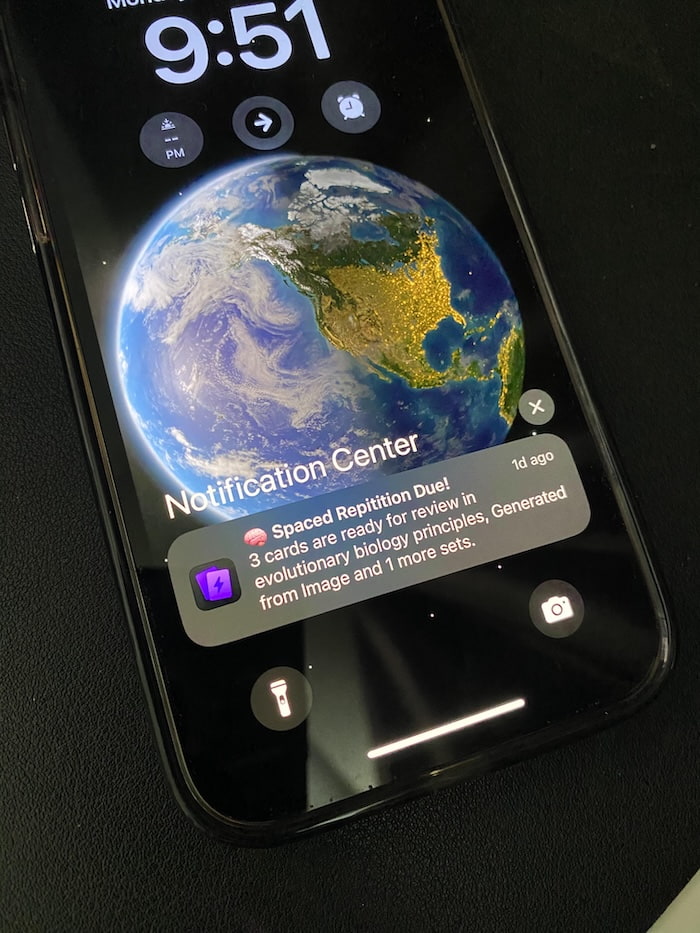
Flashrecall automatically keeps track and reminds you of the cards you don't remember well so you remember faster. Like this :
Much easier to learn, and way closer to how they ask it in exams.
In Flashrecall, you can:
- Type cards manually like this, or
- Snap a photo of your notes or textbook and let it auto-generate flashcards from the text
- Import PDFs or text and turn them into cards in seconds
So you don’t have to spend hours typing every single thing.
Step 3: Use Spaced Repetition (So You Don’t Forget Everything In 2 Weeks)
If you cram, you remember for the test tomorrow.
If you use spaced repetition, you remember for the exam in June.
Spaced repetition = reviewing information just as you’re about to forget it.
Flashrecall does this automatically:
- Every time you review a card, you rate how hard it was
- Flashrecall schedules the next review for you
- Hard cards come back sooner, easy ones get spaced out
You don’t need to track anything in a spreadsheet or planner. The app literally sends study reminders:
“Hey, you’ve got 37 cards due today.”
That’s how you keep A Level content fresh over months without burning out.
Step 4: Turn Your Class Notes Into Flashcards (Fast, Not Painfully Slow)
Here’s a simple system that actually works during term time:
1. After each lesson (or at least each week)
- Take a photo of your notes or the textbook page
- Import it into Flashrecall
- Let the app generate flashcards from the text
2. Clean up the cards
- Delete anything useless
- Edit wording to be short + exam-style
- Split long cards into 2–3 smaller ones
3. Add a few exam-style questions
For example, in chemistry:
- “Explain why the boiling point of HF is higher than HCl.”
- “State and explain the trend in ionisation energy across Period 3.”
You can type these manually, or even paste from a PDF or website and turn them into cards.
Over time, you’ll build a huge, well-structured deck without doing a massive last-minute flashcard project in April.
Step 5: Use Images, Diagrams, And YouTube For Visual Subjects
Some A Level topics are super visual:
- Biology: heart, nephron, cell structure, immune response
- Physics: circuits, lenses, diagrams
- Geography: case study maps, diagrams, processes
In Flashrecall, you can:
- Make image-based cards (e.g. “Label this diagram”)
- Import PDF diagrams or slides and generate cards from them
- Paste a YouTube link and turn the video content into flashcards
Example for Biology:
- Front: [Picture of the heart] → “Label A, B, C.”
- Back: Left atrium, left ventricle, aorta
This is so much better than just rereading diagrams and hoping they stick.
Step 6: Practice Explaining, Not Just Recognising
One trap with flashcards: you see the front and think, “Yeah I know that” – but you actually don’t.
To avoid that, use active recall properly:
- Look at the front
- Say the answer out loud or in your head
- Then flip the card and check
Flashrecall is built around this. It’s not just “flip through cards” – it’s question → answer → feedback.
And if you’re stuck, you can chat with the flashcard:
- Ask: “Explain this in simpler terms”
- Or: “Give me an example of this in an exam answer”
This is insanely helpful for subjects like Psychology or Economics where you need evaluation points, not just definitions.
Step 7: Turn Flashcards Into Exam Marks
Flashcards alone won’t give you A*s.
But flashcards + exam questions? That’s the combo.
Here’s a good pattern:
1. Learn content with flashcards in Flashrecall
2. Once a topic feels ~70% solid, do past paper questions
3. When you get something wrong:
- Turn that mistake into a new flashcard
- Example:
- Front: “Why is this answer wrong? (Q: Explain why…”)
- Back: “Because I forgot to mention X / use key term Y / link to Z.”
Over time, your deck becomes tailored to your weak spots, not just generic facts.
How Flashrecall Makes A Level Flashcards Actually Doable
Quick recap of why Flashrecall) is genuinely useful for A Level students:
- Instant flashcards from:
- Images (class notes, textbook pages, whiteboards)
- Text
- PDFs (specs, revision guides)
- YouTube links (lectures, explainer videos)
- Typed prompts
- Manual card creation if you like building your own from scratch
- Built-in active recall – question → answer → feedback
- Spaced repetition with automatic reminders – no need to plan your reviews
- Study reminders so you don’t fall behind
- Works offline – perfect for bus rides, libraries, school wifi dead zones
- Chat with your flashcards if you don’t understand something fully
- Great for languages, sciences, humanities, medicine, business – literally any A Level subject
- Fast, modern, easy to use, and free to start
- Works on iPhone and iPad
A Simple A Level Flashcard Routine You Can Steal
If you want something you can start today, try this:
- After homework, open Flashrecall
- Do your due cards (spaced repetition)
- Add 5–10 new cards from today’s lessons (photo → auto-generate → tidy up)
- Pick one topic per subject
- Add missing cards from notes / textbook / PDFs
- Do a longer review session
- Finish with a few past paper questions
Stick to that and you’ll walk into exams having seen every key fact multiple times over months, not crammed in one week.
If you’re serious about using A Level flashcards properly, try building your decks in Flashrecall and let the app handle the boring scheduling part for you:
👉 Download Flashrecall here:
https://apps.apple.com/us/app/flashrecall-study-flashcards/id6746757085
Set up one deck per subject, add a few cards today, and you’ll feel the difference in a week.
Frequently Asked Questions
What's the fastest way to create flashcards?
Manually typing cards works but takes time. Many students now use AI generators that turn notes into flashcards instantly. Flashrecall does this automatically from text, images, or PDFs.
Is there a free flashcard app?
Yes. Flashrecall is free and lets you create flashcards from images, text, prompts, audio, PDFs, and YouTube videos.
How do I start spaced repetition?
You can manually schedule your reviews, but most people use apps that automate this. Flashrecall uses built-in spaced repetition so you review cards at the perfect time.
Related Articles
- A Level Biology Flashcards: 7 Proven Hacks To Learn Faster And Actually Remember It All – Stop Rewriting Notes And Start Studying Smarter Today
- AQA Revision Cards: 7 Powerful Flashcard Tricks Most Students Don’t Use (But Should) – Turn Your Notes Into High-Scoring AQA Cards In Minutes
- GoodNotes 5 Flashcards: Why Most Students Struggle (And the Better, Faster Alternative) – Discover a smarter way to turn notes into powerful flashcards and actually remember what you study.
Research References
The information in this article is based on peer-reviewed research and established studies in cognitive psychology and learning science.
Cepeda, N. J., Pashler, H., Vul, E., Wixted, J. T., & Rohrer, D. (2006). Distributed practice in verbal recall tasks: A review and quantitative synthesis. Psychological Bulletin, 132(3), 354-380
Meta-analysis showing spaced repetition significantly improves long-term retention compared to massed practice
Carpenter, S. K., Cepeda, N. J., Rohrer, D., Kang, S. H., & Pashler, H. (2012). Using spacing to enhance diverse forms of learning: Review of recent research and implications for instruction. Educational Psychology Review, 24(3), 369-378
Review showing spacing effects work across different types of learning materials and contexts
Kang, S. H. (2016). Spaced repetition promotes efficient and effective learning: Policy implications for instruction. Policy Insights from the Behavioral and Brain Sciences, 3(1), 12-19
Policy review advocating for spaced repetition in educational settings based on extensive research evidence
Karpicke, J. D., & Roediger, H. L. (2008). The critical importance of retrieval for learning. Science, 319(5865), 966-968
Research demonstrating that active recall (retrieval practice) is more effective than re-reading for long-term learning
Roediger, H. L., & Butler, A. C. (2011). The critical role of retrieval practice in long-term retention. Trends in Cognitive Sciences, 15(1), 20-27
Review of research showing retrieval practice (active recall) as one of the most effective learning strategies
Dunlosky, J., Rawson, K. A., Marsh, E. J., Nathan, M. J., & Willingham, D. T. (2013). Improving students' learning with effective learning techniques: Promising directions from cognitive and educational psychology. Psychological Science in the Public Interest, 14(1), 4-58
Comprehensive review ranking learning techniques, with practice testing and distributed practice rated as highly effective

FlashRecall Team
FlashRecall Development Team
The FlashRecall Team is a group of working professionals and developers who are passionate about making effective study methods more accessible to students. We believe that evidence-based learning tec...
Credentials & Qualifications
- •Software Development
- •Product Development
- •User Experience Design
Areas of Expertise
Ready to Transform Your Learning?
Start using FlashRecall today - the AI-powered flashcard app with spaced repetition and active recall.
Download on App Store