A To Z Flashcards App: The Complete Guide
The A to Z flashcards app helps you remember complex info by breaking it into bite-sized pieces. Flashrecall creates cards from notes and times reviews.
How Flashrecall app helps you remember faster. It's free
Why A–Z Flashcards Are Way More Powerful Than You Think
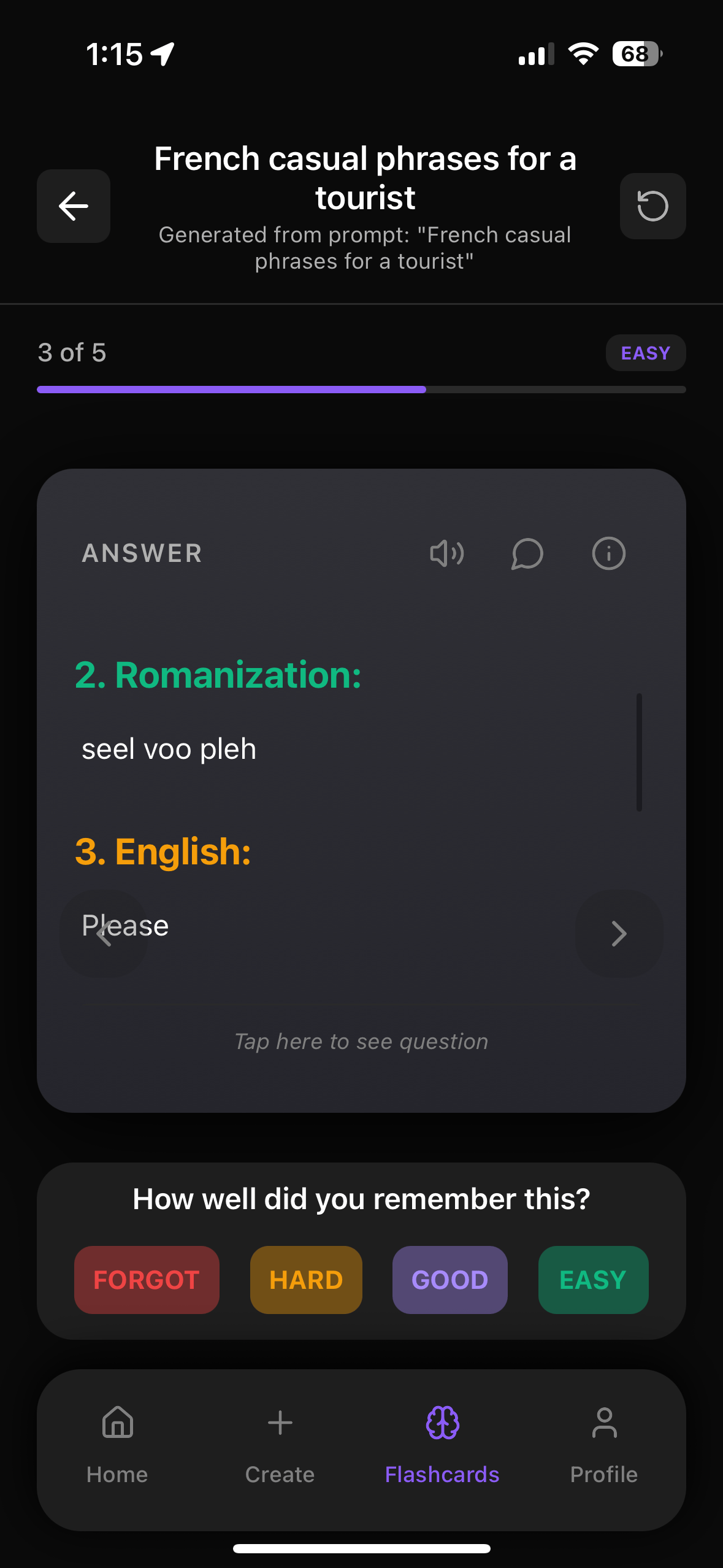
So, a to z flashcards app might sound a bit techy, but trust me, it's your best buddy when it comes to cramming less and remembering more. You know how sometimes you stare at your notes and nothing sticks? Yeah, been there. That's where these flashcards come in handy. They break down all that complicated stuff into bite-sized pieces you can actually remember. And here's what's neat—Flashrecall basically does all the heavy lifting for you by whipping up flashcards from your study notes and timing your review sessions just right. It's like having your own personal study coach. If you're curious about diving deeper into how these nifty digital cards can turn you into a learning ninja, go ahead and check out our complete guide. Trust me, you'll be glad you did!
But used properly, “A to Z flashcards” can become a full system for learning any subject in a structured way — languages, medicine, coding, business terms, exam vocab, you name it.
And the easiest way to actually stick with flashcards (instead of giving up after 3 days) is to use an app that does all the boring parts for you.
That’s where Flashrecall comes in:
👉 https://apps.apple.com/us/app/flashrecall-study-flashcards/id6746757085
Flashrecall lets you:
- Create flashcards instantly from images, PDFs, text, YouTube links, audio or typed prompts
- Use built-in spaced repetition and active recall without setting anything up
- Study on iPhone and iPad, even offline
- Chat with your flashcards when you’re stuck (yes, actually chat with them)
Let’s turn your simple “A–Z flashcards” idea into a powerful study system.
What Are A–Z Flashcards (Beyond Just The Alphabet)?
Most people think A–Z flashcards = “A is for Apple, B is for Ball”.
That’s the basic version.
But you can use the A–Z idea in way smarter ways:
- A–Z vocabulary for a language (A = “abandonar”, B = “buscar”…)
- A–Z medical terms (A = “anemia”, B = “bradycardia”…)
- A–Z business concepts (A = “ARPU”, B = “Break-even point”…)
- A–Z exam topics (A = “Algebra”, B = “Biology basics”…)
- A–Z formulas, laws, cases, historical events, anything
The A–Z structure gives your brain a mental map.
You’re not just memorizing random stuff — you’re organizing knowledge alphabetically so it’s easier to recall.
Why A–Z Flashcards Work So Well For Learning
A–Z flashcards secretly combine a few powerful learning principles:
1. Chunking
Instead of “learn 500 words”, you tell your brain:
- Today: focus on A–F
- Tomorrow: G–L
- Then: M–R, S–Z
Smaller chunks = less overwhelm = more consistency.
2. Cues For Memory
The letter becomes a cue:
- “I know this word starts with P… what was it again?”
- “For D in anatomy, I had diaphragm, duodenum, deltoid…”
This makes recall easier because your brain has a starting point.
3. Easy Progress Tracking
You can literally say:
- “I’ve finished A–D, I’m halfway through E–H.”
It feels tangible, which makes you more likely to keep going.
And if you use Flashrecall, you don’t just have A–Z structure — you also get:
- Automatic spaced repetition so hard cards show up more often
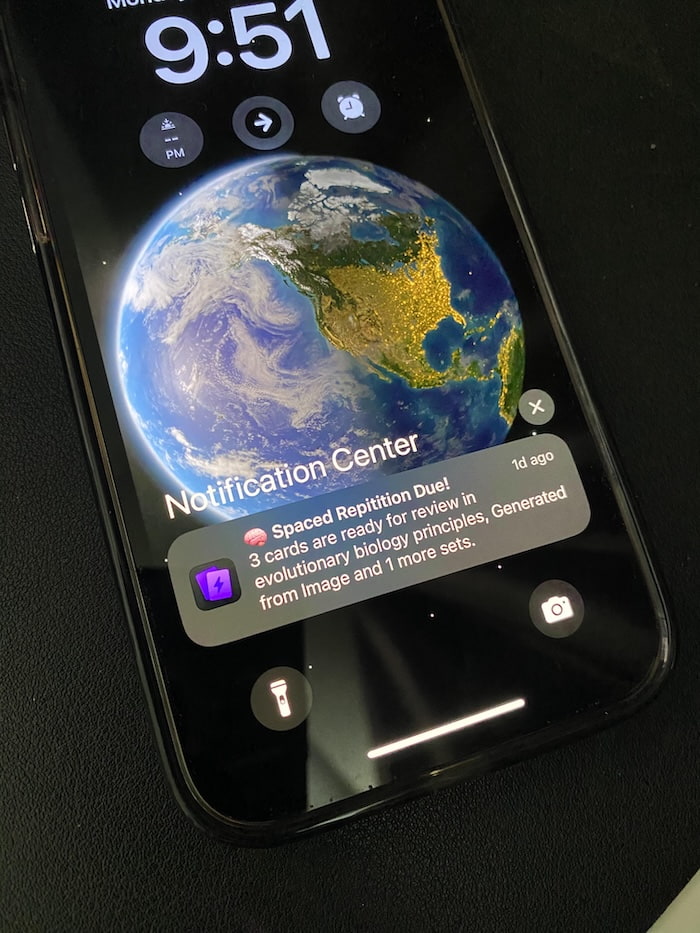
- Study reminders so you don’t forget to review
- Active recall mode so you’re not just re-reading; you’re actually testing yourself
How To Build A–Z Flashcards The Smart Way (Not The Slow Way)
Step 1: Pick Your Topic
A–Z works best for:
- Language vocab
- Medical or legal terminology
- Business/finance terms
- Exam glossaries
- Key concepts in a textbook or course
Ask yourself:
> “What’s the set of terms I wish I could recall instantly?”
That’s your A–Z list.
Step 2: Create Your First A–Z Deck In Flashrecall
Download Flashrecall here:
👉 https://apps.apple.com/us/app/flashrecall-study-flashcards/id6746757085
Then:
1. Create a new deck called something like:
- “Spanish A–Z Vocab”
- “Anatomy A–Z”
- “Business Terms A–Z”
2. Start with one letter at a time:
- Add cards for A words first
- Then move to B, C, etc.
You can:
- Type cards manually if you already know what you want
- Or let Flashrecall help you by pasting text, PDFs, or YouTube links, then generating cards from the content
Step 3: Use Different Card Types For Better Memory
Don’t just do “word → definition”. Mix it up.
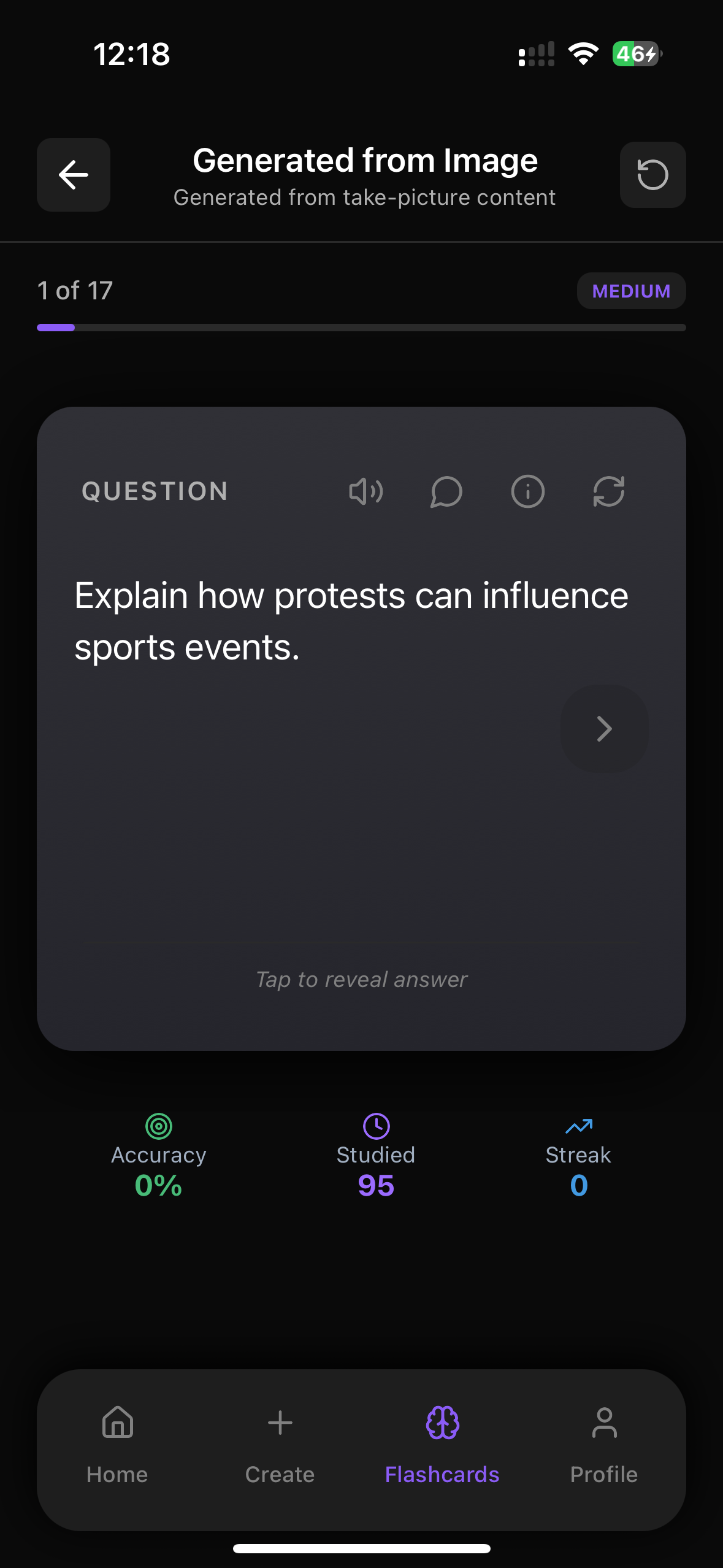
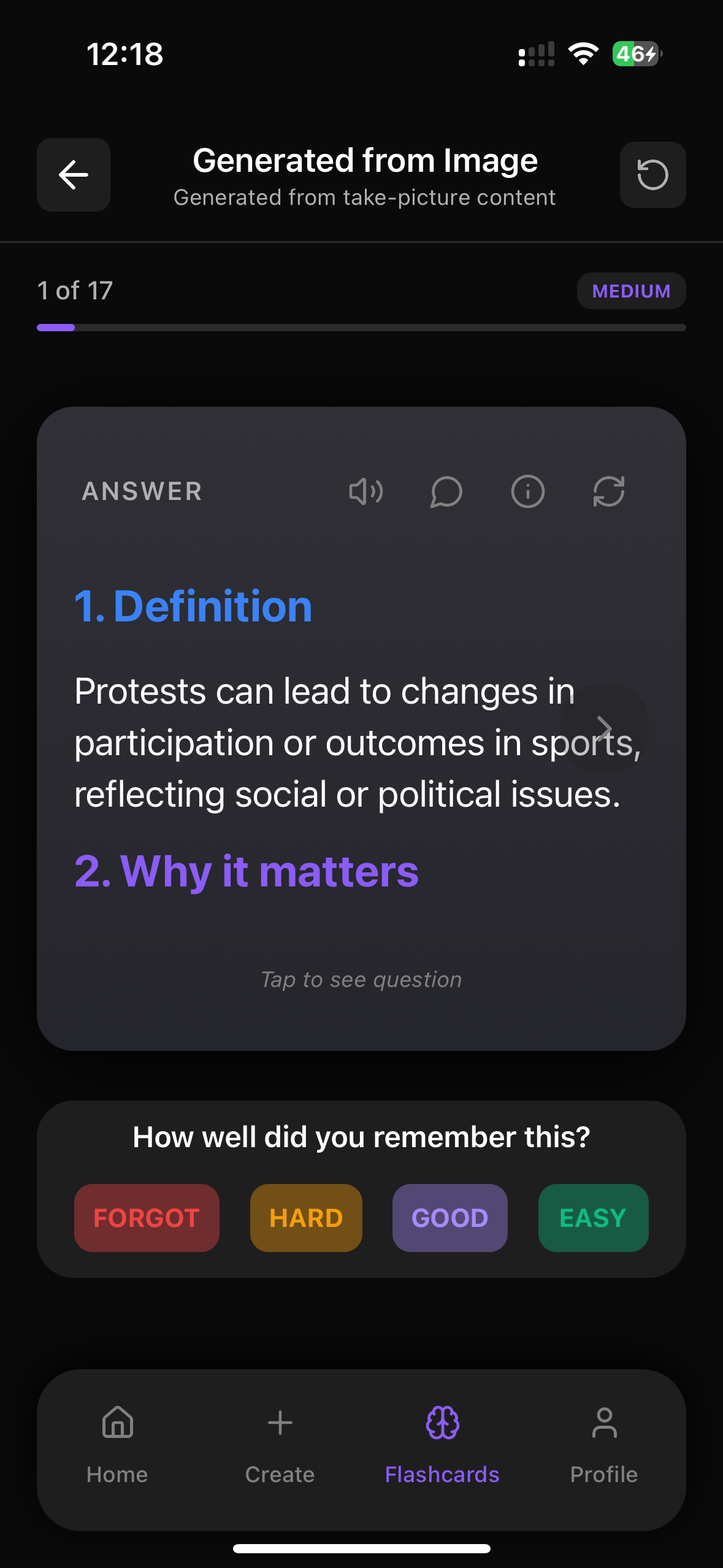
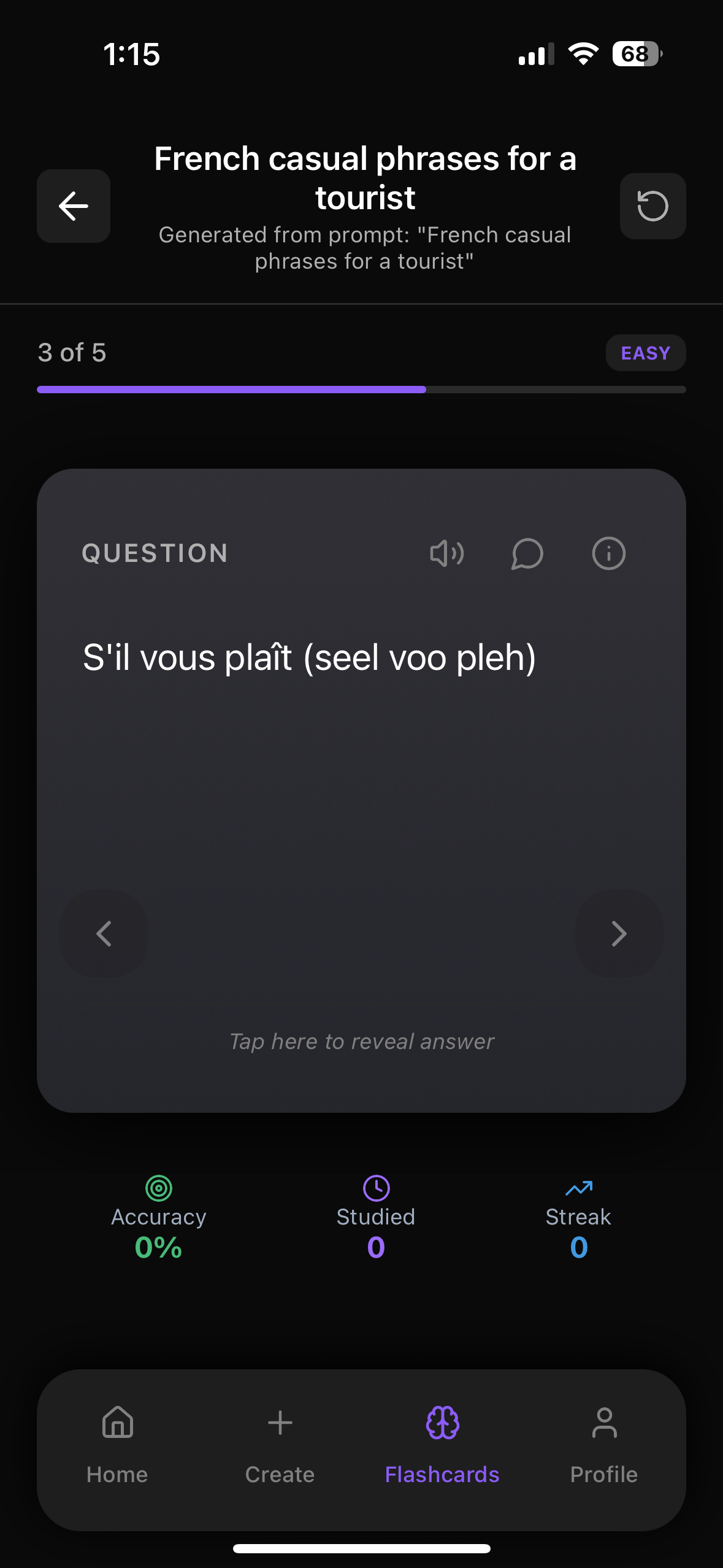
Flashrecall automatically keeps track and reminds you of the cards you don't remember well so you remember faster. Like this :
For Spanish:
- Front: “abandonar”
- Front: “to search”
- Front: Fill in the blank: “Voy a _______ información en Google.”
You can even paste a short article or vocab list into Flashrecall and let it auto-create cards, then edit them.
- Front: “Anemia”
- Front: “Bradycardia”
- Front: “What is bradycardia?”
With Flashrecall, you can also:
- Take a photo of your notes or textbook page
- Let the app turn it into flashcards automatically
Way faster than typing each one.
How To Organize Your A–Z Decks Without Getting Lost
You’ve got options:
Option 1: One Big A–Z Deck
- All letters in one deck
- Good for: vocab, terminology
You can add a tag or label in the front/back like:
- “(A)” Abandonar – to abandon
- “(B)” Buscar – to search
Option 2: One Deck Per Letter (A Deck, B Deck, etc.)
- “Spanish A Words”
- “Spanish B Words”
- “Spanish C Words”
This is nice if you’re doing deep dives per letter, like 50+ words each.
Option 3: Mixed, But Filtered With Search
Flashrecall lets you search and filter easily, so even if everything’s in one deck, you can still quickly review only:
- A–F today
- G–L tomorrow
Why Flashrecall Is Perfect For A–Z Flashcards
You could do all this with paper cards… but then:
- You have to sort them manually
- You forget to review them
- You lose some
- You have no idea which ones you’re weak on
Flashrecall fixes all that:
1. Built-In Spaced Repetition (So You Don’t Forget)
The app automatically:
- Shows you difficult cards more often
- Shows easy cards less often
- Schedules reviews right before you’re about to forget
So your A–Z flashcards don’t just look organized — they actually stick in your long-term memory.
2. Active Recall By Default
Flashrecall is designed around question → answer style learning, not passive reading.
You see the front, try to recall the answer in your head, then flip.
That’s active recall — the single most effective study technique. No extra setup needed.
3. Create Cards Instantly From Anything
This is where Flashrecall really saves time.
You can make A–Z cards from:
- Images – snap a photo of a textbook page, vocab list, whiteboard
- Text – paste a list of terms and let the app turn them into cards
- PDFs – upload your notes, lecture slides, or handouts
- YouTube links – paste a video link and generate cards from the content
- Audio – useful for language learning or lectures
- Typed prompts – just type what you want and let Flashrecall help format it
You can still add cards manually if you like full control, but you don’t have to do everything by hand.
4. Study Reminders (So You Actually Review A–Z)
You can set study reminders, so your phone nudges you:
> “Hey, time to review your A–Z vocab deck.”
Perfect if you constantly mean to study but forget.
5. Works Offline
On the bus, plane, or in a classroom with bad Wi‑Fi?
You can still review your decks. Offline support means your A–Z cards are always with you.
6. Chat With Your Flashcards When You’re Stuck
This is a fun one.
If you’re unsure about a concept, you can chat with the flashcard in Flashrecall and ask:
- “Explain this in simpler words.”
- “Give me another example.”
- “How is this different from X?”
It’s like having a mini tutor built into your deck.
Example A–Z Flashcard Setups For Different Goals
1. A–Z For Language Learning
Deck: “French A–Z Vocab”
For each letter:
- 5–15 common words
- Mix of:
- Word → translation
- Translation → word
- Fill-in-the-blank sentences
- Image-based cards for concrete nouns (Flashrecall supports images too)
Study plan:
- Day 1: A–C
- Day 2: D–F
- Day 3: G–I
Then let spaced repetition in Flashrecall handle the rest.
2. A–Z For Medical Students
Deck: “Pathology A–Z”
For each letter:
- Key diseases
- Definitions
- Key features / buzzwords
- Treatment basics
Example card:
- Front: “D – Define ‘Diabetes Mellitus Type 1’”
You can import from PDFs or notes and convert them to cards in Flashrecall instead of typing every term.
3. A–Z For Business / Finance
Deck: “Business A–Z Terms”
- A: A/B Testing, ARPU, ARR
- B: Break-even, Burn Rate, Brand Equity
- C: CAC, Churn, CLV
Each card:
- Term → definition
- Term → example
- Scenario → “Which term describes this?”
How Often Should You Review A–Z Flashcards?
With Flashrecall’s spaced repetition, you don’t have to plan it manually.
But as a rough idea:
- New deck: 10–20 minutes per day
- Maintenance: 5–10 minutes per day
The key is consistency, not marathon sessions.
Spaced repetition + small daily reviews = crazy long-term retention.
Quick A–Z Flashcard Tips To Learn Faster
- Start small: Don’t try to fill all 26 letters on day one. Do 3–5 words per letter and build up.
- Use examples: Definitions alone are dry. Add sample sentences or scenarios.
- Mix directions: Both “term → meaning” and “meaning → term”.
- Review out loud: Saying the answer helps memory (especially for languages).
- Let the app do the heavy lifting: Use Flashrecall’s auto-card creation from text, PDFs, images, and YouTube so you can focus on learning, not formatting.
Turn Simple A–Z Flashcards Into A Powerful Study Habit
A–Z flashcards don’t have to be just kid stuff.
Used right, they’re a super clean way to organize and memorize huge amounts of information.
If you want:
- Easy A–Z structure
- Automatic spaced repetition
- Built-in active recall
- Study reminders
- Offline access
- And the ability to create cards instantly from images, PDFs, text, audio, and YouTube
Then try Flashrecall here (free to start):
👉 https://apps.apple.com/us/app/flashrecall-study-flashcards/id6746757085
Set up your first A–Z deck today, and in a few weeks you’ll be shocked how much you can recall from memory.
Frequently Asked Questions
What's the fastest way to create flashcards?
Manually typing cards works but takes time. Many students now use AI generators that turn notes into flashcards instantly. Flashrecall does this automatically from text, images, or PDFs.
Is there a free flashcard app?
Yes. Flashrecall is free and lets you create flashcards from images, text, prompts, audio, PDFs, and YouTube videos.
How do I start spaced repetition?
You can manually schedule your reviews, but most people use apps that automate this. Flashrecall uses built-in spaced repetition so you review cards at the perfect time.
What is active recall and how does it work?
Active recall is the process of actively retrieving information from memory rather than passively reviewing it. Flashrecall forces proper active recall by making you think before revealing answers, then uses spaced repetition to optimize your review schedule.
What's the best way to learn vocabulary?
Research shows that combining flashcards with spaced repetition and active recall is highly effective. Flashrecall automates this process, generating cards from your study materials and scheduling reviews at optimal intervals.
Related Articles
- Decoding Flashcards: The Essential Guide To Learning Faster With Powerful Memory Tricks – Discover how to turn any confusing flashcard into a simple, unforgettable memory tool most students never use.
- Geography Flashcards: The Essential Guide To Remember Every Country, Capital And Map Faster Than Ever – Most Students Study Geography Wrong, Here’s How To Fix It In Days
- Phase 2 Flashcards: The Essential Guide To Passing Exams Faster With Smarter Study Habits – Most Students Miss These Simple Flashcard Tricks
Research References
The information in this article is based on peer-reviewed research and established studies in cognitive psychology and learning science.
Cepeda, N. J., Pashler, H., Vul, E., Wixted, J. T., & Rohrer, D. (2006). Distributed practice in verbal recall tasks: A review and quantitative synthesis. Psychological Bulletin, 132(3), 354-380
Meta-analysis showing spaced repetition significantly improves long-term retention compared to massed practice
Carpenter, S. K., Cepeda, N. J., Rohrer, D., Kang, S. H., & Pashler, H. (2012). Using spacing to enhance diverse forms of learning: Review of recent research and implications for instruction. Educational Psychology Review, 24(3), 369-378
Review showing spacing effects work across different types of learning materials and contexts
Kang, S. H. (2016). Spaced repetition promotes efficient and effective learning: Policy implications for instruction. Policy Insights from the Behavioral and Brain Sciences, 3(1), 12-19
Policy review advocating for spaced repetition in educational settings based on extensive research evidence
Karpicke, J. D., & Roediger, H. L. (2008). The critical importance of retrieval for learning. Science, 319(5865), 966-968
Research demonstrating that active recall (retrieval practice) is more effective than re-reading for long-term learning
Roediger, H. L., & Butler, A. C. (2011). The critical role of retrieval practice in long-term retention. Trends in Cognitive Sciences, 15(1), 20-27
Review of research showing retrieval practice (active recall) as one of the most effective learning strategies
Dunlosky, J., Rawson, K. A., Marsh, E. J., Nathan, M. J., & Willingham, D. T. (2013). Improving students' learning with effective learning techniques: Promising directions from cognitive and educational psychology. Psychological Science in the Public Interest, 14(1), 4-58
Comprehensive review ranking learning techniques, with practice testing and distributed practice rated as highly effective

FlashRecall Team
FlashRecall Development Team
The FlashRecall Team is a group of working professionals and developers who are passionate about making effective study methods more accessible to students. We believe that evidence-based learning tec...
Credentials & Qualifications
- •Software Development
- •Product Development
- •User Experience Design
Areas of Expertise
Ready to Transform Your Learning?
Start using FlashRecall today - the AI-powered flashcard app with spaced repetition and active recall.
Download on App Store