Aba Flash Cards For Kids: The Essential Guide
Aba flash cards for kids help boost learning with bright visuals and spaced repetition. Create custom flashcards in minutes using the Flashrecall app.
How Flashrecall app helps you remember faster. It's free
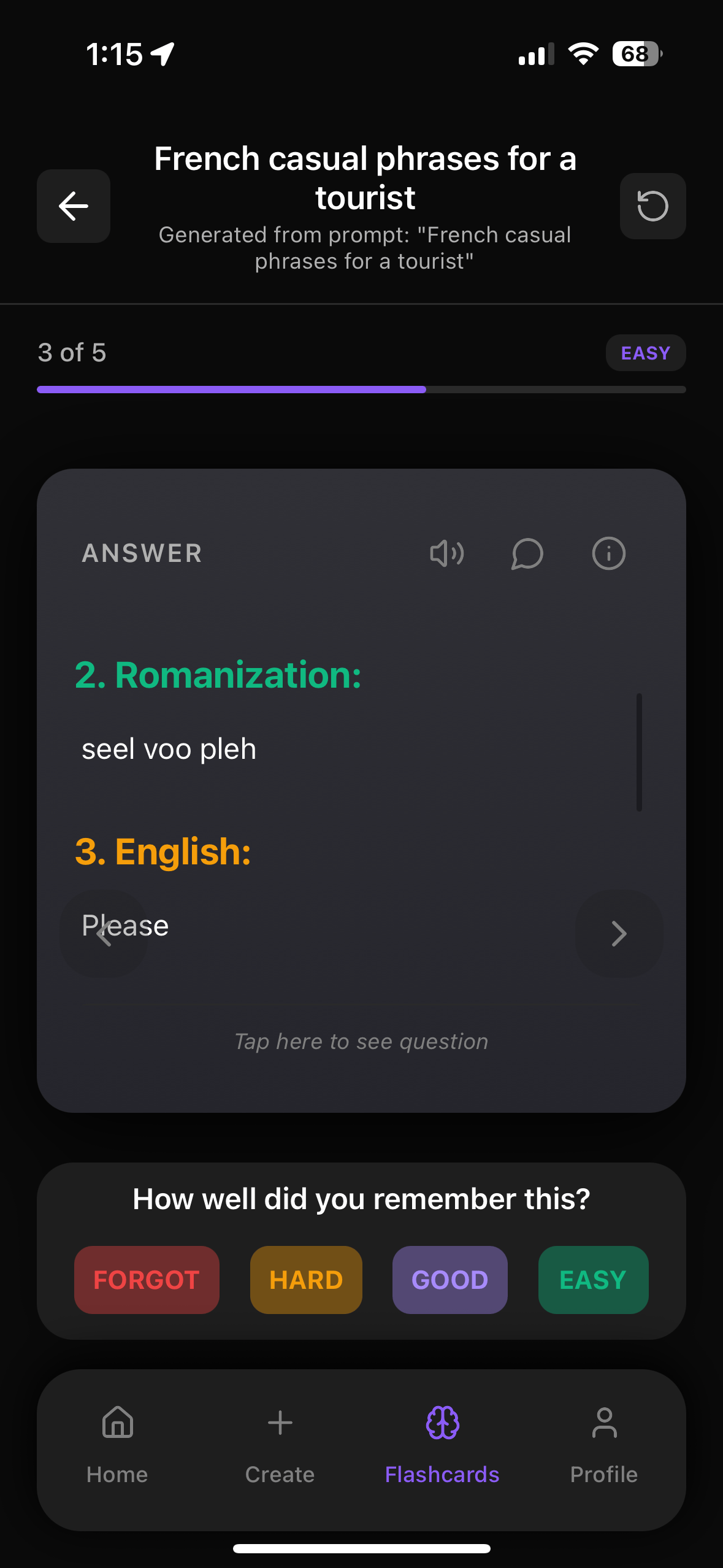
ABA Flash Cards Don’t Have To Take Forever To Make
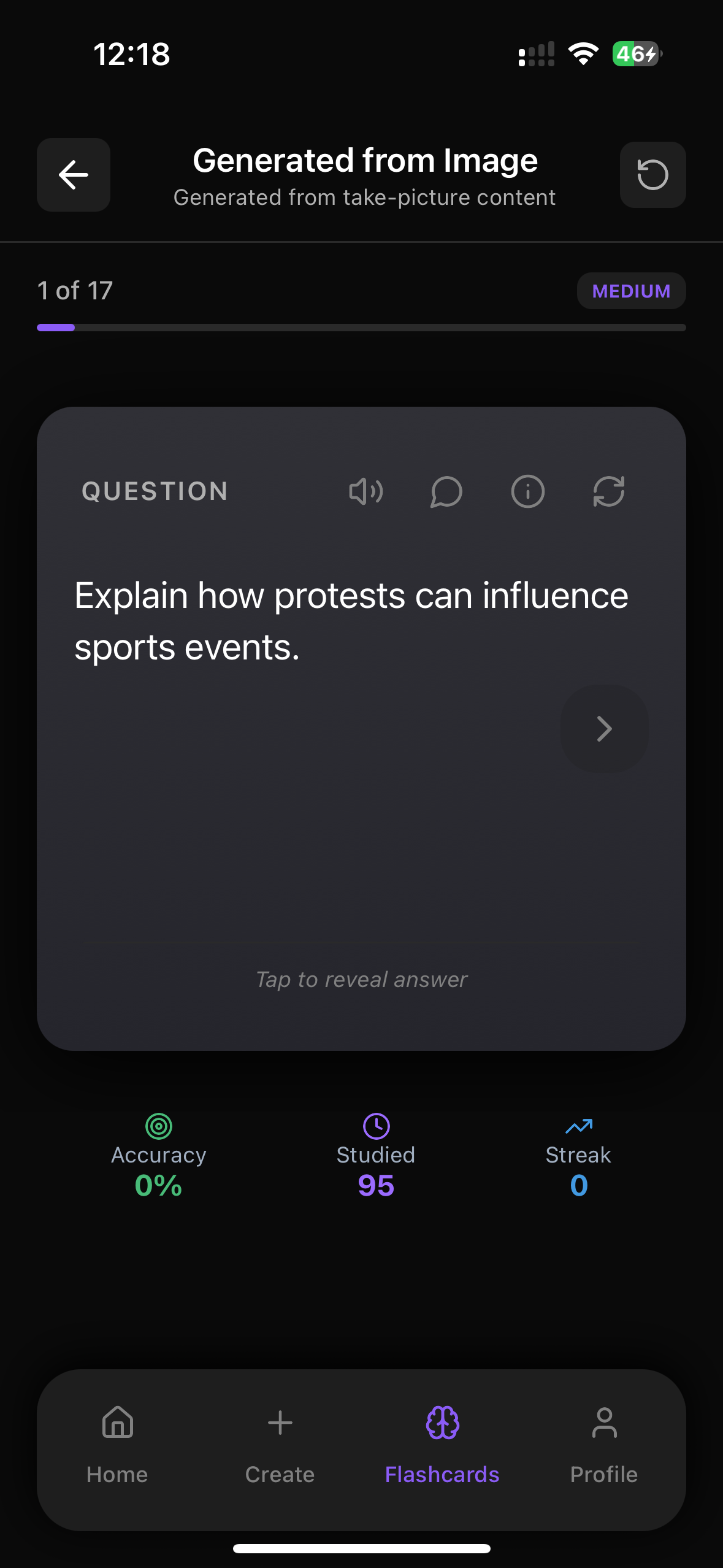
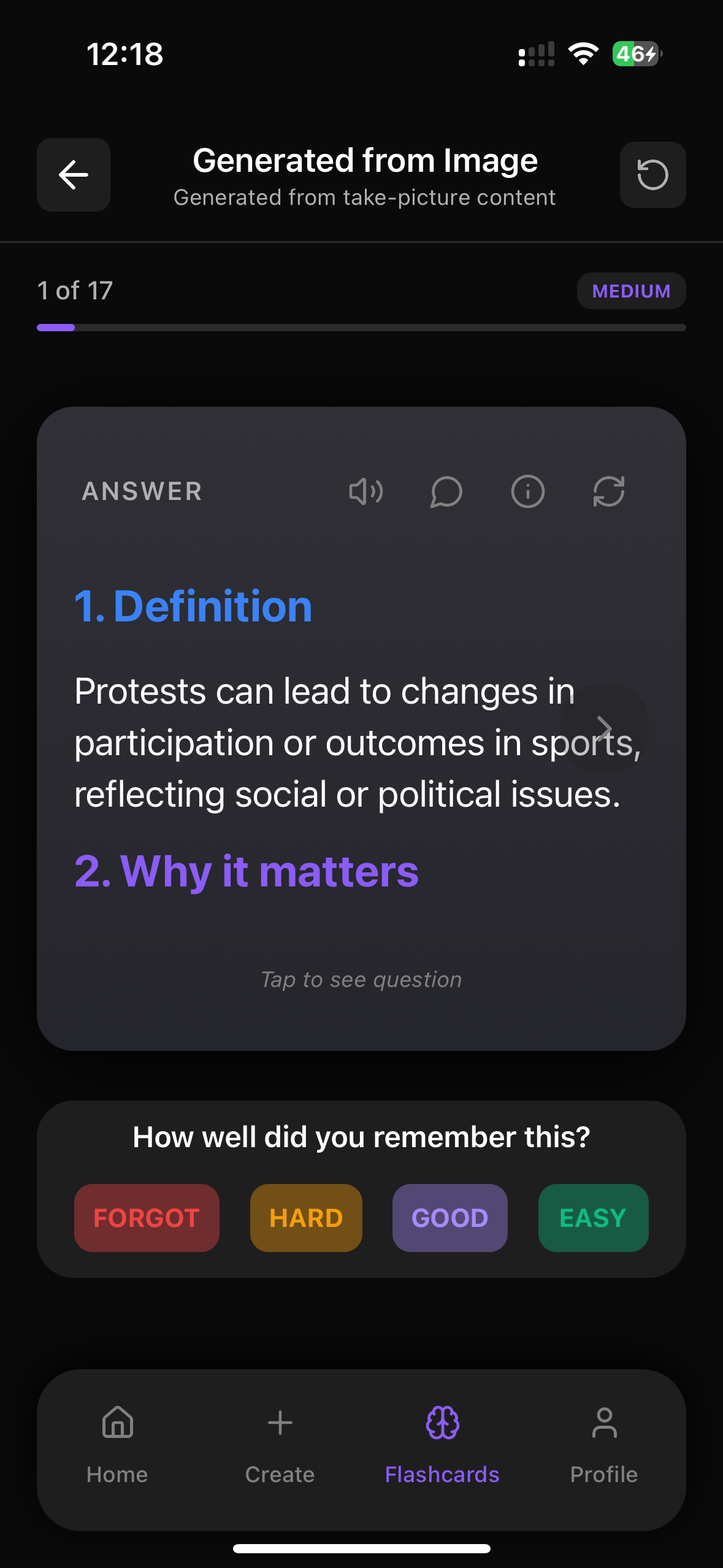
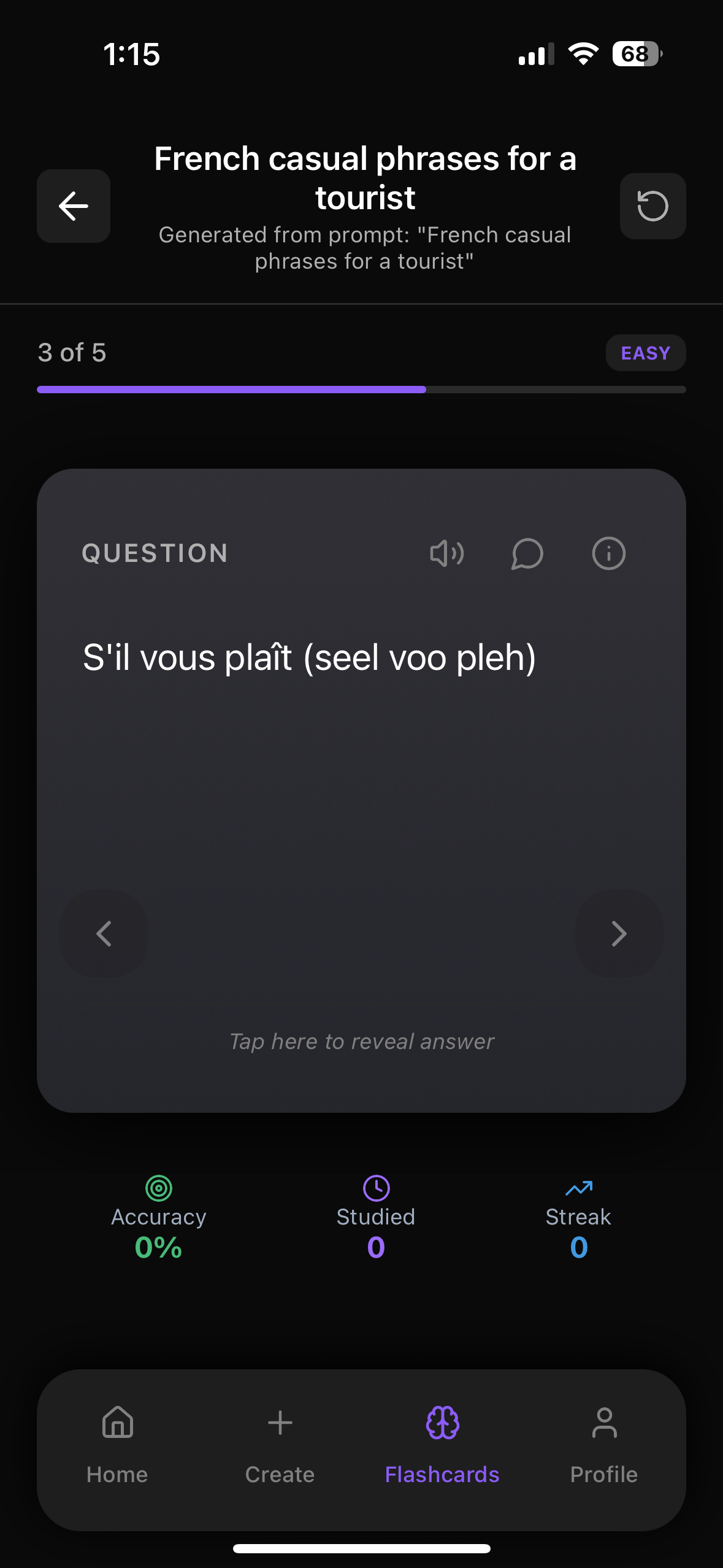
Ever notice how kids just light up when they’re learning something new, especially with fun visuals? So, aba flash cards for kids are basically like magic tools that help them learn and remember all sorts of cool stuff. Unlike those old-school study methods that can make you snooze, these flashcards are all about bright colors, simple words, and little interactive bits that keep kiddos totally engaged. Flashrecall makes this whole process a breeze. You can whip up custom flashcards from your photos, drawings, or even just some text, which is super handy for you parents and teachers out there. Plus, with its automatic spaced repetition, your child reviews the cards just at the right time, making it all stick without overwhelming them. If you’re tired of spending hours on laminating and just want to jump into teaching in minutes, check out our guide. Give it a whirl and see how easy and fun learning can get!
If you're looking for information about aba flash cards: the essential guide to faster, stress‑free learning with smart digital tools – stop laminating for hours and start teaching in minutes, read our complete guide to aba flash cards.
Printing, cutting, laminating, organizing, losing half of them, re-printing… it’s a whole thing.
That’s where a modern flashcard app like Flashrecall comes in. It lets you create ABA flash cards in minutes from images, PDFs, YouTube links, or just text, and then actually reminds you and your learners to review them with spaced repetition.
You can grab it here (free to start):
👉 https://apps.apple.com/us/app/flashrecall-study-flashcards/id6746757085
Let’s break down how to use ABA flash cards effectively—and how to stop wasting hours making them the old-school way.
What Are ABA Flash Cards (And Why They Work So Well)
ABA flash cards are just structured prompts you use to:
- Teach new skills
- Practice discrimination
- Work on receptive and expressive language
- Run quick drills (e.g., “touch dog”, “what is this?”, “what color?”)
- Test generalization in different contexts
They’re used for things like:
- Receptive ID: “Touch the apple.”
- Expressive ID: “What is this?”
- Features / functions / classes: “What do you wear on your feet?”
- Emotions: “Show me happy/sad/angry.”
- Actions: “Who is running?”
- Colors, shapes, numbers, letters, sight words
- Social skills and daily routines
The reason they’re so powerful is simple:
They’re visual, repeatable, and easy to adjust to the learner.
But only if you can actually make and manage them without losing your mind.
The Big Problem: Traditional ABA Flash Cards Are A Time Trap
If you’ve ever prepped ABA materials, this probably sounds familiar:
- Searching Google Images
- Copy/pasting into Word or PowerPoint
- Resizing everything
- Printing in color (expensive)
- Cutting, laminating, hole-punching
- Storing in binders, boxes, random Ziplocs
- Then… losing a card you really need mid-session
And then your BCBA says, “We’re adding a new target set,” and you start again from scratch.
Digital flash cards fix most of this, but not all flashcard apps are good for ABA. A lot of them are built for med school or language learning and don’t match how ABA actually works.
That’s why something flexible like Flashrecall works so well: you can build picture-based, text-based, and even audio-based cards in seconds and organize them by program, goal, or learner.
Why Flashrecall Works So Well For ABA Flash Cards
Here’s how Flashrecall fits right into ABA work:
1. Create Cards From Almost Anything (Perfect For Visuals)
ABA is super visual, and Flashrecall makes that easy:
- Snap a photo of real objects (toys, food, clothing) and turn it into a card instantly
- Import images from your camera roll
- Upload PDFs (e.g., existing ABA materials) and auto-generate flashcards
- Paste a YouTube link (e.g., social stories, language videos) and build cards from the content
- Type or paste text for vocabulary, definitions, or instructions
- Add audio if you need verbal prompts or want the learner to hear the word
You can also just make cards manually if you like full control.
All inside one app on your iPhone or iPad.
👉 Download Flashrecall:
https://apps.apple.com/us/app/flashrecall-study-flashcards/id6746757085
2. Built-In Active Recall (Perfect For Discrete Trials & Drills)
ABA is basically structured active recall:
- You present a stimulus
- The learner responds
- You reinforce or correct
Flashrecall leans into this:
- You see the front of the card (e.g., a picture of a dog, or the word “dog”)
- The learner responds (says “dog”, touches the right picture, etc.)
- You tap to reveal the answer and mark how well they did
This mirrors discrete trial teaching but with less paper and more structure.
Flashrecall automatically keeps track and reminds you of the cards you don't remember well so you remember faster. Like this :
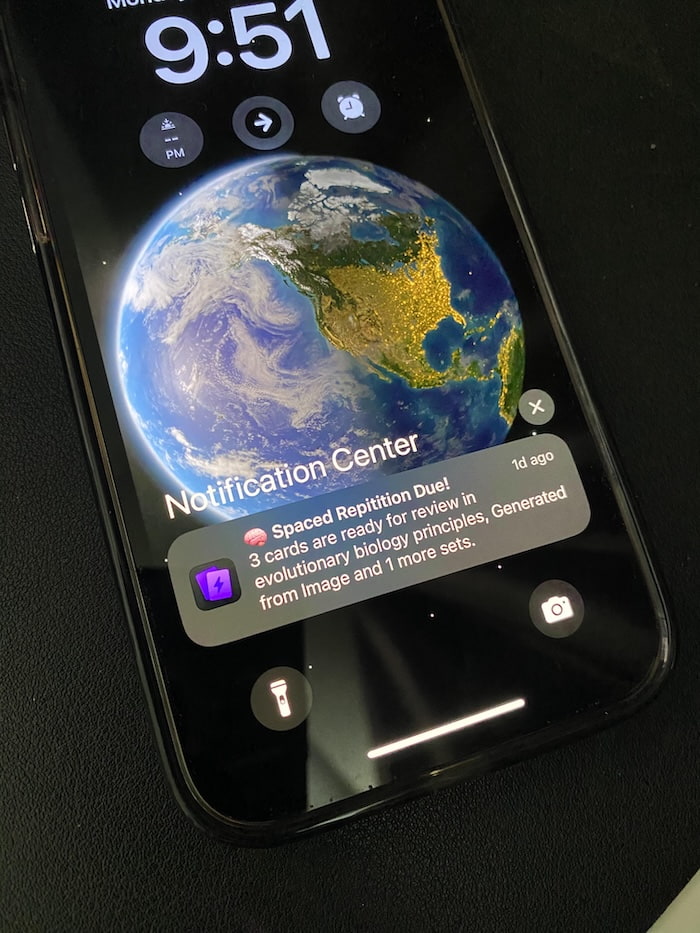
You can even chat with the flashcard inside Flashrecall if you are the learner (e.g., an RBT studying ABA terms) and want deeper explanations, examples, or clarifications.
3. Spaced Repetition + Reminders (So Skills Don’t Fade)
One of the biggest issues in ABA is maintenance. Kids learn a skill… and then lose it because it’s not reviewed.
Flashrecall has built-in spaced repetition:
- Cards you or your learner struggle with show up more often
- Cards they know well show up less often
- You get automatic study reminders, so you don’t forget to review older targets
No more trying to remember, “When did we last run body parts?”
The app does that thinking for you.
4. Works Offline (Huge For Homes, Clinics & Schools)
You don’t always have stable Wi-Fi—in homes, on the bus, in schools with strict filters.
Flashrecall works offline, so you can:
- Review cards anywhere
- Run quick trials in the car, waiting rooms, or during transitions
- Keep everything accessible even if the internet goes down
5. Fast, Modern, Free To Start
A lot of ABA tools are clunky or ancient-looking.
Flashrecall is:
- Fast and modern
- Simple enough for busy parents and RBTs
- Free to start, so you can test it with your current programs
It runs on iPhone and iPad, which is perfect for sessions—you probably already carry one around anyway.
How To Set Up ABA Flash Cards In Flashrecall (Step-By-Step)
Here’s a simple way to build an ABA setup inside Flashrecall.
Step 1: Create Decks By Program Or Goal
Examples:
- “Receptive Labels – Animals”
- “Expressive Labels – Household Items”
- “Emotions – Faces”
- “Colors & Shapes”
- “Daily Routines – Morning”
- “Social Skills – What Should You Do?”
Organize them however you and your BCBA like to track targets.
Step 2: Add Picture-Based Cards
For a receptive ID deck:
- Front: Image of a dog, cat, car, apple, etc.
- Back: “Dog”, “Cat”, “Car”, “Apple”
For a feature/function/class deck:
- Front: “What do you wear on your feet?” (text)
- Back: Images of shoes, socks, boots, plus the word “Shoes”
You can quickly create these by:
- Taking photos of real items in the child’s environment
- Importing clipart or icons from your phone
- Using pages from existing PDF materials
Step 3: Add Audio Or Text Prompts (Optional But Powerful)
For some learners, you might want:
- Audio on the front: “Touch dog”
- Image on the back: the correct picture plus the written word “Dog”
Or for RBT/BCBA studying:
- Front: “Pairing”
- Back: Clear definition + an example scenario
Flashrecall lets you mix text, images, and audio how you want.
Step 4: Use It During Sessions
You can use Flashrecall in a few ways:
- Discrete Trials: Show the card, give the SD, wait for response, then reveal answer & record how they did (by tapping how hard/easy it was).
- Quick Drills: Run through 10–20 cards as a warm-up or cool-down.
- Parent Training: Teach parents to review cards between sessions on their own device.
- Staff Training: RBTs use Flashrecall to study ABA terms, ethics codes, protocols, and behavior plans.
Because it’s spaced repetition-based, the app will naturally cycle the right cards at the right times.
Examples Of ABA Flash Card Decks You Can Build
Here are some concrete ideas you can start with:
1. Early Learner Decks
- Body Parts: nose, eyes, ears, mouth, hands, feet
- Common Objects: ball, cup, spoon, chair, book, car
- Animals: dog, cat, bird, fish, cow, horse
- Colors & Shapes: red, blue, green; circle, square, triangle
2. Language & Concepts
- Opposites: big/small, hot/cold, up/down
- Prepositions: in, on, under, next to (with pictures)
- Actions: running, jumping, sleeping, eating
- Emotions: happy, sad, angry, scared, excited
3. Social & Daily Living
- What Should You Do?:
- Someone is crying → “Ask if they’re okay”
- The fire alarm rings → “Leave the building”
- Routines (morning, bedtime, school):
- Brush teeth, get dressed, pack bag, etc.
4. RBT/BCBA Study Decks
If you are the learner:
- ABA terminology (reinforcement, extinction, DRA, NCR, etc.)
- Ethics code items
- Data collection methods
- Treatment plan components
You can even paste sections from PDFs or textbooks into Flashrecall and let it auto-generate cards for you.
How Flashrecall Compares To Old-School & Other Flashcard Options
You might be wondering:
“Why not just use physical cards or a generic flashcard app?”
- Pros: Great for hands-on kids, no screens needed
- Cons: Time-consuming, easy to lose, hard to update, no automatic review scheduling
- Often built for language or exams only
- Limited image support or clunky to add pictures
- No easy way to use PDFs, YouTube, or audio
- Not optimized for quick, flexible ABA-style use
- Designed for fast card creation from images, text, audio, PDFs, and YouTube
- Built-in active recall and spaced repetition with auto reminders
- Lets you chat with the flashcard for deeper learning (awesome for RBT/BCBA studying)
- Works offline on iPhone and iPad
- Free to start, modern, and easy to use
For ABA, that combo just makes life easier.
Tips To Make ABA Flash Cards Actually Work In Real Life
A few practical pointers:
- Keep cards clear and simple
Avoid busy backgrounds and tiny text. One clear concept per card.
- Use real-life photos when possible
Especially for generalization—use the actual cup, shoes, toothbrush the child uses.
- Mix mastered and new targets
Don’t run only hard cards; mix easy ones to keep momentum and confidence up.
- Review often, in short bursts
5–10 minutes a few times a day beats one giant, exhausting session.
- Involve parents and caregivers
Share decks and have them review cards with the child between sessions.
- Track what works
If certain visuals or prompts work better, duplicate that style across decks.
Ready To Make ABA Flash Cards The Easy Way?
You don’t need to spend hours printing and laminating to get high-quality ABA flash cards.
With Flashrecall, you can:
- Build visual, audio, and text-based ABA cards in minutes
- Use built-in active recall and spaced repetition so skills actually stick
- Study and practice anywhere, even offline
- Support learners, parents, RBTs, and BCBAs all from one simple app
Try it out here (free to start):
👉 https://apps.apple.com/us/app/flashrecall-study-flashcards/id6746757085
If you want, tell me what kind of ABA program you’re running (early learner, social skills, language, exam prep for RBT/BCBA), and I can suggest specific deck ideas and example cards tailored to you.
Frequently Asked Questions
What's the fastest way to create flashcards?
Manually typing cards works but takes time. Many students now use AI generators that turn notes into flashcards instantly. Flashrecall does this automatically from text, images, or PDFs.
Is there a free flashcard app?
Yes. Flashrecall is free and lets you create flashcards from images, text, prompts, audio, PDFs, and YouTube videos.
How do I start spaced repetition?
You can manually schedule your reviews, but most people use apps that automate this. Flashrecall uses built-in spaced repetition so you review cards at the perfect time.
Related Articles
- Right Brain Education Flashcards: 7 Powerful Ways To Boost Your Child’s Memory And Creativity Fast – Most Parents Never Learn These Simple Flashcard Secrets
- A6 Flashcards: The Essential Guide To Studying Smarter (Not Harder) With Digital Cards – Why Tiny Cards + The Right App Can Transform Your Memory Fast
- Anatomy Flashcards Printable: 7 Powerful Study Tricks Most Med Students Don’t Use Yet – But Should
Research References
The information in this article is based on peer-reviewed research and established studies in cognitive psychology and learning science.
Cepeda, N. J., Pashler, H., Vul, E., Wixted, J. T., & Rohrer, D. (2006). Distributed practice in verbal recall tasks: A review and quantitative synthesis. Psychological Bulletin, 132(3), 354-380
Meta-analysis showing spaced repetition significantly improves long-term retention compared to massed practice
Carpenter, S. K., Cepeda, N. J., Rohrer, D., Kang, S. H., & Pashler, H. (2012). Using spacing to enhance diverse forms of learning: Review of recent research and implications for instruction. Educational Psychology Review, 24(3), 369-378
Review showing spacing effects work across different types of learning materials and contexts
Kang, S. H. (2016). Spaced repetition promotes efficient and effective learning: Policy implications for instruction. Policy Insights from the Behavioral and Brain Sciences, 3(1), 12-19
Policy review advocating for spaced repetition in educational settings based on extensive research evidence
Karpicke, J. D., & Roediger, H. L. (2008). The critical importance of retrieval for learning. Science, 319(5865), 966-968
Research demonstrating that active recall (retrieval practice) is more effective than re-reading for long-term learning
Roediger, H. L., & Butler, A. C. (2011). The critical role of retrieval practice in long-term retention. Trends in Cognitive Sciences, 15(1), 20-27
Review of research showing retrieval practice (active recall) as one of the most effective learning strategies
Dunlosky, J., Rawson, K. A., Marsh, E. J., Nathan, M. J., & Willingham, D. T. (2013). Improving students' learning with effective learning techniques: Promising directions from cognitive and educational psychology. Psychological Science in the Public Interest, 14(1), 4-58
Comprehensive review ranking learning techniques, with practice testing and distributed practice rated as highly effective

FlashRecall Team
FlashRecall Development Team
The FlashRecall Team is a group of working professionals and developers who are passionate about making effective study methods more accessible to students. We believe that evidence-based learning tec...
Credentials & Qualifications
- •Software Development
- •Product Development
- •User Experience Design
Areas of Expertise
Ready to Transform Your Learning?
Start using FlashRecall today - the AI-powered flashcard app with spaced repetition and active recall.
Download on App Store