Abeka Chemistry Test 7 Study Method: The Proven Guide
The Abeka Chemistry Test 7 study method focuses on active recall and spaced repetition. Use Flashrecall to create flashcards and master key concepts.
How Flashrecall app helps you remember faster. It's free
Stop Stressing Over Abeka Chemistry Test 7
Alright, so abeka chemistry test 7 study method might sound like a mouthful, but here's the deal: it's a super chill way to actually remember stuff instead of just staring at your notes hoping it sinks in. Forget about that cramming nonsense the night before; this method is all about actively pulling info from your brain at just the right times. It's like giving your memory a workout, and trust me, it works way better. The cool part? Flashrecall’s got your back, handling all the timing and reminders, so you can kick back and just focus on learning. If you're curious about nailing your abeka chemistry test 2 as well, ditching the last-minute stress, we've got a complete guide you should totally check out.
The good news? You don’t need to reread the whole chapter 10 times. You just need a smarter system:
- focus on the exact concepts they love to test
- drill them with active recall
- review them on a schedule that actually sticks in your brain
That’s where a tool like Flashrecall makes life way easier. It lets you turn your Abeka notes, textbook pages, and even screenshots of practice questions into flashcards instantly, then quizzes you with built‑in spaced repetition so you remember everything in time for Test 7.
You can grab it here (free to start):
👉 https://apps.apple.com/us/app/flashrecall-study-flashcards/id6746757085
Let’s break down how to study for Abeka Chemistry Test 7 in a way that’s actually efficient.
What Usually Shows Up On Abeka Chemistry Test 7?
Obviously every teacher can tweak things, but Abeka tests are pretty predictable in style:
You’ll usually see a mix of:
- Definitions & vocabulary (e.g., molar mass, empirical formula, limiting reactant)
- Math problems (moles, grams, conversions, stoichiometry)
- Concept questions (why something happens, not just the formula)
- Balancing equations
- Short answer / explanation (describe, compare, explain trends, etc.)
Your job is to turn those into targets instead of surprises.
Step 1: Scan the Chapter & Test Review
Grab:
- Your Abeka chemistry textbook
- The quiz/test review sheets (if your teacher gives them)
- Any worksheets or homework from that section
Now quickly list:
- Key terms
- Key formulas
- Common problem types
This list is your “Test 7 hit list”.
Turn Your Abeka Notes Into Flashcards (The Smart Way)
You don’t need to sit there typing every single card manually (unless you want to). With Flashrecall, you can create flashcards in a few taps from almost anything.
How Flashrecall Helps You Prep For Test 7
Flashrecall (iPhone + iPad) is built exactly for this kind of exam prep:
- Make flashcards instantly from:
- Photos of your textbook, worksheets, or handwritten notes
- PDF pages (like Abeka test reviews)
- Text you copy/paste
- YouTube explanations (paste the link, turn main ideas into cards)
- Typed prompts if you want full control
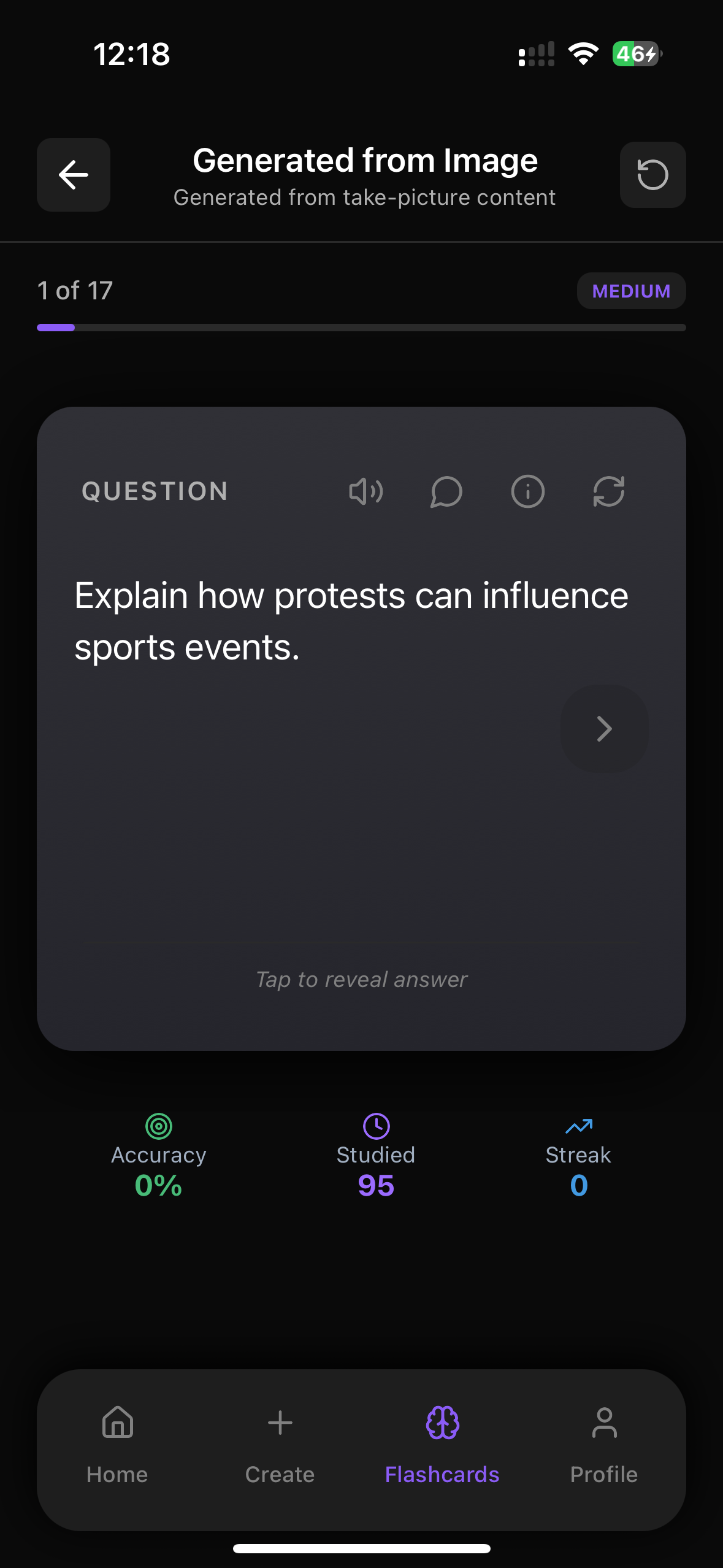
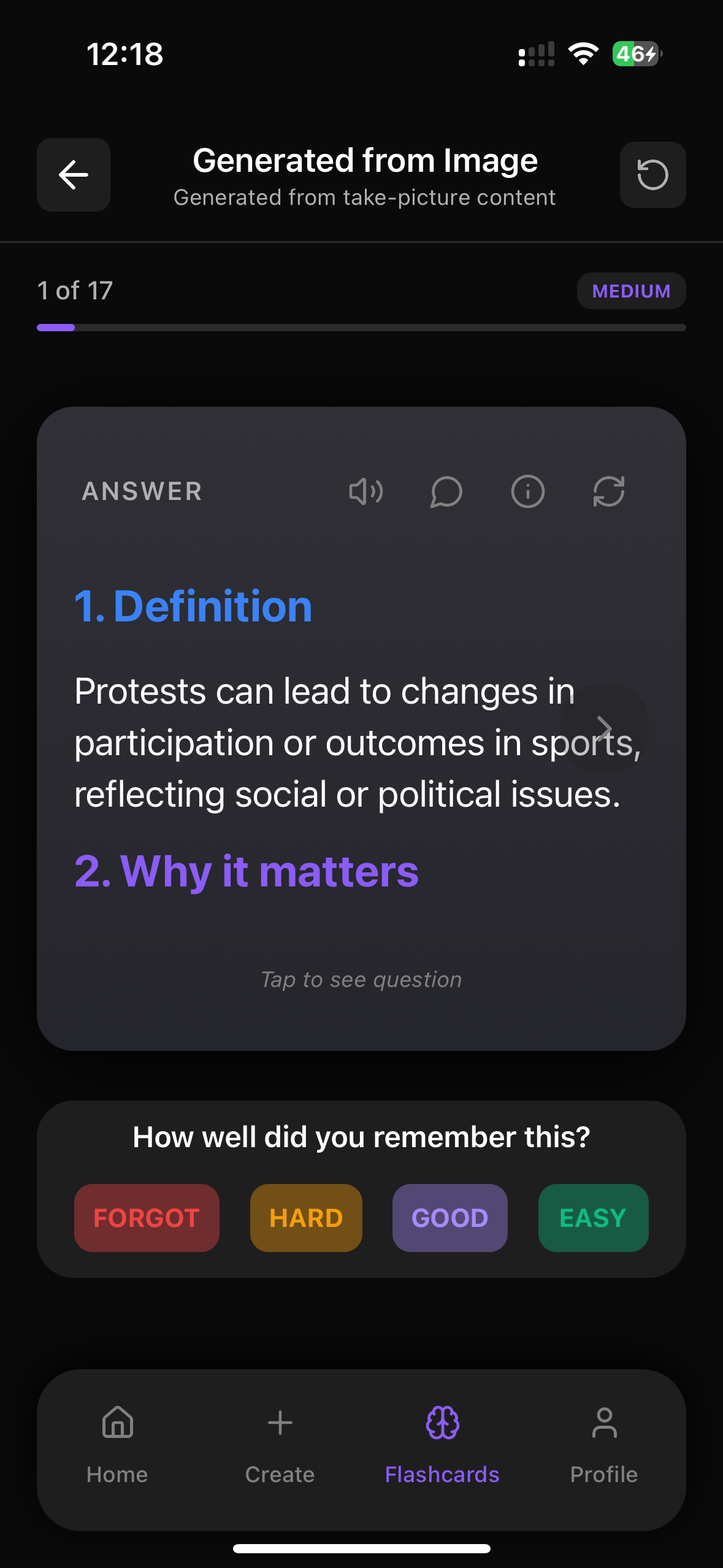
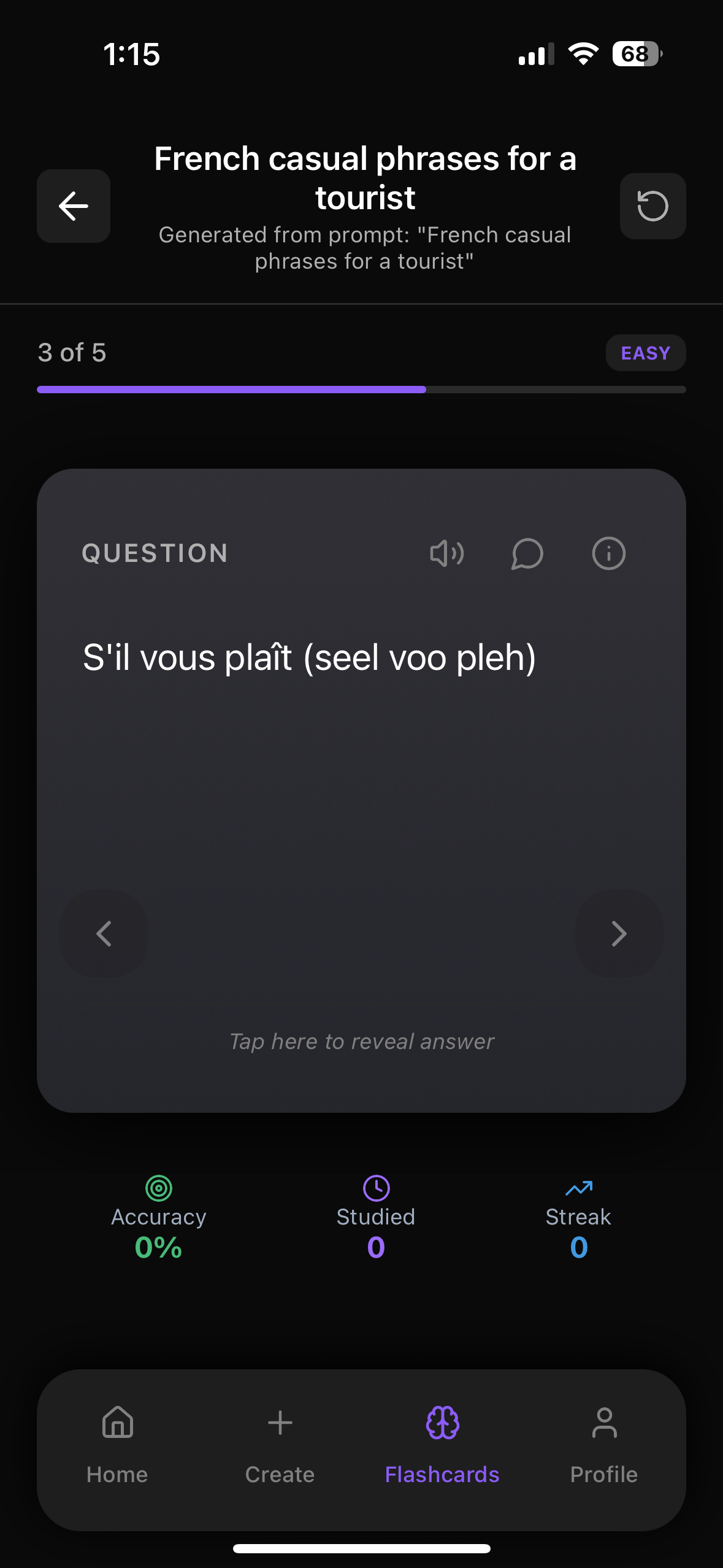
- Built‑in active recall: it shows you the question first and makes you think before revealing the answer
- Automatic spaced repetition: it schedules reviews for you with reminders, so you don’t have to remember when to study
- Works offline: perfect if you’re studying on the bus or somewhere without Wi‑Fi
- You can chat with your flashcards: if you’re confused about a concept, you can ask follow‑up questions right inside the app
- Fast, modern, and free to start: no clunky old‑school interface
Download it here:
👉 https://apps.apple.com/us/app/flashrecall-study-flashcards/id6746757085
Let’s talk about what to put into those cards for Abeka Chemistry Test 7.
What To Put On Your Flashcards For Abeka Chemistry Test 7
1. Core Definitions (Don’t Skip These)
Abeka loves clear definitions. Make Q/A cards like:
- Q: What is molar mass?
- Q: Define empirical formula.
- Q: What is a limiting reactant?
Put each term on its own card. In Flashrecall, you can:
- Snap a picture of the glossary/notes
- Let the app turn them into flashcards automatically
- Edit any that need tweaking
2. Formula & Setup Cards
Don’t just memorize formulas—memorize when and how to use them.
Example cards:
- Q: What formula converts moles to grams?
- Q: Steps to solve a basic stoichiometry problem?
1. Balance the equation
2. Convert given amount to moles
3. Use mole ratio to find moles of unknown
4. Convert moles of unknown to grams (if needed)
You can even add step‑by‑step cards:
- Front: “Stoichiometry steps (no peeking!)”
- Back: List the steps in order
3. Sample Problems As Cards
This is where most people get stuck—and where you can pull ahead.
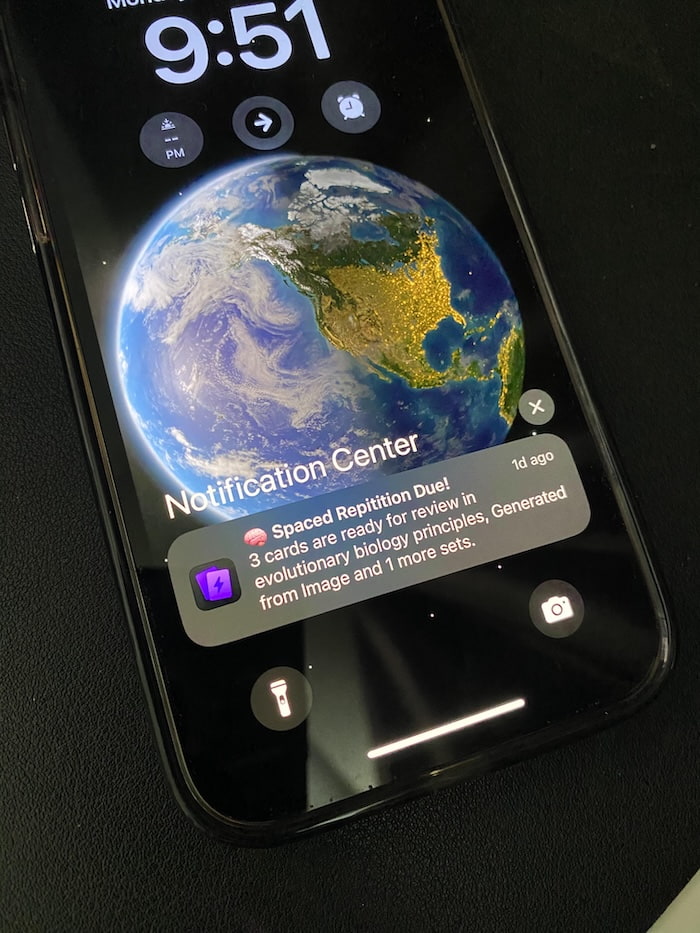
Flashrecall automatically keeps track and reminds you of the cards you don't remember well so you remember faster. Like this :
Take a practice problem from your Abeka homework or review sheet and do this:
- Card 1 (concept):
- Card 2 (step breakdown):
If you don’t want to type the whole problem:
- Take a photo of the worksheet in Flashrecall
- Let it auto‑generate cards
- Or keep the photo on the back as a worked example
How To Actually Study (Not Just “Make Cards”)
Making cards is step one. The real magic is how you review them.
Use Active Recall (No Passive Rereading)
When a card pops up:
- Look away from the answer
- Say the answer out loud or write it down
- Then flip and check yourself
Flashrecall is built around this: it always shows the question first, forcing your brain to work. That struggle is what makes the memory stick.
Use Spaced Repetition (So You Don’t Cram Everything)
Instead of cramming the night before, let spaced repetition do the heavy lifting:
- Study a little each day
- Review cards right before you forget them
- Spend less time overall but remember more
Flashrecall has automatic spaced repetition with reminders, so:
- Cards you know well show up less often
- Cards you struggle with come back more frequently
- You don’t have to plan a schedule—just follow the app’s daily reviews
3‑Day Study Plan For Abeka Chemistry Test 7
Adjust the days depending on when your test is, but this structure works well.
Day 1 – Build Your Deck & Learn The Basics
1. Go through your textbook section and notes
2. Add:
- Key terms
- Formulas
- A few sample problems
3. Use Flashrecall to:
- Snap pictures of pages or worksheets
- Turn them into cards automatically
4. Do your first review session (20–30 minutes)
Day 2 – Practice Problems + Weak Spots
1. Add more problem‑based cards (especially ones you got wrong in homework)
2. Use Flashrecall’s chat with your flashcard feature:
- If a card says “limiting reactant” and you’re still confused, ask:
> “Explain this like I’m in 9th grade”
- Or:
> “Show me another example of a limiting reactant problem”
3. Do at least 2 shorter sessions (15–20 minutes each)
4. Mark any card that still feels shaky
Day 3 – Test Simulation
1. Open Flashrecall and review everything due
2. For each card, ask:
- “How would this show up on the test?”
- “Could I solve a variation of this?”
3. Do a timed practice:
- Set a 20–30 min timer
- Rapid‑fire go through cards
- No distractions, pretend it’s the real test
By the end of this, most questions on Abeka Chemistry Test 7 should feel like you’ve already seen something similar.
Common Mistakes Students Make Before Abeka Chemistry Tests
Avoid these and you’re already ahead of most of your class.
1. Only Rereading The Book
Rereading feels productive but doesn’t test if you can recall anything.
Solution: use active recall with flashcards, not just reading.
2. Ignoring Math Problems
Chemistry is part math, part concepts. If you skip the math, your score tanks.
Solution: turn problems themselves into flashcards and practice regularly.
3. Studying Only The Night Before
You can cram, but you’ll forget everything right after.
Solution: use spaced repetition in Flashrecall—short daily reviews beat one long panic session.
4. Not Focusing On Teacher Emphasis
If your teacher spent 20 minutes on limiting reactants… that’s a hint.
Solution: give those topics extra cards and extra review.
Why Use Flashrecall Instead Of Old‑School Methods?
You could use paper flashcards or a more basic app, but Flashrecall is designed for fast, modern studying:
- Way faster to create cards
- Snap a pic of your Abeka pages instead of typing everything
- Smarter reviews
- Built‑in spaced repetition with automatic reminders
- More helpful when you’re stuck
- You can literally chat with your flashcards to get extra explanation
- Flexible
- Great for chemistry now, but also for biology, history, vocab, languages, SATs, medical school, business terms—basically anything you need to memorize
- Works offline
- Study anywhere without worrying about Wi‑Fi
And again, it’s free to start and works on both iPhone and iPad:
👉 https://apps.apple.com/us/app/flashrecall-study-flashcards/id6746757085
Final Thoughts: Walk Into Abeka Chemistry Test 7 Confident
You don’t need to be a “chemistry person” to do well on Abeka Chemistry Test 7. You just need:
1. A clear list of what’s actually tested
2. Good flashcards built around definitions, formulas, and problems
3. Daily active recall + spaced repetition
Flashrecall makes all of that way easier:
- Instantly turn your Abeka materials into flashcards
- Get automatic reminders so you actually review
- Ask follow‑up questions when you’re confused
Set up your deck today, do a few short sessions, and you’ll walk into Test 7 feeling prepared instead of guessing.
Frequently Asked Questions
What's the fastest way to create flashcards?
Manually typing cards works but takes time. Many students now use AI generators that turn notes into flashcards instantly. Flashrecall does this automatically from text, images, or PDFs.
Is there a free flashcard app?
Yes. Flashrecall is free and lets you create flashcards from images, text, prompts, audio, PDFs, and YouTube videos.
How do I start spaced repetition?
You can manually schedule your reviews, but most people use apps that automate this. Flashrecall uses built-in spaced repetition so you review cards at the perfect time.
What is active recall and how does it work?
Active recall is the process of actively retrieving information from memory rather than passively reviewing it. Flashrecall forces proper active recall by making you think before revealing answers, then uses spaced repetition to optimize your review schedule.
Related Articles
- Abeka Chemistry Test 2: Proven Study Hacks To Boost Your Score Fast (Most Students Don’t Know These) – Stop cramming the night before and use simple tools and habits that actually help you remember everything.
- Abeka Chemistry Test 6 Study Guide: 7 Proven Tips To Boost Your Score Fast – Stop Cramming And Use This Simple Strategy To Actually Remember The Reactions
- General Chemistry Quizlet: 7 Powerful Study Upgrades Most Students Don’t Know About – Stop Just Memorizing and Start Actually Understanding Chem Fast
Research References
The information in this article is based on peer-reviewed research and established studies in cognitive psychology and learning science.
Cepeda, N. J., Pashler, H., Vul, E., Wixted, J. T., & Rohrer, D. (2006). Distributed practice in verbal recall tasks: A review and quantitative synthesis. Psychological Bulletin, 132(3), 354-380
Meta-analysis showing spaced repetition significantly improves long-term retention compared to massed practice
Carpenter, S. K., Cepeda, N. J., Rohrer, D., Kang, S. H., & Pashler, H. (2012). Using spacing to enhance diverse forms of learning: Review of recent research and implications for instruction. Educational Psychology Review, 24(3), 369-378
Review showing spacing effects work across different types of learning materials and contexts
Kang, S. H. (2016). Spaced repetition promotes efficient and effective learning: Policy implications for instruction. Policy Insights from the Behavioral and Brain Sciences, 3(1), 12-19
Policy review advocating for spaced repetition in educational settings based on extensive research evidence
Karpicke, J. D., & Roediger, H. L. (2008). The critical importance of retrieval for learning. Science, 319(5865), 966-968
Research demonstrating that active recall (retrieval practice) is more effective than re-reading for long-term learning
Roediger, H. L., & Butler, A. C. (2011). The critical role of retrieval practice in long-term retention. Trends in Cognitive Sciences, 15(1), 20-27
Review of research showing retrieval practice (active recall) as one of the most effective learning strategies
Dunlosky, J., Rawson, K. A., Marsh, E. J., Nathan, M. J., & Willingham, D. T. (2013). Improving students' learning with effective learning techniques: Promising directions from cognitive and educational psychology. Psychological Science in the Public Interest, 14(1), 4-58
Comprehensive review ranking learning techniques, with practice testing and distributed practice rated as highly effective

FlashRecall Team
FlashRecall Development Team
The FlashRecall Team is a group of working professionals and developers who are passionate about making effective study methods more accessible to students. We believe that evidence-based learning tec...
Credentials & Qualifications
- •Software Development
- •Product Development
- •User Experience Design
Areas of Expertise
Ready to Transform Your Learning?
Start using FlashRecall today - the AI-powered flashcard app with spaced repetition and active recall.
Download on App Store