Active Recall Examples - Examples And How To Do Active Recall The PROPER Way
Active recall means retrieving info without looking at notes. Check out examples like the cover-and-answer technique and effective flashcard usage to learn.
How Flashrecall app helps you remember faster. It's free
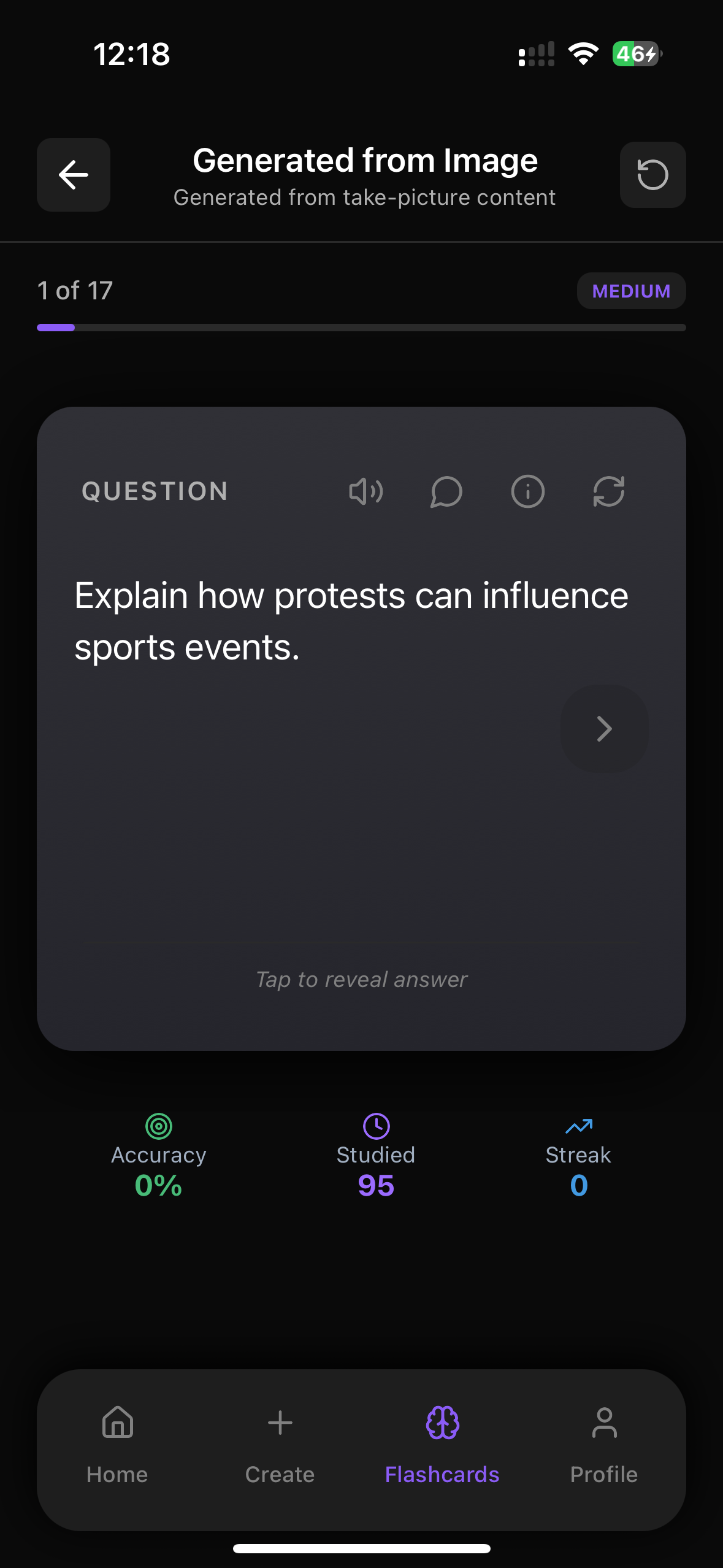
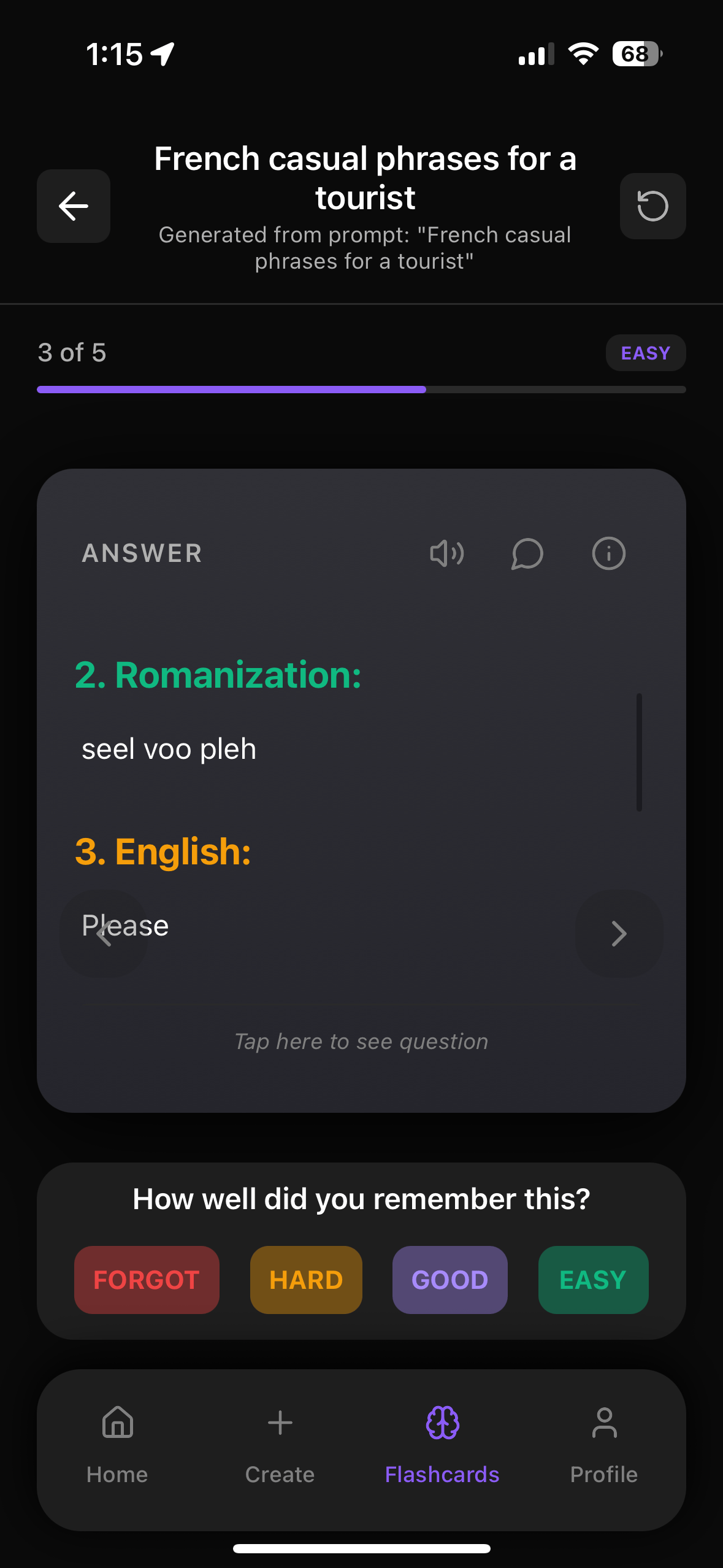
Active recall is one of the simplest and strongest ways to learn anything — but only if you do it properly. Most students think they’re doing active recall, but they’re actually just rereading or passively scanning their notes.
Here are clear examples, how to do it the right way, and why Flashrecall is the best tool for real, effective active recall.
🧠 What Active Recall Really Means
Active recall = forcing your brain to retrieve information without looking at your notes first.
If you don’t struggle a bit before checking the answer, it’s not active recall.
📌 Examples of Proper Active Recall
Here are real examples of what active recall looks like:
✅ Example 1: Cover-and-Answer Technique
1. Read a question or topic heading.
2. Cover the explanation.
3. Try to explain it from memory.
4. Uncover to check your accuracy.
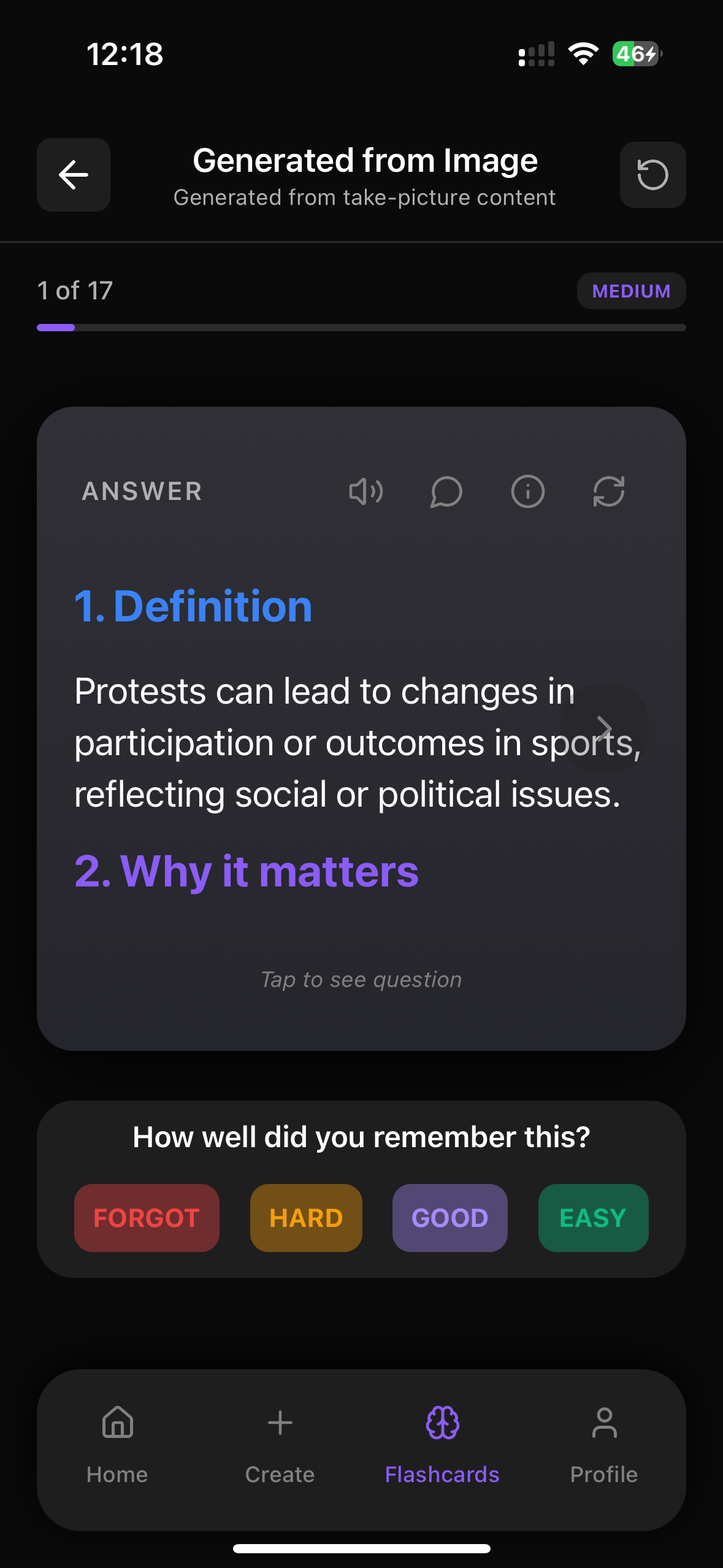
✅ Example 2: Flashcards Done Correctly
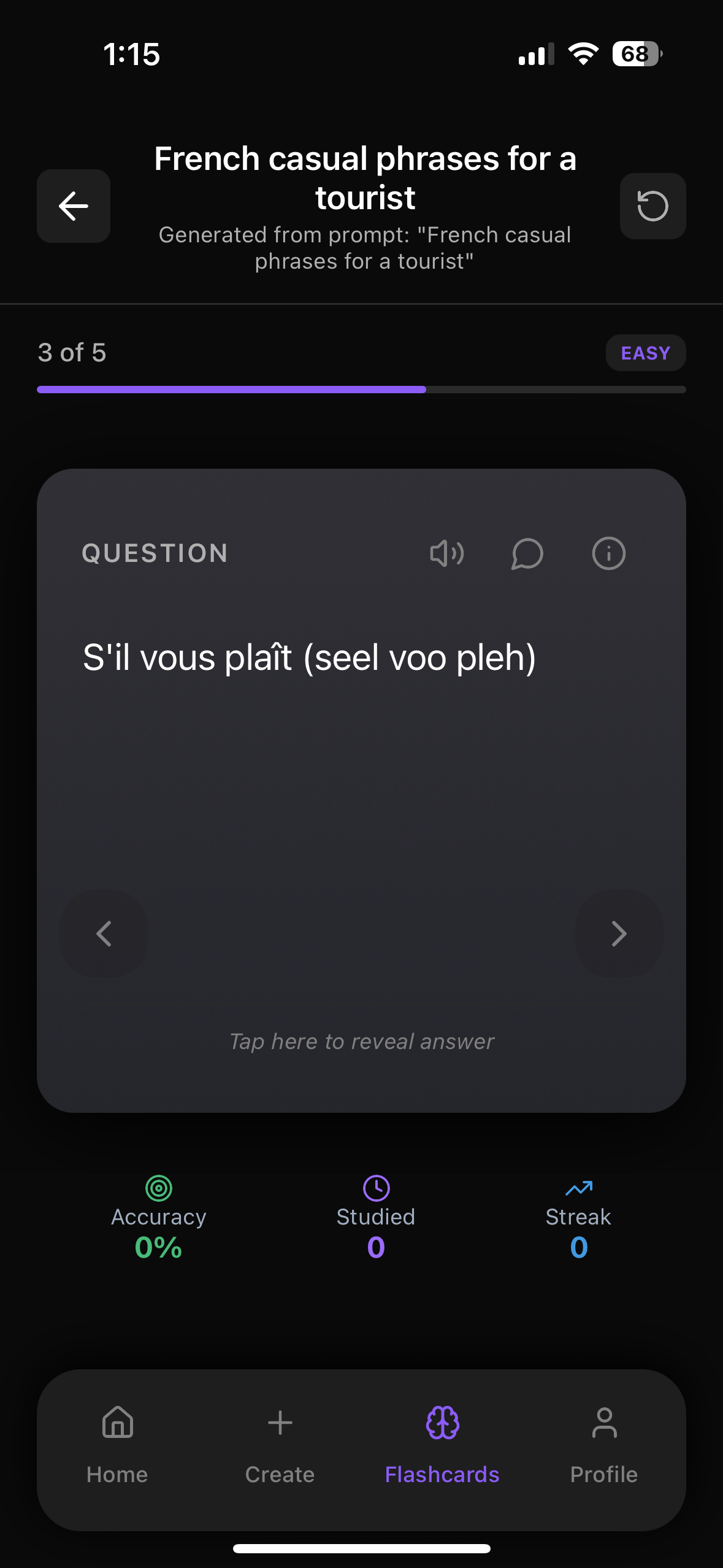
1. Look at the front of the card.
2. Pause and think — try to recall the answer.
3. Flip the card only after thinking.
4. Rate how well you remembered it.
This is the method Flashrecall is built around.
✅ Example 3: Blank-Page Method
1. Take a blank piece of paper.
2. Write everything you remember about a topic.
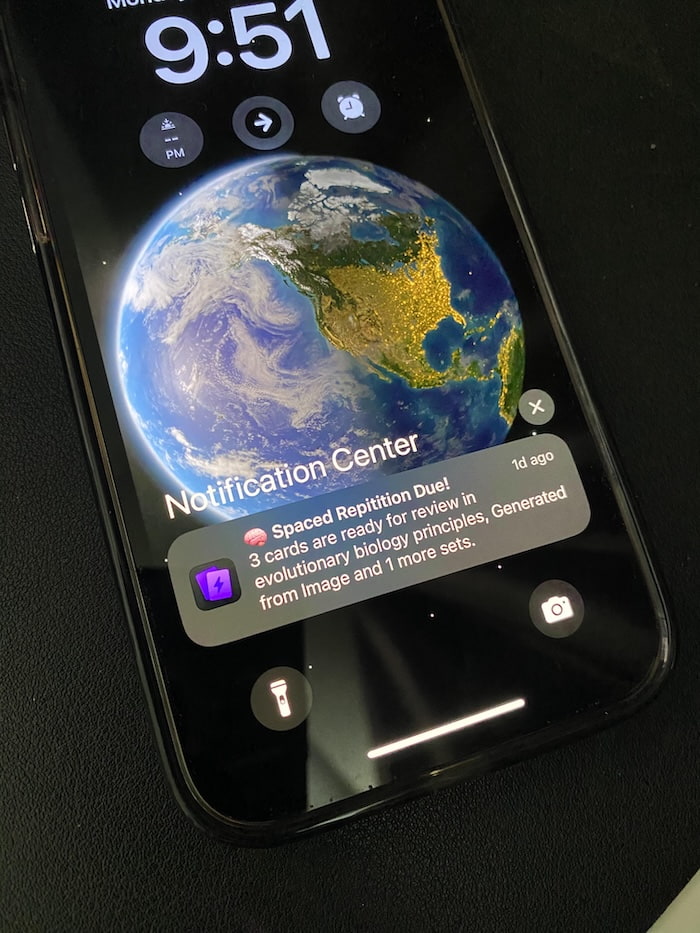
Flashrecall automatically keeps track and reminds you of the cards you don't remember well so you remember faster. Like this :
3. Compare with your notes.
4. Fill in the gaps.
✅ Example 4: Teach-It-Out-Loud Method
Explain the concept as if teaching a 5-year-old.
If you can’t explain it simply, you don’t fully understand it yet.
✅ Example 5: Past-Year Questions
Attempt the question from memory before looking at notes or solutions.
This forces recall + understanding.
❌ What Is NOT Active Recall
Many students confuse passive studying with active recall:
- rereading notes
- highlighting
- rewriting notes
- watching lectures again
- copying summaries
These feel productive but don’t build long-term memory.
⚡ How To Do Active Recall the PROPER Way
To get maximum results:
1. Try to remember BEFORE revealing the answer
2. Think for at least 3–5 seconds
3. Rate how hard it was
4. Review harder content more often
5. Repeat in short, focused sessions
This is exactly how top students study for languages, medicine, CFA, O-Levels, and university exams.
📱 Why Flashrecall Is the PERFECT Active Recall App
Most people fail at active recall because they:
- don’t know what questions to ask themselves
- don’t schedule reviews properly
- get overwhelmed by manual flashcard creation
- don’t stay consistent
✔ Automatically creates flashcards for you
From images, text, prompts, PDFs, YouTube videos, audio, and more.
✔ Forces proper active recall
Card → pause → think → reveal → rate.
✔ Built-in spaced repetition
It schedules every review at the perfect time so you remember long-term.
✔ Fast, 5–10 minute study sessions
Easy to stay consistent.
✔ Works for ANY subject
Languages, medicine, CFA, science, math, history — you name it.
🎯 Final Takeaway
Active recall works — but only if you do it properly.
And the easiest way to do it correctly, consistently, and with zero setup is to use Flashrecall.
Try one session and you’ll immediately feel how much stronger your memory becomes.
Frequently Asked Questions
What's the fastest way to create flashcards?
Manually typing cards works but takes time. Many students now use AI generators that turn notes into flashcards instantly. Flashrecall does this automatically from text, images, or PDFs.
Is there a free flashcard app?
Yes. Flashrecall is free and lets you create flashcards from images, text, prompts, audio, PDFs, and YouTube videos.
What is active recall and how does it work?
Active recall is the process of actively retrieving information from memory rather than passively reviewing it. Flashrecall forces proper active recall by making you think before revealing answers, then uses spaced repetition to optimize your review schedule.
How can I study more effectively for exams?
Effective exam prep combines active recall, spaced repetition, and regular practice. Flashrecall helps by automatically generating flashcards from your study materials and using spaced repetition to ensure you remember everything when exam day arrives.
Related Articles
Research References
The information in this article is based on peer-reviewed research and established studies in cognitive psychology and learning science.
Karpicke, J. D., & Roediger, H. L. (2008). The critical importance of retrieval for learning. Science, 319(5865), 966-968
Research demonstrating that active recall (retrieval practice) is more effective than re-reading for long-term learning
Roediger, H. L., & Butler, A. C. (2011). The critical role of retrieval practice in long-term retention. Trends in Cognitive Sciences, 15(1), 20-27
Review of research showing retrieval practice (active recall) as one of the most effective learning strategies
Dunlosky, J., Rawson, K. A., Marsh, E. J., Nathan, M. J., & Willingham, D. T. (2013). Improving students' learning with effective learning techniques: Promising directions from cognitive and educational psychology. Psychological Science in the Public Interest, 14(1), 4-58
Comprehensive review ranking learning techniques, with practice testing and distributed practice rated as highly effective

FlashRecall Team
FlashRecall Development Team
The FlashRecall Team is a group of working professionals and developers who are passionate about making effective study methods more accessible to students. We believe that evidence-based learning tec...
Credentials & Qualifications
- •Software Development
- •Product Development
- •User Experience Design
Areas of Expertise
Ready to Transform Your Learning?
Start using FlashRecall today - the AI-powered flashcard app with spaced repetition and active recall.
Download on App Store