Active Recall Studying Techniques Study Method Guide: The Essential Guide
Active recall boosts memory by testing your knowledge instead of rereading. Use flashcards and the Flashrecall app to automate your study routine effectively.
How Flashrecall app helps you remember faster. It's free
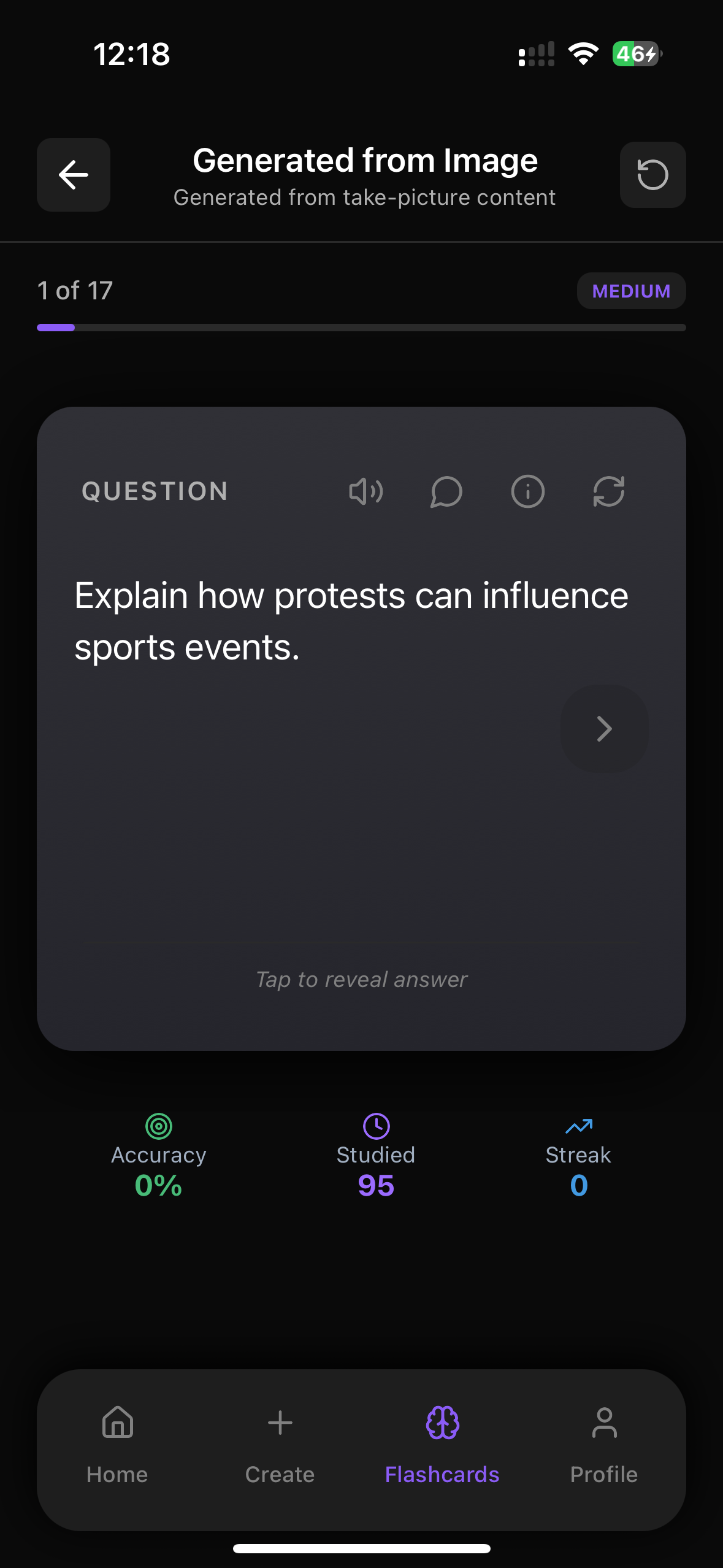
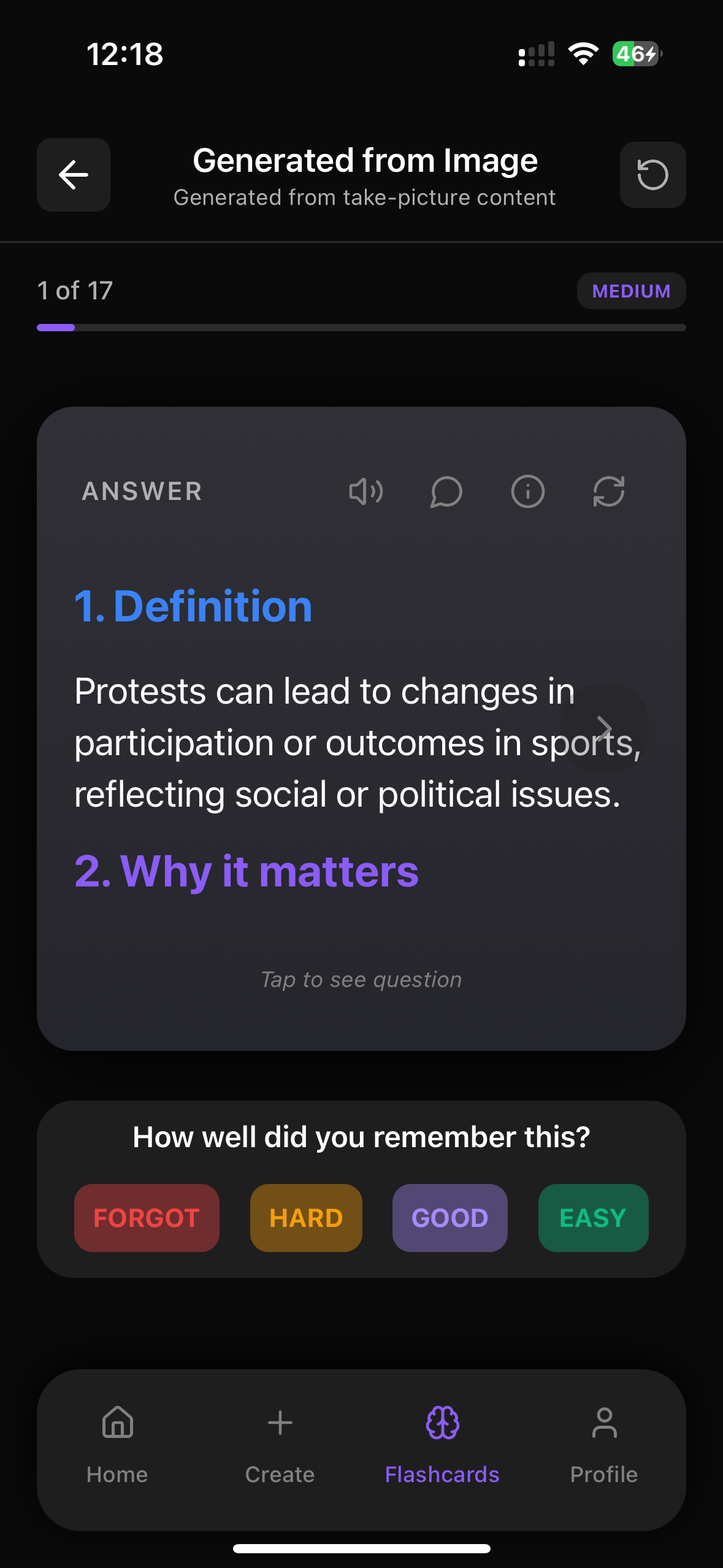
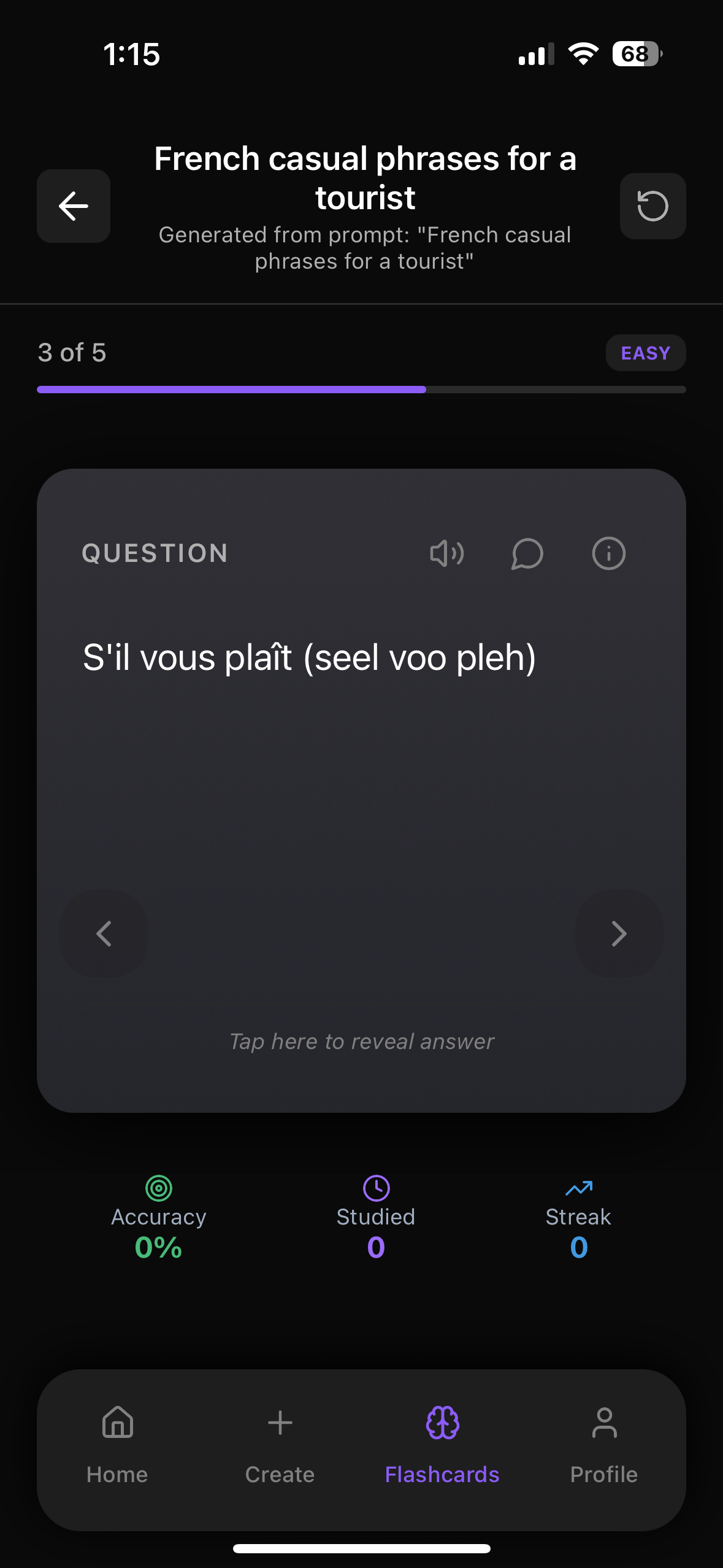
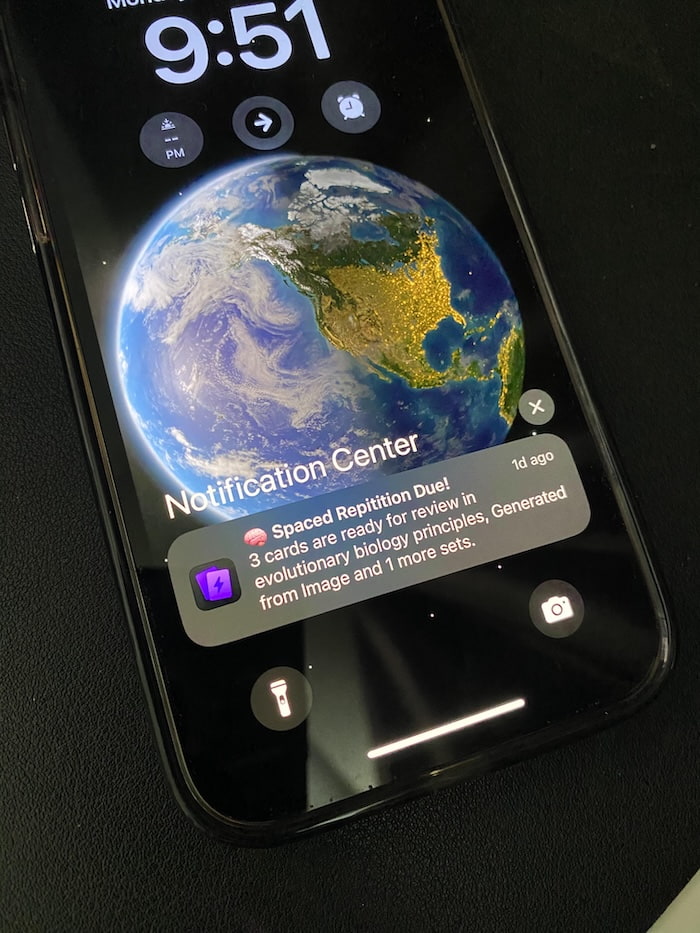
You know how sometimes it feels like you're just not getting anywhere with studying? Well, here's the thing: the "Active Recall Studying Techniques study method guide" might just be your new secret weapon. It's all about ditching the cramming and re-reading and focusing on actually pulling the info out of your brain over time. Trust me, it works way better. And guess what? Flashrecall can totally take care of the timing and reminders for you, so you just chill and learn. If you're curious about diving into this method and want to nail it, check out our complete guide.
🧠 What Exactly Is Active Recall?
Active recall means testing your memory instead of rereading your notes.
Your brain is forced to retrieve information, which strengthens the memory far more than passive study techniques.
It’s simple but extremely powerful.
🎯 Why Active Recall Works So Well
Every time you “pull” an answer from memory, your brain reinforces the pathway — making future recall faster and easier. This is why active recall beats:
❌ highlighting
❌ rereading
❌ copying notes
❌ watching explanations again
Those feel productive but don’t build long-term memory.
📌 The Most Useful Active Recall Studying Techniques
Here are the techniques that work best — and how to do each one properly.
✔ 1. Flashcards (The King of Active Recall)
This is the easiest, fastest, and most effective method.
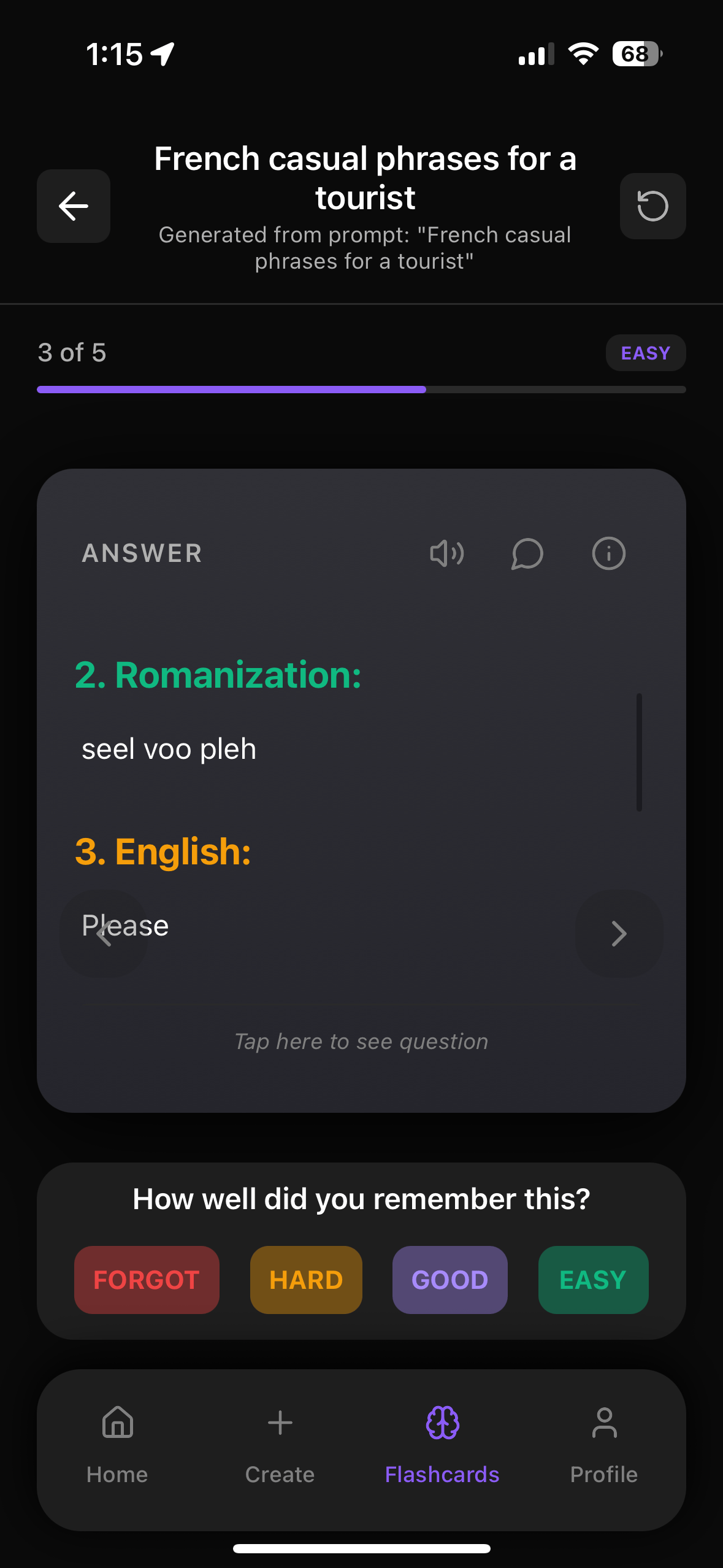
1. Look at the question side.
2. Pause for a few seconds.
3. Try to recall the answer.
4. Flip only after thinking.
5. Rate difficulty (Easy / Good / Hard).
Flashrecall automatically keeps track and reminds you of the cards you don't remember well so you remember faster. Like this :
This is exactly how Flashrecall guides you through every study session.
✔ 2. Blank Page Method
Take a blank sheet and write everything you remember about a topic.
Then compare with your notes.
This exposes holes in your memory instantly.
✔ 3. Teach-It Method
Try explaining the concept out loud as if you’re teaching someone new.
If you can’t explain it simply, you haven’t mastered it.
✔ 4. Question Creation
Turn your notes into questions.
This forces your brain to organise the information in a retrieval-friendly format.
Flashrecall saves time here because it can auto-generate flashcards from images, PDFs, text, screenshots, prompts, and YouTube videos.
✔ 5. Past-Year Questions
Attempt questions from memory before checking answers.
This is especially effective for subjects like math, science, history, and languages.
⏳ How Long Should Active Recall Sessions Be?
Short and consistent is better than long and random:
- 5 minutes before class
- 10 minutes at night
- 3 minutes on the train
- 5 minutes in between tasks
Tiny bursts add up fast — especially when combined with spaced repetition.
🔁 Pair It With Spaced Repetition
Active recall + spaced repetition = unbeatable.
You retrieve the information…
Then review it just before forgetting…
Which locks it into long-term memory.
Flashrecall handles this automatically with built-in spaced repetition.
📱 Why Flashrecall Makes Active Recall So Easy
Most students skip active recall because it takes time to:
- create flashcards
- organise notes
- schedule reviews
- decide what to study next
✔ Auto-creates flashcards for you
From images, text, prompts, PDFs, audio, YouTube videos — anything.
✔ Forces proper active recall
Question → think → answer → flip → rate.
✔ Automatic spaced repetition
Hard cards return sooner; easy cards get spaced out automatically.
✔ Perfect for 5–10 minute sessions
Built for busy students.
🎯 Final Takeaway
Active recall studying techniques work because they make your brain retrieve information — and that’s how real memory is built.
If you want to study faster, remember longer, and feel confident before exams, the easiest way to stay consistent is by using Flashrecall.
Use active recall daily and you’ll see results almost immediately.
Frequently Asked Questions
What's the fastest way to create flashcards?
Manually typing cards works but takes time. Many students now use AI generators that turn notes into flashcards instantly. Flashrecall does this automatically from text, images, or PDFs.
Is there a free flashcard app?
Yes. Flashrecall is free and lets you create flashcards from images, text, prompts, audio, PDFs, and YouTube videos.
How do I start spaced repetition?
You can manually schedule your reviews, but most people use apps that automate this. Flashrecall uses built-in spaced repetition so you review cards at the perfect time.
What is active recall and how does it work?
Active recall is the process of actively retrieving information from memory rather than passively reviewing it. Flashrecall forces proper active recall by making you think before revealing answers, then uses spaced repetition to optimize your review schedule.
Related Articles
Research References
The information in this article is based on peer-reviewed research and established studies in cognitive psychology and learning science.
Cepeda, N. J., Pashler, H., Vul, E., Wixted, J. T., & Rohrer, D. (2006). Distributed practice in verbal recall tasks: A review and quantitative synthesis. Psychological Bulletin, 132(3), 354-380
Meta-analysis showing spaced repetition significantly improves long-term retention compared to massed practice
Carpenter, S. K., Cepeda, N. J., Rohrer, D., Kang, S. H., & Pashler, H. (2012). Using spacing to enhance diverse forms of learning: Review of recent research and implications for instruction. Educational Psychology Review, 24(3), 369-378
Review showing spacing effects work across different types of learning materials and contexts
Kang, S. H. (2016). Spaced repetition promotes efficient and effective learning: Policy implications for instruction. Policy Insights from the Behavioral and Brain Sciences, 3(1), 12-19
Policy review advocating for spaced repetition in educational settings based on extensive research evidence
Karpicke, J. D., & Roediger, H. L. (2008). The critical importance of retrieval for learning. Science, 319(5865), 966-968
Research demonstrating that active recall (retrieval practice) is more effective than re-reading for long-term learning
Roediger, H. L., & Butler, A. C. (2011). The critical role of retrieval practice in long-term retention. Trends in Cognitive Sciences, 15(1), 20-27
Review of research showing retrieval practice (active recall) as one of the most effective learning strategies
Dunlosky, J., Rawson, K. A., Marsh, E. J., Nathan, M. J., & Willingham, D. T. (2013). Improving students' learning with effective learning techniques: Promising directions from cognitive and educational psychology. Psychological Science in the Public Interest, 14(1), 4-58
Comprehensive review ranking learning techniques, with practice testing and distributed practice rated as highly effective

FlashRecall Team
FlashRecall Development Team
The FlashRecall Team is a group of working professionals and developers who are passionate about making effective study methods more accessible to students. We believe that evidence-based learning tec...
Credentials & Qualifications
- •Software Development
- •Product Development
- •User Experience Design
Areas of Expertise
Ready to Transform Your Learning?
Start using FlashRecall today - the AI-powered flashcard app with spaced repetition and active recall.
Download on App Store