Anatomy Anki Flashcards: 7 Powerful Tips To Actually Remember Every Structure Fast – Stop mindless card flipping and use this guide to make anatomy stick for good.
Anatomy Anki flashcards are great, but this breaks down where they fail, how spaced repetition really helps, and why Flashrecall makes anatomy way less painful.
How Flashrecall app helps you remember faster. It's free
What Are Anatomy Anki Flashcards (And How Do They Actually Help)?
Alright, let's talk about anatomy Anki flashcards: they’re just digital flashcards made in Anki to help you memorize anatomy terms, structures, and functions using spaced repetition. Instead of rereading your textbook, you quiz yourself on things like muscles, nerves, and bones at smart intervals so they move into long‑term memory. People love them for med school and anatomy classes because they turn huge, overwhelming content into bite‑sized questions. Apps like Flashrecall do the same thing but with fewer setup headaches and a much smoother experience, especially on iPhone and iPad.
If you’re thinking, “Okay, I get the idea, but how do I actually use anatomy flashcards without wasting time?” — that’s what we’ll go through now.
Also, if you want something like Anki but way more modern and easier to use, check out Flashrecall here:
https://apps.apple.com/us/app/flashrecall-study-flashcards/id6746757085
Anki vs Flashrecall For Anatomy: What’s The Difference?
You’ve probably heard:
- “Use Anki for anatomy or you’ll fail.”
- “Just download this 10,000‑card deck.”
Anki is great, but it can be clunky, especially on mobile. For anatomy, that matters a lot because you’re constantly looking at images, labels, and diagrams.
Here’s how Flashrecall compares when you’re doing anatomy flashcards:
Where Anki Is Good
- Customizable card types
- Lots of shared decks online
- Solid spaced repetition engine
But it can feel:
- Old‑school and confusing to set up
- Awkward for quickly turning screenshots or PDFs into cards
- Annoying to sync across devices and tweak settings
Where Flashrecall Feels Better For Anatomy
Flashrecall basically takes the “Anki idea” and makes it way smoother for real life studying:
- Instant image cards
Take a screenshot of a Netter plate, lecture slide, or atlas → drop it into Flashrecall → boom, flashcards. You can even create multiple cards from one image.
- Spaced repetition built‑in, no config
The app automatically schedules reviews. You just open it and study. No fiddling with intervals or settings.
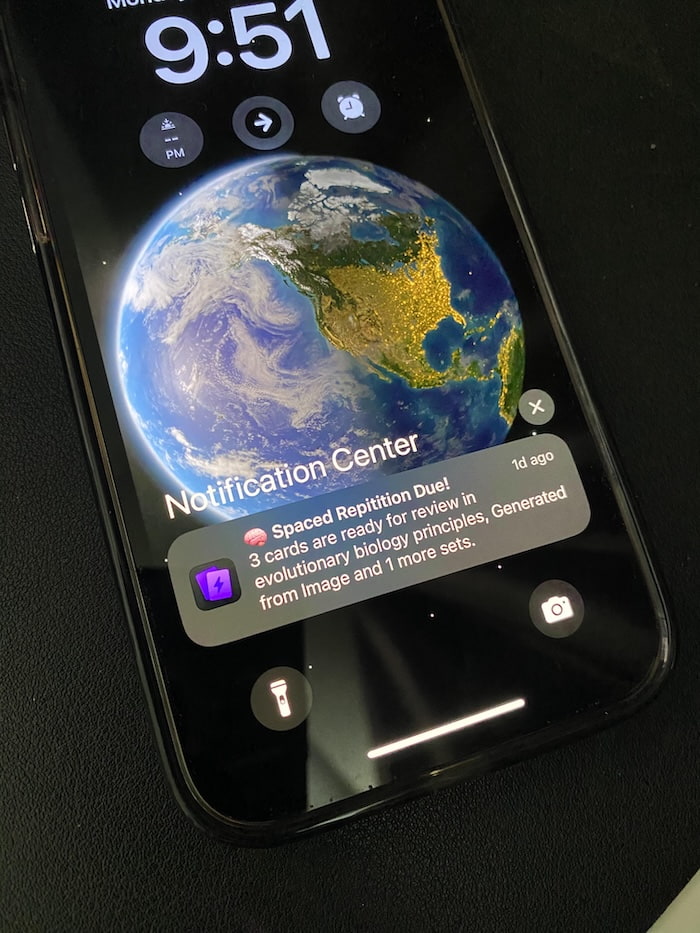
- Study reminders
You actually get reminded to review, so you don’t fall behind in the middle of a busy anatomy block.
- Chat with your flashcards
Stuck on something? You can literally chat with the card and ask follow‑up questions like “What’s the function of this muscle again?” Super underrated for anatomy.
- Works offline
Anatomy labs and hospital basements don’t always have great Wi‑Fi. Flashrecall still works.
- Fast, modern, iOS‑native
Clean interface, smooth on iPhone and iPad, free to start.
If you like the idea of anatomy Anki flashcards but hate the setup and friction, Flashrecall is basically the “no‑frustration” version:
https://apps.apple.com/us/app/flashrecall-study-flashcards/id6746757085
How To Use Anatomy Flashcards Without Overwhelming Yourself
Most people mess up anatomy flashcards in one of two ways:
1. They download a massive pre‑made deck and drown in cards.
2. They try to make cards for every single sentence in the textbook.
You don’t need either.
1. Focus On High‑Yield Structures First
Start with:
- Major bones and landmarks
- Big muscle groups (origin, insertion, innervation, action)
- Key nerves and their course
- Main arteries and what they supply
Example card ideas:
- Front: What nerve innervates the deltoid muscle?
- Front: What passes through the foramen magnum?
In Flashrecall, you can create these manually in seconds, or use text from your notes and turn it into multiple cards automatically.
2. One Fact Per Card (Seriously)
Don’t cram everything on one card like:
> “Deltoid: origin, insertion, innervation, action”
That’s actually four cards:
1. Origin
2. Insertion
3. Innervation
4. Action
Smaller cards = easier recall = better spaced repetition.
In Flashrecall, you can quickly duplicate a card and tweak the question, so breaking things up is painless.
7 Powerful Tips To Make Anatomy Flashcards Actually Work
Tip 1: Use Images, Not Just Text
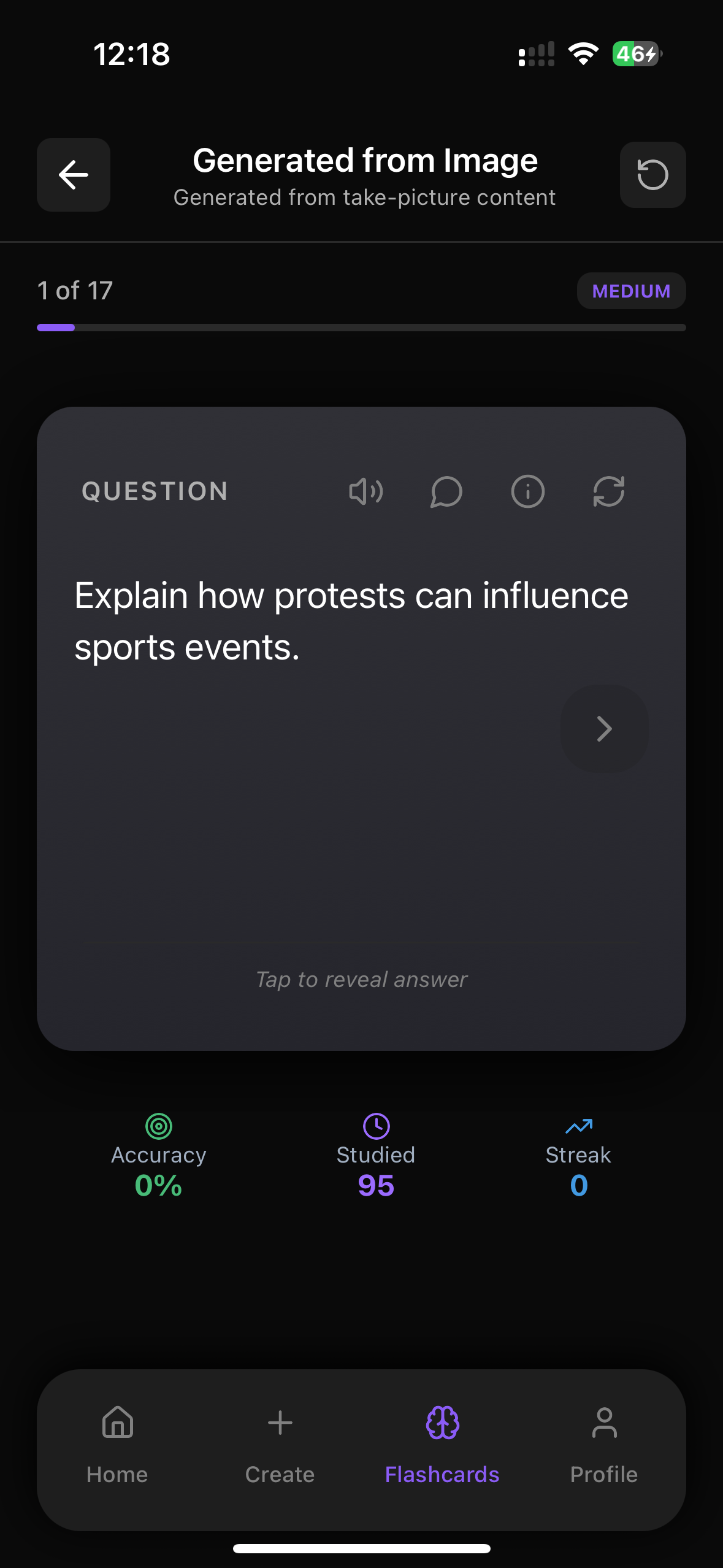
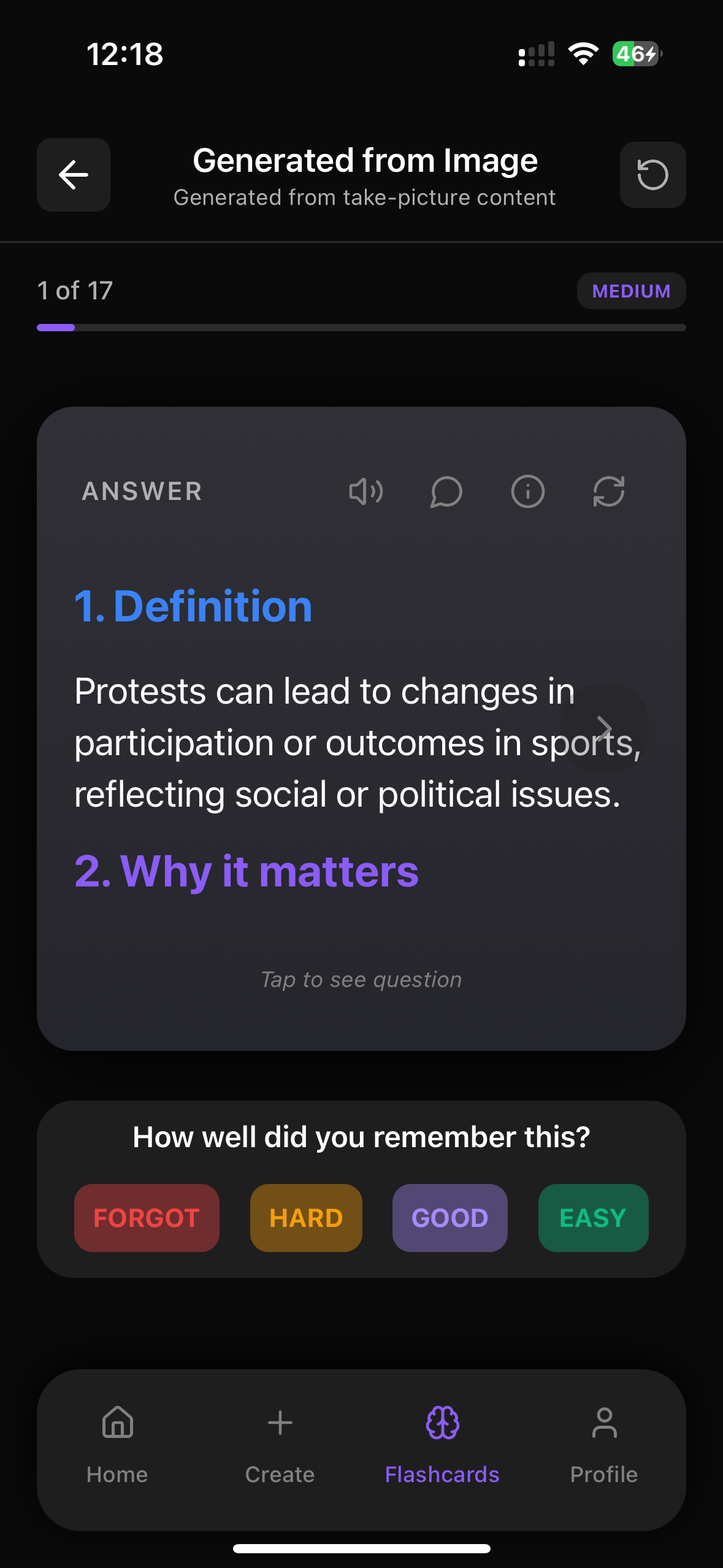
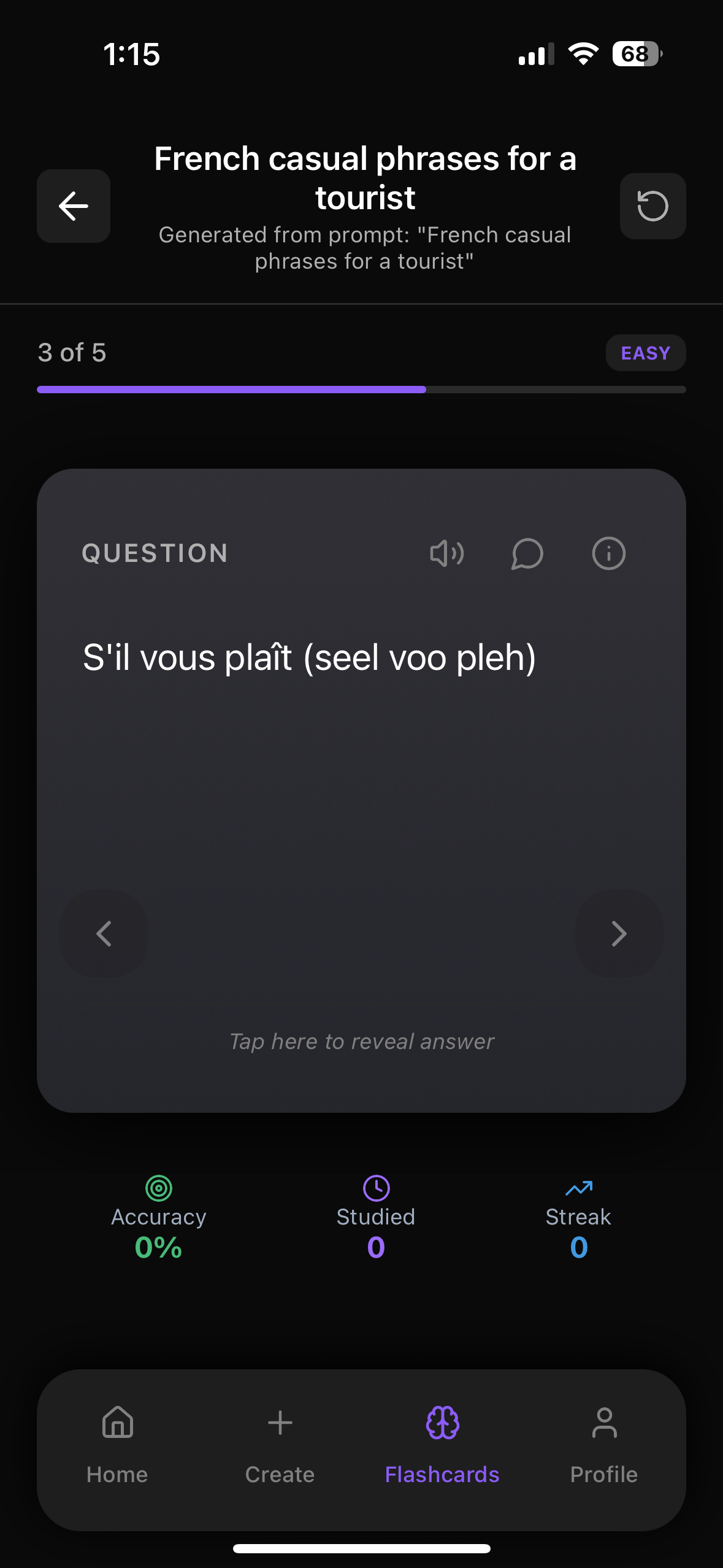
Flashrecall automatically keeps track and reminds you of the cards you don't remember well so you remember faster. Like this :
Anatomy is visual. Text‑only cards are painful.
Better approach:
- Screenshot a labeled diagram
- Import it into Flashrecall
- Cover the labels and ask:
- “Name this muscle.”
- “What nerve is this?”
- “What artery is this?”
You can even have multiple cards per image: one card asking for the structure, another asking for function, another for innervation.
Flashrecall makes this super easy because it can make flashcards instantly from images, PDFs, YouTube links, and text. No need to manually crop everything in a separate app.
Tip 2: Turn Lecture Slides And PDFs Into Cards Instantly
Instead of typing everything out like a scribe:
- Import a PDF of your anatomy slides into Flashrecall
- Pull out key images or tables
- Turn them into cards with just a few taps
This is perfect for:
- Nerve lesion tables
- Dermatomes
- Muscle charts
- Clinical correlations
You keep the exact diagrams your professor loves to test, just in flashcard form.
Tip 3: Use Active Recall, Not Passive Reading
The whole point of anatomy Anki flashcards (or any flashcards) is active recall — forcing your brain to pull the answer out, not just recognize it.
So when you see a card:
- Don’t half‑guess and flip immediately
- Actually say the answer in your head (or out loud if you can)
- Then flip and rate how hard it was
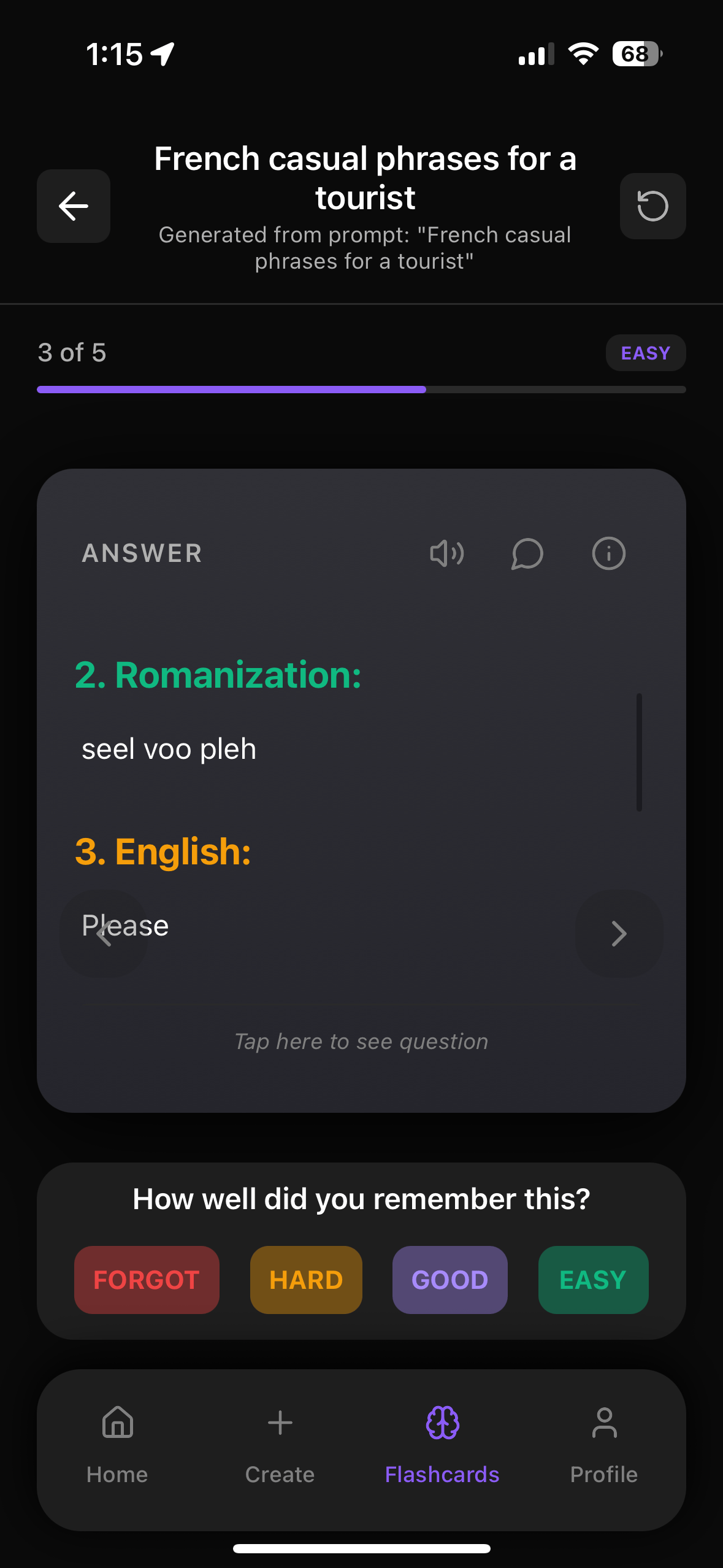
Flashrecall has active recall baked in by design: card front → you think → tap → check → rate. The spaced repetition engine then handles the schedule.
Tip 4: Let Spaced Repetition Do The Heavy Lifting
You don’t need to plan “review schedules” manually. That’s what the algorithm is for.
- New card → you’ll see it more often
- Easy card → it gets pushed further out
- Hard card → it comes back sooner
With Flashrecall, this happens automatically. You just open the app and your queue is ready. No settings, no extra brainpower.
Plus, you can turn on study reminders, so you get a nudge to review before you forget everything from last week’s lab.
Tip 5: Mix Regions Instead Of Studying In Silos
A common trap: “Today is only upper limb. Tomorrow, only thorax.”
That feels organized but your brain learns better when it has to tell things apart.
So once you’ve gone through each region once, start mixing:
- Upper limb + lower limb
- Thorax + abdomen
- Head & neck + neuro
Flashrecall makes this easy because you can put cards into different decks or tags (e.g., “Upper Limb”, “Thorax”) but still review mixed sessions if you want variety.
Tip 6: Add Clinical Hooks To Make Facts Stick
Pure memorization is harder than facts with context.
Instead of:
> “Radial nerve injury leads to wrist drop.”
Try:
> “A patient with a mid‑shaft humerus fracture presents with wrist drop. What nerve is injured?”
You’re still learning the same thing, but now it’s tied to a story — which your brain loves.
In Flashrecall, you can quickly edit cards or add explanations to the back, so you remember both the raw fact and the clinical scenario.
Tip 7: Use “Chat With Your Flashcards” When You’re Confused
This is where Flashrecall does something Anki just doesn’t.
Say you have a card like:
> “What are the contents of the femoral triangle?”
You remember some but not all and feel shaky. In Flashrecall, you can literally chat with the card and ask:
- “Can you explain the femoral triangle like I’m five?”
- “What’s an easy way to remember the order of the contents?”
- “Why does it matter clinically?”
You’re not just memorizing — you’re understanding, inside the same app, without jumping to Google or a textbook.
How To Build A Simple Anatomy Deck In Flashrecall (Step‑By‑Step)
Here’s a quick way to get started without overcomplicating it:
Step 1: Pick One Region
Don’t start with “all of anatomy”. Choose:
- Upper limb
- Thorax
- Abdomen
- Head & neck
Start small so you don’t burn out.
Step 2: Grab Your Best Resources
Use:
- Lecture slides
- Anatomy atlas (Netter, Gray’s, etc.)
- Lab manual
- Any high‑yield summary PDF
These are your “card ingredients”.
Step 3: Create Your First 20–30 Cards
In Flashrecall:
1. Import a slide or image (e.g., brachial plexus, rotator cuff, coronary arteries).
2. Turn labels/structures into cards:
- “Identify this nerve.”
- “What does this artery supply?”
3. Add pure text cards for definitions or key lists.
Aim for 20–30 good cards per session, not 200 in one go.
Step 4: Turn On Spaced Repetition + Reminders
Flashrecall already uses spaced repetition automatically, but:
- Set a daily reminder at a time you’ll actually study (e.g., after lunch, before bed).
- Do your reviews first, then add a few new cards.
This keeps your deck manageable and your brain less fried.
Step 5: Review A Little Every Day
Even 15–20 minutes daily beats one massive weekend cram.
You’ll notice:
- Structures start to feel familiar
- You recognize patterns (e.g., nerve roots, arterial branches)
- Lab sessions become way less painful
And because Flashrecall works offline, you can hammer through cards on the bus, in the library, or in the hallway before lab.
Should You Still Use Anki If You Switch To Flashrecall?
You totally can use both:
- Keep your old Anki decks if you already rely on them.
- Use Flashrecall for new, image‑heavy anatomy material, class‑specific slides, and anything you want to build quickly on your phone.
But if you’re just starting and want something that:
- Makes cards instantly from images, text, audio, PDFs, YouTube links
- Has built‑in spaced repetition with auto reminders
- Lets you chat with your flashcards when you don’t understand
- Works offline and is fast, modern, and easy to use
- Is free to start on iPhone and iPad
Then Flashrecall is honestly the smoother choice for anatomy than traditional Anki on iOS.
You can grab it here and start building your anatomy deck today:
https://apps.apple.com/us/app/flashrecall-study-flashcards/id6746757085
Final Thoughts
Anatomy Anki flashcards are basically a way of turning a massive, terrifying subject into small, repeatable questions your brain can actually handle. The trick isn’t just “use flashcards” — it’s use them well: one fact per card, lots of images, daily reviews, and spaced repetition.
If you want all the benefits of Anki without the clunky setup and syncing drama, try doing your anatomy decks in Flashrecall instead. It keeps the good parts (active recall, spaced repetition) and wraps them in an app that actually feels nice to use when you’re exhausted from lab.
Frequently Asked Questions
Is Anki good for studying?
Anki is powerful but requires manual card creation and has a steep learning curve. Flashrecall offers AI-powered card generation from your notes, images, PDFs, and videos, making it faster and easier to create effective flashcards.
What's the fastest way to create flashcards?
Manually typing cards works but takes time. Many students now use AI generators that turn notes into flashcards instantly. Flashrecall does this automatically from text, images, or PDFs.
How do I start spaced repetition?
You can manually schedule your reviews, but most people use apps that automate this. Flashrecall uses built-in spaced repetition so you review cards at the perfect time.
Related Articles
- Anki Flashcards Anatomy: 7 Powerful Study Tricks Most Med Students Don’t Use (But Should) – Learn Anatomy Faster, Remember Longer, And Stop Drowning In Decks
- Anki Anatomy: The Complete Guide To Learning Every Structure Faster (And What To Use Instead) – Stop drowning in decks and start actually remembering anatomy with smarter flashcards.
- Anki Medical: The Complete Guide To Smarter Med School Flashcards (And A Better Alternative Most Students Don’t Know About) – Stop drowning in Anki decks and learn a faster, saner way to memorize medicine.
Research References
The information in this article is based on peer-reviewed research and established studies in cognitive psychology and learning science.
Cepeda, N. J., Pashler, H., Vul, E., Wixted, J. T., & Rohrer, D. (2006). Distributed practice in verbal recall tasks: A review and quantitative synthesis. Psychological Bulletin, 132(3), 354-380
Meta-analysis showing spaced repetition significantly improves long-term retention compared to massed practice
Carpenter, S. K., Cepeda, N. J., Rohrer, D., Kang, S. H., & Pashler, H. (2012). Using spacing to enhance diverse forms of learning: Review of recent research and implications for instruction. Educational Psychology Review, 24(3), 369-378
Review showing spacing effects work across different types of learning materials and contexts
Kang, S. H. (2016). Spaced repetition promotes efficient and effective learning: Policy implications for instruction. Policy Insights from the Behavioral and Brain Sciences, 3(1), 12-19
Policy review advocating for spaced repetition in educational settings based on extensive research evidence
Karpicke, J. D., & Roediger, H. L. (2008). The critical importance of retrieval for learning. Science, 319(5865), 966-968
Research demonstrating that active recall (retrieval practice) is more effective than re-reading for long-term learning
Roediger, H. L., & Butler, A. C. (2011). The critical role of retrieval practice in long-term retention. Trends in Cognitive Sciences, 15(1), 20-27
Review of research showing retrieval practice (active recall) as one of the most effective learning strategies
Dunlosky, J., Rawson, K. A., Marsh, E. J., Nathan, M. J., & Willingham, D. T. (2013). Improving students' learning with effective learning techniques: Promising directions from cognitive and educational psychology. Psychological Science in the Public Interest, 14(1), 4-58
Comprehensive review ranking learning techniques, with practice testing and distributed practice rated as highly effective

FlashRecall Team
FlashRecall Development Team
The FlashRecall Team is a group of working professionals and developers who are passionate about making effective study methods more accessible to students. We believe that evidence-based learning tec...
Credentials & Qualifications
- •Software Development
- •Product Development
- •User Experience Design
Areas of Expertise
Ready to Transform Your Learning?
Start using FlashRecall today - the AI-powered flashcard app with spaced repetition and active recall.
Download on App Store