Anki Dropbox Sync: Why It’s So Clunky (And The Better Way To Back Up Your Flashcards) – Stop fighting with broken sync and learn the smarter, faster way to keep your cards safe and in sync on all your devices.
Anki Dropbox keeps corrupting your decks? See why the .anki2 file is so fragile, what “conflicted copies” really do, and the smoother auto-sync options.
How Flashrecall app helps you remember faster. It's free
Alright, Let’s Talk About Anki Dropbox And Why It’s So Annoying
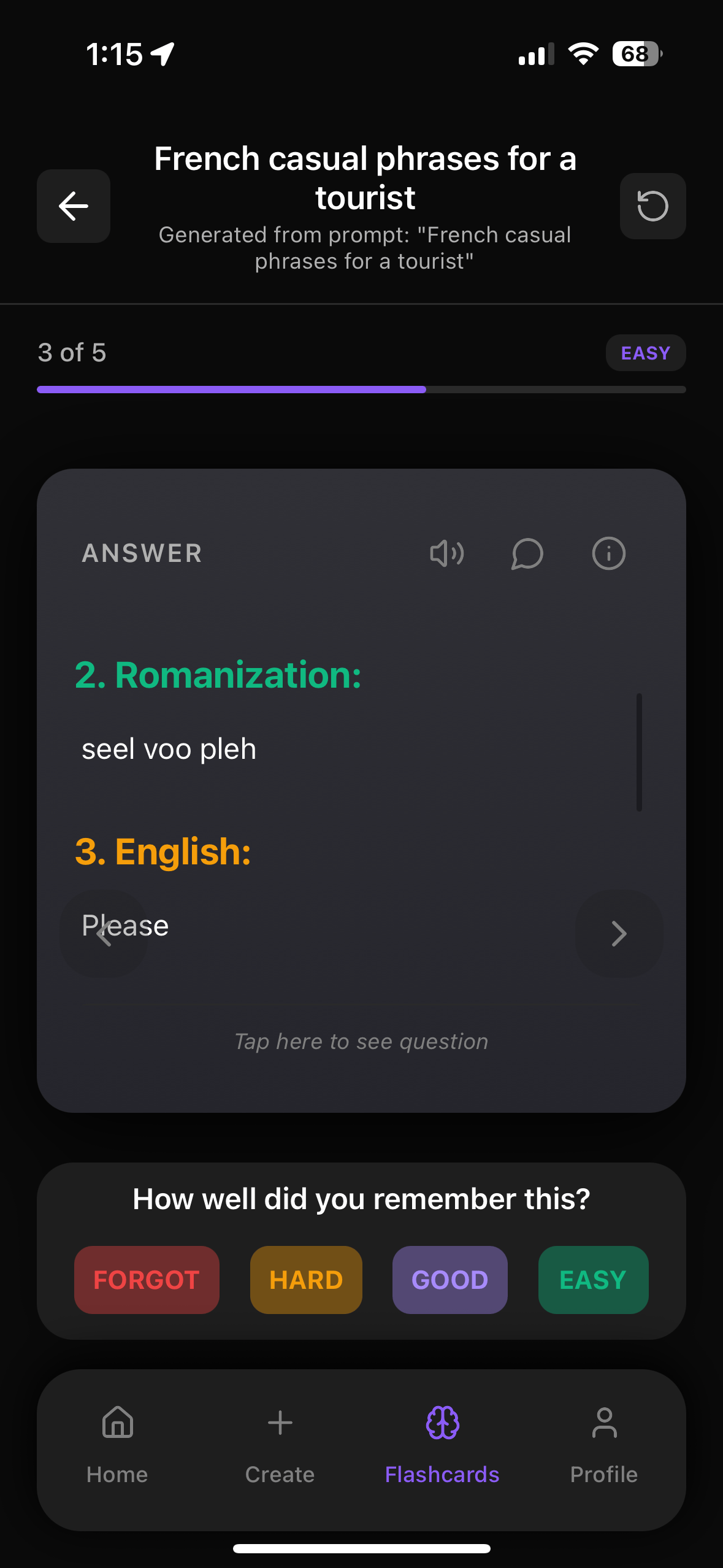
Alright, let’s talk about anki dropbox because yeah, it can work, but it’s kind of a headache. Anki Dropbox basically means you’re manually syncing your Anki collection file using Dropbox instead of using AnkiWeb, usually by moving the `.anki2` file or the whole profile folder into a Dropbox folder. People do this to back up their decks or keep them in sync across devices, but it’s super easy to corrupt your collection if you open it on two devices at once or if Dropbox hasn’t finished syncing. A much smoother option is using an app that just syncs automatically in the background, like Flashrecall, so you don’t have to touch files or worry about breaking anything:
https://apps.apple.com/us/app/flashrecall-study-flashcards/id6746757085
Let’s break down what’s actually going on, how Anki + Dropbox works, why it breaks so often, and what to use instead if you just want your cards safe and synced without babysitting folders.
What People Mean By “Anki Dropbox”
When people say “anki dropbox”, they usually mean one of these:
1. Using Dropbox as a backup
- You copy your Anki collection file to a Dropbox folder occasionally.
- This is just a backup, not real-time sync.
2. Putting your whole Anki profile in Dropbox to sync between computers
- You move `Anki2` (or your profile folder) into Dropbox.
- Then you point Anki on each computer to that folder.
- This feels like cloud sync, but it’s actually very fragile.
3. Syncing media folders with Dropbox
- Some people sync only the `collection.media` folder with Dropbox.
- They still use AnkiWeb for card data, and Dropbox just for images/audio.
All of these technically “work”, but they’re easy to mess up and Anki’s own docs strongly recommend using AnkiWeb instead of Dropbox for syncing your main collection.
Why Anki + Dropbox Is So Fragile
Here’s why anki dropbox setups so often end in “my deck is corrupted, help” posts:
1. Anki Wasn’t Designed For File-Sync Apps
Anki stores your whole collection in one big database file.
Dropbox syncs that file by:
- Detecting changes
- Uploading chunks
- Downloading them to other devices
If you:
- Open Anki on Computer A
- Then open Anki on Computer B before Dropbox finishes syncing
…you can easily end up with conflicting copies or a corrupted database.
2. “Conflicted Copies” = Silent Disaster
Dropbox loves to create files like:
- `collection.anki2 (User's conflicted copy).anki2`
Anki doesn’t know which one is “correct”, and you might not even notice for a while.
You can end up:
- Studying on one version on Laptop
- Studying a different version on Desktop
- Losing progress when you overwrite one with the other
3. Background Sync + Open Database = Bad Combo
Anki expects to be the only thing modifying its database file while it’s open.
But Dropbox might be:
- Updating that same file in the background
- Mid-sync while Anki is writing to it
That’s how corruption happens.
The “Safe” (But Annoying) Way To Use Dropbox With Anki
If you absolutely have to use anki dropbox, the safest way is to treat it as backup, not live sync.
Safer Approach: Backup Only
1. Use Anki normally (local profile, no Dropbox).
2. Once in a while:
- Go to `File → Export`
- Export `*.apkg` of your decks
- Save those exports into a Dropbox folder
Pros:
- No risk of database corruption
- You can restore if your computer dies
Cons:
- Not real sync
- You have to remember to export
Risky Approach: Full Profile In Dropbox (Not Recommended)
If you still want to do it:
1. Close Anki on all devices.
2. Move your Anki profile folder into Dropbox.
3. Point Anki on each device to that same folder.
4. Rules you must follow:
- Never open Anki on two devices at once.
- Always let Dropbox fully sync before opening Anki.
- Always close Anki and wait for sync before shutting down or switching devices.
Honestly: this is way too much effort for something that should “just work”.
Why AnkiWeb Is Usually Better Than Dropbox For Sync
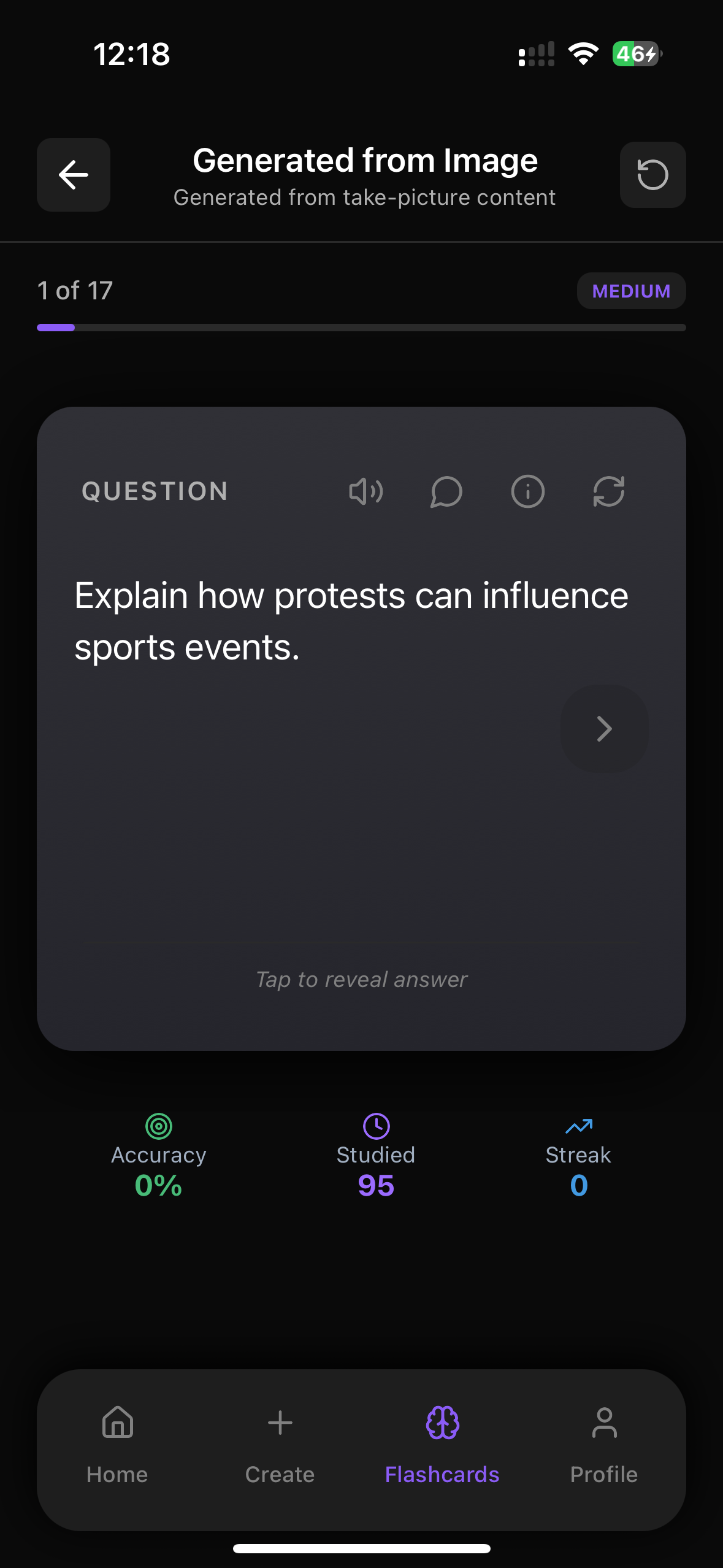
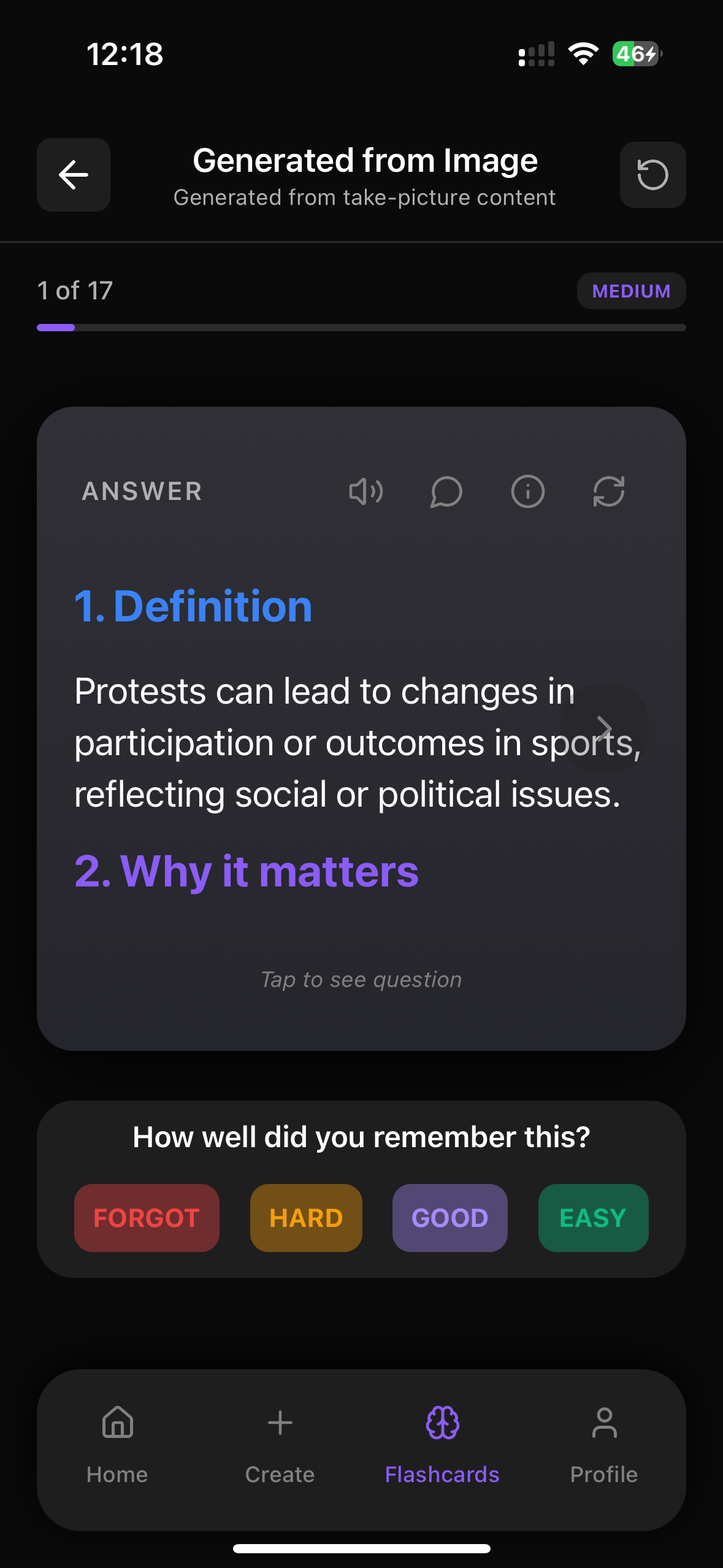
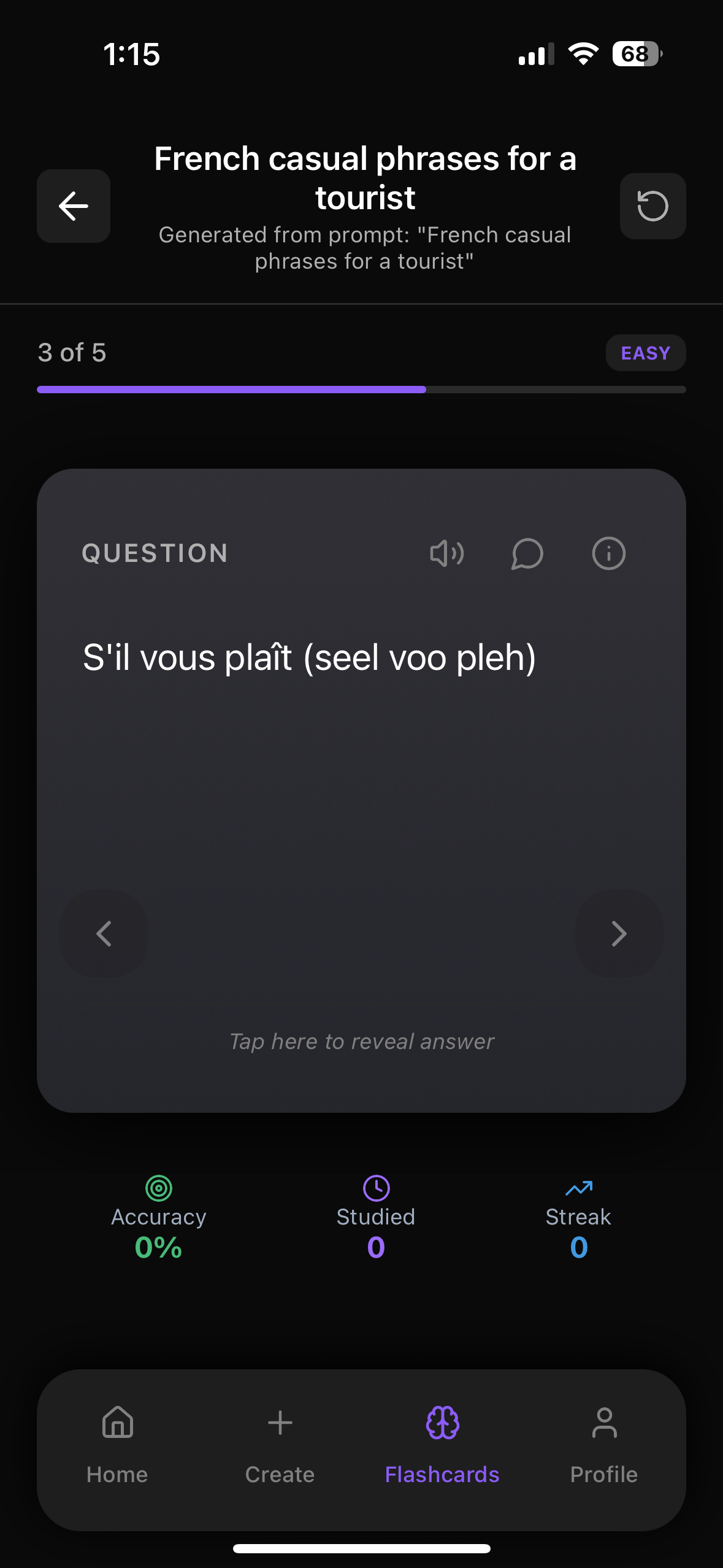
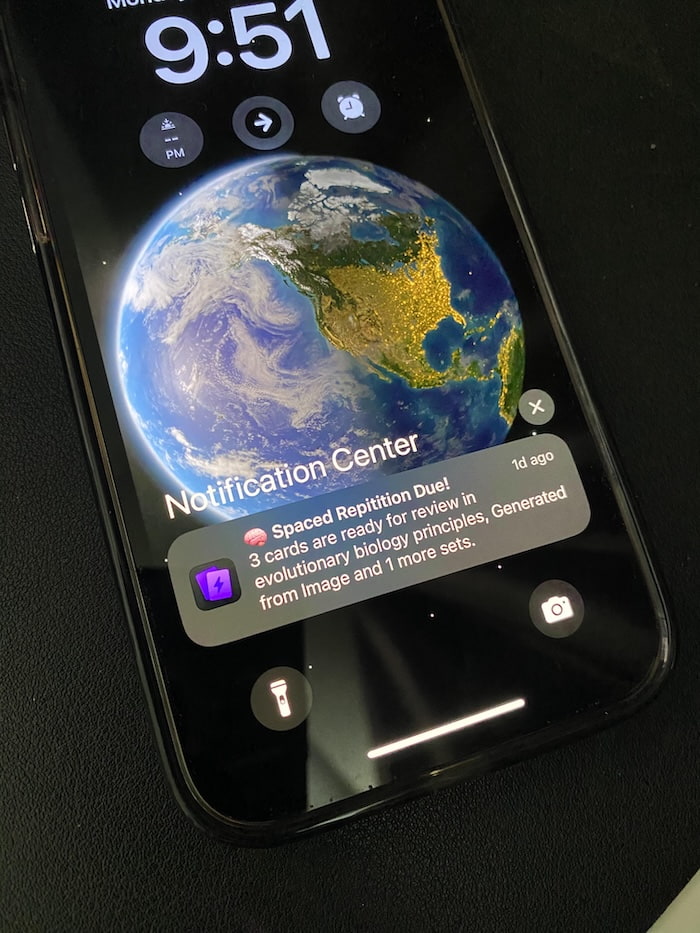
Flashrecall automatically keeps track and reminds you of the cards you don't remember well so you remember faster. Like this :
AnkiWeb is the official sync system for Anki. It:
- Syncs cards, notes, and scheduling
- Also syncs media if you enable it
- Handles conflicts more gracefully than Dropbox
But even AnkiWeb has downsides:
- It’s not instant like iCloud-style sync
- You have to manually hit sync sometimes
- The mobile experience can feel a bit dated compared to newer apps
If you’re thinking, “I just want my cards on my phone and laptop without all this drama,” that’s where using something more modern like Flashrecall makes life easier.
The Easier Alternative: Use An App With Built-In Cloud Sync (Like Flashrecall)
Instead of fighting with anki dropbox setups, you can just use an app where:
- Sync is automatic
- Backups are automatic
- You never touch a database file
Flashrecall does exactly that:
https://apps.apple.com/us/app/flashrecall-study-flashcards/id6746757085
How Flashrecall Handles Sync And Backup
With Flashrecall:
- Your decks are stored in the cloud automatically.
- They sync between your iPhone and iPad without you managing folders.
- You don’t have to think about `.anki2` files, media folders, or Dropbox conflicts.
You just:
- Open the app
- Make cards
- Study
- And everything’s already backed up
No “did Dropbox finish syncing?” stress.
But What If You’re Already Deep In Anki?
Totally normal. A lot of people start with Anki, then look for something smoother later.
Here’s a simple way to handle it:
1. Export Your Important Decks From Anki
In Anki:
1. Go to `File → Export`
2. Choose:
- Export format: `*.apkg`
- Include media: yes
3. Save it somewhere (Dropbox is fine as plain storage here)
2. Rebuild Your Core Decks In Flashrecall
Flashrecall makes it really easy to rebuild or even improve your decks because it can create cards from almost anything:
- Images – snap a photo of notes or a textbook page, auto-generate flashcards
- Text – paste in definitions, summaries, vocab lists
- PDFs – pull content straight from PDFs
- YouTube links – turn videos into flashcards
- Typed prompts – tell it what you’re learning, get cards generated
- Or just manual cards if you like full control
Once your decks are in Flashrecall, they’re synced and backed up automatically. No Dropbox dance.
Why Flashrecall Beats Anki + Dropbox For Day-To-Day Studying
Here’s how it compares in real life:
1. Sync & Backup
- Anki + Dropbox:
- Manual setup
- Easy to corrupt
- You must be careful with when you open/close Anki
- Flashrecall:
- Sync is built-in
- No file management
- Your decks are just… there on all your devices
2. Spaced Repetition & Reminders
Both Anki and Flashrecall use spaced repetition, but:
- In Anki, you need to remember to open the app and study.
- In Flashrecall, you can set study reminders so your phone nudges you.
- The app automatically schedules reviews so you don’t have to think about intervals.
So you still get the science of spaced repetition, just without the micromanagement.
3. Active Recall (The Whole Point Of Flashcards)
Flashrecall is built around active recall:
- You see the prompt
- You try to remember
- Then you reveal the answer and rate how hard it was
Same idea as Anki, but in a cleaner, more modern interface that feels less like using 2008 software and more like a current iOS app.
4. Learning More From Each Card (Chat With It)
One cool thing Anki doesn’t have: in Flashrecall, you can chat with the flashcard.
- Stuck on a concept?
- Not sure why the answer is correct?
You can ask questions and get explanations right inside the app, instead of jumping to Google or ChatGPT separately.
Perfect For Any Subject, Not Just Exams
Flashrecall works well for:
- Languages – vocab, grammar patterns, phrases
- School & university – history dates, formulas, definitions
- Medicine – drug names, mechanisms, diseases
- Business & careers – frameworks, interview prep, terminology
- Random life stuff – names, capitals, personal knowledge
And you can use it offline, so even if your Wi‑Fi is trash, you can keep reviewing. Sync will catch up when you’re back online.
When Does Anki + Dropbox Still Make Sense?
To be fair, there are cases where anki dropbox might still be okay:
- You’re super technical and comfortable managing files.
- You only use one computer and just want automatic backups.
- You’re locked into a big Anki ecosystem with add-ons you rely on.
In that case, I’d still suggest:
- Use Dropbox for backups, not live sync.
- Use AnkiWeb for actual syncing.
- Keep a habit of exporting `.apkg` files regularly.
But if what you really want is:
> “I never want to think about syncing or backups again.”
…then it’s probably time to move to something that just handles it for you.
How To Switch From Anki + Dropbox Headaches To Something Simpler
Here’s a simple step-by-step plan:
Step 1: Stop Live-Syncing Your Anki Database With Dropbox
- Move your Anki profile back to a local folder.
- Use AnkiWeb for sync if you’re staying on Anki for a while.
- Keep Dropbox only as a place to store exported backups.
Step 2: Download Flashrecall
Grab it here (free to start):
https://apps.apple.com/us/app/flashrecall-study-flashcards/id6746757085
Works on:
- iPhone
- iPad
Step 3: Recreate Your Most Important Decks
You don’t have to move everything at once. Start with:
- Your main exam deck
- Your language vocab
- Or whatever you’re using daily
Use:
- Images, PDFs, text, or YouTube links to speed up card creation.
- Or just manually add the cards you actually care about.
Step 4: Let Flashrecall Handle The Boring Stuff
From there:
- Spaced repetition is automatic.
- Study reminders keep you on track.
- Sync and backup run in the background.
- You can chat with your cards if you get stuck.
You just open the app and study. No more worrying about whether Dropbox is about to eat your collection.
Final Thoughts: Anki Dropbox Is A Hack, Not A Solution
So yeah, anki dropbox can work, but it’s basically a fragile workaround for something that should be simple: “keep my flashcards safe and synced.”
If you’re tired of:
- Conflicted copies
- Sync errors
- Manually babysitting folders
Then it’s honestly easier to switch to something like Flashrecall that was built from the ground up with automatic sync, backups, and a modern study flow.
Try Flashrecall here and make flashcards the easy part of learning again:
https://apps.apple.com/us/app/flashrecall-study-flashcards/id6746757085
Frequently Asked Questions
Is Anki good for studying?
Anki is powerful but requires manual card creation and has a steep learning curve. Flashrecall offers AI-powered card generation from your notes, images, PDFs, and videos, making it faster and easier to create effective flashcards.
What's the fastest way to create flashcards?
Manually typing cards works but takes time. Many students now use AI generators that turn notes into flashcards instantly. Flashrecall does this automatically from text, images, or PDFs.
What's the most effective study method?
Research consistently shows that active recall combined with spaced repetition is the most effective study method. Flashrecall automates both techniques, making it easy to study effectively without the manual work.
What should I know about Dropbox?
Anki Dropbox Sync: Why It’s So Clunky (And The Better Way To Back Up Your Flashcards) – Stop fighting with broken sync and learn the smarter, faster way to keep your cards safe and in sync on all your devices. covers essential information about Dropbox. To master this topic, use Flashrecall to create flashcards from your notes and study them with spaced repetition.
Related Articles
- Anki Collection: How To Fix, Clean Up, And Upgrade Your Decks For Faster Learning – Most People Just Keep Adding Cards… Here’s How To Actually Make Your Collection Work For You
- Anki iPad Free Alternatives: 7 Powerful Reasons To Switch To A Faster, Smarter Flashcard App – Stop Fighting Clunky Workflows And Actually Learn Faster On Your iPad
- Anki Obsidian Workflow: The Complete Guide To Faster Notes, Better Flashcards, And Remembering More With Less Effort – Stop Copy-Pasting And Turn Your Notes Into Smart Study Sessions
Research References
The information in this article is based on peer-reviewed research and established studies in cognitive psychology and learning science.
Cepeda, N. J., Pashler, H., Vul, E., Wixted, J. T., & Rohrer, D. (2006). Distributed practice in verbal recall tasks: A review and quantitative synthesis. Psychological Bulletin, 132(3), 354-380
Meta-analysis showing spaced repetition significantly improves long-term retention compared to massed practice
Carpenter, S. K., Cepeda, N. J., Rohrer, D., Kang, S. H., & Pashler, H. (2012). Using spacing to enhance diverse forms of learning: Review of recent research and implications for instruction. Educational Psychology Review, 24(3), 369-378
Review showing spacing effects work across different types of learning materials and contexts
Kang, S. H. (2016). Spaced repetition promotes efficient and effective learning: Policy implications for instruction. Policy Insights from the Behavioral and Brain Sciences, 3(1), 12-19
Policy review advocating for spaced repetition in educational settings based on extensive research evidence
Karpicke, J. D., & Roediger, H. L. (2008). The critical importance of retrieval for learning. Science, 319(5865), 966-968
Research demonstrating that active recall (retrieval practice) is more effective than re-reading for long-term learning
Roediger, H. L., & Butler, A. C. (2011). The critical role of retrieval practice in long-term retention. Trends in Cognitive Sciences, 15(1), 20-27
Review of research showing retrieval practice (active recall) as one of the most effective learning strategies
Dunlosky, J., Rawson, K. A., Marsh, E. J., Nathan, M. J., & Willingham, D. T. (2013). Improving students' learning with effective learning techniques: Promising directions from cognitive and educational psychology. Psychological Science in the Public Interest, 14(1), 4-58
Comprehensive review ranking learning techniques, with practice testing and distributed practice rated as highly effective

FlashRecall Team
FlashRecall Development Team
The FlashRecall Team is a group of working professionals and developers who are passionate about making effective study methods more accessible to students. We believe that evidence-based learning tec...
Credentials & Qualifications
- •Software Development
- •Product Development
- •User Experience Design
Areas of Expertise
Ready to Transform Your Learning?
Start using FlashRecall today - the AI-powered flashcard app with spaced repetition and active recall.
Download on App Store