Anki Flash Cards App: The Powerful Guide
The Anki flash cards app simplifies learning with spaced repetition and active recall. Check out tips to maximize your study sessions and boost retention.
How Flashrecall app helps you remember faster. It's free
Anki Flash Cards Are Great… But Are They Still the Best Option?
You ever get that feeling that you’re drowning in info and need a lifeboat? Well, the anki flash cards app is like that handy little raft you didn’t know you needed. Basically, it’s a super cool way to break down stuff you’re learning into bite-sized chunks that your brain can actually manage. I mean, whether you’re cramming for an exam or picking up a new language, you’d be surprised how much easier it gets when you’re using flashcards right. The cool part is Flashrecall takes it up a notch by generating flashcards from your notes and setting up those review sessions at just the right times. So if you’re curious about squeezing more out of the anki flash cards app, from sneaky tricks to finding speedy ways to learn, you might wanna dive into our complete guide. Trust me, it’s like chatting with a friend who’s got your back on this learning journey!
But here’s the thing nobody really tells you:
Anki can also be confusing, ugly, and kinda annoying to use—especially on mobile.
If you want the benefits of Anki (spaced repetition, active recall, solid memory) without the clunky setup, you’ll probably like Flashrecall a lot more:
👉 Flashrecall app: https://apps.apple.com/us/app/flashrecall-study-flashcards/id6746757085
It’s basically what you wish Anki felt like on your iPhone or iPad:
fast, modern, easy to use, and way better for real-life studying.
Let’s break it down.
What Makes Anki Flash Cards So Popular?
To be fair, Anki is huge for a reason. Here’s what it does well:
- Spaced repetition – It shows you cards right before you’re about to forget them.
- Active recall – You see a question, try to remember the answer from your head, then check.
- Custom decks – You can build your own flashcards for anything.
- Shared decks – Tons of premade decks for languages, medicine, exams, etc.
If you use Anki consistently, you will remember more.
The problem isn’t the idea – it’s the experience.
Where Anki Flash Cards Start to Feel Painful
If you’ve tried Anki for more than 10 minutes, you probably hit at least one of these:
- The interface feels… old
- Making cards on mobile is slow and fiddly
- Syncing between devices can be annoying
- Importing stuff from PDFs, screenshots, or videos is not straightforward
- It’s easy to fall behind on reviews and feel overwhelmed
- The learning curve is steep if you’re not a techy person
So a lot of people install Anki, make a few flash cards, then quietly stop using it.
That’s where Flashrecall comes in: same science, way smoother experience.
Flashrecall vs Anki: Same Brain Science, Better Experience
If you like the idea of Anki but wish it was more “2025” and less “Windows 98,”
Flashrecall is basically that.
Here’s how it compares.
1. Making Flash Cards Is Actually Fast (Not a Chore)
With Anki, you usually:
- Type everything manually
- Fight with formatting
- Mess around with cloze deletions and card types
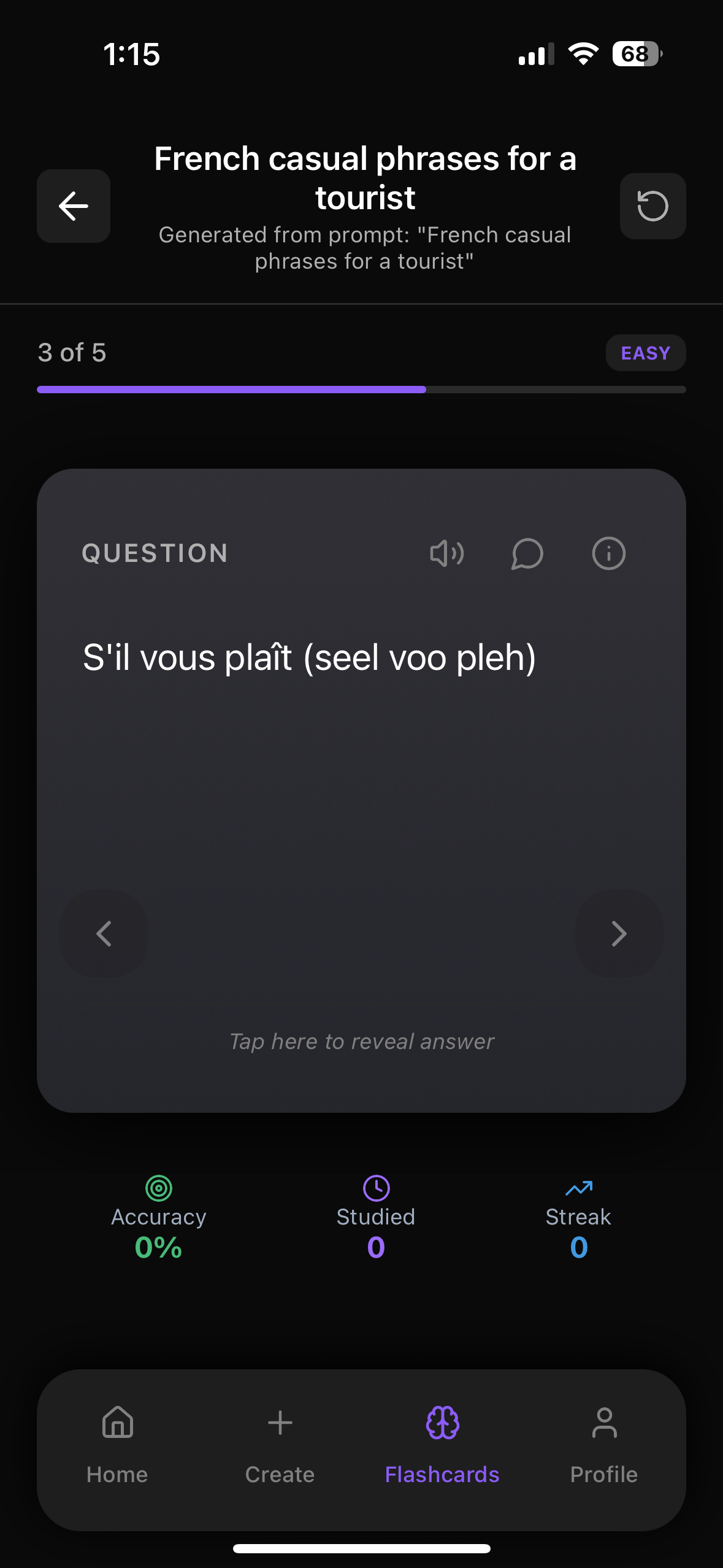
With Flashrecall, you can make cards in pretty much any way you want:
- 📸 From images – Take a photo of a page or slide and turn it into cards
- 📝 From text – Paste text and auto-generate flashcards
- 🎧 From audio – Great for language learning and lectures
- 📄 From PDFs – Turn textbook pages into cards instead of rewriting everything
- ▶️ From YouTube links – Create cards from videos you’re learning from
- ✍️ Typed prompts – Just tell it what you’re studying and generate cards
- ✏️ Manual cards – Still there when you want full control
Anki can technically do some of this with add-ons and hacks, but Flashrecall just… does it.
No plugins, no setup, no tutorials.
👉 Try it here: https://apps.apple.com/us/app/flashrecall-study-flashcards/id6746757085
2. Built-In Spaced Repetition That Just Works
Anki is famous for spaced repetition, but it also expects you to:
- Choose settings
- Understand intervals
- Deal with a mountain of overdue cards if you skip days
Flashrecall keeps the same spaced repetition logic, but makes it way less stressful:
- Reviews are automatically scheduled for you
- You get smart study reminders so you don’t forget to review
- You don’t have to tweak a million settings – it just works out of the box
You still get the memory benefits, but with less “oh no, 900 cards due today” panic.
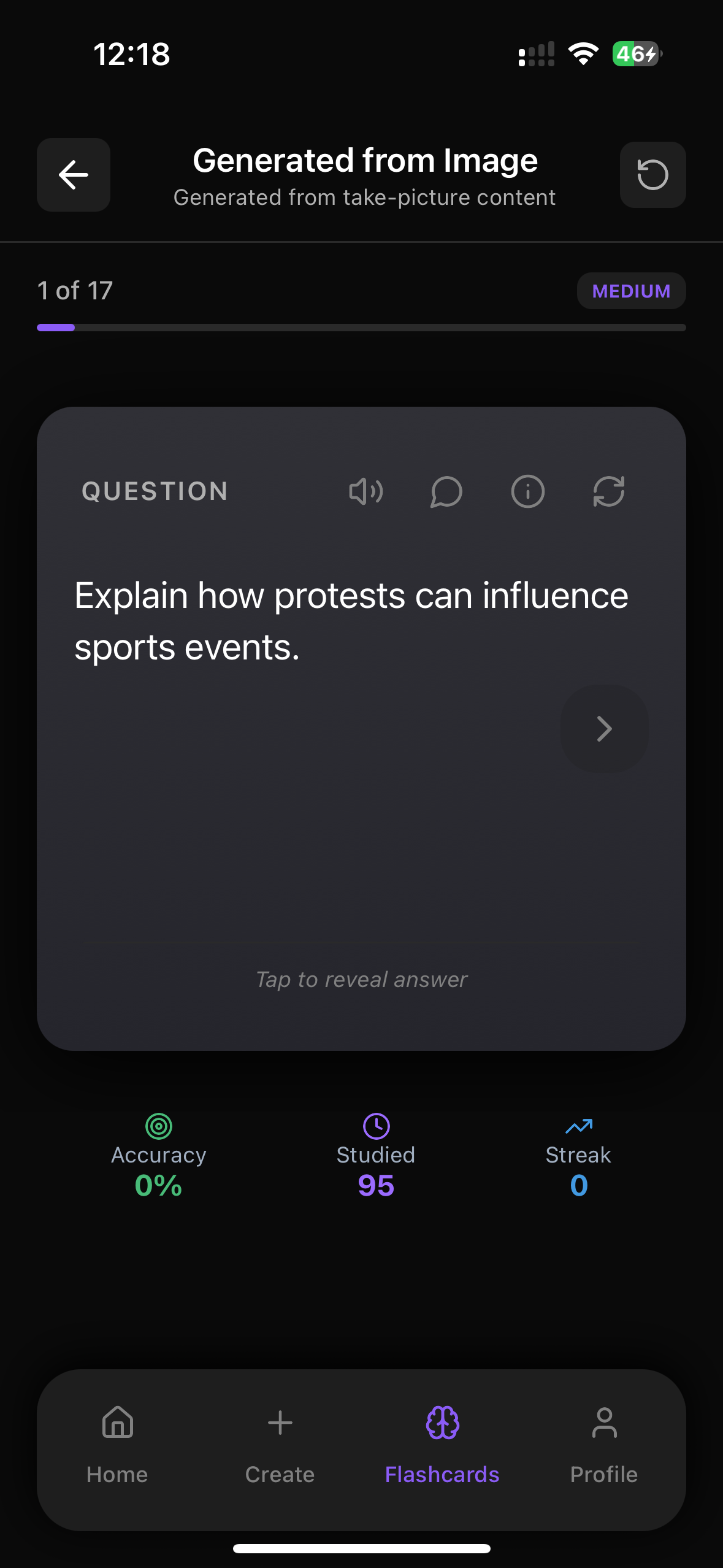
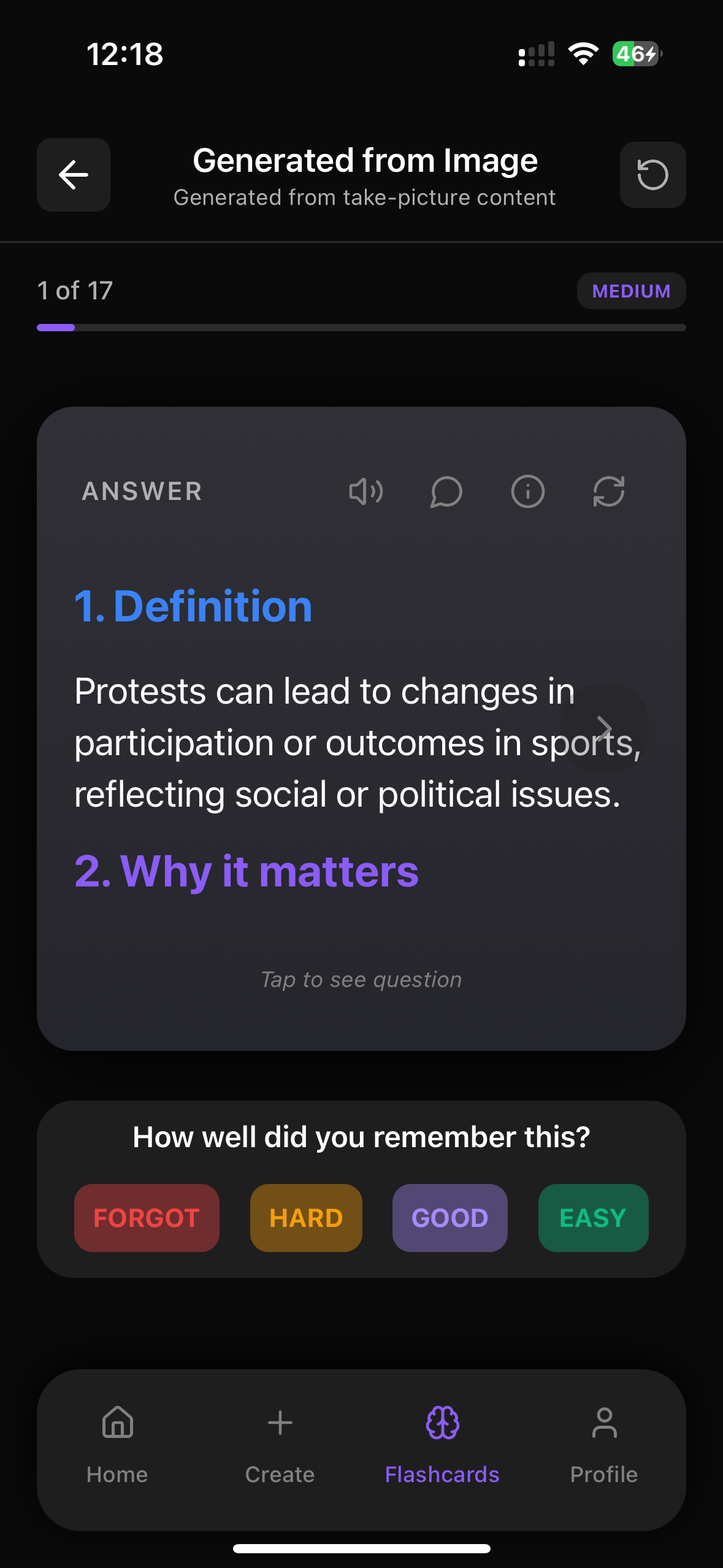
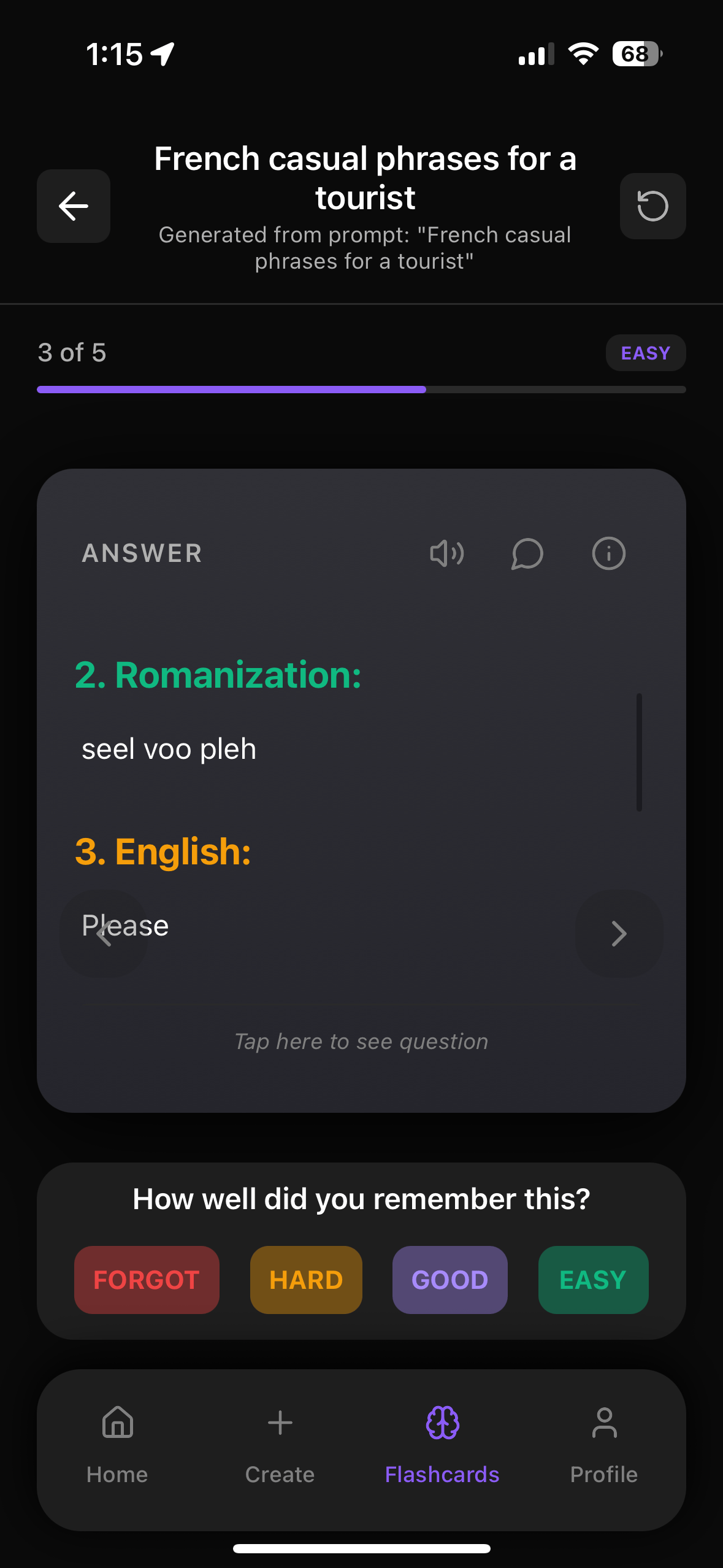
3. Active Recall Is Built In (And Feels Natural)
Both Anki and Flashrecall are based on active recall – forcing your brain to pull the answer out, not just reread it.
In Flashrecall, this feels super natural:
- You see the question side
- You think of the answer
- You tap to reveal
- You rate how easy or hard it was
That rating feeds into the spaced repetition system automatically.
Same science as Anki, but with a cleaner, modern interface that doesn’t fight you.
4. You Can Actually Chat With Your Flash Cards
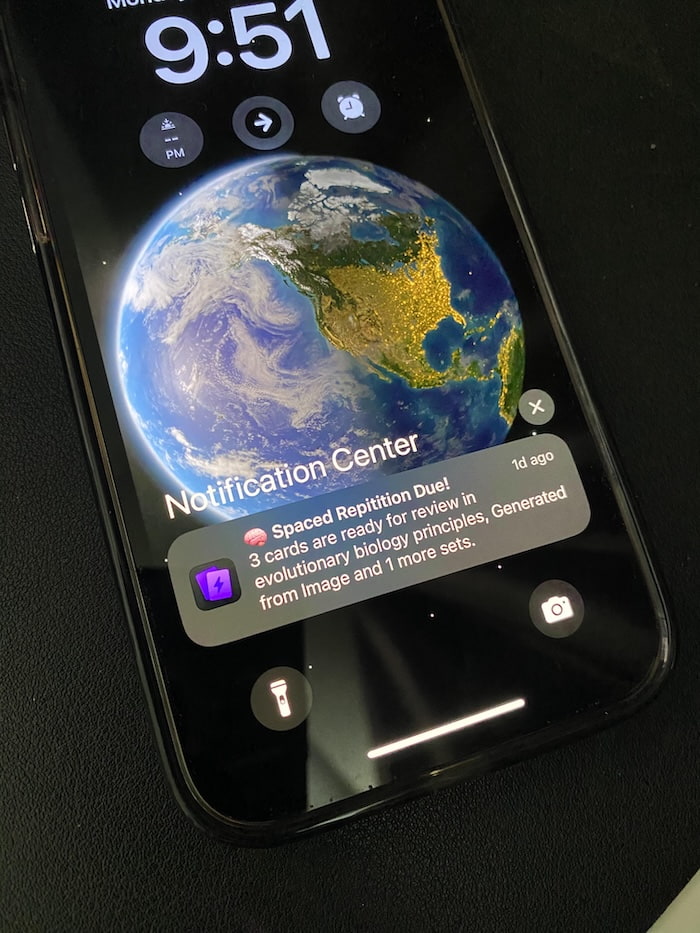
Flashrecall automatically keeps track and reminds you of the cards you don't remember well so you remember faster. Like this :
This is where Flashrecall does something Anki just… doesn’t.
If you’re unsure about a concept, you can literally chat with the flashcard.
Example:
- You’re studying heart physiology
- You see a card about “stroke volume”
- You’re like, “Wait, I kinda forgot what that really means”
- You open the chat and ask:
> “Explain stroke volume like I’m 15”
- Flashrecall breaks it down for you, based on what you’re studying
This is insanely useful for:
- Medicine – complex concepts broken down simply
- Languages – ask for extra examples or explanations
- Business & tech – clarify jargon and frameworks
Anki shows you cards.
Flashrecall helps you actually understand them.
5. Perfect for iPhone and iPad (No Weird Mobile Compromises)
Anki on mobile is… usable, but not exactly smooth.
Flashrecall is built for iPhone and iPad from the start:
- Fast, clean, modern UI
- Works great with touch and on-the-go studying
- Works offline – you can study on the bus, on a plane, wherever
- Syncs across your Apple devices seamlessly
So instead of “Ugh, I’ll do this later on my laptop,” you can just knock out a few cards anytime.
Download it here:
https://apps.apple.com/us/app/flashrecall-study-flashcards/id6746757085
What Can You Use Flashrecall (or Anki) Flash Cards For?
Anything you’d use Anki for, you can use Flashrecall for too—usually faster:
- Languages
- Vocabulary, phrases, grammar patterns
- Use audio + text to train listening and speaking
- School subjects
- History dates, formulas, definitions, key concepts
- Turn textbook pages or lecture slides into cards instantly
- University & exams
- Medicine, law, engineering, psychology, etc.
- Perfect for high-volume memorization
- Standardized tests
- MCAT, USMLE, SAT, GRE, LSAT, nursing exams, and more
- Business & career
- Frameworks, interview prep, coding concepts, acronyms
If it’s something you need to remember, flashcards + spaced repetition will help.
Flashrecall just makes the whole process less painful.
Example: How a Med Student Might Use Flashrecall Instead of Anki
Let’s say you’re a med student (classic Anki user type).
With Anki, you might:
1. Download a giant shared deck
2. Try to customize it
3. Spend hours managing cards instead of actually studying
With Flashrecall, you could:
1. Import PDF lecture slides → auto-generate flash cards from key points
2. Snap photos of whiteboard notes → turn them into cards
3. Add audio for heart sounds or lung sounds
4. Use spaced repetition + reminders so you don’t fall behind
5. Chat with tricky cards:
- “Explain the difference between systolic and diastolic heart failure”
- Get a simple explanation, then keep reviewing the card
You’re still doing what Anki users do—just with less friction and more understanding.
Example: Language Learning With Flashrecall vs Anki
With Anki, language decks are powerful but often:
- Hard to customize
- Awkward on mobile
- Time-consuming to build yourself
With Flashrecall, you could:
- Paste a short story or article in your target language → auto-generate vocab cards
- Add audio for pronunciation
- Use YouTube links to turn language videos into cards
- Ask the chat:
- “Give me 5 example sentences using this word”
- “Explain this grammar pattern simply”
Again, same core idea as Anki, but way more friendly to use daily.
When Should You Use Anki, And When Should You Use Flashrecall?
To be honest:
- If you love tweaking settings, building complex card types, and using desktop most of the time → Anki might still be your thing.
- If you want something that:
- Feels modern
- Works beautifully on iPhone and iPad
- Lets you create cards from anything (text, images, PDFs, YouTube, audio)
- Has built-in spaced repetition, active recall, reminders, and chat
- Is free to start
…then Flashrecall is probably the better choice.
How to Switch From Anki-Style Studying to Flashrecall
You don’t even have to fully “quit Anki.” You can:
1. Pick one subject you’re currently using Anki for
2. Rebuild just that deck in Flashrecall (it’s fast, especially with text/PDF/image imports)
3. Use Flashrecall for a week:
- Let the spaced repetition and reminders handle your schedule
- Use the chat whenever you’re confused
4. See which one you actually feel like opening every day
The best flashcard app is the one you actually stick with.
For a lot of people, that ends up being Flashrecall because it just feels easier and more helpful.
Try Flashrecall: Anki-Style Power Without the Hassle
If you like what Anki does but not how it feels, Flashrecall is honestly worth a try.
- Same science-backed learning (spaced repetition + active recall)
- Faster, smarter card creation from images, PDFs, YouTube, audio, and text
- Chat with your flashcards when you’re stuck
- Study reminders so you don’t fall off
- Works offline
- Great for languages, exams, school, university, medicine, business—anything
- Free to start, iPhone and iPad ready
Grab it here and test it on your next topic:
👉 https://apps.apple.com/us/app/flashrecall-study-flashcards/id6746757085
If you’ve ever thought, “I love what Anki does, I just wish it was easier,”
Flashrecall is basically the version you were waiting for.
Frequently Asked Questions
Is Anki good for studying?
Anki is powerful but requires manual card creation and has a steep learning curve. Flashrecall offers AI-powered card generation from your notes, images, PDFs, and videos, making it faster and easier to create effective flashcards.
What's the fastest way to create flashcards?
Manually typing cards works but takes time. Many students now use AI generators that turn notes into flashcards instantly. Flashrecall does this automatically from text, images, or PDFs.
How do I start spaced repetition?
You can manually schedule your reviews, but most people use apps that automate this. Flashrecall uses built-in spaced repetition so you review cards at the perfect time.
What is active recall and how does it work?
Active recall is the process of actively retrieving information from memory rather than passively reviewing it. Flashrecall forces proper active recall by making you think before revealing answers, then uses spaced repetition to optimize your review schedule.
Related Articles
- Anki Cards: 7 Powerful Tricks To Upgrade Your Flashcards (And A Smarter Alternative Most Students Don’t Know)
- Custom Flash Cards: 7 Powerful Ways To Study Smarter (And Actually Remember Stuff) – Stop wasting time with boring notes and build custom flashcards that fit your brain perfectly.
- Anki Revision: 7 Powerful Tricks To Study Smarter (And a Better Alternative Most Students Don’t Know) – Stop wasting hours reviewing the wrong way and use these proven strategies to actually remember what you study.
Research References
The information in this article is based on peer-reviewed research and established studies in cognitive psychology and learning science.
Cepeda, N. J., Pashler, H., Vul, E., Wixted, J. T., & Rohrer, D. (2006). Distributed practice in verbal recall tasks: A review and quantitative synthesis. Psychological Bulletin, 132(3), 354-380
Meta-analysis showing spaced repetition significantly improves long-term retention compared to massed practice
Carpenter, S. K., Cepeda, N. J., Rohrer, D., Kang, S. H., & Pashler, H. (2012). Using spacing to enhance diverse forms of learning: Review of recent research and implications for instruction. Educational Psychology Review, 24(3), 369-378
Review showing spacing effects work across different types of learning materials and contexts
Kang, S. H. (2016). Spaced repetition promotes efficient and effective learning: Policy implications for instruction. Policy Insights from the Behavioral and Brain Sciences, 3(1), 12-19
Policy review advocating for spaced repetition in educational settings based on extensive research evidence
Karpicke, J. D., & Roediger, H. L. (2008). The critical importance of retrieval for learning. Science, 319(5865), 966-968
Research demonstrating that active recall (retrieval practice) is more effective than re-reading for long-term learning
Roediger, H. L., & Butler, A. C. (2011). The critical role of retrieval practice in long-term retention. Trends in Cognitive Sciences, 15(1), 20-27
Review of research showing retrieval practice (active recall) as one of the most effective learning strategies
Dunlosky, J., Rawson, K. A., Marsh, E. J., Nathan, M. J., & Willingham, D. T. (2013). Improving students' learning with effective learning techniques: Promising directions from cognitive and educational psychology. Psychological Science in the Public Interest, 14(1), 4-58
Comprehensive review ranking learning techniques, with practice testing and distributed practice rated as highly effective

FlashRecall Team
FlashRecall Development Team
The FlashRecall Team is a group of working professionals and developers who are passionate about making effective study methods more accessible to students. We believe that evidence-based learning tec...
Credentials & Qualifications
- •Software Development
- •Product Development
- •User Experience Design
Areas of Expertise
Ready to Transform Your Learning?
Start using FlashRecall today - the AI-powered flashcard app with spaced repetition and active recall.
Download on App Store