Anki Flashcards App: The Best Guide
The Anki flashcards app breaks down info into bite-sized pieces using spaced repetition. Flashrecall offers a simpler way to study without the tech hassle.
How Flashrecall app helps you remember faster. It's free
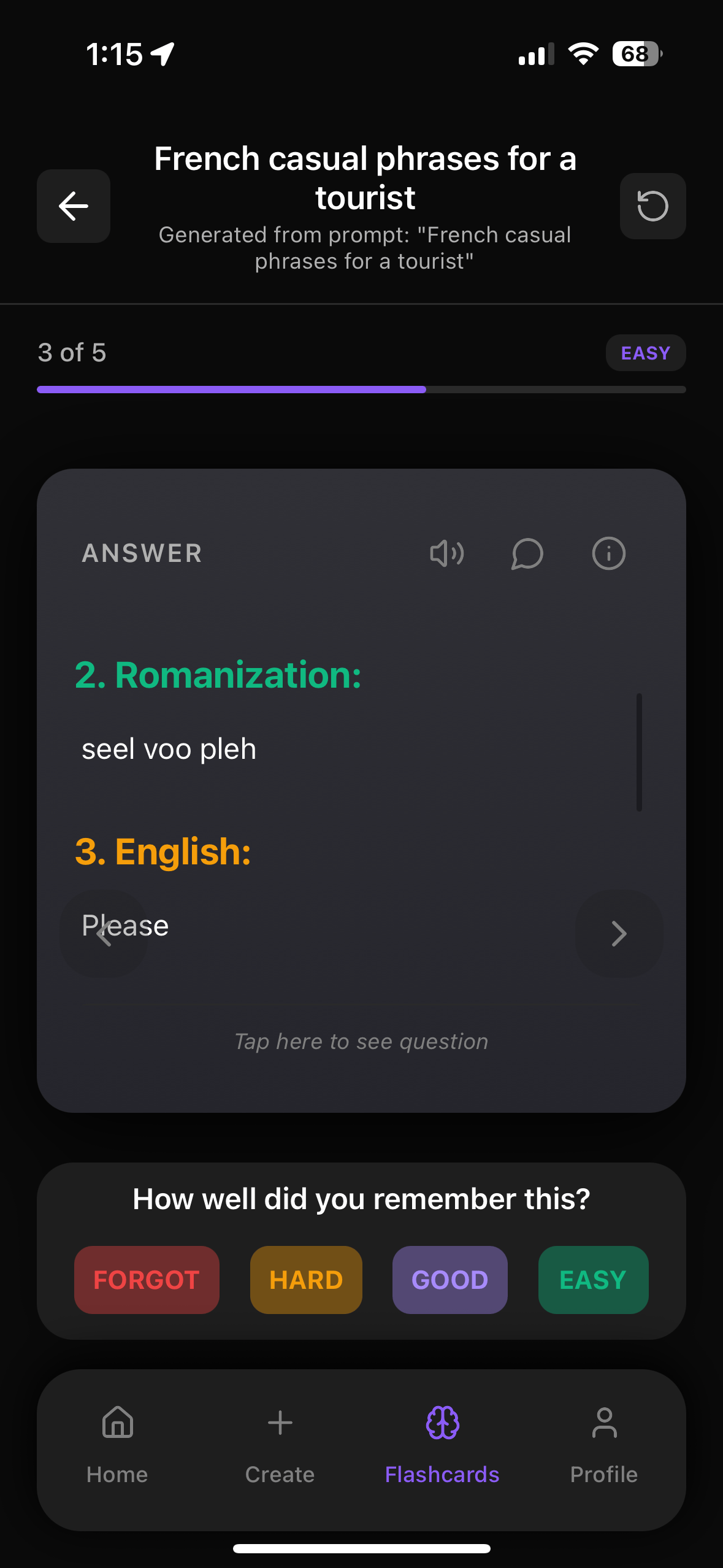
Anki Flashcards Are Great… But Are They Still The Best Option?
So, you ever get that feeling where you're trying to cram a ton of information into your brain and it's just not sticking? That's where the anki flashcards app comes to the rescue! It's like your best study buddy that helps you break down all that crazy info into bite-sized pieces. You know, the cool part is, it uses this thing called spaced repetition to make sure you actually remember stuff instead of forgetting it five minutes later. And hey, if you want to make life even easier, Flashrecall is like your personal assistant that creates these flashcards for you and reminds you when to review them. Pretty slick, right? If you’re curious about all the ins and outs of using the anki flashcards app and want some insider tips on how to make the most of it, check out our complete guide. Trust me, you won’t want to miss it!
But here’s the honest truth:
Anki is amazing if you love tinkering with settings, plugins, and clunky interfaces.
If you just want to start learning fast on your phone without a tech degree… there are better options now.
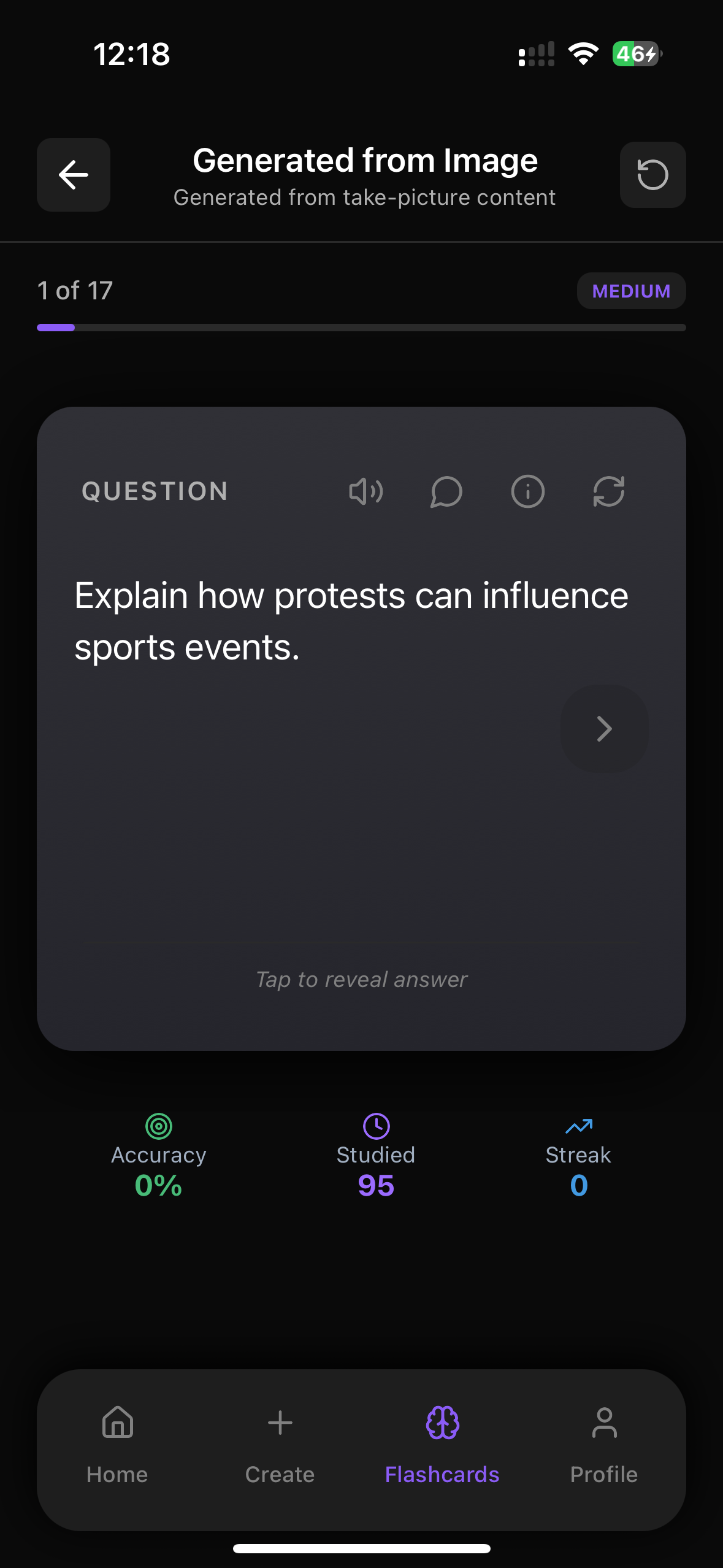
One of the best modern alternatives is Flashrecall – a fast, clean flashcard app that keeps the good parts of Anki (spaced repetition, active recall) but removes the friction and complexity.
You can grab it here:
👉 https://apps.apple.com/us/app/flashrecall-study-flashcards/id6746757085
Let’s break down how Anki flashcards work, where they shine, where they suck, and how Flashrecall fixes the annoying parts.
What Makes Anki Flashcards So Popular?
To be fair, Anki is huge for a reason. It nails a few key things:
1. Spaced Repetition (The Secret Sauce)
Anki uses an algorithm to decide when you should see each card again.
Instead of cramming, you review just before you’re about to forget something, which is insanely effective for long‑term memory.
Flashrecall does this too — but with automatic reminders built in, so you don’t have to think about syncing, decks, or weird intervals. It just pings you when it’s time to review.
2. Active Recall (Forces Your Brain To Work)
With Anki, you see a question, try to answer from memory, then flip the card.
That “struggle” is what actually builds memory.
Flashrecall keeps that same active recall approach, but adds some smart twists — like being able to chat with your flashcards if you’re confused about a concept. More on that in a bit.
3. Flexibility And Customization
Anki is insanely customizable:
- Card templates
- Add-ons
- Custom card types
- Cloze deletions
- Tags, fields, all the nerdy stuff
If you love tweaking everything, Anki is a playground.
But if you’re like most people and just want to study for an exam, learn a language, or memorize work stuff… that level of complexity can be overwhelming.
The Hidden Downsides Of Anki (Nobody Tells You This At First)
Anki fans love it, but a lot of people quietly quit after a week.
Here’s why:
1. The Learning Curve Is Steep
The interface feels… old.
Buttons are confusing. Settings are buried.
YouTube is full of “How to Use Anki” tutorials because the app itself doesn’t feel intuitive.
Compare that with Flashrecall: you install it, and in literally a minute you can:
- Snap a photo of your notes → it auto‑creates flashcards
- Paste text or a PDF → cards generated for you
- Drop in a YouTube link → pull key info and turn it into cards
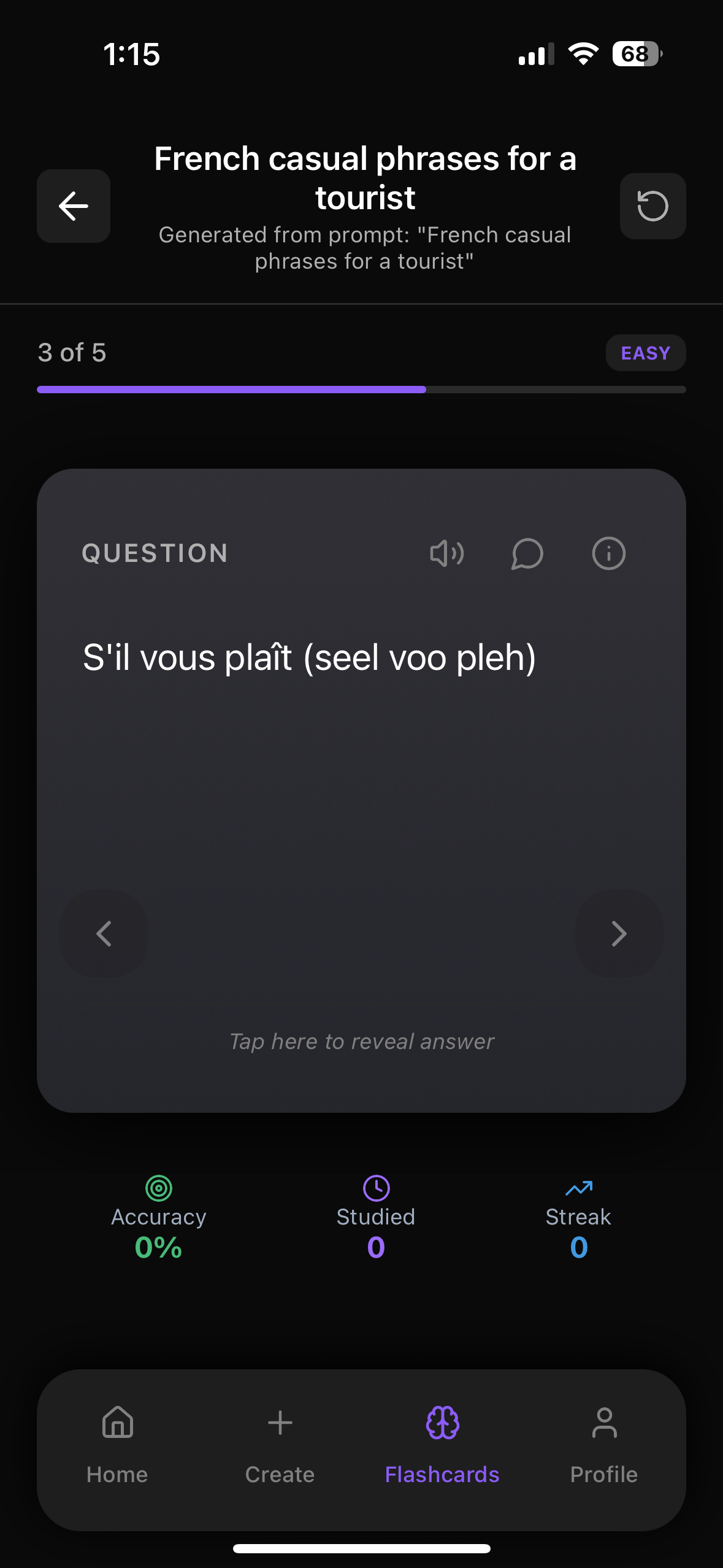
- Or just type a prompt (“make flashcards about photosynthesis”) and it builds a deck
No setup. No add-ons. No “read this 20‑minute guide first.”
2. Making Cards Is Time‑Consuming
With Anki, making cards manually is often slow:
- Copy → paste
- Type question
- Type answer
- Format
- Repeat 100 times
Flashrecall flips that around. It’s built to make flashcards instantly from:
- Images (handwritten notes, textbook pages, slides)
- PDFs
- Text
- Audio
- YouTube links
- Or just manual input if you like full control
You spend less time building decks and more time actually learning.
3. Mobile Experience Isn’t Great
Anki on mobile:
- iOS app is paid
- Interface is clunky
- Syncing between devices can be confusing
Flashrecall is built specifically for iPhone and iPad, feels modern, and just works:
- Fast, clean UI
- Works offline
- Free to start
- Sync is seamless — open it on your phone or iPad and keep going
4. No Built-In “Help Me Understand This” Mode
Anki is incredible at drilling facts.
But what if you don’t understand the thing you’re trying to memorize?
That’s where Flashrecall is different:
You can chat with your flashcards.
Example:
- You’re learning medicine and have a card on “beta blockers”
- You don’t really get what they do
- In Flashrecall, you can ask:
> “Explain this like I’m 15”
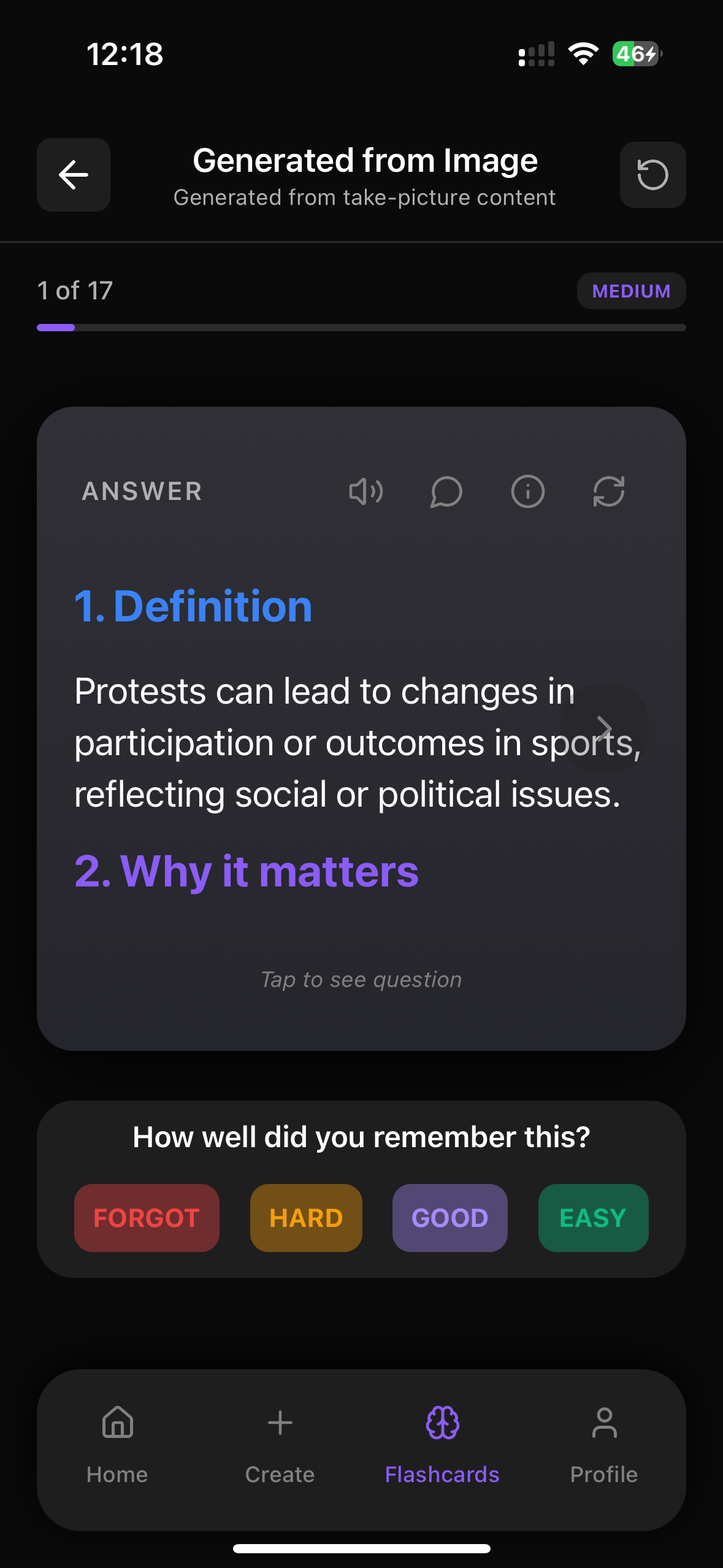
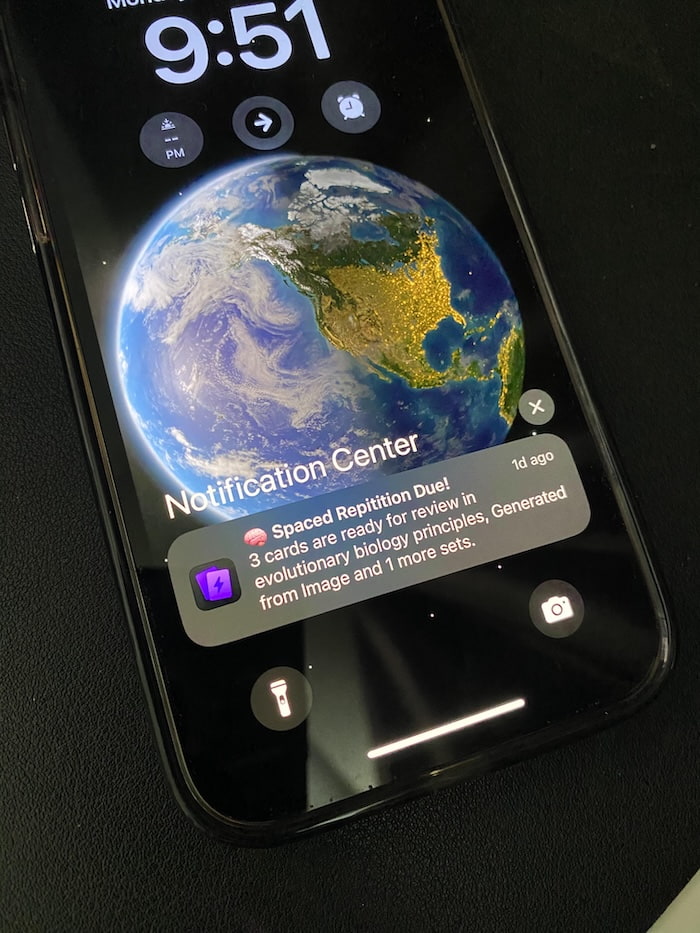
Flashrecall automatically keeps track and reminds you of the cards you don't remember well so you remember faster. Like this :
> “What’s an easy way to remember side effects?”
It uses AI to break it down, give examples, and help you actually understand before you memorize.
Anki vs Flashrecall: Quick Comparison
| Feature | Anki | Flashrecall |
|---|---|---|
| Spaced repetition | Yes | Yes, with auto reminders |
| Active recall | Yes | Yes, built-in |
| Makes cards from images/PDFs | Only with add-ons, clunky | Yes, instantly |
| YouTube → flashcards | Not built-in | Yes |
| Chat with flashcards (AI help) | No | Yes |
| Mobile UI | Dated, more complex | Modern, fast, simple |
| Works offline | Yes | Yes |
| Free to start | Desktop free, iOS paid | Yes, free to start |
| Best for | Power users, tinkerers | Students, professionals, anyone who wants fast, easy flashcards |
If you’re deep into Anki and love full control, keep using it.
If you just want something that feels simple, smart, and fast, Flashrecall is honestly easier to live with.
👉 Try it here: https://apps.apple.com/us/app/flashrecall-study-flashcards/id6746757085
How To Use Flashcards Effectively (Whether You Use Anki Or Flashrecall)
The tool matters, but how you use it matters more. Here’s a simple approach:
1. Turn Everything You Learn Into Questions
Bad card:
> “Photosynthesis is the process by which plants convert light energy into chemical energy…”
Good card:
> Q: What is photosynthesis?
> A: The process by which plants convert light energy into chemical energy.
In Flashrecall, you can paste a paragraph of notes and let it auto‑generate good Q&A cards for you — and then you just tweak anything that feels off.
2. Keep Cards Short And Focused
Avoid stuffing 10 facts on one card.
Instead, split them:
Instead of:
> “Symptoms of diabetes: A, B, C, D, E…”
Use:
- “What are 3 common symptoms of diabetes?”
- “Name 2 long-term complications of diabetes.”
Flashrecall’s AI card creation is actually pretty good at breaking down dense text into smaller chunks automatically.
3. Review A Little Every Day
Spaced repetition only works if you actually show up.
Anki expects you to remember to open the app and review.
Flashrecall helps by:
- Sending study reminders
- Scheduling reviews with built-in spaced repetition
- Keeping your daily load manageable so you don’t burn out
Just open the app when you get a reminder, smash through your cards, done.
4. Mix Understanding With Memorization
If you’re just memorizing words or formulas you don’t get, it won’t stick.
With Flashrecall, when you’re stuck on a card, you can:
- Ask for a simple explanation
- Get examples
- Ask for mnemonics or memory tricks
So you’re not just memorizing — you’re actually learning.
Real-Life Examples: When Flashrecall Beats Anki
Example 1: Language Learning
You’re learning Spanish.
With Anki:
- You manually type vocab
- Maybe add audio if you know how
- Organize decks, tags, etc.
With Flashrecall:
- Paste a short story or vocab list → auto flashcards
- Add audio or pronunciation notes
- Use chat to ask:
> “Use this word in 3 simple sentences”
> “Explain the difference between ‘ser’ and ‘estar’”
You get both drill practice and real understanding.
Example 2: Med School / Nursing / Pharmacy
You’ve got 100 pages of pharmacology notes. Fun.
With Anki:
- You’ll likely spend hours building a deck or hunting for a shared one
- Then tweak it because shared decks rarely match your exact course
With Flashrecall:
- Import chunks of your notes or slides as text or images
- Let the app auto‑create cards
- Ask follow-up questions like:
> “What’s an easy way to remember the side effects of ACE inhibitors?”
You go from “I should make Anki cards” to “I’m actually reviewing” in a fraction of the time.
Example 3: Business, Exams, Or Work Training
Need to remember:
- Sales scripts
- Key frameworks
- Exam content (CFA, PMP, bar exam, etc.)
With Flashrecall, you can:
- Turn PDFs or training docs into flashcards instantly
- Study offline on the train, plane, or between meetings
- Get nudged with reminders so you don’t forget to review
You don’t need to be a “flashcard nerd” — you just open the app and learn.
So… Should You Use Anki Or Flashrecall?
Use Anki if:
- You love tweaking settings and add-ons
- You’re okay with a dated interface
- You want maximum control and don’t mind the learning curve
Use Flashrecall if:
- You want something that just works on iPhone/iPad
- You like the idea of instant flashcards from images, PDFs, YouTube, and text
- You want built-in spaced repetition + reminders
- You’d actually use “chat with your flashcards” to understand tough topics
- You’re busy and want to spend more time learning, less time fiddling
If that sounds like you, grab Flashrecall here and try it for free:
👉 https://apps.apple.com/us/app/flashrecall-study-flashcards/id6746757085
You still get the power of Anki-style flashcards — just with a cleaner, faster, more modern experience that fits real life a bit better.
Frequently Asked Questions
Is Anki good for studying?
Anki is powerful but requires manual card creation and has a steep learning curve. Flashrecall offers AI-powered card generation from your notes, images, PDFs, and videos, making it faster and easier to create effective flashcards.
What's the fastest way to create flashcards?
Manually typing cards works but takes time. Many students now use AI generators that turn notes into flashcards instantly. Flashrecall does this automatically from text, images, or PDFs.
How do I start spaced repetition?
You can manually schedule your reviews, but most people use apps that automate this. Flashrecall uses built-in spaced repetition so you review cards at the perfect time.
Related Articles
- Anki Online Flashcards: The Best Alternative Apps, Hidden Limitations, And A Faster Way To Study Smarter Today – Find Out What Most Students Overlook
- FreezingBlue Flashcards: The Best Modern Alternative You’ll Wish You Tried Sooner – Discover a faster, smarter way to study on iPhone and iPad before you waste more time on clunky tools.
- Logseq Flashcards: The Complete Guide To Faster Learning (And A Smarter Alternative Most People Miss) – Discover how to turn your notes into powerful flashcards and actually remember what you learn.
Research References
The information in this article is based on peer-reviewed research and established studies in cognitive psychology and learning science.
Cepeda, N. J., Pashler, H., Vul, E., Wixted, J. T., & Rohrer, D. (2006). Distributed practice in verbal recall tasks: A review and quantitative synthesis. Psychological Bulletin, 132(3), 354-380
Meta-analysis showing spaced repetition significantly improves long-term retention compared to massed practice
Carpenter, S. K., Cepeda, N. J., Rohrer, D., Kang, S. H., & Pashler, H. (2012). Using spacing to enhance diverse forms of learning: Review of recent research and implications for instruction. Educational Psychology Review, 24(3), 369-378
Review showing spacing effects work across different types of learning materials and contexts
Kang, S. H. (2016). Spaced repetition promotes efficient and effective learning: Policy implications for instruction. Policy Insights from the Behavioral and Brain Sciences, 3(1), 12-19
Policy review advocating for spaced repetition in educational settings based on extensive research evidence
Karpicke, J. D., & Roediger, H. L. (2008). The critical importance of retrieval for learning. Science, 319(5865), 966-968
Research demonstrating that active recall (retrieval practice) is more effective than re-reading for long-term learning
Roediger, H. L., & Butler, A. C. (2011). The critical role of retrieval practice in long-term retention. Trends in Cognitive Sciences, 15(1), 20-27
Review of research showing retrieval practice (active recall) as one of the most effective learning strategies
Dunlosky, J., Rawson, K. A., Marsh, E. J., Nathan, M. J., & Willingham, D. T. (2013). Improving students' learning with effective learning techniques: Promising directions from cognitive and educational psychology. Psychological Science in the Public Interest, 14(1), 4-58
Comprehensive review ranking learning techniques, with practice testing and distributed practice rated as highly effective

FlashRecall Team
FlashRecall Development Team
The FlashRecall Team is a group of working professionals and developers who are passionate about making effective study methods more accessible to students. We believe that evidence-based learning tec...
Credentials & Qualifications
- •Software Development
- •Product Development
- •User Experience Design
Areas of Expertise
Ready to Transform Your Learning?
Start using FlashRecall today - the AI-powered flashcard app with spaced repetition and active recall.
Download on App Store