Anki Flashcards Medicine: 7 Proven Tips To Actually Remember What You Study In Med School – Stop Forgetting Everything And Start Crushing Exams Faster
Anki flashcards medicine is the default in med school, but the setup sucks. See why people burn out on huge decks and how Flashrecall keeps spaced repetition...
How Flashrecall app helps you remember faster. It's free
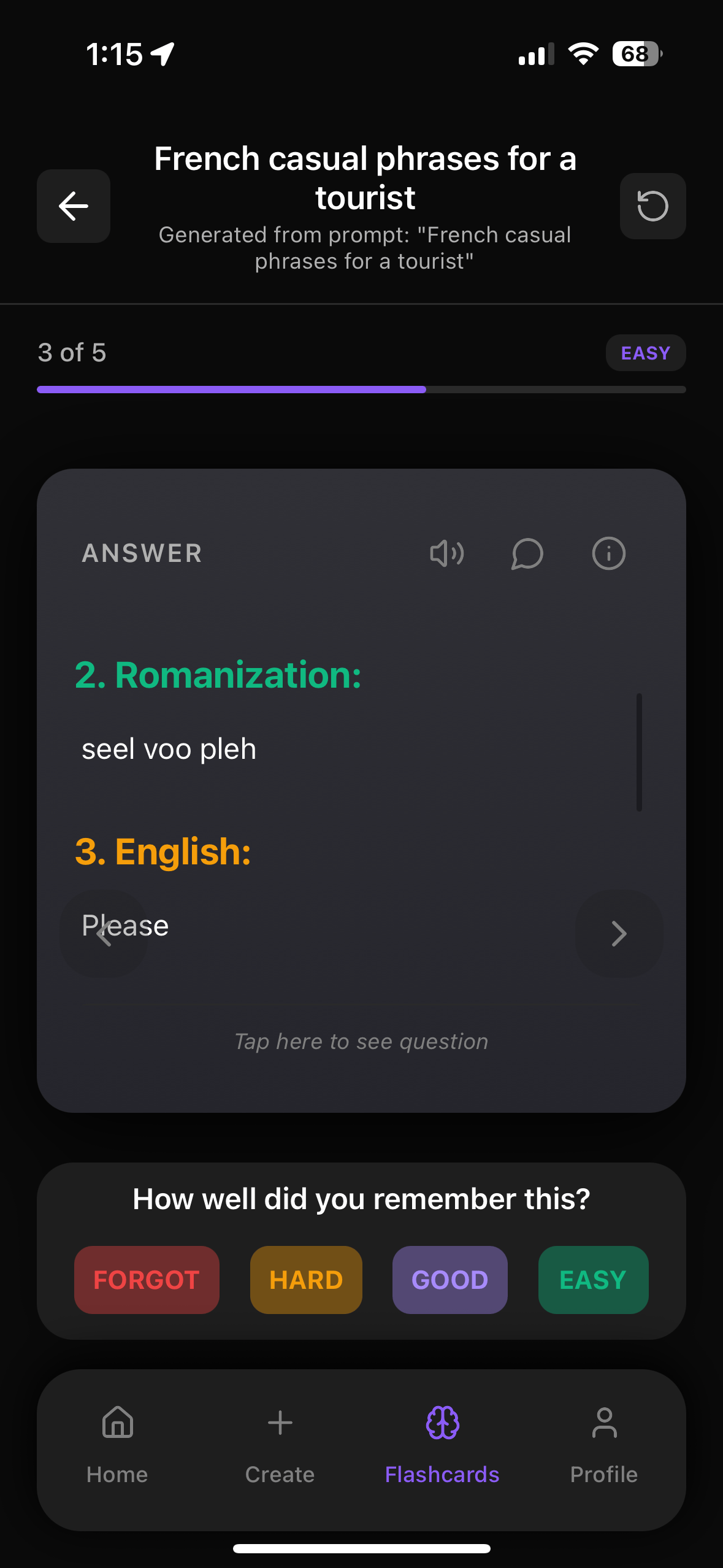
So… What’s The Deal With Anki Flashcards For Medicine?
Alright, let’s talk about anki flashcards medicine because this is basically the default study language in med school now. Anki flashcards for medicine are digital cards (usually Q on the front, A on the back) that you review using spaced repetition so you don’t forget all those tiny facts about enzymes, side effects, and weird syndromes. The idea is simple: instead of cramming, you see cards right before you’re about to forget them, so the info actually sticks long-term. Most med students use some combo of premade decks + custom cards for lectures and questions. And honestly, this is exactly where apps like Flashrecall come in, because they make the whole “make cards + review them on time” thing way less painful:
https://apps.apple.com/us/app/flashrecall-study-flashcards/id6746757085
Anki Flashcards For Medicine: Why Everyone Uses Them (And Why Many Still Struggle)
You know how everyone says, “Just use Anki, it’s OP for med school”?
They’re not wrong… but it’s also not that simple.
- Medicine is insanely detail-heavy (drugs, dosages, pathways, criteria, etc.)
- You need long-term retention for boards, OSCEs, and real patients
- Spaced repetition is scientifically backed to improve memory
- Active recall (forcing yourself to answer before seeing the solution) is way more effective than rereading notes
- Setting Anki up is a pain for a lot of people
- Syncing, add-ons, clunky UI… it can feel like learning a second degree
- Many students just download huge premade decks and then get overwhelmed
- If you miss a few days, your review queue explodes and you rage-quit
That’s why a lot of people are now looking for Anki-style alternatives that keep the good parts (spaced repetition + flashcards) but are easier and faster to use — like Flashrecall on iPhone/iPad.
How Flashrecall Fits Into The “Anki Flashcards Medicine” World
So, quick comparison without trashing anything:
- Anki: Super powerful, very customizable, amazing for power users, but kind of old-school and clunky on mobile.
- Flashrecall: Modern, fast, simple interface, built-in spaced repetition and active recall, and way easier to create cards from literally anything.
If you like the concept of Anki flashcards for medicine but hate the setup and friction, Flashrecall basically gives you:
- Automatic spaced repetition (no need to tweak settings endlessly)
- Study reminders so you don’t forget to review
- Works offline on iPhone and iPad (perfect for hospital corridors, trains, or boring lectures)
- You can chat with your flashcards when you’re unsure about something and want a deeper explanation
- Free to start and super quick to get going
You can grab it here and test it while you read this:
👉 https://apps.apple.com/us/app/flashrecall-study-flashcards/id6746757085
1. Use Flashcards For What Medicine Is Actually Bad At: Memory
Medicine has two parts:
1. Understanding – pathophys, mechanisms, reasoning
2. Pure recall – lists, side effects, diagnostic criteria, staging, scores, etc.
Anki-style flashcards shine at the recall part.
Good things to turn into cards:
- “First-line treatment for…”
- “Side effects of…”
- “Triad of…”
- “Diagnostic criteria for…”
- “What lab changes in…”
In Flashrecall, you can do this in two ways:
- Manual cards: Just type your question + answer. Great for high-yield points from lectures.
- Instant cards from content:
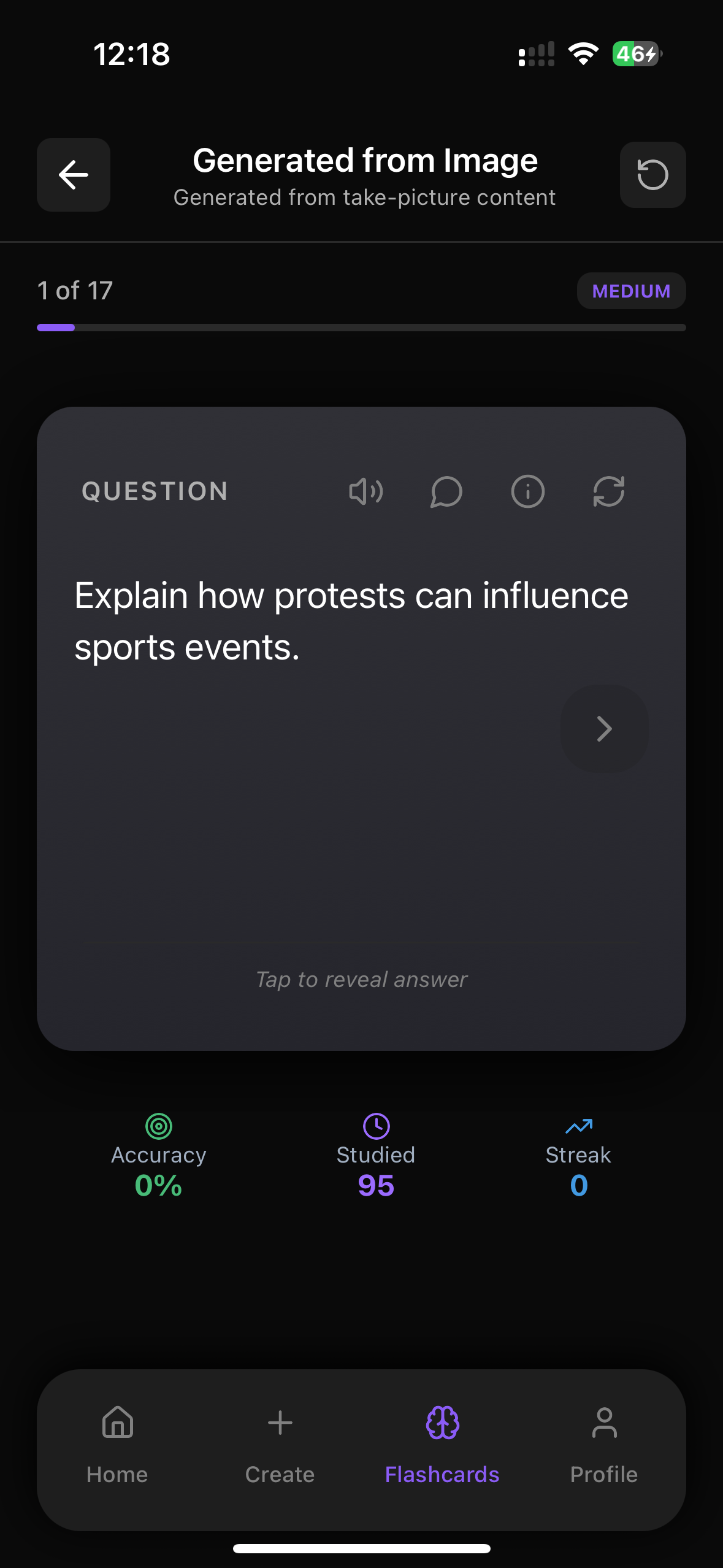
- Screenshot a slide or textbook page → Flashrecall can auto-generate cards from the image
- Import PDFs or paste text → it can pull flashcards from that
- Drop in a YouTube link (e.g., med lecture) → generate cards from the content
So instead of staring at a 50-slide lecture, you turn it into 20–30 clean, reviewable flashcards and let spaced repetition handle the rest.
2. Don’t Just Download Massive Decks And Hope For The Best
This is one of the biggest mistakes with anki flashcards medicine:
- You download a 40,000-card deck
- You do 200 cards one day, 0 the next
- You get buried in reviews and quit
Premade decks can be great, but you should:
- Use them selectively – only the sections you actually need
- Add your own cards from lectures, question banks, and mistakes
- Delete or suspend cards that are low-yield or irrelevant to your curriculum
With Flashrecall, you can easily:
- Make small, topic-based decks:
- “Cardio Pharm – Antihypertensives”
- “Micro – Gram Positive”
- “Neuro – Local Anesthetics”
- Keep things focused instead of drowning in one monster deck
Small, focused decks = less overwhelming, more consistent.
3. Build Better Cards: Simple, Short, And Specific
Good Anki-style medicine flashcards are:
- Short – one fact per card
- Clear – no long paragraphs
- Specific – not “Tell me everything about asthma”
Bad card:
> “Explain everything about heart failure treatment.”
Good cards:
- “First-line drug for chronic HFrEF?”
- “Which HF drug improves survival: ACEi, loop diuretic, or beta-blocker?”
- “Mechanism of ACE inhibitors in heart failure?”
Flashrecall makes this easier because:
- You can highlight bits from a PDF or screenshot and turn just that into a card
- You can chat with the flashcard and ask, “Can you break this into smaller cards?” or “Can you explain this mechanism more simply?” and then turn that into more cards
So you’re not just memorizing; you’re also clarifying your understanding.
4. Use Spaced Repetition Properly (Without Micromanaging Settings)
With Anki, you often have to mess with intervals, ease, steps, etc.
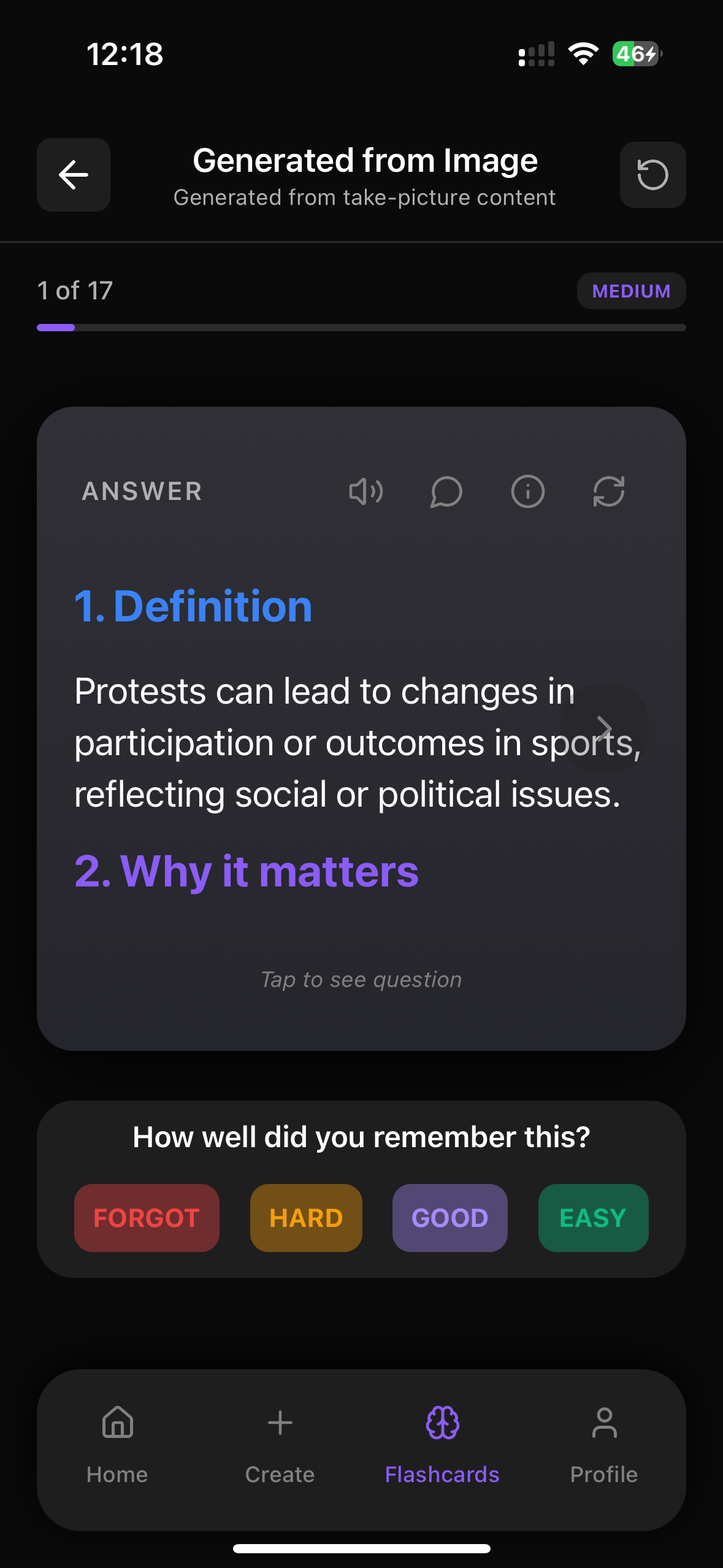
Flashrecall automatically keeps track and reminds you of the cards you don't remember well so you remember faster. Like this :
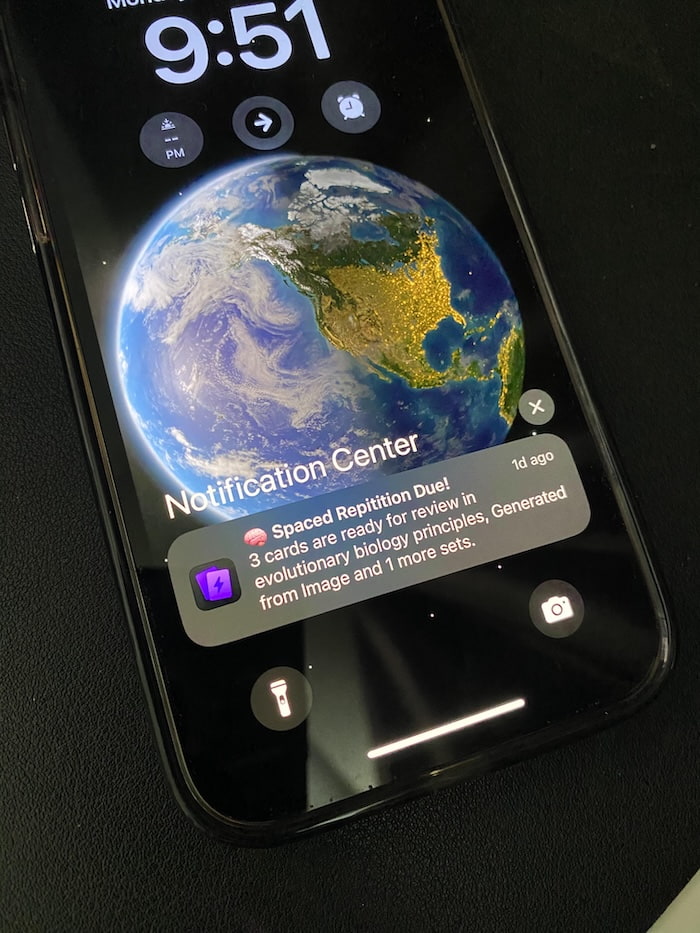
With Flashrecall, the spaced repetition is already built-in and automatic.
How it works in practice:
- You review a card
- You rate how hard it was (easy / medium / hard)
- Flashrecall schedules the next review at the right time
- You get study reminders so you don’t fall off
This is perfect for medicine because you’re juggling:
- Lectures
- Clinical rotations
- Question banks
- Assignments
- Life (barely)
Let the app handle the “when to review” problem so you can focus on actually learning.
5. Turn Your Question Bank Mistakes Into Flashcards Instantly
One of the highest-yield uses of anki flashcards medicine style learning is this:
> Every time you miss a question → make a flashcard from that concept.
With Flashrecall, this is super fast:
- Take a screenshot of the question/explanation
- Drop it into Flashrecall → auto-generate flashcards from it
- Edit the cards to keep only the key idea (“Why was this wrong?” / “What should I remember next time?”)
Examples:
- “What is the mechanism of drug X that caused this side effect?”
- “Which nerve is injured in this type of fracture?”
- “What’s the best next step in management for this scenario?”
This way, your flashcards are directly tied to real exam-style mistakes, not random trivia.
6. Study Medicine Anywhere: Offline, Short Sessions, Big Gains
One underrated thing about Anki-style flashcards for medicine is how well they fit into tiny time pockets:
- 5 minutes before a lecture
- 10 minutes on the bus
- Waiting for a consultant to show up on ward round
- Lying in bed pretending you’ll sleep early
Flashrecall works offline, so you can review:
- Pharmacology doses
- Diagnostic criteria
- Micro bugs & drugs
- Anatomy landmarks
…even if the hospital Wi-Fi dies (which it will).
Short, frequent sessions beat one giant “I’ll study 8 hours on Sunday” fantasy every time.
7. Use Active Recall + “Chat With The Flashcard” To Actually Understand
Medicine isn’t just memorizing; you also need to reason through cases.
Classic flashcards = front/back.
Flashrecall adds something extra: you can chat with your flashcards.
So if you have a card like:
> Q: “Mechanism of beta-blockers in angina?”
You can:
- Ask: “Explain this like I’m 12”
- Ask: “How does this relate to afterload and oxygen demand?”
- Ask: “Give me a clinical example where this matters”
This turns your deck into a mini tutor.
You’re not just memorizing; you’re actively building mental models.
How To Start Using Flashrecall For Medicine In 10 Minutes
If you’re used to Anki but want something smoother on iOS, here’s a simple way to start:
1. Download Flashrecall
👉 https://apps.apple.com/us/app/flashrecall-study-flashcards/id6746757085
2. Create 2–3 decks only to begin with, for example:
- “Pharm – Cardio”
- “Micro – Bacteria”
- “Internal Med – Must-Know Stuff”
3. Import something you’re already studying today
- A PDF lecture
- A screenshot of a slide
- A short text summary
Let Flashrecall auto-generate some starter cards.
4. Clean up the cards
- Delete low-yield ones
- Edit wording to make them short and clear
- Break big cards into smaller pieces
5. Do 20–40 cards a day
- Consistent, small sessions > once-a-week marathons
- Let the spaced repetition handle the scheduling
- Turn new mistakes (from Qbanks, OSCE practice, etc.) into cards as you go
After a week, you’ll have a small but powerful personal deck that’s actually aligned with your course and your weak spots.
Anki Flashcards Medicine vs Flashrecall: Quick Recap
If you’re comparing options for med school:
- Use Anki if:
- You love tinkering with settings and add-ons
- You’re okay with a steeper learning curve
- You mostly study on desktop
- Use Flashrecall if:
- You want Anki-style medicine flashcards without the friction
- You study a lot on your iPhone or iPad
- You like auto-generated cards from PDFs, images, YouTube, etc.
- You want built-in spaced repetition, reminders, and a clean, modern UI
- You like the idea of chatting with your flashcards to understand concepts better
Both follow the same core idea: spaced repetition + active recall = you remember more with less time.
Flashrecall just makes that process smoother and faster, especially for busy med students.
Final Thoughts
If you’re deep into anki flashcards medicine or just starting to figure out how to survive med school, the main thing is this:
- Don’t rely on passive reading
- Turn high-yield info into flashcards
- Review consistently with spaced repetition
- Tie your cards to real questions, cases, and lectures
Flashcards won’t magically make med school easy, but they do make it way more manageable.
If you want something that feels like “Anki, but modern and easy on iOS,” try Flashrecall here:
👉 https://apps.apple.com/us/app/flashrecall-study-flashcards/id6746757085
Set up a couple of decks today, do 20 cards, and future-you during exams will be very, very grateful.
Frequently Asked Questions
Is Anki good for studying?
Anki is powerful but requires manual card creation and has a steep learning curve. Flashrecall offers AI-powered card generation from your notes, images, PDFs, and videos, making it faster and easier to create effective flashcards.
What's the fastest way to create flashcards?
Manually typing cards works but takes time. Many students now use AI generators that turn notes into flashcards instantly. Flashrecall does this automatically from text, images, or PDFs.
How do I start spaced repetition?
You can manually schedule your reviews, but most people use apps that automate this. Flashrecall uses built-in spaced repetition so you review cards at the perfect time.
What's the best way to learn vocabulary?
Research shows that combining flashcards with spaced repetition and active recall is highly effective. Flashrecall automates this process, generating cards from your study materials and scheduling reviews at optimal intervals.
How can I study more effectively for this test?
Effective exam prep combines active recall, spaced repetition, and regular practice. Flashrecall helps by automatically generating flashcards from your study materials and using spaced repetition to ensure you remember everything when exam day arrives.
Related Articles
- Anki Medical: The Complete Guide To Smarter Med School Flashcards (And A Better Alternative Most Students Don’t Know About) – Stop drowning in Anki decks and learn a faster, saner way to memorize medicine.
- Create Flashcards For Studying: 7 Powerful Tips To Learn Faster And Actually Remember Stuff
- Flash Cards For Medical Terminology: 7 Powerful Tricks To Learn Faster And Actually Remember Everything – Even During Exams
Research References
The information in this article is based on peer-reviewed research and established studies in cognitive psychology and learning science.
Cepeda, N. J., Pashler, H., Vul, E., Wixted, J. T., & Rohrer, D. (2006). Distributed practice in verbal recall tasks: A review and quantitative synthesis. Psychological Bulletin, 132(3), 354-380
Meta-analysis showing spaced repetition significantly improves long-term retention compared to massed practice
Carpenter, S. K., Cepeda, N. J., Rohrer, D., Kang, S. H., & Pashler, H. (2012). Using spacing to enhance diverse forms of learning: Review of recent research and implications for instruction. Educational Psychology Review, 24(3), 369-378
Review showing spacing effects work across different types of learning materials and contexts
Kang, S. H. (2016). Spaced repetition promotes efficient and effective learning: Policy implications for instruction. Policy Insights from the Behavioral and Brain Sciences, 3(1), 12-19
Policy review advocating for spaced repetition in educational settings based on extensive research evidence
Karpicke, J. D., & Roediger, H. L. (2008). The critical importance of retrieval for learning. Science, 319(5865), 966-968
Research demonstrating that active recall (retrieval practice) is more effective than re-reading for long-term learning
Roediger, H. L., & Butler, A. C. (2011). The critical role of retrieval practice in long-term retention. Trends in Cognitive Sciences, 15(1), 20-27
Review of research showing retrieval practice (active recall) as one of the most effective learning strategies
Dunlosky, J., Rawson, K. A., Marsh, E. J., Nathan, M. J., & Willingham, D. T. (2013). Improving students' learning with effective learning techniques: Promising directions from cognitive and educational psychology. Psychological Science in the Public Interest, 14(1), 4-58
Comprehensive review ranking learning techniques, with practice testing and distributed practice rated as highly effective
Ebbinghaus, H. (1885). Memory: A Contribution to Experimental Psychology. New York: Dover
Pioneering research on the forgetting curve and memory retention over time

FlashRecall Team
FlashRecall Development Team
The FlashRecall Team is a group of working professionals and developers who are passionate about making effective study methods more accessible to students. We believe that evidence-based learning tec...
Credentials & Qualifications
- •Software Development
- •Product Development
- •User Experience Design
Areas of Expertise
Ready to Transform Your Learning?
Start using FlashRecall today - the AI-powered flashcard app with spaced repetition and active recall.
Download on App Store