Anki For Chemistry: 7 Powerful Flashcard Tricks Most Students Don’t Use To Finally Master Reactions And Mechanisms – Learn Faster With Smarter Cards, Not Longer Study Sessions
Anki for chemistry works, but this guide shows why Flashrecall makes reactions, mechanisms, and formulas way easier with instant cards, reminders, and spaced...
How Flashrecall app helps you remember faster. It's free
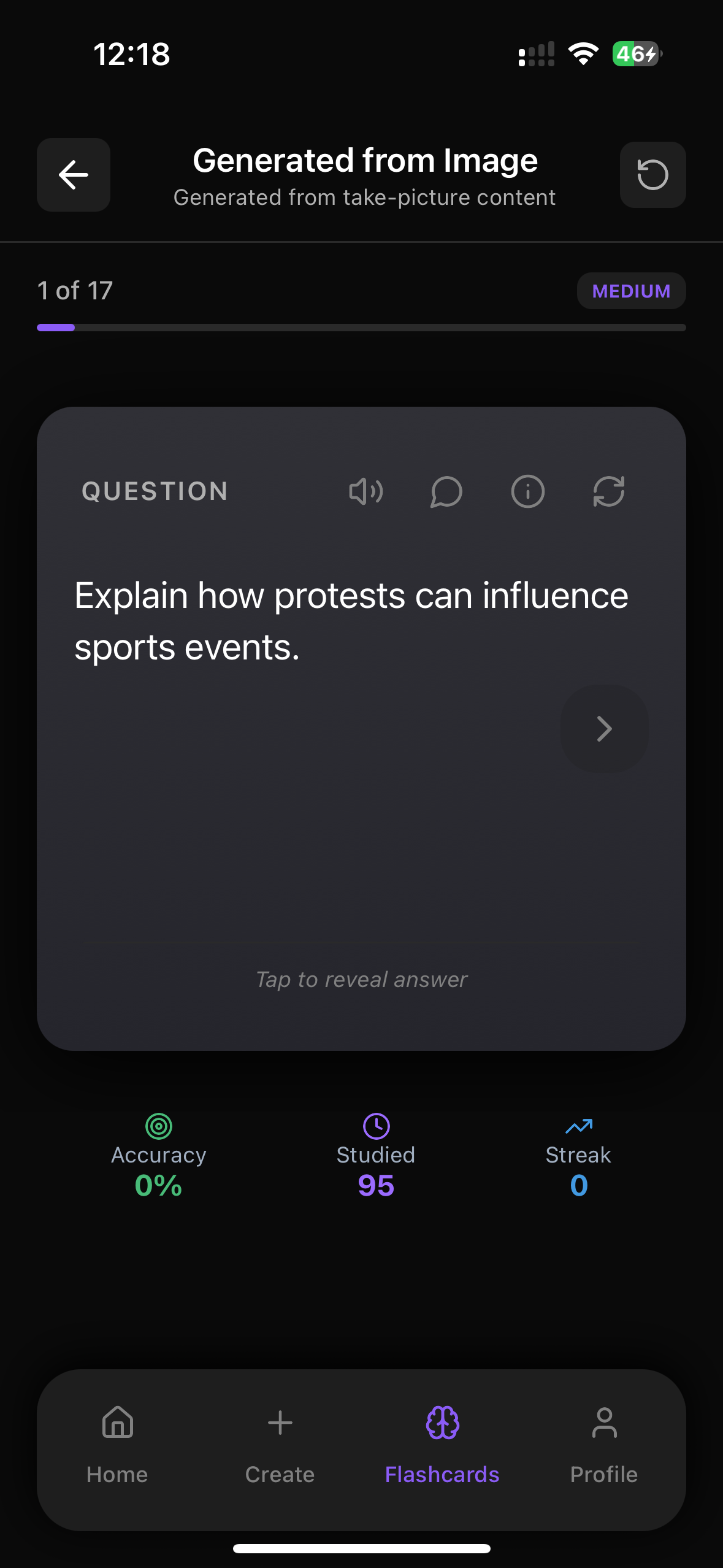
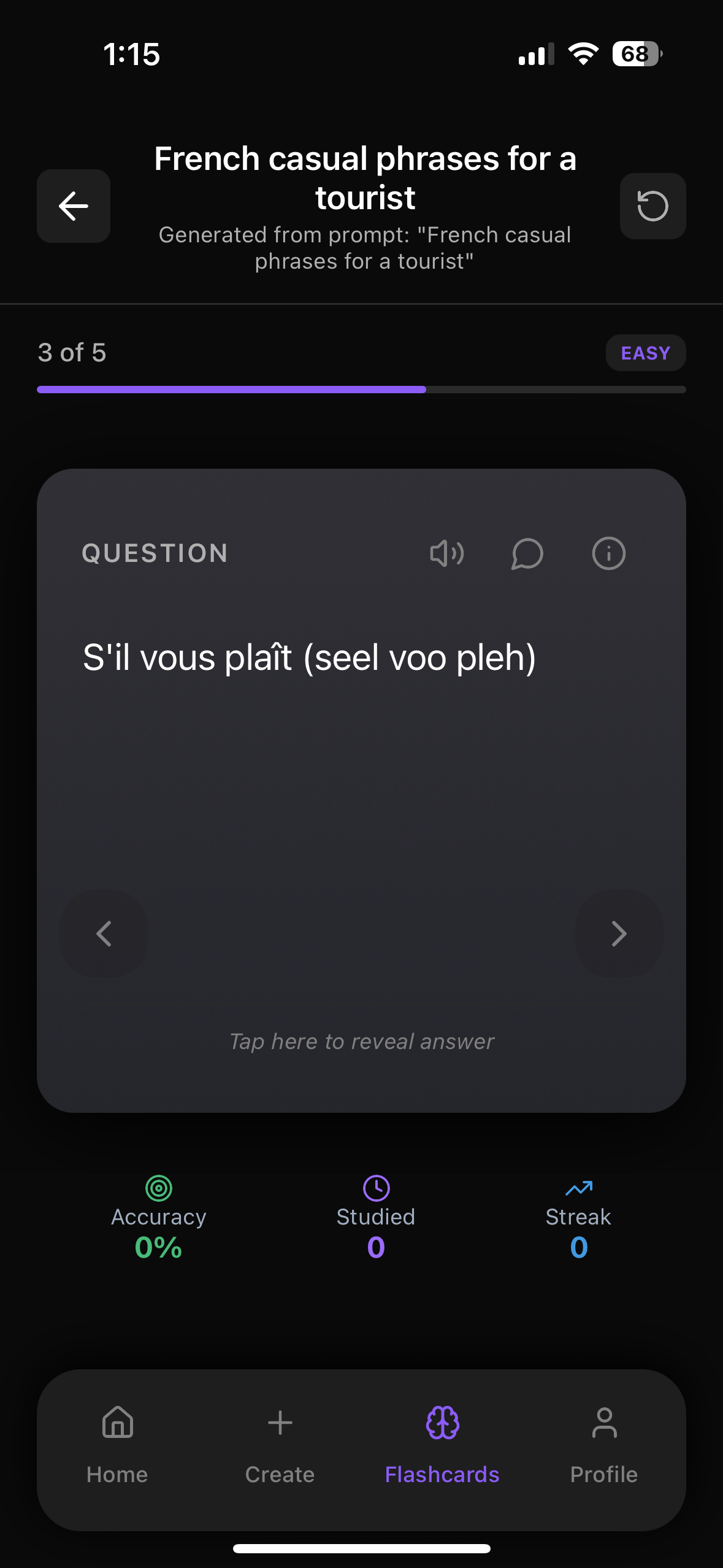
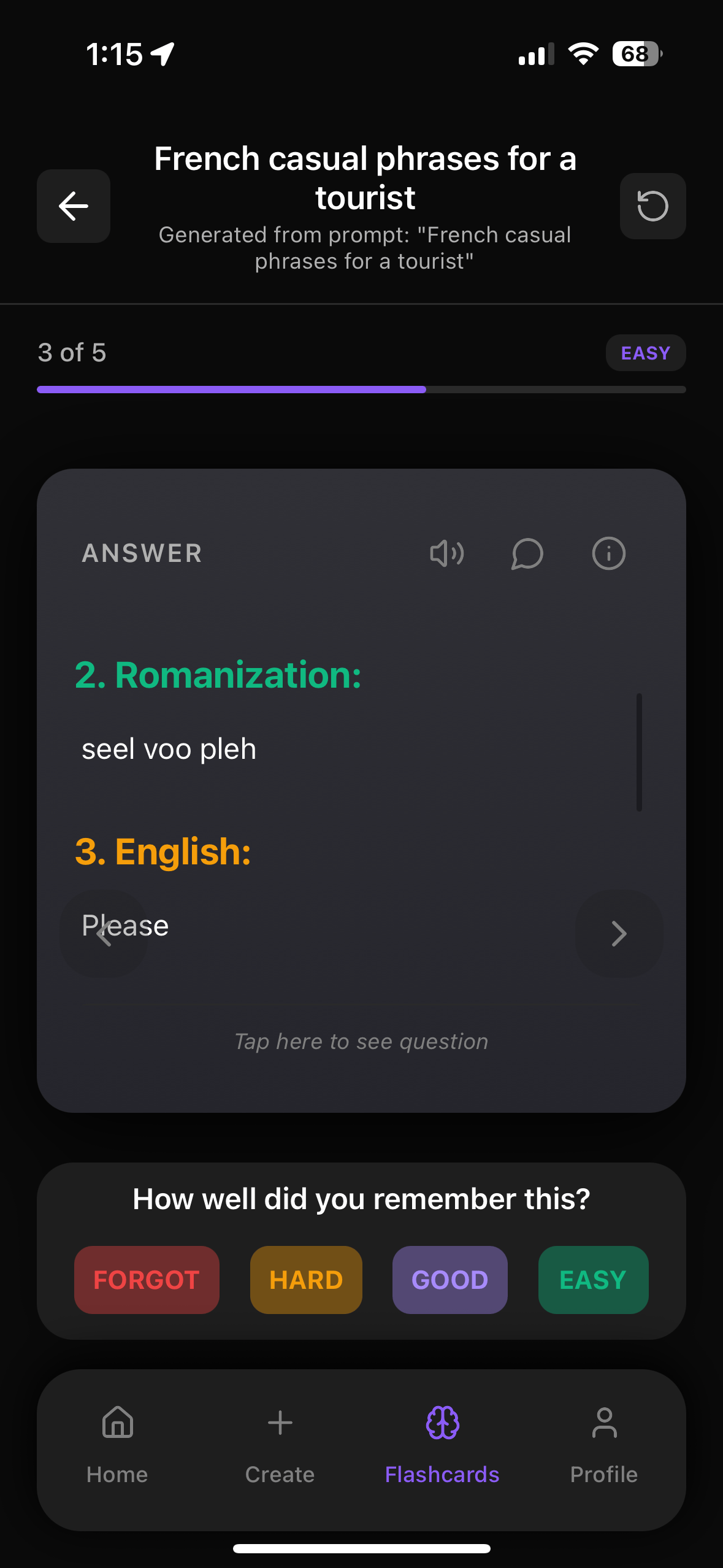
What “Anki For Chemistry” Really Means (And A Better Option)
Alright, let’s talk about what people actually mean when they search for anki for chemistry: they’re looking for a smart flashcard setup that helps them remember reactions, mechanisms, formulas, and weird exceptions without going insane. Anki is a spaced repetition flashcard app, and using it for chemistry means turning all those reactions, equations, and concepts into bite-sized cards you review over time so they actually stick. This matters because chemistry isn’t just memorizing one thing – it’s hundreds of tiny details that build on each other, and your brain will absolutely forget them if you just cram. Apps like Flashrecall do the same spaced repetition thing, but in a faster, more modern way that’s way easier to use on iPhone and iPad:
https://apps.apple.com/us/app/flashrecall-study-flashcards/id6746757085
Anki For Chemistry vs Flashrecall: What’s The Difference?
You’ve probably heard:
- “Use Anki for chemistry, it’s OP.”
- “Just download a premade deck.”
And yeah, Anki works. But here’s the honest breakdown:
- Super powerful, but kinda clunky and old-school
- Syncing, add-ons, card styling… it’s a lot
- Making cards from PDFs, screenshots, or YouTube videos takes extra steps
- Great if you want full control and don’t mind fiddling with settings
- Same core idea: spaced repetition + active recall
- But way simpler and faster to actually use
- Instantly makes cards from:
- Images (e.g. reaction tables from your notes)
- Text, PDFs, audio
- YouTube links
- Or just stuff you type
- Works offline, has reminders, and runs on iPhone + iPad
- Free to start and feels like a modern app, not a 2008 science project
If you like the idea of “anki for chemistry” but want something smoother, Flashrecall basically gives you the same memory benefits with less friction:
👉 https://apps.apple.com/us/app/flashrecall-study-flashcards/id6746757085
Why Spaced Repetition Is So Good For Chemistry
Chemistry is brutal for memory:
- Dozens of functional groups
- Tons of named reactions
- Acid/base trends, periodic trends, solubility rules
- Mechanisms, intermediates, exceptions
Spaced repetition helps because it:
- Shows you hard cards more often, easy ones less often
- Keeps stuff in your head weeks and months after the exam
- Stops the “I swear I knew this last week” problem
Both Anki and Flashrecall use this idea. The difference is how easy it is to actually get cards in there and stick with the habit.
Flashrecall does the annoying parts for you:
- Auto-schedules reviews
- Sends study reminders so you don’t forget
- Lets you quickly snap photos of notes / textbook pages and turn them into cards
So you spend less time messing with settings and more time actually learning chemistry.
What Kind Of Chemistry Stuff Works Best As Flashcards?
If you’re trying to figure out how to turn chemistry into cards (Anki style), here’s what works really well:
1. Reactions & Mechanisms
- Front: “What’s the product of: secondary alcohol + PCC?”
- Back: Product name, structure, and maybe a quick note like “mild oxidant, stops at aldehyde.”
- Front: “Mechanism: SN1 vs SN2 – tert-butyl bromide in polar protic solvent?”
- Back: SN1, carbocation intermediate, rate depends only on substrate, etc.
Flashrecall tip:
Take a photo of your reaction summary sheet, highlight one reaction, and turn that part into a card in seconds.
2. Functional Groups & Spectroscopy
- Front: “Name this functional group (image of ester).”
- Back: “Ester – RCOOR’, smells nice, common in fragrances.”
- Front: “IR peak ~1700 cm⁻¹ strong and sharp?”
- Back: Likely C=O stretch (carbonyl).
You can drop images straight into Flashrecall cards, so IR/NMR diagrams or structure images are super easy to use.
3. Periodic Trends & Concepts
- Front: “How does atomic radius change across a period?”
- Back: Decreases left → right (more nuclear charge, same shielding).
- Front: “Definition of nucleophile vs electrophile.”
- Back: Short, simple definitions + 1 example each.
These are perfect for active recall – seeing a question and forcing yourself to answer from memory instead of just rereading notes.
4. Equations & Constants
- Front: “Ideal gas law?”
- Back: PV = nRT, with units and typical R values.
- Front: “Henderson–Hasselbalch equation?”
- Back: pH = pKa + log([A-]/[HA]).
With Flashrecall, you can:
- Paste equations from your notes
- Or write them out manually
- Or even snap a pic from your textbook and crop the equation
How To Set Up “Anki-Style” Chemistry Study In Flashrecall
Here’s a simple workflow that basically gives you the benefits of Anki for chemistry, but faster.
Step 1: Grab Your Source Material
- Lecture slides
- Textbook pages
- Problem sets
- Lab handouts
- YouTube explanation videos
In Flashrecall, you can:
- Paste YouTube links and pull content from them
- Import PDFs and convert key bits into cards
- Use images of your notebook or whiteboard
- Or just type things in manually if you like control
Step 2: Turn Content Into Smart Flashcards
Instead of dumping everything, pick high-yield stuff:
- Reactions that keep showing up
- Mechanisms your prof loves
- Definitions, trends, formulas
Flashrecall lets you:
- Highlight text and make a card instantly
- Use images and crop just the relevant part
- Add hints or extra notes on the back if needed
Try to keep each card to one idea:
- One reaction
- One concept
- One equation
- One mechanism step (if needed)
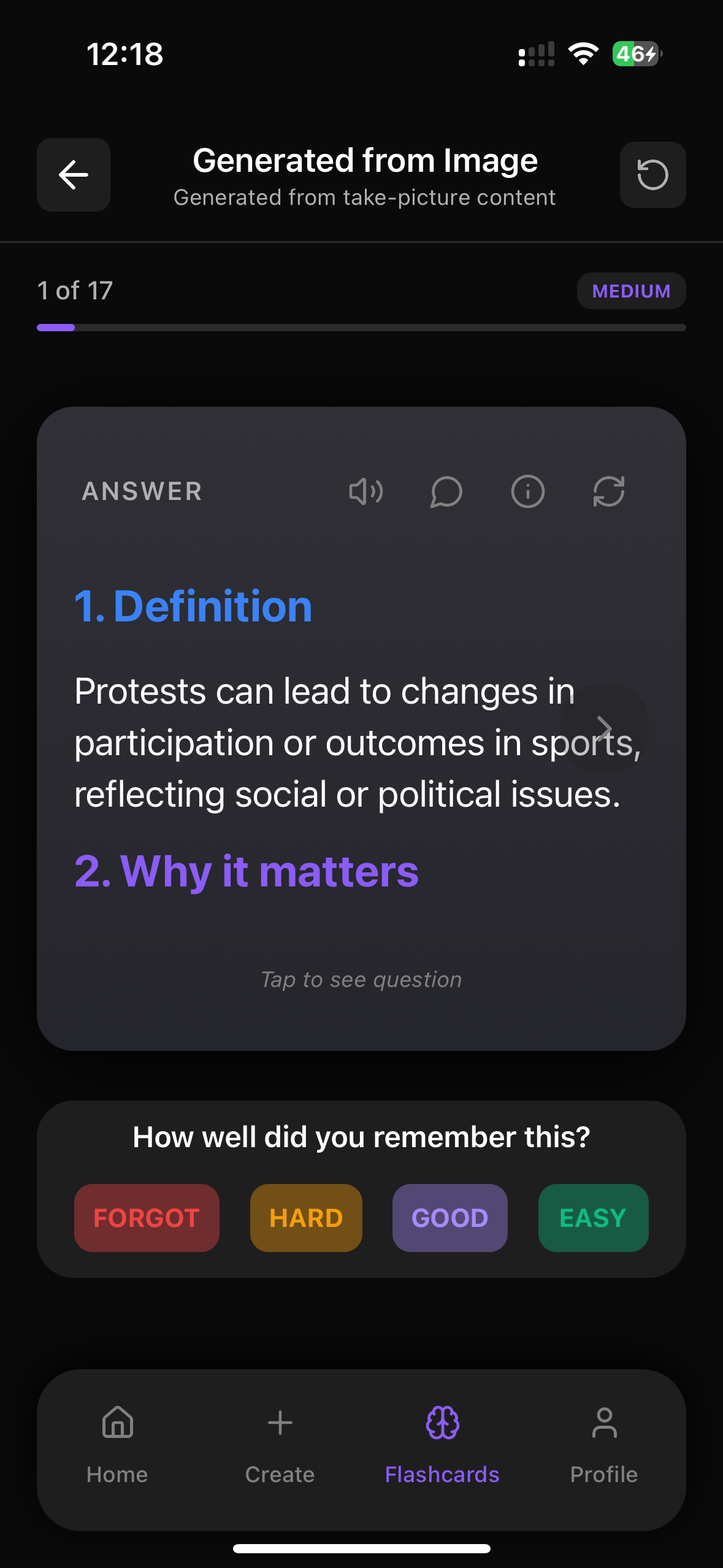
Step 3: Use Active Recall Properly
Flashrecall automatically keeps track and reminds you of the cards you don't remember well so you remember faster. Like this :
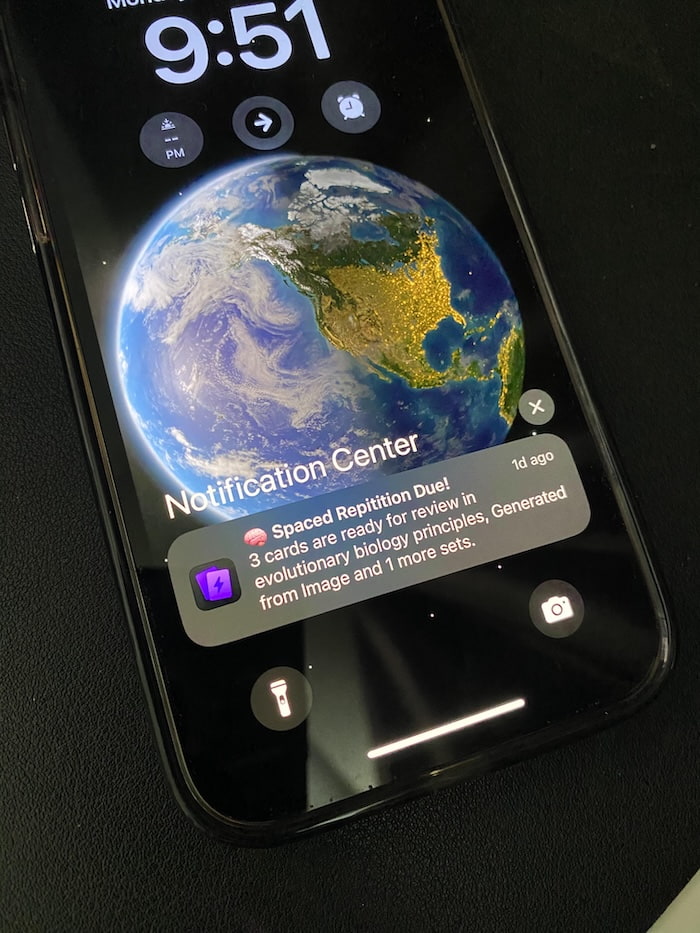
The power isn’t in just having cards. It’s in how you use them.
With Flashrecall:
- Cards show up with a question or prompt
- You try to answer from memory
- Then you tap to reveal the answer
- You rate how well you knew it
That’s built-in active recall + spaced repetition in one go.
No need to manually schedule reviews – the app does that automatically.
Step 4: Let The App Handle The Timing
This is where apps like Anki and Flashrecall beat paper flashcards:
- They decide when to show you a card again
- Hard cards come back sooner
- Easy cards get pushed further out
In Flashrecall:
- You get study reminders, so you don’t randomly skip 5 days and destroy your schedule
- You can study offline, so bus rides, dead Wi‑Fi spots, or boring moments become review time
Step 5: Use The Chat Feature When You’re Stuck
One thing Anki doesn’t have that Flashrecall does:
You can chat with the flashcard.
So if you’re like:
- “Wait, why does SN1 prefer tertiary carbons again?”
- “Why does this reagent give anti addition?”
You can literally ask inside Flashrecall and get explanations connected to the card you’re studying.
It’s like having a mini tutor sitting inside your deck.
Example: Turning A Chem Lecture Into Flashcards In 10 Minutes
Let’s say you just had an orgo lecture on electrophilic aromatic substitution (EAS).
Here’s how you could handle it in Flashrecall:
1. Take photos of the key slides (nitration, sulfonation, halogenation, etc.).
2. Import them into Flashrecall and crop each reaction into its own card:
- Front: “Nitration of benzene – reagents + product?”
- Back: HNO₃/H₂SO₄, nitrobenzene, mechanism note.
3. Add concept cards:
- “What is an activating group? Give 2 examples.”
- “Why do deactivating groups direct meta (except halogens)?”
4. Add a few mechanism-focused cards:
- “Key intermediate in EAS?” → Arenium ion / sigma complex.
5. Start reviewing that night – spaced repetition will handle the rest.
You’ve now turned a dense lecture into a set of bite-sized questions your brain can actually manage.
Premade Decks vs Making Your Own (Important For Chem)
People often search “anki for chemistry deck” hoping for a magic download. Here’s the truth:
- Good for quick review or broad topics
- But often don’t match your class, your professor, or your exam style
- Forces you to process the material
- You remember better because you built the questions
- You can phrase things the way you understand them
Flashrecall makes building your own way less painful because it:
- Converts PDFs, images, and YouTube content into cards fast
- Lets you type or edit on the go
- Syncs across iPhone and iPad so you can tweak cards whenever
Use premade stuff if you find good ones, but always customize and add your own.
Why Flashrecall Is A Great “Anki For Chemistry” Alternative
If you like the spaced repetition idea but don’t want to wrestle with a complicated interface, Flashrecall is honestly a nicer fit for most chemistry students:
- Fast card creation from images, text, PDFs, YouTube links, or manual input
- Built-in spaced repetition with automatic scheduling
- Active recall by default – every card is a question/answer style prompt
- Study reminders so you don’t fall off your routine
- Works offline, so you can study anywhere
- Chat with the flashcard when you’re confused about a concept
- Works great for chemistry, biology, physics, languages, and exams in general
- Free to start, modern UI, and runs smoothly on iPhone and iPad
If your goal was “I want Anki for chemistry so I can actually remember reactions and not panic before exams,” you’ll get that same effect – just with a smoother experience – by using Flashrecall:
👉 https://apps.apple.com/us/app/flashrecall-study-flashcards/id6746757085
Quick Chemistry Flashcard Tips To Remember More In Less Time
To wrap it up, here are some simple rules that make any Anki-style app work better for chemistry:
1. One idea per card – don’t cram an entire page into one flashcard.
2. Use images – structures, mechanisms, IR/NMR spectra are way easier visually.
3. Keep answers short – if the back of your card looks like a paragraph, split it.
4. Review a little every day – 10–20 minutes beats a 3-hour cram once a week.
5. Add cards right after class – your memory is freshest then.
6. Tag or group by topic – acids/bases, orgo, inorganic, spectroscopy, etc.
7. Actually say the answer in your head (or out loud) before flipping the card.
Do that consistently with a spaced repetition app like Flashrecall, and “anki for chemistry” stops being this mysterious study hack and just becomes your normal, low-stress way to keep chemistry in your brain long-term.
Frequently Asked Questions
Is Anki good for studying?
Anki is powerful but requires manual card creation and has a steep learning curve. Flashrecall offers AI-powered card generation from your notes, images, PDFs, and videos, making it faster and easier to create effective flashcards.
What's the fastest way to create flashcards?
Manually typing cards works but takes time. Many students now use AI generators that turn notes into flashcards instantly. Flashrecall does this automatically from text, images, or PDFs.
How do I start spaced repetition?
You can manually schedule your reviews, but most people use apps that automate this. Flashrecall uses built-in spaced repetition so you review cards at the perfect time.
Related Articles
- Basic Chemistry Quizlet Alternatives: 7 Powerful Ways To Actually Remember What You Study – Stop Memorizing And Start Understanding Chemistry Faster
- General Chemistry Quizlet: 7 Powerful Study Upgrades Most Students Don’t Know About – Stop Just Memorizing and Start Actually Understanding Chem Fast
- Android Best Flashcard App: 7 Powerful Study Tricks Most Students Don’t Use Yet – But Should If They Want To Learn Faster
Research References
The information in this article is based on peer-reviewed research and established studies in cognitive psychology and learning science.
Cepeda, N. J., Pashler, H., Vul, E., Wixted, J. T., & Rohrer, D. (2006). Distributed practice in verbal recall tasks: A review and quantitative synthesis. Psychological Bulletin, 132(3), 354-380
Meta-analysis showing spaced repetition significantly improves long-term retention compared to massed practice
Carpenter, S. K., Cepeda, N. J., Rohrer, D., Kang, S. H., & Pashler, H. (2012). Using spacing to enhance diverse forms of learning: Review of recent research and implications for instruction. Educational Psychology Review, 24(3), 369-378
Review showing spacing effects work across different types of learning materials and contexts
Kang, S. H. (2016). Spaced repetition promotes efficient and effective learning: Policy implications for instruction. Policy Insights from the Behavioral and Brain Sciences, 3(1), 12-19
Policy review advocating for spaced repetition in educational settings based on extensive research evidence
Karpicke, J. D., & Roediger, H. L. (2008). The critical importance of retrieval for learning. Science, 319(5865), 966-968
Research demonstrating that active recall (retrieval practice) is more effective than re-reading for long-term learning
Roediger, H. L., & Butler, A. C. (2011). The critical role of retrieval practice in long-term retention. Trends in Cognitive Sciences, 15(1), 20-27
Review of research showing retrieval practice (active recall) as one of the most effective learning strategies
Dunlosky, J., Rawson, K. A., Marsh, E. J., Nathan, M. J., & Willingham, D. T. (2013). Improving students' learning with effective learning techniques: Promising directions from cognitive and educational psychology. Psychological Science in the Public Interest, 14(1), 4-58
Comprehensive review ranking learning techniques, with practice testing and distributed practice rated as highly effective

FlashRecall Team
FlashRecall Development Team
The FlashRecall Team is a group of working professionals and developers who are passionate about making effective study methods more accessible to students. We believe that evidence-based learning tec...
Credentials & Qualifications
- •Software Development
- •Product Development
- •User Experience Design
Areas of Expertise
Ready to Transform Your Learning?
Start using FlashRecall today - the AI-powered flashcard app with spaced repetition and active recall.
Download on App Store