Anki For Engineering: 7 Powerful Ways To Study Smarter, Pass Exams, And Actually Remember Formulas – Stop Wasting Time Rereading Notes And Start Using Flashcards The Right Way
Anki for engineering without the clunky setup—see how Flashrecall turns your notes, PDFs and formulas into spaced‑repetition flashcards that actually stick.
How Flashrecall app helps you remember faster. It's free
So… What Is “Anki For Engineering” Anyway?
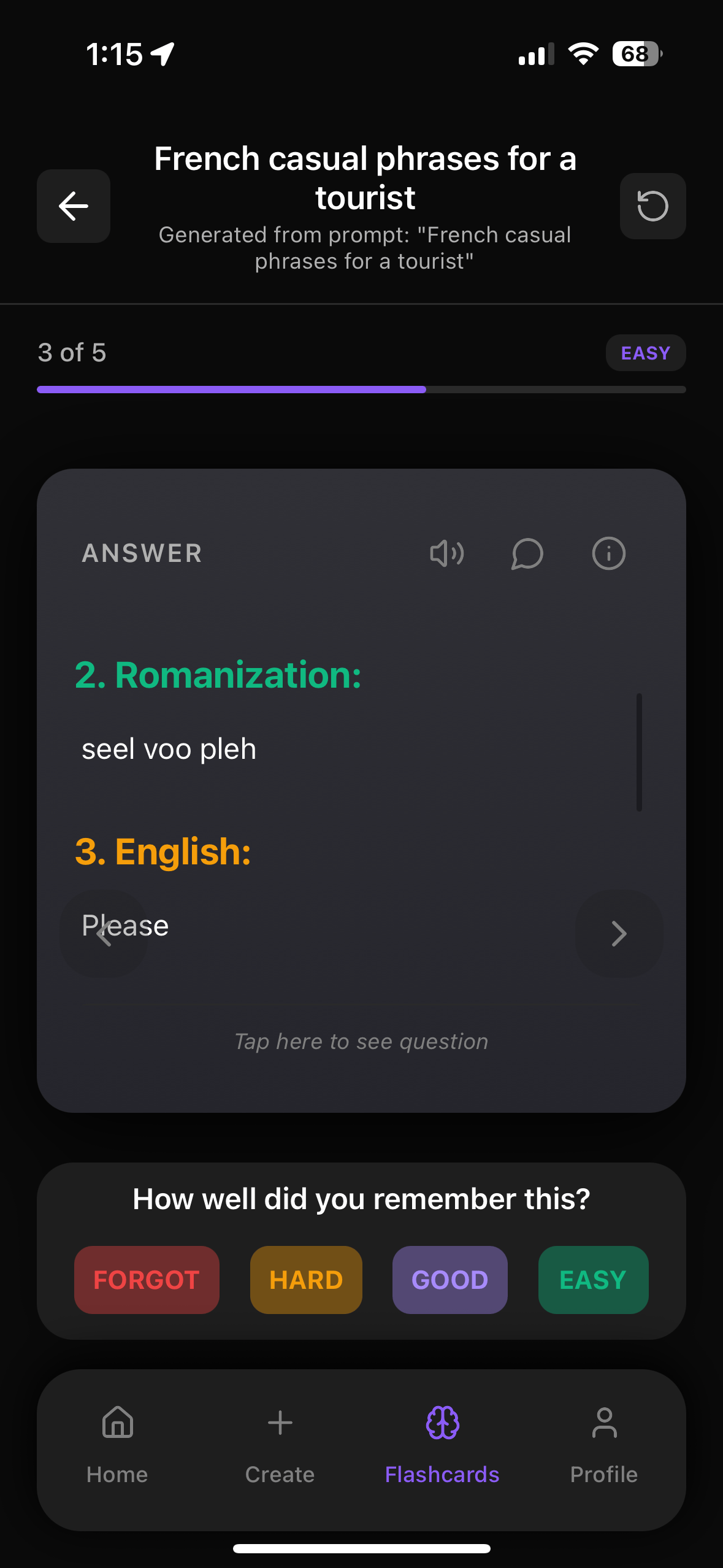
Alright, let’s talk about this: when people say “anki for engineering”, they usually mean using spaced-repetition flashcards to learn engineering formulas, concepts, and problem patterns without forgetting them every two weeks. It’s about turning tough stuff like circuits, thermodynamics, statics, or control systems into bite-sized questions you can review over time instead of cramming the night before. This matters because engineering is super cumulative—if you forget the basics, the later courses feel impossible. Apps like Anki and alternatives like Flashrecall do this with spaced repetition and active recall, but Flashrecall makes it way easier and faster to create and study cards, especially on your phone:
https://apps.apple.com/us/app/flashrecall-study-flashcards/id6746757085
Let’s break down how to actually use an “Anki-style” workflow for engineering—and why Flashrecall might be a better fit for you.
Why Flashcards Work So Well For Engineering
Engineering isn’t just about memorizing formulas; it’s about:
- Knowing when to use which formula
- Recognizing patterns in problems
- Remembering definitions, assumptions, and units
- Keeping previous course content fresh (calculus, physics, etc.)
Two ideas matter here:
- Active recall – forcing your brain to pull the answer out of memory (like flashcards do)
- Spaced repetition – reviewing right before you’re about to forget, instead of cramming
That’s exactly what “anki for engineering” means in practice: using a flashcard app that automatically spaces your reviews and forces you to think, not just reread.
Flashrecall does this out of the box with built‑in active recall and automatic spaced repetition, plus study reminders so you don’t have to remember when to study—your phone just nudges you.
Why Flashrecall Over Anki For Engineering Students?
Anki is powerful, but let’s be real: it can feel like configuring a 90s program sometimes.
- Way easier card creation
- Snap a pic of your notes, textbook, or whiteboard → Flashrecall turns it into flashcards
- Import from PDFs, text, YouTube links, or even audio
- Or just type normally if you like building cards manually
- Auto spaced repetition + reminders
- Reviews are scheduled for you
- You get reminders so you don’t fall off between exams
- Chat with your flashcards
- Stuck on a concept? You can literally chat with the card to get more explanation or examples
- Works offline
- Perfect for train rides, campus dead zones, or boring lectures
- Fast, modern, and free to start
- Clean interface, works on iPhone and iPad
- No weird setup, just install and start studying
If you like the idea of “anki for engineering” but don’t want the hassle, Flashrecall is a really nice upgrade:
https://apps.apple.com/us/app/flashrecall-study-flashcards/id6746757085
What Kind Of Engineering Stuff Should You Put Into Flashcards?
Let’s get specific. Here’s what works really well for engineering flashcards:
1. Formulas (But Not Just Copy-Paste)
Don’t just write the formula. Make cards that test understanding:
- Front: “Bernoulli equation (steady, incompressible flow) – write it and state assumptions.”
- Back: Formula + bullet list of assumptions
- Front: “Normal stress formula for axial loading (symbol + equation).”
- Back: σ = F / A
You can also add units:
- Front: “Units of Young’s modulus (E) in SI?”
- Back: Pa (N/m²)
2. Concepts And Definitions
Engineering has tons of terms you’re expected to “just know”:
- “What is the difference between laminar and turbulent flow?”
- “Define factor of safety.”
- “What does ‘linearity’ mean in a system?”
These are perfect for short flashcards.
3. Problem Types And Patterns
You can’t turn full 2‑page problems into cards, but you can capture patterns like:
- “For a simply supported beam with a point load in the middle, what does the shear diagram look like?”
- “Steps to solve a first-order linear ODE using integrating factor?”
You could even paste a small diagram or screenshot into Flashrecall and ask:
- Front (image): Beam diagram
- Back: “This is a simply supported beam with a central point load: max bending moment = PL/4.”
Flashrecall handles images really well—just snap a photo and turn it into cards.
How To Use Flashrecall As Your “Anki For Engineering” Setup
Step 1: Capture From Your Real Study Material
Instead of manually typing every formula, do this:
- Take pictures of:
- Lecture slides
- Whiteboard notes
- Textbook examples
- Upload PDFs from your course
- Drop in YouTube links for explanations you like
Flashrecall can instantly make flashcards from these sources, which saves a ton of time compared to building every card from scratch.
You can still create cards manually when you want something super specific, but you’re not stuck doing everything by hand.
Step 2: Make Question-Style Cards (Not Just Copy-Paste Notes)
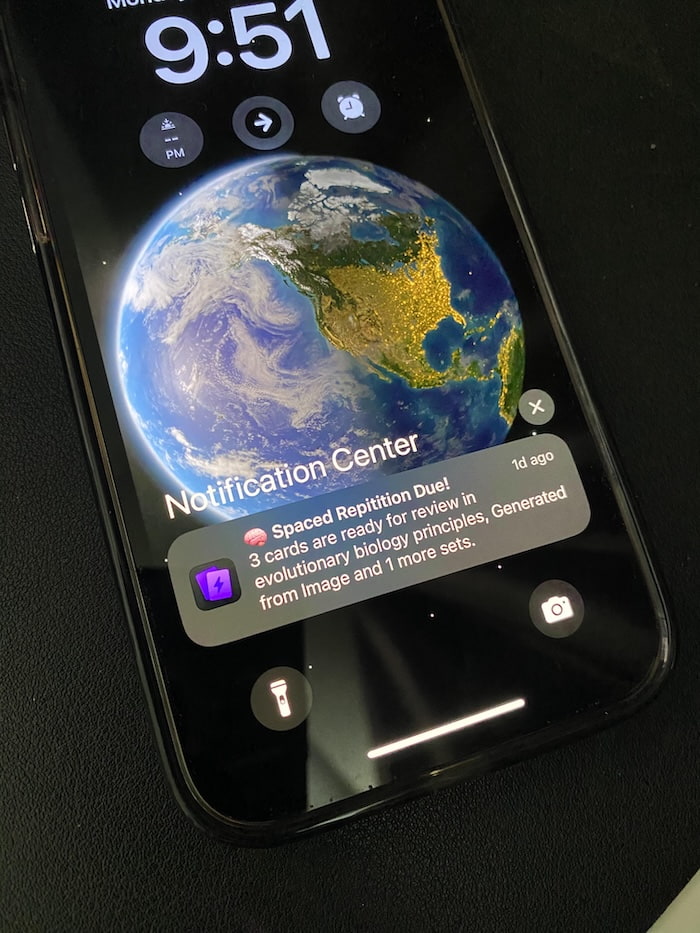
Flashrecall automatically keeps track and reminds you of the cards you don't remember well so you remember faster. Like this :
Good engineering flashcards usually look like:
- Question → Answer
- Prompt → Formula
- Diagram → “Explain what’s happening”
Examples:
- Front: “When can you treat a member as a two-force member?”
- Back: Only two forces acting at its ends, equal, opposite, and collinear.
- Front: “Draw the free body diagram for a block on an inclined plane (no friction).”
- Back: Description or small sketch (you can add an image).
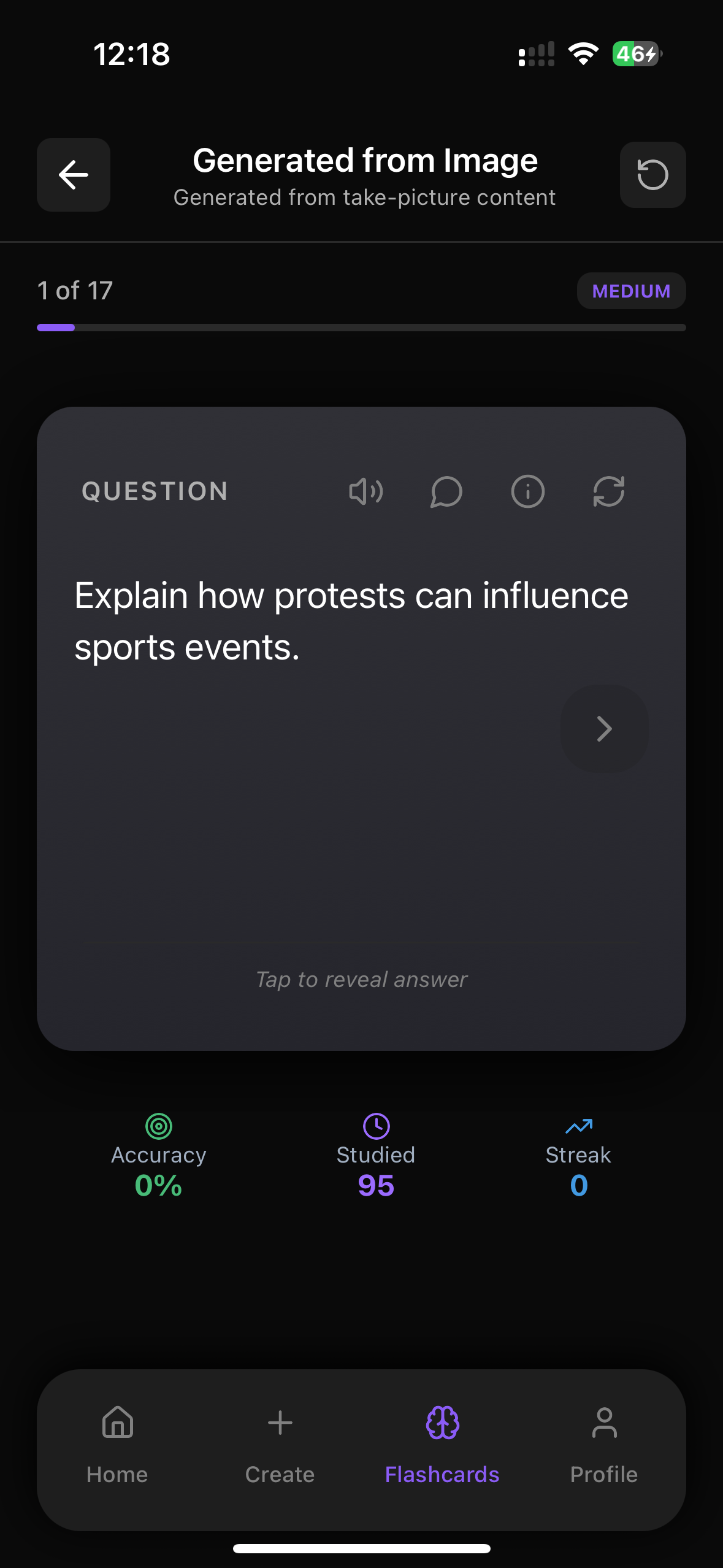
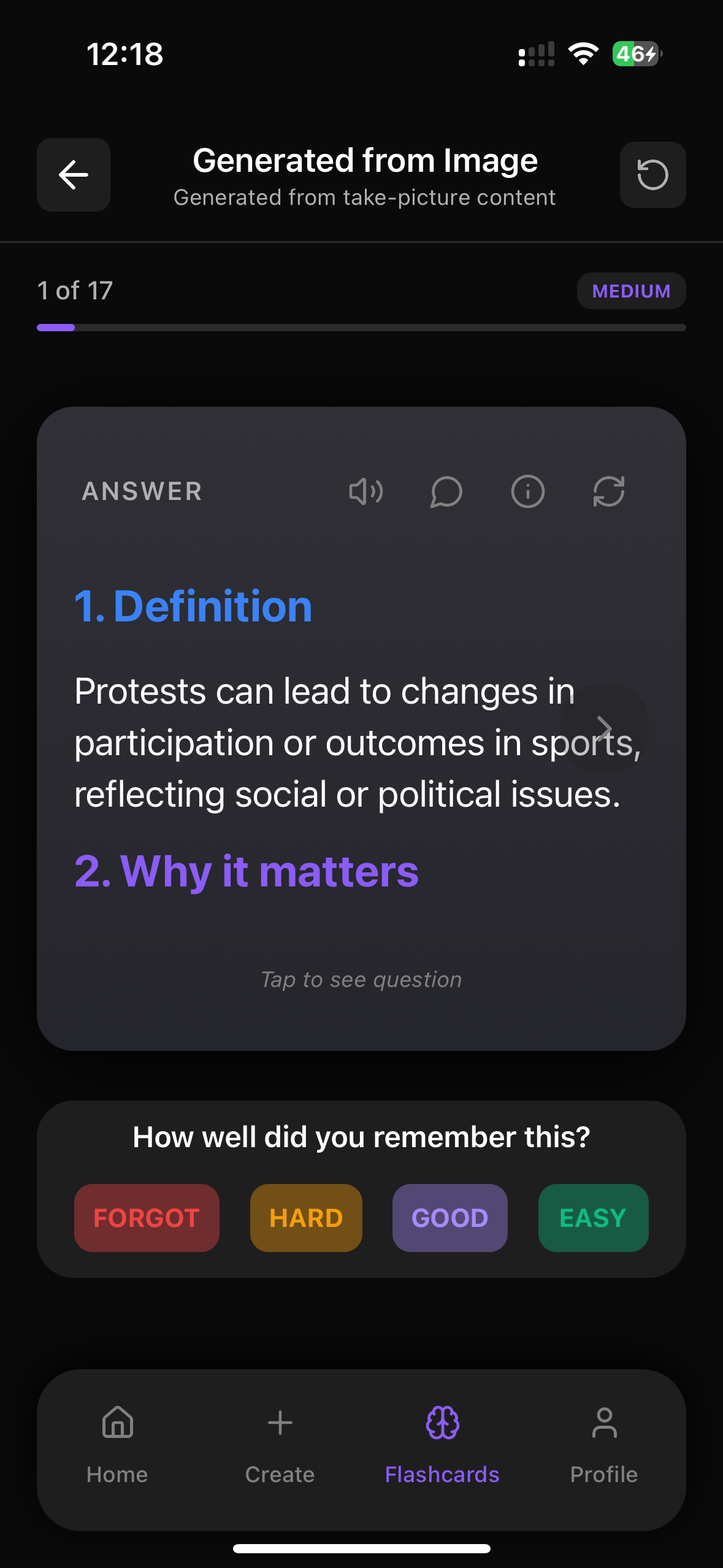
Active recall is built in: Flashrecall shows you the question, you think, then you flip. No passive rereading.
Step 3: Use Spaced Repetition Properly (Without Babysitting It)
The whole magic of “anki for engineering” is spaced repetition—but you don’t need to micromanage it.
With Flashrecall:
- Cards you know well show up less often
- Cards you keep missing show up more often
- Reviews are automatically scheduled for you
You just open the app, hit “Study,” and follow the queue. The algorithm does the timing.
Plus, you can set study reminders, so if you’re the type to forget until the night before the exam, your phone will gently roast you into studying.
Step 4: Mix Courses – Don’t Just Cram One Subject
Engineering builds on itself. It’s way better to mix topics than to grind one subject for 5 hours.
You can have decks like:
- Calculus Refresher
- Statics
- Dynamics
- Thermodynamics
- Circuits
- Materials
Then either:
- Study one deck per day, or
- Shuffle multiple decks together (great for long-term retention)
Flashrecall works offline, so you can quickly run a few reviews while waiting for class, on the bus, or during lunch.
Example: Using “Anki For Engineering” Style Study For Different Majors
Mechanical Engineering
Great flashcard topics:
- Stress/strain relationships
- Beam formulas
- Thermo cycles (Otto, Diesel, Rankine)
- Phase diagrams basics
- Heat transfer modes and key equations
You can snap photos of those messy thermodynamics derivations and turn them into clean Q&A cards.
Electrical / Computer Engineering
Flashcards work really well for:
- Circuit laws (KCL, KVL, Thevenin/Norton)
- Logic gates and truth tables
- Common op-amp configurations
- Signal transforms (Laplace, Fourier basics)
- Digital design terms, microcontroller registers, etc.
You can paste screenshots from datasheets or lecture slides straight into Flashrecall and build cards around them.
Civil Engineering
Try cards for:
- Soil classification systems
- Concrete mix components and properties
- Structural load types
- Code-related definitions (like from Eurocode, ACI, etc.)
Again, quick photos → instant cards → spaced repetition handles the rest.
How Flashrecall Helps When You’re Stuck
One thing that makes Flashrecall stand out compared to Anki is the chat with your flashcard feature.
Say you have a card:
- Front: “What is Reynolds number and what does it tell you?”
You flip and realize: “Okay, I kind of know the formula, but I don’t fully get what it means.”
With Flashrecall, you can:
- Open that card
- Ask follow-up questions right there:
- “Explain Reynolds number like I’m 10.”
- “Give me an example of laminar vs turbulent flow.”
It’s like having a built-in tutor for each card, which is super helpful in engineering where understanding why matters just as much as memorizing.
How Often Should You Study With Flashcards For Engineering?
Realistically:
- Daily is best, even if it’s just 10–20 minutes
- Short, consistent sessions beat 3-hour cramming marathons
- Use it:
- Right after class (turn fresh notes into cards)
- End of the day (quick review of new material)
- Before quizzes/exams (focus on “hard” cards)
Flashrecall’s spaced repetition and reminders keep everything on track so you’re not guessing what to study.
Final Thoughts: Make “Anki For Engineering” Actually Work For You
Using “anki for engineering” isn’t about the specific app—it’s about:
- Turning lectures, notes, and textbooks into questions
- Reviewing them with spaced repetition
- Keeping old material alive while you learn new stuff
Anki can do this, but if you want something faster, cleaner, and more mobile-friendly, Flashrecall is honestly easier to stick with long term. You can:
- Create cards instantly from images, PDFs, YouTube, or text
- Let the app handle spaced repetition and reminders
- Study offline on iPhone or iPad
- Chat with your cards when a concept doesn’t click
If you’re serious about not forgetting formulas the moment the exam ends, try setting up your own “anki for engineering” system inside Flashrecall and use it for just two weeks. You’ll feel the difference in how fast things come back to you.
You can grab it here and start for free:
https://apps.apple.com/us/app/flashrecall-study-flashcards/id6746757085
Frequently Asked Questions
Is Anki good for studying?
Anki is powerful but requires manual card creation and has a steep learning curve. Flashrecall offers AI-powered card generation from your notes, images, PDFs, and videos, making it faster and easier to create effective flashcards.
What's the fastest way to create flashcards?
Manually typing cards works but takes time. Many students now use AI generators that turn notes into flashcards instantly. Flashrecall does this automatically from text, images, or PDFs.
How do I start spaced repetition?
You can manually schedule your reviews, but most people use apps that automate this. Flashrecall uses built-in spaced repetition so you review cards at the perfect time.
What is active recall and how does it work?
Active recall is the process of actively retrieving information from memory rather than passively reviewing it. Flashrecall forces proper active recall by making you think before revealing answers, then uses spaced repetition to optimize your review schedule.
How can I study more effectively for exams?
Effective exam prep combines active recall, spaced repetition, and regular practice. Flashrecall helps by automatically generating flashcards from your study materials and using spaced repetition to ensure you remember everything when exam day arrives.
Related Articles
- Mathematics Flashcards: 7 Powerful Ways To Finally Understand Math And Remember Formulas Forever – Stop rereading your notes and start using smart flashcards that actually make math stick.
- Cold War Flashcards: 7 Powerful Study Hacks To Finally Remember All The Key Events And Concepts – Stop rereading your notes and start actually remembering the Cold War with smarter flashcard strategies.
- Flashcards For Students: 7 Powerful Ways To Study Smarter, Remember More, And Actually Save Time – Discover How Modern Apps Like Flashrecall Make It Stupid‑Easy
Research References
The information in this article is based on peer-reviewed research and established studies in cognitive psychology and learning science.
Cepeda, N. J., Pashler, H., Vul, E., Wixted, J. T., & Rohrer, D. (2006). Distributed practice in verbal recall tasks: A review and quantitative synthesis. Psychological Bulletin, 132(3), 354-380
Meta-analysis showing spaced repetition significantly improves long-term retention compared to massed practice
Carpenter, S. K., Cepeda, N. J., Rohrer, D., Kang, S. H., & Pashler, H. (2012). Using spacing to enhance diverse forms of learning: Review of recent research and implications for instruction. Educational Psychology Review, 24(3), 369-378
Review showing spacing effects work across different types of learning materials and contexts
Kang, S. H. (2016). Spaced repetition promotes efficient and effective learning: Policy implications for instruction. Policy Insights from the Behavioral and Brain Sciences, 3(1), 12-19
Policy review advocating for spaced repetition in educational settings based on extensive research evidence
Karpicke, J. D., & Roediger, H. L. (2008). The critical importance of retrieval for learning. Science, 319(5865), 966-968
Research demonstrating that active recall (retrieval practice) is more effective than re-reading for long-term learning
Roediger, H. L., & Butler, A. C. (2011). The critical role of retrieval practice in long-term retention. Trends in Cognitive Sciences, 15(1), 20-27
Review of research showing retrieval practice (active recall) as one of the most effective learning strategies
Dunlosky, J., Rawson, K. A., Marsh, E. J., Nathan, M. J., & Willingham, D. T. (2013). Improving students' learning with effective learning techniques: Promising directions from cognitive and educational psychology. Psychological Science in the Public Interest, 14(1), 4-58
Comprehensive review ranking learning techniques, with practice testing and distributed practice rated as highly effective

FlashRecall Team
FlashRecall Development Team
The FlashRecall Team is a group of working professionals and developers who are passionate about making effective study methods more accessible to students. We believe that evidence-based learning tec...
Credentials & Qualifications
- •Software Development
- •Product Development
- •User Experience Design
Areas of Expertise
Ready to Transform Your Learning?
Start using FlashRecall today - the AI-powered flashcard app with spaced repetition and active recall.
Download on App Store