Anki For Medical Students Guide: The Essential Guide
Anki for Medical Students simplifies studying with flashcards created from any material. Use active recall and spaced repetition to boost your memory retention.
How Flashrecall app helps you remember faster. It's free
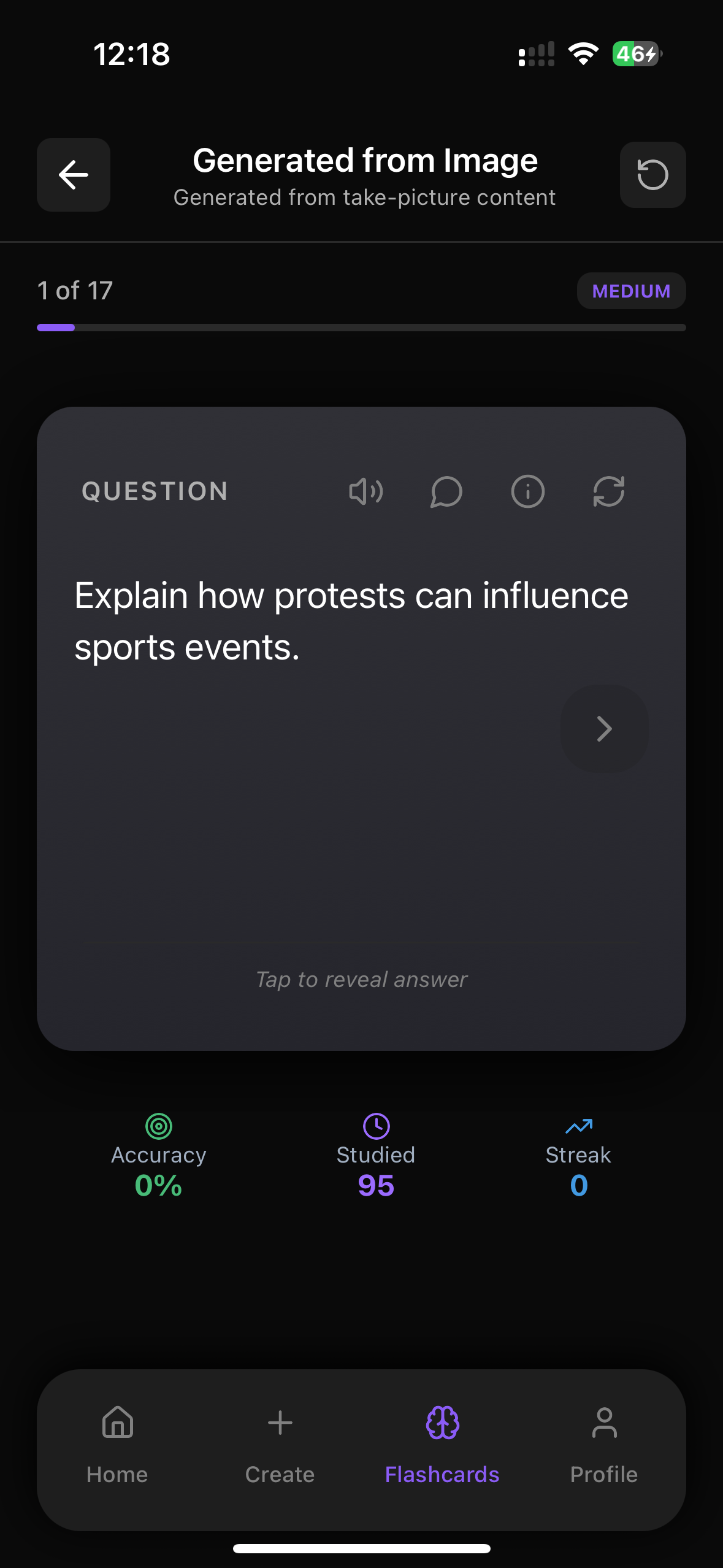
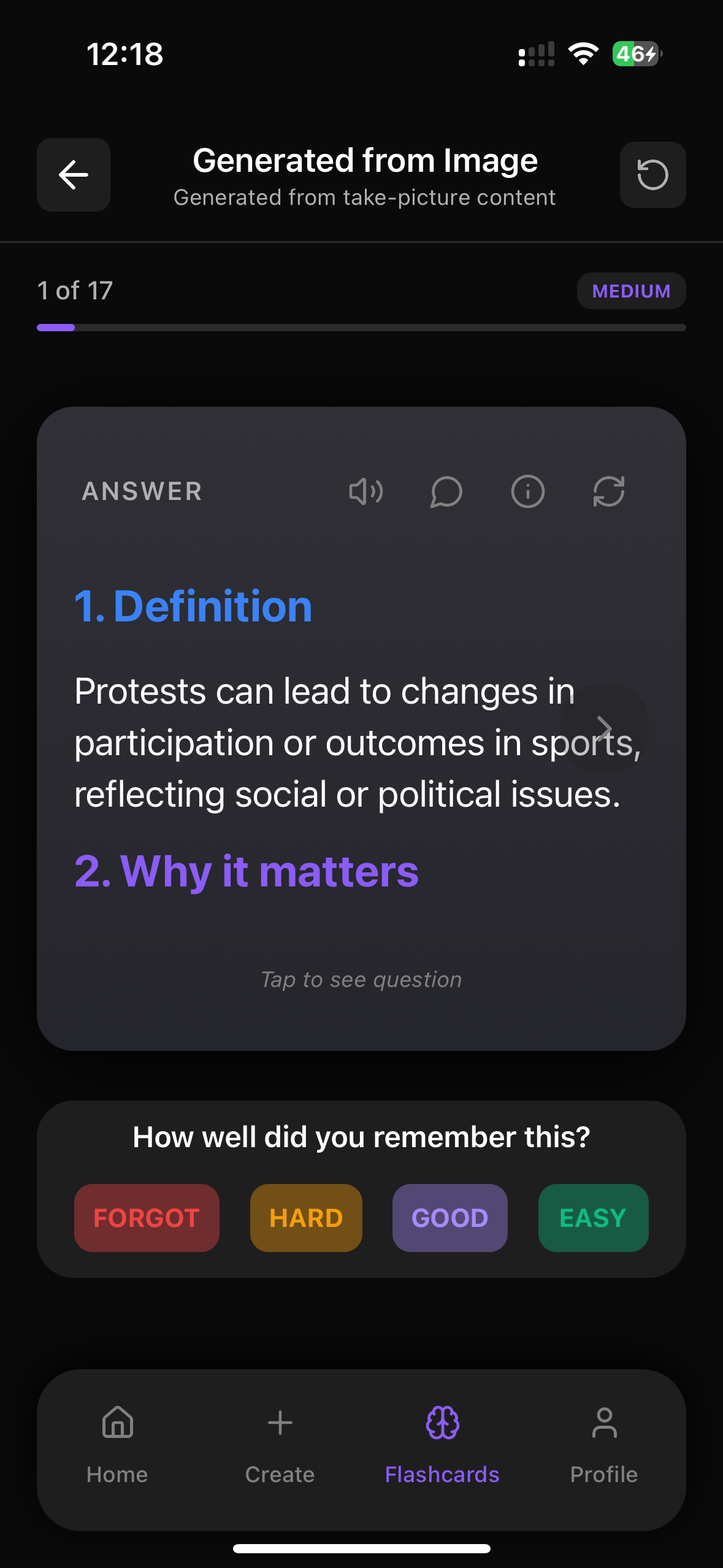
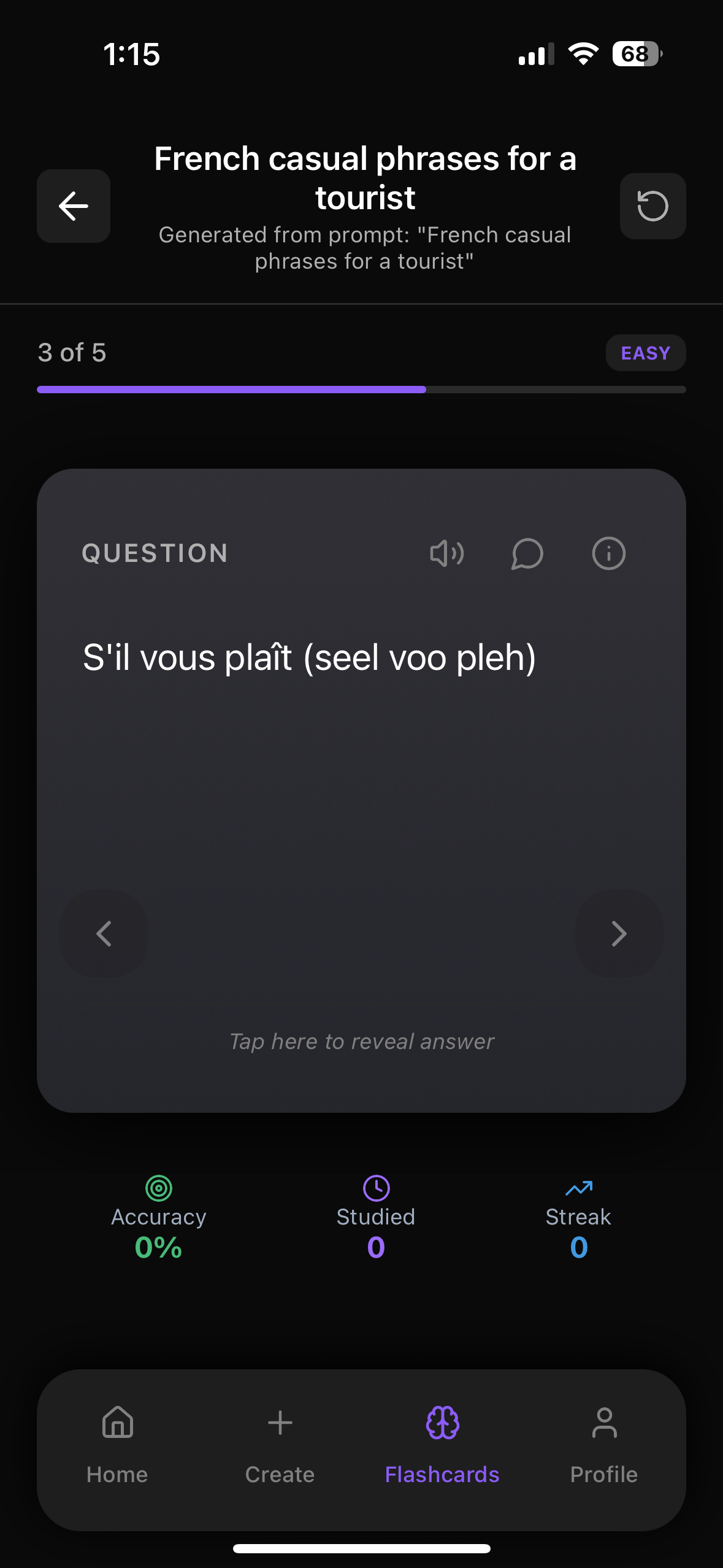
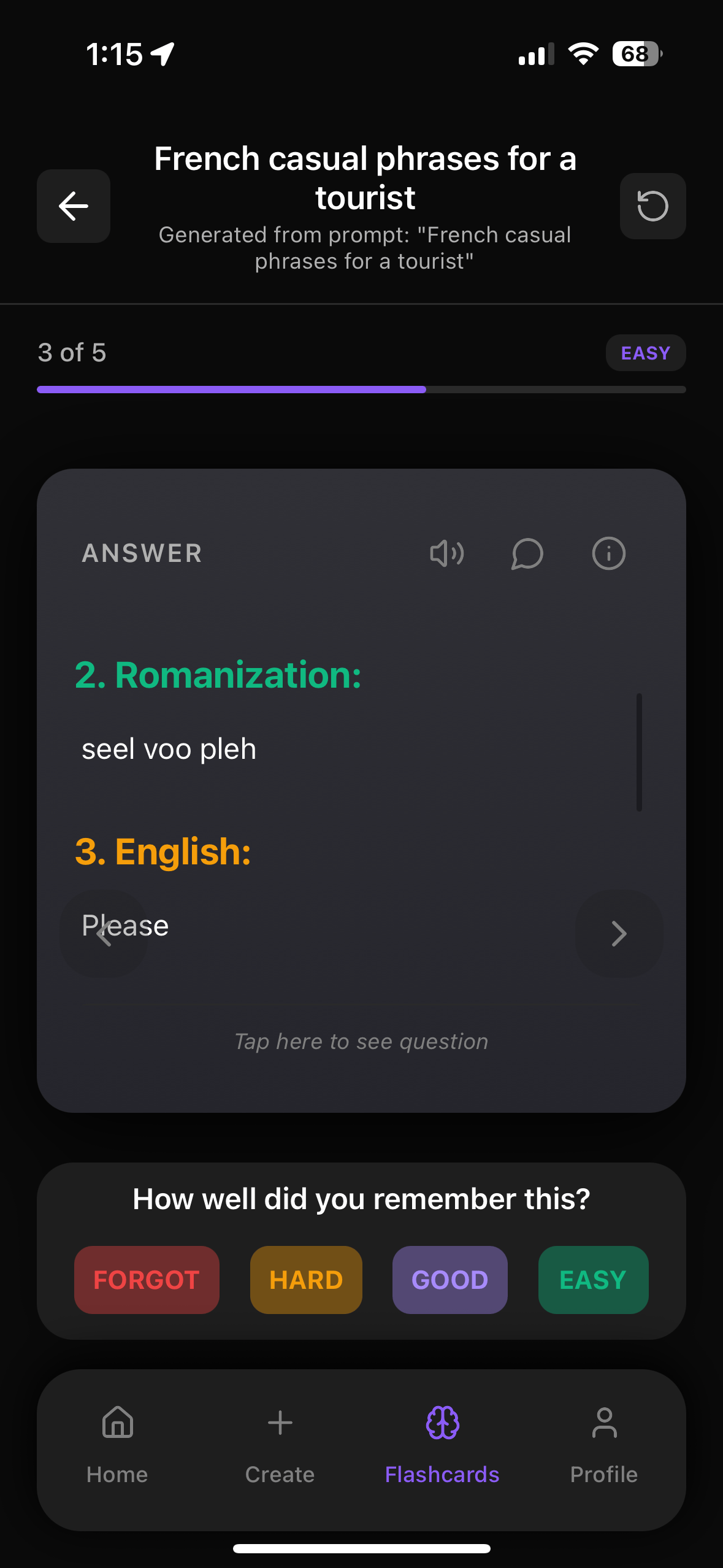
Trying to figure out this whole Anki for Medical Students guide thing? Let me break it down for you. You know how cramming loads of information into your brain can feel like trying to catch water in a sieve? Yeah, it’s not fun. But here's the trick: turning all that complex stuff into bite-sized chunks with flashcards. And the cool part is, using tools like active recall and spaced repetition can really make a difference. That’s where Flashrecall steps in, making it super easy by whipping up flashcards from your study notes and reminding you when it’s time to review them. It’s like having a little study buddy that’s got your back. So if you’re curious about how Anki can help you breeze through med school, maybe check out our complete guide. It's packed with tips that most students don’t even know!
Why Medical Students Use Anki
Med school requires long-term memory. You aren’t just studying for one exam — you need this knowledge for clinical years and residency too.
Anki became popular because it uses:
1. Active Recall
You try to remember the answer before flipping the card → this strengthens your memory fast.
2. Spaced Repetition
Cards are shown at increasing intervals so your brain is tested just before forgetting.
It’s scientifically proven and insanely effective.
Flashrecall takes these same principles and makes them easier, faster, and more practical for daily med school life.
How Flashrecall Helps Medical Students Learn Faster
✔️ Instant flashcards from ANY study material
This is the #1 advantage over traditional Anki.
Flashrecall automatically makes flashcards from:
- Images (lecture slides, textbook pages, diagrams)
- PDFs (notes, lecture packs, cheat sheets)
- Typed notes
- AI prompts (“Create 30 flashcards on respiratory physiology”)
- YouTube videos (Ninja Nerd, Osmosis, Armando, etc.)
- Audio (lectures, voice notes)
Instead of typing thousands of cards yourself, Flashrecall does the heavy lifting.
✔️ Automatic spaced repetition intervals
Flashrecall handles all the scheduling for you:
- Hard → shown sooner
- Medium → spaced normally
- Easy → shown later
No deck settings.
No confusing interval menus.
Just tap and study.
Perfect for busy med students juggling lectures, labs, and rotations.
✔️ Built-in active recall
Every card forces you to think before flipping — exactly the method needed to remember complex content better.
✔️ Study reminders so you stay consistent
One of the biggest reasons med students fall off Anki is inconsistency.
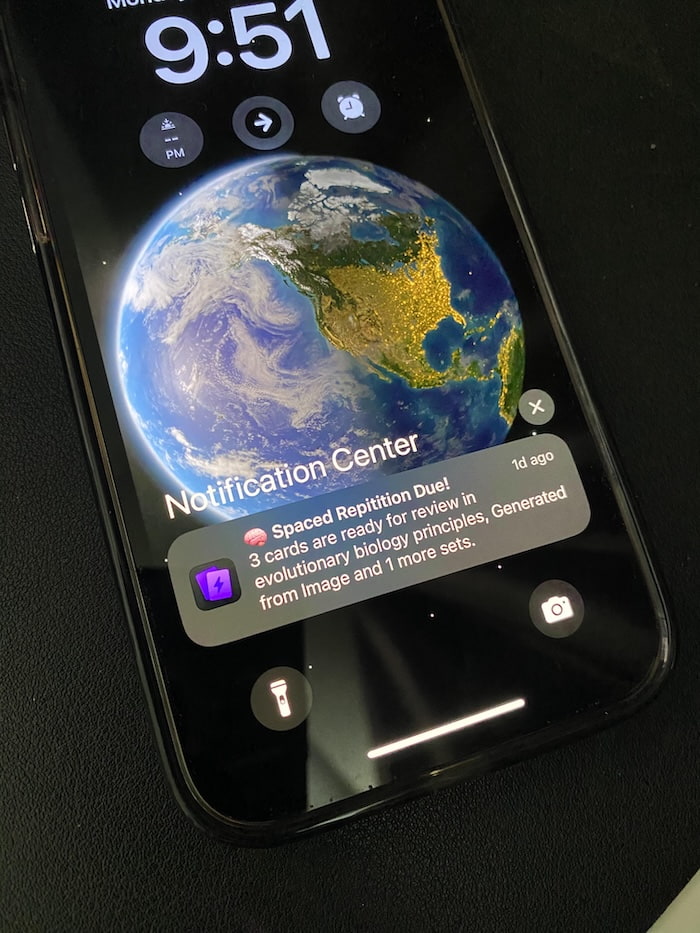
Flashrecall reminds you exactly when it’s time to review.
✔️ Fast, modern, easy to use
No setup.
Flashrecall automatically keeps track and reminds you of the cards you don't remember well so you remember faster. Like this :
No plugins.
No tech complexity.
Just pure studying.
Flashrecall works beautifully on both iPhone and iPad.
Examples of Flashcards Medical Students Use
Anatomy
Front: “What passes through the foramen ovale?”
Back: “Mandibular branch of CN V3”
Physiology
Front: “Frank-Starling law?”
Back: “Increased EDV → increased stroke volume”
Pharmacology
Front: “Mechanism of action of beta-blockers?”
Back: “Decrease HR & contractility via β1 blockade”
Microbiology
Front: “Gram-negative diplococci?”
Back: “Neisseria”
Pathology
Front: “Reed–Sternberg cells indicate?”
Back: “Hodgkin lymphoma”
Flashrecall can generate cards like these instantly from your study materials.
Flashrecall vs Traditional Anki for Medical Students
| Feature | Anki | Flashrecall |
|---|---|---|
| Manual card creation | ✔️ Yes | ❌ No |
| Image → cards | ⚠️ Manual | ✔️ Instant |
| PDF → cards | ❌ No | ✔️ Yes |
| YouTube → cards | ❌ No | ✔️ Yes |
| Automatic reminders | ❌ No | ✔️ Yes |
| Easy to use | ❌ Hard | ✔️ Very easy |
| AI card creation | ❌ No | ✔️ Yes |
Flashrecall works like Anki…but 10× smoother.
Who Flashrecall Is Perfect For
- First-year medical students
- Students deep in pre-clinicals
- Step 1 / Step 2 prep
- OSCE/skills revision
- IMG students
- Anyone who finds Anki too manual or slow
If you want the benefits of Anki without the pain, Flashrecall is perfect.
Final Thoughts
Anki is one of the most powerful tools for medical students — but it’s not always easy to use. Flashrecall keeps the core science (active recall + spaced repetition) and adds modern features that save you time, simplify the workflow, and help you memorise medical content faster.
Try Flashrecall free here:
https://apps.apple.com/us/app/flashrecall-study-flashcards/id6746757085
Related Articles
- Anki – What It Is and How Flashrecall Anki Helps You Learn Faster With Flashcards and Spaced Repetition
- JLab Anki – Learn Medical Concepts Faster With Smart Flashcards & Spaced Repetition
- Ali Abdaal Anki – How Anki Is Used and How Flashrecall Helps You Learn Faster With Anki Flashcards and Spaced Repetition
- Spaced Repetition System Anki – What It Is, Examples, and How Flashrecall Helps You Learn Faster With an Anki Spaced Repetition System
- Anki Studying The Easiest Way to Learn Faster With Smart Flashcards & Spaced Repetition- Anki Guides Hub
Frequently Asked Questions
Is Anki good for medical students?
Anki is powerful but requires manual card creation and has a steep learning curve. Flashrecall offers AI-powered card generation from your notes, images, PDFs, and videos, making it faster and easier to create effective flashcards.
What's the fastest way to create flashcards?
Manually typing cards works but takes time. Many students now use AI generators that turn notes into flashcards instantly. Flashrecall does this automatically from text, images, or PDFs.
How do I start spaced repetition?
You can manually schedule your reviews, but most people use apps that automate this. Flashrecall uses built-in spaced repetition so you review cards at the perfect time.
Research References
The information in this article is based on peer-reviewed research and established studies in cognitive psychology and learning science.
Cepeda, N. J., Pashler, H., Vul, E., Wixted, J. T., & Rohrer, D. (2006). Distributed practice in verbal recall tasks: A review and quantitative synthesis. Psychological Bulletin, 132(3), 354-380
Meta-analysis showing spaced repetition significantly improves long-term retention compared to massed practice
Carpenter, S. K., Cepeda, N. J., Rohrer, D., Kang, S. H., & Pashler, H. (2012). Using spacing to enhance diverse forms of learning: Review of recent research and implications for instruction. Educational Psychology Review, 24(3), 369-378
Review showing spacing effects work across different types of learning materials and contexts
Kang, S. H. (2016). Spaced repetition promotes efficient and effective learning: Policy implications for instruction. Policy Insights from the Behavioral and Brain Sciences, 3(1), 12-19
Policy review advocating for spaced repetition in educational settings based on extensive research evidence
Karpicke, J. D., & Roediger, H. L. (2008). The critical importance of retrieval for learning. Science, 319(5865), 966-968
Research demonstrating that active recall (retrieval practice) is more effective than re-reading for long-term learning
Roediger, H. L., & Butler, A. C. (2011). The critical role of retrieval practice in long-term retention. Trends in Cognitive Sciences, 15(1), 20-27
Review of research showing retrieval practice (active recall) as one of the most effective learning strategies
Dunlosky, J., Rawson, K. A., Marsh, E. J., Nathan, M. J., & Willingham, D. T. (2013). Improving students' learning with effective learning techniques: Promising directions from cognitive and educational psychology. Psychological Science in the Public Interest, 14(1), 4-58
Comprehensive review ranking learning techniques, with practice testing and distributed practice rated as highly effective
Ebbinghaus, H. (1885). Memory: A Contribution to Experimental Psychology. New York: Dover
Pioneering research on the forgetting curve and memory retention over time

FlashRecall Team
FlashRecall Development Team
The FlashRecall Team is a group of working professionals and developers who are passionate about making effective study methods more accessible to students. We believe that evidence-based learning tec...
Credentials & Qualifications
- •Software Development
- •Product Development
- •User Experience Design
Areas of Expertise
Ready to Transform Your Learning?
Start using FlashRecall today - the AI-powered flashcard app with spaced repetition and active recall.
Download on App Store