Anki GCSE Biology: The Complete Guide To Smashing Your Exams With Smarter Flashcards – Plus A Better iOS Alternative Most Students Don’t Know About
anki gcse biology revision with spaced repetition, real card examples, and an honest Anki vs Flashrecall iOS breakdown so you don’t waste hours on the wrong...
How Flashrecall app helps you remember faster. It's free
So, What’s The Deal With Anki GCSE Biology?
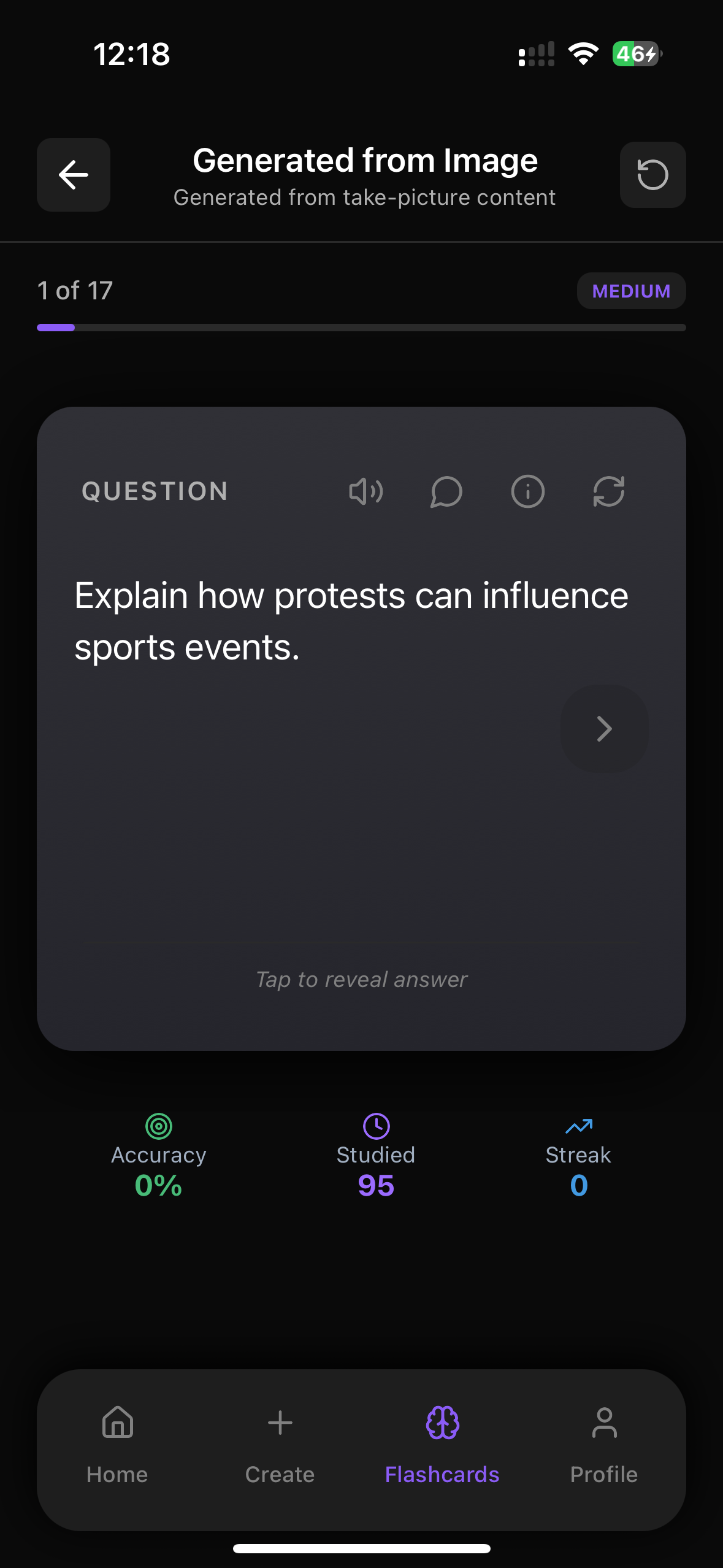
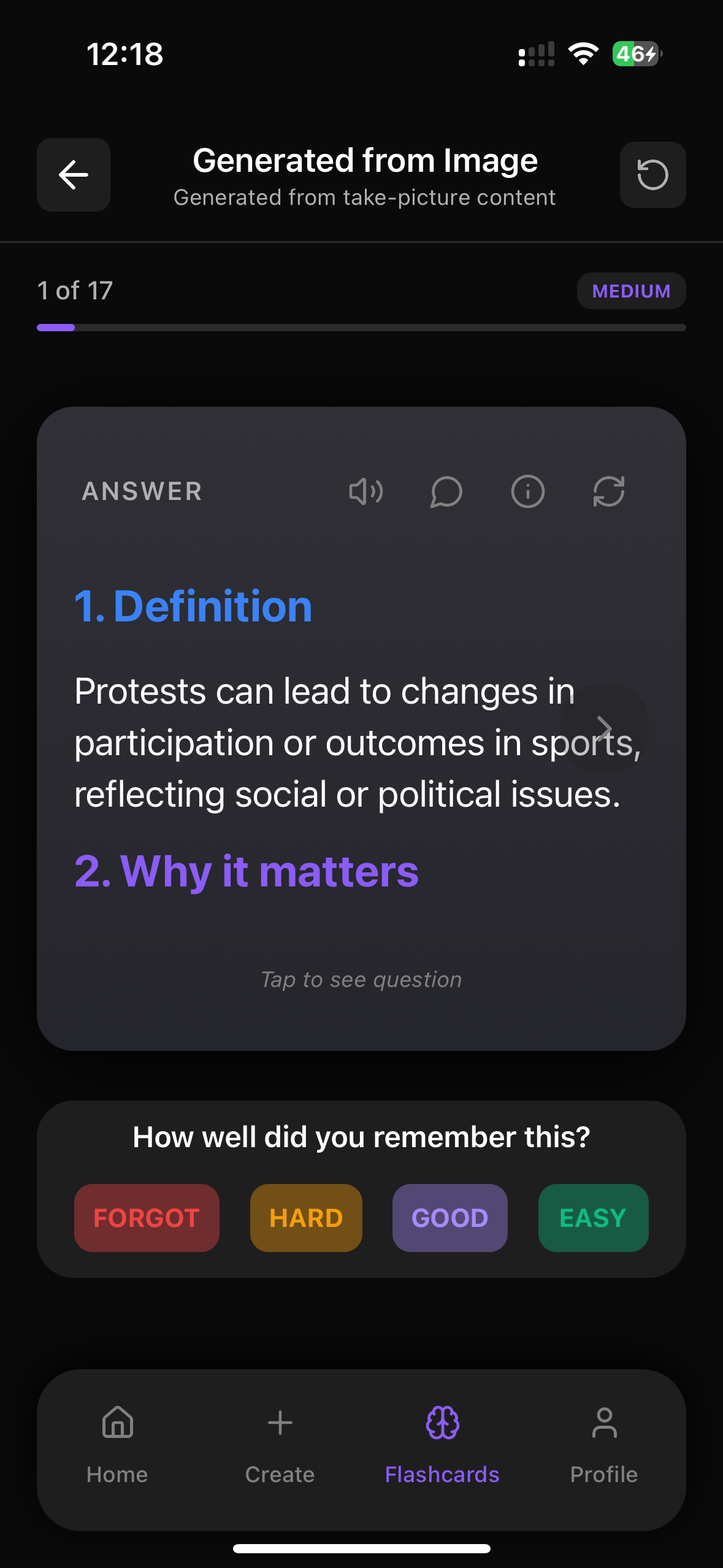
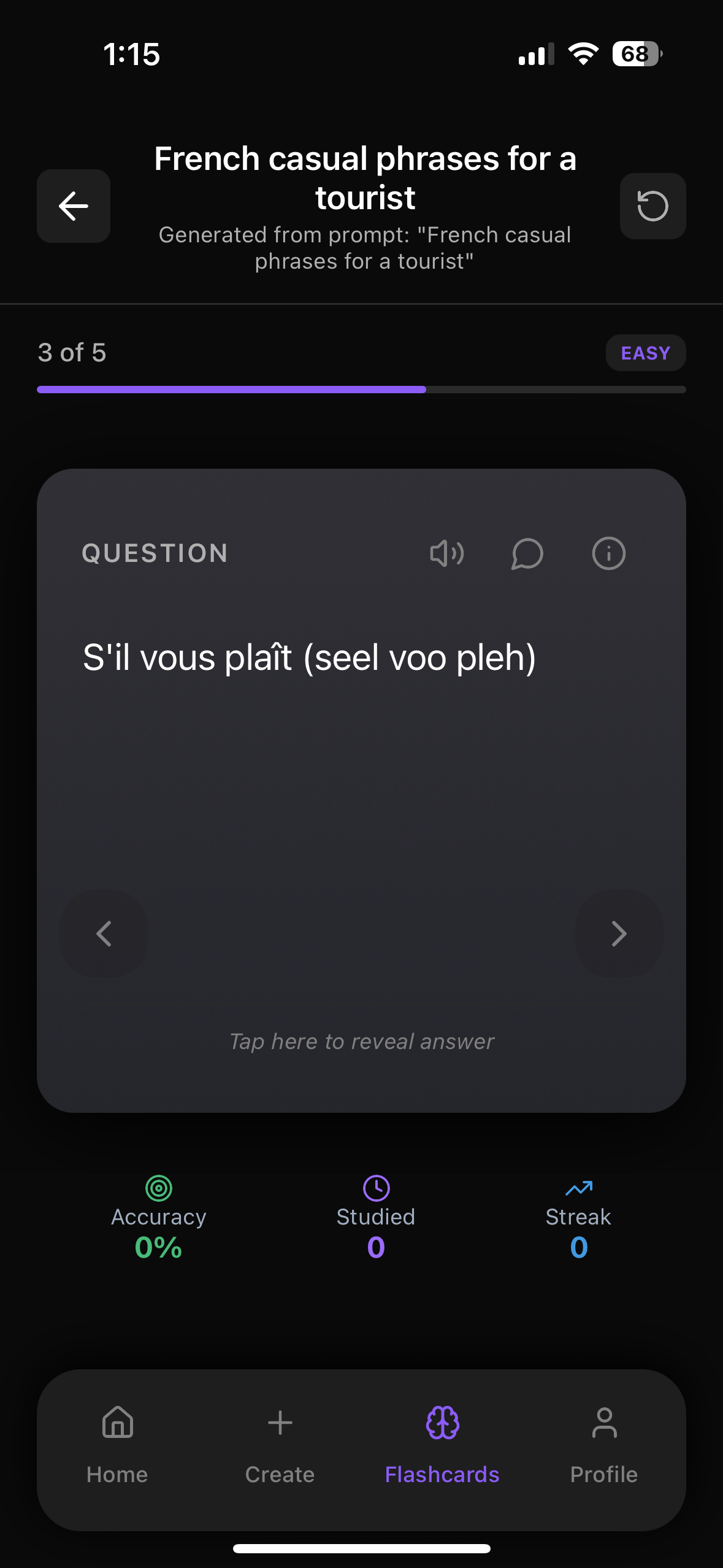
Alright, let’s talk about anki gcse biology because it’s basically using the Anki flashcard app to revise GCSE Biology with spaced repetition so you remember more and forget less. You make digital flashcards (for things like enzymes, cell structure, and required practicals) and Anki shows them to you right before you’re about to forget, which is way more effective than just rereading notes. It matters because GCSE Biology is packed with content – definitions, processes, graphs, experiments – and spaced repetition is one of the easiest ways to keep it all in your head until exam day. The only catch? Anki can feel a bit clunky on iOS, which is why a lot of students are switching to Flashrecall instead: a faster, more modern flashcard app with automatic spaced repetition and super easy card creation:
https://apps.apple.com/us/app/flashrecall-study-flashcards/id6746757085
Anki For GCSE Biology: What People Are Actually Trying To Do
When people search for anki gcse biology, they’re usually trying to:
- Find ready-made GCSE Biology decks
- Figure out if Anki is good for revising Biology
- Learn how to structure cards for topics like cells, inheritance, ecology, etc.
- Compare Anki to other flashcard apps on iPhone/iPad
In simple terms: you want something that helps you remember huge amounts of content without burning out.
Spaced repetition flashcards are perfect for that. But the specific app you use really matters, especially on iOS.
Why Spaced Repetition Works So Well For GCSE Biology
GCSE Biology is full of stuff your brain loves to forget:
- Definitions: osmosis, active transport, homeostasis
- Processes: photosynthesis, respiration, the immune response
- Lists: risk factors, stages of mitosis, organelles and their functions
- Required practicals: method, variables, and evaluation points
Spaced repetition works by:
1. Showing you a card
2. Asking you to recall the answer from memory (active recall)
3. If you get it right, it waits longer before showing it again
4. If you forget it, it shows it sooner
Do this over weeks and months, and the information sticks. No more “I knew this last week, why is my brain empty now?”
Both Anki and Flashrecall use this idea. The difference is how easy and enjoyable they make it.
Anki vs Flashrecall For GCSE Biology On iOS
So, how does Anki stack up against Flashrecall for GCSE Biology on iPhone and iPad?
Anki: The Good And The Not-So-Good
- Very powerful and customizable
- Lots of shared decks online (though quality varies a lot)
- Great if you like tweaking settings and add-ons (mostly on desktop)
- Interface can feel old and confusing
- Making cards on your phone isn’t very smooth
- No built-in “make cards from images/PDFs/YouTube” stuff – you do everything manually
- Can be overkill if you just want to revise Biology quickly and simply
If you’re super techy and love fiddling with settings, Anki can work. But if you just want to get cards made fast and start revising, there’s a smoother option.
Flashrecall: A Simpler, Faster Option For GCSE Biology
👉 Download it here (free to start):
https://apps.apple.com/us/app/flashrecall-study-flashcards/id6746757085
Here’s why it works so well for GCSE Biology:
- Automatic spaced repetition – it schedules your reviews for you, no need to mess with settings
- Study reminders – gentle nudges so you don’t forget to revise
- Make cards from almost anything:
- Photos of your textbook or revision guide
- PDF notes from school
- YouTube links (perfect for revision videos)
- Typed prompts or pasted text
- Or just make them manually if you prefer
- Built-in active recall – it hides the answer so you properly test yourself, not just reread
- Works offline – revise on the bus, in school corridors, wherever
- Chat with your flashcard – if you’re stuck on a card, you can ask questions and get explanations
- Fast, modern, and easy to use – no weird menus, no setup headache
- Works on iPhone and iPad – perfect if you revise on multiple devices
So if you went searching for “anki gcse biology” because you want a good Biology flashcard setup, it’s honestly worth trying Flashrecall first. It does the same spaced repetition magic but with way less friction.
What To Actually Put On Your GCSE Biology Flashcards
No matter what app you use, the quality of your cards matters more than the quantity.
1. Keep Cards Short And Focused
Bad card:
> Q: Explain photosynthesis.
> A: Long essay answer.
Good cards:
- Q: What is the word equation for photosynthesis?
A: Carbon dioxide + water → glucose + oxygen
- Q: In photosynthesis, which organelle does it happen in?
A: Chloroplast
- Q: Which green pigment absorbs light in photosynthesis?
A: Chlorophyll
Short, specific cards are way easier for spaced repetition to work with.
2. Use “Question → Answer” For Definitions
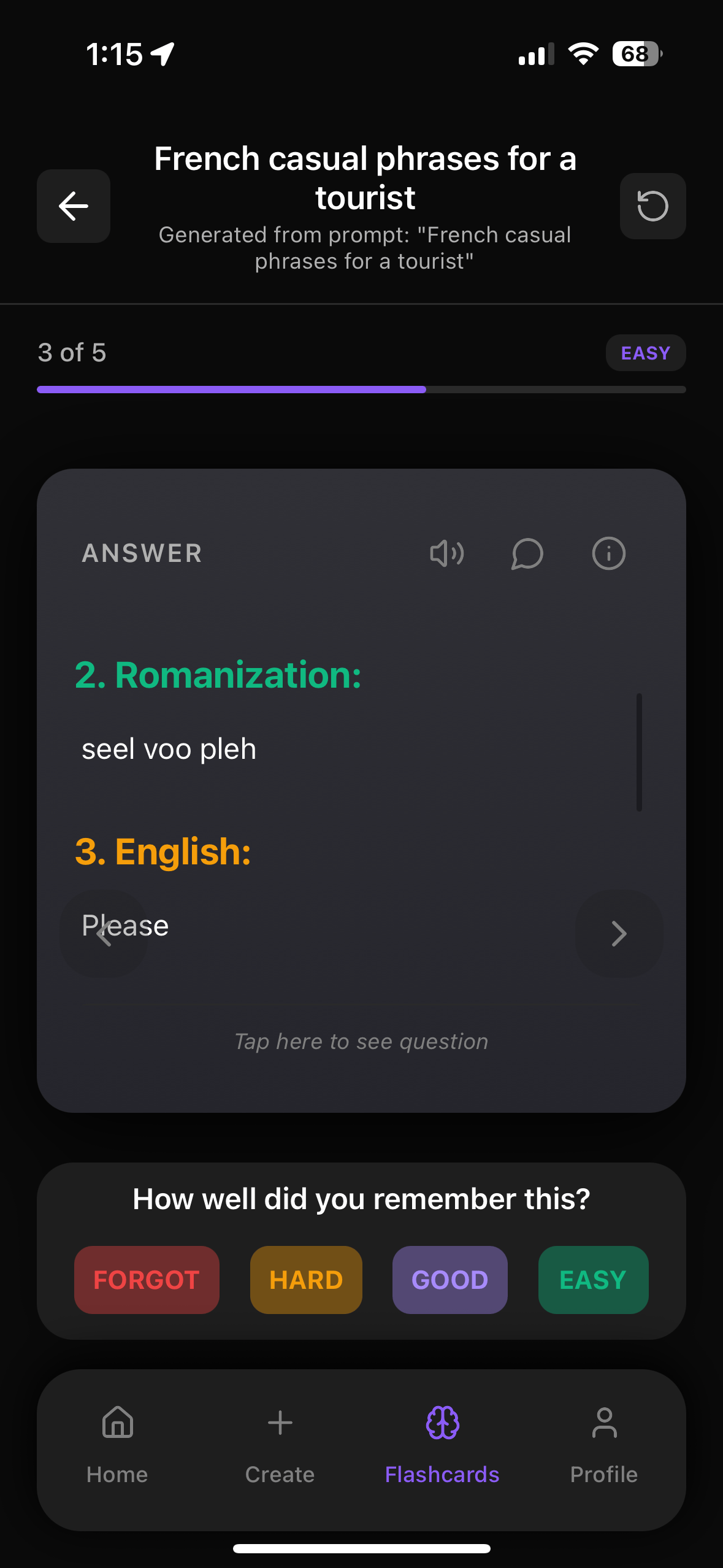
Flashrecall automatically keeps track and reminds you of the cards you don't remember well so you remember faster. Like this :
Examples:
- Q: Define osmosis.
A: The diffusion of water from a dilute solution to a concentrated solution through a partially permeable membrane.
- Q: What is homeostasis?
A: The regulation of internal conditions to maintain a stable environment.
Make a whole deck just for definitions – Flashrecall is great for this because you can blast through them quickly with active recall.
3. Turn Diagrams Into Cards
Biology loves diagrams: cells, the heart, the lungs, the kidney, etc.
With Flashrecall, you can:
1. Take a photo of a labelled diagram from your revision guide
2. Turn different parts into cards (e.g. “What is structure A?”)
3. Test yourself on each label
You don’t have to manually type everything – just snap, crop, and make cards. This is way harder to do smoothly in Anki on iOS.
4. Use Cards For Required Practicals
GCSE exams love asking about practicals. Make cards like:
- Q: What is the independent variable in the photosynthesis light intensity practical?
A: Distance of the lamp from the plant.
- Q: What is the control variable in the osmosis potato practical?
A: Temperature / volume of solution / time in solution (depending on the setup).
- Q: How do you calculate percentage change in mass?
A: (Final mass – initial mass) ÷ initial mass × 100
You can even upload a PDF of your practical booklet into Flashrecall and pull cards straight from it.
How To Use Flashrecall Step-By-Step For GCSE Biology
Here’s a simple way to set up your Biology revision in Flashrecall:
Step 1: Download Flashrecall
Grab it here (free to start):
https://apps.apple.com/us/app/flashrecall-study-flashcards/id6746757085
Open it on your iPhone or iPad.
Step 2: Create A “GCSE Biology” Deck (Or Multiple Decks)
You can go broad:
- “GCSE Biology – AQA”
- “GCSE Biology – Edexcel”
Or split by topic:
- Cells & Microscopy
- Organisation (Heart, Lungs, Digestion)
- Infection & Response
- Bioenergetics (Photosynthesis & Respiration)
- Homeostasis & Response
- Inheritance, Variation & Evolution
- Ecology
Topic-based decks make it easier to focus on your weak areas.
Step 3: Add Cards Quickly
Use whatever you have:
- Photos of your textbook or revision guide – turn key diagrams or paragraphs into flashcards
- Class notes – snap pages or copy-paste from digital notes
- YouTube revision videos – paste the link and pull key facts into cards
- Manual cards – type in definitions, processes, and lists
Flashrecall is built to make this part fast, so you’re not spending hours just typing.
Step 4: Let Spaced Repetition Do The Heavy Lifting
Once your cards are in:
- Flashrecall automatically schedules reviews using spaced repetition
- You just open the app, hit study, and it shows you whatever you need to see that day
- No manual planning, no “what should I revise today?” drama
You’ll see cards again just as you’re about to forget them, which is exactly what you want for long-term memory.
Step 5: Use The “Chat With Card” When You’re Confused
Stuck on something like:
> “Explain how insulin controls blood glucose levels.”
In Flashrecall, you can chat with the flashcard to get:
- A simpler explanation
- Extra examples
- A breakdown in smaller steps
It’s like having a mini tutor inside your revision app – something Anki doesn’t really offer in a built-in way.
How Often Should You Use Flashcards For GCSE Biology?
You don’t need insane 3-hour sessions.
Try this:
- 10–20 minutes a day on Biology cards
- More closer to exams, but still in short, focused bursts
Flashrecall has study reminders, so you can set it to nudge you at, say, 7pm every day. Consistency beats cramming every time.
Can You Still Use Anki Decks And Switch To Flashrecall?
If you already have Anki decks, don’t panic. You can:
- Keep using them on desktop if you like
- Start building new and better-structured decks in Flashrecall for the topics you’re revising now
- Gradually move over as you realise Flashrecall is just smoother on iOS
For most GCSE Biology students, the main goal isn’t “perfect software setup” – it’s “Can I remember this stuff on exam day?” Flashrecall is built with that in mind.
Final Thoughts: Is “Anki GCSE Biology” The Best Move?
Using flashcards with spaced repetition for GCSE Biology? Absolutely the right move.
Being locked into Anki on iOS if it feels clunky and annoying? Not necessary.
If you like the idea of “anki gcse biology” but want:
- Faster card creation
- A cleaner, more modern app
- Built-in spaced repetition and reminders
- The ability to make cards from images, PDFs, YouTube, and text
- Offline study and a chat feature when you’re stuck
…then Flashrecall is honestly a better fit for most GCSE students.
Try it out here and start turning your Biology notes into marks:
https://apps.apple.com/us/app/flashrecall-study-flashcards/id6746757085
Build a few decks, do 10 minutes a day, and you’ll be miles ahead of the “I’ll just reread the textbook the night before” crowd.
Frequently Asked Questions
Is Anki good for studying?
Anki is powerful but requires manual card creation and has a steep learning curve. Flashrecall offers AI-powered card generation from your notes, images, PDFs, and videos, making it faster and easier to create effective flashcards.
What's the fastest way to create flashcards?
Manually typing cards works but takes time. Many students now use AI generators that turn notes into flashcards instantly. Flashrecall does this automatically from text, images, or PDFs.
How do I start spaced repetition?
You can manually schedule your reviews, but most people use apps that automate this. Flashrecall uses built-in spaced repetition so you review cards at the perfect time.
How can I study more effectively for exams?
Effective exam prep combines active recall, spaced repetition, and regular practice. Flashrecall helps by automatically generating flashcards from your study materials and using spaced repetition to ensure you remember everything when exam day arrives.
Related Articles
- Anki 2.0 Alternatives: The Essential 2025 Guide to Faster, Smarter Flashcards – Why Most Learners Are Switching to Simpler Apps
- Anki 2.0 Download: Why You Don’t Need the Old Version Anymore (And What To Use Instead) – Before you waste time hunting old installers, here’s a faster, smarter way to get Anki-style flashcards on your phone in minutes.
- AnkiApp Web: The Complete Guide to Smarter Online Flashcards (And a Better Alternative Most Students Don’t Know About) – Discover how to study faster on any device and why many learners are switching to a more modern app.
Research References
The information in this article is based on peer-reviewed research and established studies in cognitive psychology and learning science.
Cepeda, N. J., Pashler, H., Vul, E., Wixted, J. T., & Rohrer, D. (2006). Distributed practice in verbal recall tasks: A review and quantitative synthesis. Psychological Bulletin, 132(3), 354-380
Meta-analysis showing spaced repetition significantly improves long-term retention compared to massed practice
Carpenter, S. K., Cepeda, N. J., Rohrer, D., Kang, S. H., & Pashler, H. (2012). Using spacing to enhance diverse forms of learning: Review of recent research and implications for instruction. Educational Psychology Review, 24(3), 369-378
Review showing spacing effects work across different types of learning materials and contexts
Kang, S. H. (2016). Spaced repetition promotes efficient and effective learning: Policy implications for instruction. Policy Insights from the Behavioral and Brain Sciences, 3(1), 12-19
Policy review advocating for spaced repetition in educational settings based on extensive research evidence
Karpicke, J. D., & Roediger, H. L. (2008). The critical importance of retrieval for learning. Science, 319(5865), 966-968
Research demonstrating that active recall (retrieval practice) is more effective than re-reading for long-term learning
Roediger, H. L., & Butler, A. C. (2011). The critical role of retrieval practice in long-term retention. Trends in Cognitive Sciences, 15(1), 20-27
Review of research showing retrieval practice (active recall) as one of the most effective learning strategies
Dunlosky, J., Rawson, K. A., Marsh, E. J., Nathan, M. J., & Willingham, D. T. (2013). Improving students' learning with effective learning techniques: Promising directions from cognitive and educational psychology. Psychological Science in the Public Interest, 14(1), 4-58
Comprehensive review ranking learning techniques, with practice testing and distributed practice rated as highly effective

FlashRecall Team
FlashRecall Development Team
The FlashRecall Team is a group of working professionals and developers who are passionate about making effective study methods more accessible to students. We believe that evidence-based learning tec...
Credentials & Qualifications
- •Software Development
- •Product Development
- •User Experience Design
Areas of Expertise
Ready to Transform Your Learning?
Start using FlashRecall today - the AI-powered flashcard app with spaced repetition and active recall.
Download on App Store