Anki Language Cards: The Complete Guide To Learning Faster (And A Better Alternative)
Anki language cards work, but the setup can be a pain. See how spaced repetition, better card design, and apps like Flashrecall make vocab study way easier.
How Flashrecall app helps you remember faster. It's free
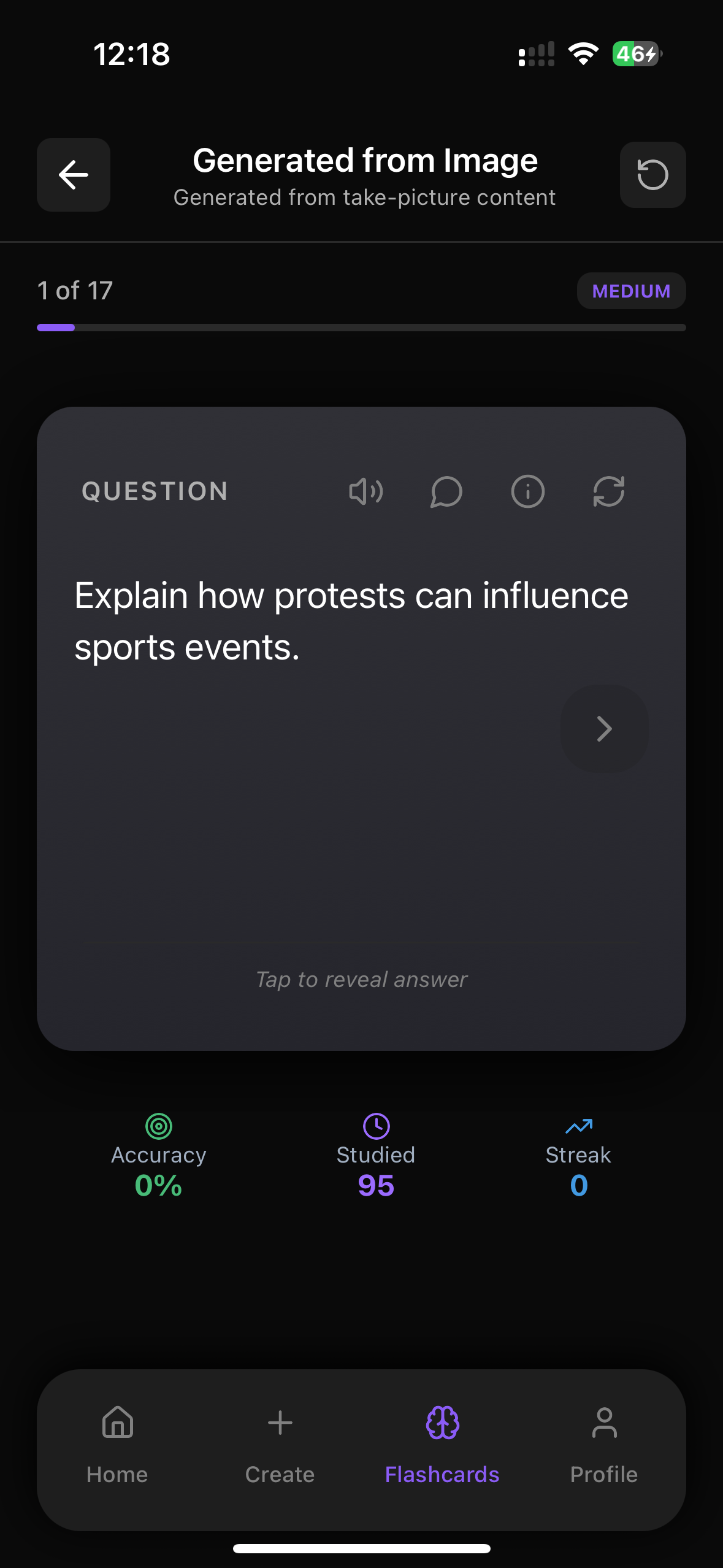
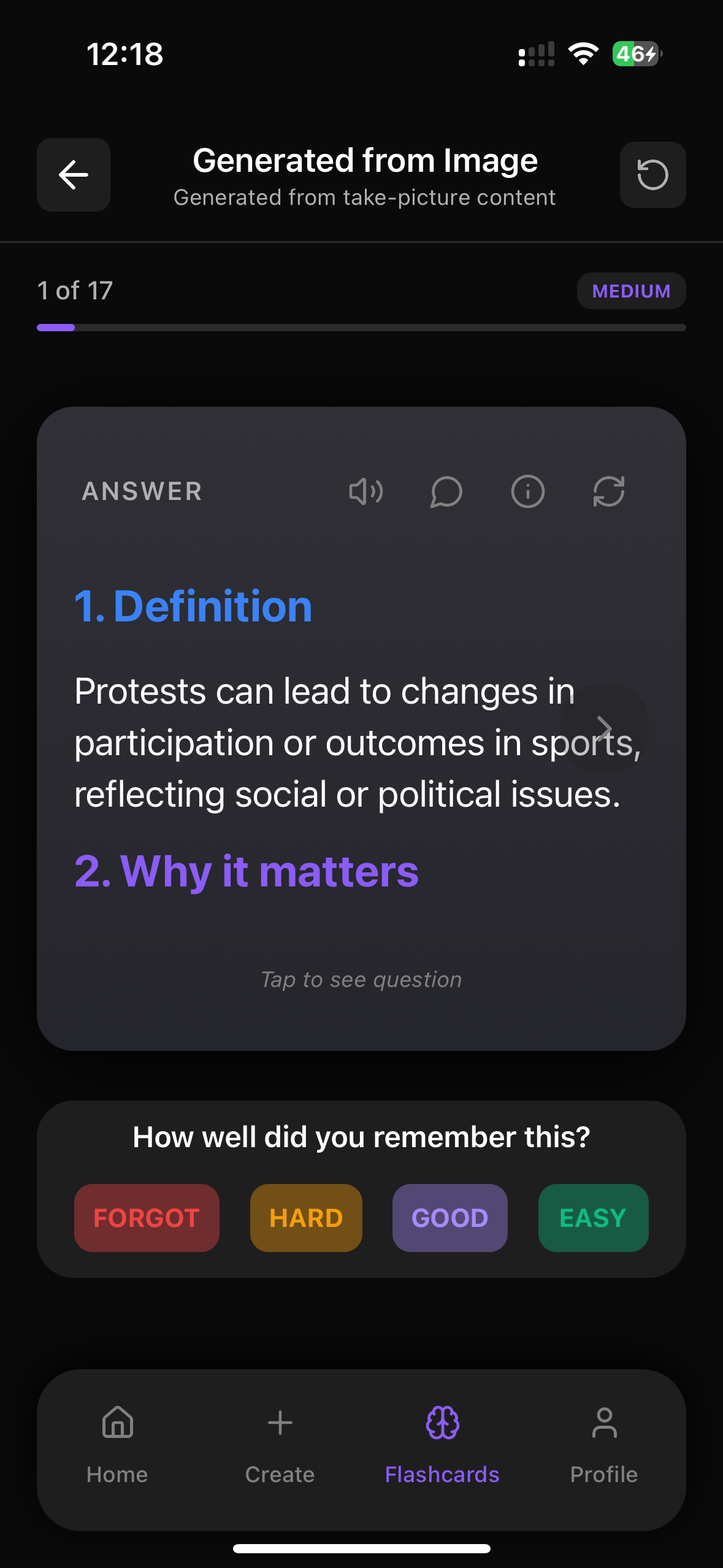
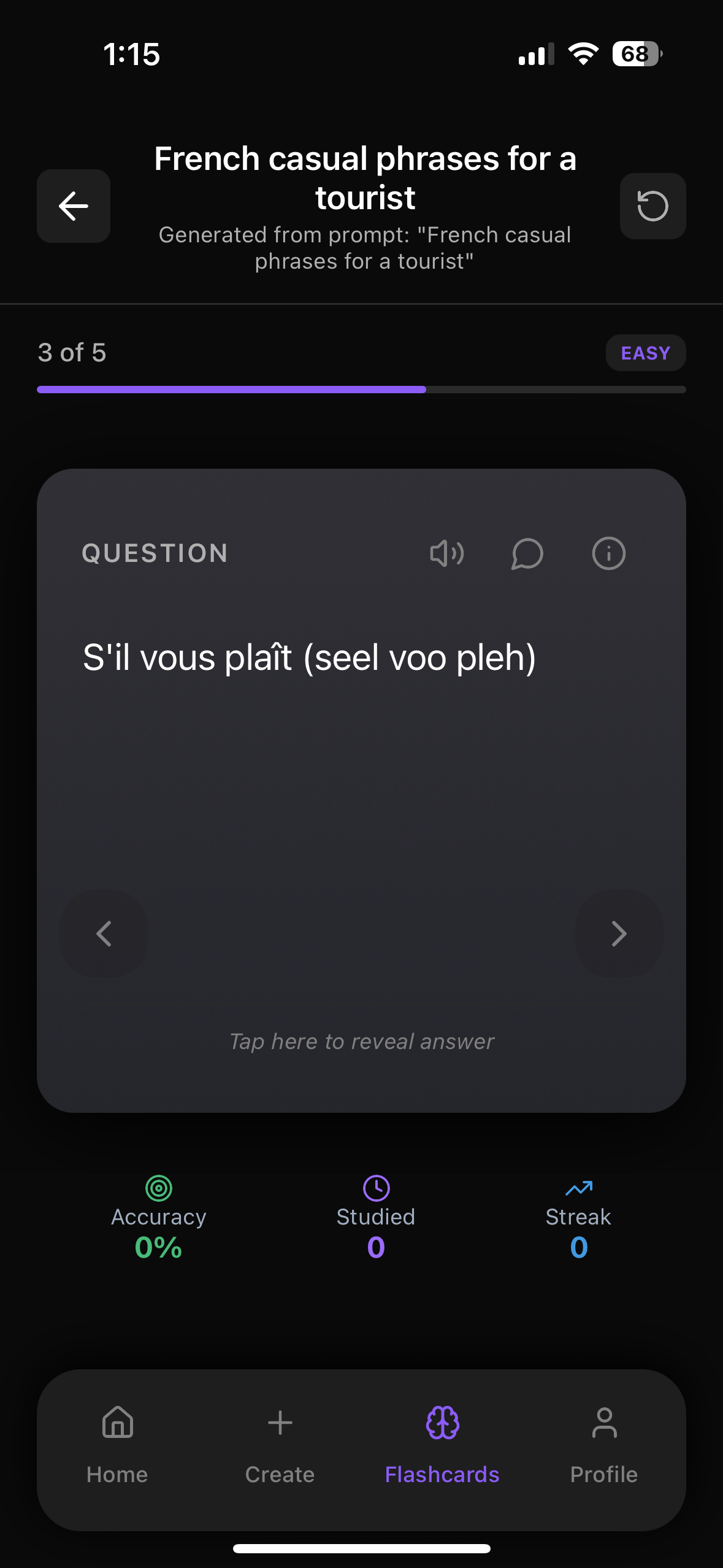
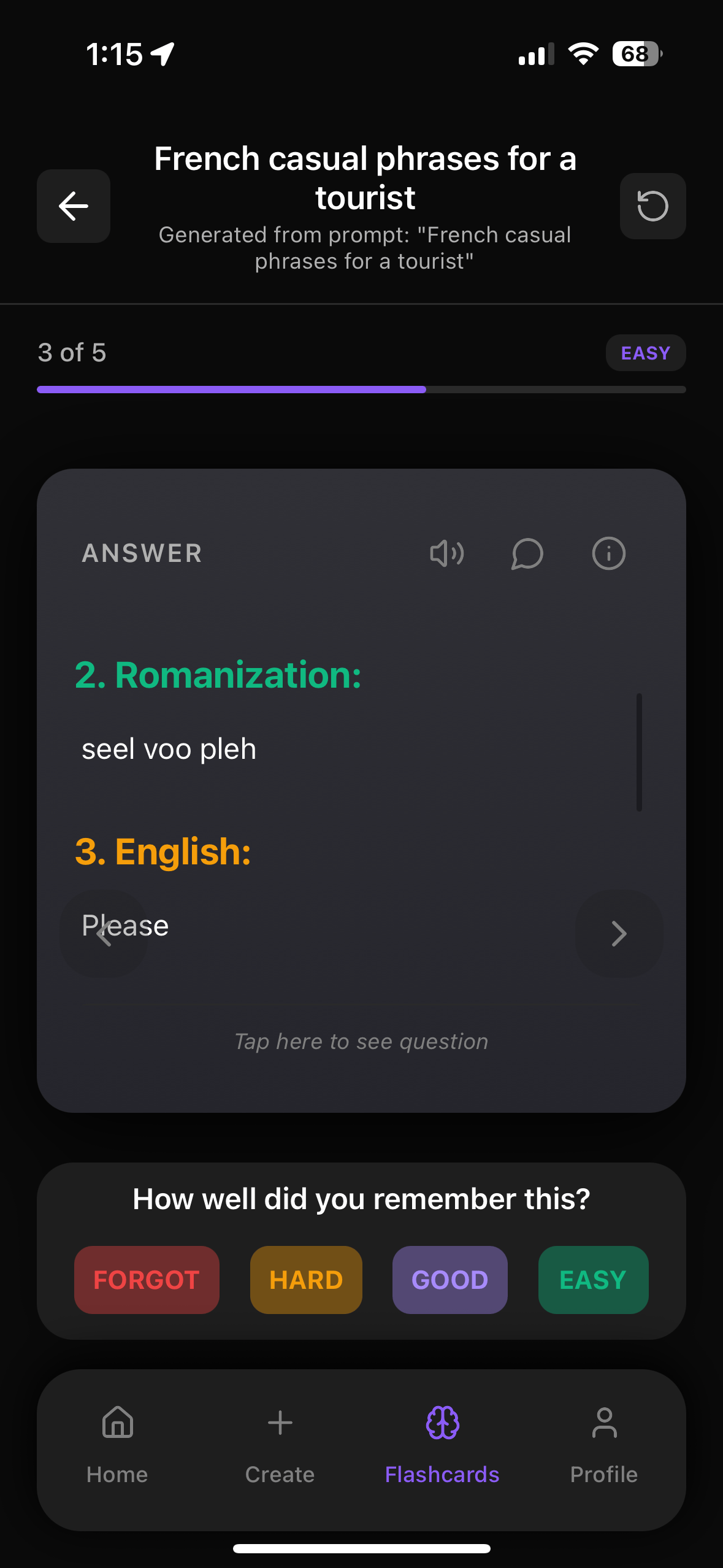
So, you know how anki language cards are basically digital flashcards people use to learn vocab, grammar, and phrases in a new language? They’re cards you review with spaced repetition so words show up right before you’re about to forget them, which is why they work so well for long-term memory. The idea is simple: front side has the word (or audio), back side has the translation, example sentence, or explanation. Apps like Anki made this popular, but newer apps like Flashrecall) now do the same thing with a cleaner interface, automatic reminders, and way faster card creation, especially from real-life content like screenshots and PDFs.
What Are Anki Language Cards, Really?
Alright, let’s break it down in normal human language.
Typical setup:
- Front: “bonjour” (maybe with audio)
- Back: “hello”, plus an example sentence and maybe a note like “formal/greeting”
You then review these cards using spaced repetition. Hard cards show up more often, easy ones get pushed further into the future. That’s why people swear by them for Japanese, Spanish, French, Chinese, and pretty much any language.
The concept itself is amazing.
The problem?
Traditional Anki can feel… ancient. Clunky UI, syncing issues, confusing settings, and making cards from real content (like a screenshot or PDF) is way more painful than it should be.
That’s where something like Flashrecall comes in — it uses the same spaced repetition idea, but makes card creation and studying way smoother:
👉 https://apps.apple.com/us/app/flashrecall-study-flashcards/id6746757085
Anki vs Modern Language Flashcard Apps (Like Flashrecall)
If you’re searching for “anki language cards”, you’re probably asking one of these:
- “How do I make good language cards?”
- “Is Anki still the best option?”
- “Is there an easier app that does the same thing?”
Let’s compare things quickly.
What Anki Does Well
- Super customizable (card types, add-ons, templates)
- Tons of shared decks online
- Proven spaced repetition system
But it also:
- Looks and feels old
- Has a bit of a learning curve
- Isn’t great for quick card creation from real-world stuff (screenshots, PDFs, YouTube, etc.)
What Flashrecall Does Better For Language Learning
Flashrecall basically takes the good parts of Anki language cards and makes them:
- Faster to create
- Easier to review
- More “real world” friendly
Some language-specific perks in Flashrecall:
- Make cards instantly from:
- Images (screenshots of Netflix subtitles, textbook pages, chat screenshots)
- Text
- PDFs
- YouTube links
- Audio
- Or just typed prompts
- Built-in spaced repetition with auto reminders, so you don’t need to think about scheduling reviews
- Active recall built in — you always have to think before flipping the card
- Works offline (perfect for flights, commutes, or bad Wi-Fi)
- You can chat with the flashcard if you’re unsure — for example, “Explain this word again in a simpler way” or “Give me another example sentence”
- Clean, modern interface that doesn’t feel like software from 2005
- Works on iPhone and iPad
- Free to start
You can grab it here:
👉 https://apps.apple.com/us/app/flashrecall-study-flashcards/id6746757085
How To Make Good Language Cards (No Matter What App You Use)
Let’s talk about how to actually make good anki language cards — the kind that don’t just pile up and overwhelm you.
1. One Idea Per Card
Don’t cram too much info into one card.
- Bad:
Front: “house, car, street, tree”
Back: “casa, coche, calle, árbol”
- Better:
Card 1: house → casa
Card 2: car → coche
Card 3: street → calle
Your brain likes small chunks. It’s way easier to remember.
In Flashrecall, you can quickly split things into multiple cards when you’re creating them, especially if you’re pulling from a text or PDF.
2. Use Example Sentences, Not Just Isolated Words
Words stick better in context.
Instead of:
- Front: “banco”
- Back: “bank”
Use:
- Front: “banco”
- Back: “bank – Voy al banco después del trabajo. (I’m going to the bank after work.)”
Or even:
- Front: “Voy al banco después del trabajo.”
- Back: “I’m going to the bank after work. (banco = bank)”
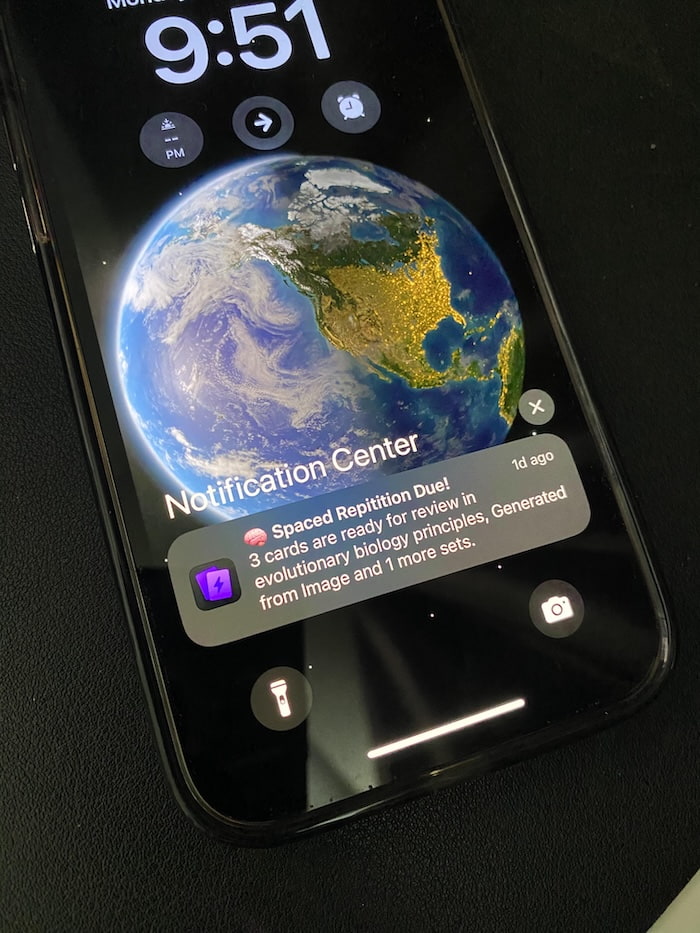
Flashrecall automatically keeps track and reminds you of the cards you don't remember well so you remember faster. Like this :
In Flashrecall, if you paste a paragraph or sentence, you can turn parts of it into cards in seconds, so building context-rich cards is actually fast instead of annoying.
3. Add Audio Whenever You Can
Pronunciation matters, especially for languages like French, Chinese, Japanese, etc.
Good card:
- Front: Audio of “ありがとう”
- Back: “ありがとう (arigatou) – thank you”
You can:
- Use text-to-speech
- Record yourself
- Or use real audio from content (YouTube, podcasts, etc.)
Flashrecall lets you create cards from audio and YouTube links, which is perfect if you’re learning from shows, music, or podcasts.
4. Don’t Overdo It: Quality > Quantity
A classic Anki mistake: adding 100+ new cards per day and then burning out.
Better approach:
- 10–30 good cards a day
- Focus on words/phrases you actually see in your reading, listening, or speaking
Spaced repetition works best when you stick with it, not when you go crazy for a week and quit. Flashrecall’s study reminders help a lot with that — gentle nudges so you don’t forget to review.
5. Use Both Directions (Carefully)
For some words, you want:
- Target language → your language
- Your language → target language
But you don’t need this for every single card.
Example:
- Front: “dog” → Back: “perro”
- Front: “perro” → Back: “dog”
Do this for core vocab, but don’t double everything or your reviews will explode.
In Flashrecall, you can quickly duplicate and flip cards when it makes sense, instead of manually retyping everything.
How To Turn Real-Life Content Into Language Cards
This is where the newer apps really beat old-school Anki setups.
Instead of manually typing every word from a textbook or screenshot, you can:
With Flashrecall, You Can:
- Take a screenshot of:
- Subtitles from Netflix
- A message from a native speaker
- A textbook page
- Import it into Flashrecall
- The app can help you pull out text and turn it into flashcards
You can also:
- Import PDFs (like grammar guides or ebooks)
- Paste in YouTube links and make cards from lines or subtitles
- Paste raw text from articles or chats
This makes your language cards feel way more real — you’re learning from stuff you actually read/watch, not just random word lists.
Download it here if you want to try that workflow:
👉 https://apps.apple.com/us/app/flashrecall-study-flashcards/id6746757085
Why Spaced Repetition Works So Well For Languages
Anki language cards (and Flashrecall cards) use spaced repetition because your brain forgets on a curve.
- Day 1: you remember almost everything
- Day 3: you’ve already forgotten half
- Day 7+: most of it is gone unless you review
Spaced repetition shows you cards:
- Right before you’re about to forget
- Less often as you get better at them
That’s why:
- 10–20 minutes a day can beat hours of random studying
- You actually keep vocabulary for months/years, not just until the next test
Flashrecall handles all of this automatically:
- You just open the app
- It tells you what’s due
- You tap “Again / Hard / Good / Easy” (or similar)
- It schedules the next review for you
No manual planning, no spreadsheets, no overthinking.
How Flashrecall Improves On Classic Anki Language Cards
To sum it up, here’s how Flashrecall compares if you’re into language learning:
What You Get With Flashrecall
- Automatic spaced repetition with smart scheduling
- Study reminders so you don’t forget to review
- Instant card creation from:
- Images
- Text
- PDFs
- Audio
- YouTube links
- Typed prompts
- Works offline
- You can chat with the flashcard if something is confusing
- Ask for more examples
- Get simpler explanations
- Clarify grammar
- Great for:
- Languages
- Exams
- School/university
- Medicine, business, anything with lots of facts
- Fast, modern, easy to use
- Free to start
- Works on iPhone and iPad
If you like the idea of Anki language cards but hate the friction, Flashrecall gives you the same learning power with a much smoother experience.
Grab it here:
👉 https://apps.apple.com/us/app/flashrecall-study-flashcards/id6746757085
Simple Starter Setup: Your First Language Deck
If you’re not sure where to start, here’s a super simple plan:
1. Create a deck in Flashrecall called “Spanish – Core Vocab” (or your language)
2. Every day:
- Add 5–15 new cards from:
- A show you’re watching
- A text conversation
- A short article
- Use example sentences whenever possible
3. Review your due cards:
- Aim for 10–20 minutes
- Tap honestly: if it was hard, mark it hard
4. Once a week:
- Add a few grammar cards (e.g., “por vs para”, “ser vs estar” with examples)
5. Keep it fun:
- Use words you actually care about (hobbies, work, travel, etc.)
Do this for a month and you’ll be shocked by how many words and phrases you remember without feeling like you’re grinding endlessly.
Final Thoughts
Anki language cards are a solid way to learn any language — the method works, no question. The only real downside is how clunky the experience can be.
If you want the same spaced repetition magic but with:
- Faster card creation
- Cleaner design
- Built-in reminders
- And smarter tools for real-life content
then it’s worth trying Flashrecall.
You can start for free here:
👉 https://apps.apple.com/us/app/flashrecall-study-flashcards/id6746757085
Set up a small deck, add a few cards from stuff you’re already reading or watching, and let spaced repetition quietly do its thing in the background while you live your life.
Frequently Asked Questions
Is Anki good for studying?
Anki is powerful but requires manual card creation and has a steep learning curve. Flashrecall offers AI-powered card generation from your notes, images, PDFs, and videos, making it faster and easier to create effective flashcards.
What's the fastest way to create flashcards?
Manually typing cards works but takes time. Many students now use AI generators that turn notes into flashcards instantly. Flashrecall does this automatically from text, images, or PDFs.
How do I start spaced repetition?
You can manually schedule your reviews, but most people use apps that automate this. Flashrecall uses built-in spaced repetition so you review cards at the perfect time.
What's the best way to learn a new language?
Research shows that combining flashcards with spaced repetition and active recall is highly effective. Flashrecall automates this process, generating cards from your study materials and scheduling reviews at optimal intervals.
How can I study more effectively for this test?
Effective exam prep combines active recall, spaced repetition, and regular practice. Flashrecall helps by automatically generating flashcards from your study materials and using spaced repetition to ensure you remember everything when exam day arrives.
Related Articles
- Anki Flashcards For Languages: 7 Proven Tips To Learn Faster (And A Better Alternative Most Learners Miss) – If you’re using Anki flashcards for languages but still forgetting words, this guide will show you what actually works and the app that makes it way easier.
- Anki For Language Learning: 7 Powerful Ways To Learn Faster (And A Smarter Alternative Most Learners Don’t Know About) – If you love Anki but want something faster, easier, and built for real-life studying, you’ll want to read this.
- Anki How To Use: Step‑By‑Step Guide Plus a Faster Alternative Most Students Miss – Learn Smarter Today
Research References
The information in this article is based on peer-reviewed research and established studies in cognitive psychology and learning science.
Cepeda, N. J., Pashler, H., Vul, E., Wixted, J. T., & Rohrer, D. (2006). Distributed practice in verbal recall tasks: A review and quantitative synthesis. Psychological Bulletin, 132(3), 354-380
Meta-analysis showing spaced repetition significantly improves long-term retention compared to massed practice
Carpenter, S. K., Cepeda, N. J., Rohrer, D., Kang, S. H., & Pashler, H. (2012). Using spacing to enhance diverse forms of learning: Review of recent research and implications for instruction. Educational Psychology Review, 24(3), 369-378
Review showing spacing effects work across different types of learning materials and contexts
Kang, S. H. (2016). Spaced repetition promotes efficient and effective learning: Policy implications for instruction. Policy Insights from the Behavioral and Brain Sciences, 3(1), 12-19
Policy review advocating for spaced repetition in educational settings based on extensive research evidence
Karpicke, J. D., & Roediger, H. L. (2008). The critical importance of retrieval for learning. Science, 319(5865), 966-968
Research demonstrating that active recall (retrieval practice) is more effective than re-reading for long-term learning
Roediger, H. L., & Butler, A. C. (2011). The critical role of retrieval practice in long-term retention. Trends in Cognitive Sciences, 15(1), 20-27
Review of research showing retrieval practice (active recall) as one of the most effective learning strategies
Dunlosky, J., Rawson, K. A., Marsh, E. J., Nathan, M. J., & Willingham, D. T. (2013). Improving students' learning with effective learning techniques: Promising directions from cognitive and educational psychology. Psychological Science in the Public Interest, 14(1), 4-58
Comprehensive review ranking learning techniques, with practice testing and distributed practice rated as highly effective

FlashRecall Team
FlashRecall Development Team
The FlashRecall Team is a group of working professionals and developers who are passionate about making effective study methods more accessible to students. We believe that evidence-based learning tec...
Credentials & Qualifications
- •Software Development
- •Product Development
- •User Experience Design
Areas of Expertise
Ready to Transform Your Learning?
Start using FlashRecall today - the AI-powered flashcard app with spaced repetition and active recall.
Download on App Store