Anki Law: How To Actually Remember Cases And Articles Faster (Most Students Don’t Know This) – Stop drowning in case briefs and start memorising law like a machine.
Anki law made simple: turn cases into smart flashcards, use spaced repetition, skip Anki’s clunky setup and try an easier app like Flashrecall for law school.
How Flashrecall app helps you remember faster. It's free
So… What Even Is “Anki Law”?
Alright, let’s talk about anki law because it’s way simpler than it sounds. Anki law basically means using Anki-style flashcards and spaced repetition to learn law cases, statutes, articles, and legal concepts so they actually stick in your brain. Instead of rereading notes 10 times, you turn them into cards and review them at smart intervals so you remember them for exams and real life. For example, you might have cards for “Donoghue v Stevenson – facts, issue, ratio, significance” or “Article 101 TFEU – what does it prohibit?” and keep seeing them just before you’d normally forget. Apps like Flashrecall do this automatically for you and make the whole “anki law” approach way less painful:
https://apps.apple.com/us/app/flashrecall-study-flashcards/id6746757085
Why Law Students Swear By Anki-Style Studying
You know how law feels like trying to memorise an entire library?
That’s exactly why people talk about “anki law” as a study method.
The idea is simple:
- Law = tons of facts + rules + cases + exceptions
- Your brain = not designed for cramming 300 cases the night before
- Spaced repetition = show you stuff right before you forget it
So instead of:
> Read case → highlight → forget → panic
You do:
> Turn case into flashcards → app schedules reviews → you remember long-term
This is where Flashrecall comes in clutch. It’s a flashcard app on iPhone and iPad that:
- Uses built-in spaced repetition (no need to tweak settings like Anki)
- Has study reminders, so you actually review your law cards
- Works offline, so you can study on the train, in court, in class, whatever
- Is free to start, so you can test your “anki law” setup without overthinking it
Link again so you don’t have to scroll:
https://apps.apple.com/us/app/flashrecall-study-flashcards/id6746757085
Anki Law, But Make It Easy: Why Many Students Don’t Stick With Anki
A lot of people like the idea of Anki for law… and then quit after a week.
Common problems:
- Too many settings, decks, and options
- Making cards takes forever
- Forgetting to review, then getting hit with 800 due cards
- Interface feels old and clunky, especially on mobile
The method is good. The experience is what kills it for a lot of law students.
That’s why using an Anki-style method in a simpler app like Flashrecall makes way more sense for most people:
- Fast, modern, clean interface
- Automatic spaced repetition built-in – no need to think about intervals
- Study reminders so your reviews don’t pile up
- Works great for law school, bar prep, legal exams, and professional training
It’s still “anki law” in spirit – just without the headache.
How To Turn Law Into Flashcards (Without Spending Your Whole Life Typing)
The biggest trick to making anki-style law cards work is not making them insanely detailed.
1. One Card = One Idea
Bad card:
> “Explain the facts, issue, holding, and ratio of Donoghue v Stevenson in detail.”
Good cards:
- “Donoghue v Stevenson – key facts?”
- “Donoghue v Stevenson – legal issue?”
- “Donoghue v Stevenson – ratio / principle?”
- “Donoghue v Stevenson – why is it important?”
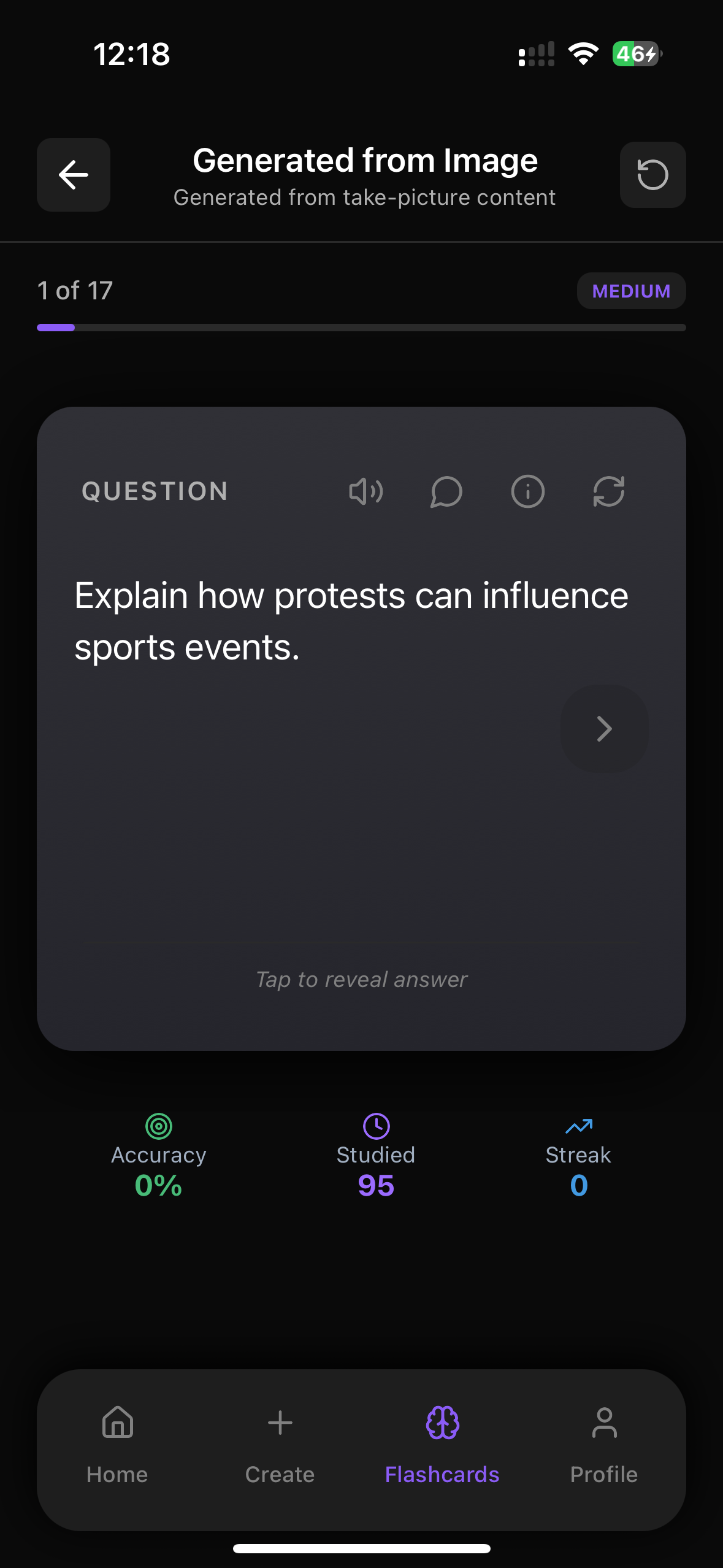
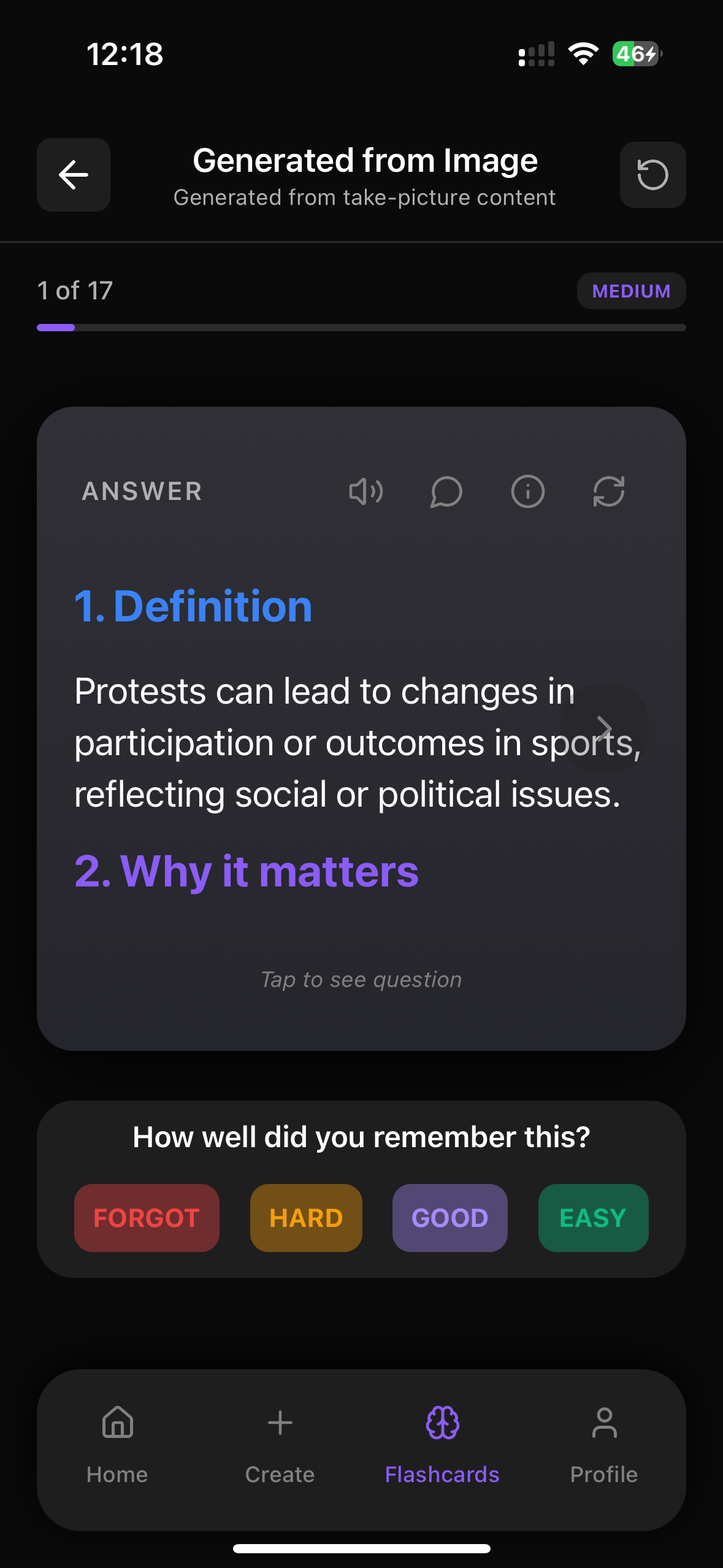
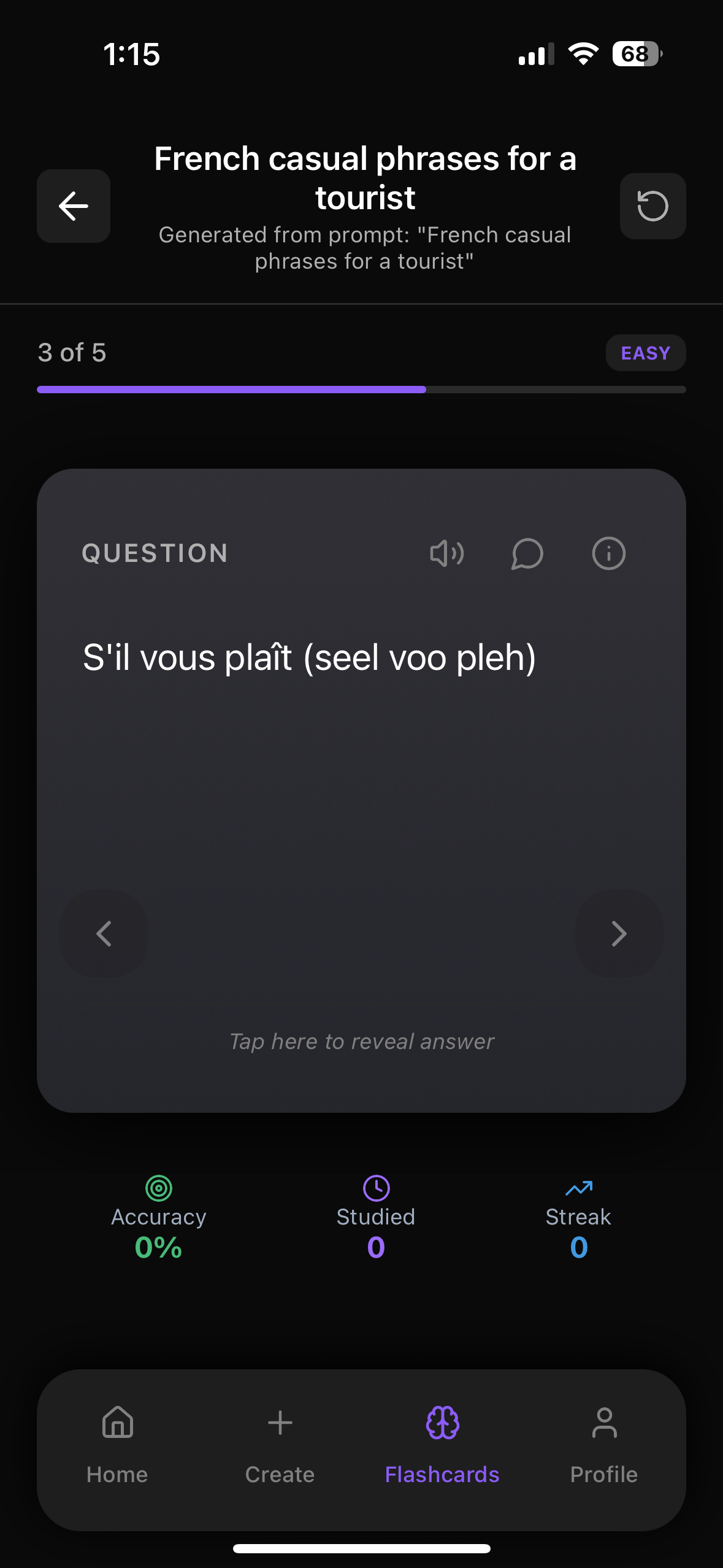
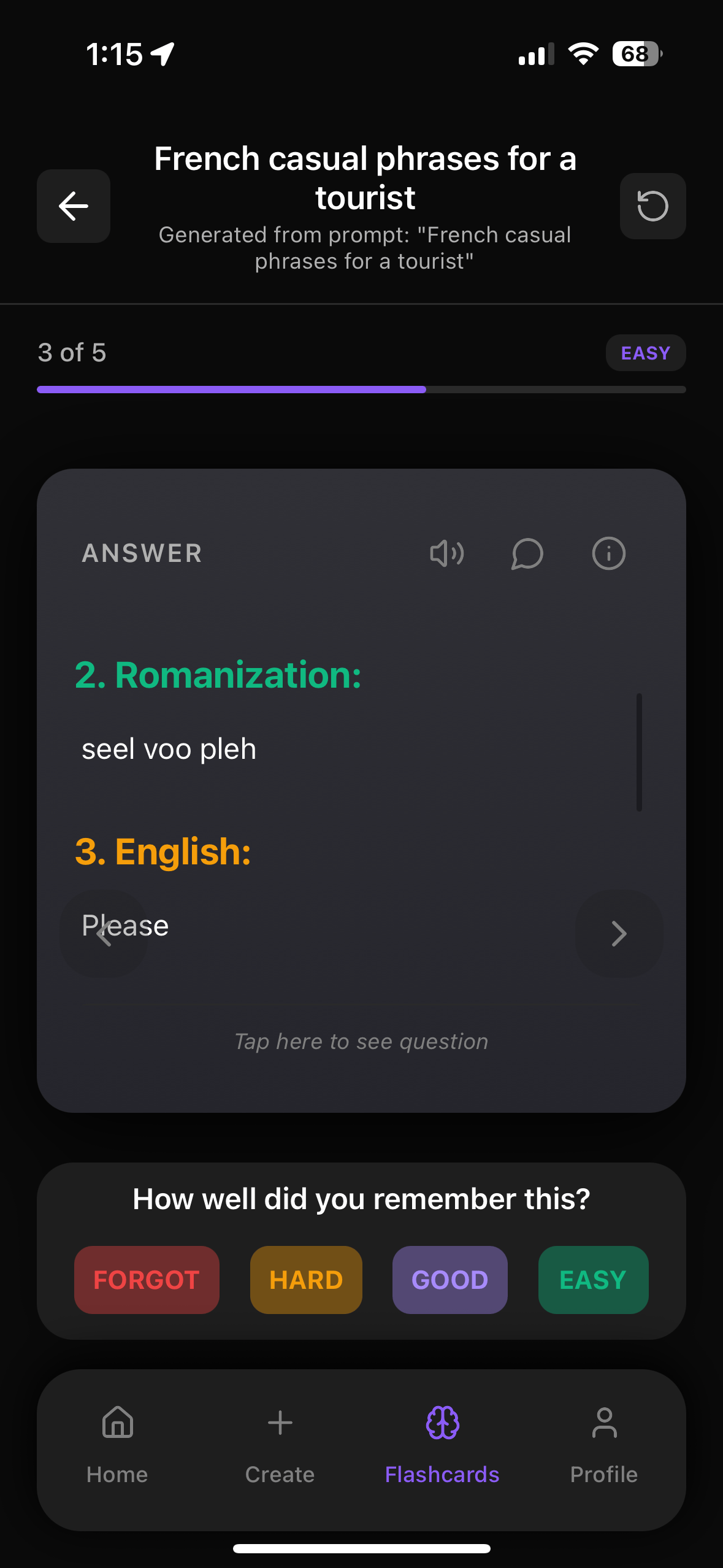
Flashrecall has built-in active recall – you see the question, try to answer from memory, then reveal the back. That’s the whole game.
2. Use Flashrecall To Create Cards Instantly
This is where Flashrecall is honestly way nicer than classic Anki for law:
You can make cards from:
- Images – snap a photo of your textbook, casebook, or handwritten notes and turn key parts into cards
- Text – paste your case brief or outline and split it into multiple cards
- PDFs – import your lecture slides or reading and pull out the important bits
- YouTube links – watching a lecture on promissory estoppel? Make cards as you go
- Audio – record explanations or definitions and turn them into cards
- Typed prompts – just type “Offer vs Invitation to Treat – differences?” and you’re done
Here’s the link again if you want to try this while you read:
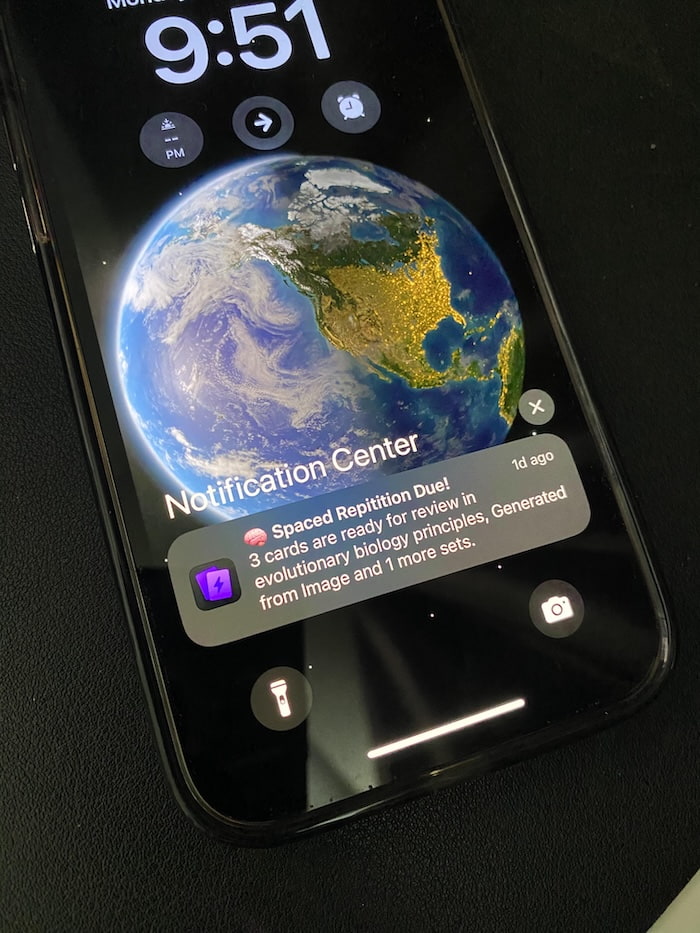
Flashrecall automatically keeps track and reminds you of the cards you don't remember well so you remember faster. Like this :
https://apps.apple.com/us/app/flashrecall-study-flashcards/id6746757085
What To Actually Put On Your “Anki Law” Cards
Let’s break it down by category.
1. Cases
For each big case, you probably want cards for:
- Name → Area
- Q: “Donoghue v Stevenson – area of law?”
- A: “Tort – negligence, duty of care”
- Facts
- Q: “Donoghue v Stevenson – key facts?”
- A: “Snail in ginger beer; consumer injured; no direct contract with manufacturer”
- Issue
- Q: “What was the legal issue in Donoghue v Stevenson?”
- A: “Does a manufacturer owe a duty of care to the ultimate consumer?”
- Holding / Ratio
- Q: “What principle did Donoghue v Stevenson establish?”
- A: “General duty of care; ‘neighbour principle’ – must take reasonable care to avoid acts/omissions likely to injure your neighbour”
- Significance
- Q: “Why is Donoghue v Stevenson important?”
- A: “Foundation of modern negligence in common law”
You don’t need to write an essay on each card. Short, sharp, testable.
2. Statutes / Articles
For statutes, codes, and treaty articles:
- Article number → content
- Q: “Article 101 TFEU – what does it prohibit?”
- A: “Agreements between undertakings that prevent, restrict, or distort competition within the internal market”
- Conditions / elements
- Q: “Elements of negligence?”
- A: “Duty of care, breach, causation, damage (and sometimes remoteness)”
- Exceptions / defences
- Q: “Defences to negligence?”
- A: “Contributory negligence, volenti non fit injuria, illegality, etc.”
Flashrecall is great for this because you can chat with the flashcard if you’re unsure – so if you forget what “volenti non fit injuria” really means in context, you can ask and get a quick explanation without leaving the app.
How Spaced Repetition Actually Works For Law
The “anki law” magic is all about timing.
Here’s what Flashrecall does automatically:
1. You see a card (e.g. “Elements of consideration?”)
2. You try to answer in your head
3. You rate how hard it was (easy / medium / hard)
4. Flashrecall schedules the next review:
- Hard → sooner
- Easy → later
So a new case might show up like:
- Day 1
- Day 3
- Day 7
- Day 14
- Day 30
- Day 60
Each time, the gap gets bigger, but only if you’re actually remembering it. That’s how you end up walking into exams with cases and articles still fresh, instead of that “I know I saw this once in week 2” feeling.
And because Flashrecall has study reminders, you don’t have to remember to open the app – it nudges you before your memory starts fading.
Flashrecall vs Anki For Law: What’s The Difference?
Since you searched “anki law”, you’re probably wondering if you should just use Anki or something else. Quick comparison:
Anki
- Powerful, but:
- Lots of settings
- Can feel clunky on mobile
- Card creation is mostly manual
- No built-in “chat with your card” feature
- Steeper learning curve
Flashrecall
- Designed to be fast and modern
- Free to start on iPhone and iPad
- Built-in spaced repetition – no config needed
- Active recall baked into every card
- Make cards from images, PDFs, text, audio, YouTube links
- Chat with the flashcard if you want more explanation or examples
- Works offline, so you can revise in court corridors, libraries, or on the train
- Great for law, languages, medicine, business, school, uni, bar prep – anything
So if you like the idea of “anki law” but don’t want to wrestle with the software, Flashrecall basically gives you the same learning method in a cleaner, easier package:
https://apps.apple.com/us/app/flashrecall-study-flashcards/id6746757085
Example: Building A Mini “Anki Law” Deck For Contract Law
Let’s say you’re doing Contract Law and want to build a quick deck in Flashrecall.
You could create cards for:
Key Concepts
- Q: “What is consideration in contract law?”
A: “Something of value given in exchange for a promise; must move from the promisee and be sufficient but not necessarily adequate.”
- Q: “What is an invitation to treat? Example?”
A: “An indication of willingness to negotiate, not an offer. E.g. goods displayed on shelves in a shop.”
Cases
- Carlill v Carbolic Smoke Ball Co
- Q: “Carlill v Carbolic Smoke Ball – what kind of offer?”
A: “Unilateral offer to the world at large.”
- Q: “Why was the deposit of £1000 relevant in Carlill?”
A: “Showed intention to create legal relations.”
- Pharmaceutical Society v Boots
- Q: “Pharmaceutical Society v Boots – what was decided?”
A: “Display of goods on shelves is an invitation to treat; offer is made at the cash desk.”
Statutes / Rules
- Q: “What does the Statute of Frauds require for certain contracts?”
A: “Some contracts (e.g. for sale of land) must be in writing to be enforceable.”
Within Flashrecall, you can:
- Import your contract law outline as a PDF and create cards directly
- Add images of diagrams or flowcharts from lectures
- Use audio to record quick explanations of tricky topics
And then just let the spaced repetition system handle the schedule.
How To Fit “Anki Law” Into Your Daily Routine (Without Burning Out)
The goal is not to spend 3 hours a day making cards.
Try this:
- During class
- Mark key cases / concepts that seem likely to be tested
- After class (15–20 min)
- Turn those into 5–15 flashcards in Flashrecall
- Daily review (15–30 min)
- Open Flashrecall, do the cards due for that day
- That’s it – no massive “catch-up” sessions
Because Flashrecall works offline, you can squeeze in reviews:
- On the bus/train
- Waiting for class to start
- In between client meetings or tutorials
- Before bed instead of scrolling social media
Small, consistent sessions beat huge, occasional cramming every time.
Final Thoughts: Use “Anki Law” Ideas, But Don’t Marry The App
The “anki law” method – turning law into flashcards + spaced repetition – is honestly one of the most effective ways to remember cases, statutes, and concepts long-term.
But you don’t have to use Anki itself.
If you want:
- A simpler, more modern app
- Automatic spaced repetition with zero setup
- Easy card creation from images, PDFs, YouTube, text, audio
- Study reminders so you stay on track
- The ability to chat with your flashcards when you’re stuck
Then try doing your “anki law” workflow in Flashrecall instead. It gives you all the memory benefits without the friction:
https://apps.apple.com/us/app/flashrecall-study-flashcards/id6746757085
Set up a small deck for one topic, test it for a week, and you’ll feel the difference when you can actually recall cases without staring at the ceiling for 30 seconds.
Frequently Asked Questions
Is Anki good for studying?
Anki is powerful but requires manual card creation and has a steep learning curve. Flashrecall offers AI-powered card generation from your notes, images, PDFs, and videos, making it faster and easier to create effective flashcards.
What's the fastest way to create flashcards?
Manually typing cards works but takes time. Many students now use AI generators that turn notes into flashcards instantly. Flashrecall does this automatically from text, images, or PDFs.
How do I start spaced repetition?
You can manually schedule your reviews, but most people use apps that automate this. Flashrecall uses built-in spaced repetition so you review cards at the perfect time.
How can I study more effectively for this test?
Effective exam prep combines active recall, spaced repetition, and regular practice. Flashrecall helps by automatically generating flashcards from your study materials and using spaced repetition to ensure you remember everything when exam day arrives.
Related Articles
- Paramedic Drug Flashcards: The Essential Way To Master Meds Fast (Most Students Don’t Know This) – Learn meds quicker, remember doses under pressure, and stop blanking on scene with this simple flashcard system.
- Anki For iPhone Free: 7 Powerful Reasons To Try This Smarter Alternative Instead – Stop Wasting Time Fighting Clunky Apps And Actually Start Learning Faster
- Anki iOS Download: The Best Alternative App Most Students Prefer Now – Stop Wasting Time Syncing and Start Studying Faster With This Instead
Research References
The information in this article is based on peer-reviewed research and established studies in cognitive psychology and learning science.
Cepeda, N. J., Pashler, H., Vul, E., Wixted, J. T., & Rohrer, D. (2006). Distributed practice in verbal recall tasks: A review and quantitative synthesis. Psychological Bulletin, 132(3), 354-380
Meta-analysis showing spaced repetition significantly improves long-term retention compared to massed practice
Carpenter, S. K., Cepeda, N. J., Rohrer, D., Kang, S. H., & Pashler, H. (2012). Using spacing to enhance diverse forms of learning: Review of recent research and implications for instruction. Educational Psychology Review, 24(3), 369-378
Review showing spacing effects work across different types of learning materials and contexts
Kang, S. H. (2016). Spaced repetition promotes efficient and effective learning: Policy implications for instruction. Policy Insights from the Behavioral and Brain Sciences, 3(1), 12-19
Policy review advocating for spaced repetition in educational settings based on extensive research evidence
Karpicke, J. D., & Roediger, H. L. (2008). The critical importance of retrieval for learning. Science, 319(5865), 966-968
Research demonstrating that active recall (retrieval practice) is more effective than re-reading for long-term learning
Roediger, H. L., & Butler, A. C. (2011). The critical role of retrieval practice in long-term retention. Trends in Cognitive Sciences, 15(1), 20-27
Review of research showing retrieval practice (active recall) as one of the most effective learning strategies
Dunlosky, J., Rawson, K. A., Marsh, E. J., Nathan, M. J., & Willingham, D. T. (2013). Improving students' learning with effective learning techniques: Promising directions from cognitive and educational psychology. Psychological Science in the Public Interest, 14(1), 4-58
Comprehensive review ranking learning techniques, with practice testing and distributed practice rated as highly effective

FlashRecall Team
FlashRecall Development Team
The FlashRecall Team is a group of working professionals and developers who are passionate about making effective study methods more accessible to students. We believe that evidence-based learning tec...
Credentials & Qualifications
- •Software Development
- •Product Development
- •User Experience Design
Areas of Expertise
Ready to Transform Your Learning?
Start using FlashRecall today - the AI-powered flashcard app with spaced repetition and active recall.
Download on App Store