Anki Mandarin Tips: The Powerful Guide
Anki Mandarin tips reveal how to master vocabulary and tones using spaced repetition. Flashrecall simplifies your study process by automating flashcard reviews.
How Flashrecall app helps you remember faster. It's free
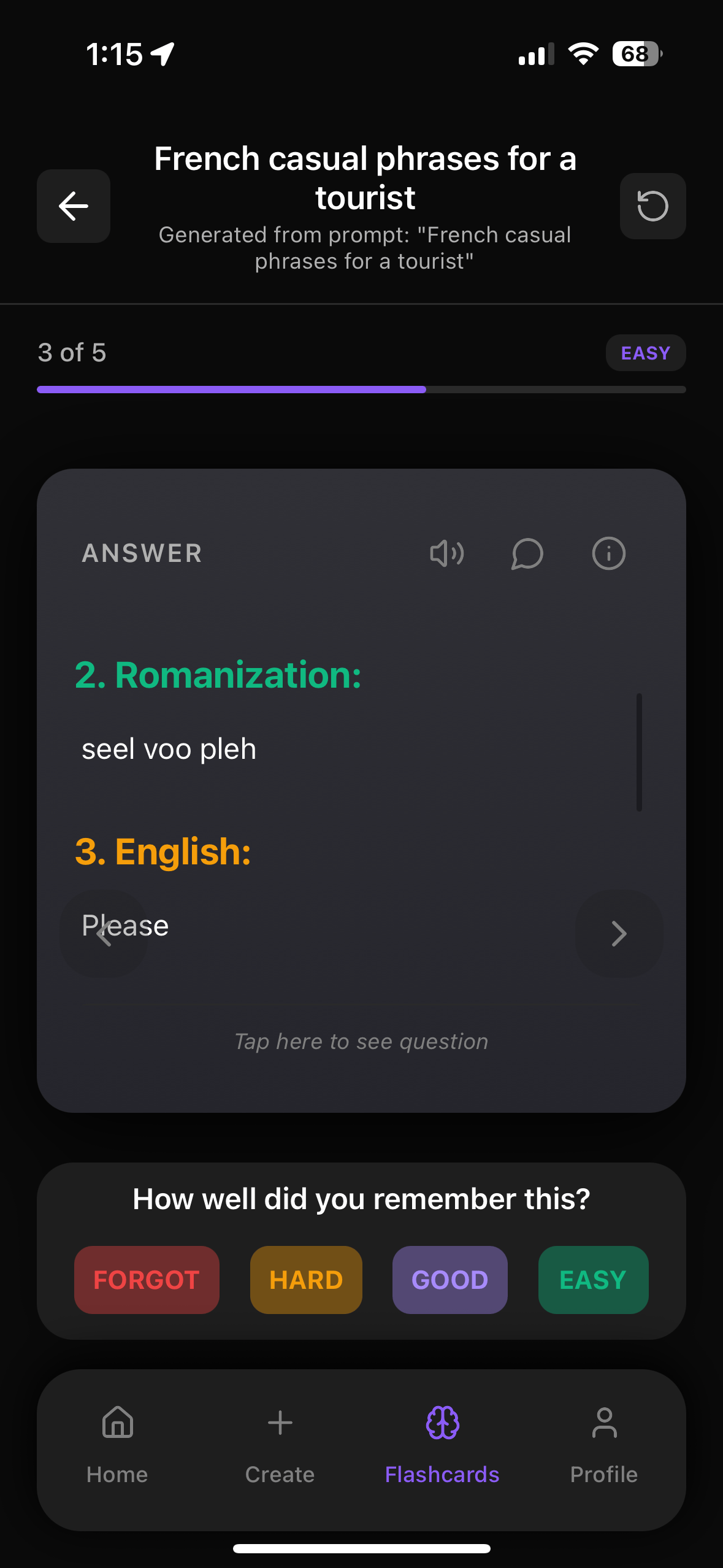
Anki For Mandarin: Awesome… But Also Kind Of A Headache?
You ever wonder how some people just seem to pick up Mandarin like it's no big deal? Well, let me tell you, anki mandarin tips are like the secret sauce to making that happen. If you've been trying to memorize vocab, tones, or those tricky characters, flashcards can seriously change the game for you. The cool part is, with things like active recall and spaced repetition, you're not just cramming information—you’re actually remembering it long-term. And Flashrecall? It’s like having a little study buddy that handles the tricky parts, automatically turning your study notes into handy flashcards and reminding you when to review. It’s all about making studying less of a grind and more of a breeze. So, if you're curious about diving deeper and getting all the juicy details, go ahead and check out our complete guide. Trust me, you’ll thank yourself later!
- Everyone says “Anki is the secret to fluency”
- You download a massive deck
- You’re overwhelmed by 3,000 cards you don’t really understand
- You miss a few days… and suddenly you’re buried in 500 reviews
Anki can work, but it’s not exactly friendly — especially on iOS.
That’s where Flashrecall comes in. It keeps the good parts of Anki (spaced repetition, active recall) but makes everything way faster, simpler, and more fun. You can grab it here:
👉 https://apps.apple.com/us/app/flashrecall-study-flashcards/id6746757085
Let’s talk about how to actually use Anki-style learning for Mandarin effectively — and why Flashrecall might be a better fit if you’re on iPhone or iPad.
Why Spaced Repetition Is So Good For Mandarin
Mandarin has three big problems for your memory:
1. Characters – They all blur together if you don’t review them right.
2. Tones – You think you remember, until you try to say it.
3. Words & sentences – You need context, not just isolated vocab.
Spaced repetition (what Anki is famous for) helps you review stuff right before you forget it, which is perfect for:
- Characters like 学, 想, 请
- Tone pairs like xuéxí, qǐngwèn
- Sentence patterns like “虽然…但是…”
Anki does this well, but it’s very DIY. Flashrecall bakes this in automatically with built-in spaced repetition and reminders, so you don’t have to tweak settings or remember to open the app. It just nudges you: “hey, time to review your Mandarin cards.”
The Problem With Anki For Mandarin On iOS
If you’re using Anki for Mandarin on your phone, you’ve probably hit at least one of these:
- The interface feels… ancient
- Syncing between desktop and iOS can be annoying
- Making cards on mobile is slow and clunky
- Adding audio, screenshots, or PDFs is a pain
- Miss a few days? Your review queue explodes
That’s why a lot of people start with Anki and then quietly stop using it.
Flashrecall basically takes the Anki idea and makes it iOS-native, fast, and modern:
- Works smoothly on iPhone and iPad
- Fast card creation from text, images, audio, PDFs, YouTube links, or just typing
- Built-in active recall and spaced repetition with auto reminders
- Works offline, so you can study on the subway, plane, or wherever
- Free to start, so no pressure
So yes — you can absolutely learn Mandarin with Anki. But if you want something that feels like it was built for your phone in 2025, Flashrecall is just easier to live with.
1. Focus On Sentences, Not Just Single Words
A common Anki mistake: making cards like this:
> Front: 学
> Back: to study
Technically correct… but not super useful.
For Mandarin, sentence-based cards are way better:
> Front: 我在大学学中文。
> Back: I study Chinese at university.
> Extra: 学 (xué) – to study
Why this works better:
- You see word + grammar + context all at once
- You learn how native speakers actually use the word
- You can reuse the sentence when you speak
In Flashrecall, this is really easy to do:
- Paste a sentence from a textbook, chat, or website
- Highlight the word you want to focus on
- Turn it into a card in seconds
You can even chat with the flashcard if you’re unsure about a word or grammar point — super useful when you’re like “wait, why is there a 了 here?”
2. Always Include Audio (Tones Matter!)
Mandarin without audio is dangerous. You think you’re learning, but your tones drift.
With Anki, adding audio often means:
- Downloading files
- Importing them manually
- Setting up templates
Most people just skip it.
With Flashrecall, you can:
- Add audio directly when you make the card (record yourself or add audio content)
- Create cards from YouTube links, so you can turn real Mandarin videos into flashcards
- Use active recall to see the character first, then check if you got the tones right
Example card idea:
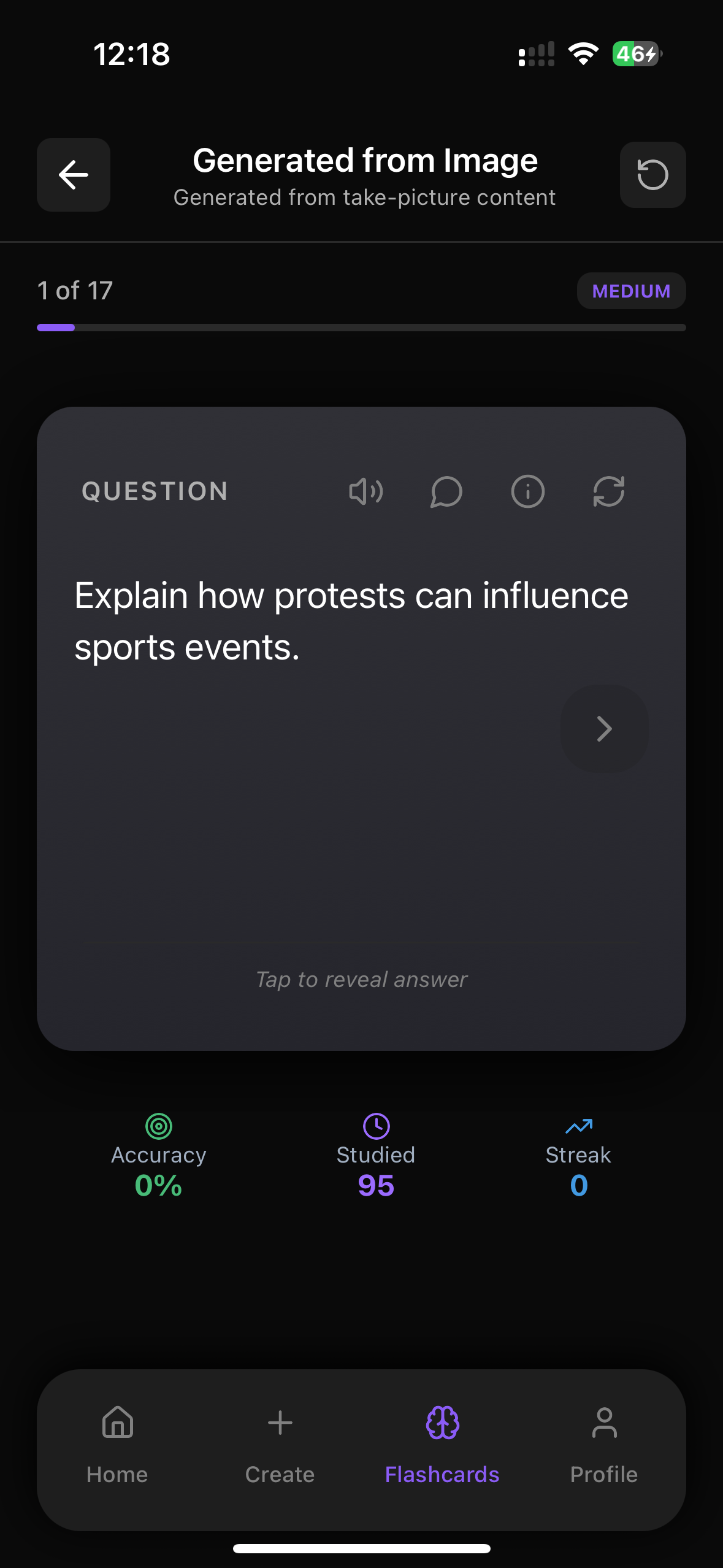
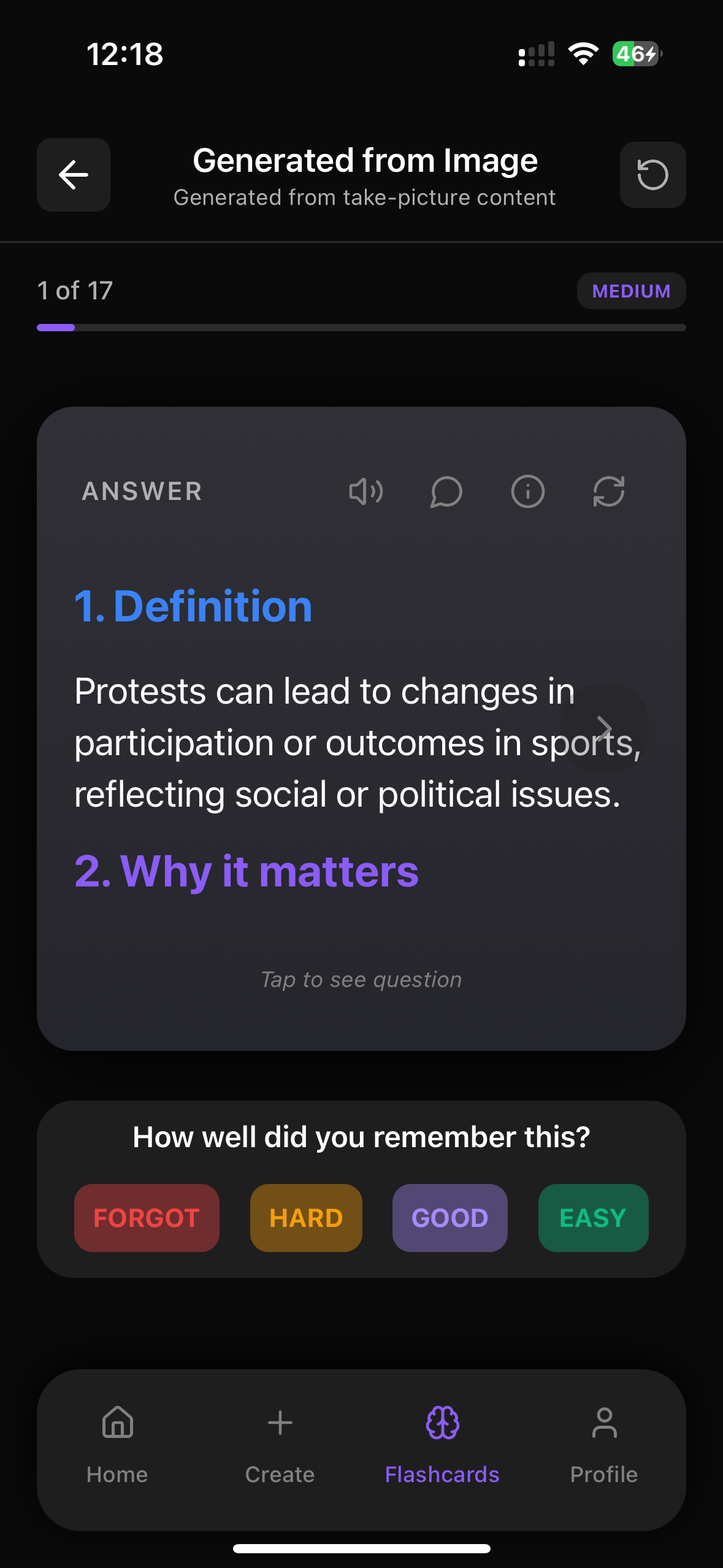
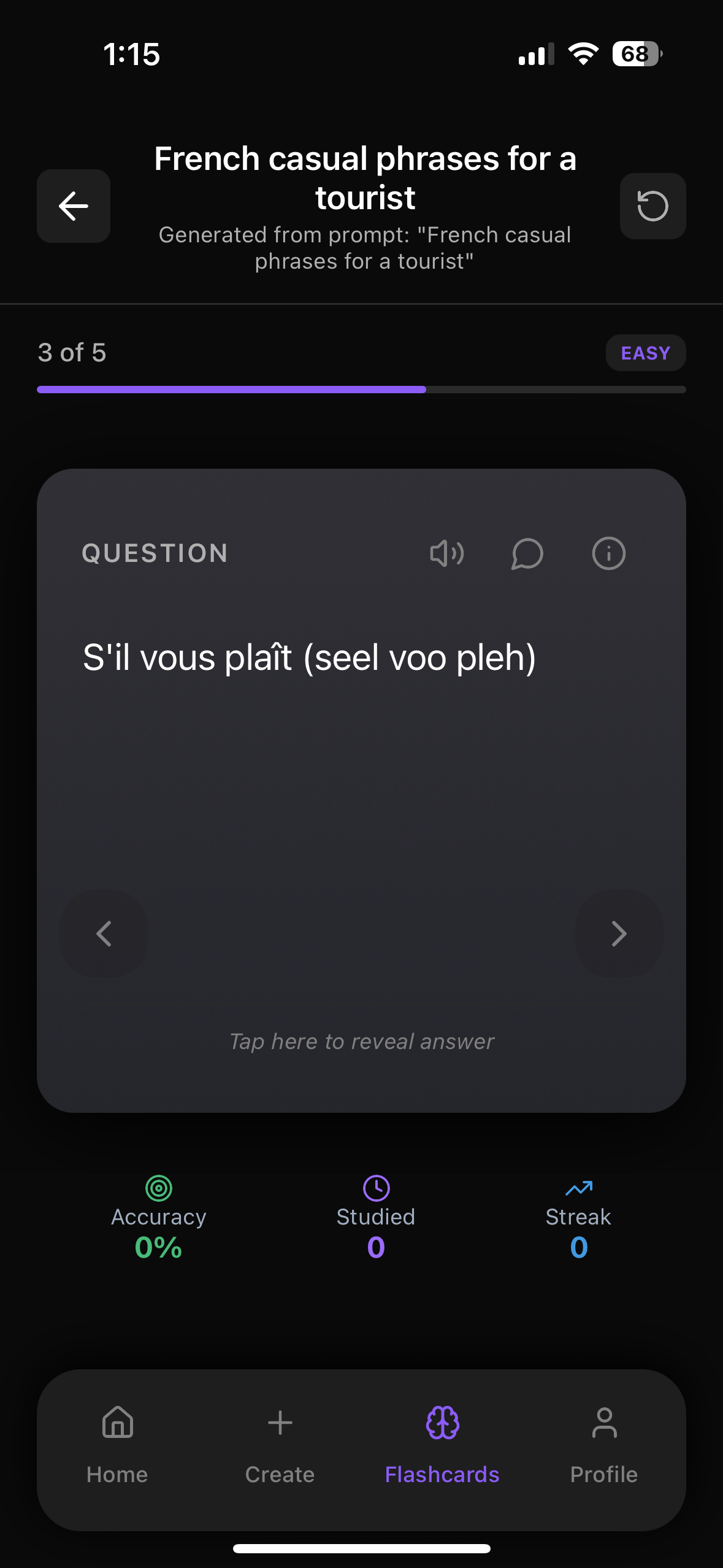
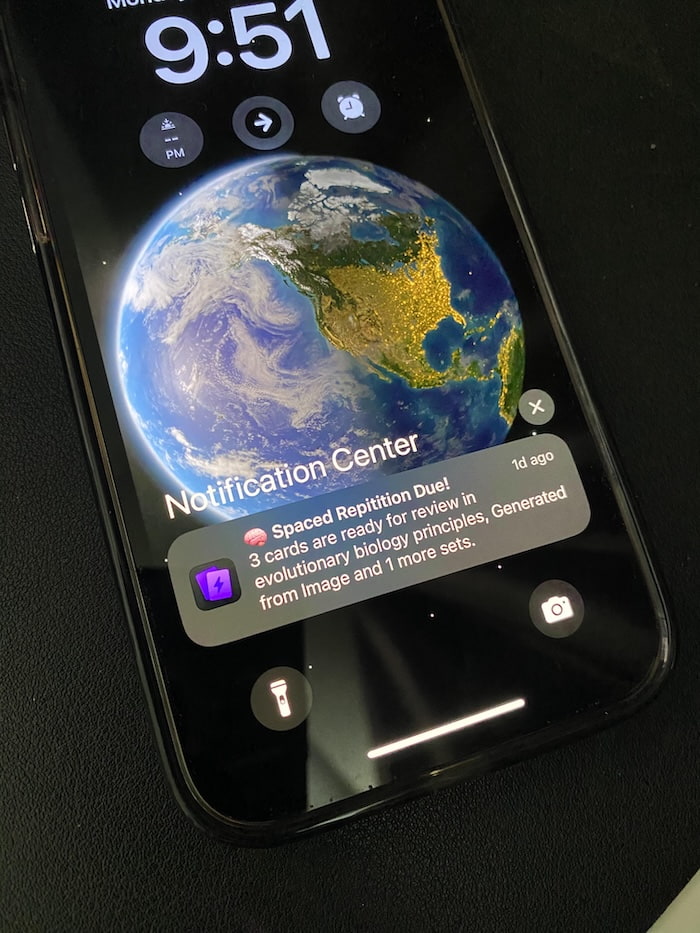
Flashrecall automatically keeps track and reminds you of the cards you don't remember well so you remember faster. Like this :
> Front: 我昨天买了一件衣服。
> Back: Audio + English: I bought a piece of clothing yesterday.
> Extra: 买 (mǎi) – third tone, “to buy”
Review it a few times with spaced repetition, and the sentence + tones actually stick.
3. Use Images For Characters And Radicals
Characters like 懂, 聪, or 让 can feel random… unless you hook them to something visual.
With Anki, you can add images, but it’s a bit clunky.
With Flashrecall, you can literally:
- Take a photo of your textbook or workbook
- Let Flashrecall turn that into flashcards instantly
- Or upload PDFs and generate cards from them
You can also make cards like:
> Front: Picture of the character 请
> Back: qǐng – to ask / please (radical: 讠 speech + 青)
That tiny bit of visual + radical info makes it way easier to remember.
4. Don’t Add 500 New Cards In One Day
The classic Anki trap: you get motivated, import a huge HSK deck, and suddenly you’re drowning.
Mandarin is a long game. It’s way better to:
- Add 5–20 new cards a day, every day
- Actually master them
- Let spaced repetition do the heavy lifting
Flashrecall makes this easier because:
- It sends study reminders so you don’t forget to review
- The spaced repetition is built-in and automatic
- You can review quickly on your phone whenever you have a spare minute
So instead of a huge binge, you get consistent micro-sessions that add up.
5. Mix Characters, Words, And Sentences
Don’t just do one type of card. For Mandarin, a nice mix looks like:
- Character cards
- Front: 学
- Back: xué – to study; component: 子 under 冖
- Word cards
- Front: 学校
- Back: xuéxiào – school
- Sentence cards
- Front: 我明年想去中国留学。
- Back: I want to go to China to study abroad next year.
In Flashrecall, you can create all of these:
- Manually, if you like full control
- Or auto-generate from text, PDFs, images, and YouTube links
(for example, turn a graded reader or HSK PDF into a study deck)
That way, you’re not just memorizing isolated pieces — you’re building a network in your brain.
6. Turn Real-Life Mandarin Into Flashcards Instantly
This is where Flashrecall really beats Anki for Mandarin.
Anytime you see Mandarin in the wild, you can turn it into flashcards:
- Screenshot a WeChat conversation → Flashrecall makes cards
- Take a photo of a restaurant menu → cards
- Import a PDF of HSK practice → cards
- Drop in a YouTube link of a Chinese video → cards from the content
Instead of hunting for “the perfect Anki deck,” you’re building your own personal Mandarin deck from stuff you actually care about.
This keeps you way more motivated than some random 3,000-word list.
Grab Flashrecall here if you want to try this:
👉 https://apps.apple.com/us/app/flashrecall-study-flashcards/id6746757085
7. Use Flashcards To Support, Not Replace, Real Mandarin
Anki and Flashrecall are tools — not a full course.
Use flashcards to lock in what you learn from:
- Classes or tutors
- Textbooks and graded readers
- Chinese dramas, YouTube, podcasts
- Real conversations
A good flow looks like:
1. Learn something in context (class, video, chat, etc.)
2. Save the useful words/sentences into Flashrecall
3. Review them over days/weeks with spaced repetition
4. Notice them again in the wild and feel that “ohhh I know this!” moment
Flashrecall’s chat with the flashcard feature is also great when you’re unsure:
- Not sure how to use a phrase in another sentence? Ask.
- Confused by a grammar pattern? Ask.
- Want more examples? Ask.
It turns your deck into more of an interactive Mandarin tutor rather than a static pile of cards.
Anki vs Flashrecall For Mandarin: Quick Comparison
- ✅ Powerful and customizable
- ✅ Huge community decks
- ❌ Clunky interface on mobile
- ❌ Card creation is slow and manual
- ❌ Audio, images, PDFs require extra work
- ❌ No built-in “chat” to clarify things
- ❌ Easy to get overwhelmed by reviews
- ✅ Built-in spaced repetition and active recall
- ✅ Auto reminders so you don’t forget to study
- ✅ Makes cards from images, text, audio, PDFs, YouTube links, or manual input
- ✅ Works offline on iPhone and iPad
- ✅ Fast, modern, and simple to use
- ✅ You can chat with the flashcard when you’re unsure
- ✅ Great for Mandarin, other languages, exams, school, medicine, business — anything
- ✅ Free to start
If you love tinkering, Anki is fine.
If you just want to learn Mandarin efficiently without fighting the app, Flashrecall is honestly a smoother ride.
How To Start Using Flashrecall For Mandarin Today
Here’s a simple starter plan:
1. Download Flashrecall
→ https://apps.apple.com/us/app/flashrecall-study-flashcards/id6746757085
2. Add 10–15 cards from real content
- A short dialogue from your textbook
- A YouTube video you watched
- A WeChat message or sentence your teacher used
3. Mix card types
- 5 character cards
- 5 word cards
- 3–5 sentence cards
4. Review once or twice a day
- Let the spaced repetition handle the schedule
- Use study reminders so you don’t forget
5. Chat with your cards when confused
- Ask for more examples
- Clarify grammar
- Get usage tips
Stick with that for a couple of weeks and you’ll feel the difference: characters stop slipping away, tones feel more natural, and sentences actually stay in your head.
If you’ve been struggling to make Anki Mandarin work on iOS, you don’t need to give up on flashcards — you just need a tool that fits your life better.
Try Flashrecall, build your own Mandarin deck from the stuff you actually use, and let spaced repetition quietly do its magic in the background:
👉 https://apps.apple.com/us/app/flashrecall-study-flashcards/id6746757085
Frequently Asked Questions
Is Anki good for studying?
Anki is powerful but requires manual card creation and has a steep learning curve. Flashrecall offers AI-powered card generation from your notes, images, PDFs, and videos, making it faster and easier to create effective flashcards.
How do I start spaced repetition?
You can manually schedule your reviews, but most people use apps that automate this. Flashrecall uses built-in spaced repetition so you review cards at the perfect time.
What is active recall and how does it work?
Active recall is the process of actively retrieving information from memory rather than passively reviewing it. Flashrecall forces proper active recall by making you think before revealing answers, then uses spaced repetition to optimize your review schedule.
Related Articles
- Creating Flashcards Online: 7 Powerful Tricks To Learn Faster (Most Students Don’t Know) – Stop wasting time with clunky tools and use smarter online flashcards that actually stick in your memory.
- Custom Flash Cards: 7 Powerful Ways To Study Smarter (And Actually Remember Stuff) – Stop wasting time with boring notes and build custom flashcards that fit your brain perfectly.
- Anki Revision: 7 Powerful Tricks To Study Smarter (And a Better Alternative Most Students Don’t Know) – Stop wasting hours reviewing the wrong way and use these proven strategies to actually remember what you study.
Research References
The information in this article is based on peer-reviewed research and established studies in cognitive psychology and learning science.
Cepeda, N. J., Pashler, H., Vul, E., Wixted, J. T., & Rohrer, D. (2006). Distributed practice in verbal recall tasks: A review and quantitative synthesis. Psychological Bulletin, 132(3), 354-380
Meta-analysis showing spaced repetition significantly improves long-term retention compared to massed practice
Carpenter, S. K., Cepeda, N. J., Rohrer, D., Kang, S. H., & Pashler, H. (2012). Using spacing to enhance diverse forms of learning: Review of recent research and implications for instruction. Educational Psychology Review, 24(3), 369-378
Review showing spacing effects work across different types of learning materials and contexts
Kang, S. H. (2016). Spaced repetition promotes efficient and effective learning: Policy implications for instruction. Policy Insights from the Behavioral and Brain Sciences, 3(1), 12-19
Policy review advocating for spaced repetition in educational settings based on extensive research evidence
Karpicke, J. D., & Roediger, H. L. (2008). The critical importance of retrieval for learning. Science, 319(5865), 966-968
Research demonstrating that active recall (retrieval practice) is more effective than re-reading for long-term learning
Roediger, H. L., & Butler, A. C. (2011). The critical role of retrieval practice in long-term retention. Trends in Cognitive Sciences, 15(1), 20-27
Review of research showing retrieval practice (active recall) as one of the most effective learning strategies
Dunlosky, J., Rawson, K. A., Marsh, E. J., Nathan, M. J., & Willingham, D. T. (2013). Improving students' learning with effective learning techniques: Promising directions from cognitive and educational psychology. Psychological Science in the Public Interest, 14(1), 4-58
Comprehensive review ranking learning techniques, with practice testing and distributed practice rated as highly effective

FlashRecall Team
FlashRecall Development Team
The FlashRecall Team is a group of working professionals and developers who are passionate about making effective study methods more accessible to students. We believe that evidence-based learning tec...
Credentials & Qualifications
- •Software Development
- •Product Development
- •User Experience Design
Areas of Expertise
Ready to Transform Your Learning?
Start using FlashRecall today - the AI-powered flashcard app with spaced repetition and active recall.
Download on App Store