A&p Flashcards Tips: The Ultimate Guide
A&P flashcards tips help break down complex info into manageable bites. Use Flashrecall for active recall and spaced repetition to boost your memory retention.
How Flashrecall app helps you remember faster. It's free
Stop Drowning In A&P Notes – Flashcards Are Your Lifeline
Ever find yourself drowning in study material and wondering how to make it all stick? Well, that's where a&p flashcards tips come in handy! They're like your secret weapon for breaking down all that complex info into bite-sized pieces that your brain can actually handle. The trick is to use them right—think active recall, spaced repetition, and just keeping at it. And here's where Flashrecall swoops in to save the day! It not only helps you create these flashcards without the hassle but also schedules your revision sessions so you’re revisiting stuff just when you need to. Oh, and if you're curious about how tiny digital cards and the right app can seriously boost your memory game, you should totally check out our complete guide. Trust me, it's worth a look!
This is exactly where A&P flashcards shine.
And honestly, this is where an app like Flashrecall makes life way easier than old-school index cards.
👉 Try Flashrecall here:
https://apps.apple.com/us/app/flashrecall-study-flashcards/id6746757085
It’s a fast, modern flashcard app that:
- Makes cards instantly from images, PDFs, YouTube links, text, audio, or typed prompts
- Has built-in spaced repetition and active recall
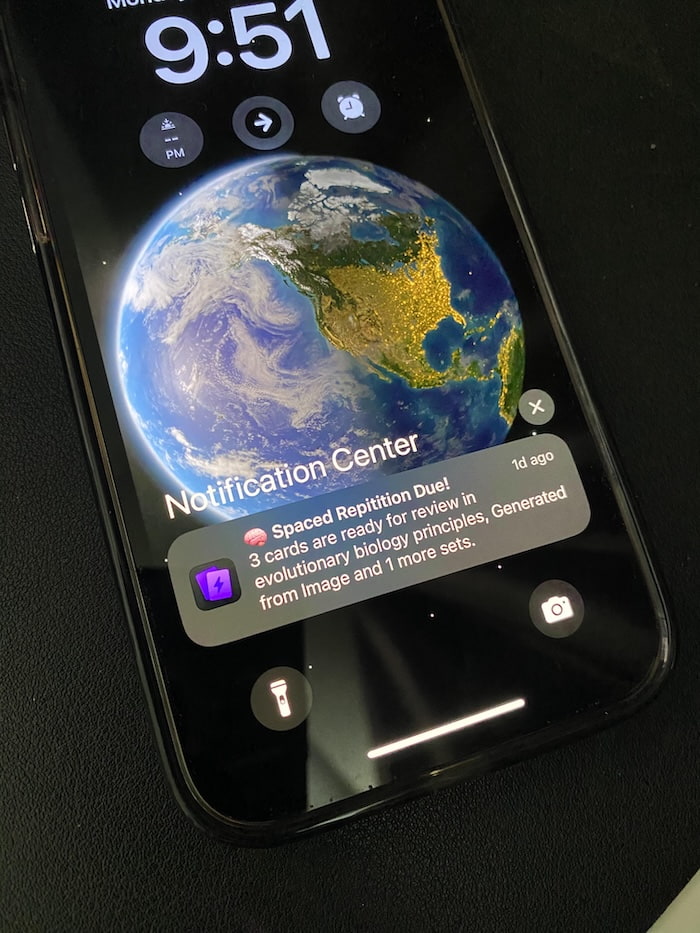
- Sends study reminders so you don’t forget to review
- Works offline on iPhone and iPad
- Is free to start
Let’s talk about how to actually use A&P flashcards in a way that doesn’t waste your time.
Why A&P Flashcards Work So Well (If You Use Them Right)
A&P is basically:
- Tons of vocabulary (terms)
- Tons of relationships (what connects to what, who does what, where things are)
- Tons of processes (how things work: action potentials, muscle contraction, cardiac cycle, etc.)
Flashcards are perfect for that because they force:
- Active recall – you try to pull the answer from memory instead of just rereading
- Spaced repetition – you see hard cards more often and easy ones less often
Flashrecall bakes both into the app automatically:
- Every time you study, it asks you to recall, not just recognize
- It schedules reviews for you with spaced repetition so you don’t have to think about when to review
- You get auto reminders, so your “I’ll study later” doesn’t turn into “I’ll retake this course next semester”
What To Put On A&P Flashcards (And What To Leave Out)
Most people mess up A&P flashcards by cramming entire paragraphs onto one card.
That’s not a flashcard. That’s a wall of text.
Good A&P Flashcards Are:
- Short – one idea per card
- Specific – no vague “describe everything about the heart” nonsense
- Clear – easy question → clear answer
Here are some examples.
Front: “Heart anatomy”
Back: “Right atrium, right ventricle, left atrium, left ventricle, tricuspid valve, mitral valve, pulmonary valve, aortic valve…”
- Front: “Which chamber of the heart receives deoxygenated blood from the body?”
Back: “Right atrium”
- Front: “Name the valve between the left atrium and left ventricle.”
Back: “Mitral (bicuspid) valve”
- Front: “Which vessel carries oxygenated blood from lungs to heart?”
Back: “Pulmonary veins”
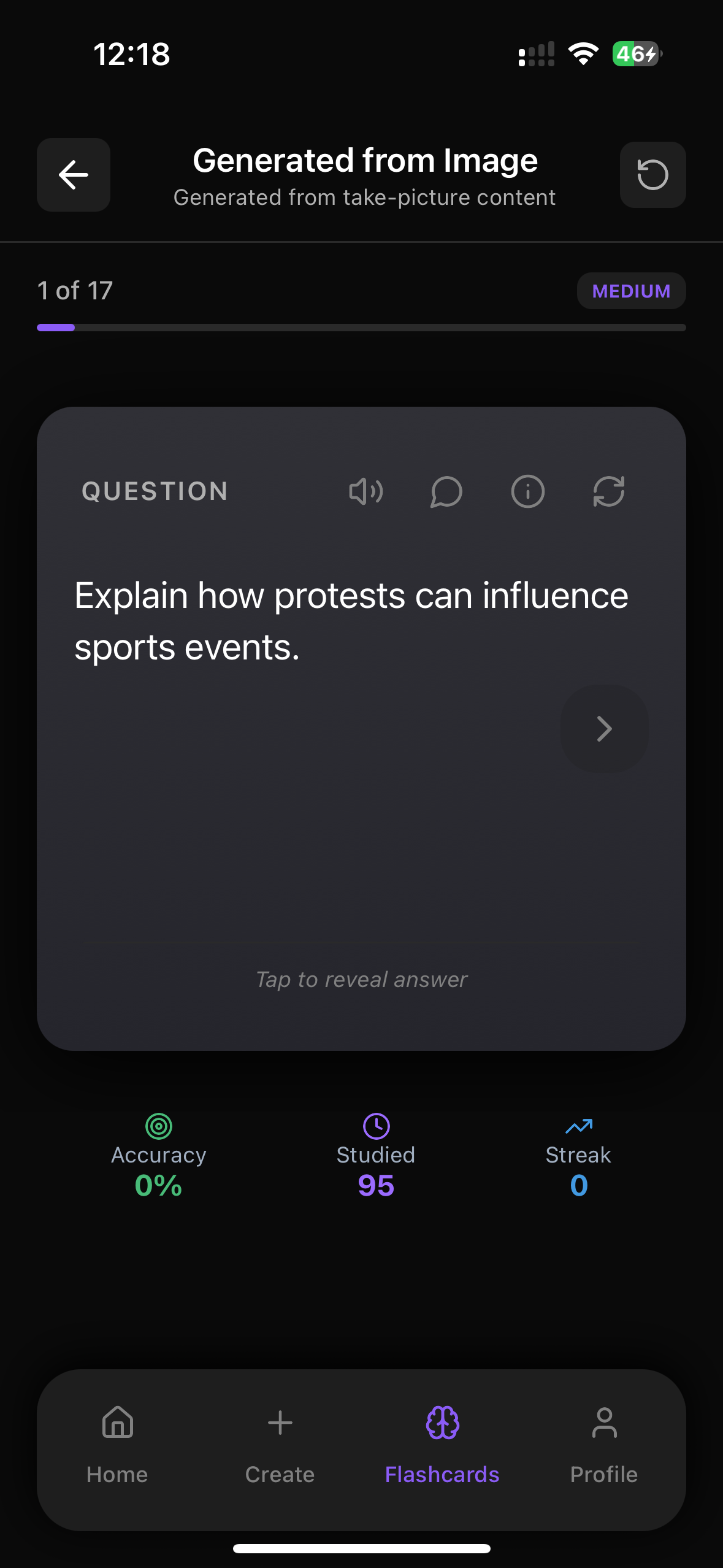
In Flashrecall, you can even screenshot a heart diagram, import it, and quickly turn labels into flashcards. No need to rewrite everything.
Front: “Explain the action potential”
Back: Paragraphs of sodium, potassium, depolarization, repolarization, etc.
- Front: “Which ion primarily enters the neuron during depolarization?”
Back: “Na⁺ (sodium)”
- Front: “What happens to membrane potential during depolarization?”
Back: “It becomes less negative (moves toward +)”
- Front: “Which ion is responsible for repolarization?”
Back: “K⁺ (potassium) leaving the cell”
You can also have process cards, like:
- Front: “Put these in order: depolarization, repolarization, hyperpolarization, resting potential restored”
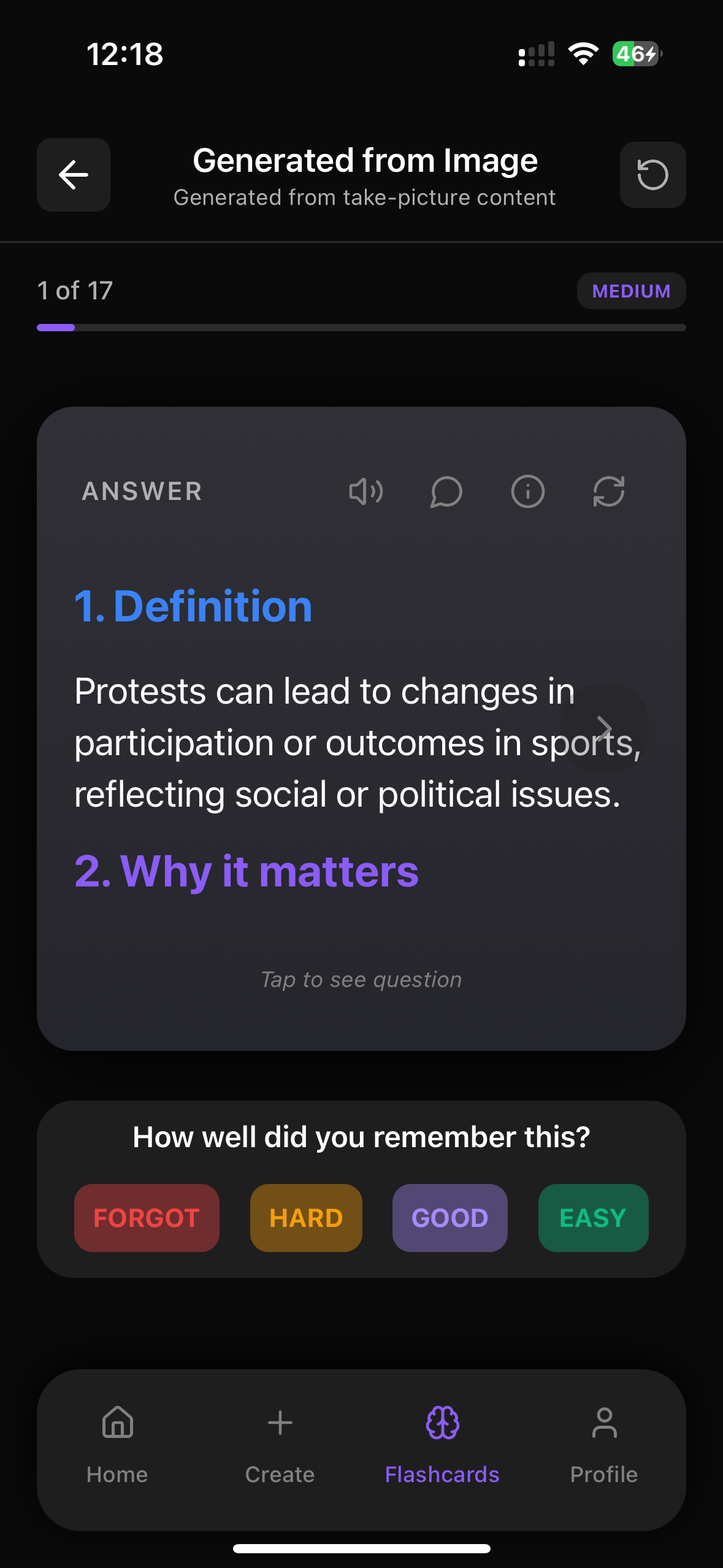
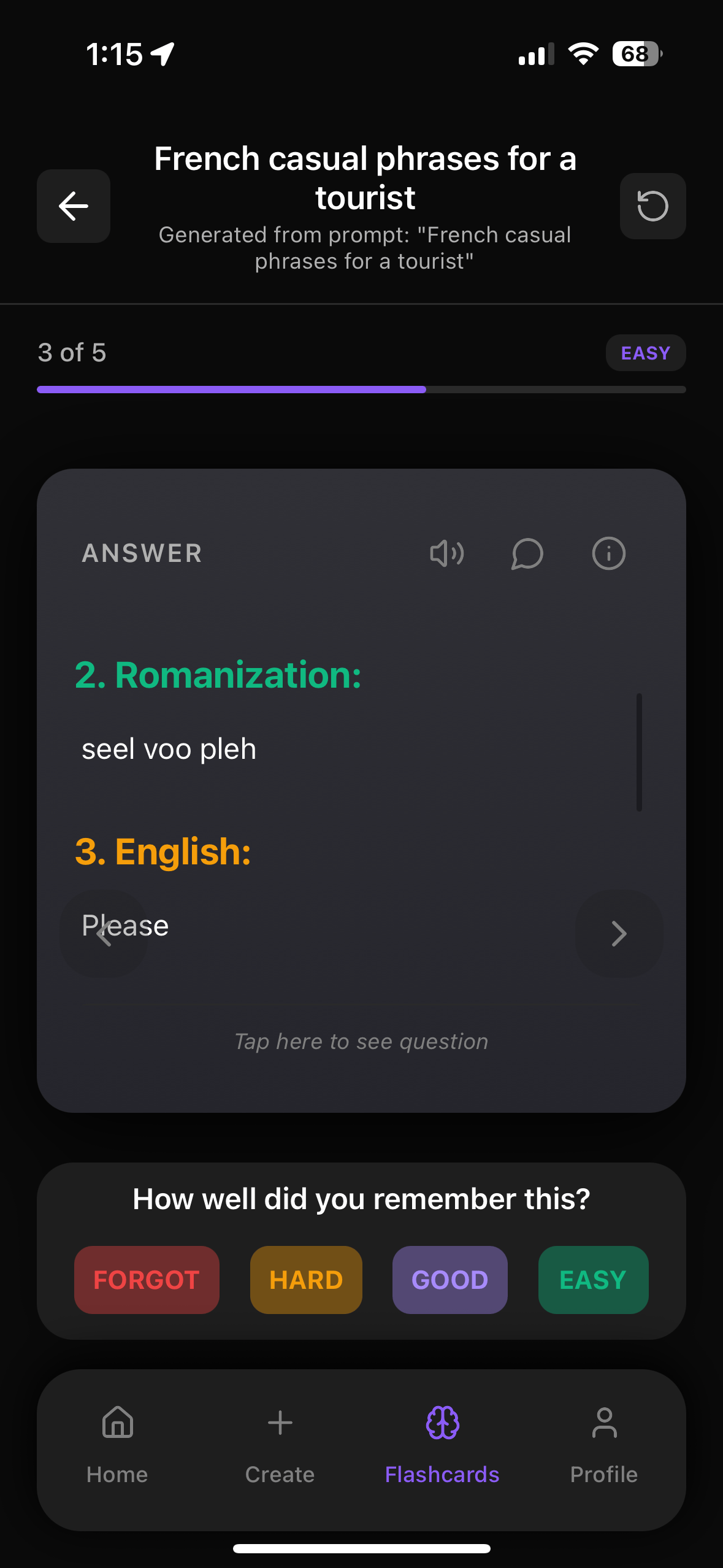
Flashrecall automatically keeps track and reminds you of the cards you don't remember well so you remember faster. Like this :
Back: “Depolarization → repolarization → hyperpolarization → resting potential restored”
How Flashrecall Makes A&P Flashcards Way Less Painful
You can do all this with paper cards… but A&P is huge. You’ll end up with a shoebox full of chaos.
Flashrecall basically fixes all the annoying parts of flashcards:
1. Create Cards Instantly From Your Study Material
Instead of typing everything, you can:
- Take a photo of your textbook diagrams or lecture slides
- Import PDFs of your notes or PowerPoints
- Paste a YouTube link from an A&P lecture
- Use audio or text
- Or just type manually if you like full control
Flashrecall can turn that content into flashcards super quickly, so you spend more time learning and less time formatting.
Example:
- Snap a pic of the brachial plexus diagram
- Highlight labels → turn them into Q&A cards
- Done. No drawing, no rewriting.
2. Built-In Spaced Repetition (So You Don’t Cram And Forget)
You know how you cram for an exam, nail it, and then two weeks later… gone?
Spaced repetition fixes that by showing you:
- Hard cards more often
- Easy cards less often
- Right before you’re about to forget them
In Flashrecall:
- Every time you answer, you rate how well you remembered
- The app automatically schedules the next review
- You get study reminders, so you don’t have to remember to remember
This is perfect for A&P because you’ll see:
- Muscles and innervations repeatedly across the semester
- Hormones, pathways, and feedback loops again and again
- Nerve roots, dermatomes, and vessels right when you’re about to forget them
3. Active Recall Built In
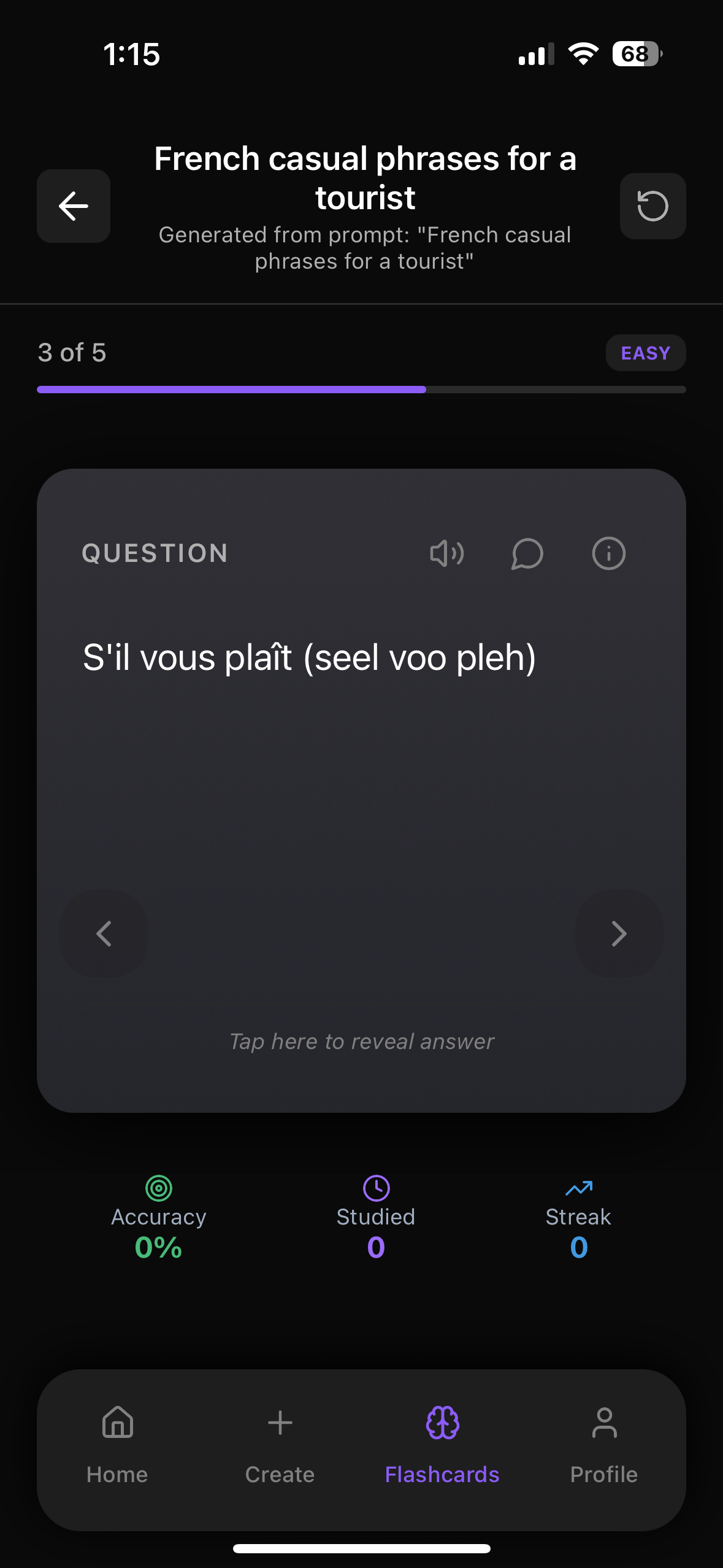
Flashrecall doesn’t just show you the answer. It makes you think first.
- You see the question (e.g., “What hormone does the anterior pituitary release to stimulate the thyroid?”)
- You say or think the answer
- Then you reveal it and rate how you did
This is exactly the kind of brain workout that locks A&P facts into long-term memory.
4. You Can “Chat” With Your Flashcards When You’re Confused
This is one of the coolest parts.
If you don’t fully understand a concept behind a card (like “Why does aldosterone increase blood pressure?”), you can chat with the content in Flashrecall.
You can ask things like:
- “Explain this in simpler words”
- “Give me an example of this in real life”
- “How is this related to ADH?”
It’s like having a mini tutor sitting inside your flashcards, which is insanely helpful for tricky physiology topics.
5. Works Offline, On iPhone And iPad
You can study:
- On the bus
- In the library
- During boring lectures (no judgment)
- On a plane
- Anywhere — even without Wi‑Fi
Flashrecall works offline on iPhone and iPad, so your A&P deck is always with you.
How To Actually Use A&P Flashcards Day-To-Day
Here’s a simple, realistic routine you can follow.
Step 1: After Each Lecture, Capture The Key Stuff
Right after class (or that night):
- Import your slides or lecture PDF into Flashrecall
- Make cards for:
- New vocab/terms
- New structures
- New processes/pathways
- Keep cards short and specific
Example topics:
- “Muscles of the shoulder” → cards for origin, insertion, action, innervation
- “Renin-angiotensin-aldosterone system” → cards for sequence + effects
- “Respiratory volumes” → cards for tidal volume, residual volume, vital capacity, etc.
Step 2: Do A Daily 10–20 Minute Review
You don’t need 3-hour study marathons every day.
Open Flashrecall and:
- Do your due cards (the app shows what’s scheduled)
- Rate how well you knew each one
- Let spaced repetition handle the rest
You’ll be surprised how much you remember with just consistent short sessions.
Step 3: Mix Anatomy + Physiology
Don’t separate them too hard. A&P makes more sense when they’re connected.
Examples:
- Anatomy card: “Where is the SA node located?”
Physiology card: “What is the function of the SA node?”
- Anatomy card: “Which gland sits on top of the kidney?”
Physiology card: “Which hormones are produced by the adrenal cortex?”
In Flashrecall, you can keep these in the same deck or use tags (e.g., “Heart – Anatomy”, “Heart – Physiology”) so you can filter when needed.
Step 4: Before Exams, Focus On Weak Areas
A few days before an exam:
- Filter or focus on cards you keep rating as hard
- Add a few more application-style cards, like:
- “What happens to heart rate if sympathetic activity increases?”
- “What would happen to blood pressure if aldosterone secretion decreased?”
Flashrecall’s spaced repetition will already have pushed most of the basics into your long-term memory, so now you’re just polishing.
Example A&P Flashcard Sets You Could Create
Here are some practical ideas for decks you can build in Flashrecall:
- Skeletal System
- Bone markings (foramina, processes, tubercles)
- Axial vs appendicular skeleton
- Landmarks for clinical palpation
- Muscular System
- Muscle origin, insertion, action, innervation
- Major muscle groups by region (shoulder, hip, back, etc.)
- Nervous System
- Cranial nerves (name, number, function)
- Major tracts (corticospinal, spinothalamic, etc.)
- Neurotransmitters and their main actions
- Cardiovascular
- Blood flow through the heart
- ECG waves and what they represent
- Blood vessel types and functions
- Respiratory
- Lung volumes and capacities
- Gas exchange and partial pressures
- Control of breathing (chemoreceptors, medulla, etc.)
- Endocrine
- Hormones, their glands, targets, and effects
- Negative feedback loops
- Differences between steroid vs peptide hormones
Flashrecall lets you build all of these quickly from your notes, slides, or textbook screenshots.
Why Use Flashrecall Instead Of Just Paper Or Random Apps?
There are a lot of flashcard tools and old-school methods, but Flashrecall stands out because it’s built specifically for fast, efficient learning:
- Super fast card creation from images, text, PDFs, YouTube links, audio
- Built-in spaced repetition and active recall (no manual scheduling)
- Study reminders so you don’t ghost your cards for weeks
- Chat with your flashcards when you’re stuck or confused
- Works offline, on iPhone and iPad
- Free to start, so you can test it on one A&P unit and see how much faster you remember stuff
If you’re serious about not suffering through A&P more than you have to, it’s worth giving it a try:
👉 Download Flashrecall here:
https://apps.apple.com/us/app/flashrecall-study-flashcards/id6746757085
Build a small deck for your next A&P topic, use it daily for a week, and see how much easier your quizzes feel.
Frequently Asked Questions
What's the fastest way to create flashcards?
Manually typing cards works but takes time. Many students now use AI generators that turn notes into flashcards instantly. Flashrecall does this automatically from text, images, or PDFs.
Is there a free flashcard app?
Yes. Flashrecall is free and lets you create flashcards from images, text, prompts, audio, PDFs, and YouTube videos.
How do I start spaced repetition?
You can manually schedule your reviews, but most people use apps that automate this. Flashrecall uses built-in spaced repetition so you review cards at the perfect time.
How can I study more effectively for exams?
Effective exam prep combines active recall, spaced repetition, and regular practice. Flashrecall helps by automatically generating flashcards from your study materials and using spaced repetition to ensure you remember everything when exam day arrives.
Related Articles
- Respiratory System Anatomy And Physiology Quizlet: 7 Powerful Study Hacks Most Med Students Miss (And What To Use Instead) – Learn Faster, Remember Longer, And Finally Make Lung Physiology Click
- Grey’s Anatomy Flashcards: The Ultimate Way To Actually Remember Every Detail Before Exams – Stop Rewatching Episodes And Start Studying Smarter With This Trick
- Genetics Flashcards: The Ultimate Way To Master DNA, Genes & Inheritance Faster Than Your Classmates – Learn smarter, remember longer, and actually understand genetics instead of just cramming it.
Research References
The information in this article is based on peer-reviewed research and established studies in cognitive psychology and learning science.
Cepeda, N. J., Pashler, H., Vul, E., Wixted, J. T., & Rohrer, D. (2006). Distributed practice in verbal recall tasks: A review and quantitative synthesis. Psychological Bulletin, 132(3), 354-380
Meta-analysis showing spaced repetition significantly improves long-term retention compared to massed practice
Carpenter, S. K., Cepeda, N. J., Rohrer, D., Kang, S. H., & Pashler, H. (2012). Using spacing to enhance diverse forms of learning: Review of recent research and implications for instruction. Educational Psychology Review, 24(3), 369-378
Review showing spacing effects work across different types of learning materials and contexts
Kang, S. H. (2016). Spaced repetition promotes efficient and effective learning: Policy implications for instruction. Policy Insights from the Behavioral and Brain Sciences, 3(1), 12-19
Policy review advocating for spaced repetition in educational settings based on extensive research evidence
Karpicke, J. D., & Roediger, H. L. (2008). The critical importance of retrieval for learning. Science, 319(5865), 966-968
Research demonstrating that active recall (retrieval practice) is more effective than re-reading for long-term learning
Roediger, H. L., & Butler, A. C. (2011). The critical role of retrieval practice in long-term retention. Trends in Cognitive Sciences, 15(1), 20-27
Review of research showing retrieval practice (active recall) as one of the most effective learning strategies
Dunlosky, J., Rawson, K. A., Marsh, E. J., Nathan, M. J., & Willingham, D. T. (2013). Improving students' learning with effective learning techniques: Promising directions from cognitive and educational psychology. Psychological Science in the Public Interest, 14(1), 4-58
Comprehensive review ranking learning techniques, with practice testing and distributed practice rated as highly effective
Ebbinghaus, H. (1885). Memory: A Contribution to Experimental Psychology. New York: Dover
Pioneering research on the forgetting curve and memory retention over time

FlashRecall Team
FlashRecall Development Team
The FlashRecall Team is a group of working professionals and developers who are passionate about making effective study methods more accessible to students. We believe that evidence-based learning tec...
Credentials & Qualifications
- •Software Development
- •Product Development
- •User Experience Design
Areas of Expertise
Ready to Transform Your Learning?
Start using FlashRecall today - the AI-powered flashcard app with spaced repetition and active recall.
Download on App Store