Aqa A Level Biology Flashcards Study Method: The Proven Guide
The AQA A Level Biology flashcards study method uses active recall and spaced repetition for better retention. Flashrecall keeps you on track with reviews.
How Flashrecall app helps you remember faster. It's free
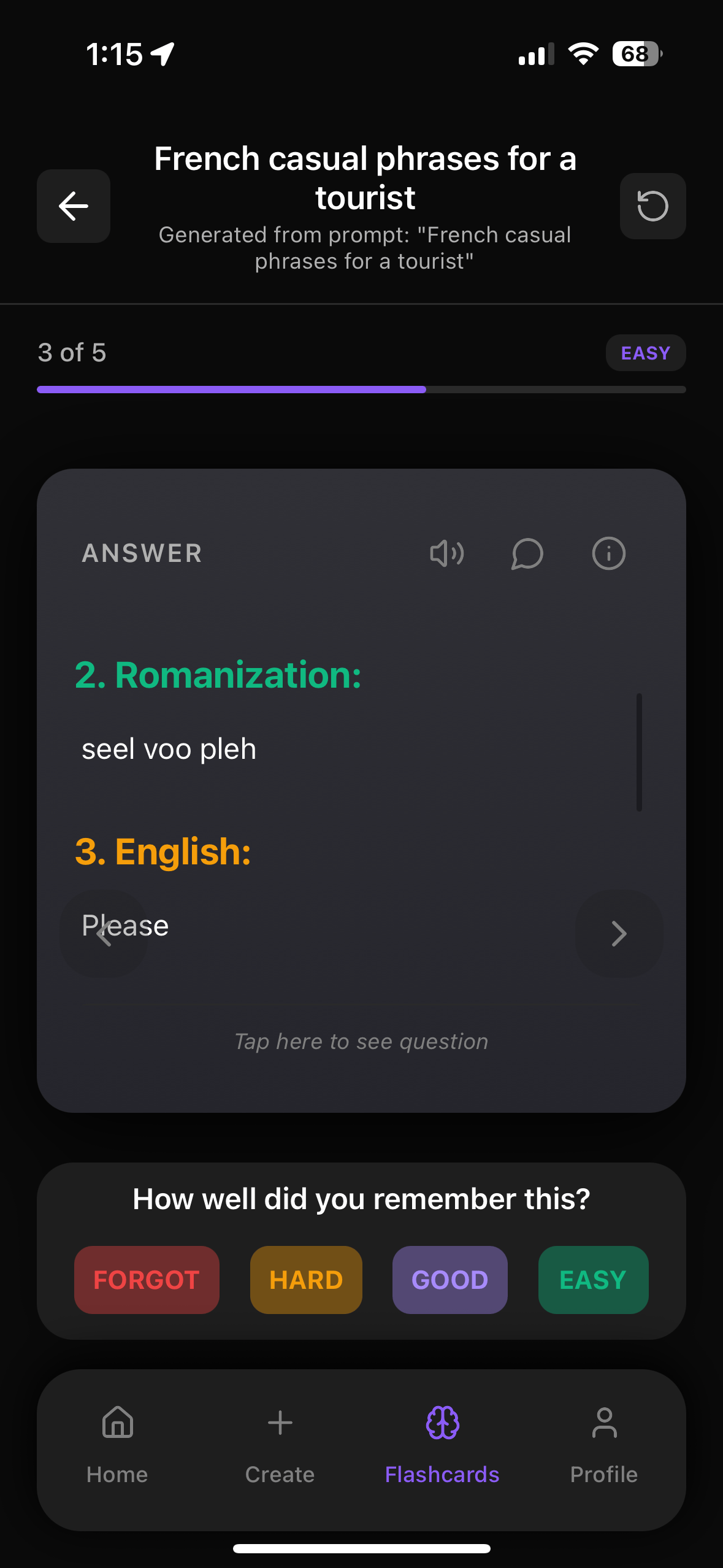
Stop Drowning In AQA A Level Biology Content
Ever try wrapping your head around all that biology stuff and just end up feeling like your brain's about to explode? Here's where the aqa a level biology flashcards study method comes in to save the day. It's like having a secret weapon for your brain, combining active recall with clever timing to make sure the info sticks around for the long haul. Instead of doing that dreaded cramming or just flipping through notes, you're actually pulling info out of your brain at just the right times, which is way more effective. Now, I know keeping track of when to review what can be a pain, but that’s where Flashrecall steps up. It’s like your personal assistant, handling the reminders, so you can focus on the learning part. If you’re curious about how to revise smarter—like those top-tier students do—ditch the endless textbook reading and check out our full guide. It’s all about working smarter, not harder, right?
If you're looking for information about aqa a level biology flashcards: 7 powerful ways to revise smarter and actually remember it all – stop rereading the textbook and use flashcards the way top a* students do., read our complete guide to aqa a level biology flashcards.
If you’re trying to memorise everything by rereading the textbook or scrolling notes, you’re basically playing on hard mode.
Flashcards are way better for AQA Biology – if you actually use them properly.
That’s where Flashrecall comes in:
👉 https://apps.apple.com/us/app/flashrecall-study-flashcards/id6746757085
It’s a fast, modern flashcard app that:
- Makes cards instantly from photos, PDFs, YouTube links, text, audio, or typed prompts
- Has built-in spaced repetition and active recall (the two things proven to boost memory)
- Sends study reminders so you don’t forget to revise
- Lets you chat with your flashcards if you’re confused about something
- Works on iPhone and iPad, even offline
- Is free to start
Perfect for AQA A Level Biology, especially when you’re trying to cram things like photosynthesis, immunity, and gene expression into your head.
Why Flashcards Work So Well For AQA A Level Biology
AQA Biology isn’t just “understand the concepts”.
You’re expected to:
- Recall exact definitions (e.g. “What is the cardiac output equation?”)
- Describe processes in order (e.g. “Stages of meiosis”)
- Explain required practicals (method, variables, evaluation)
- Apply knowledge to weird exam questions
Flashcards are perfect because they force active recall – you see a question, you try to answer from memory, then you check. That’s exactly what Flashrecall is designed around.
Instead of:
> staring at a page → feeling like you “kind of know it” → forgetting in the exam
You do:
> question → struggle a bit → answer → check → brain goes “oh, this matters”
And with spaced repetition (which Flashrecall does automatically), you see each card again just before you’re about to forget it. That’s how you move stuff from “I saw this once” to “I can write a 6-marker on this in my sleep”.
The Best Topics To Turn Into Flashcards For AQA Biology
You could turn the entire spec into flashcards, but that’s overkill. Focus on high-yield, commonly examined stuff.
Here are some AQA-specific areas that work amazingly well as flashcards:
1. Definitions & Key Terms
These are easy marks if you know them word-perfect.
Examples:
- “Define allele.”
- “What is a pathogen?”
- “Define cardiac output.”
- “What is a gene mutation?”
- “Define water potential.”
In Flashrecall, you can literally:
- Take a photo of your textbook glossary or notes
- Let the app auto-generate flashcards for each definition
No typing everything out. Massive time-saver.
2. Processes & Pathways
Anything that happens in steps is flashcard gold.
Think:
- Photosynthesis (light-dependent + light-independent reactions)
- Respiration (glycolysis, link reaction, Krebs, oxidative phosphorylation)
- Immune response (phagocytosis, T cells, B cells, antibodies)
- Meiosis and mitosis
- Synaptic transmission
Example Flashrecall card:
- Front: “Describe the stages of the light-dependent reaction in photosynthesis.”
- Back: Bullet-pointed steps + mention of thylakoid membranes, photolysis, ATP, reduced NADP.
You can even:
- Import a YouTube video link for a topic (like photosynthesis)
- Let Flashrecall pull out key points and turn them into cards
Perfect when you’re revising with video explanations.
3. Required Practicals
AQA loves these. You need:
- Method
- Variables (independent, dependent, control)
- How to improve reliability / validity
- How to analyse results
Example:
- Front: “Required Practical: Investigating the effect of a named variable on the rate of enzyme-controlled reactions – outline the method.”
- Back: Step-by-step method + key controls + what you’d measure.
In Flashrecall:
- Take a photo of your practical sheet or a PDF from your teacher
- Flashrecall can generate multiple cards from that one image/PDF: method, variables, errors, improvements.
4. Graphs, Data & Exam-Style Questions
AQA loves weird graphs and “suggest why” questions.
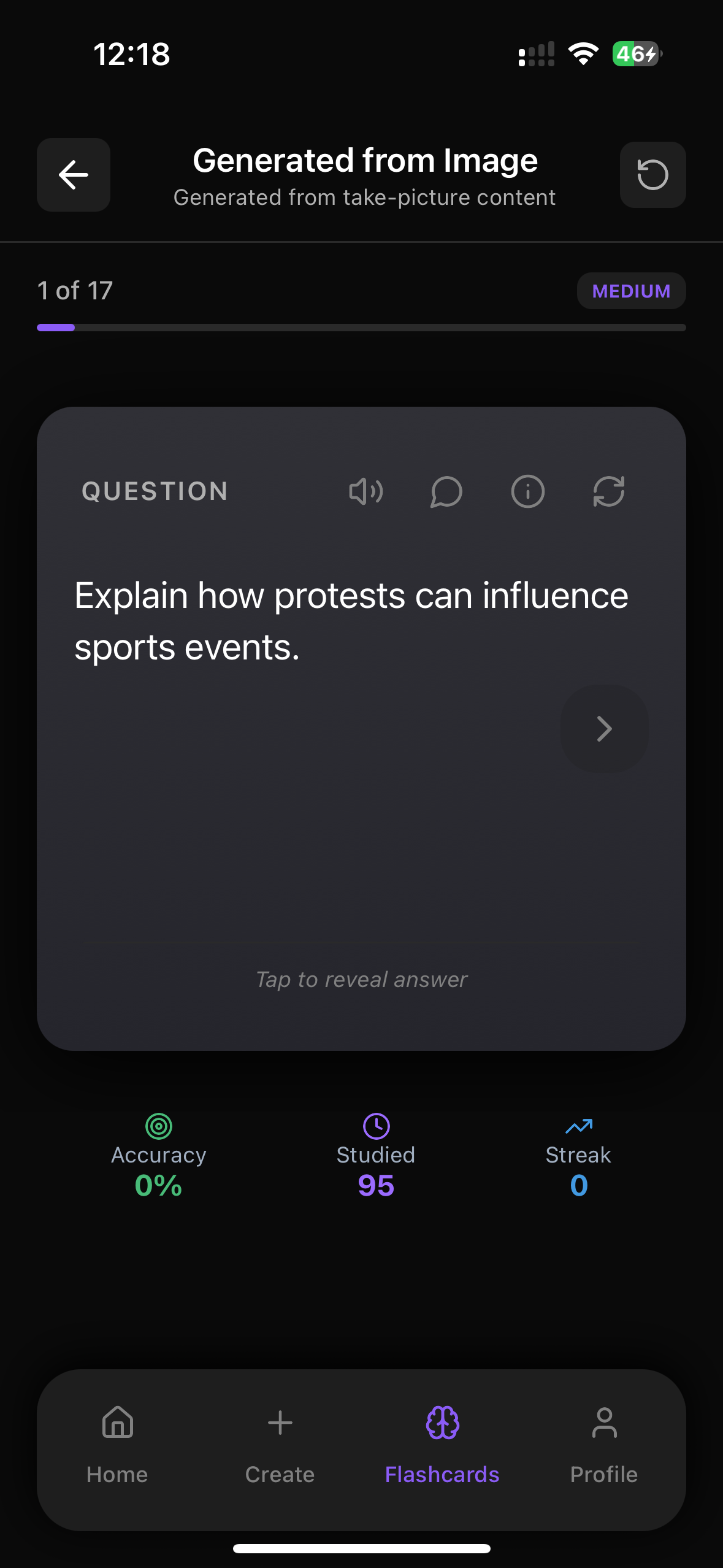
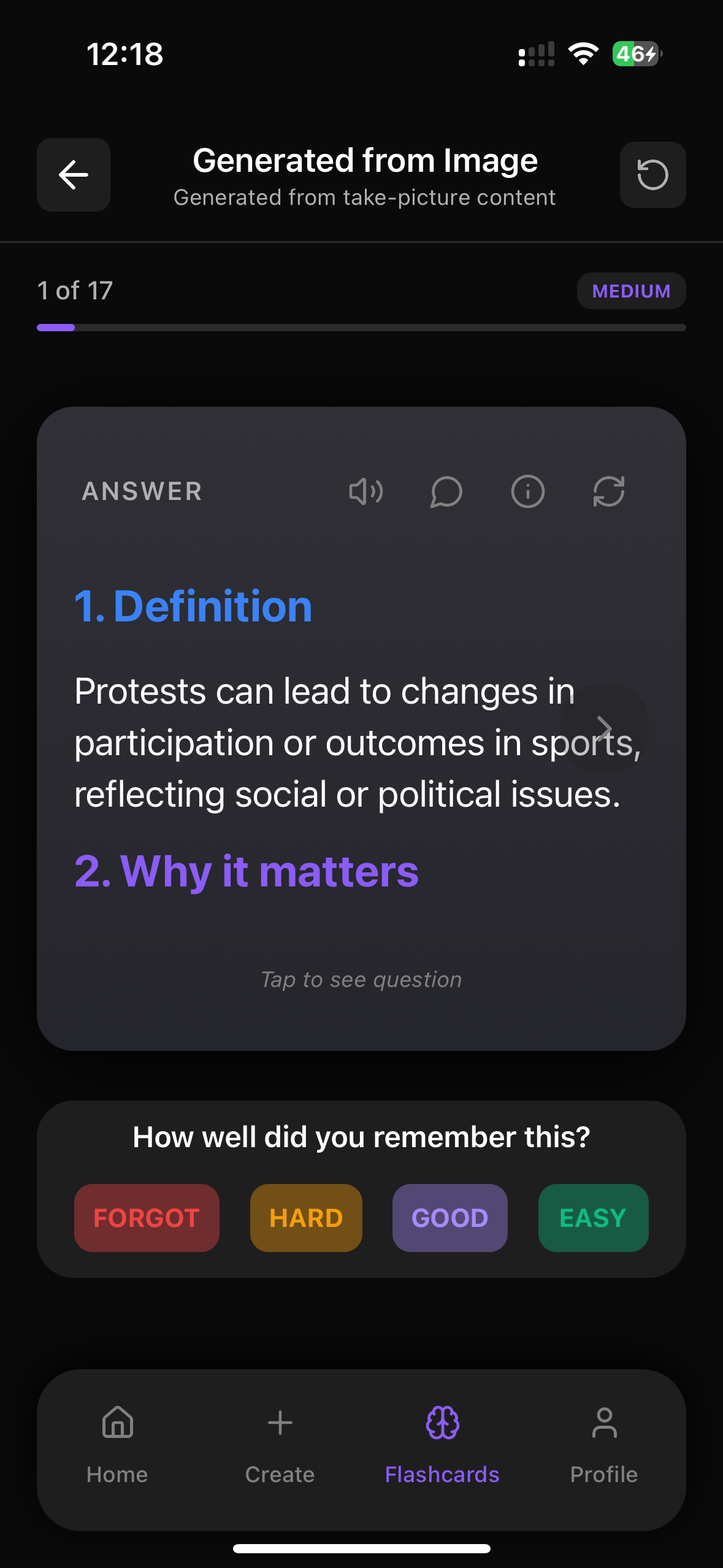
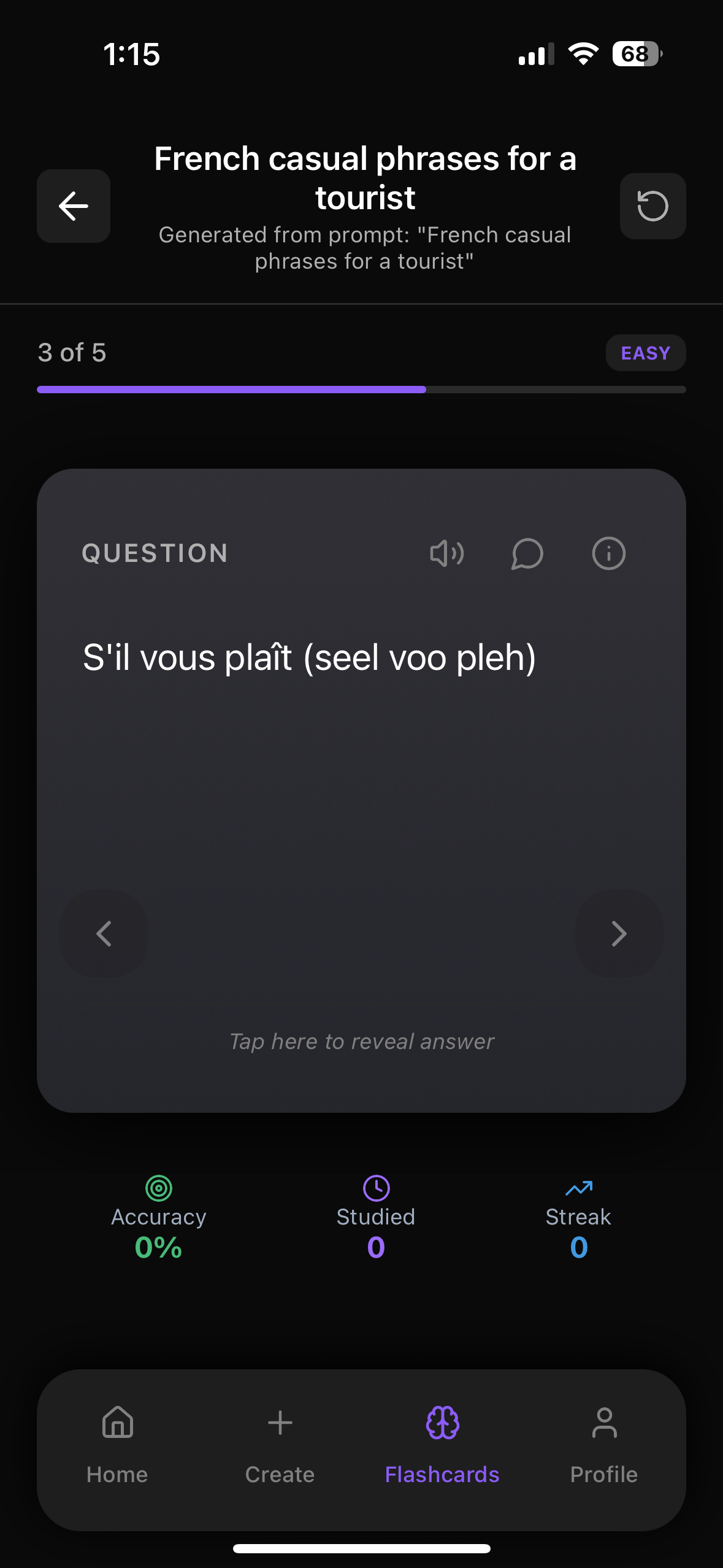
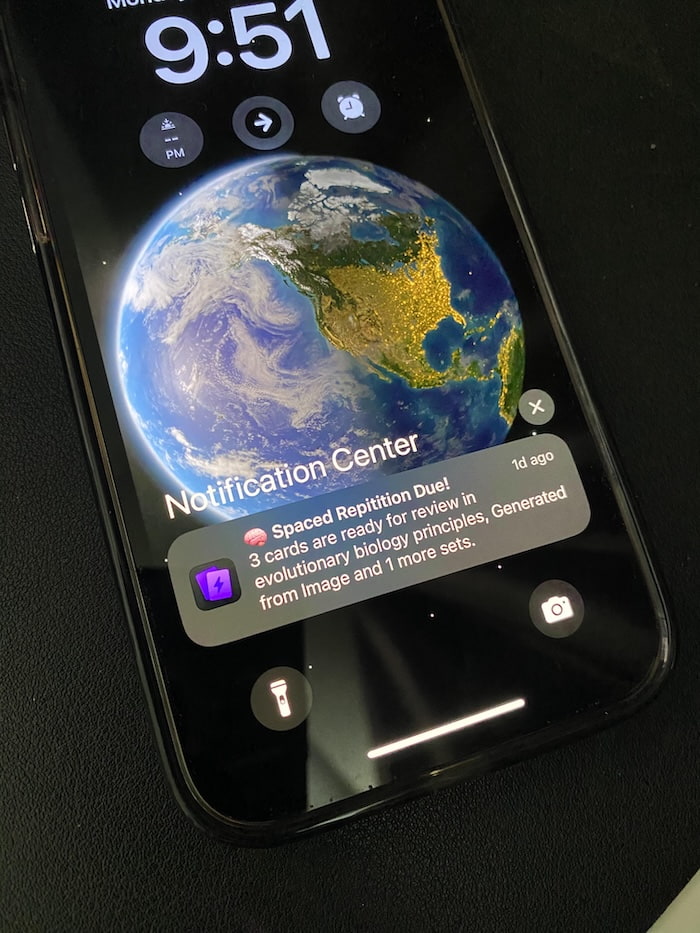
Flashrecall automatically keeps track and reminds you of the cards you don't remember well so you remember faster. Like this :
You can turn past paper questions into flashcards too.
Example:
- Front: Screenshot of an AQA graph question
- Back: Mark scheme answer in bullet points
Flashrecall lets you:
- Add images to flashcards directly (like curves for enzyme activity, standard deviation graphs, etc.)
- Then you can chat with the flashcard if you don’t understand the answer and ask things like “Explain why the rate levels off here”.
How To Use Flashrecall For AQA Biology (Step-By-Step)
Here’s a simple way to build a powerful AQA Biology deck without spending your whole life making cards.
Step 1: Download Flashrecall
Grab it here (it’s free to start):
👉 https://apps.apple.com/us/app/flashrecall-study-flashcards/id6746757085
Open it on your iPhone or iPad and create a deck called:
> “AQA A Level Biology – Year 12”
and maybe another:
> “AQA A Level Biology – Year 13”
Keep things organised by topic: Cells, Exchange, Genetics, Energy, etc.
Step 2: Turn Your Existing Stuff Into Cards (Fast)
Instead of manually typing hundreds of cards, let Flashrecall do the heavy lifting:
You can:
- Take photos of your class notes or revision guides
- Import PDFs (spec, revision notes, practical summaries)
- Paste text from websites or online notes
- Add YouTube links for topics you’re revising
- Or just type prompts like “Make flashcards about the immune response” and let it generate cards
Flashrecall will:
- Automatically pull out questions and answers
- Turn them into flashcards you can edit if you want
This is insanely useful for big topics like:
- Immunity
- Photosynthesis
- Respiration
- Homeostasis
Step 3: Use Active Recall Properly
When you study in Flashrecall:
- Look at the question
- Answer in your head or out loud (don’t just flip immediately)
- Then tap to reveal the answer
- Mark how well you knew it (easy / medium / hard)
That difficulty rating is what feeds the spaced repetition engine.
Flashrecall will automatically decide when to show you that card again.
No need to:
- Track review dates
- Build your own schedule
- Remember what to revise when
You just open the app, and it tells you:
> “Here are today’s cards.”
Step 4: Let Spaced Repetition Do Its Thing
As exams get closer, you don’t want to waste time revising things you already know perfectly.
Flashrecall’s built-in spaced repetition with auto reminders:
- Shows you hard cards more often
- Shows easy cards less often
- Sends study reminders so you don’t “forget to revise today”
This is perfect for long-term AQA Biology topics that you learn in September but still need in June, like:
- Cell structure
- Enzymes
- DNA replication
- Transport across membranes
You’re basically training your brain to remember these on command for the exam.
Step 5: Use It Anywhere (Bus, Library, Bed, Whatever)
Flashrecall works offline, so you can:
- Revise on the bus
- Flip through cards in a free period
- Quickly review a deck before a biology test
Because it’s fast and modern (no clunky menus, no ugly UI), it actually feels nice to use. You’re way more likely to stick with it compared to clunky tools.
How Flashrecall Compares To Traditional Flashcards (And Other Apps)
You could:
- Handwrite 500+ cards
- Lose half of them
- Forget to review them regularly
Or you could:
- Use a generic flashcard app that makes you set everything up manually
- No reminders, no AI help, no quick import from your notes
Flashrecall is better for AQA A Level Biology because:
- You can create cards instantly from your real study materials (images, text, PDFs, YouTube, prompts)
- It has built-in active recall + spaced repetition – no need to configure anything
- You get auto reminders so you actually stay consistent
- You can chat with your flashcards when you’re stuck (e.g. “Explain this in simpler terms”)
- It’s free to start, and works smoothly on iPhone and iPad
It’s basically built for students who want the benefits of smart revision without spending hours setting everything up.
Example: AQA Topic → Flashrecall Deck
Let’s say you’re revising Immunity.
You could create cards like:
- Q: “What is an antigen?”
A: Definition + where they’re found.
- Q: “Outline the stages of phagocytosis.”
A: Step-by-step explanation.
- Q: “Describe the role of T helper cells.”
A: Their role in stimulating B cells and cytotoxic T cells.
- Q: [Image of antibody structure] “Label A, B, and C.”
A: Variable region, constant region, antigen-binding site.
- Q: “Explain how vaccination leads to immunity.”
A: Primary response, memory cells, faster secondary response.
You throw these into Flashrecall, and the app:
- Schedules them via spaced repetition
- Reminds you to review
- Lets you test yourself again and again until it’s automatic
That’s exactly the level of recall AQA wants.
Final Tip: Start Small, But Start Today
You don’t need a perfect deck for every single topic right now.
Do this:
- Pick one topic you’re weak on (e.g. Photosynthesis, Immunity, Respiration)
- Spend 20–30 minutes turning your notes into Flashrecall cards
- Review them for 10–15 minutes a day
You’ll be shocked how much easier past paper questions feel once the content is actually in your head.
Grab Flashrecall here and turn AQA A Level Biology into something you can actually handle:
👉 https://apps.apple.com/us/app/flashrecall-study-flashcards/id6746757085
Your future self in the exam hall is 100% going to thank you.
Frequently Asked Questions
What's the fastest way to create flashcards?
Manually typing cards works but takes time. Many students now use AI generators that turn notes into flashcards instantly. Flashrecall does this automatically from text, images, or PDFs.
Is there a free flashcard app?
Yes. Flashrecall is free and lets you create flashcards from images, text, prompts, audio, PDFs, and YouTube videos.
How do I start spaced repetition?
You can manually schedule your reviews, but most people use apps that automate this. Flashrecall uses built-in spaced repetition so you review cards at the perfect time.
What is active recall and how does it work?
Active recall is the process of actively retrieving information from memory rather than passively reviewing it. Flashrecall forces proper active recall by making you think before revealing answers, then uses spaced repetition to optimize your review schedule.
Related Articles
- Pharmacology Mnemonics Flashcards: 7 Powerful Tricks To Finally Remember Every Drug Class Without Going Crazy – Stop rereading notes and use smarter flashcards that actually stick in your brain.
- A Level Biology Flashcards: 7 Proven Hacks To Learn Faster And Actually Remember It All – Stop Rewriting Notes And Start Studying Smarter Today
- Linear Algebra Flashcards: 7 Powerful Study Hacks To Finally Understand Matrices Fast – Stop rereading your notes and use flashcards the smart way to actually get linear algebra.
Research References
The information in this article is based on peer-reviewed research and established studies in cognitive psychology and learning science.
Cepeda, N. J., Pashler, H., Vul, E., Wixted, J. T., & Rohrer, D. (2006). Distributed practice in verbal recall tasks: A review and quantitative synthesis. Psychological Bulletin, 132(3), 354-380
Meta-analysis showing spaced repetition significantly improves long-term retention compared to massed practice
Carpenter, S. K., Cepeda, N. J., Rohrer, D., Kang, S. H., & Pashler, H. (2012). Using spacing to enhance diverse forms of learning: Review of recent research and implications for instruction. Educational Psychology Review, 24(3), 369-378
Review showing spacing effects work across different types of learning materials and contexts
Kang, S. H. (2016). Spaced repetition promotes efficient and effective learning: Policy implications for instruction. Policy Insights from the Behavioral and Brain Sciences, 3(1), 12-19
Policy review advocating for spaced repetition in educational settings based on extensive research evidence
Karpicke, J. D., & Roediger, H. L. (2008). The critical importance of retrieval for learning. Science, 319(5865), 966-968
Research demonstrating that active recall (retrieval practice) is more effective than re-reading for long-term learning
Roediger, H. L., & Butler, A. C. (2011). The critical role of retrieval practice in long-term retention. Trends in Cognitive Sciences, 15(1), 20-27
Review of research showing retrieval practice (active recall) as one of the most effective learning strategies
Dunlosky, J., Rawson, K. A., Marsh, E. J., Nathan, M. J., & Willingham, D. T. (2013). Improving students' learning with effective learning techniques: Promising directions from cognitive and educational psychology. Psychological Science in the Public Interest, 14(1), 4-58
Comprehensive review ranking learning techniques, with practice testing and distributed practice rated as highly effective

FlashRecall Team
FlashRecall Development Team
The FlashRecall Team is a group of working professionals and developers who are passionate about making effective study methods more accessible to students. We believe that evidence-based learning tec...
Credentials & Qualifications
- •Software Development
- •Product Development
- •User Experience Design
Areas of Expertise
Ready to Transform Your Learning?
Start using FlashRecall today - the AI-powered flashcard app with spaced repetition and active recall.
Download on App Store