ARDMS Abdomen Flashcards: 7 Powerful Ways To Pass Faster And Remember More
ARDMS abdomen flashcards plus spaced repetition and active recall so you remember liver lesions, Doppler values, and protocols without cramming.
How Flashrecall app helps you remember faster. It's free
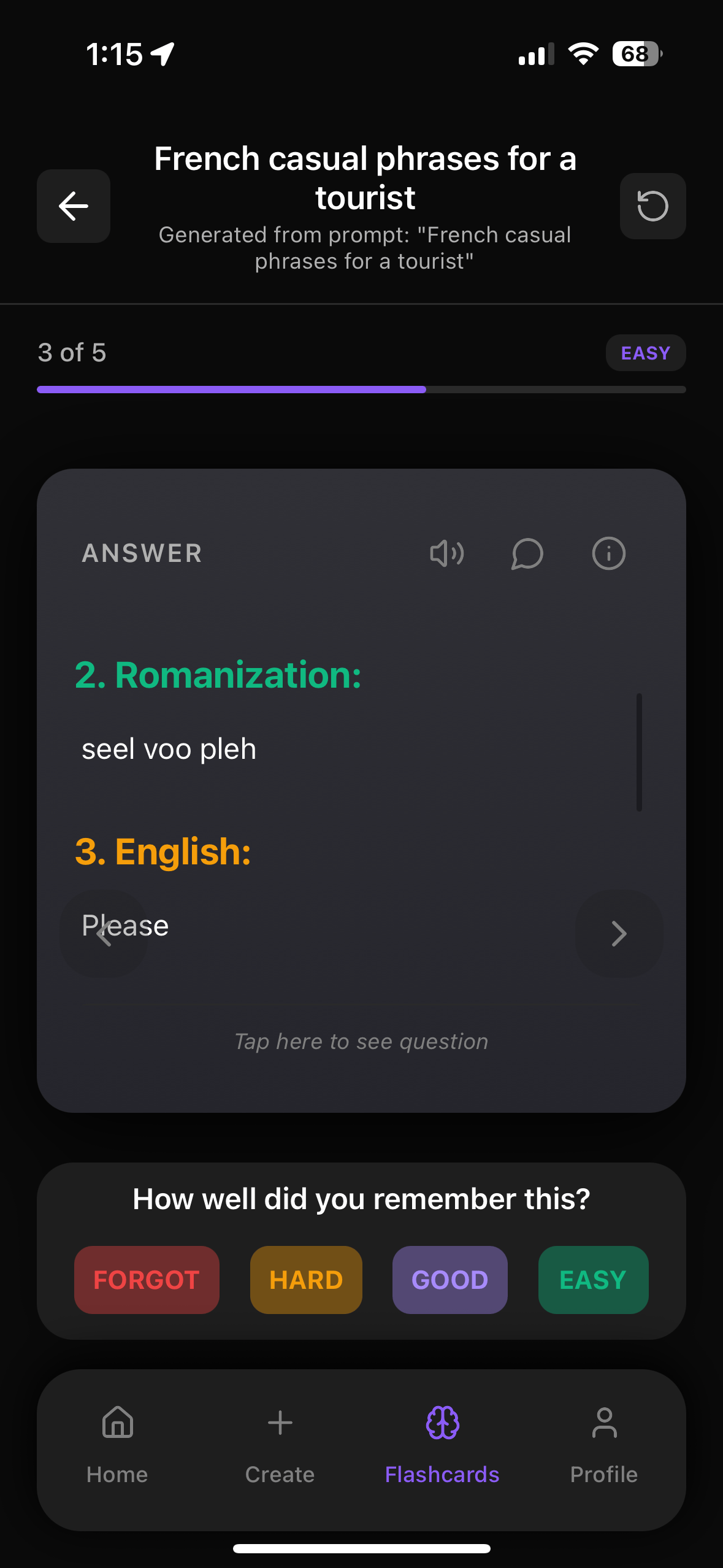
What Are ARDMS Abdomen Flashcards (And Why They Actually Work)?
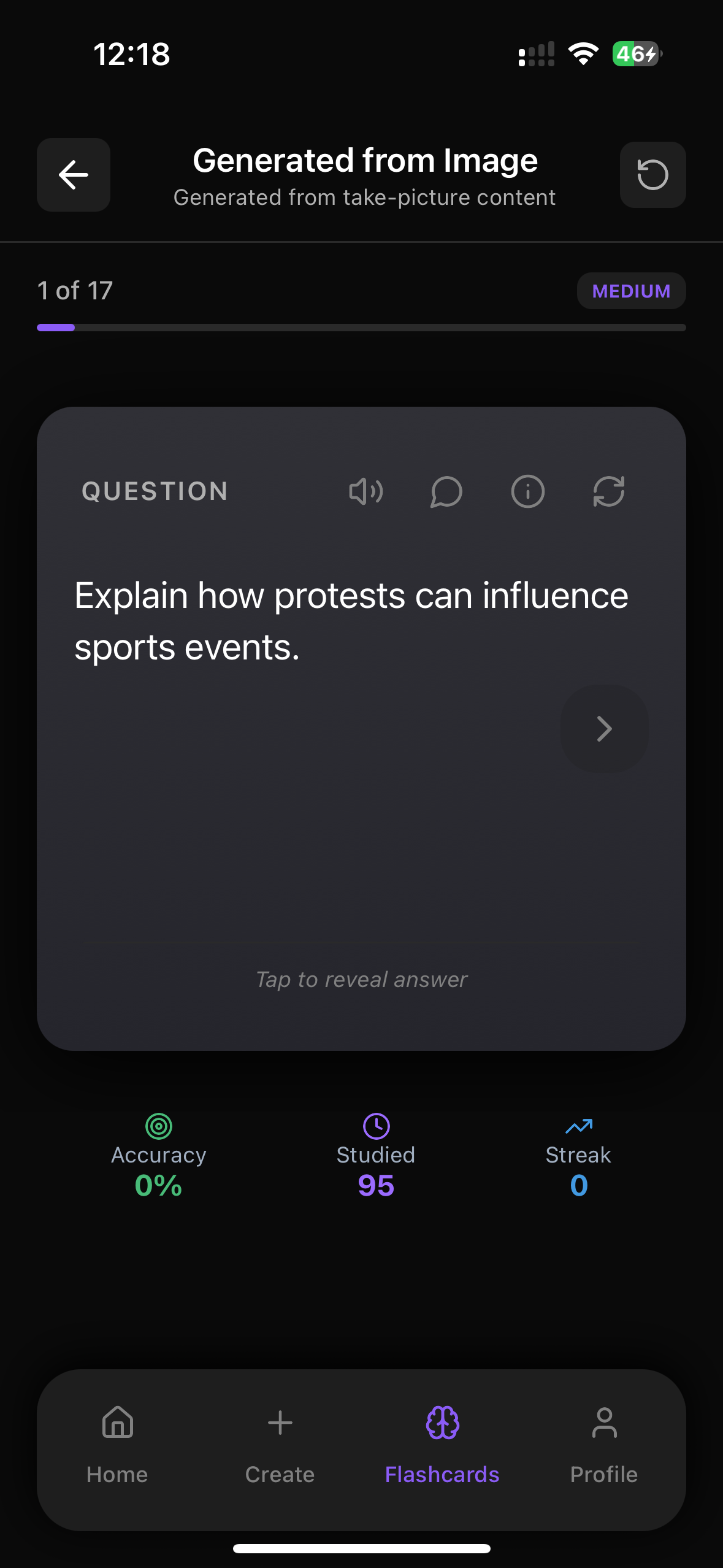
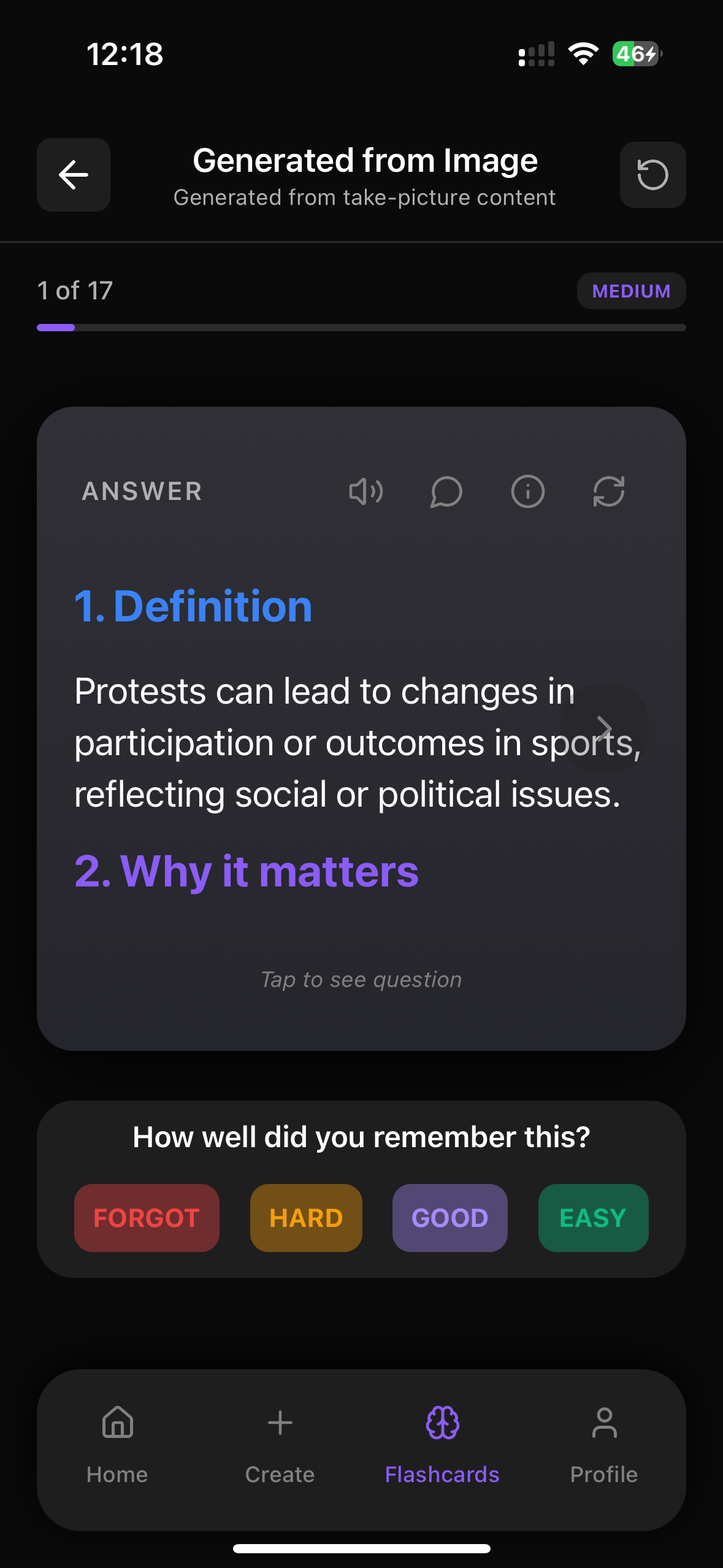
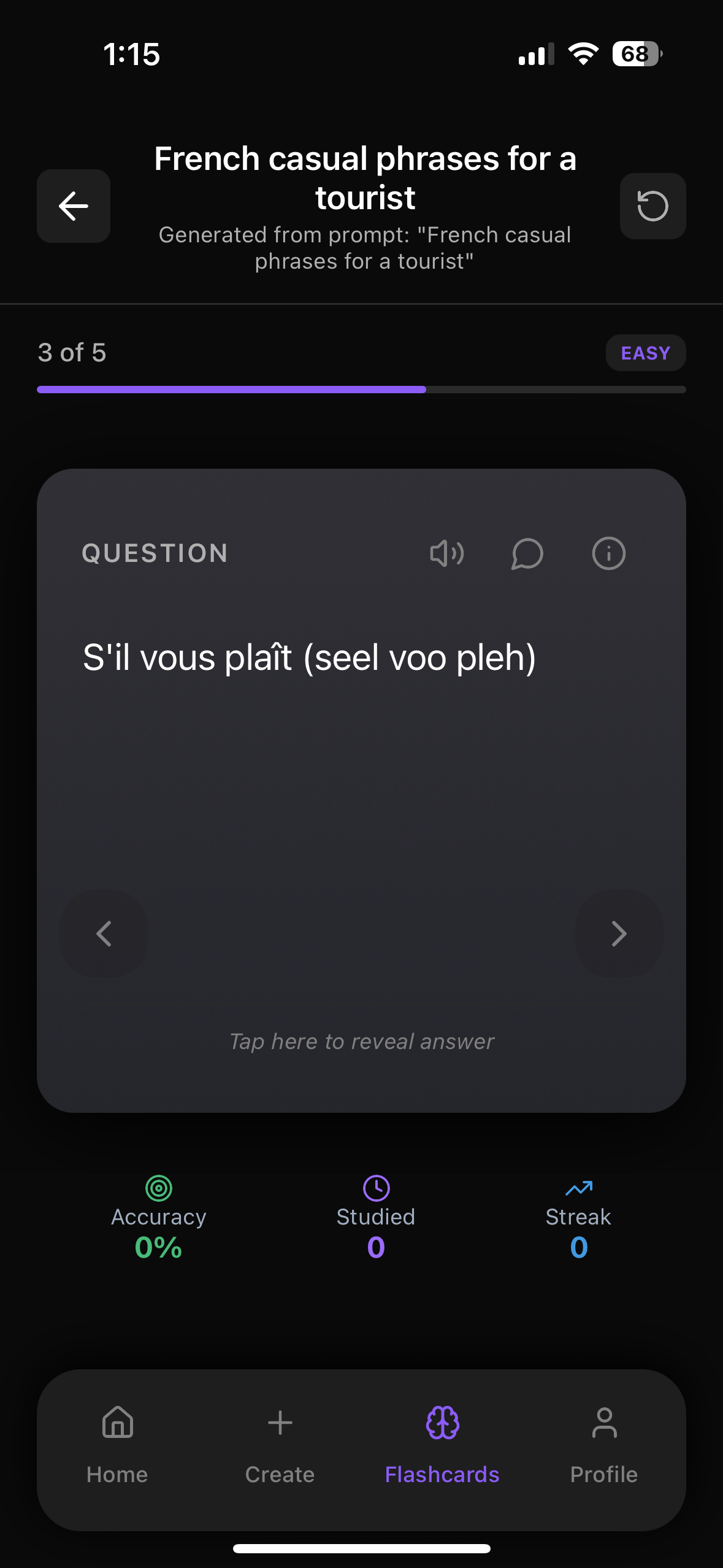
Alright, let's talk about ardms abdomen flashcards because they’re basically your shortcut to remembering all the ultrasound anatomy, pathology, and protocols you need for the ARDMS Abdomen exam. Ardms abdomen flashcards are bite-sized Q&A cards that cover things like liver lesions, Doppler values, pancreatic anatomy, and exam criteria so you’re not just reading — you’re actively testing yourself. This works because your brain remembers way better when you try to recall information instead of just rereading notes. And when you put those flashcards into a spaced repetition app like Flashrecall, you keep seeing the right cards at the right time, so the info actually sticks for exam day.
By the way, if you want to make and study these easily, Flashrecall on iPhone/iPad is perfect for this:
https://apps.apple.com/us/app/flashrecall-study-flashcards/id6746757085
You can build your own ARDMS Abdomen deck, import content from PDFs or screenshots, and let the app handle all the scheduling for you.
Why Flashcards Are So Good For ARDMS Abdomen Prep
The Abdomen exam is super detail-heavy:
- Organ sizes and normal measurements
- Vascular anatomy and Doppler waveforms
- Pathologies and their ultrasound appearance
- Patient positioning and scanning protocols
- Criteria for specific diagnoses
Reading a textbook is fine, but the exam is basically: “Do you remember this exact detail right now?”
That’s where flashcards shine.
Flashcards force active recall — instead of staring at a page, you look at a question and try to pull the answer from memory. That “mental struggle” is what makes your brain go, “Oh, this is important, let’s keep it.”
Now mix that with spaced repetition (reviewing cards just before you’re about to forget them) and you’ve got a system that’s way more efficient than just highlighting your notes 20 times.
Flashrecall bakes both of these into the app automatically: you see a question, try to answer it (active recall), then the app decides when you should see it again (spaced repetition). No spreadsheets. No study calendar drama.
Why Use Flashrecall For ARDMS Abdomen Flashcards?
You can absolutely use paper cards or random apps… but here’s why Flashrecall is especially nice for ARDMS Abdomen:
- Instant card creation from your study material
Got a PDF of abdomen notes? A screenshot of a liver lesion chart? A YouTube lecture on portal hypertension?
Flashrecall can turn:
- Images
- Text
- PDFs
- YouTube links
- Typed prompts
- Even audio
into flashcards automatically. Huge time-saver when you’re already juggling clinicals and studying.
- Built-in spaced repetition (with auto reminders)
You don’t have to remember when to review. Flashrecall schedules your ARDMS abdomen flashcards for you and sends study reminders, so you’re consistently reviewing small chunks instead of cramming the week before.
- Active recall built in
Each card is designed around question → think → reveal. That’s exactly how you should be studying for a board-style exam.
- Works offline
Studying on a break at the hospital, on the train, or in a waiting room? No problem — your decks are available even without Wi‑Fi.
- You can chat with your flashcards
Stuck on “Budd-Chiari syndrome” or can’t remember which veins are involved? You can literally chat with the content in Flashrecall and ask follow-up questions so you understand, not just memorize.
- Fast, modern, easy to use
No clunky old-school interface. It’s clean, quick, and doesn’t get in your way.
- Free to start, iPhone + iPad
Just grab it here and try it:
https://apps.apple.com/us/app/flashrecall-study-flashcards/id6746757085
What To Put On Your ARDMS Abdomen Flashcards
Let’s break down what actually belongs on your cards so you’re not wasting time memorizing random stuff.
1. Normal Anatomy & Measurements
You’ll see tons of questions about what’s “normal” vs “abnormal.”
Good flashcard ideas:
- Liver size
- Front: “Normal liver length in midclavicular line (adult)?”
- Back: “Up to ~15–17 cm (varies slightly by source, know your program’s value).”
- Common bile duct (CBD)
- Front: “Normal CBD diameter in adult without cholecystectomy?”
- Back: “Up to 6 mm (add ~1 mm per decade after 60).”
- Spleen
- Front: “Normal spleen length?”
- Back: “Up to 12–13 cm (again, know the range your program uses).”
You can throw all of these into Flashrecall manually, or screenshot your measurement tables and let the app auto-generate cards from the image.
2. Pathology & Sonographic Appearance
This is where a lot of people lose points — knowing what something looks like on ultrasound.
Examples:
- Front: “Classic ultrasound appearance of hepatic hemangioma?”
Back: “Homogeneous, hyperechoic, well-defined, posterior enhancement, usually in right lobe.”
- Front: “Acute cholecystitis ultrasound findings?”
Back: “GB wall thickening (>3 mm), gallstones, positive sonographic Murphy sign, pericholecystic fluid, distended GB.”
- Front: “Chronic pancreatitis ultrasound appearance?”
Back: “Small, heterogeneous, calcifications, irregular duct, possible dilated pancreatic duct.”
You can even include images in Flashrecall cards — super helpful when you want to visually link “this pattern = this diagnosis.”
3. Vascular Anatomy & Doppler
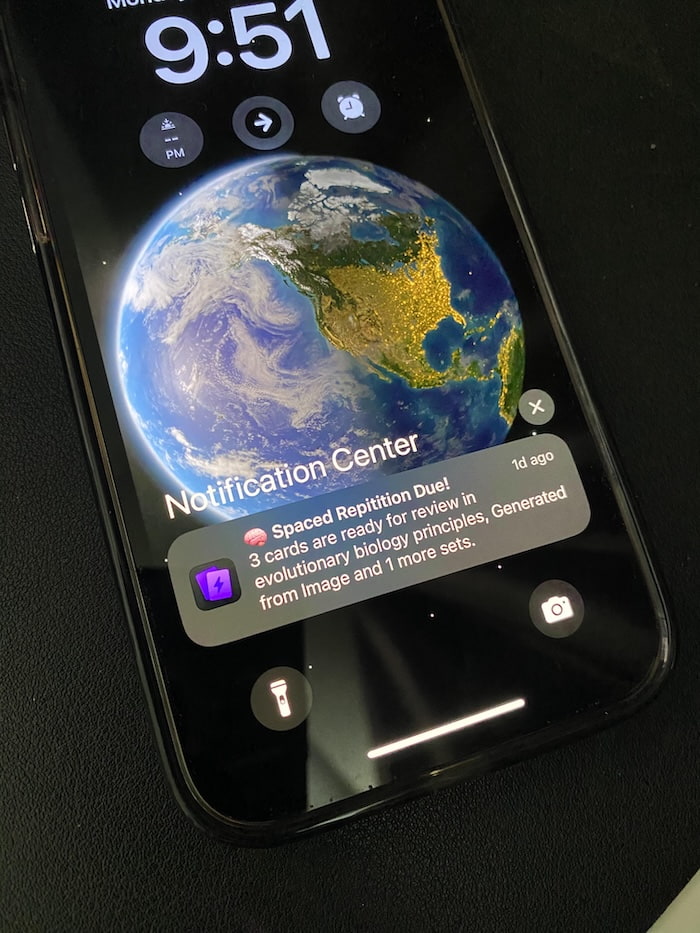
Flashrecall automatically keeps track and reminds you of the cards you don't remember well so you remember faster. Like this :
ARDMS loves vascular questions.
Card ideas:
- Front: “Normal portal vein flow direction and waveform?”
Back: “Hepatopetal, monophasic with mild respiratory variation.”
- Front: “Hepatic veins waveform description?”
Back: “Triphasic, reflecting cardiac cycle.”
- Front: “Main portal vein normal diameter?”
Back: “Up to ~13 mm.”
You can use PDFs or lecture slides, then let Flashrecall auto-create flashcards from those sections instead of typing every single thing.
4. Exam Protocols & Patient Prep
These are easy points if you actually remember them.
- Front: “Fasting requirement for complete abdominal ultrasound?”
Back: “Typically NPO 6–8 hours (varies by lab).”
- Front: “Standard patient position for gallbladder scan?”
Back: “Supine; may also use LLD, upright, or other positions to move stones.”
- Front: “Why do we use LLD for gallbladder?”
Back: “To see if stones move and differentiate from polyps/sludge.”
How To Actually Study Your ARDMS Abdomen Flashcards (Without Burning Out)
Making cards is half the battle. Using them right is the other half.
1. Keep Cards Short And Focused
One question = one idea.
Bad:
“List all liver pathologies, their appearances, and Doppler findings.”
Better:
“Ultrasound appearance of fatty liver?”
“Ultrasound appearance of cirrhosis?”
“Portal hypertension signs on ultrasound?”
Shorter cards = easier recall + faster reviews.
2. Study A Little Every Day
Instead of massive 3-hour cram sessions, do 15–30 minutes daily.
Flashrecall helps a ton here:
- It schedules your reviews automatically (spaced repetition).
- It reminds you to study so days don’t slip by.
You just open the app and do the cards it gives you. No planning needed.
3. Mix Topics (Don’t Just Do “Liver Day”)
Your exam will mix everything together, so your flashcard sessions should too:
- Liver
- GB & biliary
- Pancreas
- Spleen
- Kidneys
- Vascular
Flashrecall naturally shuffles your cards and surfaces what you’re close to forgetting, so your sessions feel like mini mock exams.
4. Use The “Chat With Your Flashcards” When You’re Confused
If you keep missing a card like:
> “Differentiate portal vein vs hepatic vein on ultrasound.”
Instead of just flipping and moving on, in Flashrecall you can ask follow-up questions like:
- “Explain this like I’m a beginner.”
- “Give me a memory trick to remember portal vs hepatic veins.”
- “Quiz me again with a slightly different question.”
That turns one flashcard into a mini tutoring session.
Example Mini Deck For ARDMS Abdomen (You Can Steal These)
Here’s a quick sample of cards you could drop straight into Flashrecall:
- Q: “Normal GB wall thickness?”
A: “≤3 mm.”
- Q: “Name the 3 main branches of the celiac trunk.”
A: “Left gastric, splenic, common hepatic.”
- Q: “What is Morrison’s pouch?”
A: “Hepatorenal recess between liver and right kidney.”
- Q: “Ultrasound signs of portal hypertension?”
A: “Dilated portal vein, splenomegaly, ascites, collaterals/varices, reversed or to-and-fro portal flow.”
- Q: “What is the double duct sign?”
A: “Dilation of CBD and pancreatic duct; often associated with pancreatic head mass.”
- Q: “Why do we ask patients to fast for GB exam?”
A: “To ensure gallbladder is distended and reduce bowel gas.”
Drop these into Flashrecall, then add your own from class, textbooks, or practice questions.
How To Build Your ARDMS Abdomen Deck Fast With Flashrecall
If you don’t want to spend hours typing, here’s a quick workflow:
1. Collect your material
- Class slides (PDFs)
- Review books
- Notes
- Screenshots of key tables/diagrams
2. Import into Flashrecall
- Upload PDFs or images directly
- Paste text or YouTube links
- Let the app generate flashcards from them automatically
3. Clean up & customize
- Edit questions so they’re short and clear
- Add images to pathology cards
- Tag cards (e.g., “Liver”, “GB”, “Vascular”) if you like organizing
4. Start daily reviews
- Open the app
- Do the cards it gives you
- Mark how hard each card was
- Let spaced repetition handle the rest
You can grab Flashrecall here:
https://apps.apple.com/us/app/flashrecall-study-flashcards/id6746757085
Final Thoughts: Make ARDMS Abdomen Feel Manageable
You don’t have to memorize the entire abdomen textbook in one go. If you turn your notes into solid ardms abdomen flashcards and run them through a spaced repetition app like Flashrecall, you’ll keep seeing the right details at the right time — until they feel automatic.
Short, daily sessions. Clear questions. Active recall. Spaced repetition.
Do that consistently, and the Abdomen exam stops feeling impossible and starts feeling… actually doable.
Frequently Asked Questions
What's the fastest way to create flashcards?
Manually typing cards works but takes time. Many students now use AI generators that turn notes into flashcards instantly. Flashrecall does this automatically from text, images, or PDFs.
Is there a free flashcard app?
Yes. Flashrecall is free and lets you create flashcards from images, text, prompts, audio, PDFs, and YouTube videos.
How do I start spaced repetition?
You can manually schedule your reviews, but most people use apps that automate this. Flashrecall uses built-in spaced repetition so you review cards at the perfect time.
What is active recall and how does it work?
Active recall is the process of actively retrieving information from memory rather than passively reviewing it. Flashrecall forces proper active recall by making you think before revealing answers, then uses spaced repetition to optimize your review schedule.
How can I study more effectively for this test?
Effective exam prep combines active recall, spaced repetition, and regular practice. Flashrecall helps by automatically generating flashcards from your study materials and using spaced repetition to ensure you remember everything when exam day arrives.
Related Articles
- Pre Planning And Inspection OSHA Quizlet: 7 Powerful Study Tricks Most Safety Pros Don’t Use Yet – But Should
- 1 10 Flashcards: 10 Powerful Ways To Use Simple Cards To Learn Anything Faster – Discover how to turn tiny “1 by 10” flashcard sets into a memory superpower most students ignore
- Anatomy And Physiology Flashcards Quizlet Alternatives: 7 Powerful Ways To Learn Faster And Actually Remember Everything
Research References
The information in this article is based on peer-reviewed research and established studies in cognitive psychology and learning science.
Cepeda, N. J., Pashler, H., Vul, E., Wixted, J. T., & Rohrer, D. (2006). Distributed practice in verbal recall tasks: A review and quantitative synthesis. Psychological Bulletin, 132(3), 354-380
Meta-analysis showing spaced repetition significantly improves long-term retention compared to massed practice
Carpenter, S. K., Cepeda, N. J., Rohrer, D., Kang, S. H., & Pashler, H. (2012). Using spacing to enhance diverse forms of learning: Review of recent research and implications for instruction. Educational Psychology Review, 24(3), 369-378
Review showing spacing effects work across different types of learning materials and contexts
Kang, S. H. (2016). Spaced repetition promotes efficient and effective learning: Policy implications for instruction. Policy Insights from the Behavioral and Brain Sciences, 3(1), 12-19
Policy review advocating for spaced repetition in educational settings based on extensive research evidence
Karpicke, J. D., & Roediger, H. L. (2008). The critical importance of retrieval for learning. Science, 319(5865), 966-968
Research demonstrating that active recall (retrieval practice) is more effective than re-reading for long-term learning
Roediger, H. L., & Butler, A. C. (2011). The critical role of retrieval practice in long-term retention. Trends in Cognitive Sciences, 15(1), 20-27
Review of research showing retrieval practice (active recall) as one of the most effective learning strategies
Dunlosky, J., Rawson, K. A., Marsh, E. J., Nathan, M. J., & Willingham, D. T. (2013). Improving students' learning with effective learning techniques: Promising directions from cognitive and educational psychology. Psychological Science in the Public Interest, 14(1), 4-58
Comprehensive review ranking learning techniques, with practice testing and distributed practice rated as highly effective

FlashRecall Team
FlashRecall Development Team
The FlashRecall Team is a group of working professionals and developers who are passionate about making effective study methods more accessible to students. We believe that evidence-based learning tec...
Credentials & Qualifications
- •Software Development
- •Product Development
- •User Experience Design
Areas of Expertise
Ready to Transform Your Learning?
Start using FlashRecall today - the AI-powered flashcard app with spaced repetition and active recall.
Download on App Store