Art Flashcards Tips: The Ultimate Guide
Art flashcards tips help you remember artists and their masterpieces better. Use Flashrecall to create flashcards and schedule reviews for quicker retention.
How Flashrecall app helps you remember faster. It's free
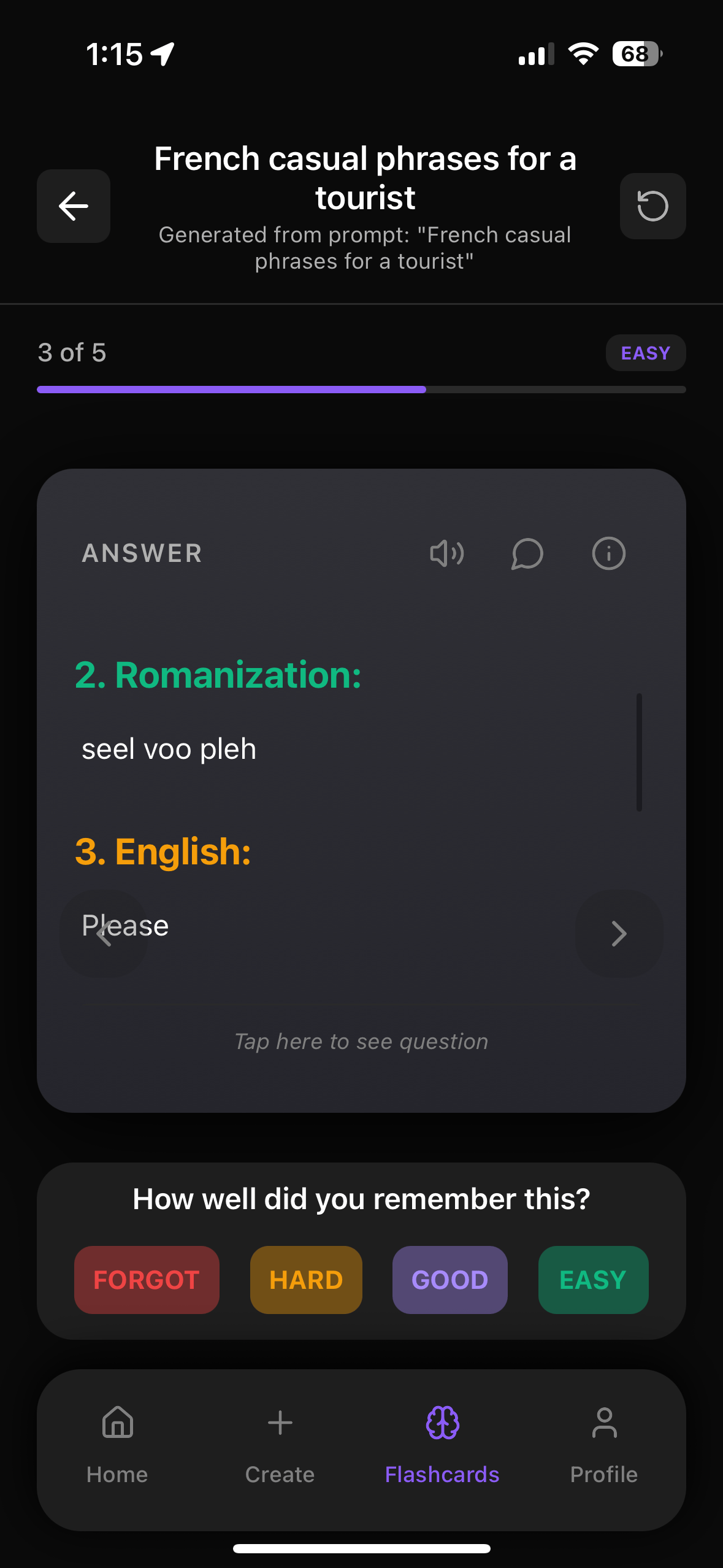
Stop Staring At Slideshows – Art Flashcards Are Your New Superpower
So, ever been stuck trying to remember which artist painted what masterpiece? Yeah, me too. That's where art flashcards tips come in clutch. Imagine breaking down all those artists and their works into little bite-sized pieces that actually stick in your brain. It’s like having a cheat sheet that helps you remember stuff way faster. Here's the scoop: using techniques like active recall and spaced repetition can really level up your memory game. And here’s what’s neat—Flashrecall does all the heavy lifting for you. It generates flashcards from your study materials and even plans review times, so you're not cramming last minute. If you're curious about diving deeper into this handy trick that most art students should totally be using, there’s a whole guide just waiting for you. Trust me, it’s worth checking out!
If you're looking for information about art flashcards: the essential way to train your eye, learn artists fast, and actually remember what you study – most art students don’t use this simple trick (but should), read our complete guide to art flashcards.
Instead of scrolling through random Pinterest boards or dead-eyed staring at lecture slides, you can turn everything into quick, bite-sized cards and drill them in minutes.
And the easiest way to do that? Use an app that actually does the heavy lifting for you.
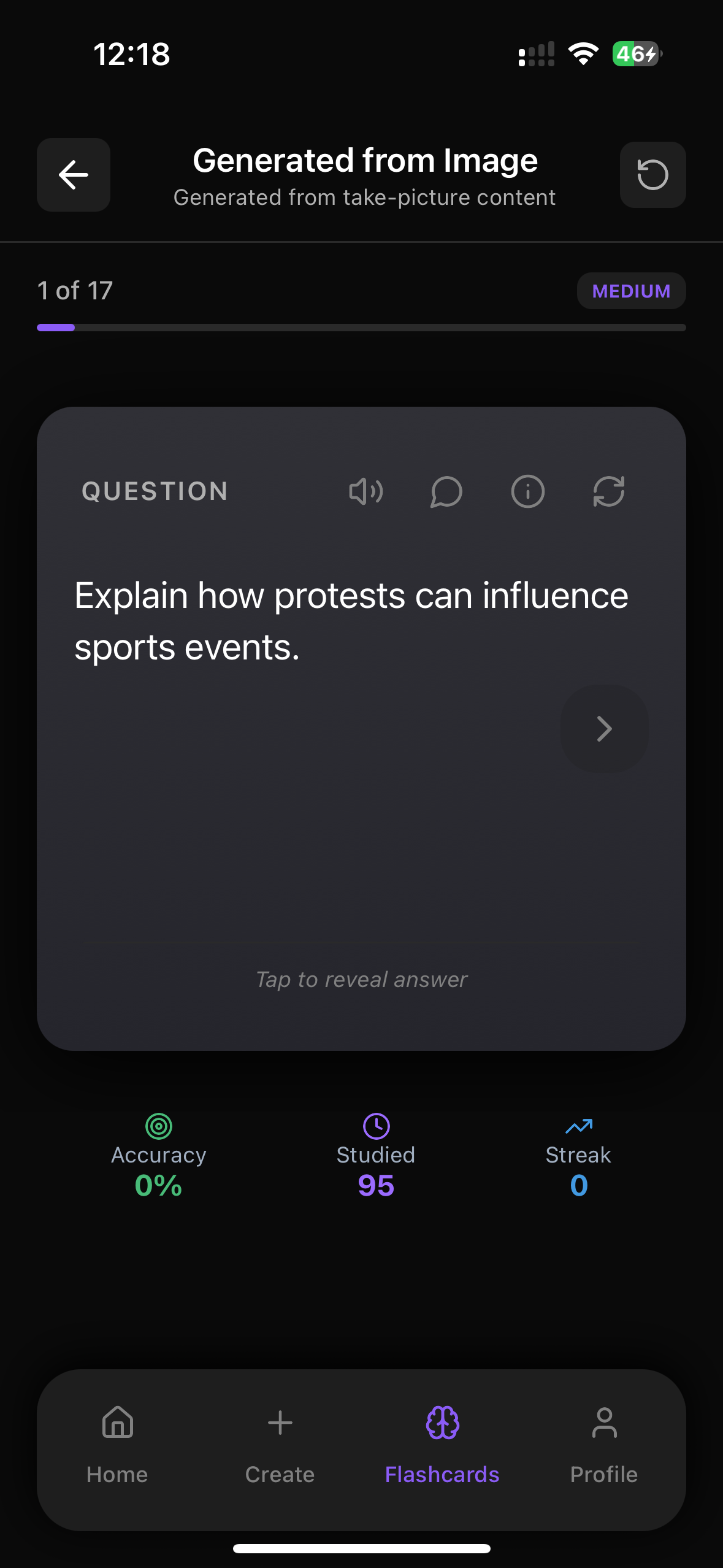
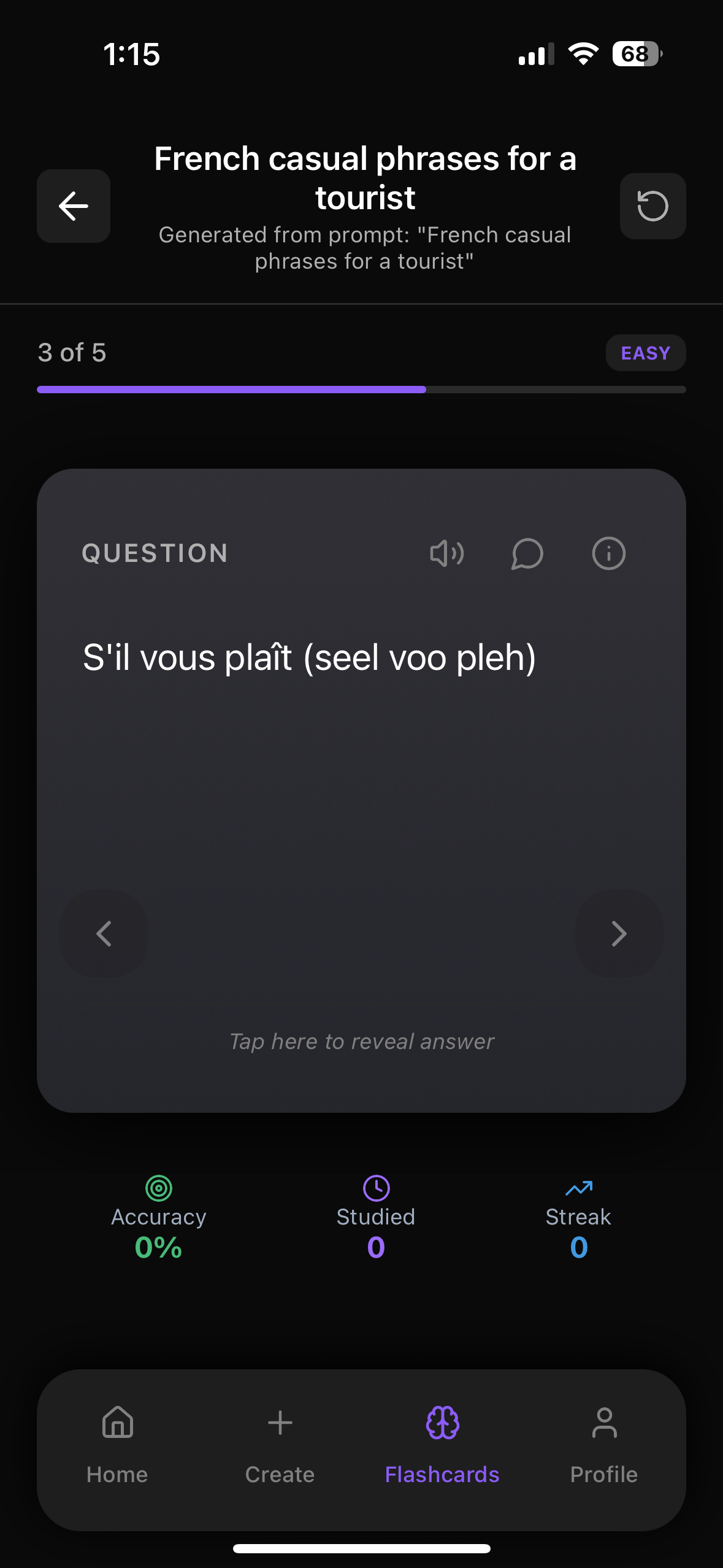
That’s exactly what Flashrecall does: it turns images, text, PDFs, YouTube links and more into flashcards in seconds, with built‑in spaced repetition so you actually remember what you learn:
👉 https://apps.apple.com/us/app/flashrecall-study-flashcards/id6746757085
Let’s break down how to use art flashcards properly, and how to make them actually useful instead of just pretty digital postcards.
Why Art Flashcards Work So Well (Especially For Visual Stuff)
Art is super visual, which makes it perfect for flashcards. Instead of memorizing huge blocks of text like:
> “Italian Renaissance, 15th century, tempera on panel, Florence…”
…you can have a card with the artwork image on the front and the key info on the back.
Flashcards work because of two big ideas:
1. Active recall – forcing your brain to pull the answer out instead of just re-reading it
2. Spaced repetition – reviewing cards right before you’re about to forget them
Flashrecall bakes both of these in automatically. You don’t have to figure out a schedule or decide what to review – the app just tells you which cards to study each day so you keep the art fresh in your mind.
What Can You Use Art Flashcards For?
Honestly, way more than just “name the painting, name the artist.” Some ideas:
1. Art History Exams
Perfect if you’re studying:
- AP Art History
- College art history courses
- Museum studies
- General humanities classes
Example flashcards:
- Front: Image of “The Starry Night”
- Front: “Which movement rejected Renaissance perspective and focused on flat color planes?”
You can load your professor’s slides into Flashrecall as a PDF and let it generate cards for you automatically. No more manually cropping images for hours.
2. Learning Artists And Styles
You can build decks like:
- “Impressionism – key works & artists”
- “Baroque vs. Rococo – spot the difference”
- “Modern art movements 1900–1950”
With Flashrecall, you can:
- Import images from PDFs, notes, or the web
- Add short, clear notes on style, date, medium, and context
- Let spaced repetition drill you on what you keep forgetting
3. Improving Your Own Art Skills
Art flashcards aren’t just for theory. You can use them to train your eye and improve your technique:
- Gesture drawing prompts
- Anatomy reference cards
- Color theory examples
- Composition breakdowns
Example deck: “Composition Tricks”
- Front: Image of a painting
You can quiz yourself: “Where’s the focal point? What composition rule is being used?” Then flip the card and check if you saw it correctly.
How To Make Powerful Art Flashcards (Without Wasting Time)
Let’s make this practical. Here’s how to build art flashcards that don’t suck.
1. Start With Images, Not Walls Of Text
Art is visual, so your front side should usually be an image:
- Painting
- Sculpture
- Architecture photo
- Sketch / diagram
In Flashrecall you can:
- Snap a photo from your textbook or notes
- Import from PDFs
- Grab stills from a YouTube art history video
- Upload images directly
The app can auto-generate flashcards from these, so you’re not manually creating every single one.
2. Keep The Back Short And Focused
Don’t write a mini essay on the back. Aim for the essentials:
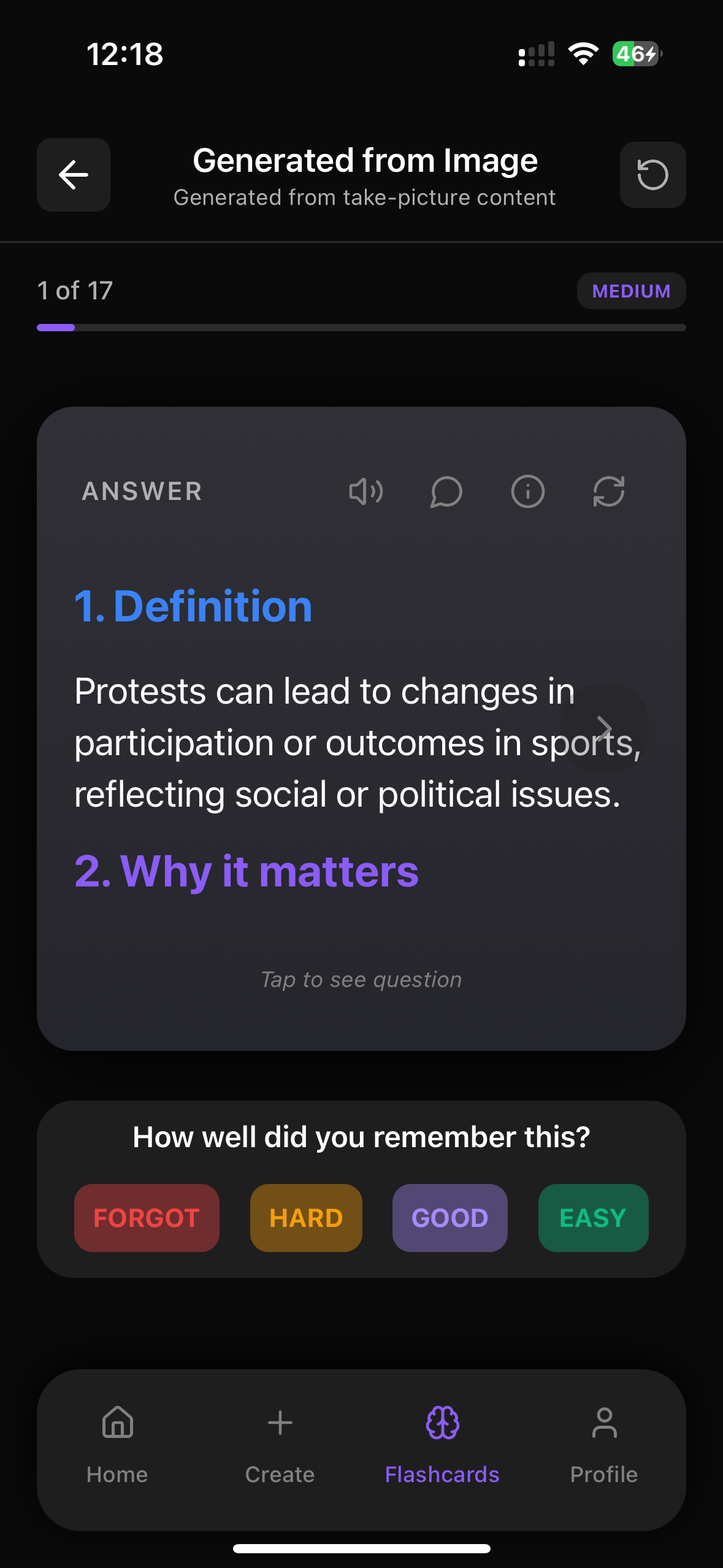
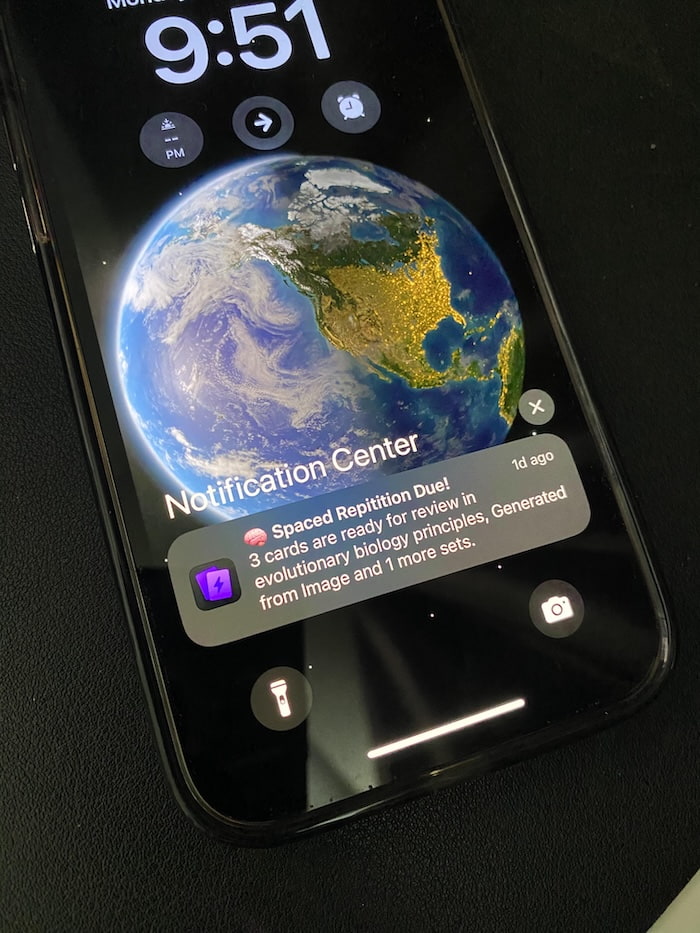
Flashrecall automatically keeps track and reminds you of the cards you don't remember well so you remember faster. Like this :
For art history:
- Artist
- Title
- Date / period
- Movement / style
- 1–2 key features or themes
Example:
> Back:
> Caravaggio – “The Calling of Saint Matthew” – 1599–1600
> Baroque – dramatic chiaroscuro, strong diagonal light, realistic figures
For technique / skill cards:
- What’s being shown
- The rule / concept
- How you’d apply it in your own work
3. Use Question Formats, Not Just Labels
Instead of:
- Front: Image
- Back: “Monet, Water Lilies”
Try different angles:
- “Who painted this?”
- “Which movement?”
- “What technique is used here?”
- “Why is this work historically important?”
Flashrecall is built around active recall, so every card is basically a mini quiz. That’s what actually wires the info into your memory.
4. Turn Your Class Material Into Cards Instantly
If you’re in a course, you probably get:
- Slide decks (PowerPoint / PDF)
- Reading PDFs
- YouTube lectures
With Flashrecall you can:
- Import a PDF → auto-generate cards from key text and images
- Paste in a YouTube link → turn the content into flashcards
- Paste or type your notes → let the app suggest flashcards for you
You can always edit or add your own cards manually, but this saves a ton of time.
Why Use An App Instead Of Physical Art Flashcards?
Physical cards are nice, but for art they get annoying fast:
- Printing images is expensive and slow
- Hard to carry 200+ image cards around
- No spaced repetition unless you manage it by hand
With Flashrecall:
- You can have hundreds of image cards on your iPhone or iPad
- The app automatically schedules reviews with spaced repetition
- You get study reminders, so you don’t forget to review before exams
- It works offline, so you can review on the train, in a museum, wherever
And it’s free to start, so you can test it with one deck and see if it clicks for you:
👉 https://apps.apple.com/us/app/flashrecall-study-flashcards/id6746757085
Example: Building An Art History Deck In Flashrecall (Step-By-Step)
Let’s say you’re prepping for an exam on Impressionism.
Step 1: Grab Your Material
You’ve got:
- Lecture slides as a PDF
- A chapter from your textbook
- A YouTube video breakdown of Impressionism
Step 2: Import Into Flashrecall
In Flashrecall you:
1. Create a new deck: “Impressionism – Core Works”
2. Import the PDF slides → the app pulls out artworks and text
3. Paste the YouTube link → generate summary cards from the video
4. Add a few manual cards for things your professor emphasized
Step 3: Clean Up And Customize
Edit the auto-generated cards:
- Make sure the image is on the front
- Keep the back focused: artist, title, date, movement, 1 key idea
- Add a few “why is this important?” cards
Step 4: Study With Spaced Repetition
Now Flashrecall:
- Shows you a mix of “new” and “review” cards
- Uses spaced repetition to reschedule cards you get right
- Brings back cards you struggle with more often
You just open the app when you get a notification, run a quick session, and you’re done. No planning, no scheduling.
Use Chat To Go Deeper When You’re Confused
One underrated thing: in Flashrecall, you can chat with your flashcards.
So if you’re like:
> “Okay, I know this is Baroque, but why exactly? What should I be looking at?”
You can literally ask inside the app:
- “Explain what makes this painting Baroque in simple terms.”
- “Compare this artwork to Renaissance style.”
It’ll use the context from your cards to help you understand, not just memorize. Super useful for tricky movements or theory-heavy topics.
Ideas For Different Art Flashcard Decks
If you’re not sure where to start, here are some deck ideas:
For Students
- “100 Must-Know Artworks For AP Art History”
- “Renaissance vs. Baroque – Spot The Difference”
- “Modern Art Movements Timeline”
- “Architecture Styles: Gothic to Postmodern”
For Artists
- “Anatomy Landmarks – Front/Back/Side”
- “Color Schemes – Examples & When To Use Them”
- “Composition Tricks From Famous Paintings”
- “Lighting Setups – Reference Shots & Notes”
For Museum Lovers / Casual Learners
- “Favorite Paintings From [Museum Name]”
- “Artists I Want To Remember”
- “Sculpture Styles Over Time”
You can literally take photos in a museum, dump them into Flashrecall, add a few notes, and boom – you’ve got a personal art memory deck.
Why Flashrecall Works So Well For Art Flashcards
Quick recap of why Flashrecall is especially good for this:
- Instant card creation
- From images, text, audio, PDFs, YouTube links, or typed prompts
- Plus manual card creation if you want full control
- Built-in active recall
- Every card is a question–answer format by design
- Spaced repetition with auto reminders
- You don’t have to remember to study – the app reminds you
- Reviews are scheduled right before you forget
- Works offline
- Perfect for studying on commutes, in museums, or in class breaks
- Chat with your flashcards
- Ask follow-up questions when you don’t fully get something
- Great for anything, not just art
- Languages, exams, medicine, business, school subjects, you name it
- Fast, modern, easy to use
- No clunky UI, just make cards and study
- Free to start, on iPhone and iPad
If you’re serious about actually remembering artists, works, and concepts – not just cramming and forgetting – this is one of the simplest tools you can add to your routine:
👉 https://apps.apple.com/us/app/flashrecall-study-flashcards/id6746757085
Final Thoughts: Make Art Stick, Not Just Scroll Past It
Art is way more fun when you actually recognize what you’re looking at.
When you can walk into a museum and go:
> “Oh, that’s a Caravaggio. Baroque. Look at that light.”
Art flashcards are how you get there without drowning in notes.
Use images on the front, clean info on the back, mix in active recall questions, and let spaced repetition do the heavy lifting.
And if you want all of that without spending hours formatting cards and building a review schedule, just throw everything into Flashrecall and let it handle the boring parts while you focus on the art.
Frequently Asked Questions
What's the fastest way to create flashcards?
Manually typing cards works but takes time. Many students now use AI generators that turn notes into flashcards instantly. Flashrecall does this automatically from text, images, or PDFs.
Is there a free flashcard app?
Yes. Flashrecall is free and lets you create flashcards from images, text, prompts, audio, PDFs, and YouTube videos.
How do I start spaced repetition?
You can manually schedule your reviews, but most people use apps that automate this. Flashrecall uses built-in spaced repetition so you review cards at the perfect time.
What is active recall and how does it work?
Active recall is the process of actively retrieving information from memory rather than passively reviewing it. Flashrecall forces proper active recall by making you think before revealing answers, then uses spaced repetition to optimize your review schedule.
Related Articles
- GoodNotes 5 Flashcards: Why Most Students Struggle (And the Better, Faster Alternative) – Discover a smarter way to turn notes into powerful flashcards and actually remember what you study.
- Kyoku Flashcards: Why Most Students Switch To This Powerful Alternative To Learn Faster – Discover the smarter way to study with flashcards that actually fit your life, not the other way around.
- Nutrition Flashcards: The Essential Study Hack To Learn Food, Macros & Vitamins 3x Faster – Most People Memorize Nutrition Wrong… Here’s the Better Way
Research References
The information in this article is based on peer-reviewed research and established studies in cognitive psychology and learning science.
Cepeda, N. J., Pashler, H., Vul, E., Wixted, J. T., & Rohrer, D. (2006). Distributed practice in verbal recall tasks: A review and quantitative synthesis. Psychological Bulletin, 132(3), 354-380
Meta-analysis showing spaced repetition significantly improves long-term retention compared to massed practice
Carpenter, S. K., Cepeda, N. J., Rohrer, D., Kang, S. H., & Pashler, H. (2012). Using spacing to enhance diverse forms of learning: Review of recent research and implications for instruction. Educational Psychology Review, 24(3), 369-378
Review showing spacing effects work across different types of learning materials and contexts
Kang, S. H. (2016). Spaced repetition promotes efficient and effective learning: Policy implications for instruction. Policy Insights from the Behavioral and Brain Sciences, 3(1), 12-19
Policy review advocating for spaced repetition in educational settings based on extensive research evidence
Karpicke, J. D., & Roediger, H. L. (2008). The critical importance of retrieval for learning. Science, 319(5865), 966-968
Research demonstrating that active recall (retrieval practice) is more effective than re-reading for long-term learning
Roediger, H. L., & Butler, A. C. (2011). The critical role of retrieval practice in long-term retention. Trends in Cognitive Sciences, 15(1), 20-27
Review of research showing retrieval practice (active recall) as one of the most effective learning strategies
Dunlosky, J., Rawson, K. A., Marsh, E. J., Nathan, M. J., & Willingham, D. T. (2013). Improving students' learning with effective learning techniques: Promising directions from cognitive and educational psychology. Psychological Science in the Public Interest, 14(1), 4-58
Comprehensive review ranking learning techniques, with practice testing and distributed practice rated as highly effective

FlashRecall Team
FlashRecall Development Team
The FlashRecall Team is a group of working professionals and developers who are passionate about making effective study methods more accessible to students. We believe that evidence-based learning tec...
Credentials & Qualifications
- •Software Development
- •Product Development
- •User Experience Design
Areas of Expertise
Ready to Transform Your Learning?
Start using FlashRecall today - the AI-powered flashcard app with spaced repetition and active recall.
Download on App Store