Ati Teas Science Quizlet Study Method: The Powerful Guide
The ati teas science quizlet study method focuses on spaced repetition and active recall. Use Flashrecall to streamline your study sessions and boost retention.
How Flashrecall app helps you remember faster. It's free
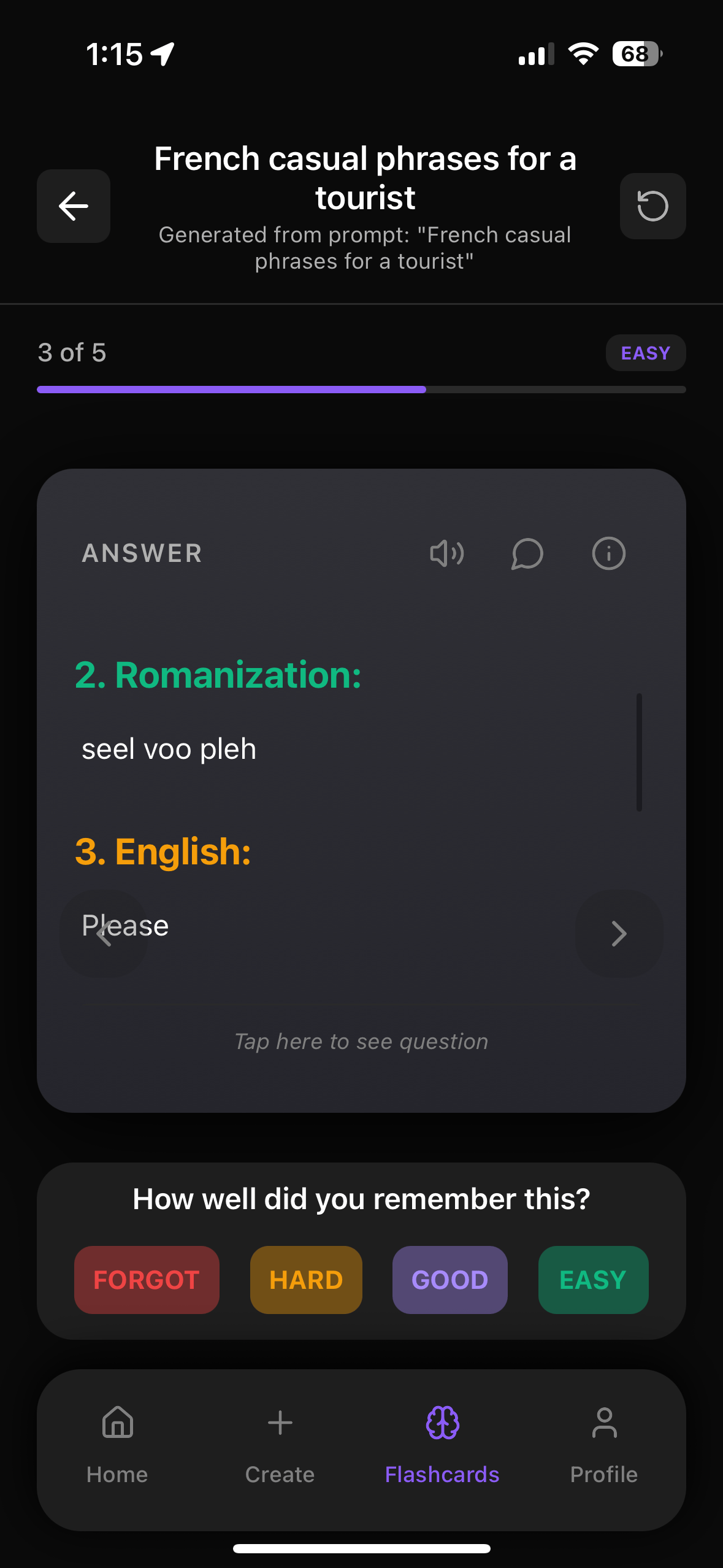
Quizlet Not Cutting It For ATI TEAS Science? Let’s Fix That.
So, you're trying to get a handle on the ati teas science quizlet study method? I totally get it. Ever notice how sometimes you cram for a test and then—poof!—that info’s gone faster than you can say "Where did it all go?" Here’s the thing: this method isn't about stuffing your brain full of facts; it's more like training your brain to remember stuff long-term. Basically, it’s about recalling info over time, which sounds way more effective than just staring at your notes, right?
If you're looking for information about ati teas science quizlet: 7 powerful study tricks most nursing students don’t know about – learn faster, remember more, and finally feel ready for test day, read our complete guide to ati teas science quizlet.
Now, Flashrecall steps in like your personal assistant. It handles all the nitty-gritty scheduling, so you can focus on the actual learning part without stressing about when to review. If you want to dive deeper into the ati teas science quizlet study method and pick up a few tricks that could make your study sessions a lot smoother, check out our guide. It might just change how you approach your next study session—no more last-minute panicking
Quizlet is fine for quick reviews, but for a high‑stakes exam like the TEAS, you need something a bit smarter: real spaced repetition, active recall built‑in, and a way to turn any resource into flashcards in seconds.
That’s where Flashrecall comes in:
👉 https://apps.apple.com/us/app/flashrecall-study-flashcards/id6746757085
It’s like Quizlet, but upgraded for serious learners:
- Makes flashcards instantly from text, images, PDFs, audio, YouTube links, or typed prompts
- Built‑in spaced repetition + reminders so you don’t forget to review
- Chat with your flashcards when you’re stuck on a topic
- Works offline, free to start, and runs on iPhone & iPad
Let’s walk through how to use (or move beyond) ATI TEAS Science Quizlet decks and turn your study time into something that actually moves your score.
Quizlet vs Flashrecall for ATI TEAS Science
What Quizlet Does Well
Quizlet is popular for a reason:
- Tons of pre‑made ATI TEAS Science sets
- Easy to flip through vocab
- Good for quick reviews on your phone
But here’s the problem: for TEAS Science, you’re not just memorizing words. You need to understand systems, processes, and cause‑and‑effect.
Quizlet alone can leave you with:
- Lots of shallow memorization
- No real control over spaced repetition
- A mix of low‑quality or outdated decks
- No way to turn your class notes, PDFs, or YouTube explanations into cards quickly
Why Flashrecall Works Better for TEAS Science
Flashrecall keeps the simplicity of flashcards but adds the stuff Quizlet is missing:
- Automatic spaced repetition
You review cards right before you’re about to forget them. No guesswork, no manual scheduling.
- Active recall by default
It focuses on “question → answer from memory,” not just recognizing terms.
- Instant card creation from your resources
Got a TEAS PDF, screenshot, or a YouTube video explanation? Flashrecall can turn those into cards in seconds.
- Chat with your flashcards
Confused about “how the nephron works”? You can literally ask the app to explain or expand on the concept.
- Study reminders
It nudges you to study so you don’t ghost your prep for a week.
- Works offline
Perfect for studying on the bus, at work breaks, or in dead Wi‑Fi zones.
Grab it here if you want to follow along as we go:
👉 https://apps.apple.com/us/app/flashrecall-study-flashcards/id6746757085
1. Stop Memorizing Random Facts – Organize by TEAS Science Topics
Most ATI TEAS Science Quizlet decks are just a giant soup of terms. That’s overwhelming and not how the exam is structured.
The TEAS Science section usually hits:
- Human Anatomy & Physiology (biggest chunk)
- Biology
- Chemistry
- Scientific Reasoning
How to Fix This in Flashrecall
Create separate decks like:
- “TEAS – Anatomy & Physiology”
- “TEAS – Biology”
- “TEAS – Chemistry”
- “TEAS – Scientific Reasoning”
Then:
- When you study A&P, you’re only seeing body systems.
- When you study Chemistry, you’re focused on bonds, reactions, solutions, etc.
You can still use Quizlet to find terms, but put your real studying into structured decks inside Flashrecall so spaced repetition can do its thing.
2. Turn Any ATI TEAS Science Resource into Flashcards (Fast)
Instead of hunting for the “perfect ATI TEAS Science Quizlet deck,” use the resources you already trust.
With Flashrecall, you can make cards from:
- PDF study guides or textbooks
Flashrecall automatically keeps track and reminds you of the cards you don't remember well so you remember faster. Like this :
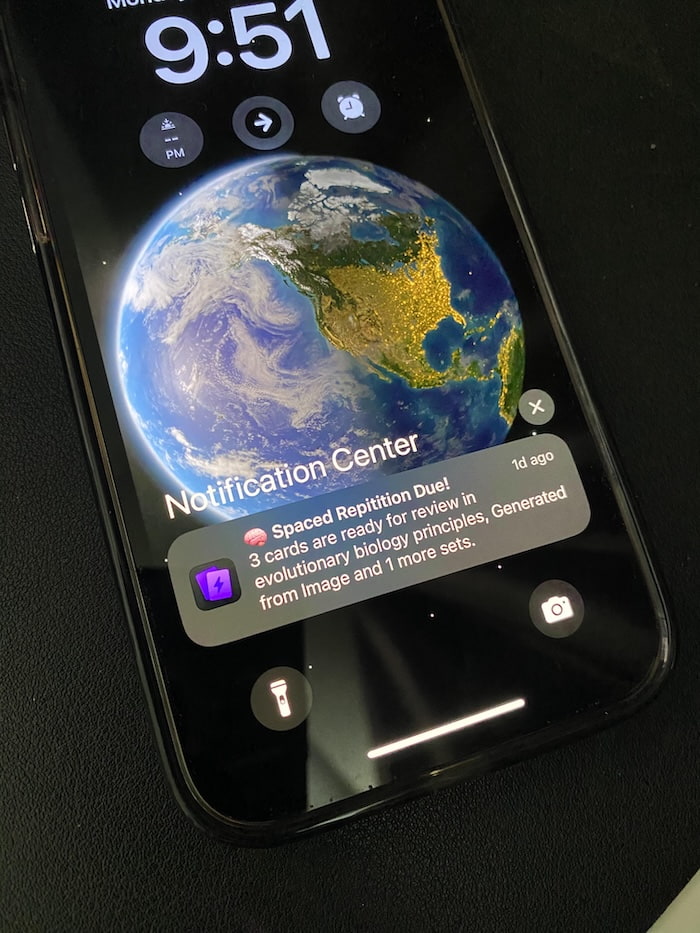
Import a PDF → generate cards from key sections.
- Screenshots of diagrams
Take a pic of a heart diagram → make cards asking:
- “Label this structure”
- “What’s the function of the left ventricle?”
- YouTube videos
Watching a TEAS Science crash course? Drop the YouTube link into Flashrecall and create cards based on the content.
- Typed prompts
Type something like:
> “Create 15 ATI TEAS Science flashcards on the respiratory system with simple questions and short answers.”
Flashrecall can generate a full set in seconds.
- Manual cards (still totally an option)
If you like full control, you can always type your own.
This way, you’re not stuck with random Quizlet decks made by strangers. You’re building from your own notes and resources, customized to how you learn.
3. Use Active Recall the Right Way (Not Just “Flipping Through”)
A lot of people “study” by staring at Quizlet cards until they feel familiar. That’s recognition, not recall.
For TEAS, you want this pattern:
> See a question → struggle a bit → pull the answer from memory → check if you were right.
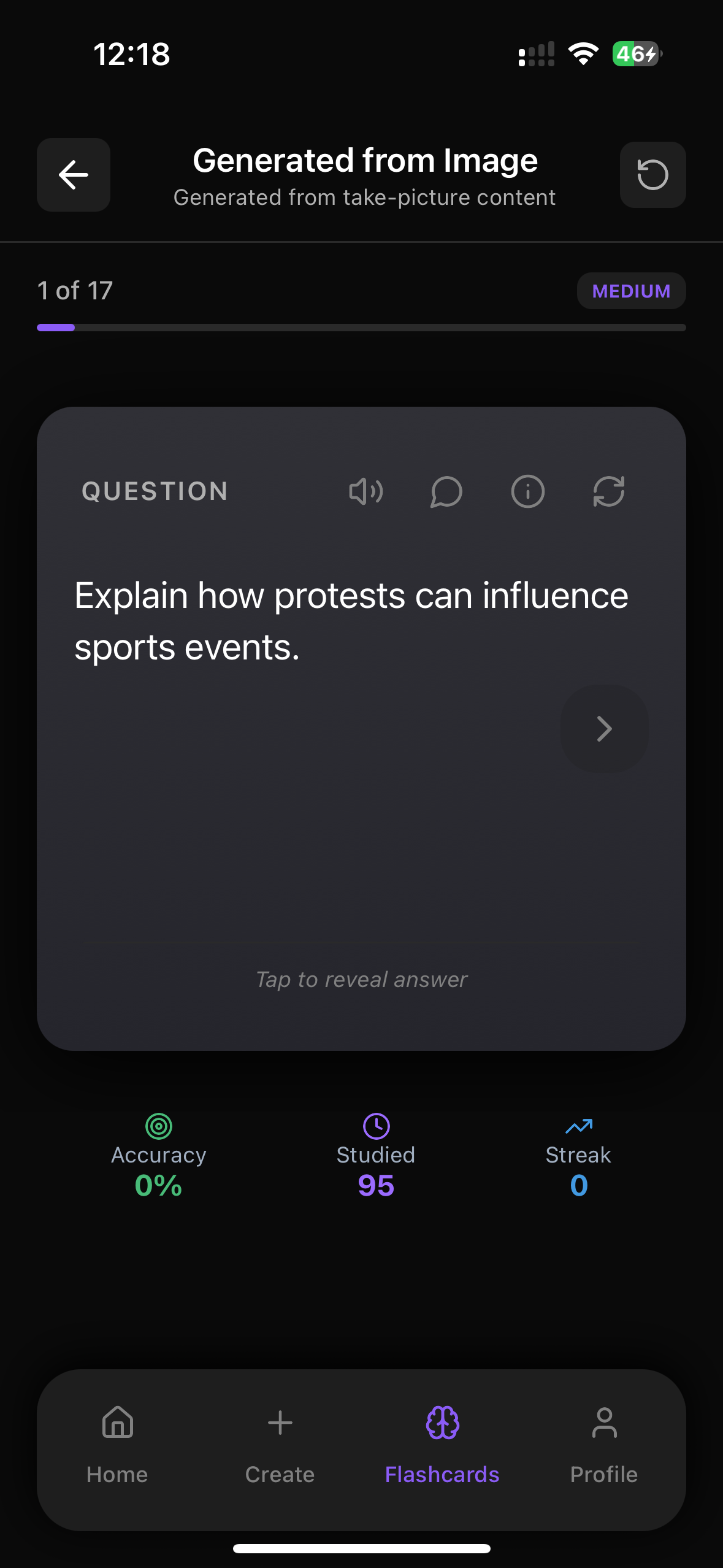
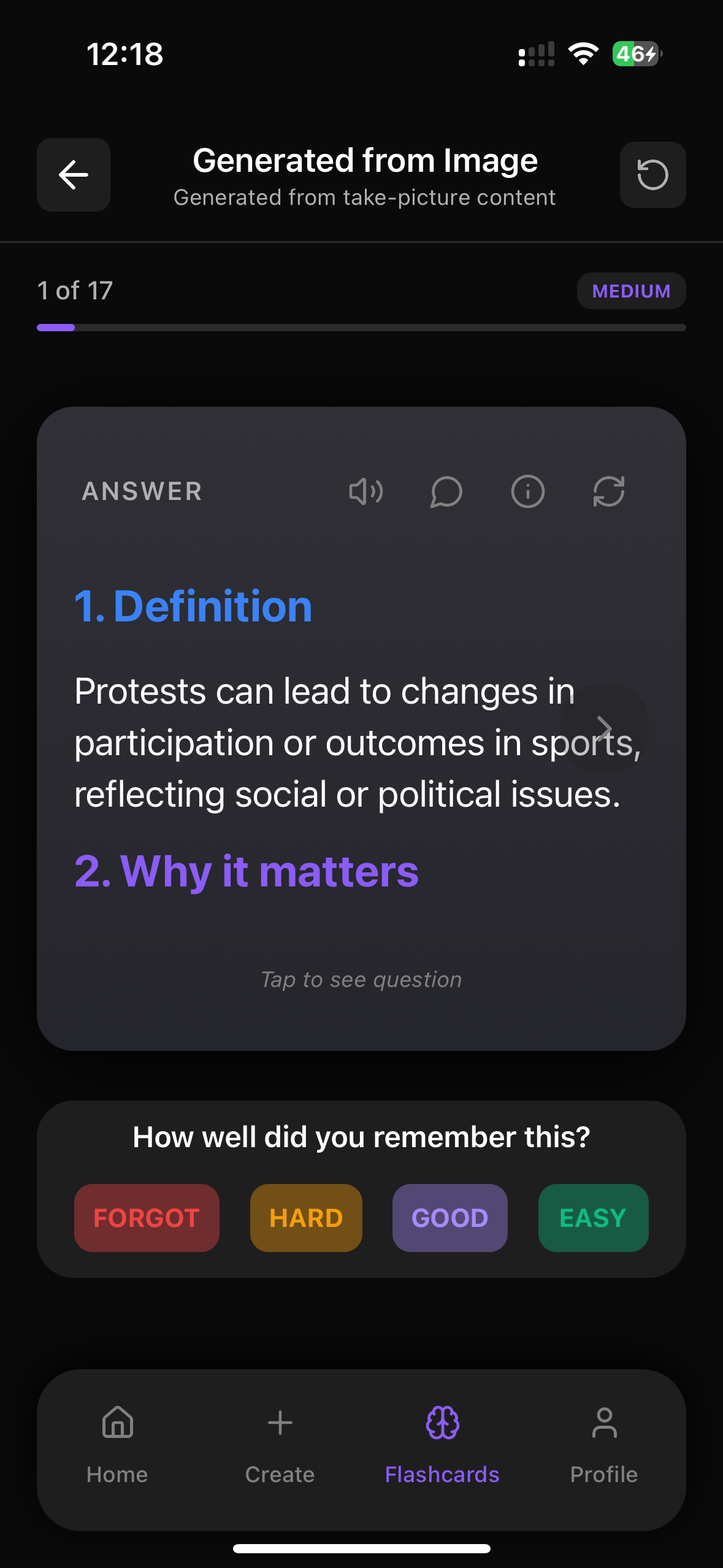
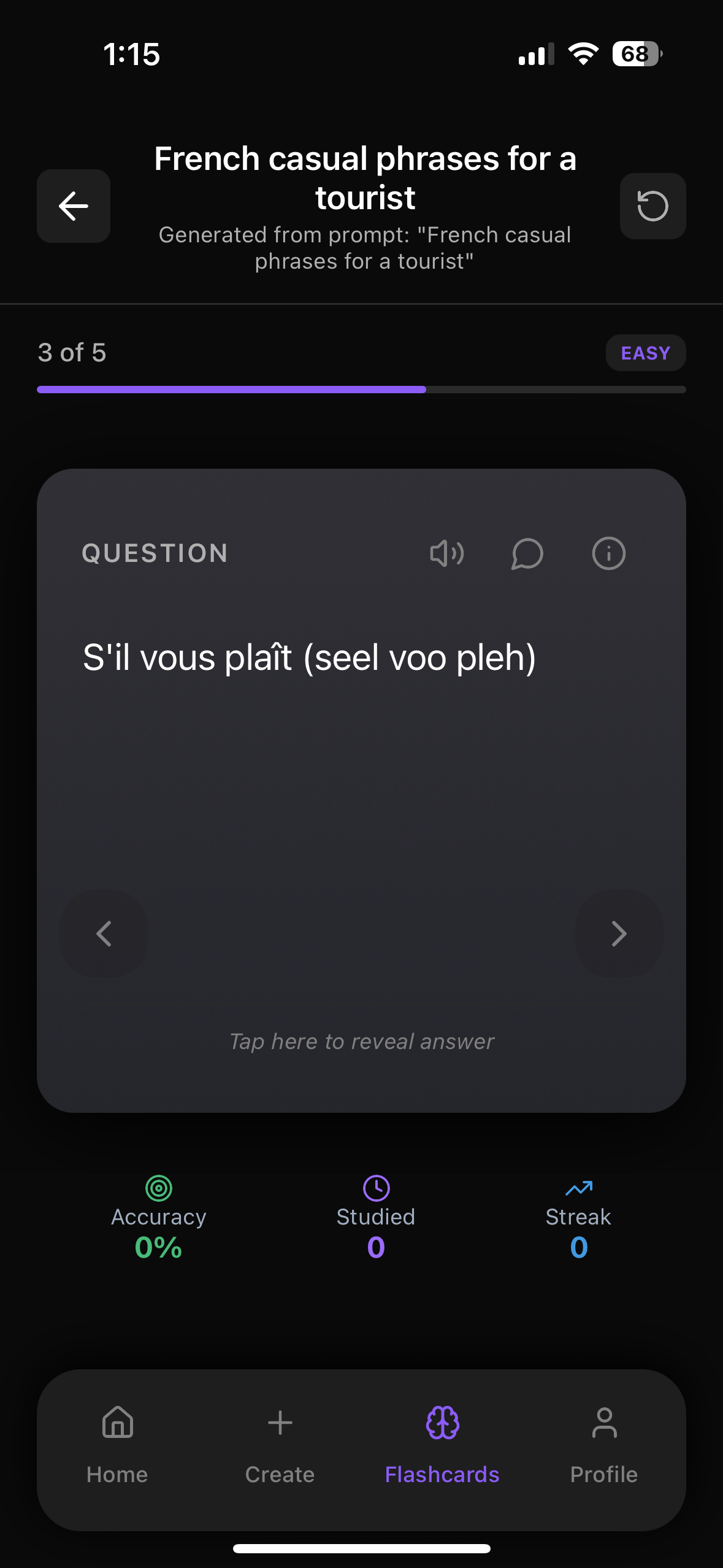
Flashrecall is built around that:
- It shows you the prompt first.
- You answer in your head (or out loud).
- Then you reveal the answer and rate how hard it was.
Example: Good vs Weak Science Cards
Front: “Nephron”
Back: “Functional unit of the kidney”
You’ll just memorize “nephron = kidney thing” and forget details.
- “What is the functional unit of the kidney and what does it do?”
- “Where in the nephron does filtration occur?”
- “Which part of the nephron is responsible for reabsorption of water?”
Flashrecall makes it super easy to tweak and add these kinds of question‑style cards, so you’re actually thinking, not just matching words.
4. Let Spaced Repetition Handle the Timing (So You Don’t Cram)
Quizlet doesn’t really guide when to review, which is a huge deal for long‑term memory.
Flashrecall has spaced repetition built in:
- Cards you know well → shown less often
- Cards you keep missing → shown more often
- Study sessions are short and focused on what you’re most likely to forget
You also get automatic reminders, so you don’t have to remember to come back to your TEAS decks. This is huge if you’re working, in school, or just juggling life.
Simple Study Plan Using Flashrecall
- Daily (15–30 minutes):
- Do your scheduled reviews (spaced repetition)
- Add 5–10 new cards from class, videos, or notes
- Weekly:
- Focus each day on one topic:
- Mon – A&P
- Tue – Biology
- Wed – Chemistry
- Thu – Scientific Reasoning
- Fri – Mix of everything
You don’t need marathon sessions. You just need consistent, smartly timed reviews, which Flashrecall handles for you.
5. Use “Chat with Your Flashcards” When You’re Confused
This is where Flashrecall really pulls away from Quizlet.
If you don’t understand a concept—say, negative feedback loops or how gas exchange works—you can:
- Open the relevant card
- Use the chat feature to ask:
- “Explain this like I’m 12.”
- “Give me another example.”
- “How would this show up on the ATI TEAS?”
Instead of stopping your study session to Google or watch another video, you get help right inside the app, staying in flow.
6. Practice TEAS-Style Questions, Not Just Definitions
ATI TEAS Science isn’t just vocab; it’s often applied questions.
Example:
- Instead of “What is homeostasis?” the exam might ask:
> “A patient is sweating and their blood vessels dilate. What is the body trying to maintain?”
So when you build cards in Flashrecall, mix in:
- Scenario questions
- Cause‑and‑effect questions
- “What happens if…” questions
Sample Card Ideas
- “What happens to blood vessels near the skin in a hot environment, and why?”
- “If the diaphragm contracts, what happens to lung volume and air pressure?”
- “How do the respiratory and circulatory systems work together to deliver oxygen?”
You can even ask Flashrecall (via typed prompts) to:
> “Create 10 ATI TEAS Science practice questions that use scenarios instead of definitions.”
Now you’re training your brain for the actual exam style, not just flashcard trivia.
7. Study Anywhere: Offline, Short Sessions, Real Life
You don’t need perfect conditions to study TEAS Science—just consistency.
Flashrecall helps with that:
- Works offline → perfect for commutes, breaks, waiting rooms
- Short, targeted review sessions based on spaced repetition
- Free to start, so you can test it without committing
Compare that to bouncing around random Quizlet decks, hoping you’re hitting the right stuff.
How to Move from ATI TEAS Science Quizlet to a Smarter System in 3 Steps
1. Keep Quizlet as a “source,” not your main tool
Use it to discover terms and topics you’re missing.
2. Build your real decks in Flashrecall
- Organize by topic (A&P, Bio, Chem, Scientific Reasoning)
- Generate cards from your PDFs, notes, YouTube videos, and screenshots
- Add scenario‑based questions, not just definitions
3. Let Flashrecall handle the memory science
- Spaced repetition schedules your reviews
- Study reminders keep you consistent
- Chat with your flashcards when something doesn’t click
Download it here and set up your first TEAS Science deck in under 10 minutes:
👉 https://apps.apple.com/us/app/flashrecall-study-flashcards/id6746757085
If you’re already putting in the effort with ATI TEAS Science Quizlet sets, you’re halfway there. Switch that effort into a smarter system, and you’ll actually feel your understanding and recall getting sharper before test day.
Frequently Asked Questions
Is Quizlet good for studying?
Quizlet helps with basic reviewing, but its active recall tools are limited. If you want proper spacing and strong recall practice, tools like Flashrecall automate the memory science for you so you don't forget your notes.
What's the fastest way to create flashcards?
Manually typing cards works but takes time. Many students now use AI generators that turn notes into flashcards instantly. Flashrecall does this automatically from text, images, or PDFs.
How do I start spaced repetition?
You can manually schedule your reviews, but most people use apps that automate this. Flashrecall uses built-in spaced repetition so you review cards at the perfect time.
What is active recall and how does it work?
Active recall is the process of actively retrieving information from memory rather than passively reviewing it. Flashrecall forces proper active recall by making you think before revealing answers, then uses spaced repetition to optimize your review schedule.
How can I study more effectively for this test?
Effective exam prep combines active recall, spaced repetition, and regular practice. Flashrecall helps by automatically generating flashcards from your study materials and using spaced repetition to ensure you remember everything when exam day arrives.
Related Articles
- Biology Exam Quizlet: 7 Powerful Study Tricks Most Students Never Use To Actually Remember Stuff
- International Economics Quizlet: 7 Powerful Study Tricks Most Students Never Use To Actually Remember The Models
- 50 States And Capitals Quizlet: 7 Powerful Tricks To Actually Remember Them All Fast – Stop Re-Learning The Same States Every Week
Research References
The information in this article is based on peer-reviewed research and established studies in cognitive psychology and learning science.
Cepeda, N. J., Pashler, H., Vul, E., Wixted, J. T., & Rohrer, D. (2006). Distributed practice in verbal recall tasks: A review and quantitative synthesis. Psychological Bulletin, 132(3), 354-380
Meta-analysis showing spaced repetition significantly improves long-term retention compared to massed practice
Carpenter, S. K., Cepeda, N. J., Rohrer, D., Kang, S. H., & Pashler, H. (2012). Using spacing to enhance diverse forms of learning: Review of recent research and implications for instruction. Educational Psychology Review, 24(3), 369-378
Review showing spacing effects work across different types of learning materials and contexts
Kang, S. H. (2016). Spaced repetition promotes efficient and effective learning: Policy implications for instruction. Policy Insights from the Behavioral and Brain Sciences, 3(1), 12-19
Policy review advocating for spaced repetition in educational settings based on extensive research evidence
Karpicke, J. D., & Roediger, H. L. (2008). The critical importance of retrieval for learning. Science, 319(5865), 966-968
Research demonstrating that active recall (retrieval practice) is more effective than re-reading for long-term learning
Roediger, H. L., & Butler, A. C. (2011). The critical role of retrieval practice in long-term retention. Trends in Cognitive Sciences, 15(1), 20-27
Review of research showing retrieval practice (active recall) as one of the most effective learning strategies
Dunlosky, J., Rawson, K. A., Marsh, E. J., Nathan, M. J., & Willingham, D. T. (2013). Improving students' learning with effective learning techniques: Promising directions from cognitive and educational psychology. Psychological Science in the Public Interest, 14(1), 4-58
Comprehensive review ranking learning techniques, with practice testing and distributed practice rated as highly effective

FlashRecall Team
FlashRecall Development Team
The FlashRecall Team is a group of working professionals and developers who are passionate about making effective study methods more accessible to students. We believe that evidence-based learning tec...
Credentials & Qualifications
- •Software Development
- •Product Development
- •User Experience Design
Areas of Expertise
Ready to Transform Your Learning?
Start using FlashRecall today - the AI-powered flashcard app with spaced repetition and active recall.
Download on App Store