Badminton Flashcards: The Best Way To Learn Rules, Shots, And Tactics Fast (Most Players Don’t Do This)
Badminton flashcards make rules, scoring, shots and tactics stick using active recall and spaced repetition in Flashrecall. Perfect off‑court study boost.
How Flashrecall app helps you remember faster. It's free
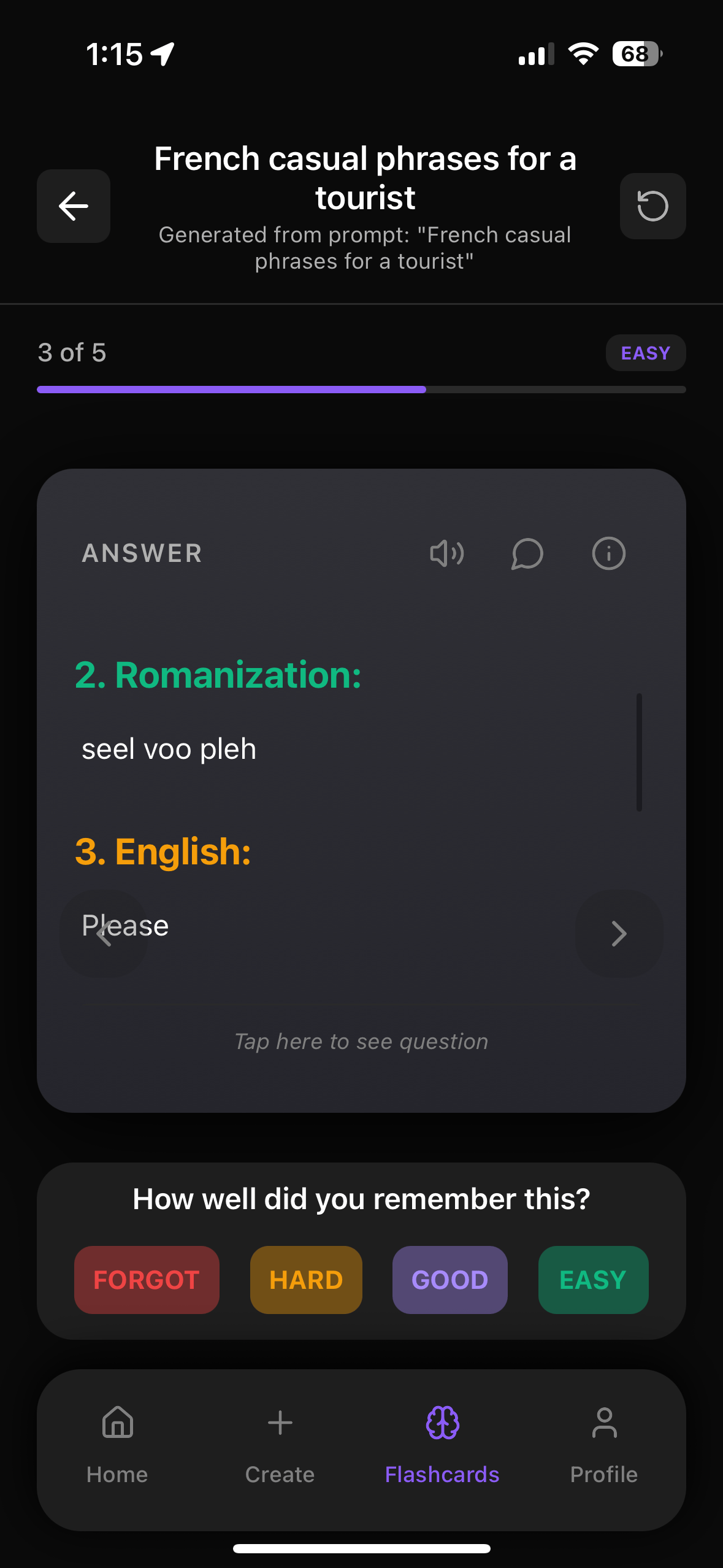
What Are Badminton Flashcards (And Why They Actually Work)?
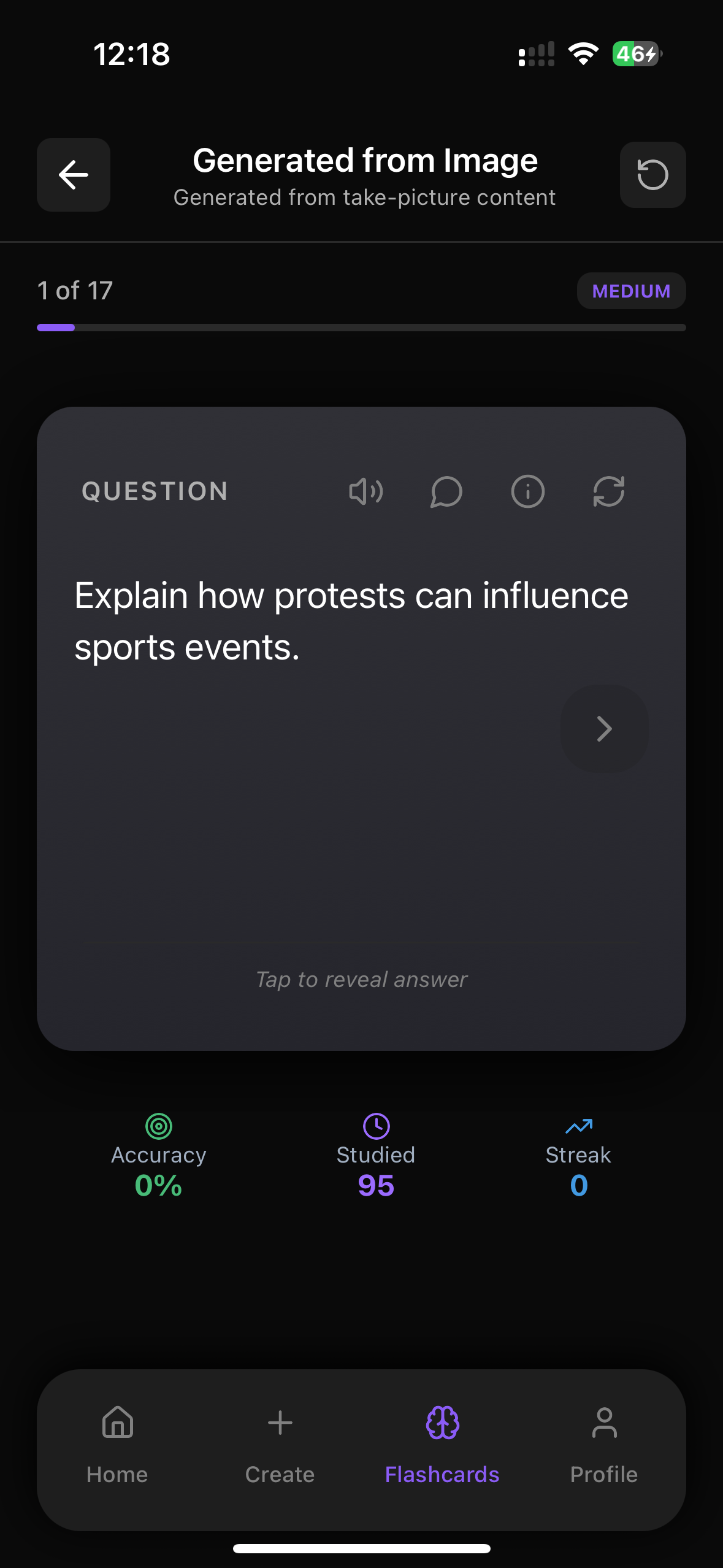
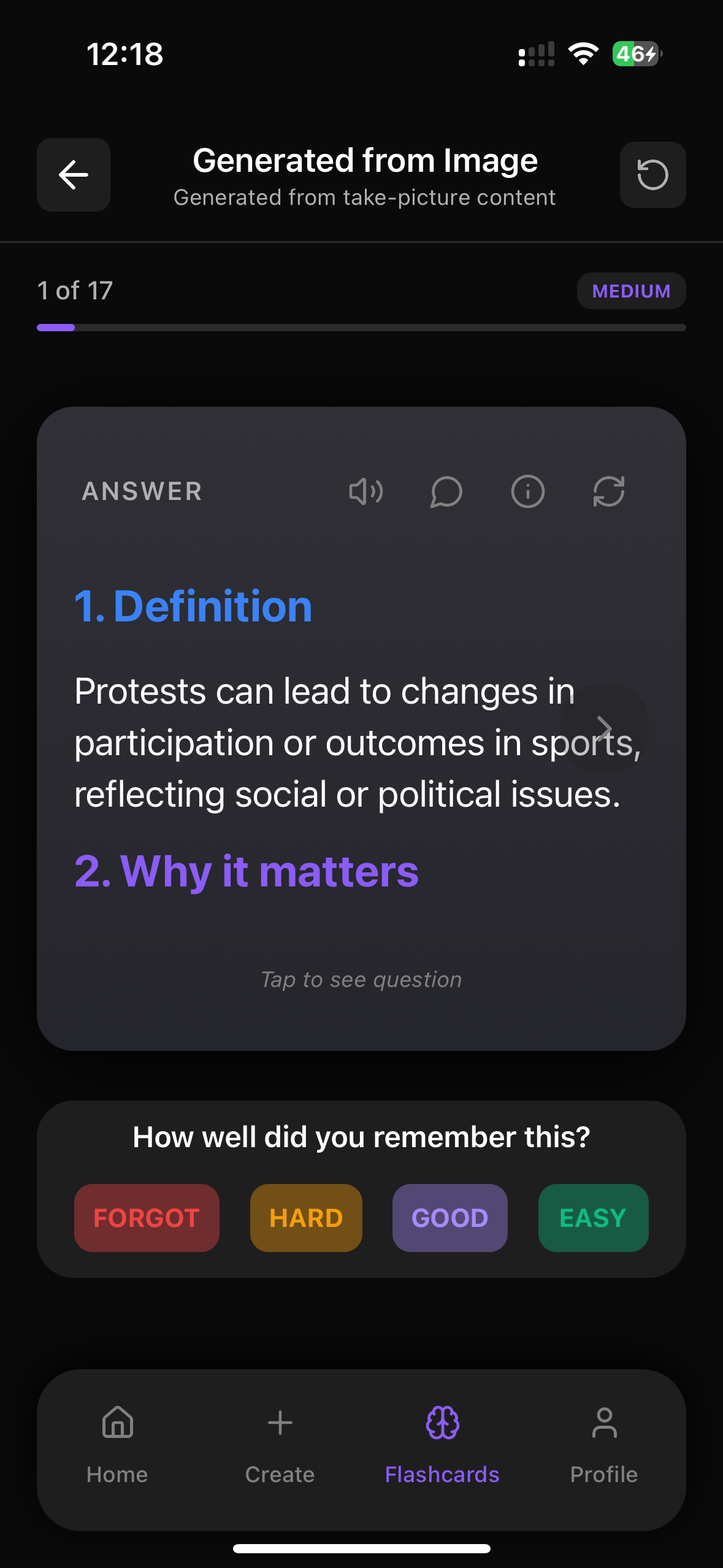
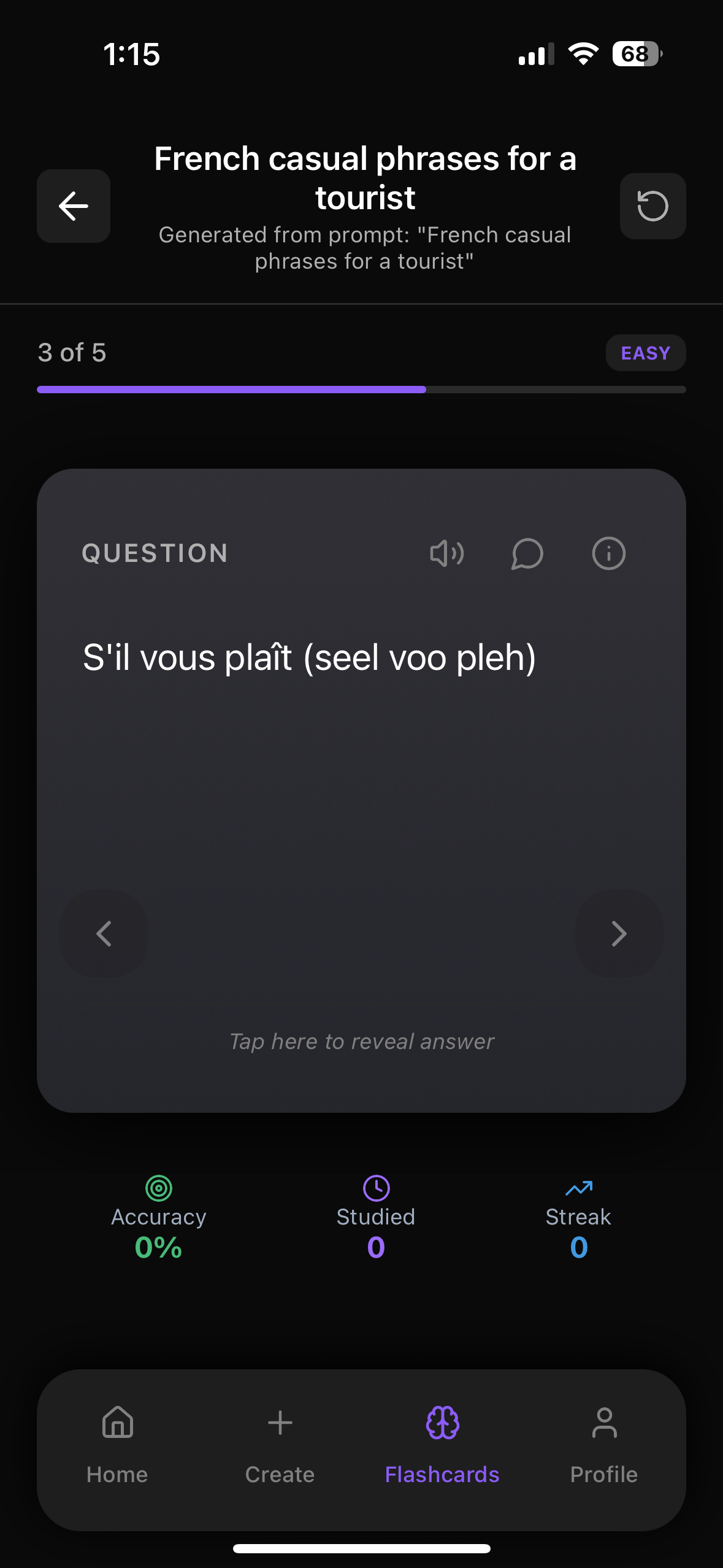
Alright, let’s talk about badminton flashcards — they’re just simple Q&A cards that help you learn badminton rules, scoring, shots, tactics, and even terminology by testing yourself instead of just reading. The idea is you put a question on one side (like “What’s a let in badminton?”) and the answer on the other, then you keep quizzing yourself until it sticks. This works because your brain remembers way better when you recall info instead of passively reading it. And if you use an app like Flashrecall (https://apps.apple.com/us/app/flashrecall-study-flashcards/id6746757085), you can make and review badminton flashcards on your phone with spaced repetition so you don’t forget everything a week later.
Why Use Flashcards For Badminton At All?
You might think: “It’s a sport, shouldn’t I just play more?”
For sure, playing is the main thing. But knowing the mental side of the game gives you a huge edge:
- You stop arguing over rules because you actually know them
- You understand when and why to use certain shots
- You remember scoring patterns and serve rotations faster
- You can learn theory (footwork, formations, tactics) off-court and apply it next time you play
Flashcards are perfect for this because they:
- Break stuff into tiny, digestible pieces
- Force your brain to actively recall info
- Are easy to review in short bursts (bus, break, before a match)
And that’s exactly the kind of learning Flashrecall is built for.
Why Flashrecall Is Perfect For Badminton Flashcards
If you’re going to make badminton flashcards, doing them in Flashrecall just makes life easier:
- You can instantly create flashcards from:
- Rule screenshots
- Coaching PDFs
- YouTube tutorials
- Typed notes
- Even voice notes / audio
- Built‑in active recall: front = question, back = answer, just like classic flashcards
- Automatic spaced repetition with reminders so you review just before you forget
- Works offline, so you can review at the court or on the train
- You can chat with the flashcard content if you’re unsure and want a deeper explanation
- Fast, modern, easy to use, and free to start
- Works on both iPhone and iPad
You can grab it here:
👉 https://apps.apple.com/us/app/flashrecall-study-flashcards/id6746757085
What Should You Put On Badminton Flashcards?
Here’s how I’d break it down so you actually remember things that help your game.
1. Rules & Scoring
These are the basics people always get confused about.
- Front: How many points are in a standard badminton game?
- Front: When do you serve from the right service court?
- Front: What is a “let” in badminton?
- Front: What happens if the shuttle hits the net and goes over on serve?
Add stuff like:
- Faults (net touch, double hit, etc.)
- Service rules in doubles vs singles
- Boundaries for singles vs doubles
You can screenshot rule diagrams from official badminton sites, drop them into Flashrecall, and let it auto-generate cards for you.
2. Shots & Techniques
This is where badminton flashcards really start helping your actual performance.
- Front: What is a clear in badminton used for?
- Front: Difference between a drop shot and a net shot?
Net shot: played close to the net to tumble just over.
- Front: When should you use a smash?
- Front: What is a drive shot?
In Flashrecall, you can:
- Take photos of coaching notes or whiteboards
- Add images of grip positions or racket angles
- Turn them into cards with one tap
3. Footwork & Positioning
Badminton is insanely footwork-heavy, and most people never memorize patterns properly.
- Front: What is the basic ready position in badminton?
- Front: What is the “split step” and when do you do it?
- Front: In singles, where should you usually recover to after a shot?
You can even upload a PDF of a footwork drill sheet into Flashrecall and let it generate multiple flashcards automatically.
4. Strategy & Tactics
Flashrecall automatically keeps track and reminds you of the cards you don't remember well so you remember faster. Like this :
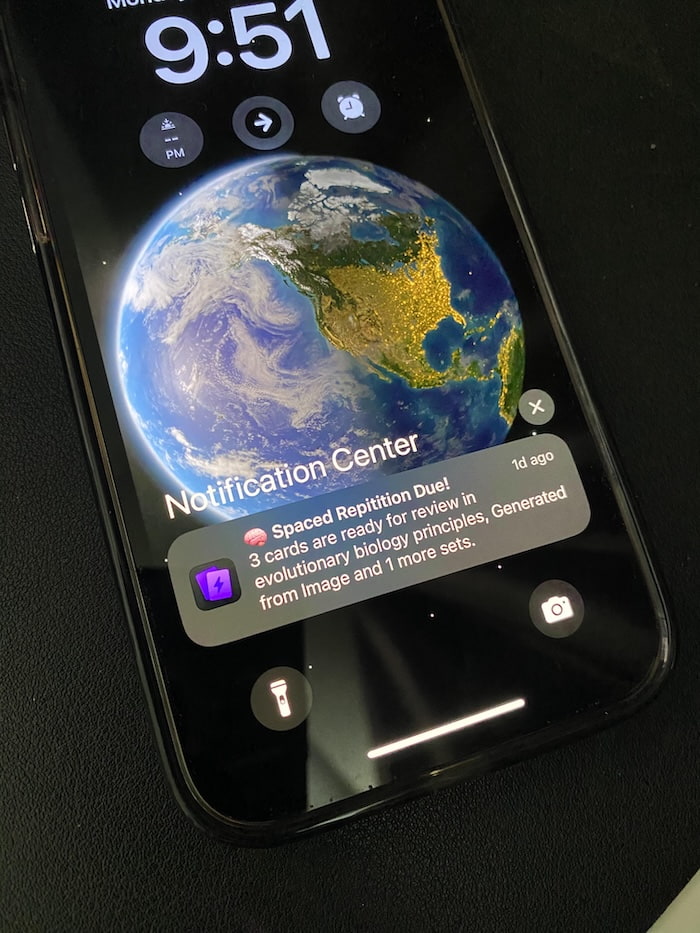
This is the fun part — turning knowledge into smarter play.
- Front: Basic doubles formation when attacking?
- Front: How can you tire your opponent in singles?
- Front: What’s a good tactic against a weaker backhand?
- Front: When should you lift in doubles?
These are perfect for spaced repetition, because strategy is useless if you forget it in the heat of a rally.
5. Vocabulary & Terms
If you’re new or coaching beginners, badminton terminology can feel like another language.
- Front: What is a “rally”?
- Front: Define “net kill.”
- Front: What does “rubber game” mean?
These are quick wins — easy cards you can run through in a minute or two.
How To Build Badminton Flashcards Fast With Flashrecall
You don’t need to sit there typing every card manually (unless you want to).
Here’s a simple workflow using Flashrecall:
Step 1: Collect Your Sources
Grab stuff like:
- Screenshots of the official badminton rules
- Coaching PDFs or slides
- YouTube tutorials on tactics, footwork, or shots
- Notes from your coach or training sessions
Step 2: Let Flashrecall Turn Them Into Cards
In Flashrecall, you can:
- Import PDFs or images → it auto-detects text and suggests flashcards
- Paste a YouTube link → generate cards from the transcript
- Type or paste your own questions → instant manual cards
- Record audio notes after training → convert them into cards later
This is way faster than trying to build everything from scratch.
Step 3: Use Spaced Repetition (So You Don’t Forget)
Flashrecall has built-in spaced repetition:
- It shows you cards right before you’re about to forget them
- You just rate how hard or easy it was
- The app handles the scheduling and sends study reminders
So your “badminton brain” gets sharper over time without you tracking anything manually.
How To Actually Study Your Badminton Flashcards
Here’s a simple routine that works well:
1. Daily 5–10 Minute Review
- Open Flashrecall
- Do your due cards (the ones spaced repetition picked for today)
- Only 5–10 minutes — super low effort
2. Before Training Or Matches
On the way to the court:
- Quickly review:
- Serving rules
- Formations (doubles)
- Tactics you want to try today
- This “primes” your brain so you apply it on court
3. After Training
Right after a session:
- Add a few cards:
- “What did coach correct me on today?”
- “What tactic worked well?”
- “What mistake did I keep making?”
Type them into Flashrecall or just record a quick note and turn it into cards later. That way, every session actually builds your knowledge, not just your sweat.
Example Badminton Flashcard Decks You Could Create
To make it easy, here are some deck ideas:
- Badminton – Basic Rules & Scoring
- Badminton – Singles Strategy
- Badminton – Doubles Formations & Tactics
- Badminton – Shots & Techniques
- Badminton – Footwork & Movement
- Badminton – Terms & Definitions
In Flashrecall, you can keep these as separate decks and review whichever one you’re focusing on that week.
Why Use An App Instead Of Paper Cards?
Paper works, but an app like Flashrecall just does more for you:
- You always have your badminton flashcards with you on your iPhone or iPad
- Automatic spaced repetition and study reminders
- Easy to add images, PDFs, and YouTube content
- Works offline at the court
- You can chat with your deck if you don’t fully understand something and want it explained differently
If you’re serious about actually remembering rules, tactics, and concepts — not just reading them once — it’s a no-brainer.
Final Thoughts: Turn Your Brain Into A Badminton Weapon
Badminton flashcards aren’t about memorizing random trivia — they’re about turning rules, techniques, and tactics into stuff you can recall instantly during a rally.
If you:
- Keep forgetting scoring or serve rules
- Struggle to remember when to use certain shots
- Want to get smarter about strategy, not just fitter
Then building a small set of badminton flashcards in Flashrecall is honestly one of the easiest upgrades you can make.
You can start for free here and build your first deck in a few minutes:
👉 https://apps.apple.com/us/app/flashrecall-study-flashcards/id6746757085
Next time you step on court, you won’t just be playing harder — you’ll be playing smarter.
Frequently Asked Questions
What's the fastest way to create flashcards?
Manually typing cards works but takes time. Many students now use AI generators that turn notes into flashcards instantly. Flashrecall does this automatically from text, images, or PDFs.
Is there a free flashcard app?
Yes. Flashrecall is free and lets you create flashcards from images, text, prompts, audio, PDFs, and YouTube videos.
How do I start spaced repetition?
You can manually schedule your reviews, but most people use apps that automate this. Flashrecall uses built-in spaced repetition so you review cards at the perfect time.
What is active recall and how does it work?
Active recall is the process of actively retrieving information from memory rather than passively reviewing it. Flashrecall forces proper active recall by making you think before revealing answers, then uses spaced repetition to optimize your review schedule.
Related Articles
- Anki Software Download: The Best Alternative To Learn Faster On iPhone & iPad (Most Students Don’t Know This)
- Slang Flashcards: The Fun, Proven Way To Sound Native Fast (Most Learners Skip This) – Learn real-life slang faster, remember it longer, and actually use it in conversations.
- Make Your Own Flashcards: 7 Powerful Tricks To Learn Faster (Most Students Don’t Know) – Turn anything you’re learning into smart, auto-review flashcards that practically make you remember.
Research References
The information in this article is based on peer-reviewed research and established studies in cognitive psychology and learning science.
Cepeda, N. J., Pashler, H., Vul, E., Wixted, J. T., & Rohrer, D. (2006). Distributed practice in verbal recall tasks: A review and quantitative synthesis. Psychological Bulletin, 132(3), 354-380
Meta-analysis showing spaced repetition significantly improves long-term retention compared to massed practice
Carpenter, S. K., Cepeda, N. J., Rohrer, D., Kang, S. H., & Pashler, H. (2012). Using spacing to enhance diverse forms of learning: Review of recent research and implications for instruction. Educational Psychology Review, 24(3), 369-378
Review showing spacing effects work across different types of learning materials and contexts
Kang, S. H. (2016). Spaced repetition promotes efficient and effective learning: Policy implications for instruction. Policy Insights from the Behavioral and Brain Sciences, 3(1), 12-19
Policy review advocating for spaced repetition in educational settings based on extensive research evidence
Karpicke, J. D., & Roediger, H. L. (2008). The critical importance of retrieval for learning. Science, 319(5865), 966-968
Research demonstrating that active recall (retrieval practice) is more effective than re-reading for long-term learning
Roediger, H. L., & Butler, A. C. (2011). The critical role of retrieval practice in long-term retention. Trends in Cognitive Sciences, 15(1), 20-27
Review of research showing retrieval practice (active recall) as one of the most effective learning strategies
Dunlosky, J., Rawson, K. A., Marsh, E. J., Nathan, M. J., & Willingham, D. T. (2013). Improving students' learning with effective learning techniques: Promising directions from cognitive and educational psychology. Psychological Science in the Public Interest, 14(1), 4-58
Comprehensive review ranking learning techniques, with practice testing and distributed practice rated as highly effective

FlashRecall Team
FlashRecall Development Team
The FlashRecall Team is a group of working professionals and developers who are passionate about making effective study methods more accessible to students. We believe that evidence-based learning tec...
Credentials & Qualifications
- •Software Development
- •Product Development
- •User Experience Design
Areas of Expertise
Ready to Transform Your Learning?
Start using FlashRecall today - the AI-powered flashcard app with spaced repetition and active recall.
Download on App Store