Best Flashcard App Language Learners Love: 7 Powerful Ways To Learn Faster And Remember More – This guide shows you exactly which app to use, how to use it, and the tricks most language learners never try.
Best flashcard app language learners actually use, with AI-made cards from YouTube, PDFs, photos and audio, plus spaced repetition that runs on autopilot.
How Flashrecall app helps you remember faster. It's free
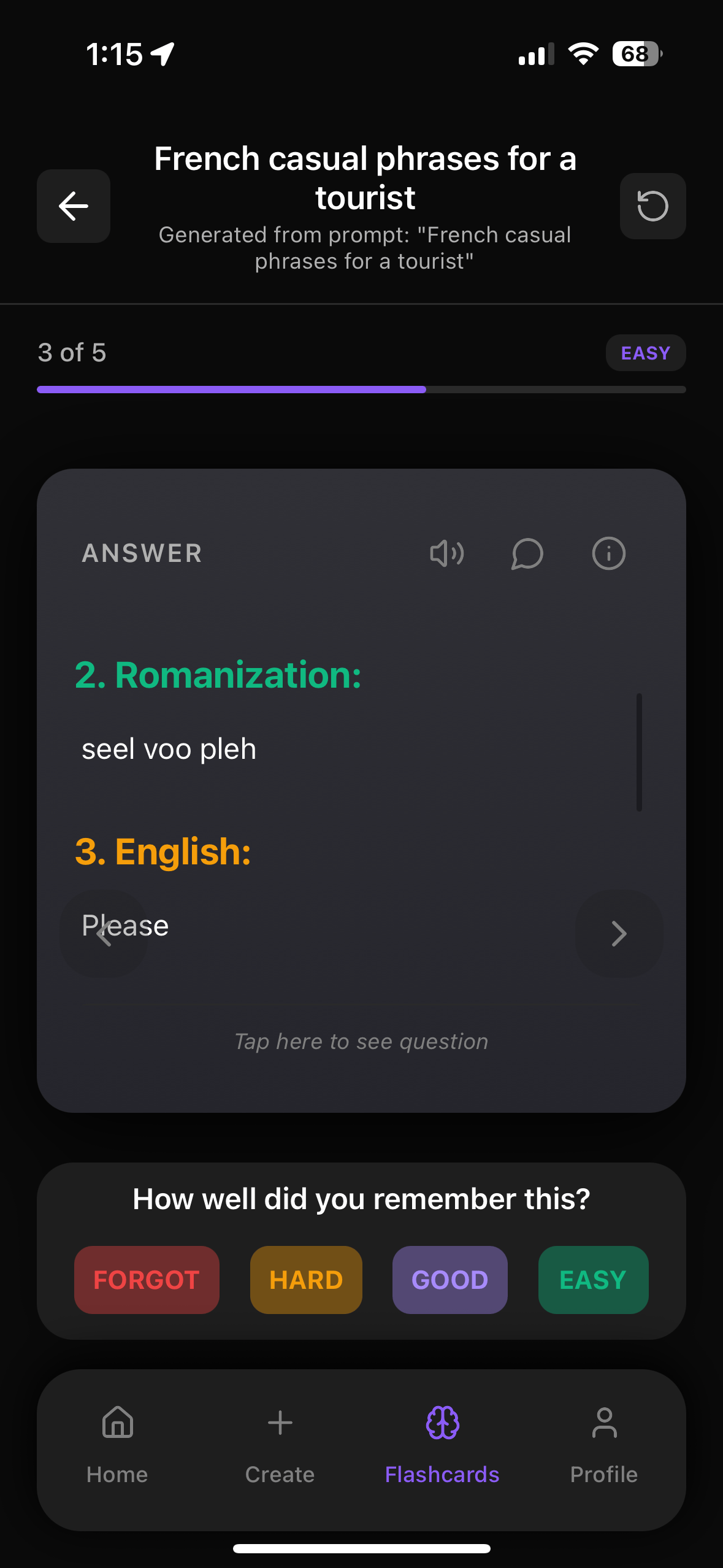
Why Flashrecall Is The Best Flashcard App For Language Learning
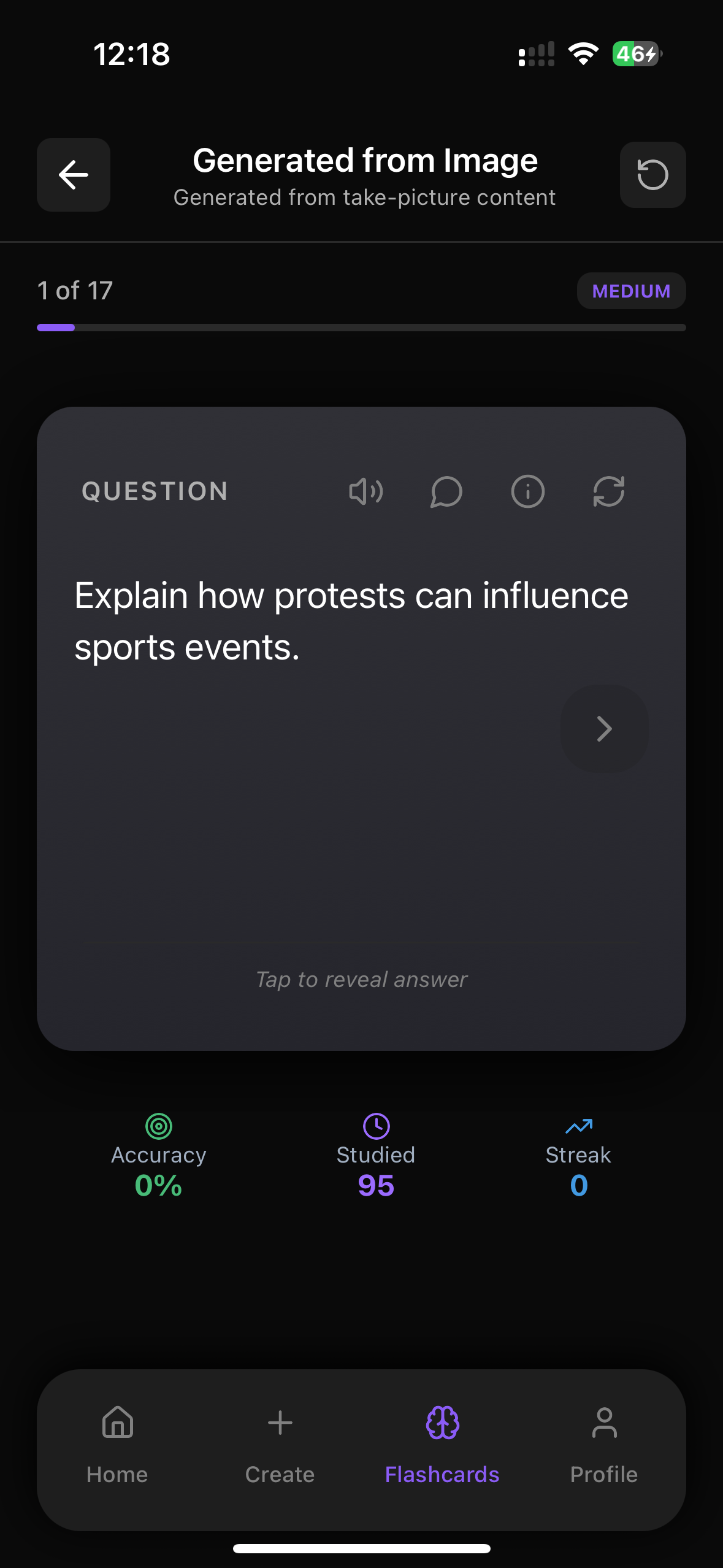
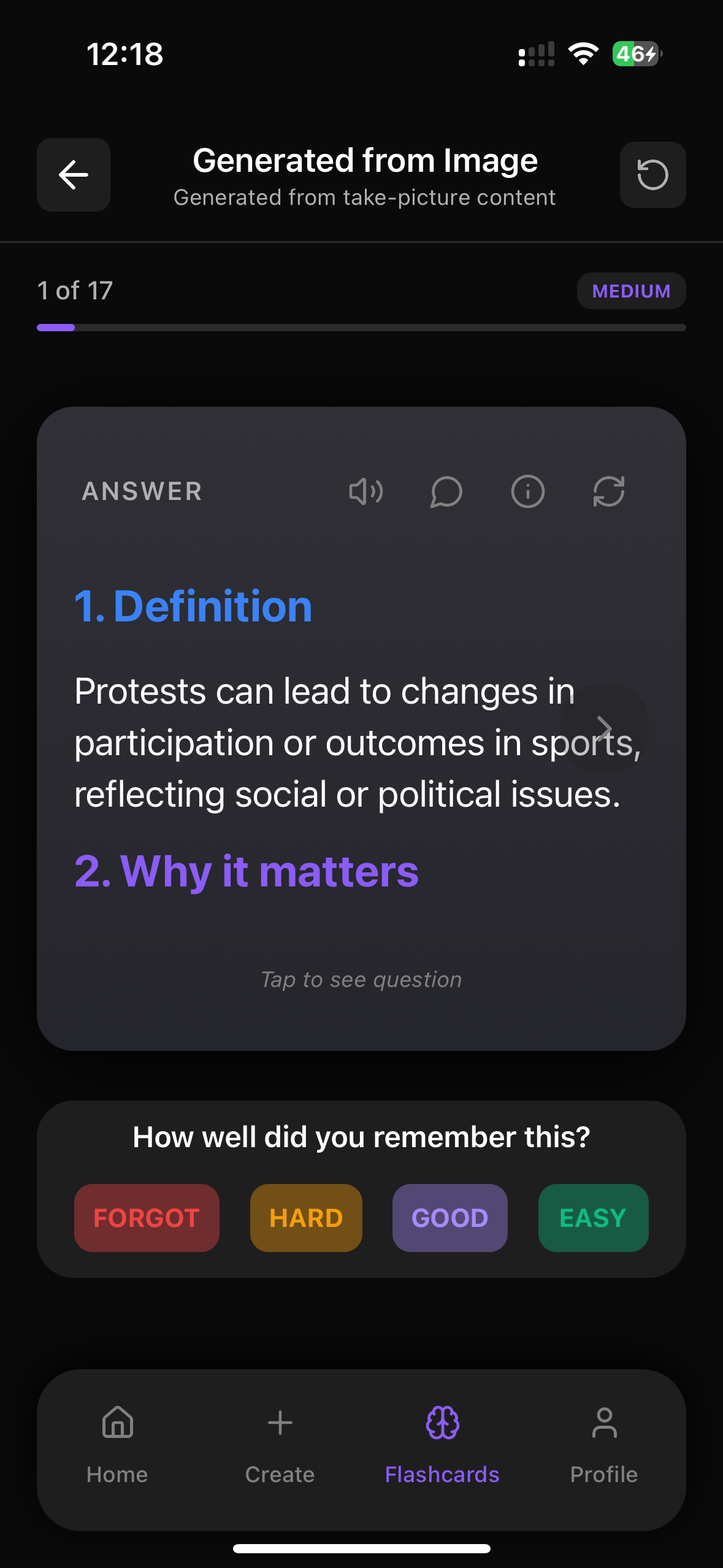
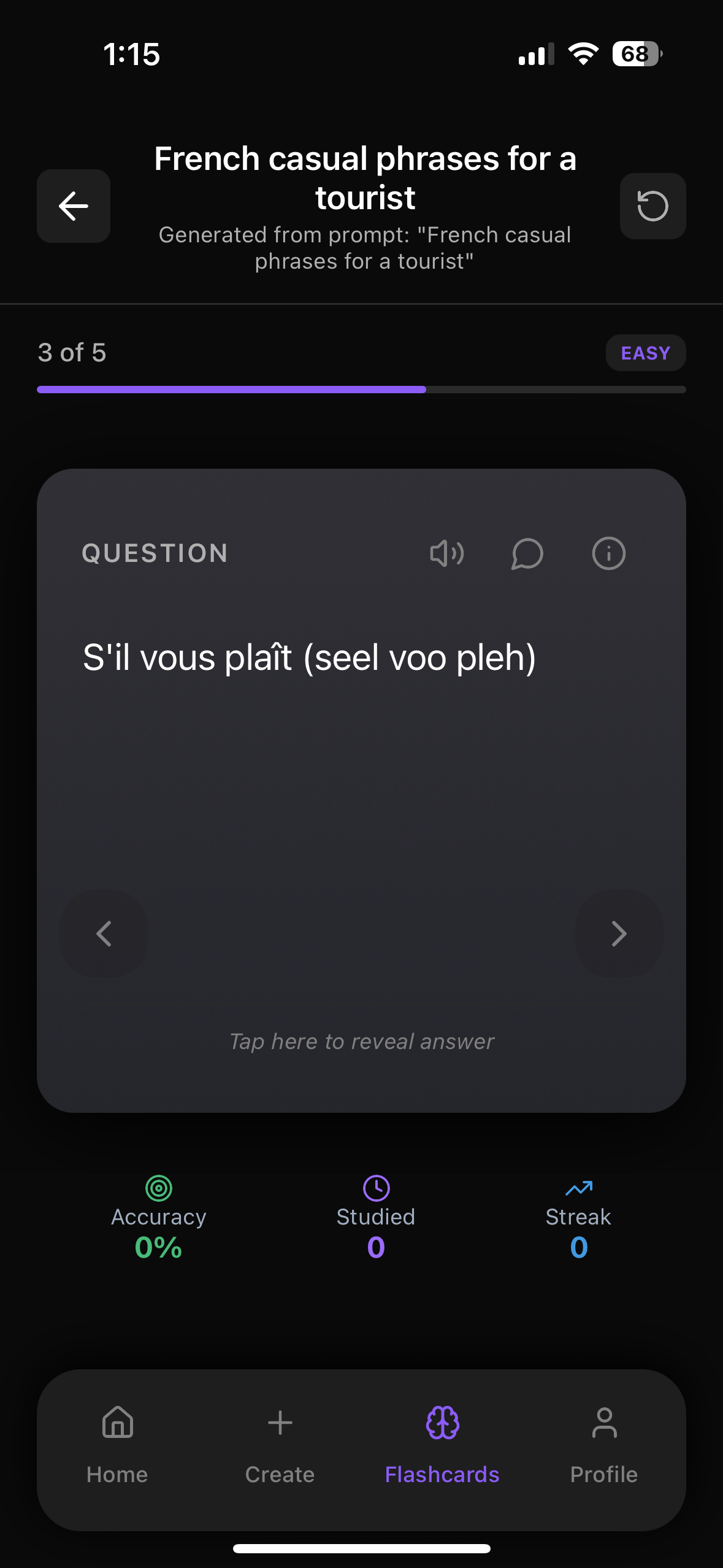
So, you’re hunting for the best flashcard app language learners actually stick with? Honestly, Flashrecall is the one I’d go with first. It’s fast, makes flashcards for you from pretty much anything (photos, PDFs, YouTube, text, audio), and has built‑in spaced repetition so you don’t have to remember when to review. For language learning, that combo is huge: vocab, grammar, phrases, listening – all in one place. You can grab it here and start for free on iPhone or iPad:
👉 https://apps.apple.com/us/app/flashrecall-study-flashcards/id6746757085
Let’s break down why it works so well for languages and how to actually use it to learn way faster.
What Makes A Flashcard App Good For Languages?
Before choosing an app, think about what you actually need for language learning:
- Fast card creation – If it takes ages to make cards, you’ll stop using it.
- Spaced repetition – You want the app to decide when to show you cards so you don’t forget.
- Supports all content types – Text, audio, screenshots, PDFs, subtitles, etc.
- Good for phrases, not just single words – Real language is in chunks.
- Easy to review daily – Reminders + simple interface = you actually open it.
Flashrecall basically checks all of these, which is why it’s so good specifically for languages, not just school stuff.
Why Flashrecall Beats Most Flashcard Apps For Language Learning
You’ve probably heard of apps like Anki, Quizlet, Brainscape, etc. They’re fine, but here’s where Flashrecall really shines for language learners:
1. It Makes Flashcards For You From Almost Anything
This is the big one.
With Flashrecall, you can instantly generate flashcards from:
- Images – Screenshot a sentence, sign, or textbook page → turn into cards.
- Text – Copy vocab lists or example sentences → auto‑cards.
- PDFs – Textbooks, study guides, exam prep → broken into flashcards.
- YouTube links – Great for language videos, explanations, or dialogues.
- Audio – Listening practice turned into cards.
- Or just type manually if you like full control.
That means you can turn real content (like a Spanish article, Japanese manga screenshot, or French grammar PDF) into study material in seconds instead of spending half your life typing.
Download it here and just try dumping some of your current language material into it:
👉 https://apps.apple.com/us/app/flashrecall-study-flashcards/id6746757085
2. Built-In Spaced Repetition (Without You Babysitting It)
You don’t want to manually track when to review words. That’s how people burn out.
Flashrecall has built‑in spaced repetition with automatic reminders:
- It shows you cards right before you’re likely to forget them.
- You just mark how well you remembered, and it schedules the next review.
- You get study reminders, so you don’t forget to open the app.
This is perfect for languages because vocab decay is brutal. With spaced repetition, you keep words alive with way less effort.
3. You Can Chat With Your Flashcards (Super Useful For Language)
This one’s underrated: you can chat with the flashcard if you’re unsure.
Example uses for language:
- Don’t understand a sentence? Ask for a simpler explanation.
- Want more example sentences? Ask the card.
- Need a grammar breakdown of a phrase? Ask what’s going on.
Instead of just memorizing “front → back,” you can actually dig deeper into meaning and usage right inside the app. That’s way closer to how you’d work with a tutor.
4. Great For Any Language, Any Level
Flashrecall isn’t locked into one language or exam. It works for:
- Beginner vocab (colors, numbers, basic verbs)
- Intermediate phrases and collocations
- Advanced idioms, slang, grammar patterns
- Exam prep (JLPT, DELE, DELF, TOPIK, TOEFL, etc.)
You can use it for:
- Languages
- School subjects
- University
- Medicine
- Business
- Pretty much anything you need to memorize
So if you’re learning Spanish and also prepping for a biology exam, you can keep everything in one place instead of juggling 3–4 different apps.
5. Works Offline, On iPhone And iPad
No Wi‑Fi? No problem.
- You can study offline, which is perfect for:
- Commuting
- Flights
- Boring waiting rooms
- It works on both iPhone and iPad, so you can review on your phone and do longer sessions on the tablet.
And it’s free to start, so there’s no risk in just trying it for a week and seeing if it clicks for you:
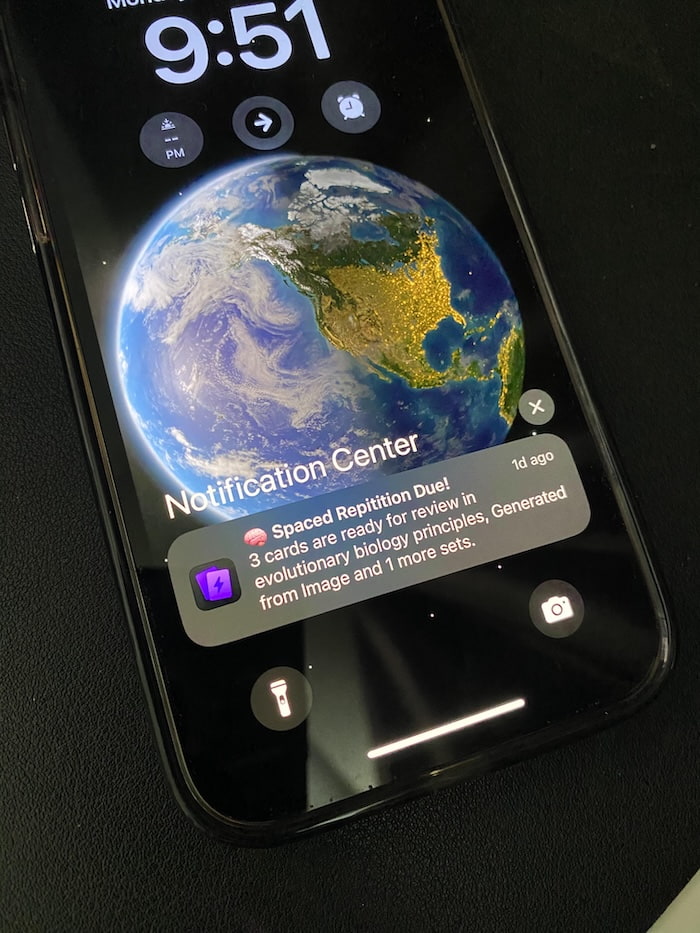
Flashrecall automatically keeps track and reminds you of the cards you don't remember well so you remember faster. Like this :
👉 https://apps.apple.com/us/app/flashrecall-study-flashcards/id6746757085
How To Use Flashrecall As Your Main Language Flashcard App
Here’s a simple way to set it up so it actually helps you daily, not just for a week.
Step 1: Pick One Language Goal
Don’t try to do everything at once. Start with one focus, like:
- “Learn 20 new Spanish words a day”
- “Master 10 Japanese grammar patterns this week”
- “Finally remember all those French verb conjugations”
Create a deck in Flashrecall just for that.
Step 2: Create Cards From Real Content
Instead of random isolated words, use real sentences and contexts.
Ideas:
- Screenshot a chat with a native speaker → turn unknown phrases into cards.
- Take a photo of your textbook or workbook.
- Copy a vocab list from your teacher or course.
- Paste part of a news article or graded reader.
- Drop in a YouTube link of a language explanation or dialogue.
Flashrecall will help you turn this into flashcards quickly, so you’re studying the language you actually see and hear, not just artificial lists.
Step 3: Use Active Recall, Not Just “Recognition”
Active recall = you try to remember the answer before you see it.
Flashrecall is built around that:
- Front: word in your target language → Back: translation + example sentence.
- Or reverse it: front in your native language, back in target language.
- Or do cloze (fill‑in‑the‑blank) style sentences.
Examples:
- Front: “to remember (Spanish)” → Back: “recordar + example sentence”
- Front: “私は昨日映画を見ました (Translate)” → Back: “I watched a movie yesterday.”
The app forces your brain to pull the answer out, which is way better for memory than just re-reading notes.
Step 4: Let Spaced Repetition Do The Heavy Lifting
Each day:
1. Open Flashrecall.
2. Do your due reviews (the ones it shows you).
3. Add a few new cards (5–20, depending on your time).
4. Done.
No need to track what to review when. The app handles that with its spaced repetition engine and reminders. You just show up and tap through.
Step 5: Use The Chat Feature When You’re Confused
If a card doesn’t fully make sense, don’t just shrug and move on.
Use the chat with the flashcard feature to:
- Ask for a breakdown of the grammar.
- Get more example sentences.
- Ask for simpler wording.
- Ask for synonyms or related phrases.
This turns your flashcards into a mini language tutor instead of just a static deck.
How Flashrecall Compares To Other Flashcard Apps For Languages
If you searched for “best flashcard app language,” you’ve probably seen:
- Anki – Super powerful but kind of clunky and ugly, and card creation is manual unless you mess with add‑ons.
- Quizlet – Easy to use, but weaker spaced repetition and less powerful for long‑term serious learning.
- Brainscape – Focused on spaced repetition, but not as flexible with input sources.
- Memrise – More like a full course platform than a pure flashcard app.
Where Flashrecall stands out:
- Speed: Instant cards from images, text, PDFs, YouTube, audio.
- Flexibility: Great for languages, exams, and any other subject.
- Smart review: Built-in spaced repetition with auto reminders.
- Extra help: Chat with cards when you’re stuck.
- Modern feel: Fast, clean, and simple to use.
If you like the idea of Anki but hate the setup, Flashrecall gives you that spaced repetition power in a much smoother, more modern way.
Grab it here and try building your first language deck:
👉 https://apps.apple.com/us/app/flashrecall-study-flashcards/id6746757085
7 Practical Ways To Use Flashrecall For Language Learning
Here are some concrete ideas you can steal:
1. Daily Vocab From Your Course
- After each class or lesson, add 10–20 new words/phrases.
- Use example sentences, not just single words.
- Review them the same day in Flashrecall.
2. Screenshot Everything You Don’t Know
- Watching a show with subtitles? Screenshot tricky lines.
- Reading an article? Screenshot paragraphs with new words.
- Turn those into cards and review later.
3. Grammar Pattern Deck
- Make a deck just for grammar patterns (e.g., Japanese 〜てしまう, French subjunctive triggers).
- Front: pattern name or example sentence with a blank.
- Back: explanation + full sentence.
4. Listening Practice Cards
- Use audio or YouTube links.
- Front: audio clip or sentence.
- Back: transcript + translation.
- Train your ear and your vocab at the same time.
5. Phrasebook Deck
- Instead of single words, store full phrases:
- “Could you say that more slowly?”
- “Where is the nearest station?”
- Much more useful in real life.
6. Exam Prep Deck
- If you’re studying for JLPT, DELE, DELF, etc., dump vocab lists and reading passages into Flashrecall.
- Turn tricky questions and explanations into flashcards.
7. “I Keep Forgetting This” Deck
- Any word/phrase you keep forgetting? Throw it into a special deck.
- Flashrecall’s spaced repetition will hammer it in over time.
Final Thoughts: Just Start With One Deck
You don’t need a perfect system. Just:
1. Download Flashrecall
👉 https://apps.apple.com/us/app/flashrecall-study-flashcards/id6746757085
2. Create one language deck.
3. Add a handful of cards from something you’re already studying.
4. Review a little every day.
If you stick with that for even a week, you’ll see why so many people call it the best flashcard app for language learning – it makes the boring parts (card creation, scheduling reviews) almost effortless so you can focus on actually learning the language.
Frequently Asked Questions
What's the fastest way to create flashcards?
Manually typing cards works but takes time. Many students now use AI generators that turn notes into flashcards instantly. Flashrecall does this automatically from text, images, or PDFs.
Is there a free flashcard app?
Yes. Flashrecall is free and lets you create flashcards from images, text, prompts, audio, PDFs, and YouTube videos.
How do I start spaced repetition?
You can manually schedule your reviews, but most people use apps that automate this. Flashrecall uses built-in spaced repetition so you review cards at the perfect time.
What's the best way to learn a new language?
Research shows that combining flashcards with spaced repetition and active recall is highly effective. Flashrecall automates this process, generating cards from your study materials and scheduling reviews at optimal intervals.
Related Articles
- Best Flashcard Software: 7 Powerful Features To Learn Faster And Remember More – Most Students Don’t Know #3 Even Exists
- Study Smarter Flashcards: 7 Powerful Ways To Learn Faster And Remember More
- Best Flashcard.com Alternatives: 7 Powerful Tools To Learn Faster (And The One Most Students Don’t Know) – Before you commit to Flashcard.com, see which app actually helps you remember more in less time.
Research References
The information in this article is based on peer-reviewed research and established studies in cognitive psychology and learning science.
Cepeda, N. J., Pashler, H., Vul, E., Wixted, J. T., & Rohrer, D. (2006). Distributed practice in verbal recall tasks: A review and quantitative synthesis. Psychological Bulletin, 132(3), 354-380
Meta-analysis showing spaced repetition significantly improves long-term retention compared to massed practice
Carpenter, S. K., Cepeda, N. J., Rohrer, D., Kang, S. H., & Pashler, H. (2012). Using spacing to enhance diverse forms of learning: Review of recent research and implications for instruction. Educational Psychology Review, 24(3), 369-378
Review showing spacing effects work across different types of learning materials and contexts
Kang, S. H. (2016). Spaced repetition promotes efficient and effective learning: Policy implications for instruction. Policy Insights from the Behavioral and Brain Sciences, 3(1), 12-19
Policy review advocating for spaced repetition in educational settings based on extensive research evidence
Karpicke, J. D., & Roediger, H. L. (2008). The critical importance of retrieval for learning. Science, 319(5865), 966-968
Research demonstrating that active recall (retrieval practice) is more effective than re-reading for long-term learning
Roediger, H. L., & Butler, A. C. (2011). The critical role of retrieval practice in long-term retention. Trends in Cognitive Sciences, 15(1), 20-27
Review of research showing retrieval practice (active recall) as one of the most effective learning strategies
Dunlosky, J., Rawson, K. A., Marsh, E. J., Nathan, M. J., & Willingham, D. T. (2013). Improving students' learning with effective learning techniques: Promising directions from cognitive and educational psychology. Psychological Science in the Public Interest, 14(1), 4-58
Comprehensive review ranking learning techniques, with practice testing and distributed practice rated as highly effective

FlashRecall Team
FlashRecall Development Team
The FlashRecall Team is a group of working professionals and developers who are passionate about making effective study methods more accessible to students. We believe that evidence-based learning tec...
Credentials & Qualifications
- •Software Development
- •Product Development
- •User Experience Design
Areas of Expertise
Ready to Transform Your Learning?
Start using FlashRecall today - the AI-powered flashcard app with spaced repetition and active recall.
Download on App Store