How To Use Best Spanish Flashcards: The Best Guide
Using the best Spanish flashcards means applying active recall and spaced repetition. Flashrecall makes it simple to create smart flashcards from your notes.
How Flashrecall app helps you remember faster. It's free
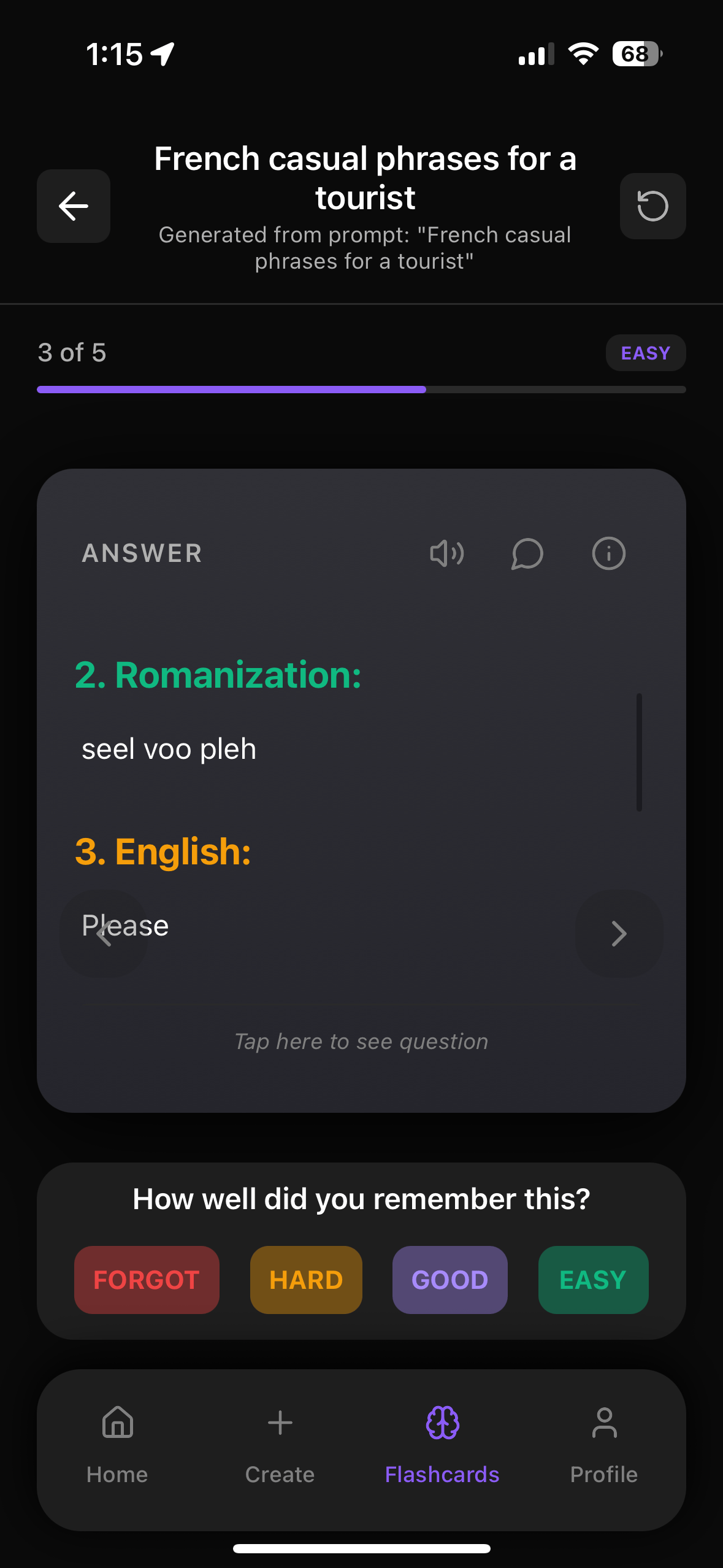
Stop Collecting Spanish Flashcards You’ll Never Actually Remember
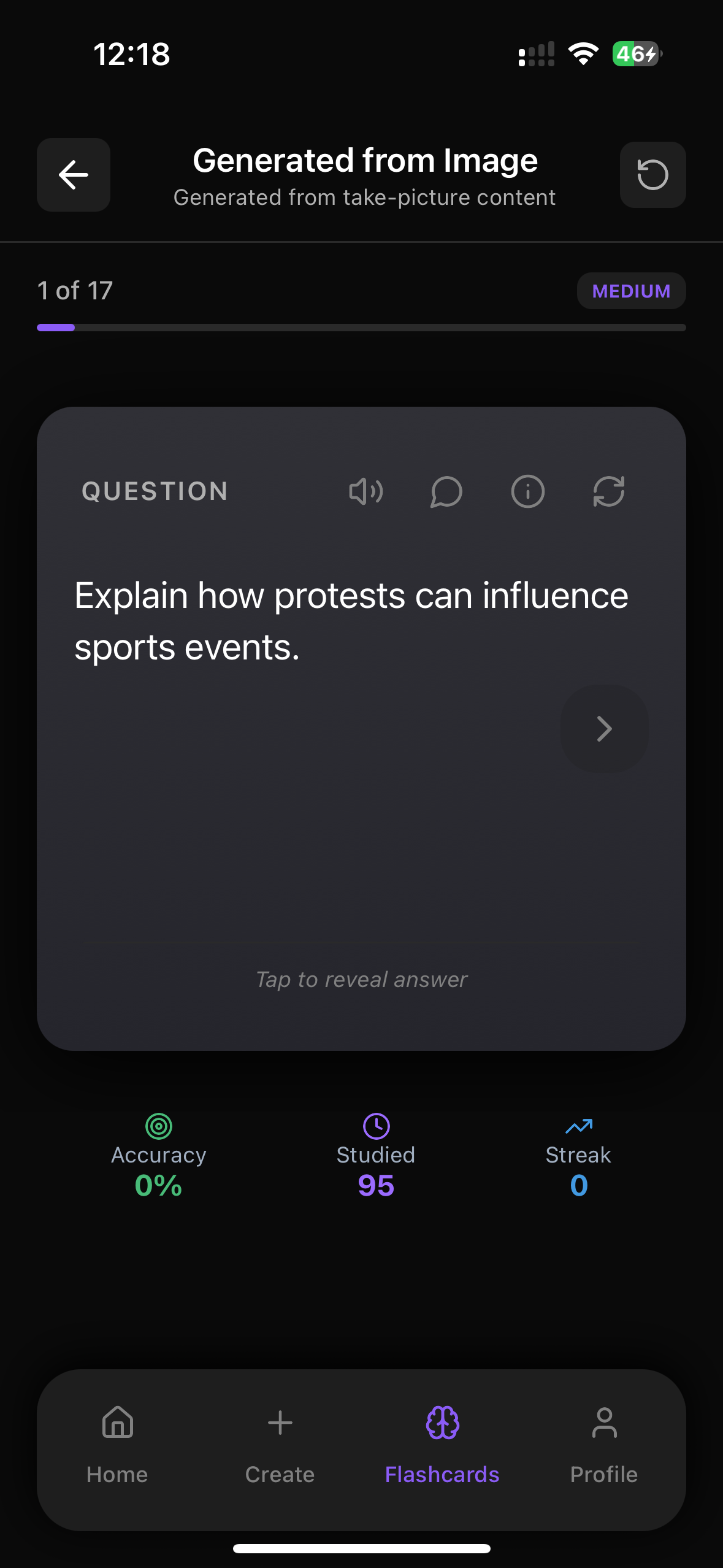
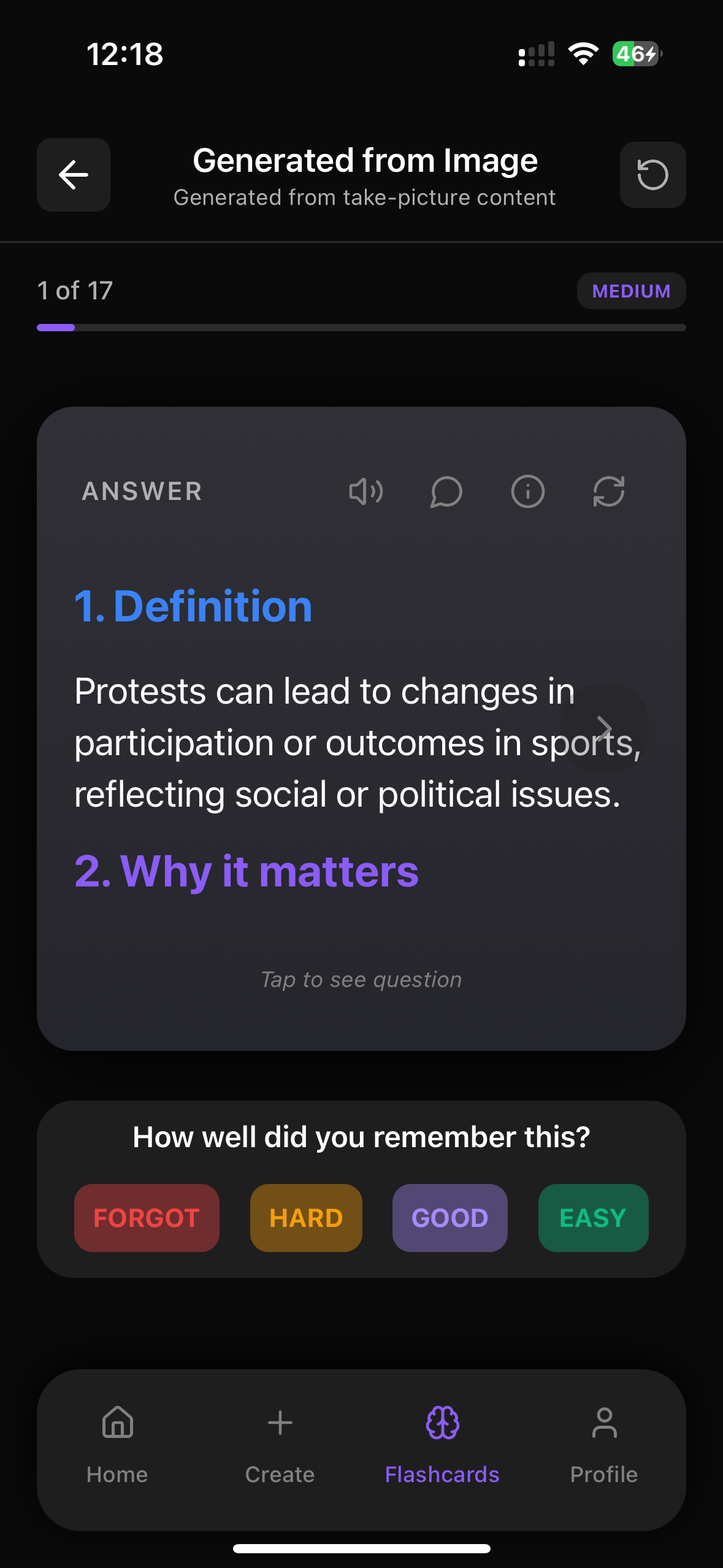
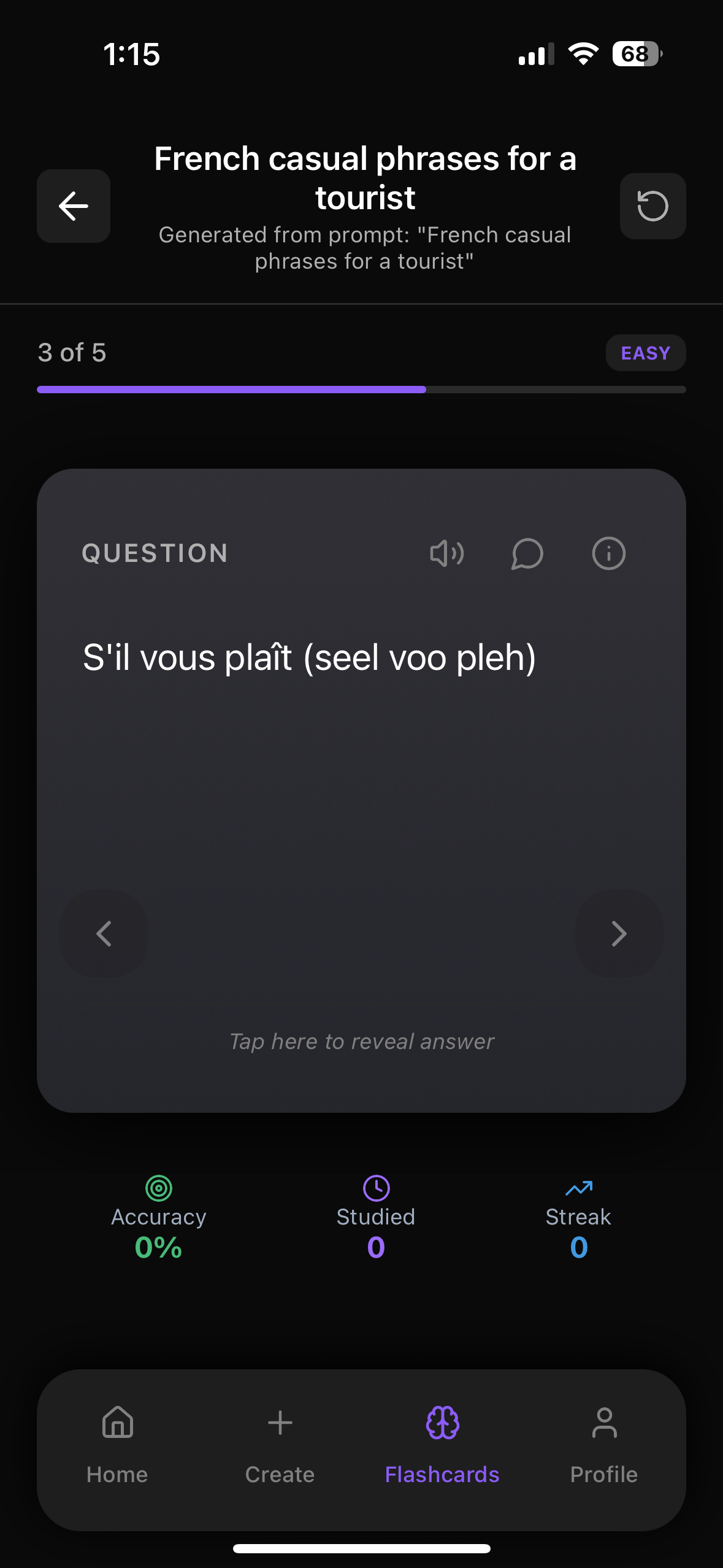
You ever feel like learning Spanish is tougher than trying to herd cats? I hear ya! So when it comes to figuring out how to use best Spanish flashcards, here's the deal: they can totally make learning way easier and fun. I mean, who doesn’t love breaking things down into bite-sized pieces? The trick is using them right - think active recall, spaced repetition, the whole shebang. That’s where Flashrecall jumps in – it’s like your study buddy that automatically whips up flashcards from your notes and even remembers when you should review them. If you're tired of boring old decks and want to start chatting in Spanish sooner, you should definitely check out our complete guide. Trust me, it’s going to change your study game for the better! 😊
That’s where an app like Flashrecall comes in:
👉 https://apps.apple.com/us/app/flashrecall-study-flashcards/id6746757085
It turns your notes, screenshots, PDFs, YouTube videos, and more into smart flashcards with built‑in spaced repetition and active recall, so you actually remember what you study instead of just… staring at it.
Let’s break down what makes the best Spanish flashcards, how to create them, and how Flashrecall makes the whole thing way easier and way faster.
What Actually Makes “The Best” Spanish Flashcards?
Before we talk tools, let’s talk quality.
Good Spanish flashcards aren’t just random word lists. They:
1. Use context, not just isolated words
- Bad: `perro – dog`
- Better: `El perro duerme en la cama. – The dog sleeps on the bed.`
You learn the word and how it’s used.
2. Test recall, not recognition
If you only see the answer all the time, your brain gets lazy.
Good cards force you to remember the word, not just recognize it.
3. Mix directions
- Spanish → English (understanding)
- English → Spanish (speaking/writing)
- Audio → Text (listening)
- Text → Audio (pronunciation)
4. Include audio and images when possible
Hearing “coche” and seeing a car makes it stick way better than text alone.
5. Use spaced repetition
You should see hard cards more often and easy cards less often — automatically.
Flashrecall basically bakes all of this into how you study, so you don’t have to manually manage decks, tags, and review schedules.
Why Flashrecall Is Perfect For Spanish Flashcards
If you’re learning Spanish, Flashrecall is kind of a cheat code.
🔹 Create cards instantly from almost anything
You can make Spanish flashcards from:
- Screenshots of Spanish texts or subtitles
- PDFs (textbooks, grammar guides, vocab lists)
- YouTube videos (Spanish lessons, TV clips, music lyrics)
- Typed prompts (e.g. “Create cards for 20 common Spanish travel phrases”)
- Plain old manual entry if you like full control
Flashrecall pulls out the important bits and turns them into flashcards for you.
Link again so you don’t scroll back:
👉 https://apps.apple.com/us/app/flashrecall-study-flashcards/id6746757085
🔹 Built‑in spaced repetition (no setup, no stress)
You don’t have to mess with settings. Flashrecall:
- Schedules your reviews automatically
- Shows you cards right before you’re about to forget them
- Sends study reminders so you don’t fall off the wagon
🔹 Active recall is built in
Every study session is designed around “Can I remember this?” instead of “Can I recognize this?” — which is exactly what you need for speaking Spanish confidently.
🔹 You can literally chat with your flashcards
Stuck on a word or grammar pattern?
You can chat with the card and ask things like:
- “Can you give me 3 more example sentences with this verb?”
- “Explain the difference between ser and estar in simple terms.”
- “Is this sentence correct: Yo fui a la playa ayer?”
It feels like having a personal Spanish tutor sitting inside your flashcard deck.
🔹 Works offline, on iPhone and iPad
Perfect for studying on the bus, plane, or when Wi‑Fi sucks.
🔹 Free to start & super fast
The app is modern, quick, and doesn’t feel like using a tool from 2009.
7 Powerful Ways To Make The Best Spanish Flashcards (With Examples)
Let’s get practical. Here’s how to build seriously effective Spanish flashcards using Flashrecall.
1. Start With High-Impact Vocab (Not Random Words)
Don’t start with “the pineapple is yellow.”
Start with what you’ll actually say.
- Greetings & introductions
- Common verbs (want, go, like, need, have, can, must)
- Daily routines (wake up, eat, work, study, sleep)
- Travel basics (airport, hotel, restaurant, directions)
- Front: `I would like a coffee, please.`
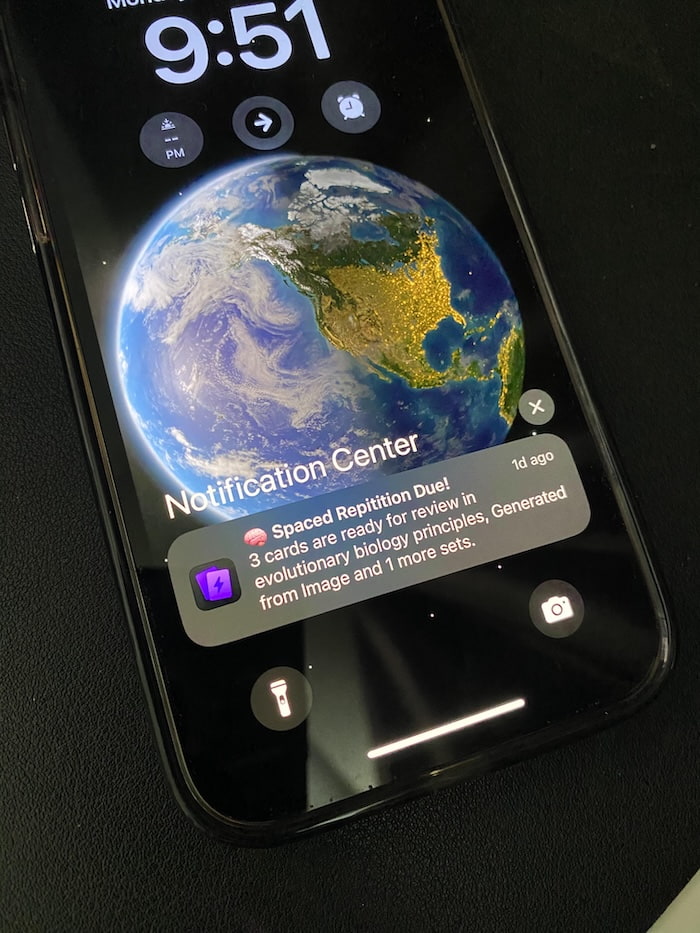
Flashrecall automatically keeps track and reminds you of the cards you don't remember well so you remember faster. Like this :
Back: `Me gustaría un café, por favor.`
- Front: `to need`
Back: `necesitar – “Necesito ayuda.” (I need help.)`
In Flashrecall, you can paste a list like “20 common Spanish travel phrases,” and let it generate cards for you automatically.
2. Use Context Sentences, Not Just Single Words
Single-word cards are fine, but context is king.
Instead of:
- Front: `libro`
Back: `book`
Try:
- Front: `book`
Back: `el libro – “Estoy leyendo un libro muy interesante.”`
Now you’re learning:
- The word
- The article (el libro)
- A natural sentence pattern
In Flashrecall, when you import text from a PDF or screenshot, you can quickly highlight important phrases and turn them into cards with example sentences.
3. Always Mix English → Spanish and Spanish → English
If you only do Spanish → English, you’ll understand a lot but struggle to speak.
- Front: `cocinar`
Back: `to cook – “Me gusta cocinar pasta.”`
- Front: `to cook`
Back: `cocinar – “¿Puedes cocinar esta noche?”`
Flashrecall makes it easy to duplicate or auto-generate reversed cards, so you cover both understanding and speaking.
4. Add Audio So You Don’t Butcher Pronunciation
Spanish spelling is friendly, but some sounds (like rolled r) need practice.
You can:
- Add audio to cards (your own or generated)
- Create listening cards:
- Front: audio of “¿Dónde está el baño?”
- Back: text + translation
This way you train your ear and your speaking, not just reading.
If you’re using YouTube lessons, Flashrecall can pull content from the video link and help you build cards from the key phrases.
5. Turn Real-Life Stuff Into Flashcards Instantly
This is where Flashrecall shines compared to old-school decks.
- Screenshot a Spanish meme, tweet, or subtitle → turn the text into flashcards
- Import a PDF of your Spanish class notes → auto-generate cards
- Paste a short Spanish article → ask Flashrecall to create vocab & phrase cards
Instead of spending hours manually typing everything, you let the app do the boring part so you can spend your time actually studying.
Download it here if you haven’t already:
👉 https://apps.apple.com/us/app/flashrecall-study-flashcards/id6746757085
6. Use Flashcards For Grammar Too (Not Just Vocab)
You can absolutely learn grammar with flashcards — you just have to design them well.
- Front: `Conjugate “hablar” in present tense (yo, tú, él/ella).`
Back: `yo hablo, tú hablas, él/ella habla`
- Front: `When do you use “ser” vs “estar”?`
Back:
- ser = permanent traits, identity, time, origin
- estar = temporary states, location, emotions
- Examples:
- Soy médico. (I am a doctor.)
- Estoy cansado. (I am tired.)
Stuck on a grammar point?
Ask Flashrecall’s built-in chat:
> “Explain the difference between por and para with 5 example sentences.”
Then turn the best examples into flashcards with one tap.
7. Let Spaced Repetition Do The Heavy Lifting
The best Spanish flashcards are useless if you never review them — or if you review them randomly.
Spaced repetition solves that. Flashrecall:
- Shows you new cards a few times close together
- Then starts spacing them out as you get them right
- Brings them back right before you’re about to forget
You just open the app, hit study, and trust the algorithm.
Plus, study reminders nudge you when you haven’t reviewed in a while, so you don’t lose your streak.
Flashrecall vs. Traditional Spanish Flashcards (Or Older Apps)
You might be thinking:
“Can’t I just use paper cards or some generic flashcard app?”
You can. But here’s the difference:
| Feature | Paper / Basic Apps | Flashrecall |
|---|---|---|
| Spaced repetition built-in | Usually manual / limited | ✅ Automatic, smart scheduling |
| Create from PDFs / YouTube | No | ✅ Yes |
| Instant cards from screenshots | No | ✅ Yes |
| Chat with your flashcards | Definitely not | ✅ Yes |
| Study reminders | Maybe basic notifications | ✅ Smart reminders |
| Works offline | Paper yes, some apps maybe | ✅ Yes |
| Modern, fast, easy UI | Depends | ✅ Designed for speed |
| Free to start | N/A / sometimes | ✅ Free to start |
If you’re serious about Spanish, you want something that:
- Saves you time creating cards
- Keeps you consistent
- Helps you understand, not just memorize
That’s exactly what Flashrecall is built for.
How To Start Using Flashrecall For Spanish Today (Simple Plan)
Here’s a quick 3-step setup you can do in 15–20 minutes:
Step 1: Install Flashrecall
Grab it here on your iPhone or iPad:
👉 https://apps.apple.com/us/app/flashrecall-study-flashcards/id6746757085
Step 2: Create Your First Spanish Deck
- Name it: `Spanish – Core Vocab`
- Add 20–30 super common words & phrases (greetings, basic verbs, daily stuff)
- Either:
- Type them in manually, or
- Paste a list and let Flashrecall generate the cards
Step 3: Study 10–15 Minutes A Day
- Open Flashrecall once a day
- Do your scheduled reviews (spaced repetition handles the timing)
- Add new cards from:
- Class notes
- YouTube videos
- Articles, books, or anything else you’re reading
That’s it. No complicated setup. Just consistent, smart practice.
Final Thoughts: The “Best” Spanish Flashcards Are The Ones You’ll Actually Use
You don’t need a perfect deck.
You need:
- Cards with good context
- A system that reminds you to study
- A tool that makes creating cards easy instead of a chore
Flashrecall gives you all of that in one place — plus the ability to chat with your cards when you’re confused, generate cards from real-life content, and let spaced repetition handle the memory science for you.
If you want your Spanish vocab to finally stick, start here:
👉 https://apps.apple.com/us/app/flashrecall-study-flashcards/id6746757085
Turn everything you see, read, and hear in Spanish into powerful flashcards — and actually remember it this time.
Frequently Asked Questions
Is Quizlet good for studying?
Quizlet helps with basic reviewing, but its active recall tools are limited. If you want proper spacing and strong recall practice, tools like Flashrecall automate the memory science for you so you don't forget your notes.
What's the fastest way to create flashcards?
Manually typing cards works but takes time. Many students now use AI generators that turn notes into flashcards instantly. Flashrecall does this automatically from text, images, or PDFs.
How do I start spaced repetition?
You can manually schedule your reviews, but most people use apps that automate this. Flashrecall uses built-in spaced repetition so you review cards at the perfect time.
What is active recall and how does it work?
Active recall is the process of actively retrieving information from memory rather than passively reviewing it. Flashrecall forces proper active recall by making you think before revealing answers, then uses spaced repetition to optimize your review schedule.
Related Articles
- Parth Momaya Com Flashcards: The Powerful Study Upgrade Most Students Don’t Know About Yet – Here’s How to Learn Faster, Remember More, and Go Beyond Basic Flashcards
- A+ Flashcards: Proven Tips To Study Smarter, Get Higher Grades, And Actually Remember Stuff – Most Students Never Learn These Simple Flashcard Secrets
- Flags Of The World Quizlet: 7 Powerful Study Hacks To Remember Every Flag Fast – Stop Forgetting Countries And Start Acing Every Geography Test
Research References
The information in this article is based on peer-reviewed research and established studies in cognitive psychology and learning science.
Cepeda, N. J., Pashler, H., Vul, E., Wixted, J. T., & Rohrer, D. (2006). Distributed practice in verbal recall tasks: A review and quantitative synthesis. Psychological Bulletin, 132(3), 354-380
Meta-analysis showing spaced repetition significantly improves long-term retention compared to massed practice
Carpenter, S. K., Cepeda, N. J., Rohrer, D., Kang, S. H., & Pashler, H. (2012). Using spacing to enhance diverse forms of learning: Review of recent research and implications for instruction. Educational Psychology Review, 24(3), 369-378
Review showing spacing effects work across different types of learning materials and contexts
Kang, S. H. (2016). Spaced repetition promotes efficient and effective learning: Policy implications for instruction. Policy Insights from the Behavioral and Brain Sciences, 3(1), 12-19
Policy review advocating for spaced repetition in educational settings based on extensive research evidence
Karpicke, J. D., & Roediger, H. L. (2008). The critical importance of retrieval for learning. Science, 319(5865), 966-968
Research demonstrating that active recall (retrieval practice) is more effective than re-reading for long-term learning
Roediger, H. L., & Butler, A. C. (2011). The critical role of retrieval practice in long-term retention. Trends in Cognitive Sciences, 15(1), 20-27
Review of research showing retrieval practice (active recall) as one of the most effective learning strategies
Dunlosky, J., Rawson, K. A., Marsh, E. J., Nathan, M. J., & Willingham, D. T. (2013). Improving students' learning with effective learning techniques: Promising directions from cognitive and educational psychology. Psychological Science in the Public Interest, 14(1), 4-58
Comprehensive review ranking learning techniques, with practice testing and distributed practice rated as highly effective

FlashRecall Team
FlashRecall Development Team
The FlashRecall Team is a group of working professionals and developers who are passionate about making effective study methods more accessible to students. We believe that evidence-based learning tec...
Credentials & Qualifications
- •Software Development
- •Product Development
- •User Experience Design
Areas of Expertise
Ready to Transform Your Learning?
Start using FlashRecall today - the AI-powered flashcard app with spaced repetition and active recall.
Download on App Store