Braille Flashcards App: The Essential Guide
A braille flashcards app helps you memorize the Braille alphabet and contractions while spaced repetition organizes your reviews. Flashrecall does the work.
How Flashrecall app helps you remember faster. It's free
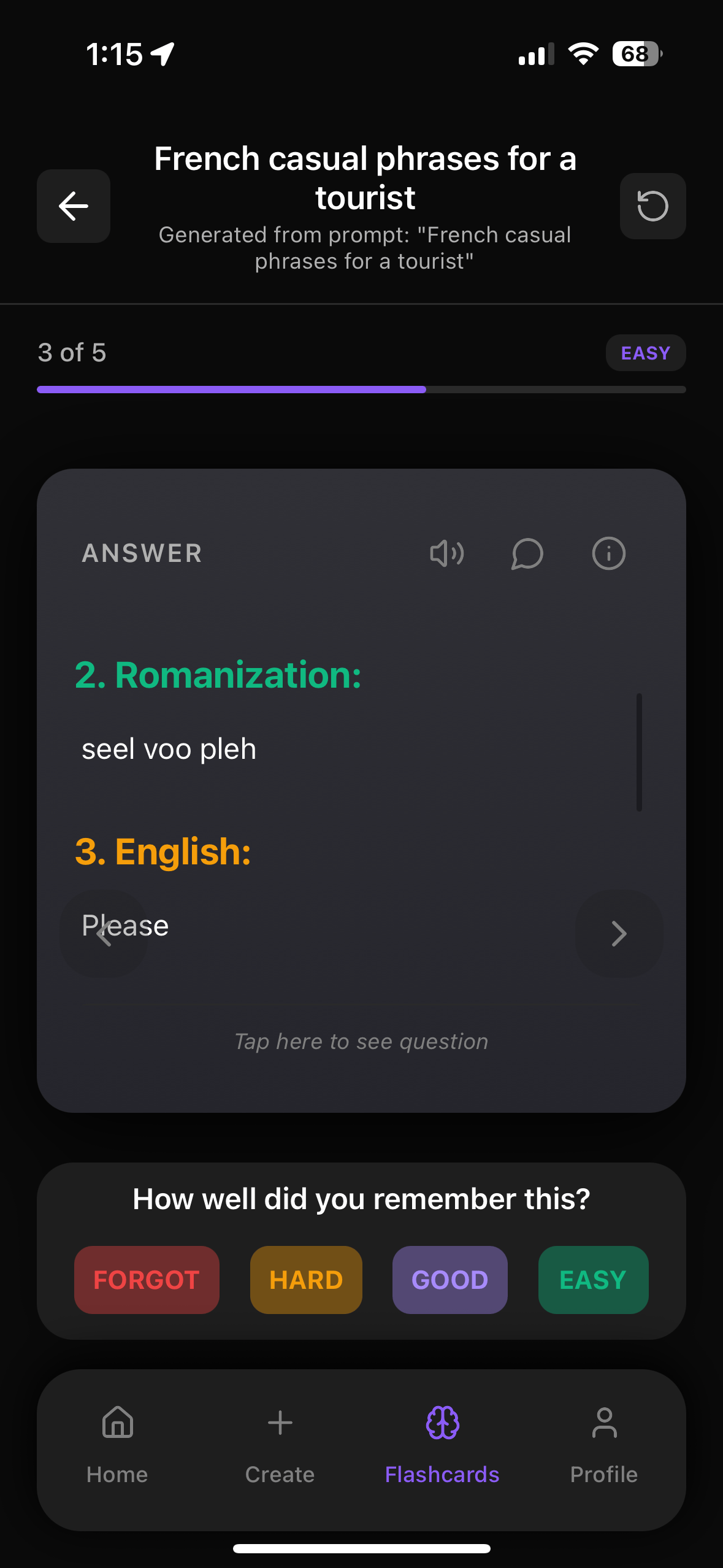
Why Braille Flashcards Are So Powerful (And So Underused)
Ever tried wrapping your head around something new and just felt stuck? That's where a braille flashcards app can really come in handy. Basically, it breaks stuff down into bite-sized pieces, making it way easier to get things to stick. So, if you're diving into learning Braille, these flashcards are a game-changer. Now, here's the twist: not all of us have the time or patience to make flashcards from scratch, right? That's where Flashrecall steps in - it does the heavy lifting for you by whipping up flashcards from your notes and setting up the perfect review schedule. It's like having a study buddy who never forgets when you need to review. Want to get the full scoop on how this all works? Check out our guide here and get rolling with your new study BFF!
They’re perfect for:
- Memorizing the Braille alphabet and numbers
- Learning contractions (Grade 2 Braille)
- Practicing punctuation and special symbols
- Building vocabulary and reading speed
The problem?
Physical Braille flashcards are slow to make, easy to lose, and hard to organize.
That’s where a digital flashcard app like Flashrecall comes in.
You can build, organize, and review Braille flashcards on your iPhone or iPad, and let spaced repetition do the heavy lifting for you.
👉 Try it here: https://apps.apple.com/us/app/flashrecall-study-flashcards/id6746757085
Let’s break down how to actually use flashcards to learn Braille in a smart, structured way.
Step 1: Decide What Braille You’re Learning (Start Simple)
Before you create a single card, be clear about your current level:
- Total beginner
- Focus: Alphabet (A–Z), numbers, basic punctuation
- Early intermediate
- Focus: Grade 2 contractions, common words, short phrases
- More advanced
- Focus: Complex contractions, math notation (Nemeth), music Braille, or specialized codes
You’ll learn faster if you tackle Braille in small, themed chunks instead of “everything at once”.
Example: Simple Beginner Decks
Start with 3 core decks:
1. Braille Alphabet – Letters A–Z
2. Braille Numbers & Number Sign
3. Basic Punctuation (. , ? ! ; : ’)
In Flashrecall, you can create each of these as separate decks so you’re not overwhelmed, and switch between them easily.
Step 2: How To Actually Structure Braille Flashcards
You can structure Braille flashcards in a few different ways depending on your goal.
Here are some useful formats.
1. “See Braille → Say The Letter/Word”
This is perfect for reading Braille.
Example:
- Front: ⠉ (Braille pattern 14)
- Back: “C – dots 1-4”
In Flashrecall, you can:
- Add images of Braille cells
- Or just write something like:
- Front: “Dots 1-4”
- Back: “C”
You can even paste Braille from a reference PDF into a card using Flashrecall’s PDF import, and turn it into cards automatically.
2. “See Text → Imagine/Write The Braille”
This helps with producing Braille (typing or embossing).
If you’re using a Braille display or slate & stylus, you can:
- Look at the front
- Try to type or punch the Braille
- Flip the card and self-check
Flashrecall has built-in active recall, so every card forces you to think before revealing the answer – which is exactly what you want for Braille.
3. “Contraction Practice” Cards (Grade 2 Braille)
For contractions, you’ll want both directions:
- Front: “Braille: ⠮”
- Front: “Word: ‘the’ (Grade 2)”
You can also group them:
- Deck: “Common Word Contractions”
- Deck: “Initial-Letter Contractions”
- Deck: “Short-Form Words”
Flashrecall lets you make as many decks as you want, so you can keep everything super organized.
Step 3: Build Braille Flashcards The Fast Way (Not One By One)
Making flashcards manually is fine… until you hit card number 150 and want to cry.
Flashrecall helps you speed this up massively:
1. Turn PDFs Into Flashcards
Got a Braille reference PDF, alphabet chart, or Grade 2 contractions list?
In Flashrecall you can:
- Import the PDF
- Highlight or select the text you want
- Turn them into flashcards automatically
So instead of typing “A, B, C…” one by one, you can grab a table and convert it into cards in minutes.
2. Use Images Of Braille
If you have:
- Photos of embossed Braille
- Screenshots of Braille from a website
- Braille diagrams
You can drop those images into Flashrecall, and it will help you turn them into cards.
You can even mix cards like:
- Front: Image of Braille cell
- Back: Letter / word / explanation
Perfect if you’re teaching someone who needs the visual layout of the dots to stick.
3. Create Cards From Text, YouTube, Or Prompts
Flashrecall can also make cards from:
- YouTube videos (e.g., “Learn Braille alphabet” videos)
- Plain text (like a list of contractions)
- Typed prompts (e.g. “Create flashcards for the English Braille alphabet”)
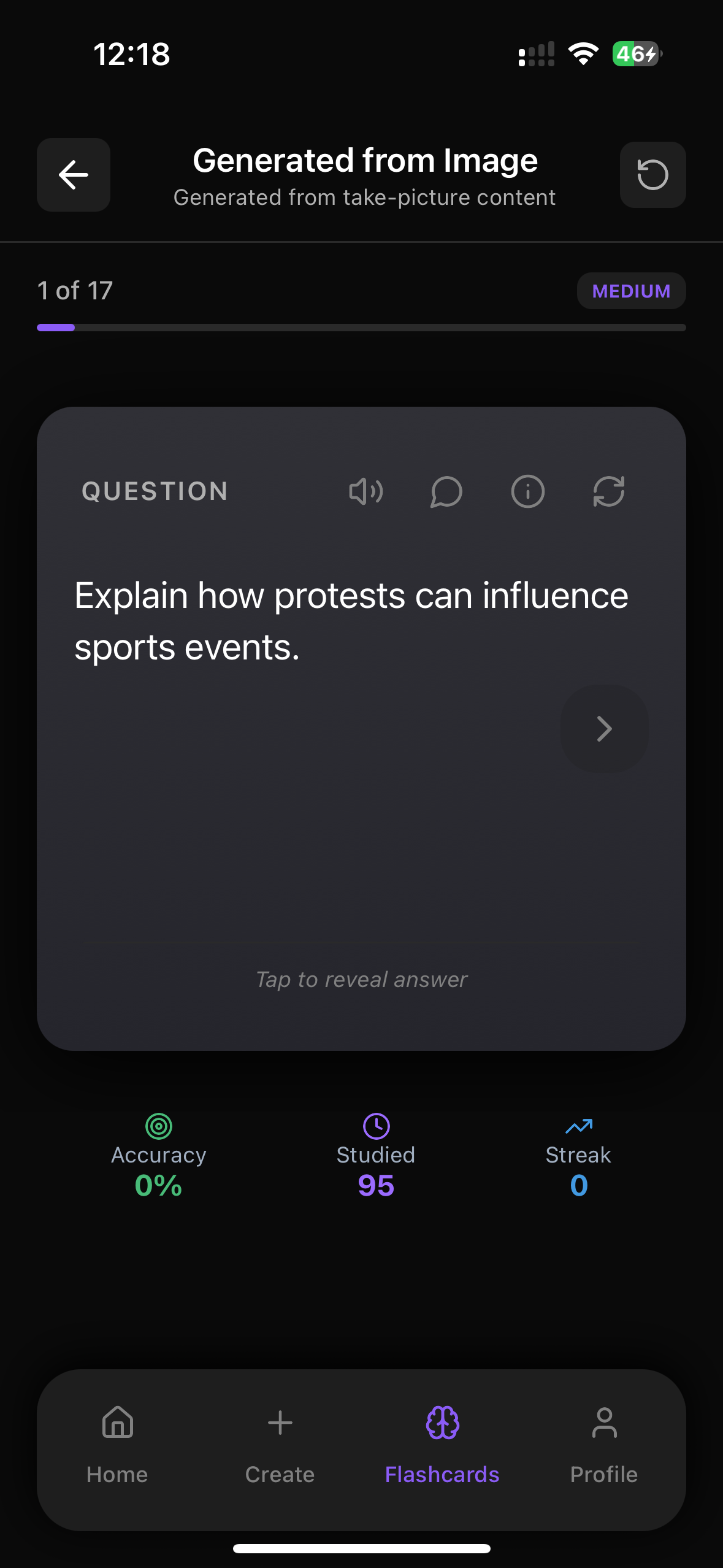
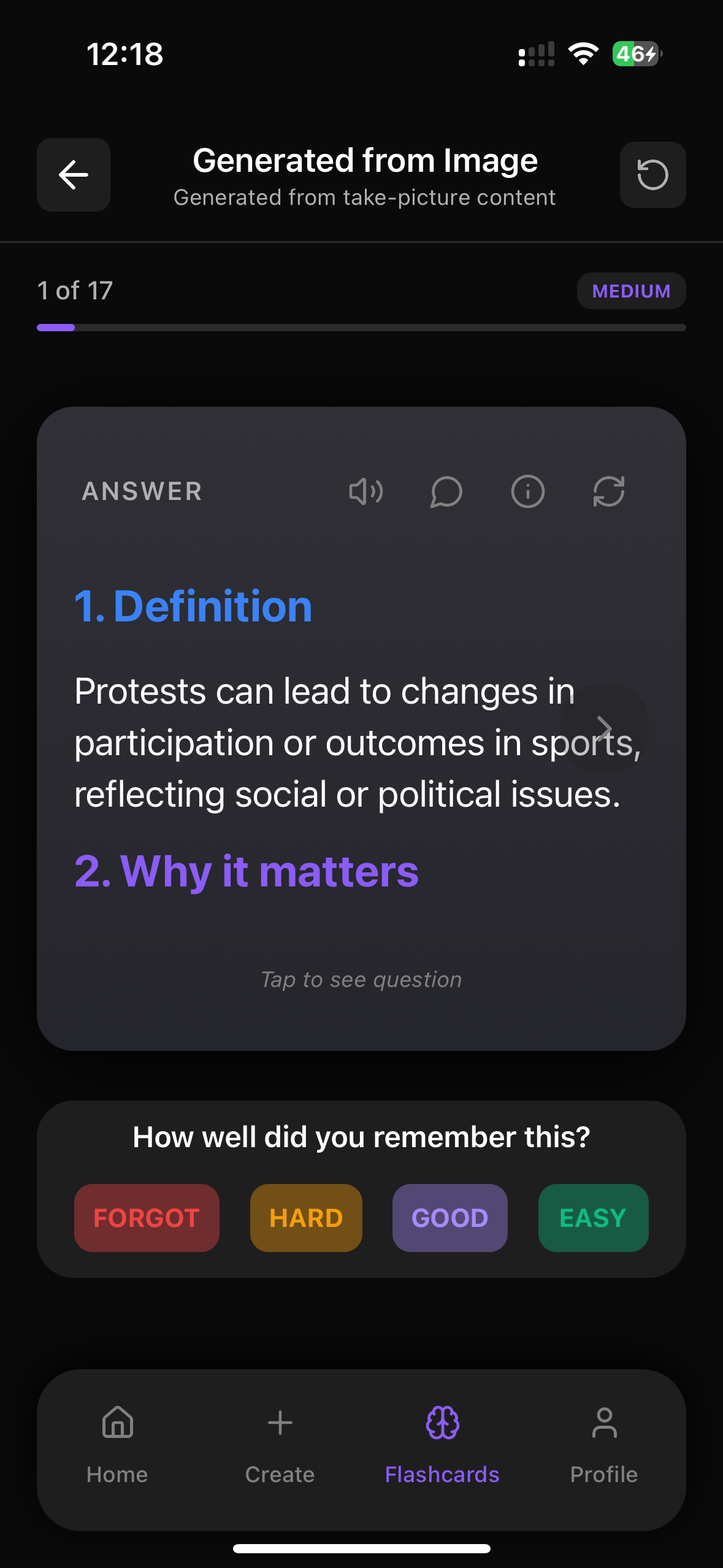
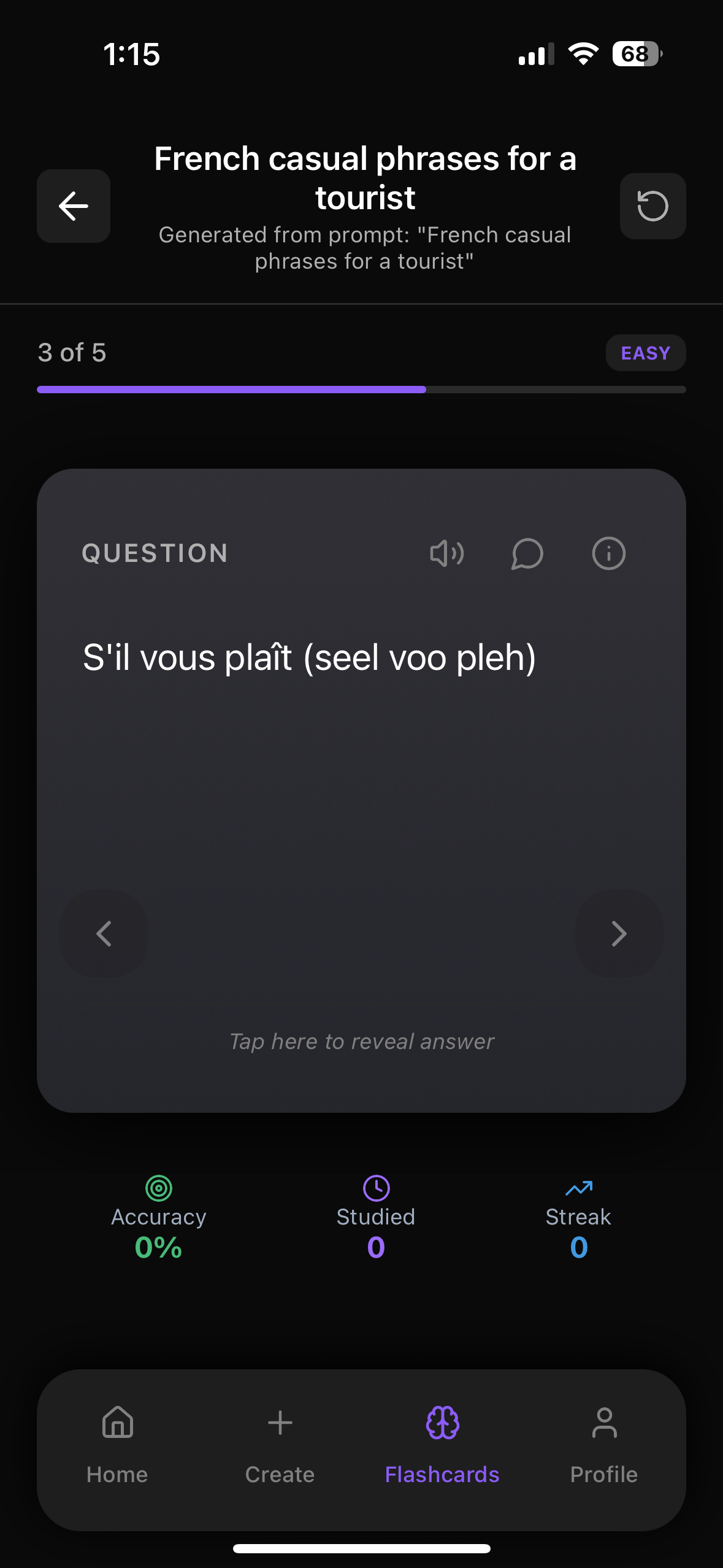
Flashrecall automatically keeps track and reminds you of the cards you don't remember well so you remember faster. Like this :
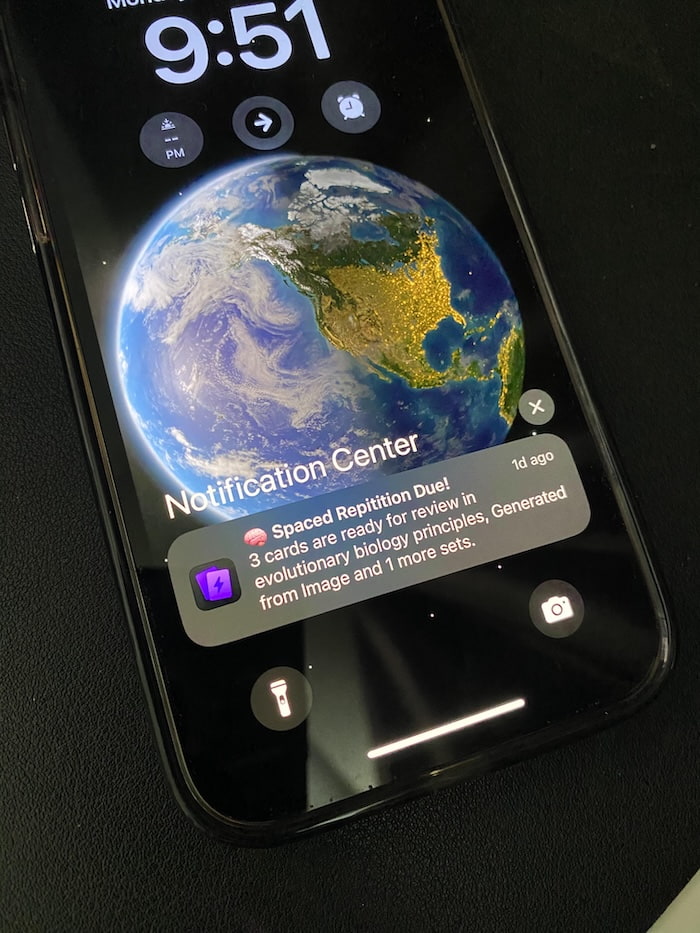
You can then edit them to match your preferred style.
👉 Grab it here if you haven’t yet:
https://apps.apple.com/us/app/flashrecall-study-flashcards/id6746757085
Step 4: Use Spaced Repetition So Braille Actually Sticks
Most people fail at Braille not because it’s “too hard”, but because they don’t review consistently.
That’s where spaced repetition saves you.
How Flashrecall Helps
Flashrecall has:
- Built-in spaced repetition
- Study reminders
- Automatic scheduling of reviews
So instead of thinking, “What should I review today?” the app just tells you:
> “Here are 32 Braille cards you’re due for. Do these now.”
You:
1. Open the app
2. Tap into your Braille deck
3. Review what’s due
4. Done in 10–15 minutes
The algorithm spaces out your reviews:
- New cards: you see them more often
- Well-known cards: you see them less often
This is exactly what you want to move Braille from ‘I kind of know it’ to ‘I don’t even have to think about it’.
Step 5: Use Active Recall Properly (No Mindless Flipping)
When you review Braille flashcards, don’t just flip through them like a picture book.
For each card, do this:
1. Pause.
Try to read or produce the Braille before revealing the answer.
2. Answer out loud or in your head.
3. Flip the card.
4. Rate how hard it was.
Flashrecall is built around active recall, so every card is a mini quiz.
This is especially important for Braille, where you want instant recognition.
Step 6: Use “Chat With Your Flashcards” When You’re Stuck
This is where Flashrecall gets really cool.
If you don’t understand a Braille rule, contraction, or symbol, you can:
- Open the Flashrecall chat
- Ask something like:
- “Explain how the Braille number sign works.”
- “What’s the difference between this contraction and that one?”
- “Give me more examples using this Braille pattern.”
You’re basically chatting with an AI that knows the context of your cards, so it can help you go beyond memorization and actually understand what you’re learning.
This is super useful if you’re self-studying Braille and don’t always have a teacher handy.
Step 7: Make Braille Practice Part Of Your Daily Routine
You don’t need 2-hour study sessions.
You need consistent, small sessions.
Here’s a simple routine:
- Morning (5–10 minutes)
Review due Braille cards in Flashrecall
- Afternoon or evening (5–10 minutes)
Add a few new cards (e.g., 5 new letters, symbols, or contractions)
- Once a week
Add new decks or reorganize (e.g., “New contractions I learned this week”)
Flashrecall works offline, so you can review:
- On the bus
- In waiting rooms
- Between classes
- During short breaks
Tiny sessions add up fast, especially with spaced repetition.
Using Braille Flashcards For Different Goals
1. For Students Learning Braille At School
You can create decks for:
- Weekly vocabulary
- Spelling tests
- Reading practice
- Math symbols (if using Nemeth)
Teachers or parents can build decks and share the same device, or help the student create cards together.
2. For Adults Losing Vision And Learning Braille Later
You can focus on:
- Letters & numbers
- Everyday words (street names, labels, signs)
- Common phrases (e.g., elevator labels, room numbers)
Flashrecall is:
- Fast, modern, and easy to use
- Free to start
- Available on iPhone and iPad
So you can keep your Braille practice with you wherever you go.
3. For Language + Braille Together
If you’re learning a language and Braille (for example, English Braille + Spanish vocabulary), you can:
- Create cards like:
- Front: Braille word
- Back: Translation + pronunciation
Flashrecall is great for languages, exams, school subjects, university, medicine, business – and yes, Braille too.
Physical Braille Cards vs Digital Braille Cards
You don’t have to choose one forever. Use both.
- Tactile practice
- Getting used to actually feeling the dots
- Fast creation (PDFs, images, text, YouTube)
- Automatic scheduling (spaced repetition)
- Keeping everything organized
- Studying anywhere, anytime
Best combo:
Use physical Braille for touch, and Flashrecall for memory and structure.
Getting Started Today (Simple Plan)
1. Download Flashrecall:
👉 https://apps.apple.com/us/app/flashrecall-study-flashcards/id6746757085
2. Create 3 small decks:
- Alphabet
- Numbers
- Basic punctuation
3. Add 5–10 cards per deck (don’t overdo it).
4. Review once or twice a day for 5–10 minutes.
5. After a week, start adding:
- Simple words
- Then contractions (if you’re doing Grade 2)
Stick with this for a month and you’ll be shocked at how natural Braille starts to feel.
If you’re serious about learning Braille, flashcards aren’t just “a nice extra” — they’re one of the fastest ways to build recognition and confidence.
And using an app like Flashrecall means:
- You don’t waste time making or sorting cards
- You don’t forget to review
- You can learn anytime, anywhere
Set up your first Braille deck today and let spaced repetition quietly do its magic in the background.
Frequently Asked Questions
What's the fastest way to create flashcards?
Manually typing cards works but takes time. Many students now use AI generators that turn notes into flashcards instantly. Flashrecall does this automatically from text, images, or PDFs.
Is there a free flashcard app?
Yes. Flashrecall is free and lets you create flashcards from images, text, prompts, audio, PDFs, and YouTube videos.
How do I start spaced repetition?
You can manually schedule your reviews, but most people use apps that automate this. Flashrecall uses built-in spaced repetition so you review cards at the perfect time.
What's the best way to learn vocabulary?
Research shows that combining flashcards with spaced repetition and active recall is highly effective. Flashrecall automates this process, generating cards from your study materials and scheduling reviews at optimal intervals.
Related Articles
- NASM CPT Flashcards: 7 Powerful Study Tricks To Pass Your Exam Faster (Most Students Don’t Know These)
- CFP Flashcards: The Essential Study Hack to Pass Your Exam Faster (Most Candidates Don’t Do This) – Turn your notes into smart CFP flashcards in seconds and finally feel confident on exam day.
- Oxford Flashcards: The Complete Guide To Smarter Studying (And The Faster Digital Upgrade Most Students Don’t Know About) – Discover how to turn classic Oxford-style flashcards into a powerful, modern system that helps you remember more in less time.
Research References
The information in this article is based on peer-reviewed research and established studies in cognitive psychology and learning science.
Cepeda, N. J., Pashler, H., Vul, E., Wixted, J. T., & Rohrer, D. (2006). Distributed practice in verbal recall tasks: A review and quantitative synthesis. Psychological Bulletin, 132(3), 354-380
Meta-analysis showing spaced repetition significantly improves long-term retention compared to massed practice
Carpenter, S. K., Cepeda, N. J., Rohrer, D., Kang, S. H., & Pashler, H. (2012). Using spacing to enhance diverse forms of learning: Review of recent research and implications for instruction. Educational Psychology Review, 24(3), 369-378
Review showing spacing effects work across different types of learning materials and contexts
Kang, S. H. (2016). Spaced repetition promotes efficient and effective learning: Policy implications for instruction. Policy Insights from the Behavioral and Brain Sciences, 3(1), 12-19
Policy review advocating for spaced repetition in educational settings based on extensive research evidence
Karpicke, J. D., & Roediger, H. L. (2008). The critical importance of retrieval for learning. Science, 319(5865), 966-968
Research demonstrating that active recall (retrieval practice) is more effective than re-reading for long-term learning
Roediger, H. L., & Butler, A. C. (2011). The critical role of retrieval practice in long-term retention. Trends in Cognitive Sciences, 15(1), 20-27
Review of research showing retrieval practice (active recall) as one of the most effective learning strategies
Dunlosky, J., Rawson, K. A., Marsh, E. J., Nathan, M. J., & Willingham, D. T. (2013). Improving students' learning with effective learning techniques: Promising directions from cognitive and educational psychology. Psychological Science in the Public Interest, 14(1), 4-58
Comprehensive review ranking learning techniques, with practice testing and distributed practice rated as highly effective

FlashRecall Team
FlashRecall Development Team
The FlashRecall Team is a group of working professionals and developers who are passionate about making effective study methods more accessible to students. We believe that evidence-based learning tec...
Credentials & Qualifications
- •Software Development
- •Product Development
- •User Experience Design
Areas of Expertise
Ready to Transform Your Learning?
Start using FlashRecall today - the AI-powered flashcard app with spaced repetition and active recall.
Download on App Store