Cdl Flashcards Study Method: The Proven Guide
The cdl flashcards study method leverages spaced repetition for better retention. Use Flashrecall to schedule reviews and make your CDL prep efficient and.
How Flashrecall app helps you remember faster. It's free
Stop Guessing: Why CDL Flashcards Work So Well
Ever tried to wrap your head around all that CDL info and felt like it was just slipping away? I totally get it. Here’s the scoop: the CDL flashcards study method is a lifesaver when it comes to keeping all those details locked in your brain. Basically, it’s all about using active recall and hitting the right timing to review stuff so it sticks long-term. Forget about cramming or just flipping through your notes a million times. Instead, you’re actively retrieving info in spaced intervals. Trust me, it's way more effective. And the cool part? Flashrecall does all the heavy lifting with scheduling and reminders, so you don’t have to stress about organizing your study sessions. If you want the lowdown on making CDL prep less of a nightmare, you might wanna check out our full guide. It’s like having a study buddy who doesn’t mind doing all the boring parts for you!
If you're looking for information about cdl flashcards: the proven way to pass your cdl exam faster (most people study wrong) – learn smarter, not harder, and turn stressful cdl prep into something you can actually manage., read our complete guide to cdl flashcards.
- The manual is huge
- Practice tests help… but the info doesn’t always stick
- It’s easy to feel like you’re “kind of ready” but not confident
That’s exactly where CDL flashcards shine — they force you to actually remember, not just recognize answers.
And instead of building everything by hand, you can use an app like Flashrecall to make the whole process way faster and smarter:
👉 https://apps.apple.com/us/app/flashrecall-study-flashcards/id6746757085
Flashrecall lets you:
- Turn text, images, PDFs, even YouTube videos into flashcards instantly
- Use built‑in spaced repetition so you review the right CDL facts at the right time
- Get study reminders so you don’t “forget to study” for three days straight
- Chat with your flashcards if you’re unsure about something
- Study offline on iPhone or iPad
Let’s walk through how to actually use CDL flashcards the smart way (not just randomly flipping cards and hoping for the best).
What You Actually Need To Memorize For The CDL
CDL exams vary a bit by state and endorsement, but flashcards are perfect for:
- General Knowledge
- Rules of the road
- CDL-specific laws
- Vehicle inspection basics
- Air Brakes
- PSI ranges
- Warning light rules
- What happens if air pressure drops
- Combination Vehicles
- Trailer swing, jackknife, rollover risks
- Coupling/uncoupling steps
- HazMat (if you’re doing it)
- Placards
- Classes of hazardous materials
- Emergency response basics
- Tanker, Passenger, School Bus, etc.
- Specific safety rules
- Loading/unloading rules
- Extra inspection items
Almost all of this is facts + procedures — perfect flashcard material.
Why Flashcards Beat Just Doing CDL Practice Tests
Practice tests are great, but they have a big flaw:
You start recognizing patterns instead of truly knowing the content.
Flashcards fix that because they force active recall — you see a question, and your brain has to pull the answer from memory without hints.
With Flashrecall, that’s built in:
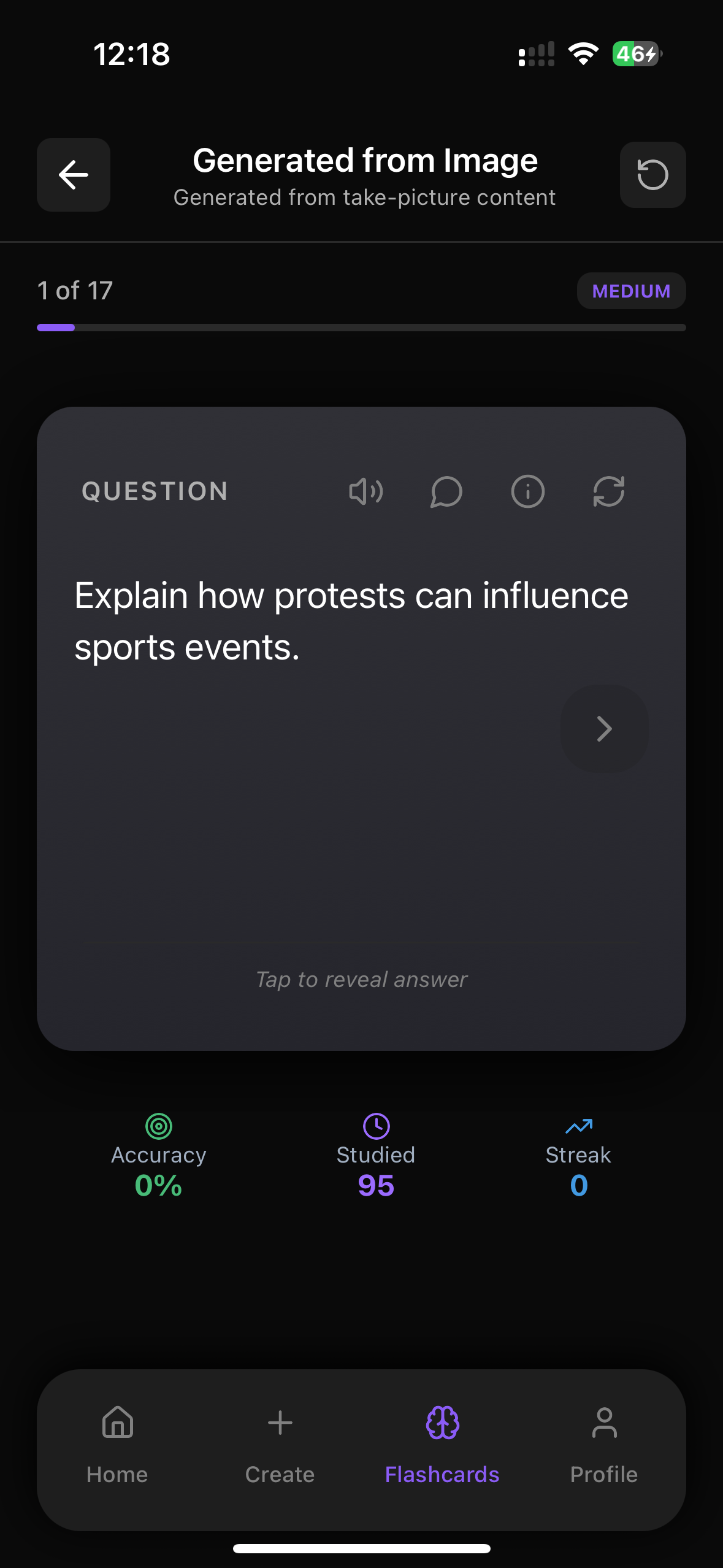
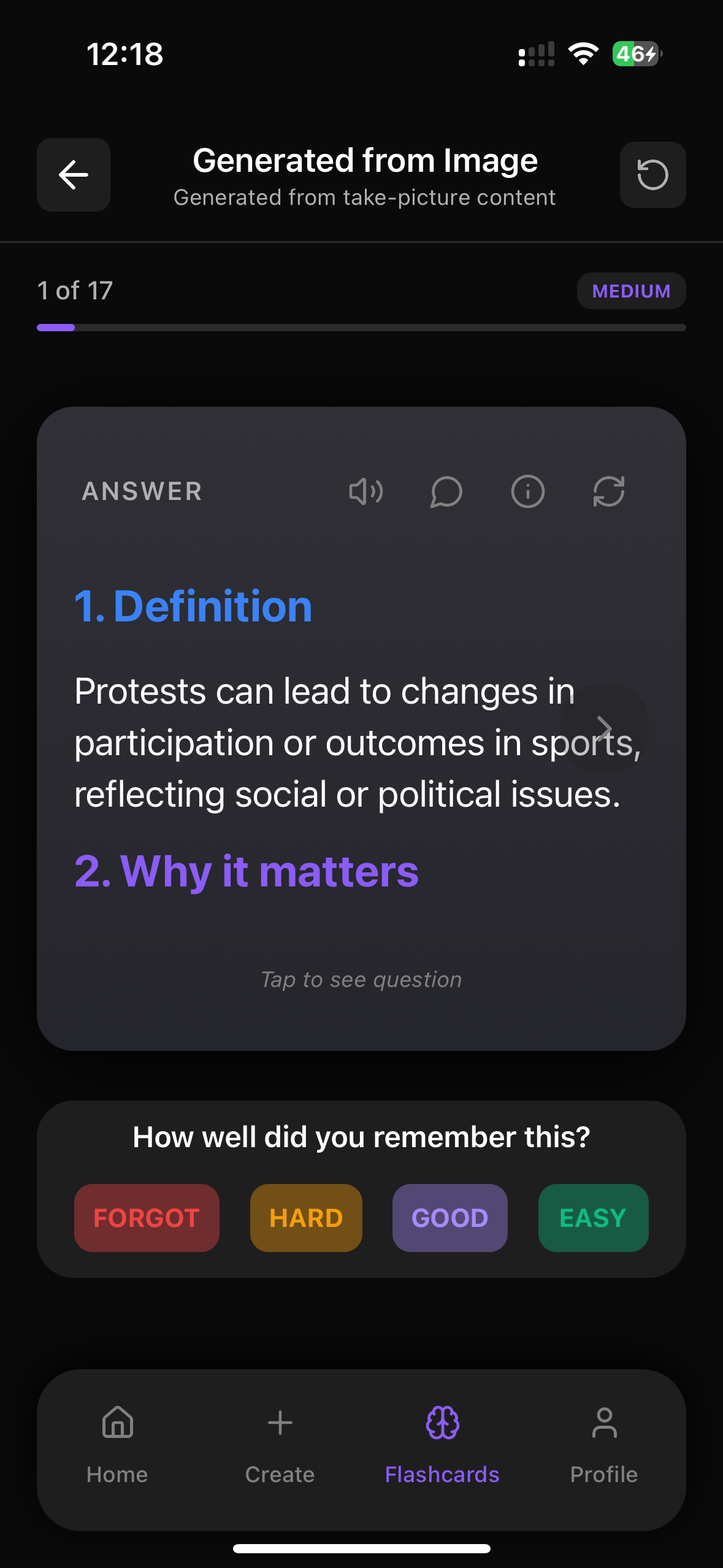
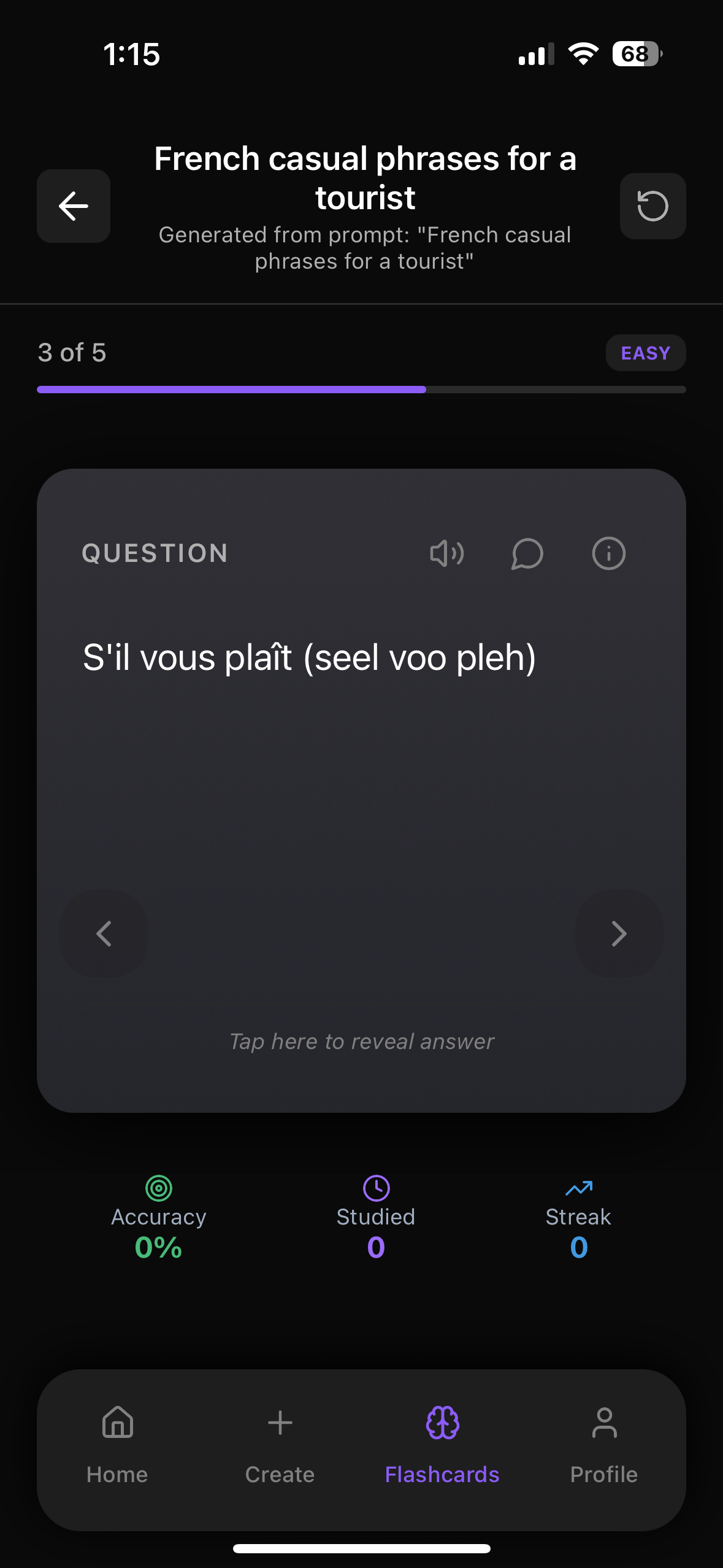
- You see the front of the card (question)
- You try to answer from memory
- Then you flip and rate how hard it was
Flashrecall’s spaced repetition engine then decides when to show that card again so it sticks long term.
So instead of rereading the CDL manual 5 times, you can:
- Turn the important parts into flashcards
- Let Flashrecall schedule your reviews
- Spend less time studying, but actually remember more
How To Build Powerful CDL Flashcards (Without Overcomplicating It)
1. Use One Question, One Idea Per Card
Bad card:
> Q: What is the minimum tread depth for front tires and what PSI should the low air warning activate?
That’s two ideas. Your brain will remember one and forget the other.
Better:
- Card 1:
- Card 2:
In Flashrecall, you can make these in seconds:
- Type or paste your questions and answers
- Or even paste text from your PDF CDL manual and let it help generate cards from it
2. Turn Your CDL Manual Into Cards (Fast)
Instead of manually rewriting everything, do this:
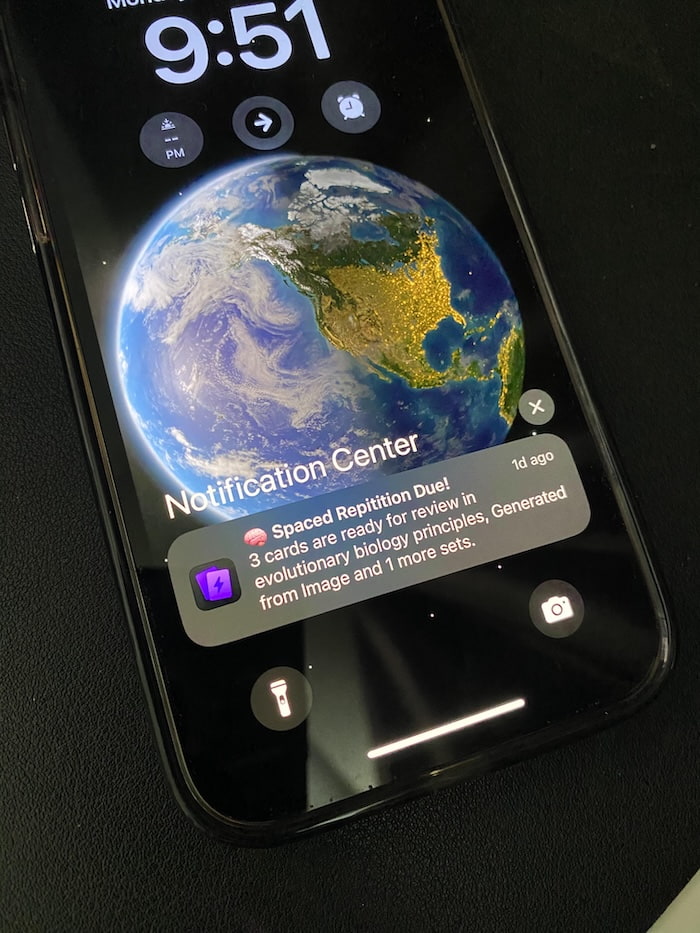
Flashrecall automatically keeps track and reminds you of the cards you don't remember well so you remember faster. Like this :
1. Open your CDL manual PDF
2. Highlight a key section (like air brakes or pre-trip)
3. In Flashrecall, import from text or PDF
4. Turn that into flashcards automatically, then quickly edit anything that needs tweaking
Flashrecall can:
- Create flashcards from PDFs, text, images, YouTube links, and typed prompts
- Let you refine or add extra details manually if you want more control
This is way faster than typing every single card from scratch.
3. Use Image Flashcards For Pre-Trip Inspection
Pre-trip is very visual. You’re literally pointing at parts of the truck.
You can:
- Take photos of real parts (brake chambers, slack adjusters, suspension, etc.)
- Or screenshot images from your training material
Then in Flashrecall:
- Create an image flashcard with the picture on the front
- Question: “What part is this and what are you checking for?”
- Answer: “Slack adjuster – no broken or missing parts, no more than 1 inch of free play, properly greased, etc.”
This helps you connect what you see in real life with what the examiner expects you to say.
4. Make “Scenario” Cards For Tricky Situations
Not everything on the CDL exam is pure memorization. Some are “what would you do if…” style.
Example flashcards:
- Q: You’re driving and the low air pressure warning comes on. What should you do?
- Q: What should you do if you start to feel a trailer jackknife?
These make you think like a real driver, not just a test taker.
Why Use Flashrecall Instead Of Random Flashcard Apps?
There are tons of generic flashcard apps, but Flashrecall is actually built around how people study:
- Instant Card Creation
- From text, images, audio, PDFs, YouTube links, or manual input
- Built-In Spaced Repetition
- Auto reminders so you review CDL info right before you’d forget it
- Active Recall By Design
- Every card forces you to think, not just tap through
- Study Reminders
- Get nudges to study so you don’t accidentally fall behind before test day
- Offline Mode
- Study in the truck, at the DMV, or on breaks with no signal
- Chat With Your Flashcards
- Stuck on a concept? You can literally chat with the flashcard set to get more explanations
- Fast, Modern, Easy To Use
- No clunky old-school UI, just clean and quick
And it’s free to start, so you can test it out with your first CDL deck:
👉 https://apps.apple.com/us/app/flashrecall-study-flashcards/id6746757085
Sample CDL Flashcards You Can Steal
Here are some examples you can plug into Flashrecall right away.
General Knowledge
- Q: What is the main cause of most serious heavy vehicle crashes?
- Q: When should you use your parking brake?
Air Brakes
- Q: What is the purpose of the air compressor governor?
- Q: What is a “spring brake”?
Combination Vehicles
- Q: What is “trailer swing”?
- Q: What is a “tractor protection valve”?
You can build a full deck like this in Flashrecall and let spaced repetition handle the rest.
How Often Should You Review Your CDL Flashcards?
Here’s a simple schedule that works well with Flashrecall’s reminders:
- Weeks before exam (2–4 weeks out):
- 20–30 minutes per day
- Focus on building your deck and getting through all cards at least once
- Closer to exam (5–7 days out):
- 30–45 minutes per day
- Let spaced repetition show you what you’re weak on
- Add new cards for anything you keep forgetting
- Last 1–2 days before exam:
- Light review only
- Don’t cram new stuff, just reinforce your existing cards
- Run through your trickiest decks (Air Brakes, Combination, HazMat if applicable)
Because Flashrecall works offline, you can squeeze in quick reviews:
- In the truck
- On lunch breaks
- Sitting at the DMV before your test
Putting It All Together: Your CDL Flashcard Game Plan
Here’s a simple step-by-step plan:
1. Download Flashrecall on your iPhone or iPad
👉 https://apps.apple.com/us/app/flashrecall-study-flashcards/id6746757085
2. Create decks for:
- General Knowledge
- Air Brakes
- Combination Vehicles
- Any endorsements you’re taking (HazMat, Tanker, Passenger, School Bus)
3. Import from your CDL manual (PDF or text) and turn key points into cards
4. Add image cards for pre-trip inspection parts
5. Study daily using Flashrecall’s spaced repetition and reminders
6. Use chat with flashcards if something doesn’t make sense and you need extra explanation
Do this consistently, and you won’t just “hope” you pass the CDL exam — you’ll walk in actually knowing the material.
If you’re serious about passing on the first try, flashcards plus spaced repetition is honestly one of the easiest wins you can give yourself. And Flashrecall makes it stupidly simple to set up and stick with.
Frequently Asked Questions
What's the fastest way to create flashcards?
Manually typing cards works but takes time. Many students now use AI generators that turn notes into flashcards instantly. Flashrecall does this automatically from text, images, or PDFs.
Is there a free flashcard app?
Yes. Flashrecall is free and lets you create flashcards from images, text, prompts, audio, PDFs, and YouTube videos.
How do I start spaced repetition?
You can manually schedule your reviews, but most people use apps that automate this. Flashrecall uses built-in spaced repetition so you review cards at the perfect time.
What is active recall and how does it work?
Active recall is the process of actively retrieving information from memory rather than passively reviewing it. Flashrecall forces proper active recall by making you think before revealing answers, then uses spaced repetition to optimize your review schedule.
How can I study more effectively for exams?
Effective exam prep combines active recall, spaced repetition, and regular practice. Flashrecall helps by automatically generating flashcards from your study materials and using spaced repetition to ensure you remember everything when exam day arrives.
Related Articles
- CISSP Flashcards: The Ultimate Study Hack To Pass On Your First Try (Most People Miss This) – Use smart flashcards and spaced repetition to turn terrifying CISSP content into daily bite-sized wins.
- Psychology Flashcards: The Ultimate Way To Remember Complex Theories Faster (Most Students Don’t Do This) – Turn boring psych notes into smart flashcards that actually stick in your brain.
- CFP Flashcards: The Essential Study Hack to Pass Your Exam Faster (Most Candidates Don’t Do This) – Turn your notes into smart CFP flashcards in seconds and finally feel confident on exam day.
Research References
The information in this article is based on peer-reviewed research and established studies in cognitive psychology and learning science.
Cepeda, N. J., Pashler, H., Vul, E., Wixted, J. T., & Rohrer, D. (2006). Distributed practice in verbal recall tasks: A review and quantitative synthesis. Psychological Bulletin, 132(3), 354-380
Meta-analysis showing spaced repetition significantly improves long-term retention compared to massed practice
Carpenter, S. K., Cepeda, N. J., Rohrer, D., Kang, S. H., & Pashler, H. (2012). Using spacing to enhance diverse forms of learning: Review of recent research and implications for instruction. Educational Psychology Review, 24(3), 369-378
Review showing spacing effects work across different types of learning materials and contexts
Kang, S. H. (2016). Spaced repetition promotes efficient and effective learning: Policy implications for instruction. Policy Insights from the Behavioral and Brain Sciences, 3(1), 12-19
Policy review advocating for spaced repetition in educational settings based on extensive research evidence
Karpicke, J. D., & Roediger, H. L. (2008). The critical importance of retrieval for learning. Science, 319(5865), 966-968
Research demonstrating that active recall (retrieval practice) is more effective than re-reading for long-term learning
Roediger, H. L., & Butler, A. C. (2011). The critical role of retrieval practice in long-term retention. Trends in Cognitive Sciences, 15(1), 20-27
Review of research showing retrieval practice (active recall) as one of the most effective learning strategies
Dunlosky, J., Rawson, K. A., Marsh, E. J., Nathan, M. J., & Willingham, D. T. (2013). Improving students' learning with effective learning techniques: Promising directions from cognitive and educational psychology. Psychological Science in the Public Interest, 14(1), 4-58
Comprehensive review ranking learning techniques, with practice testing and distributed practice rated as highly effective

FlashRecall Team
FlashRecall Development Team
The FlashRecall Team is a group of working professionals and developers who are passionate about making effective study methods more accessible to students. We believe that evidence-based learning tec...
Credentials & Qualifications
- •Software Development
- •Product Development
- •User Experience Design
Areas of Expertise
Ready to Transform Your Learning?
Start using FlashRecall today - the AI-powered flashcard app with spaced repetition and active recall.
Download on App Store