Chemistry Exam 1 Quizlet: 7 Powerful Study Tricks Most Students Don’t Use (But Should) – Stop guessing with random sets and start studying smarter with tools that actually match YOUR class.
chemistry exam 1 quizlet decks miss your professor’s actual questions. See why random sets fail and how Flashrecall turns your notes into smarter spaced-rep...
How Flashrecall app helps you remember faster. It's free
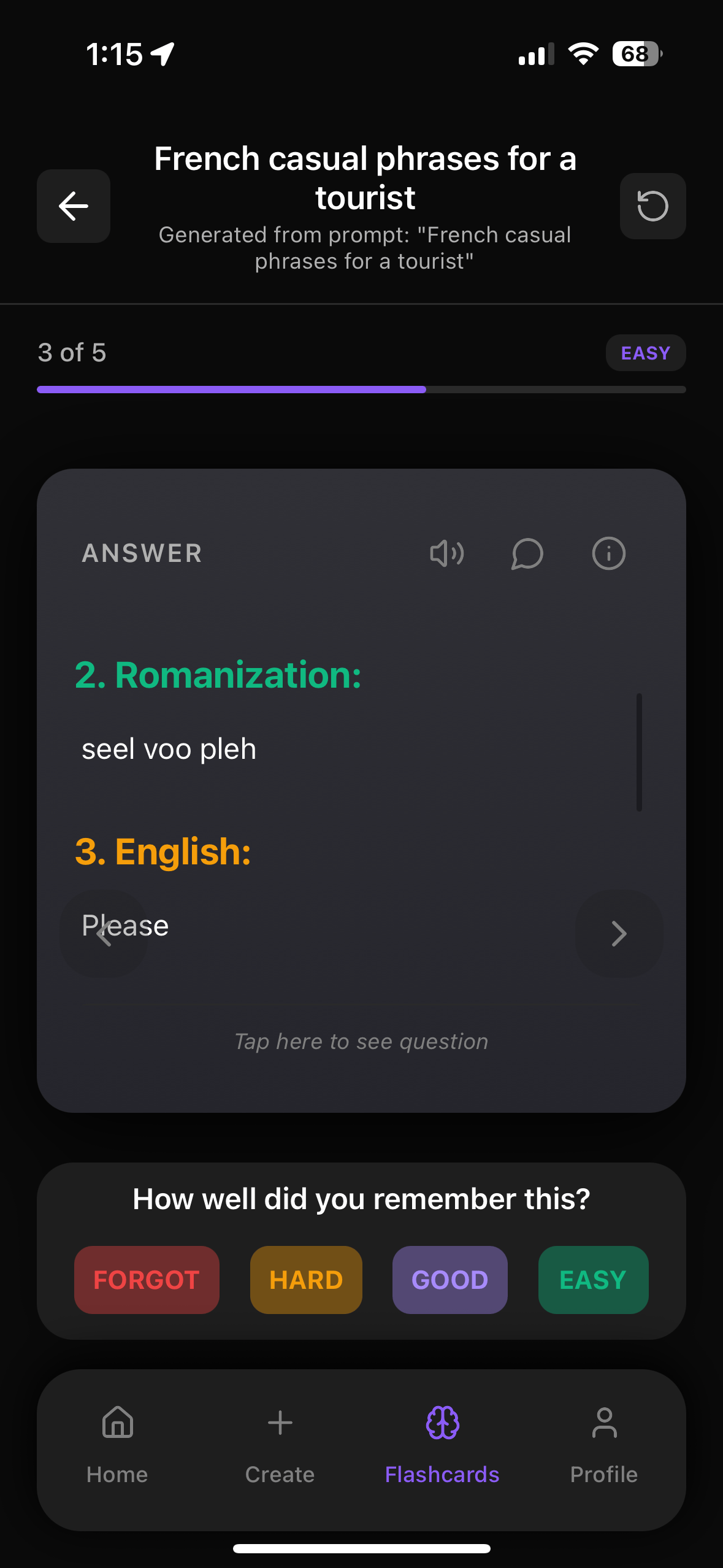
Stop Letting Random Quizlet Sets Decide Your Chemistry Grade
If you're cramming for Chemistry Exam 1 and typing “chemistry exam 1 Quizlet” into Google… yeah, you’re not alone.
But here’s the problem:
- Those Quizlet sets might not match your class
- Half the cards are wrong, outdated, or super vague
- Everyone in your class is memorizing the same half‑correct stuff
Instead of gambling your grade on random decks, you’re way better off using a tool that lets you build your own cards fast, based on your actual notes, slides, and textbook.
That’s exactly what Flashrecall is perfect for:
👉 https://apps.apple.com/us/app/flashrecall-study-flashcards/id6746757085
It’s a fast, modern flashcard app for iPhone and iPad that:
- Makes flashcards instantly from images, PDFs, text, YouTube links, audio, or typed prompts
- Has built‑in spaced repetition and active recall (no extra setup)
- Sends study reminders so you actually review before you forget
- Lets you chat with your flashcards if you’re confused about a concept
- Works offline, and is free to start
Let’s walk through how to prep for Chemistry Exam 1 without relying on random Quizlet decks—and how to do it smarter with Flashrecall.
Why “Chemistry Exam 1 Quizlet” Is Letting You Down
Quizlet isn’t bad, but for Chemistry Exam 1 specifically, it has some big issues:
1. Every Professor’s Exam 1 Is Different
Your Exam 1 might cover:
- Atomic structure, isotopes, and electron configs
- Periodic trends
- Stoichiometry and moles
- Significant figures and unit conversions
- Or even basic thermochemistry
But that random “Chemistry Exam 1” Quizlet set?
Maybe it’s for:
- A different textbook
- A different university
- A different chapter order
So you end up memorizing stuff that:
- Isn’t on your exam
- Or misses the hard questions your professor loves
2. You Don’t Know What’s Wrong
User-made sets = user-made mistakes.
You’ll see:
- Wrong definitions
- Mis-labeled diagrams
- Oversimplified answers that don’t work on real exam questions
Worst part: you think you “know it” because you got the flashcard right… but the card itself is wrong.
3. It Feels Like Studying, But It’s Passive
A lot of Quizlet use turns into:
- Mindless flipping
- Matching games
- Multiple-choice “guess and hope”
That’s not deep understanding, especially for chemistry where you need to:
- Work through problems
- Understand why formulas work
- Apply concepts to new situations
You need active recall + spaced repetition, not just random card flipping.
Why Flashrecall Works Better for Chemistry Exam 1
Instead of relying on random decks, you can build a custom Chemistry Exam 1 system in Flashrecall that matches your class exactly.
Here’s why it works better:
1. Turn Your Class Material Into Flashcards Instantly
You don’t have to type every card manually (unless you want to).
With Flashrecall, you can create cards from:
- Lecture slides – snap a photo or import as PDF
- Textbook pages – take a picture, highlight what matters
- Practice problems – screenshot them and turn them into Q&A cards
- YouTube videos your professor recommends – paste the link and pull key points
- Typed prompts – ask it to generate cards from your notes
Example for Exam 1:
- Take a photo of the periodic table from your notes
- Flashrecall can help you turn it into cards like:
- Q: What is the trend in atomic radius across a period?
- A: Decreases from left to right due to increasing effective nuclear charge.
You’re not just relying on what some random person thought was important—you’re using your professor’s material.
2. Built-In Active Recall (The Thing That Actually Boosts Grades)
Active recall = testing yourself instead of just rereading.
Flashrecall is built around that:
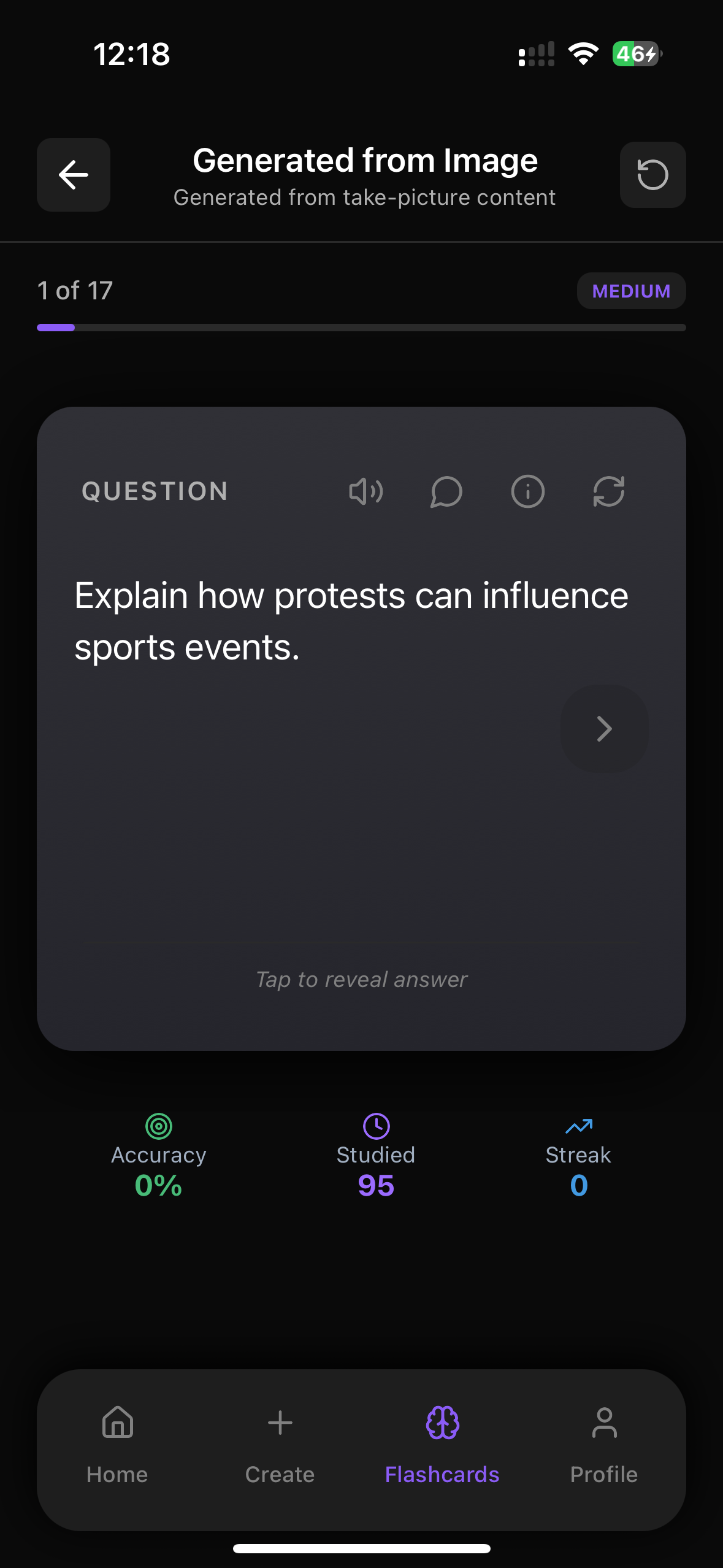
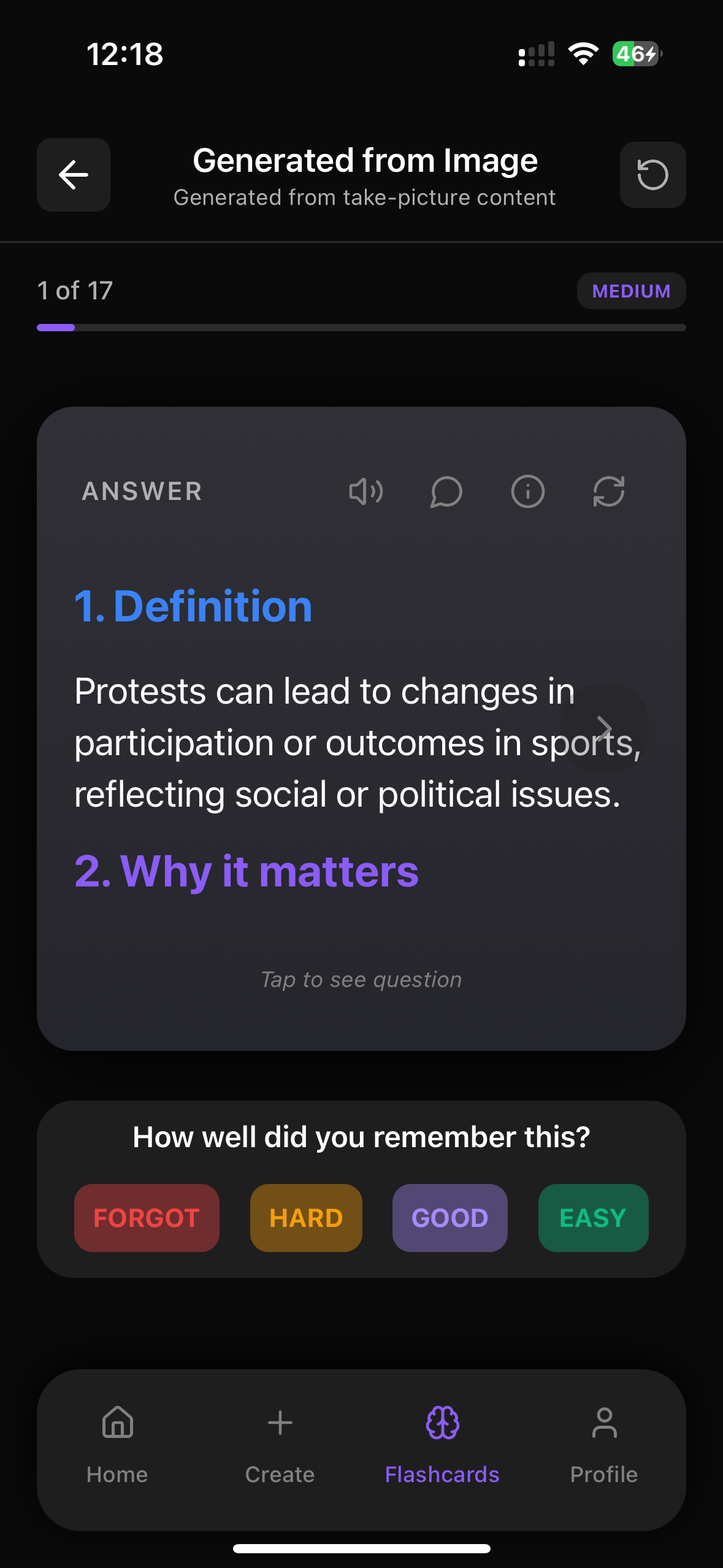
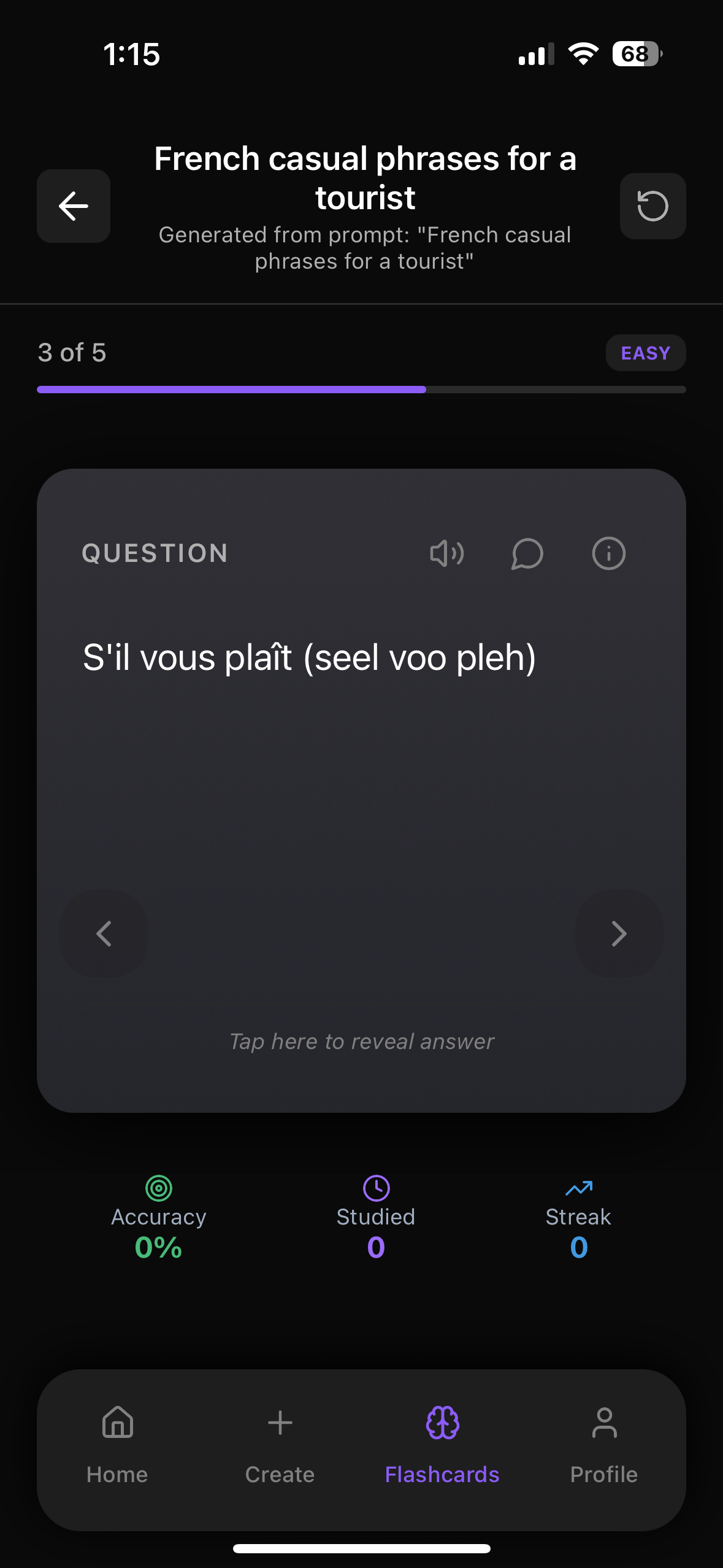
- You see the question
- You try to answer from memory
- Then you reveal the answer and rate how hard it was
For chemistry, that could be:
- Q: Convert 25.0 g of NaCl to moles.
- Q: Define “limiting reactant” and give an example.
- Q: What’s the difference between an isotope and an ion?
You’re constantly pulling info from your brain, not just staring at it.
3. Automatic Spaced Repetition (So You Don’t Forget Everything in a Week)
Flashrecall has spaced repetition built in with auto reminders.
That means:
- Cards you know well show up less often
- Cards you struggle with show up more
- You get notified to review before stuff starts fading
Flashrecall automatically keeps track and reminds you of the cards you don't remember well so you remember faster. Like this :
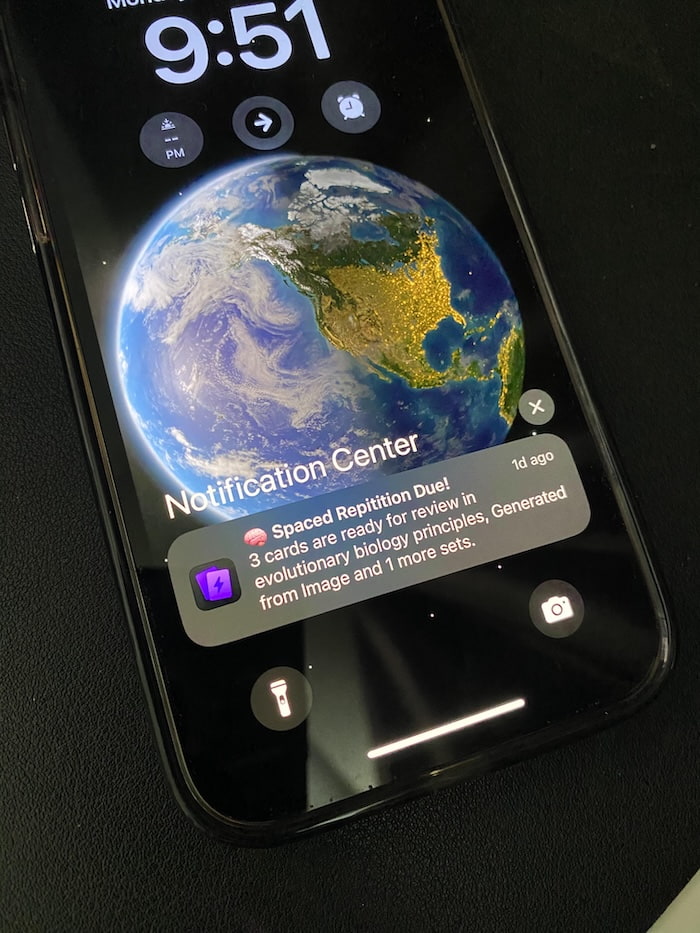
You don’t have to remember when to study—Flashrecall handles that.
This is perfect for chemistry because:
- You learn atomic structure one week
- Stoichiometry the next
- Gases after that
If you’re not reviewing the early stuff, Exam 1 hits and you’re like “wait… what even is a mole again?”
Flashrecall prevents that.
4. You Can Chat With Your Flashcards When You’re Stuck
This is one of the coolest parts.
If you don’t understand a card, you can chat with it inside Flashrecall:
- Ask it to explain the concept in simpler words
- Get step-by-step help on a problem
- Ask for another example
Example:
You have a card:
> Q: What is the mole concept?
You’re still confused. You can chat and say:
> “Explain this to me like I’m 14 with a real-world example.”
You get clarity without going down a 40‑minute Google rabbit hole.
How to Use Flashrecall Step-by-Step for Chemistry Exam 1
Here’s a simple, practical way to prep.
Step 1: Gather Your Exam 1 Material
Grab:
- Lecture slides
- Homework sets
- Practice exams or review sheets
- Textbook chapters for Exam 1
Import them into Flashrecall:
- PDFs → directly
- Photos/screenshots → instant card creation
- Typed notes → paste and turn into cards
Step 2: Create Smart Flashcards (Not Just Definitions)
Good chemistry flashcards are more than “term → definition”.
Mix in:
- Concept cards
- Q: Why do atoms form ions?
- A: To achieve a more stable electron configuration (often a noble gas config).
- Problem cards
- Q: A sample contains 3.01 × 10²³ molecules of CO₂. How many moles is this?
- A: 0.5 mol (because 6.02 × 10²³ molecules = 1 mol).
- Process cards
- Q: Steps to convert grams → moles → particles?
- A: Grams ÷ molar mass = moles → moles × Avogadro’s number = particles.
- Common mistake cards
- Q: What’s a common mistake when balancing equations?
- A: Changing subscripts instead of coefficients.
You can make these manually or let Flashrecall help generate them from your notes or textbook pages.
Step 3: Start Early, Study Short
You don’t need 4‑hour marathons.
Use Flashrecall in:
- 10–20 minute sessions
- 1–2 times a day
Because of spaced repetition:
- The app will focus on what you’re weakest at
- You’ll see important cards multiple times before Exam 1
And with study reminders, you won’t forget to review. You’ll get a nudge like “hey, time to review your Chemistry Exam 1 deck”.
Step 4: Combine Flashcards With Practice Problems
Flashcards are amazing for:
- Concepts
- Formulas
- Definitions
- Common patterns
But chemistry exams also test:
- Multi-step problems
- Applying formulas in new ways
So do this:
- Work through practice problems on paper
- Any step you mess up? Turn it into a Flashrecall card.
Example:
You mess up a limiting reactant problem.
Create cards like:
- Q: How do you identify the limiting reactant?
- Q: In this specific reaction (include numbers), which reactant is limiting and why?
You’re literally turning your mistakes into future points on the exam.
Flashrecall vs Quizlet for Chemistry Exam 1
Since you searched “chemistry exam 1 Quizlet,” here’s the honest comparison:
Quizlet Pros
- Tons of pre-made sets
- Easy to start quickly
- Good if you’re super lazy and don’t care if it’s 100% accurate
Quizlet Cons
- Random sets, random quality
- No guarantee it matches your class
- A lot of passive studying
- You have to manually find good decks
Flashrecall Pros
- Built from your notes, slides, textbook, and practice problems
- Instant card creation from images, PDFs, text, YouTube, audio
- Built-in spaced repetition + active recall
- Study reminders so you don’t ghost your exam prep
- Chat with your flashcards when you’re stuck
- Works offline, free to start, fast and modern UI
- Great for any subject: chemistry, physics, languages, medicine, business, etc.
Flashrecall Cons
- You actually build your own deck (which is good for learning, but yeah, it’s not just click-and-hope)
If you actually care about understanding chemistry instead of just memorizing random Quizlet cards, Flashrecall is the better move.
Example: What a Good Chemistry Exam 1 Deck Looks Like
Here’s a sample structure you could use in Flashrecall:
1. Basics & Units
- SI units
- Significant figures
- Dimensional analysis
2. Atoms & Elements
- Protons, neutrons, electrons
- Isotopes vs ions
- Atomic number vs mass number
3. Periodic Table
- Groups vs periods
- Metals, nonmetals, metalloids
- Periodic trends (radius, ionization energy, electronegativity)
4. Chemical Bonds & Compounds
- Ionic vs covalent
- Naming ionic compounds
- Polyatomic ions
5. Moles & Stoichiometry
- Molar mass
- Mole conversions (grams ↔ moles ↔ particles)
- Balanced equations
- Limiting reactants & percent yield
You can build each section as a tag or deck in Flashrecall and let spaced repetition keep everything fresh.
Final Thoughts: Don’t Let Random Quizlet Decks Decide Your Grade
Using “Chemistry Exam 1 Quizlet” sets is like borrowing notes from a stranger in a different class and hoping for the best.
You’ll do way better if you:
1. Build your own cards from your course
2. Use active recall and spaced repetition
3. Turn your mistakes into flashcards
4. Study a little bit consistently, instead of panicking the night before
Flashrecall makes all of that way easier:
- Instant card creation
- Smart review scheduling
- Study reminders
- Chat-based explanations when you’re stuck
If you’re serious about not bombing Chemistry Exam 1, start building your own deck now:
👉 https://apps.apple.com/us/app/flashrecall-study-flashcards/id6746757085
Your future self on exam day will be very, very grateful.
Frequently Asked Questions
Is Quizlet good for studying?
Quizlet helps with basic reviewing, but its active recall tools are limited. If you want proper spacing and strong recall practice, tools like Flashrecall automate the memory science for you so you don't forget your notes.
What's the fastest way to create flashcards?
Manually typing cards works but takes time. Many students now use AI generators that turn notes into flashcards instantly. Flashrecall does this automatically from text, images, or PDFs.
How do I start spaced repetition?
You can manually schedule your reviews, but most people use apps that automate this. Flashrecall uses built-in spaced repetition so you review cards at the perfect time.
What is active recall and how does it work?
Active recall is the process of actively retrieving information from memory rather than passively reviewing it. Flashrecall forces proper active recall by making you think before revealing answers, then uses spaced repetition to optimize your review schedule.
How can I study more effectively for exams?
Effective exam prep combines active recall, spaced repetition, and regular practice. Flashrecall helps by automatically generating flashcards from your study materials and using spaced repetition to ensure you remember everything when exam day arrives.
Related Articles
- Basic Chemistry Quizlet Alternatives: 7 Powerful Ways To Actually Remember What You Study – Stop Memorizing And Start Understanding Chemistry Faster
- Accounting Exam 1 Quizlet: 7 Powerful Study Hacks Most Students Never Use To Crush Their First Test – Stop Just Scrolling Through Sets And Start Actually Remembering The Material
- NACE Exam Quizlet Alternatives: 7 Powerful Study Hacks Most Students Don’t Know – Stop Wasting Time and Start Studying Smarter Today
Research References
The information in this article is based on peer-reviewed research and established studies in cognitive psychology and learning science.
Cepeda, N. J., Pashler, H., Vul, E., Wixted, J. T., & Rohrer, D. (2006). Distributed practice in verbal recall tasks: A review and quantitative synthesis. Psychological Bulletin, 132(3), 354-380
Meta-analysis showing spaced repetition significantly improves long-term retention compared to massed practice
Carpenter, S. K., Cepeda, N. J., Rohrer, D., Kang, S. H., & Pashler, H. (2012). Using spacing to enhance diverse forms of learning: Review of recent research and implications for instruction. Educational Psychology Review, 24(3), 369-378
Review showing spacing effects work across different types of learning materials and contexts
Kang, S. H. (2016). Spaced repetition promotes efficient and effective learning: Policy implications for instruction. Policy Insights from the Behavioral and Brain Sciences, 3(1), 12-19
Policy review advocating for spaced repetition in educational settings based on extensive research evidence
Karpicke, J. D., & Roediger, H. L. (2008). The critical importance of retrieval for learning. Science, 319(5865), 966-968
Research demonstrating that active recall (retrieval practice) is more effective than re-reading for long-term learning
Roediger, H. L., & Butler, A. C. (2011). The critical role of retrieval practice in long-term retention. Trends in Cognitive Sciences, 15(1), 20-27
Review of research showing retrieval practice (active recall) as one of the most effective learning strategies
Dunlosky, J., Rawson, K. A., Marsh, E. J., Nathan, M. J., & Willingham, D. T. (2013). Improving students' learning with effective learning techniques: Promising directions from cognitive and educational psychology. Psychological Science in the Public Interest, 14(1), 4-58
Comprehensive review ranking learning techniques, with practice testing and distributed practice rated as highly effective

FlashRecall Team
FlashRecall Development Team
The FlashRecall Team is a group of working professionals and developers who are passionate about making effective study methods more accessible to students. We believe that evidence-based learning tec...
Credentials & Qualifications
- •Software Development
- •Product Development
- •User Experience Design
Areas of Expertise
Ready to Transform Your Learning?
Start using FlashRecall today - the AI-powered flashcard app with spaced repetition and active recall.
Download on App Store