CNA Abbreviation Quizlet: 7 Powerful Tips To Actually Remember Every Term Fast – Stop scrolling flashcards endlessly and use a smarter system that makes CNA abbreviations actually stick.
cna abbreviation quizlet decks feel random? See why they don’t stick, how to build your own focused CNA cards, and use spaced repetition in Flashrecall.
How Flashrecall app helps you remember faster. It's free
What “CNA Abbreviation Quizlet” Really Means (And What You Actually Need)
So, you’re looking up cna abbreviation quizlet because you want a quick way to learn all those CNA terms, right? CNA abbreviations are those short forms like “BID,” “PRN,” “NPO,” “ADL” that show up on charts, orders, and exams, and you’re expected to know exactly what they mean. They matter because if you mix them up in real life, it’s not just a wrong test answer—it can affect patient care. Instead of just scrolling through random Quizlet sets, it’s way more effective to build your own focused deck and review it with spaced repetition in an app like Flashrecall (https://apps.apple.com/us/app/flashrecall-study-flashcards/id6746757085), so the abbreviations actually stay in your brain long-term.
Why CNA Abbreviations Feel So Hard To Memorize
Alright, let’s talk about why these things are annoying:
- A lot of them look similar (BP, BPD, BPH… fun).
- Some are Latin-based (BID, TID, QID, PRN).
- You’re learning them on top of procedures, ethics, infection control, and skills.
- Quizlet decks are hit-or-miss and often mixed with stuff you don’t need.
You don’t just need “more cards.”
You need:
1. The right abbreviations for your class/exam
2. Active recall (forcing your brain to pull the answer out)
3. Spaced repetition (seeing cards again right before you forget them)
That’s literally what Flashrecall is built around.
Why Quizlet Alone Isn’t Enough For CNA Abbreviations
Quizlet is fine for finding pre-made decks, but:
- Deck quality is all over the place
- You often get too many cards and feel overwhelmed
- There’s no strong focus on how you review, just that you review
For CNA, you want tight, exam-specific decks and a system that:
- Prioritizes the abbreviations you keep forgetting
- Shows easy ones less often
- Reminds you to study without you having to remember
That’s where Flashrecall (https://apps.apple.com/us/app/flashrecall-study-flashcards/id6746757085) is just way nicer to use day-to-day.
How Flashrecall Makes CNA Abbreviations Way Easier
Here’s how you can turn “ugh, abbreviations” into “ok, I got this” using Flashrecall.
1. Build A CNA Abbreviation Deck In Minutes
You can create your own “CNA Abbreviation” deck instead of relying on random Quizlet sets.
In Flashrecall, you can:
- Make cards manually:
- Front: “NPO”
- Back: “Nothing by mouth (no oral intake)”
- Or let the app help you:
- Paste a list of abbreviations and meanings
- Snap a photo of your CNA textbook page or PDF
- Use a YouTube lecture link and pull key terms
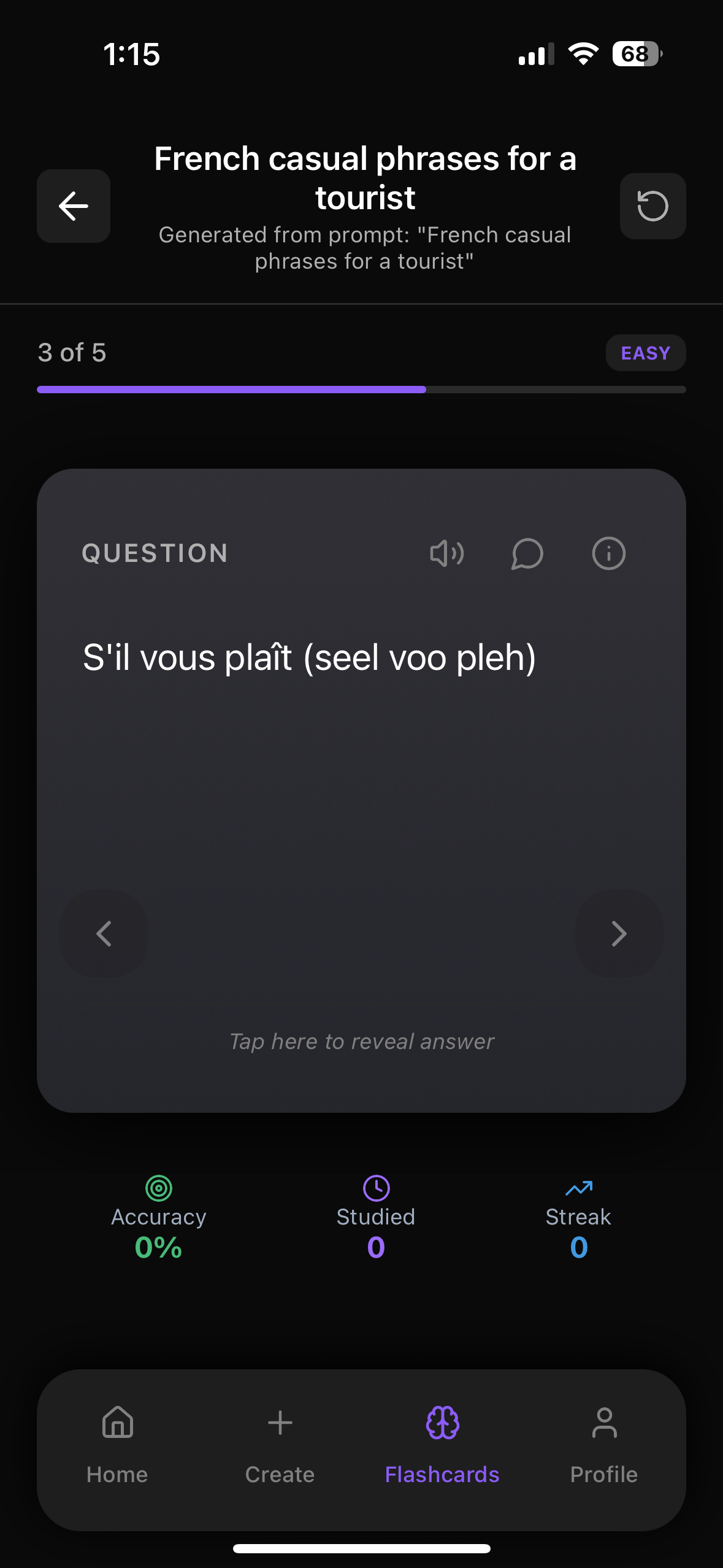
- Type a prompt like “Create flashcards for common CNA abbreviations” and clean them up
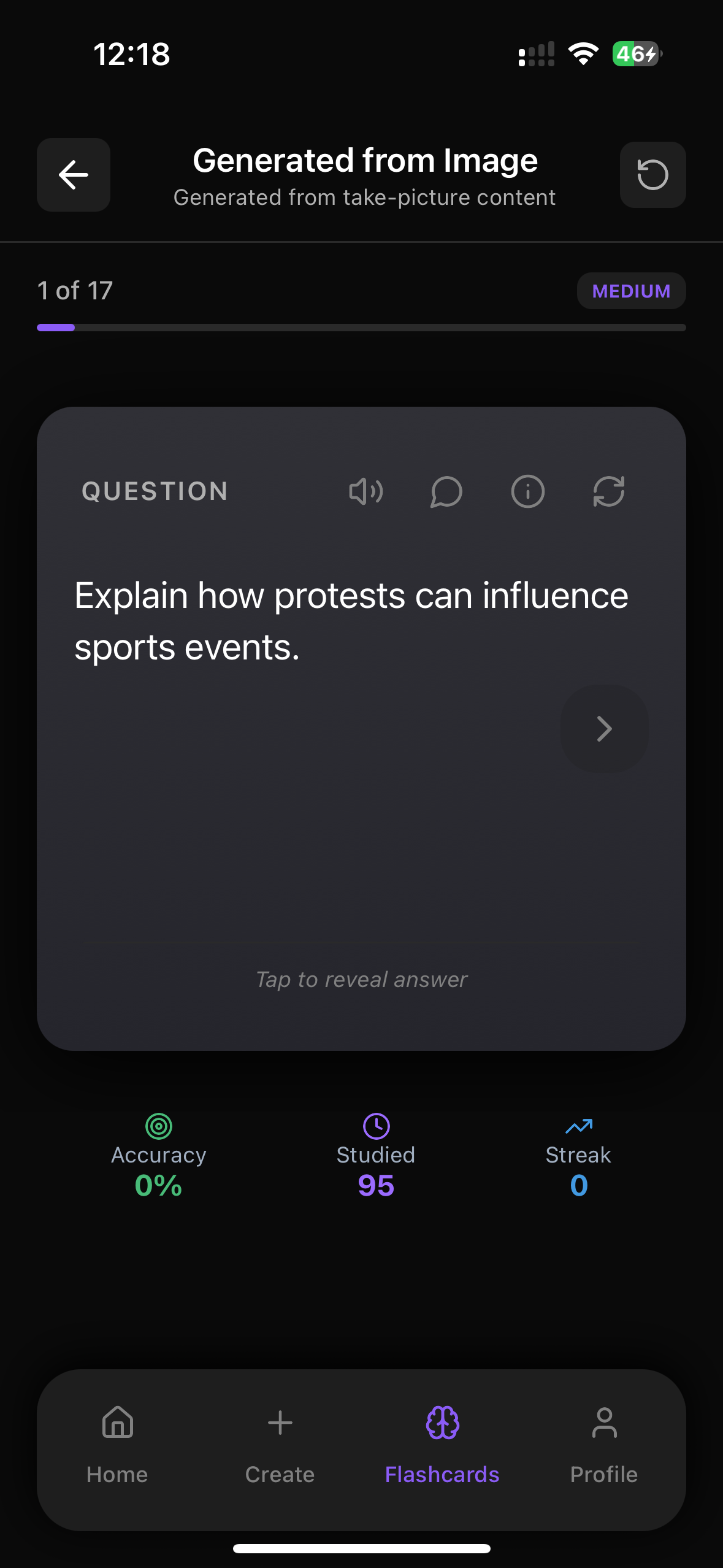
Flashrecall can turn images, text, PDFs, YouTube links, and typed prompts into flashcards super fast. So instead of hunting for a “good cna abbreviation quizlet deck,” you just build a perfect deck for your class in one place.
2. Use Active Recall Instead Of Just Staring At Cards
The key to remembering abbreviations is active recall:
- Don’t just flip the card and read it.
- Look at “BID” and try to say “twice a day” before flipping.
- Rate: Did I know it? Kind of know it? Completely blank?
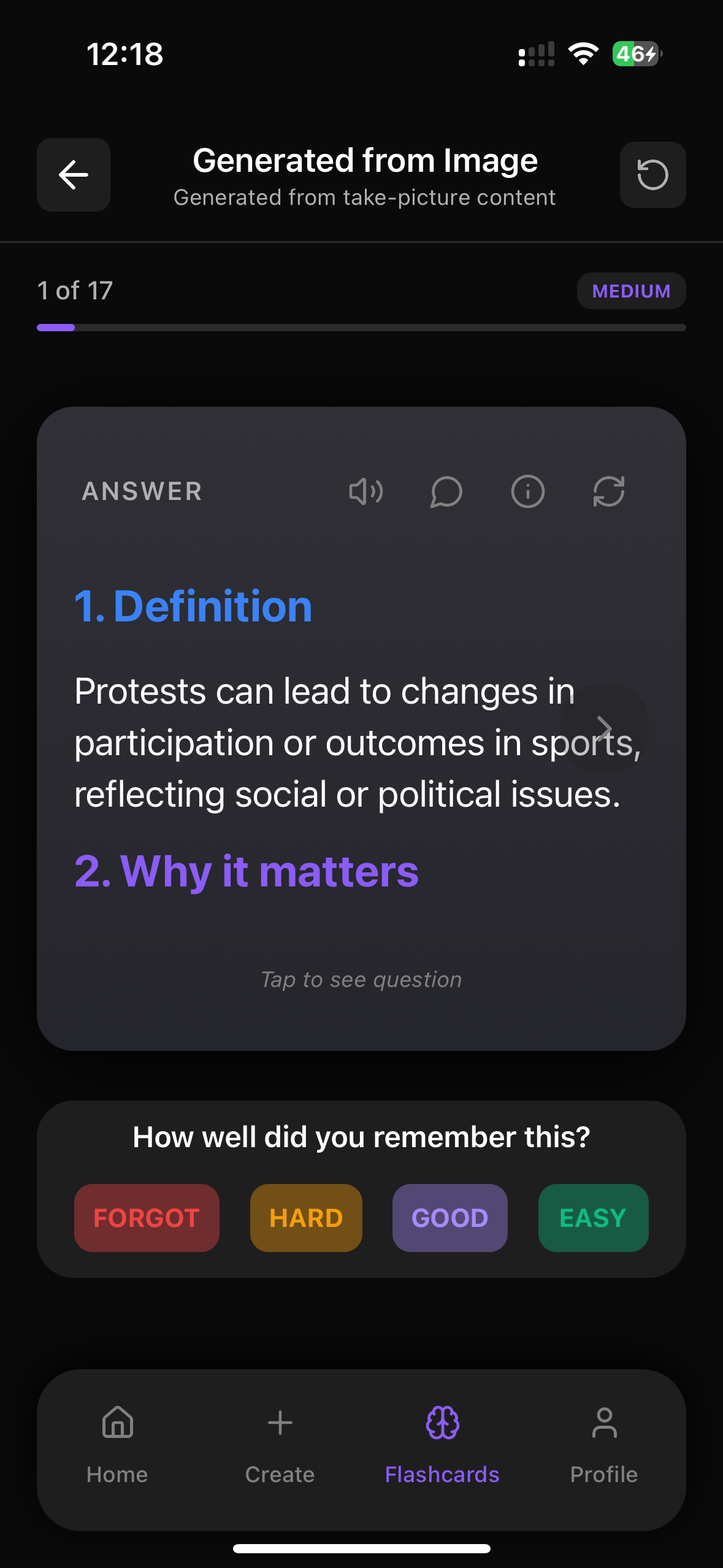
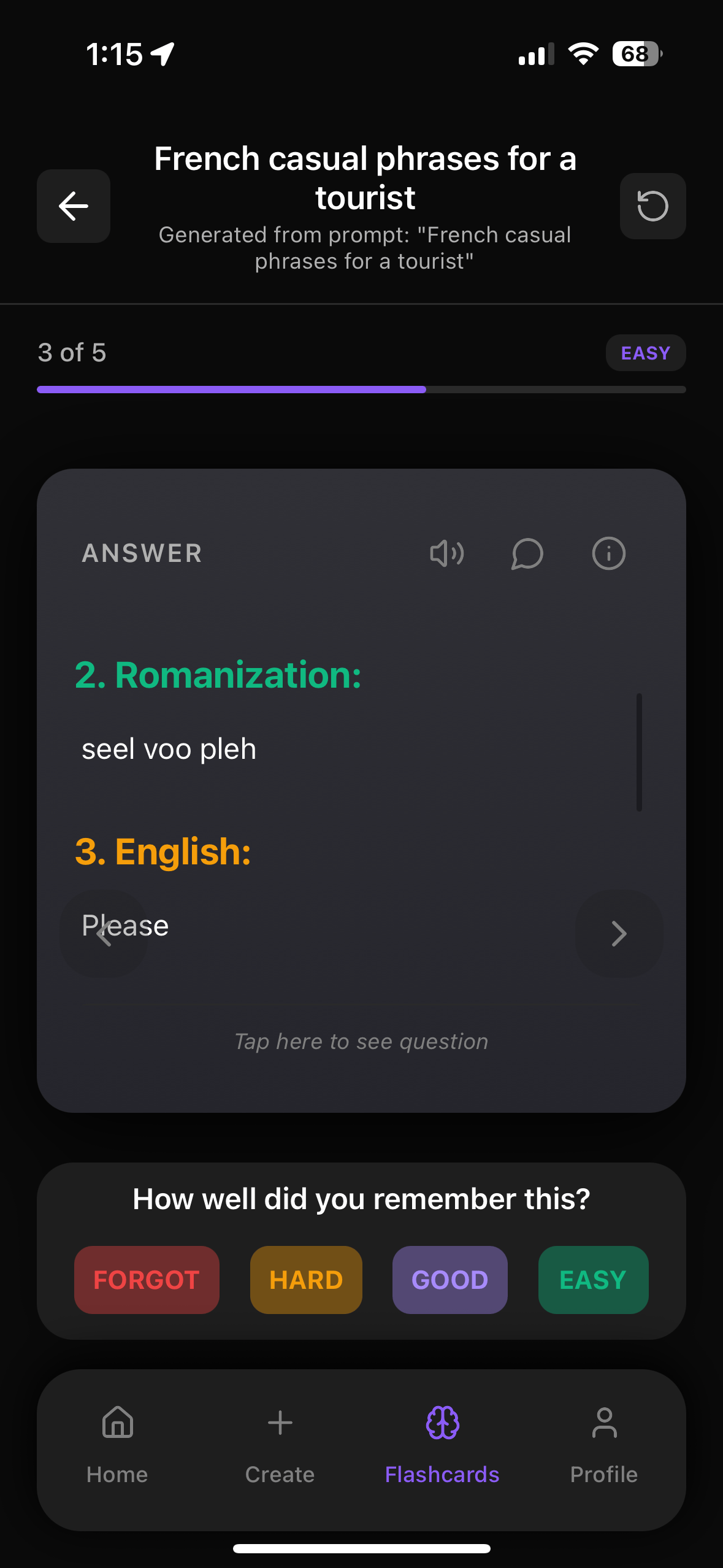
Flashrecall is built around this. Every review session is basically your brain doing reps:
- Front: “ADL”
- You think: “Activities of Daily Living”
- Flip and check
- Mark how hard it was
That simple process builds crazy-strong memory compared to passively scrolling Quizlet sets.
3. Let Spaced Repetition Handle The Timing For You
You know how you cram a list of abbreviations and then forget everything a week later? That’s because you’re not spacing reviews.
Flashrecall has built‑in spaced repetition with auto reminders, so you:
- See hard abbreviations more often
- See easy ones less often
- Get reminded to review right before you’d normally forget
You don’t have to think, “When should I review ADL again?”
The app just schedules it.
So instead of binge-studying a giant cna abbreviation quizlet deck the night before your exam, you’re reviewing small chunks over time, which feels lighter and actually works.
4. Turn Your CNA Materials Into Cards Instantly
You probably already have:
- Lecture slides
- Textbook pages
- Printed handouts
- PDF study guides
- Screenshots from your instructor’s PowerPoints
Flashrecall lets you:
- Take a photo of a page with abbreviations
- Import a PDF from your CNA course
- Use a YouTube link from a CNA lecture
- Paste text from your study guide
And it can help you auto-generate flashcards from that content.
So instead of copying a giant Quizlet deck that may not match your class, you build cards straight from your actual course materials, which is way more accurate for your exam.
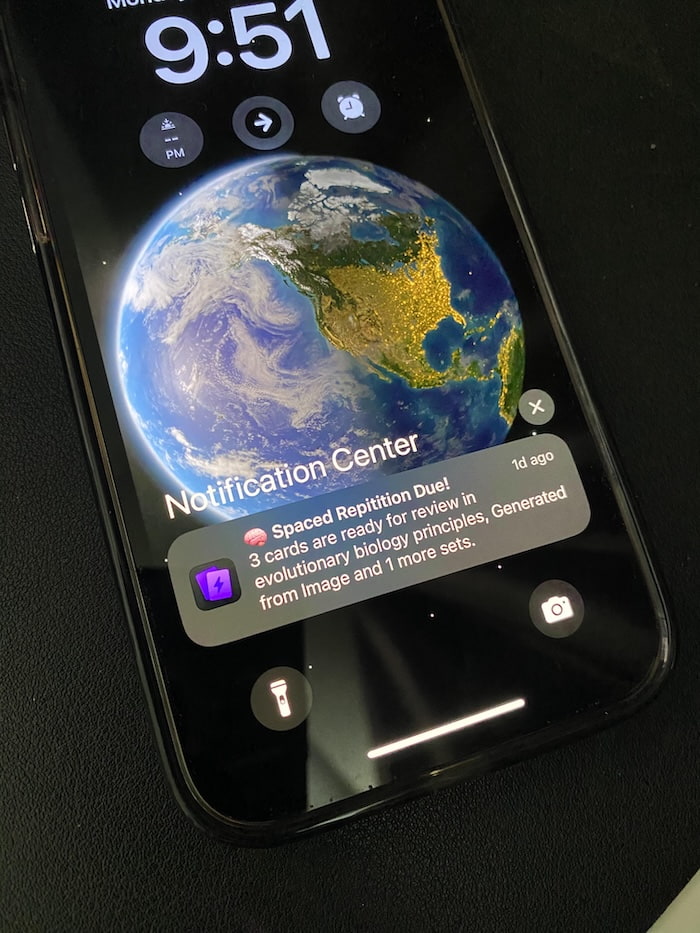
Flashrecall automatically keeps track and reminds you of the cards you don't remember well so you remember faster. Like this :
Download it here:
https://apps.apple.com/us/app/flashrecall-study-flashcards/id6746757085
5. Example CNA Abbreviation Deck You Can Copy
Here’s a simple structure you can recreate in Flashrecall:
- BP – Blood pressure
- HR – Heart rate
- RR – Respiratory rate
- T – Temperature
- O2 Sat – Oxygen saturation
- BID – Twice a day
- TID – Three times a day
- QID – Four times a day
- PRN – As needed
- AC – Before meals
- PC – After meals
- ADL – Activities of Daily Living
- ROM – Range of Motion
- BRP – Bathroom Privileges
- amb – Ambulate / walk
- NPO – Nothing by mouth
- Dx – Diagnosis
- Tx – Treatment
- Hx – History
- c̅ – With
- s̅ – Without
Make each of these a flashcard in Flashrecall, then let spaced repetition handle the rest.
Flashrecall vs. Quizlet For CNA Abbreviations
Since the keyword is literally “cna abbreviation quizlet,” let’s be real for a second:
- Tons of public decks
- Easy to search
- Familiar to most students
- You’re in control of quality
Instead of guessing if a random deck is correct or up to date, you build from your own notes, PDFs, and textbook.
- Smarter review with spaced repetition built-in
Flashrecall automatically spaces your reviews and sends study reminders so you don’t forget to open the app.
- You can chat with your flashcards
If you’re unsure about something like “What exactly are examples of ADLs?” you can chat with the card and get more explanation right there.
- Works offline
You can review abbreviations on the bus, in the break room, wherever—no Wi‑Fi needed.
- Fast, modern, and easy to use
It’s designed to feel clean and simple, not clunky.
- Free to start, works on iPhone and iPad
So you can study on your phone in bed and on your iPad at your desk.
Here’s the link again if you want to try it:
https://apps.apple.com/us/app/flashrecall-study-flashcards/id6746757085
7 Practical Tips To Actually Remember CNA Abbreviations
Use these along with Flashrecall and you’ll feel way more confident.
1. Break Them Into Small Groups
Don’t try to learn 100 abbreviations at once.
- Do 10–20 per day
- Group by theme: vitals, meds, mobility, documentation, etc.
- Make one deck or multiple smaller decks in Flashrecall
2. Mix Abbreviations With Real-Life Examples
Instead of just:
> Front: NPO
> Back: Nothing by mouth
Add a note or second card:
> “Patient is NPO before surgery — no food, no water.”
Flashrecall lets you add extra notes or even create a second card with a scenario.
3. Say Them Out Loud
When you review:
- Read the abbreviation out loud
- Say the full meaning out loud
- Then flip and check
It feels silly but it helps lock it in. Great if you’re studying in your room or in the car (parked, obviously).
4. Review A Little Every Day
CNA abbreviations are perfect for short, daily sessions:
- 5–15 minutes a day in Flashrecall
- Let the spaced repetition handle which cards to show
- Use the study reminders so you don’t skip days
Tiny consistent reviews beat one huge cram session.
5. Mix Old And New Cards
When you add new abbreviations, don’t ignore your old ones.
Flashrecall automatically mixes:
- New cards you just added
- Older cards that are “due” for review
So you’re always strengthening your base while adding more.
6. Test Yourself Without Looking First
When you’re at clinicals or reading notes:
- See “NPO” in a chart
- Pause and think: “Nothing by mouth”
- Then confirm with your instructor or book
That’s active recall in real life. The more you practice in Flashrecall, the easier this becomes.
7. Use Flashrecall For More Than Just Abbreviations
Once you’ve got your CNA abbreviation deck going, you can also:
- Make decks for infection control, body mechanics, ethics, skills steps, etc.
- Turn your skills checklist into flashcards
- Use it for med terminology, future nursing school, or any other subject
It’s not just a “CNA abbreviation app”; it’s something you can keep using for school, exams, languages, medicine, business—anything you want to remember.
How To Get Started Right Now
If you came here searching for cna abbreviation quizlet, what you really need is a simple, reliable way to memorize the abbreviations that actually show up in your class and on your exam.
Here’s a quick plan:
1. Download Flashrecall on your iPhone or iPad:
https://apps.apple.com/us/app/flashrecall-study-flashcards/id6746757085
2. Create a deck called “CNA Abbreviations”
3. Add 15–20 abbreviations from your syllabus or textbook
4. Review for 10 minutes using active recall
5. Come back tomorrow when Flashrecall reminds you, and keep adding a few more
Do that for a week, and you’ll be surprised how many abbreviations you can rattle off without even thinking.
Frequently Asked Questions
Is Quizlet good for studying?
Quizlet helps with basic reviewing, but its active recall tools are limited. If you want proper spacing and strong recall practice, tools like Flashrecall automate the memory science for you so you don't forget your notes.
What's the fastest way to create flashcards?
Manually typing cards works but takes time. Many students now use AI generators that turn notes into flashcards instantly. Flashrecall does this automatically from text, images, or PDFs.
How do I start spaced repetition?
You can manually schedule your reviews, but most people use apps that automate this. Flashrecall uses built-in spaced repetition so you review cards at the perfect time.
How can I study more effectively for this test?
Effective exam prep combines active recall, spaced repetition, and regular practice. Flashrecall helps by automatically generating flashcards from your study materials and using spaced repetition to ensure you remember everything when exam day arrives.
Related Articles
- Quizlet Multiplication Tables: 7 Powerful Tricks To Help Kids Remember Faster (And Actually Enjoy It) – Stop the endless drilling and discover smarter ways to master times tables that actually stick.
- CPT Quizlet: Why Most Students Get Stuck (And The Better Way To Pass Faster) – Discover a smarter CPT study system that actually helps you remember on exam day.
- SAT Words Quizlet: 7 Powerful Hacks Most Students Miss (And a Smarter Alternative) – Stop memorizing random word lists and learn SAT vocab in a way that actually sticks (and doesn’t bore you to death).
Research References
The information in this article is based on peer-reviewed research and established studies in cognitive psychology and learning science.
Cepeda, N. J., Pashler, H., Vul, E., Wixted, J. T., & Rohrer, D. (2006). Distributed practice in verbal recall tasks: A review and quantitative synthesis. Psychological Bulletin, 132(3), 354-380
Meta-analysis showing spaced repetition significantly improves long-term retention compared to massed practice
Carpenter, S. K., Cepeda, N. J., Rohrer, D., Kang, S. H., & Pashler, H. (2012). Using spacing to enhance diverse forms of learning: Review of recent research and implications for instruction. Educational Psychology Review, 24(3), 369-378
Review showing spacing effects work across different types of learning materials and contexts
Kang, S. H. (2016). Spaced repetition promotes efficient and effective learning: Policy implications for instruction. Policy Insights from the Behavioral and Brain Sciences, 3(1), 12-19
Policy review advocating for spaced repetition in educational settings based on extensive research evidence
Karpicke, J. D., & Roediger, H. L. (2008). The critical importance of retrieval for learning. Science, 319(5865), 966-968
Research demonstrating that active recall (retrieval practice) is more effective than re-reading for long-term learning
Roediger, H. L., & Butler, A. C. (2011). The critical role of retrieval practice in long-term retention. Trends in Cognitive Sciences, 15(1), 20-27
Review of research showing retrieval practice (active recall) as one of the most effective learning strategies
Dunlosky, J., Rawson, K. A., Marsh, E. J., Nathan, M. J., & Willingham, D. T. (2013). Improving students' learning with effective learning techniques: Promising directions from cognitive and educational psychology. Psychological Science in the Public Interest, 14(1), 4-58
Comprehensive review ranking learning techniques, with practice testing and distributed practice rated as highly effective

FlashRecall Team
FlashRecall Development Team
The FlashRecall Team is a group of working professionals and developers who are passionate about making effective study methods more accessible to students. We believe that evidence-based learning tec...
Credentials & Qualifications
- •Software Development
- •Product Development
- •User Experience Design
Areas of Expertise
Ready to Transform Your Learning?
Start using FlashRecall today - the AI-powered flashcard app with spaced repetition and active recall.
Download on App Store