Create Study Flashcards: 7 Powerful Tips To Learn Faster And Remember More – Stop Wasting Time With Ineffective Notes And Do This Instead
Create study flashcards that don’t suck: active recall, spaced repetition, one-idea cards, and an AI flashcard maker that turns notes, PDFs, and YouTube into...
How Flashrecall app helps you remember faster. It's free
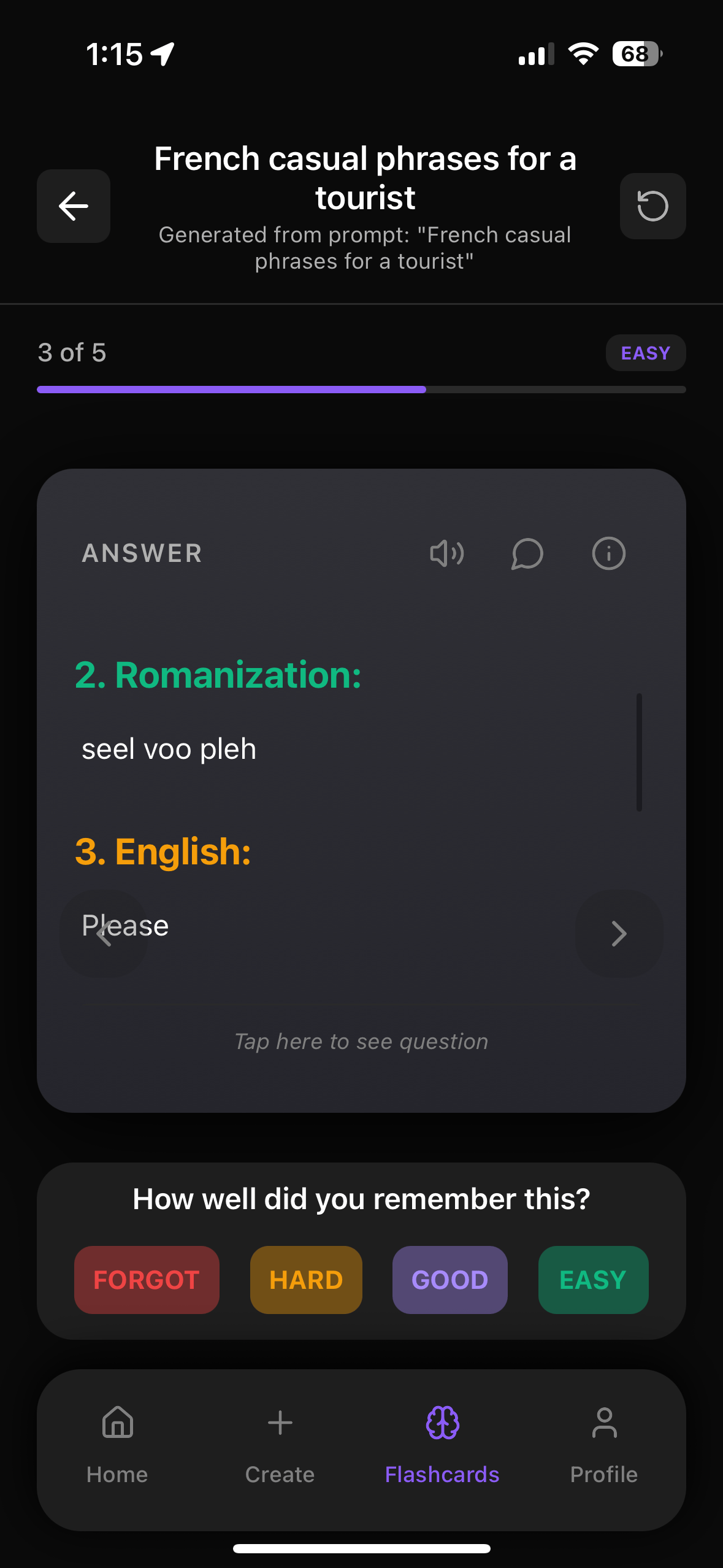
What “Create Study Flashcards” Actually Means (And Why It Works)
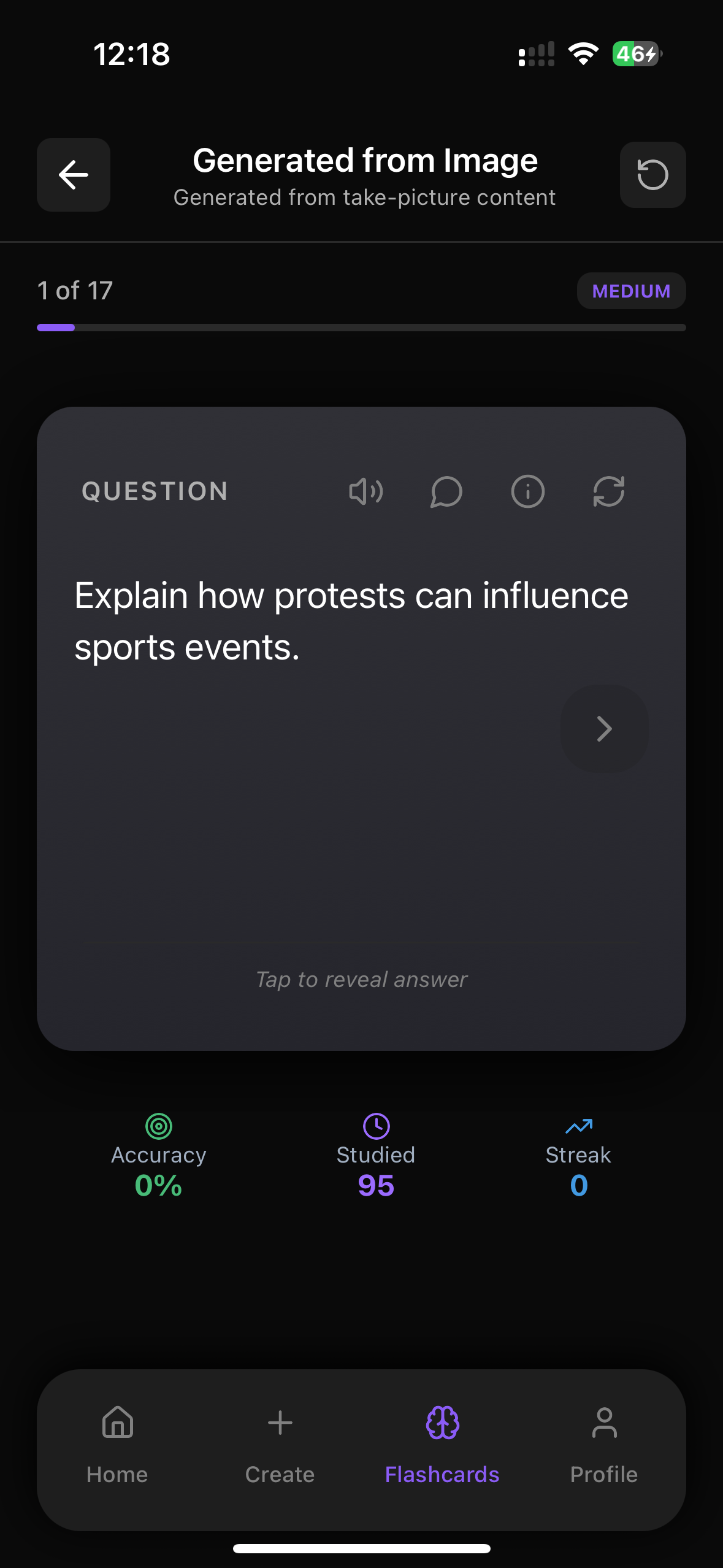
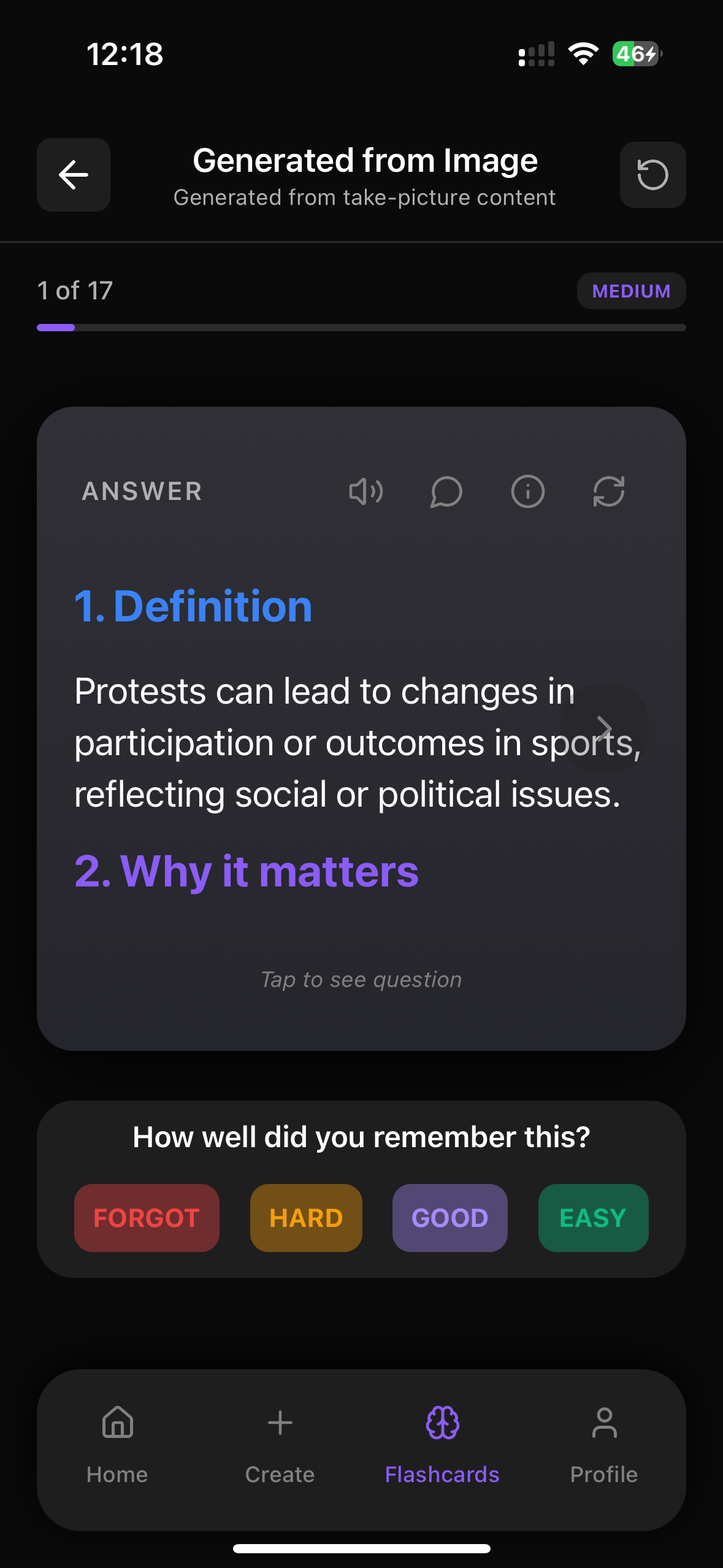
Alright, let’s talk about what it really means to create study flashcards: it’s basically turning your notes, lectures, and textbooks into quick question-and-answer cards so your brain has to actively pull the info out instead of just rereading it. That’s important because active recall (forcing your brain to remember) is way more effective than just highlighting or scrolling through notes. When you make flashcards like “What’s the definition of X?” on the front and the answer on the back, you’re training your memory like a muscle. Apps like Flashrecall make this even easier by letting you turn text, images, PDFs, and even YouTube videos into flashcards automatically, then scheduling smart review sessions so you actually remember the stuff long-term.
Here’s how to do it properly without overcomplicating things.
Why Flashcards Beat Plain Notes For Studying
So, you know how you can read a whole page and then realize you remember literally nothing? That’s passive learning.
Flashcards fix that because they force you to:
- Look at a question
- Try to answer from memory
- Check if you’re right
- Repeat over time
That’s active recall + spaced repetition in action.
With Flashrecall), this whole process gets smoother because:
- You don’t have to manually track when to review – it has built-in spaced repetition and reminders
- You can create study flashcards from:
- Typed notes
- Photos of your textbook or handwritten notes
- PDFs
- YouTube links
- Plain text or prompts
- It works offline, so you can study on the train, in class, or wherever
- You can even chat with your flashcards if you’re confused and want a deeper explanation
Basically, you focus on learning, and the app handles the boring scheduling and organization.
Step 1: Decide What Actually Needs A Flashcard
Not everything deserves a flashcard. The trick is to be selective.
Good things to put on flashcards:
- Definitions
- “What is osmosis?”
- Formulas
- “What’s the formula for acceleration?”
- Vocabulary / languages
- “French: ‘to eat’ = ?”
- Dates and names
- “When did WWI start?”
- Key concepts
- “Explain classical conditioning in one sentence”
Stuff that usually doesn’t work well:
- Giant paragraphs
- Full pages of notes
- Long essays or open-ended discussions
If you’re using Flashrecall, you can just import a PDF or text and let it help you pull out key points into flashcards, instead of doing everything manually.
Step 2: Use The “One Question, One Idea” Rule
Here’s the thing: the biggest mistake people make when they create study flashcards is cramming too much on one card.
Bad card:
> “Explain photosynthesis, list all the steps, name all the structures, and give an example.”
Good cards (split up):
- “What is the basic definition of photosynthesis?”
- “Where in the cell does photosynthesis happen?”
- “What are the two main stages of photosynthesis?”
- “What is the role of chlorophyll?”
Smaller cards = easier to review, easier to grade yourself honestly, and easier for spaced repetition to work well.
In Flashrecall, making multiple cards is super fast because the interface is simple and modern. You can just tap through and add new ones in seconds instead of wrestling with clunky menus.
Step 3: Turn Your Notes Into Questions (Not Just Facts)
When you create study flashcards, try to phrase the front of the card as a question or a prompt that forces thinking.
Instead of this:
- Front: “Photosynthesis”
- Back: “Process by which plants use sunlight to make food…”
Do this:
- Front: “What is photosynthesis?”
- Back: “Process by which plants use sunlight to convert water and carbon dioxide into glucose and oxygen.”
Or:
- Front: “What are the reactants and products of photosynthesis?”
- Back: “Reactants: CO₂ + H₂O; Products: Glucose + O₂.”
This is where active recall kicks in. You’re not just recognizing the word; you’re trying to produce the answer.
Flashrecall is built around this idea. Every card is set up to make you answer first, then reveal the back. Then you rate how hard it was, and the app automatically schedules the next review for you based on your performance.
Step 4: Use Images, Not Just Text
Your brain loves visuals. If you’re studying:
- Anatomy
- Chemistry
- Geography
- Math graphs
- Diagrams of processes
…then images on your flashcards can help a ton.
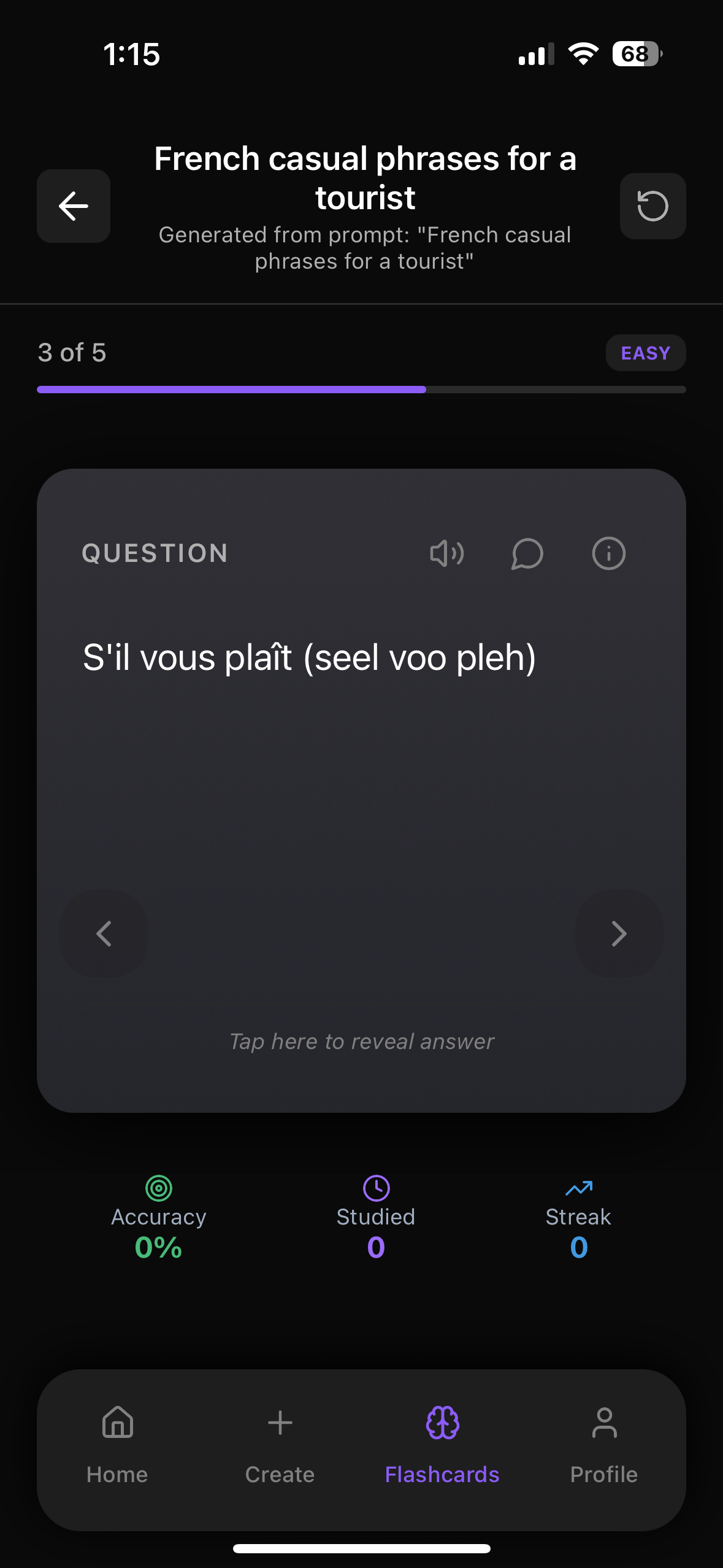
Flashrecall automatically keeps track and reminds you of the cards you don't remember well so you remember faster. Like this :
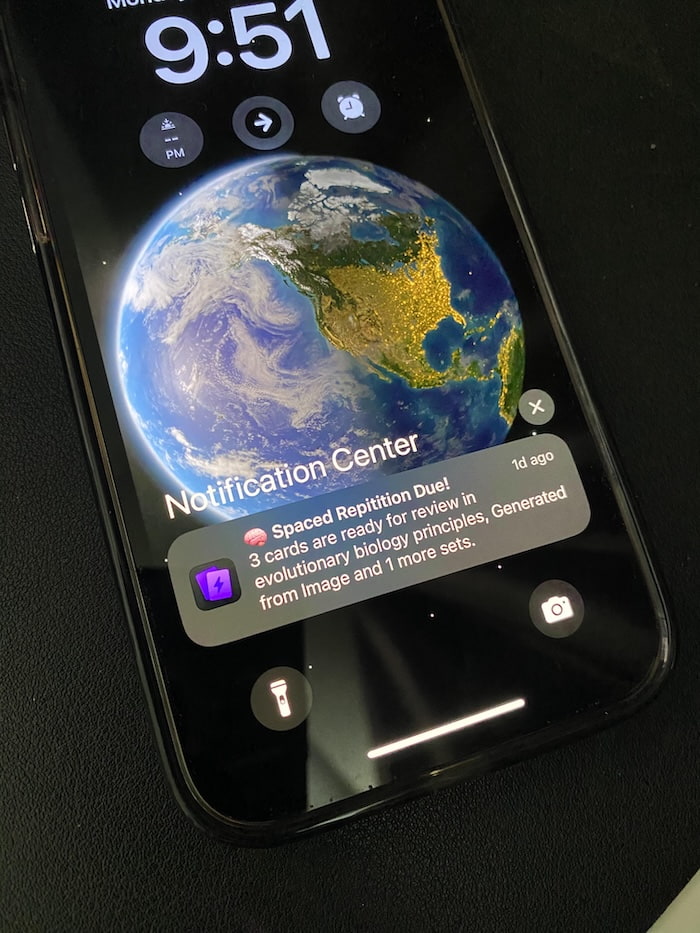
Examples:
- Front: picture of a bone → “Name this bone”
- Front: map of Europe → “Which country is highlighted?”
- Front: diagram of the heart → “Label this part”
With Flashrecall, you can:
- Snap a photo of your textbook diagram or handwritten notes and instantly make cards
- Import PDFs or images and generate flashcards from them
- Use YouTube links and extract key ideas into cards
You don’t have to type everything from scratch, which saves a ridiculous amount of time.
Step 5: Don’t Just Cram – Use Spaced Repetition
Cramming feels productive but falls apart a few days later.
Spaced repetition = review things just before you’re about to forget them. That’s how you move stuff into long-term memory.
Normally, you’d have to plan this manually:
- Review after 1 day
- Then 3 days
- Then a week
- Then 2 weeks
- And so on…
But realistically, no one wants to manage that by hand.
Flashrecall has automatic spaced repetition with reminders built in. You just:
1. Create study flashcards
2. Study them
3. Tap how easy or hard each one was
4. Let the app decide when to show it again
You’ll get study reminders so you don’t forget to review, and it works offline on iPhone and iPad, so you can keep up even without Wi‑Fi.
Step 6: Make Cards For Anything You’re Learning
Flashcards aren’t just for school. You can use them for pretty much anything:
- Languages – vocab, phrases, verb conjugations
- Exams – SAT, MCAT, USMLE, bar exam, driving test
- University – medicine, law, engineering, business, psychology
- Work – frameworks, processes, product details, interview prep
- Personal stuff – names of people, capitals, trivia, coding syntax
Flashrecall is flexible enough for all of that:
- You can create cards manually if you like full control
- Or use AI help (via prompts, PDFs, YouTube, etc.) to speed things up
- You can chat with your flashcards if something doesn’t make sense and you want it explained in a different way
So instead of having random notes scattered across Google Docs, screenshots, and notebooks, you turn everything into one clean, reviewable system.
Step 7: Keep Your Flashcards Simple And Honest
Two more underrated tips when you create study flashcards:
1. Keep the answers short
If your answer is a wall of text, you won’t want to review it.
Try to:
- Use 1–3 bullet points
- Or one clear sentence
- Or a simple formula / keyword list
Example:
- Front: “What are the three branches of government in the US?”
- Back: “Legislative, Executive, Judicial”
Short and clean.
2. Be honest when grading yourself
If you kind of-sort-of remembered it, don’t mark it as “easy.” That just means you’ll forget it later.
In Flashrecall, after each card you tap how it felt (e.g., easy, medium, hard), and that rating controls when you see it again. Being honest here is how you actually learn faster instead of lying to yourself.
How To Start Creating Study Flashcards Today (Without Overthinking It)
If you want a super simple way to start:
1. Download Flashrecall here:
👉 https://apps.apple.com/us/app/flashrecall-study-flashcards/id6746757085
2. Pick one topic you’re studying today (not the whole course, just one chapter).
3. Make 10–20 flashcards:
- One question per card
- Short answer on the back
4. Use Flashrecall’s spaced repetition mode and go through them once.
5. Come back when the app reminds you and review again.
That’s it. No complicated system, no giant setup. Just small, consistent reviews.
Why Use Flashrecall Instead Of Old-School Cards Or Random Apps?
You can use paper cards or any generic flashcard app, but here’s where Flashrecall really helps:
- Way faster card creation – from images, PDFs, YouTube, or typed text
- Built-in active recall + spaced repetition – no manual scheduling
- Smart reminders – so you don’t forget to study
- Works offline – perfect for commutes or bad Wi‑Fi
- Chat with your flashcards – if you’re stuck, you can ask follow-up questions
- Free to start – so you can try it without committing to anything
- Modern, clean design – not clunky or outdated
If your goal is to actually remember what you study instead of cramming and forgetting, then using something like Flashrecall just makes life easier.
Final Thoughts: Flashcards Work If You Actually Use Them
To sum it up:
- Create study flashcards by turning your notes into simple Q&A cards
- Keep each card focused on one idea
- Use images, short answers, and honest self-grading
- Let spaced repetition handle the timing so you don’t have to
And if you want all of that without juggling paper stacks or spreadsheets, grab Flashrecall on your iPhone or iPad:
👉 https://apps.apple.com/us/app/flashrecall-study-flashcards/id6746757085
Start with just a handful of cards today. Your future self (the one walking into the exam or speaking that new language) will be very, very happy you did.
Frequently Asked Questions
What's the fastest way to create flashcards?
Manually typing cards works but takes time. Many students now use AI generators that turn notes into flashcards instantly. Flashrecall does this automatically from text, images, or PDFs.
Is there a free flashcard app?
Yes. Flashrecall is free and lets you create flashcards from images, text, prompts, audio, PDFs, and YouTube videos.
How do I start spaced repetition?
You can manually schedule your reviews, but most people use apps that automate this. Flashrecall uses built-in spaced repetition so you review cards at the perfect time.
What is active recall and how does it work?
Active recall is the process of actively retrieving information from memory rather than passively reviewing it. Flashrecall forces proper active recall by making you think before revealing answers, then uses spaced repetition to optimize your review schedule.
Related Articles
- Create Flashcards The Smart Way: 7 Powerful Tips To Learn Faster And Remember More – Stop Wasting Time On Boring Notes And Turn Them Into High‑Impact Flashcards
- Create Your Flashcards Like A Pro: 7 Powerful Tips To Learn Faster And Remember More – Stop Wasting Time On Boring Notes And Turn Them Into Smart Flashcards That Actually Stick
- Online Flashcard Maker: The Best Way To Create Powerful Study Cards In Minutes (Most Students Don’t Know This Trick)
Research References
The information in this article is based on peer-reviewed research and established studies in cognitive psychology and learning science.
Cepeda, N. J., Pashler, H., Vul, E., Wixted, J. T., & Rohrer, D. (2006). Distributed practice in verbal recall tasks: A review and quantitative synthesis. Psychological Bulletin, 132(3), 354-380
Meta-analysis showing spaced repetition significantly improves long-term retention compared to massed practice
Carpenter, S. K., Cepeda, N. J., Rohrer, D., Kang, S. H., & Pashler, H. (2012). Using spacing to enhance diverse forms of learning: Review of recent research and implications for instruction. Educational Psychology Review, 24(3), 369-378
Review showing spacing effects work across different types of learning materials and contexts
Kang, S. H. (2016). Spaced repetition promotes efficient and effective learning: Policy implications for instruction. Policy Insights from the Behavioral and Brain Sciences, 3(1), 12-19
Policy review advocating for spaced repetition in educational settings based on extensive research evidence
Karpicke, J. D., & Roediger, H. L. (2008). The critical importance of retrieval for learning. Science, 319(5865), 966-968
Research demonstrating that active recall (retrieval practice) is more effective than re-reading for long-term learning
Roediger, H. L., & Butler, A. C. (2011). The critical role of retrieval practice in long-term retention. Trends in Cognitive Sciences, 15(1), 20-27
Review of research showing retrieval practice (active recall) as one of the most effective learning strategies
Dunlosky, J., Rawson, K. A., Marsh, E. J., Nathan, M. J., & Willingham, D. T. (2013). Improving students' learning with effective learning techniques: Promising directions from cognitive and educational psychology. Psychological Science in the Public Interest, 14(1), 4-58
Comprehensive review ranking learning techniques, with practice testing and distributed practice rated as highly effective

FlashRecall Team
FlashRecall Development Team
The FlashRecall Team is a group of working professionals and developers who are passionate about making effective study methods more accessible to students. We believe that evidence-based learning tec...
Credentials & Qualifications
- •Software Development
- •Product Development
- •User Experience Design
Areas of Expertise
Ready to Transform Your Learning?
Start using FlashRecall today - the AI-powered flashcard app with spaced repetition and active recall.
Download on App Store