Cute Flashcards Tips: The Proven Guide
Cute flashcards tips mix aesthetics with study power. Use active recall and spaced repetition with Flashrecall for effective, memorable learning.
How Flashrecall app helps you remember faster. It's free
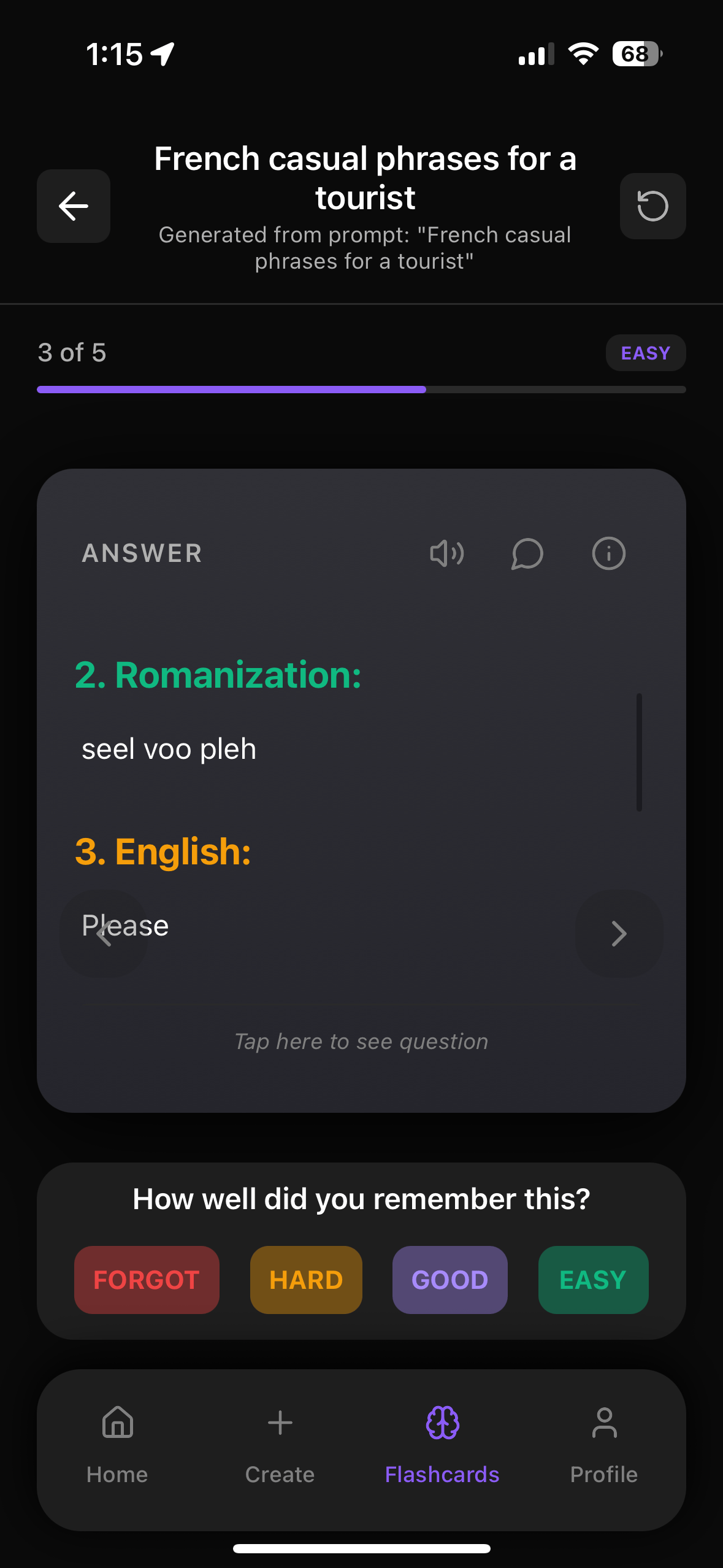
Cute Flashcards That Actually Help You Study (Not Just Look Pretty)
You ever find yourself drowning in study notes and wishing for a magic wand to make it all stick? That's where cute flashcards tips come in handy. They're kind of like your secret weapon for breaking down all that complex stuff into bite-sized pieces that your brain can actually handle. And the cool part? If you want to do it right, it's all about active recall and spaced repetition. Seriously, these methods are like giving your brain little reminders at just the right time. Flashrecall's got your back here, making flashcards out of your materials and planning reviews for you, so you don't have to stress about it. If you’re curious about mixing aesthetics with your study game and keeping yourself motivated to remember the good stuff, you should definitely check out our complete guide. Trust me, your brain will thank you!
But here’s the problem:
Most cute flashcards are either:
- super pretty but totally useless for memory
- or super effective but look like they were made in Microsoft Word in 2004
You don’t have to choose.
You can have aesthetic + effective flashcards — and you don’t need to hand-draw every single one.
That’s where Flashrecall comes in:
👉 https://apps.apple.com/us/app/flashrecall-study-flashcards/id6746757085
It lets you create cute, powerful flashcards in seconds from images, text, PDFs, YouTube links, audio, or just typing. And it bakes in active recall + spaced repetition, so your cute cards actually help you remember stuff.
Let’s break down how to make your flashcards cute and smart.
Why Cute Flashcards Work (It’s Not Just the Aesthetic)
Cute flashcards help for a few real reasons:
- You actually want to look at them → more study time without forcing yourself
- Color and visuals help memory → your brain loves patterns and images
- They feel personal → your cards feel like yours, not some boring textbook
The trick is not to let the aesthetic replace the learning science.
So the formula you want is:
> Cute design + Active recall + Spaced repetition = Maximum results
Flashrecall quietly handles the “science” part in the background while you focus on making cards that feel fun and satisfying to use.
1. Decide Your Cute Flashcard Style (Without Overthinking It)
You don’t need to be an artist. Pick a simple “vibe” and stick to it:
Some easy styles you can try:
- Pastel minimalist
- Soft pinks, blues, creams
- Clean fonts, no clutter
- Kawaii / doodle style
- Tiny doodles (stars, hearts, cats, plants)
- Rounded shapes, soft colors
- Dark academia
- Beige, brown, muted green
- Handwritten-style fonts, vintage feel
- Color-coded student aesthetic
- One color per subject
- Simple icons or symbols for each topic
In Flashrecall, you don’t have to design everything from scratch. You can:
- Snap a pic of your cute handwritten notes
- Upload aesthetic PDFs or slides
- Grab screenshots from YouTube or websites
Then Flashrecall turns them into flashcards for you.
You keep the aesthetic, but save a ton of time.
2. Use Color and Icons… But Keep the Info Simple
The most common mistake with cute flashcards:
They look like a Pinterest board, but each card has way too much text.
For memory, you want short, focused cards.
Good cute card:
“French – ‘to eat’ 🍽️”
“manger”
Simple, clear, and still cute.
Overloaded card (don’t do this):
Front: “French verbs: to eat, to drink, to sleep, to run, to walk, to speak, to see, to go”
Back: all the translations
Your brain won’t know what to focus on.
Use the cuteness to highlight key info, not hide it:
- One main idea per card
- Use color for categories (e.g., blue = verbs, pink = nouns)
- Add tiny icons for vibes (🌱 for biology, 💸 for finance, 🧠 for psychology)
In Flashrecall, you can create these cards manually or let the app help generate them from your notes, then tweak them to match your aesthetic.
3. Turn Any Cute Note Into Flashcards in Seconds
If you already make pretty notes, you’re halfway there.
You don’t need to rewrite everything as flashcards.
With Flashrecall, you can:
- Take a photo of your handwritten notes or textbook
- Upload a PDF of your cute digital notes or slides
- Paste text from a doc or website
- Drop in a YouTube link to that aesthetic study video you love
Then Flashrecall automatically creates flashcards for you from that content.
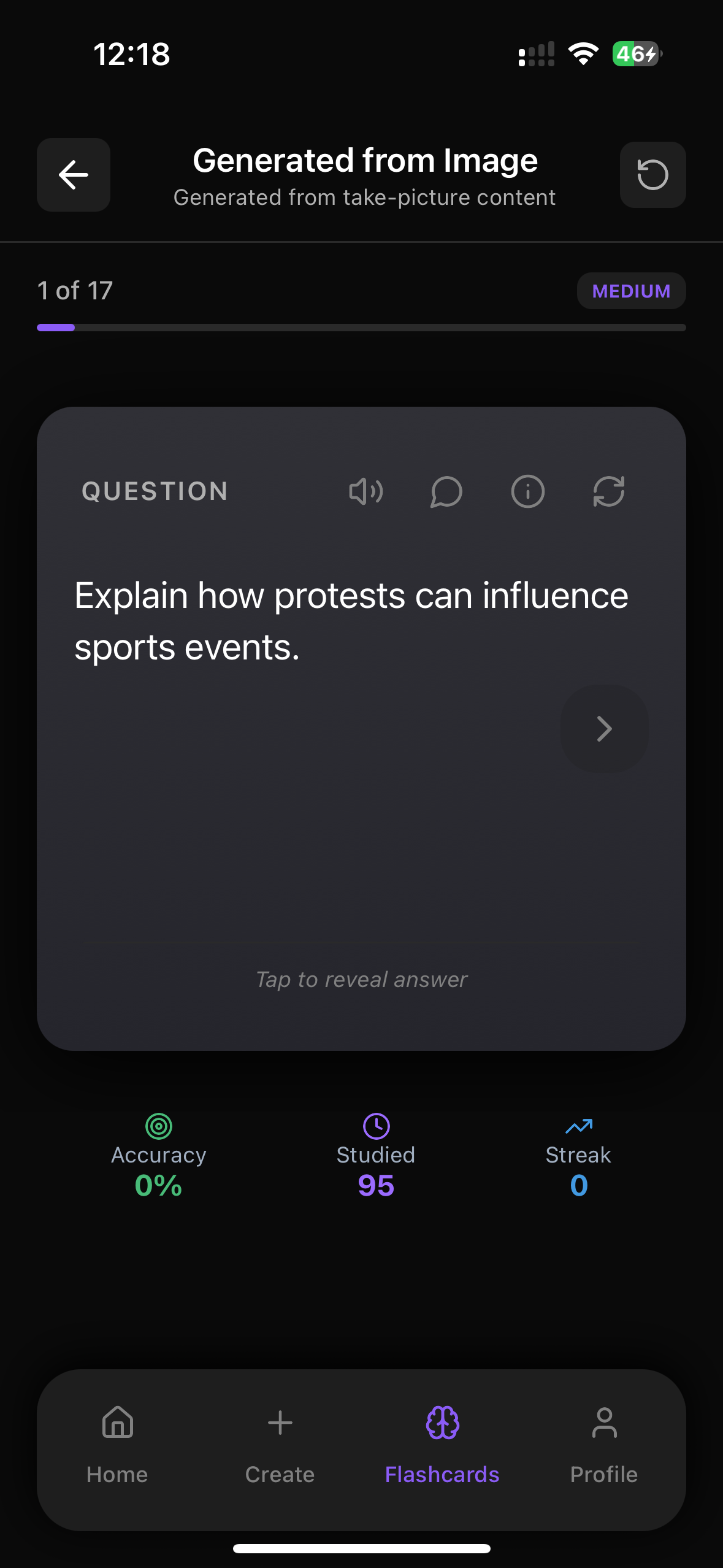
Flashrecall automatically keeps track and reminds you of the cards you don't remember well so you remember faster. Like this :
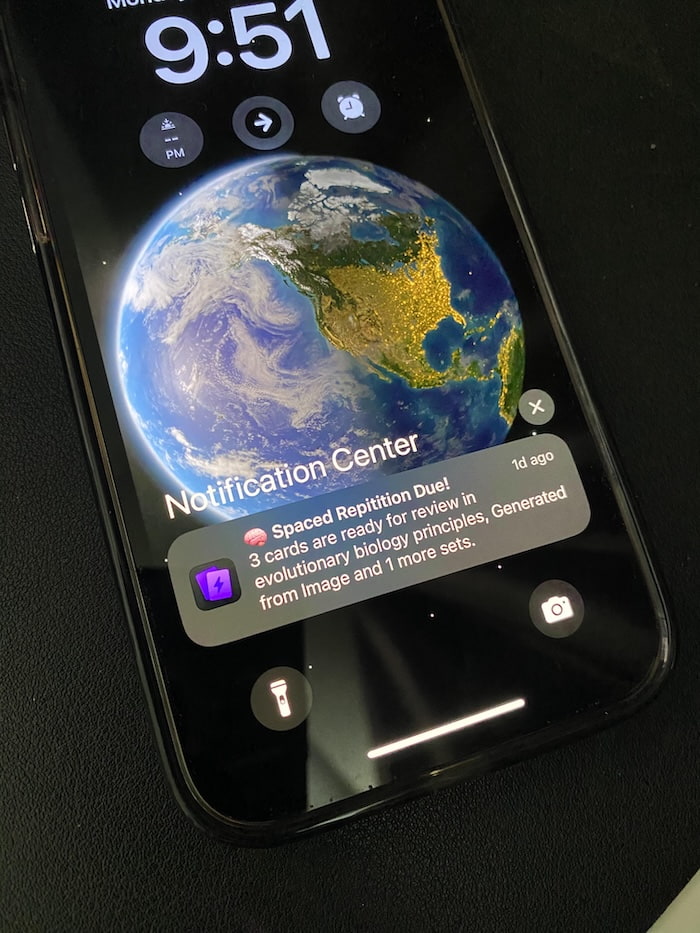
You can then:
- Edit the cards
- Add emojis, icons, or small doodle images
- Break long cards into smaller, cuter, more focused ones
It’s like turning your whole notebook into a cute flashcard deck in minutes instead of hours.
👉 Try it here (free to start):
https://apps.apple.com/us/app/flashrecall-study-flashcards/id6746757085
4. Make Your Cute Flashcards Active Recall Friendly
A card is effective when it forces your brain to pull the answer out, not just recognize it.
So instead of:
> Front: “Photosynthesis definition”
> Back: long paragraph
Use:
> Front: “What is photosynthesis? 🌿 (short definition)”
> Back: “Process where plants use sunlight to convert CO₂ + water into glucose + oxygen.”
Or:
> Front: “What does ‘mitochondria’ do? ⚡”
> Back: “Powerhouse of the cell; produces energy (ATP).”
Flashrecall is built around active recall:
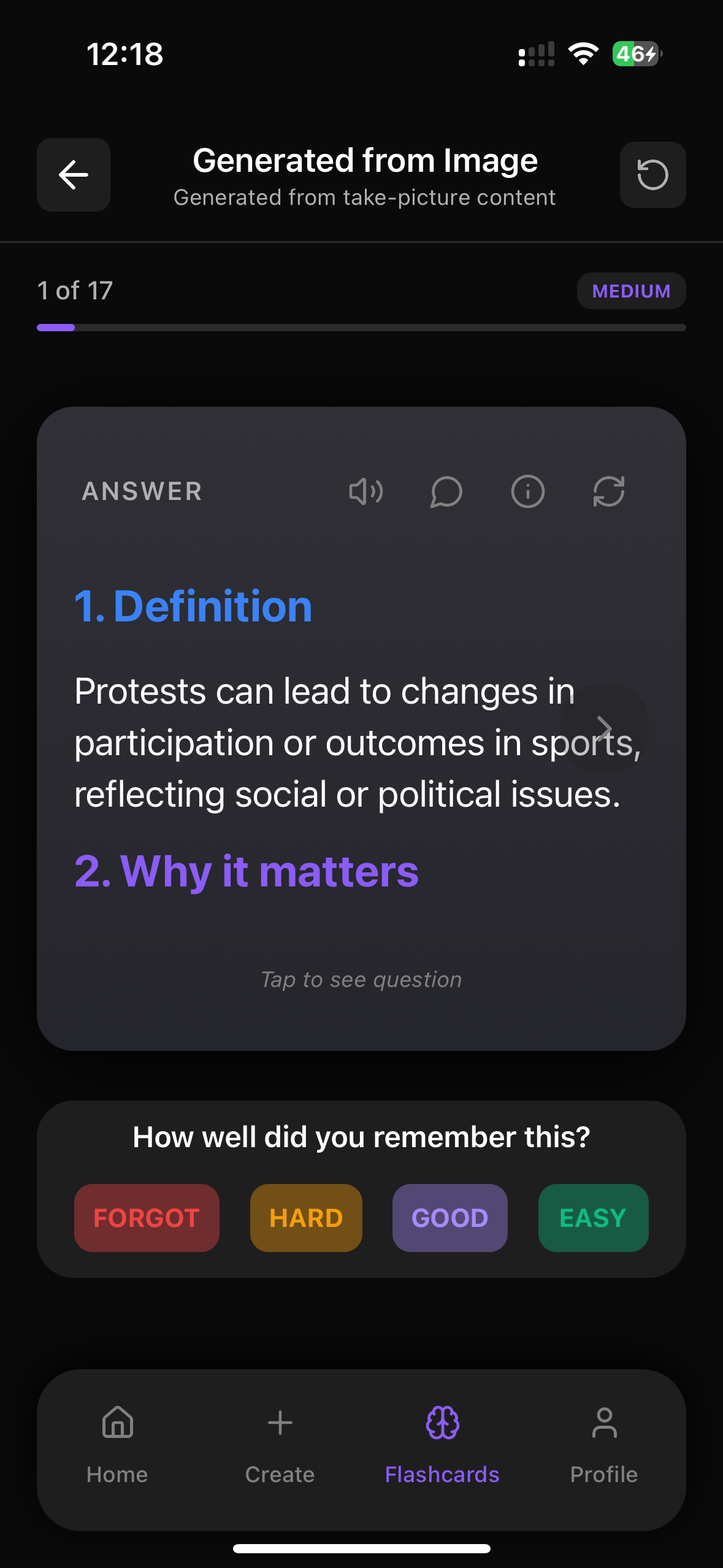
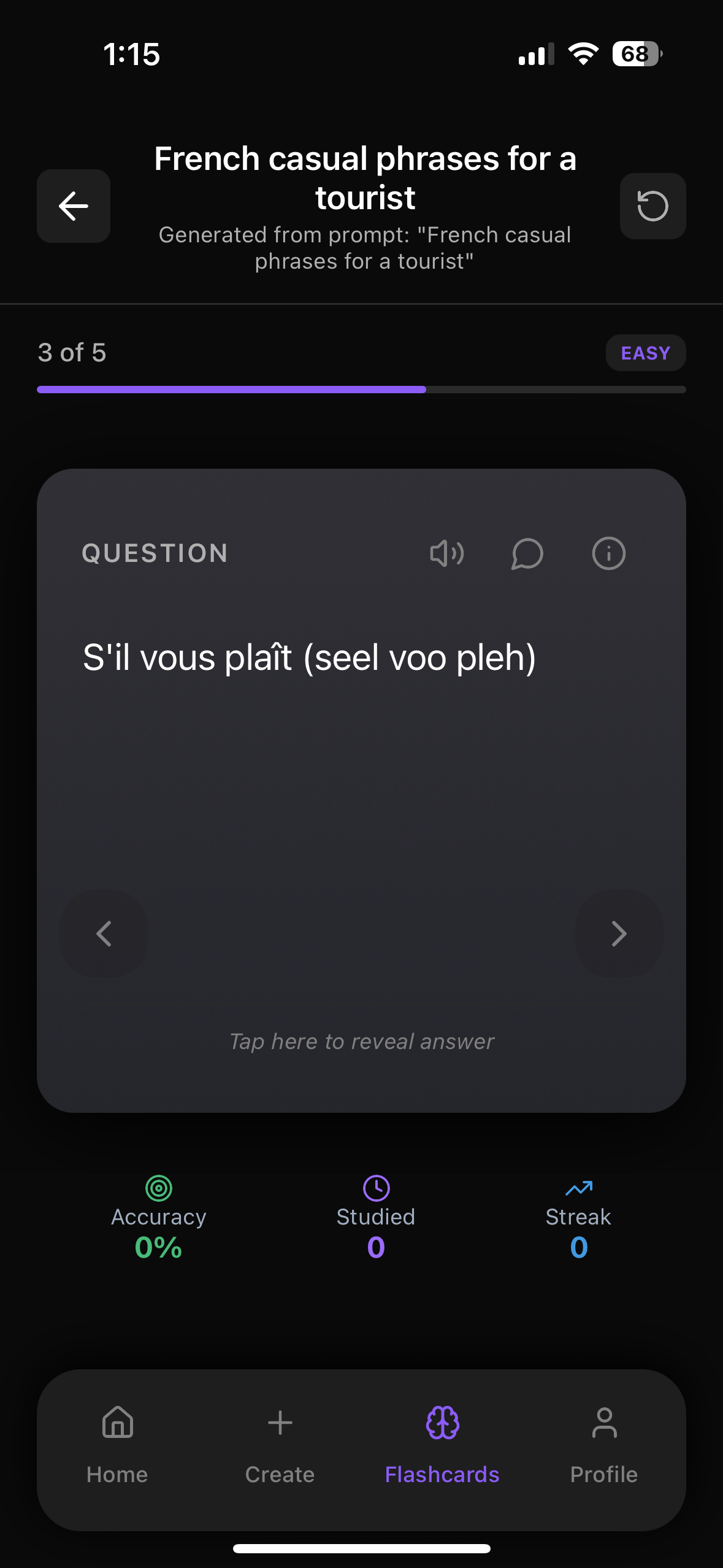
- It shows you the front
- You try to answer from memory
- Then you reveal the back and rate how hard it was
The app then automatically schedules when you’ll see that card again using spaced repetition — so you review right before you’re about to forget.
So yeah, your cards can be cute, but the logic behind them is hardcore science.
5. Use Spaced Repetition So You Don’t Just “Cram Cute”
Cute cram sessions feel productive… until you forget everything a week later.
Spaced repetition = reviewing at smart intervals so your brain actually keeps the info long term.
The good news: Flashrecall does this for you.
- You study your cute cards
- You rate how easy/hard each one was
- Flashrecall decides when to show it next
- You get study reminders so you don’t forget to review
You don’t have to manage a review schedule manually.
You just open the app on your iPhone or iPad and it tells you, “Here’s what to review today.”
That’s how your cute flashcards go from “aesthetic moment” to “actual memory upgrade.”
6. Add Images, Doodles, and Screenshots for Extra Cuteness
Visuals = more memorable.
With Flashrecall, you can:
- Add images directly to your cards
- Use screenshots from slides, diagrams, or charts
- Snap pics of your own doodles or handwritten mind maps
Examples:
- Language learning:
- Front: picture of a cat 🐱 + “How do you say this in Spanish?”
- Back: “el gato”
- Anatomy:
- Front: image of a heart with one area blurred → “Name this part ❤️”
- Back: “Left ventricle”
- Business / finance:
- Front: screenshot of a graph → “What does this graph show?”
- Back: explanation
You can make your cards feel like a mini scrapbook of your learning.
7. Chat With Your Flashcards When You’re Confused
This is where Flashrecall gets low-key magical.
If you’re not sure about a card, you can chat with it inside the app.
Examples:
- “Explain this in simpler words.”
- “Give me an example of this in real life.”
- “Compare this to [other concept].”
So if one of your cute cards is like:
> Front: “What is opportunity cost? 💸”
> Back: “The value of the next best alternative you give up when making a choice.”
You can ask the app:
> “Can you give me 3 simple examples of opportunity cost?”
And boom — you get more context without leaving your deck or Googling around.
8. Cute Flashcards for Different Subjects (Ideas You Can Steal)
Here are some quick ideas by subject:
Languages
- Color-code by type:
- Verbs = green, Nouns = pink, Adjectives = yellow
- Add tiny flags 🇫🇷 🇪🇸 🇯🇵
- Use images for vocab: food, animals, objects
Medicine / Nursing / Biology
- Use soft colors for systems:
- Blue = cardiovascular, Green = respiratory, Purple = nervous
- Add simple diagrams or labeled images
- One card per disease / drug / structure
School / Uni Subjects
- Math: one formula per card, plus a tiny example
- History:
- Front: “Who was [person]? 🏛️”
- Back: 1–2 key facts, not a whole essay
- Literature: quotes on front, meaning / theme on back
Business / Exams / Certifications
- Flashcards for definitions, frameworks, formulas
- Use icons: 💼 📊 📈
- Add short scenarios: “If X happens, what should you do?”
Flashrecall works for languages, exams, school, uni, medicine, business — literally anything you need to remember.
9. Why Use Flashrecall Instead of Just Paper Cute Cards?
Paper flashcards are fun, but:
- You have to carry them everywhere
- No automatic reminders
- No spaced repetition
- Editing is annoying
- You can’t search or reorganize easily
With Flashrecall:
- Works on iPhone and iPad
- Offline support → study on the bus, plane, or bad Wi‑Fi
- Free to start
- Automatically turns text, images, PDFs, YouTube links, and audio into cards
- Built-in active recall + spaced repetition + reminders
- You can chat with your flashcards when you’re stuck
- Fast, modern, and actually nice to use
You still get the cute vibe — just without the hassle.
How to Get Started in 5 Minutes
1. Download Flashrecall
👉 https://apps.apple.com/us/app/flashrecall-study-flashcards/id6746757085
2. Pick one subject you want cute flashcards for (don’t start with everything at once).
3. Import something you already have
- Notes, a PDF, a screenshot, a YouTube link, whatever.
4. Let Flashrecall auto-generate cards, then:
- Shorten them
- Add emojis, colors, or images to make them cute
5. Start a quick review session and let the app handle the spaced repetition and reminders.
If you like the idea of cute flashcards but also actually want to remember things long-term, Flashrecall basically gives you both:
Aesthetic study sessions now, and a stronger memory later.
Frequently Asked Questions
What's the fastest way to create flashcards?
Manually typing cards works but takes time. Many students now use AI generators that turn notes into flashcards instantly. Flashrecall does this automatically from text, images, or PDFs.
Is there a free flashcard app?
Yes. Flashrecall is free and lets you create flashcards from images, text, prompts, audio, PDFs, and YouTube videos.
How do I start spaced repetition?
You can manually schedule your reviews, but most people use apps that automate this. Flashrecall uses built-in spaced repetition so you review cards at the perfect time.
What is active recall and how does it work?
Active recall is the process of actively retrieving information from memory rather than passively reviewing it. Flashrecall forces proper active recall by making you think before revealing answers, then uses spaced repetition to optimize your review schedule.
What's the best way to learn vocabulary?
Research shows that combining flashcards with spaced repetition and active recall is highly effective. Flashrecall automates this process, generating cards from your study materials and scheduling reviews at optimal intervals.
Related Articles
- Audio Flashcards: The Powerful Way To Learn Faster (And Actually Remember Stuff) – Discover How To Turn Anything You Hear Into Smart, Auto-Reviewing Flashcards In Minutes
- Electronic Flash Cards: The Ultimate Modern Study Hack To Learn Faster On Any Device – Ditch Paper Cards And Upgrade Your Memory In One Day
- Moina Flashcards: The Best Alternative Most Students Don’t Know About (Yet) – Learn Faster With Smarter, Automatic Study Tools
Research References
The information in this article is based on peer-reviewed research and established studies in cognitive psychology and learning science.
Cepeda, N. J., Pashler, H., Vul, E., Wixted, J. T., & Rohrer, D. (2006). Distributed practice in verbal recall tasks: A review and quantitative synthesis. Psychological Bulletin, 132(3), 354-380
Meta-analysis showing spaced repetition significantly improves long-term retention compared to massed practice
Carpenter, S. K., Cepeda, N. J., Rohrer, D., Kang, S. H., & Pashler, H. (2012). Using spacing to enhance diverse forms of learning: Review of recent research and implications for instruction. Educational Psychology Review, 24(3), 369-378
Review showing spacing effects work across different types of learning materials and contexts
Kang, S. H. (2016). Spaced repetition promotes efficient and effective learning: Policy implications for instruction. Policy Insights from the Behavioral and Brain Sciences, 3(1), 12-19
Policy review advocating for spaced repetition in educational settings based on extensive research evidence
Karpicke, J. D., & Roediger, H. L. (2008). The critical importance of retrieval for learning. Science, 319(5865), 966-968
Research demonstrating that active recall (retrieval practice) is more effective than re-reading for long-term learning
Roediger, H. L., & Butler, A. C. (2011). The critical role of retrieval practice in long-term retention. Trends in Cognitive Sciences, 15(1), 20-27
Review of research showing retrieval practice (active recall) as one of the most effective learning strategies
Dunlosky, J., Rawson, K. A., Marsh, E. J., Nathan, M. J., & Willingham, D. T. (2013). Improving students' learning with effective learning techniques: Promising directions from cognitive and educational psychology. Psychological Science in the Public Interest, 14(1), 4-58
Comprehensive review ranking learning techniques, with practice testing and distributed practice rated as highly effective

FlashRecall Team
FlashRecall Development Team
The FlashRecall Team is a group of working professionals and developers who are passionate about making effective study methods more accessible to students. We believe that evidence-based learning tec...
Credentials & Qualifications
- •Software Development
- •Product Development
- •User Experience Design
Areas of Expertise
Ready to Transform Your Learning?
Start using FlashRecall today - the AI-powered flashcard app with spaced repetition and active recall.
Download on App Store