
Cvc Flashcards With Pictures App: The Powerful Guide
CVC flashcards with pictures break down tricky concepts into easy-to-remember bits. Use spaced repetition and active recall for effective learning and review.
How Flashrecall app helps you remember faster. It's free
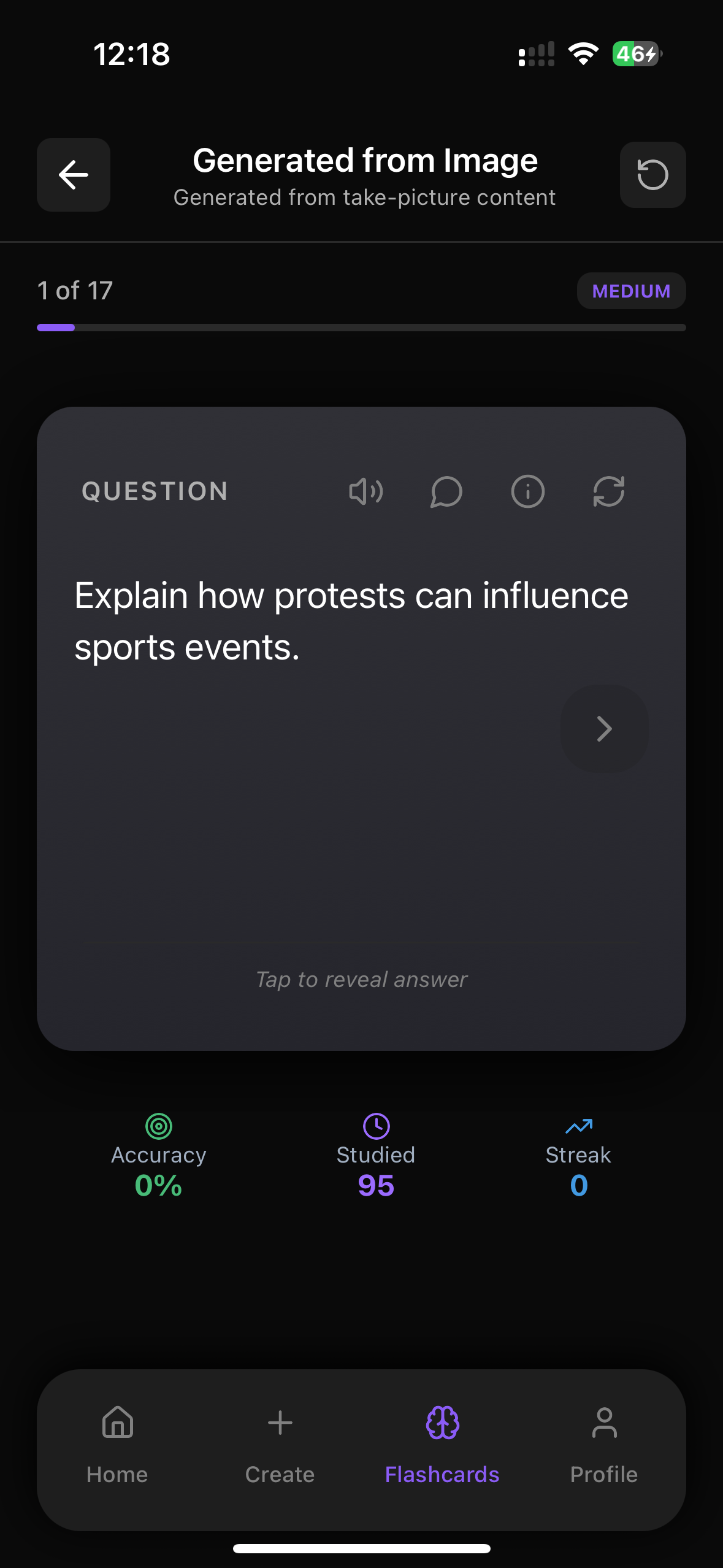
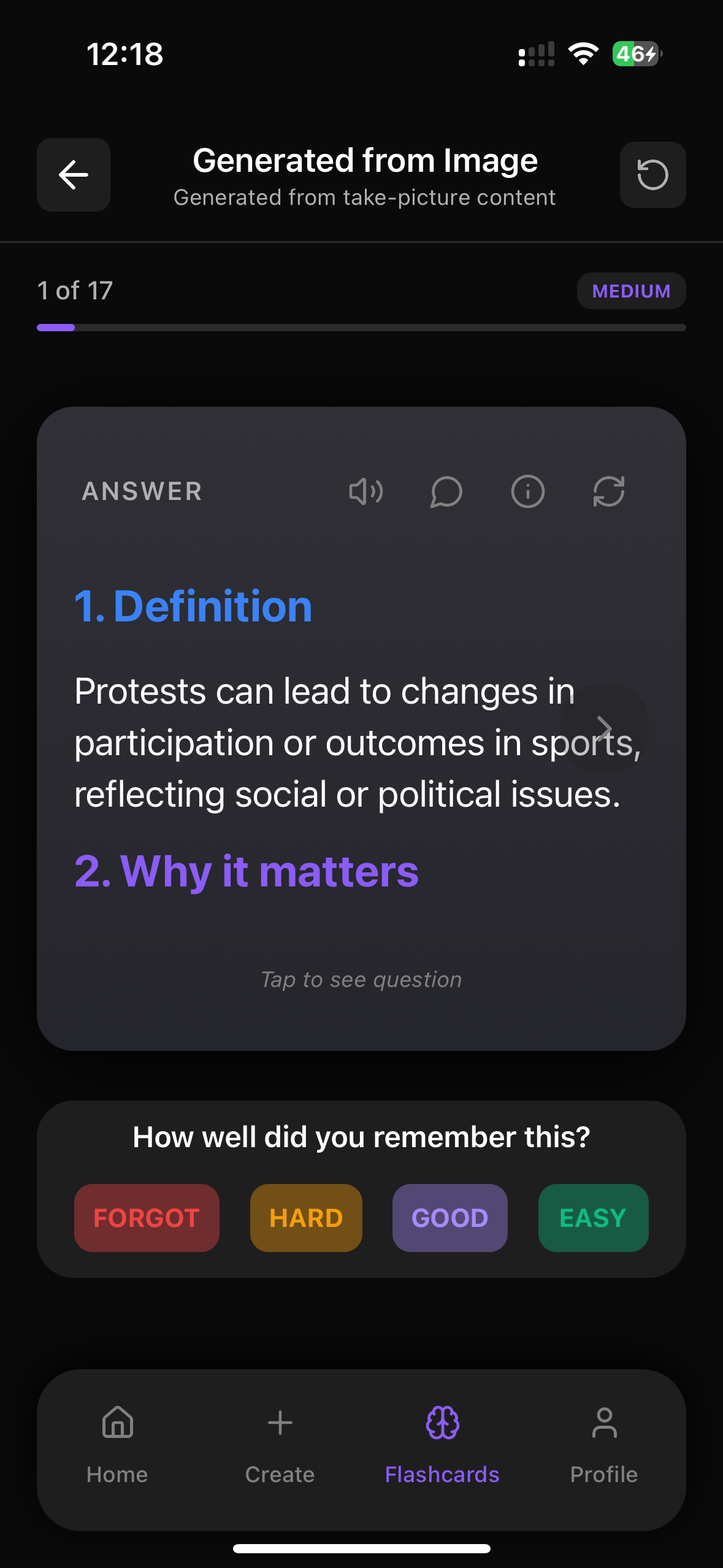
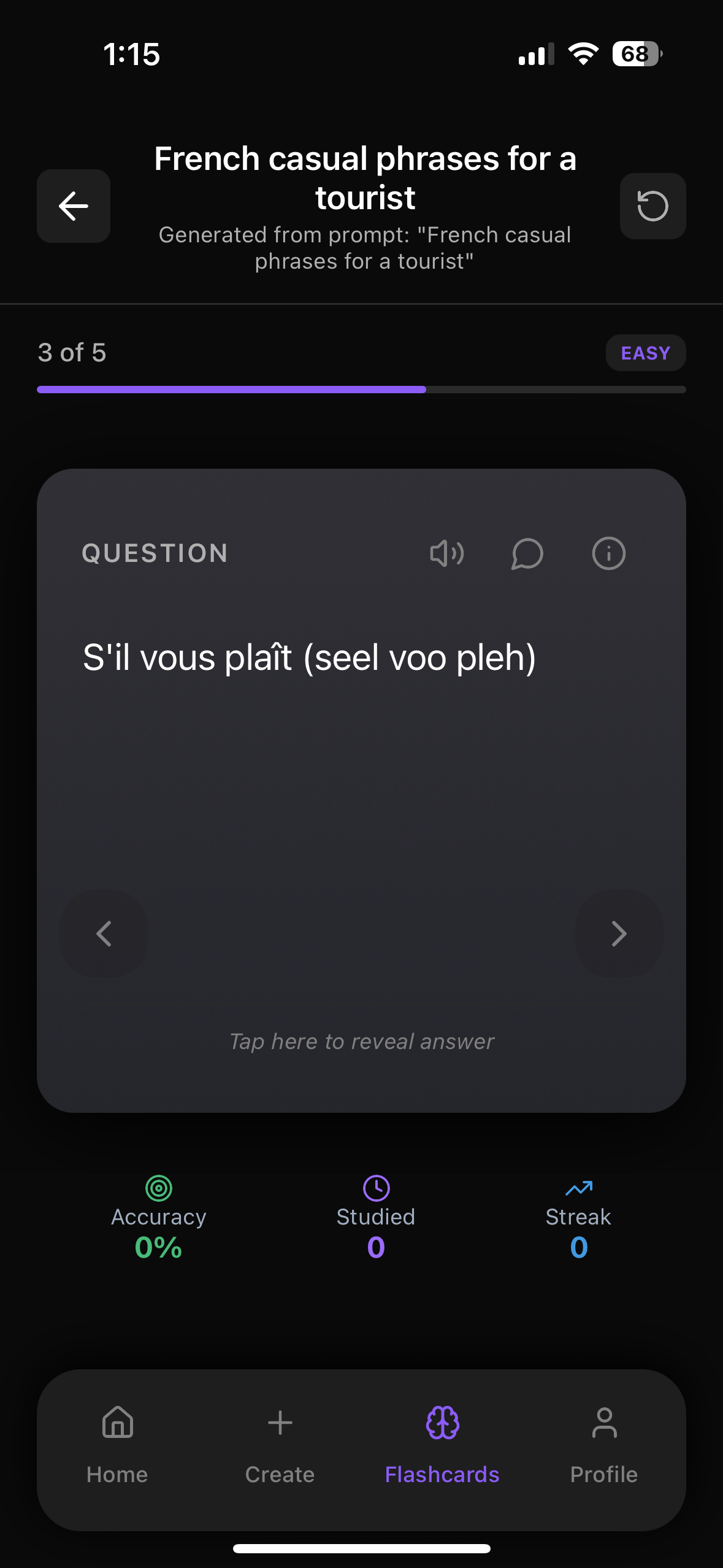
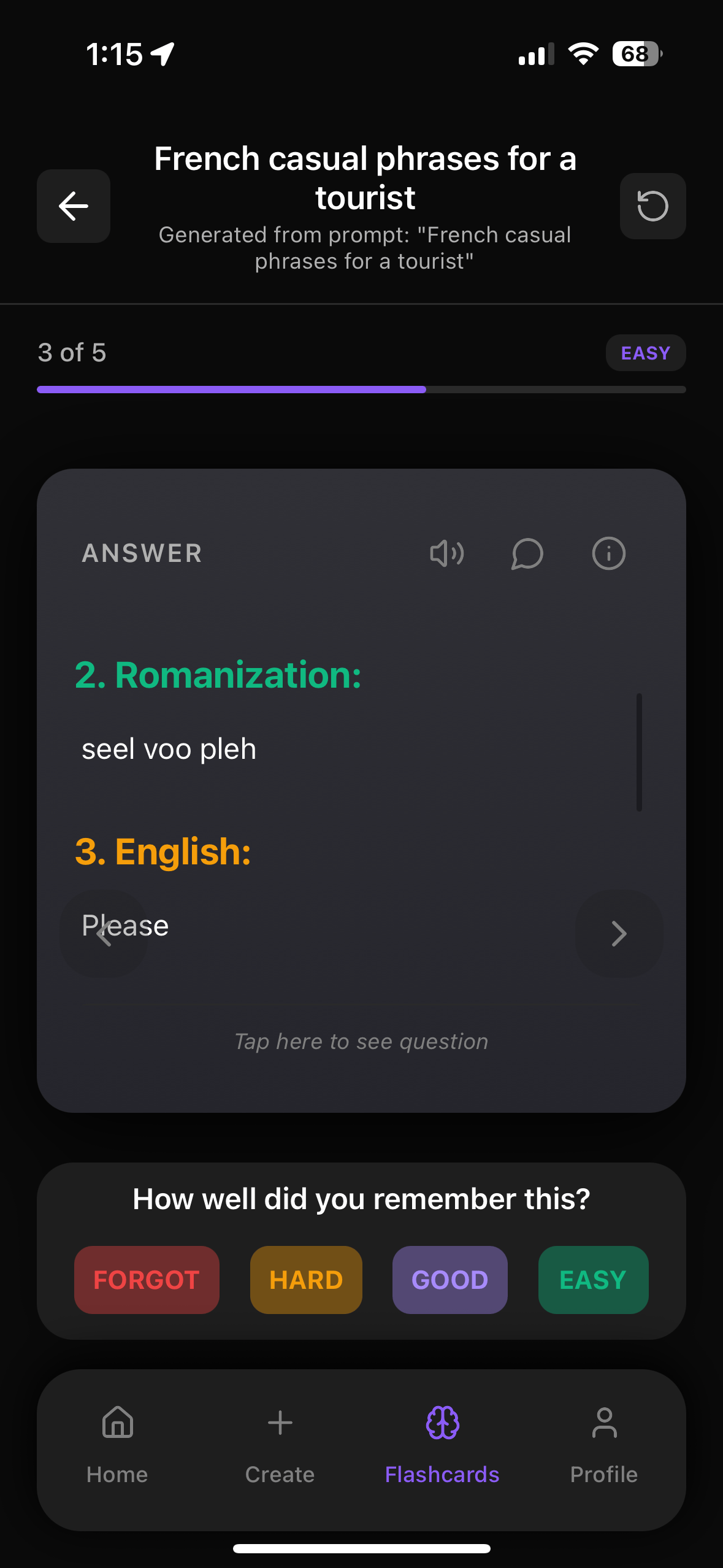
Why CVC Flashcards With Pictures Work So Well
Ever notice how some study tools just make everything click? That's exactly what a cvc flashcards with pictures app does. It’s like having a personal cheat code for learning—breaking down tricky info into bite-sized bits you can actually remember. So, if you're diving into something like exams, learning a new language, or picking up a fresh skill, these flashcards can be a lifesaver. But, here’s the kicker: you gotta use them the right way—think active recall, spaced repetition, and a sprinkle of consistent practice. That sounds intense, but don't sweat it. Flashrecall’s got your back by whipping up these flashcards from whatever you're studying and timing your reviews like a pro. And if you’re curious about abc flashcards with pictures and how they could turbocharge your kid’s learning, check out our full guide. Trust me, it’s worth a look!
If you're looking for information about abc flashcards with pictures: 7 powerful tricks to help kids learn letters faster – turn any image into smart picture flashcards that actually stick in their memory., read our complete guide to abc flashcards with pictures.
CVC = Consonant – Vowel – Consonant
Words like: cat, dog, sun, bed, hat, map, pig.
They’re short, simple, and perfect for helping kids “sound out” words.
But here’s the thing most people miss:
> It’s not just about having CVC flashcards with pictures.
> It’s about how you use them, and how easy they are to review consistently.
That’s where a good flashcard app makes a huge difference.
Instead of printing, cutting, laminating, losing cards under the couch…
you can just use an app like Flashrecall to make CVC picture flashcards in seconds and have your kid practice them every day without you having to remember.
👉 Flashrecall link:
https://apps.apple.com/us/app/flashrecall-study-flashcards/id6746757085
Let’s walk through how to actually use CVC flashcards with pictures in a smart, low-effort way.
Step 1: Pick The Right CVC Words (Don’t Overcomplicate It)
Start super simple. You don’t need 100 words on day one.
Good CVC starter sets
- cat, hat, mat, bag, jam, man, pan, map
- bed, pen, net, leg, hen, ten
- pig, dig, sit, lid, pin, fin
- dog, log, pot, box, mop, top
- sun, cup, bus, bug, rug, tub
Pick maybe 10–15 words to start. You want your child to feel like they’re winning, not drowning.
Step 2: Use Pictures The Right Way
Pictures aren’t just decoration — they help your kid connect:
- Sound → Word → Meaning → Image
For example, with cat:
- They see the picture of a cat
- They sound out /c/ /a/ /t/
- They match it to the word “cat”
- Their brain links it to a real object they know
How to create picture flashcards fast
With Flashrecall, you don’t have to design anything fancy:
- Take a photo of a real object (your cat, a cup, a bed)
- Or screenshot / download a simple image
- Drop it into Flashrecall and it instantly makes a flashcard from the image
- You can add the written word (“cat”) and maybe audio saying the word
Flashrecall can create cards from:
- Images
- Text
- Audio
- PDFs
- YouTube links
- Or just manually typing
So if you already have a CVC worksheet or PDF, you can literally import it and turn it into cards in a few taps.
Step 3: Use Active Recall (Don’t Just Let Them Stare At Cards)
Most kids (and adults) just look at flashcards.
But the real magic is in active recall — forcing the brain to pull the answer out.
Here’s how to do that with CVC picture cards:
Option A: Picture → Word
1. Show the picture (no word yet)
2. Ask: “What’s this?”
3. Then: “Can you sound it out? What letters do we hear?”
4. Reveal the word: cat
5. Have them read it: /c/ /a/ /t/
Option B: Word → Picture
1. Show the word sun (no picture)
2. Ask them to sound it out
3. Then show the picture and say: “Yes! This is the sun.”
In Flashrecall, this is built-in:
- Card front: picture or word
- Card back: the answer (word, picture, audio, whatever you want)
- The app asks you to answer first, then shows the back
- You mark it as easy, good, or hard
Flashrecall automatically keeps track and reminds you of the cards you don't remember well so you remember faster. Like this :
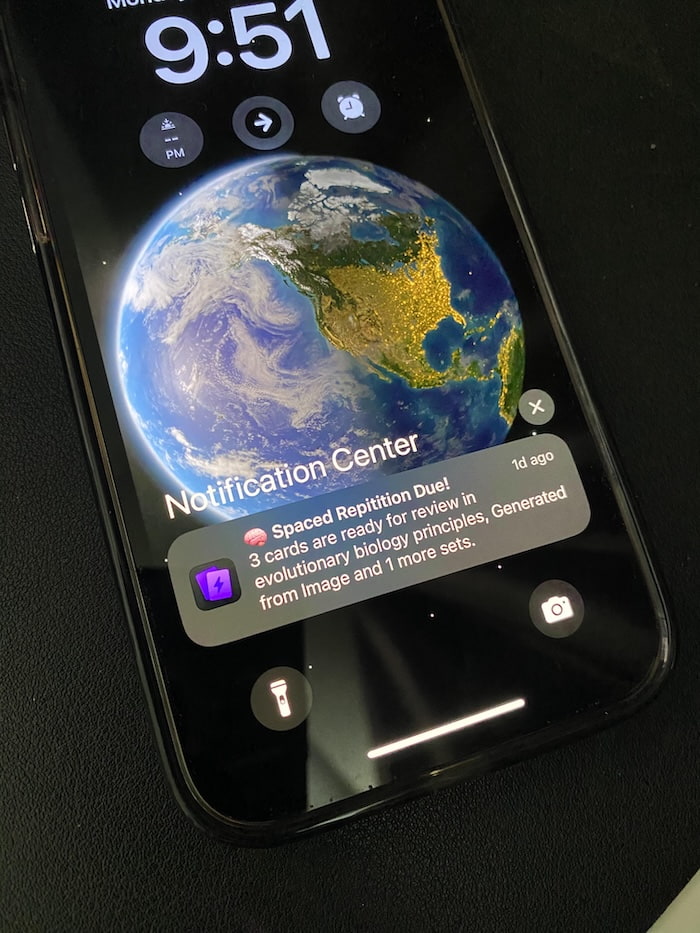
That’s active recall done for you.
Step 4: Let Spaced Repetition Do The Heavy Lifting
Here’s the big problem with physical flashcards:
- You forget to use them
- They get lost
- You repeat easy words too much
- You don’t repeat hard words enough
Spaced repetition fixes all of that.
What is spaced repetition (kid version)?
It’s basically:
> Review easy words less often,
> review hard words more often,
> so you remember everything with less effort.
Flashrecall has spaced repetition built in:
- You study your CVC cards
- You tap how hard or easy each one was
- The app automatically schedules the next review at the perfect time
- You get study reminders, so you don’t have to remember to remember
So instead of:
> “We haven’t done flashcards in two weeks…”
You get:
> “Oh, Flashrecall just reminded us. 5 minutes of CVC words before dinner.”
That tiny consistency is what actually builds reading skills.
Step 5: Turn CVC Practice Into Quick, Fun Games
You don’t need full “lessons.”
You just need 5–10 minute games.
Here are some easy ones you can do with CVC flashcards (physical or in Flashrecall):
1. “Guess The Word” (Picture First)
- Show the picture of a cat
- Ask: “What’s this?”
- Then: “Let’s sound it out. What letters do we hear?”
- Have them spell it: c-a-t
- Flip the card or tap to reveal the word
2. “Robot Reading”
- Show the word (e.g. sun)
- Tell your kid: “Read it like a robot.”
- They say: /s/… /u/… /n/…
- Then say it fast: “sun!”
3. “Find The Odd One Out”
Make a small deck in Flashrecall with:
- cat, dog, sun, bed, mop, car (not CVC, but familiar)
Ask:
- “Which one doesn’t match our CVC pattern? Which one is different?”
It secretly teaches them word structure awareness.
4. “Story Builder”
- Show 3–4 CVC picture cards: cat, bed, sun, cup
- Ask: “Can we make a silly story using all these words?”
- “The cat slept in the bed until the sun came up and knocked over the cup.”
This helps with comprehension, not just decoding.
Step 6: Use Flashrecall To Make CVC Sets For Anything
The cool part: CVC words are everywhere in your kid’s life.
You can create personalized decks in Flashrecall:
- Your pet: cat, dog
- Their room: bed, rug, cup, box
- Their toys: bus, car (even if it’s not CVC, it’s fine), doll, map
Because Flashrecall:
- Works on iPhone and iPad
- Works offline (perfect for car rides, waiting rooms, flights)
- Lets you chat with the flashcard if you’re unsure or want extra explanations
So if you’re not sure how to explain something or want more examples,
you can literally ask inside the app and keep learning from there.
Again, here’s the link:
https://apps.apple.com/us/app/flashrecall-study-flashcards/id6746757085
It’s free to start, so you can test it with a small CVC deck and see if your kid vibes with it.
Step 7: Slowly Level Up (But Keep CVC As A Base)
Once your child is comfortable with CVC + pictures, you can level up without changing tools.
In Flashrecall, just create new decks for:
1. CVC Word Families
- -at: cat, hat, mat, rat, bat
- -an: man, pan, can, fan
- -og: dog, log, fog, hog
This helps them see patterns:
“If I can read cat, I can read hat too.”
2. Tricky Vowels & Blends
- ship, shop, chip
- duck, back, neck
- star, car, jar
You can still use pictures to keep it grounded and fun.
3. Sight Words + CVC Mix
Mix simple sight words with CVC words:
- I, see, the, a, my, to
with
- cat, dog, sun, bed, map
Now they can start reading little sentences:
> “I see the cat.”
> “I see the sun.”
> “The dog is on the bed.”
You can make sentence cards in Flashrecall too:
- Front: sentence
- Back: picture of what it means
Why Use An App Instead Of Just Printable CVC Picture Cards?
Printables are great… for like, one week. Then:
- You lose half the set
- You forget to use them
- Your kid is bored of the same stack
With Flashrecall, you get:
- ✅ Instant card creation from images, text, audio, PDFs, YouTube links
- ✅ Manual card creation if you like total control
- ✅ Active recall built-in (front → think → reveal)
- ✅ Spaced repetition that auto-schedules reviews
- ✅ Study reminders so you actually stay consistent
- ✅ Works offline on iPhone and iPad
- ✅ Chat with the flashcard if you or your kid want extra help
- ✅ Great for languages, school subjects, exams, medicine, business later on — not just CVC words
So you’re not just making CVC flashcards with pictures…
You’re building a full learning system your kid can grow into for years.
Quick Start Plan (You Can Do This Today)
If you want a super simple plan:
1. Download Flashrecall:
https://apps.apple.com/us/app/flashrecall-study-flashcards/id6746757085
2. Make a tiny deck of 10 CVC words with pictures (cat, dog, sun, bed, hat, map, pig, cup, bus, rug)
3. Do 5 minutes of practice with your kid
- Use it 4–5 days, just 5–10 minutes a day
- Let the app handle the review timing with spaced repetition
- Add a few new words when the old ones feel easy
- You’ll probably be shocked at how confidently they can sound out and read simple words.
If you’re using CVC flashcards with pictures already, you’re on the right track.
If you want to make that process faster, easier, and more consistent, Flashrecall basically does the boring parts for you so you can focus on the fun “wow, you read that!” moments.
Frequently Asked Questions
What's the fastest way to create flashcards?
Manually typing cards works but takes time. Many students now use AI generators that turn notes into flashcards instantly. Flashrecall does this automatically from text, images, or PDFs.
Is there a free flashcard app?
Yes. Flashrecall is free and lets you create flashcards from images, text, prompts, audio, PDFs, and YouTube videos.
What is active recall and how does it work?
Active recall is the process of actively retrieving information from memory rather than passively reviewing it. Flashrecall forces proper active recall by making you think before revealing answers, then uses spaced repetition to optimize your review schedule.
Related Articles
- Jolly Phonics Cards: 7 Powerful Ways To Help Kids Read Faster (Most Parents Don’t Know This) – Turn Any Phonics List Into Fun, Smart Flashcards On Your Phone
- Essential Letters And Sounds Flashcards: 7 Powerful Ways To Teach Reading Faster (Most Parents Don’t Know These) – Turn simple flashcards into a complete reading system your kid will actually enjoy.
- Abacus Flash Cards: The Essential Guide To Teaching Mental Math Faster (Without Boring Worksheets) – Discover how to turn abacus flash cards into a fun, modern learning system your kid will actually enjoy.
Research References
The information in this article is based on peer-reviewed research and established studies in cognitive psychology and learning science.
Cepeda, N. J., Pashler, H., Vul, E., Wixted, J. T., & Rohrer, D. (2006). Distributed practice in verbal recall tasks: A review and quantitative synthesis. Psychological Bulletin, 132(3), 354-380
Meta-analysis showing spaced repetition significantly improves long-term retention compared to massed practice
Carpenter, S. K., Cepeda, N. J., Rohrer, D., Kang, S. H., & Pashler, H. (2012). Using spacing to enhance diverse forms of learning: Review of recent research and implications for instruction. Educational Psychology Review, 24(3), 369-378
Review showing spacing effects work across different types of learning materials and contexts
Kang, S. H. (2016). Spaced repetition promotes efficient and effective learning: Policy implications for instruction. Policy Insights from the Behavioral and Brain Sciences, 3(1), 12-19
Policy review advocating for spaced repetition in educational settings based on extensive research evidence
Karpicke, J. D., & Roediger, H. L. (2008). The critical importance of retrieval for learning. Science, 319(5865), 966-968
Research demonstrating that active recall (retrieval practice) is more effective than re-reading for long-term learning
Roediger, H. L., & Butler, A. C. (2011). The critical role of retrieval practice in long-term retention. Trends in Cognitive Sciences, 15(1), 20-27
Review of research showing retrieval practice (active recall) as one of the most effective learning strategies
Dunlosky, J., Rawson, K. A., Marsh, E. J., Nathan, M. J., & Willingham, D. T. (2013). Improving students' learning with effective learning techniques: Promising directions from cognitive and educational psychology. Psychological Science in the Public Interest, 14(1), 4-58
Comprehensive review ranking learning techniques, with practice testing and distributed practice rated as highly effective

FlashRecall Team
FlashRecall Development Team
The FlashRecall Team is a group of working professionals and developers who are passionate about making effective study methods more accessible to students. We believe that evidence-based learning tec...
Credentials & Qualifications
- •Software Development
- •Product Development
- •User Experience Design
Areas of Expertise
Ready to Transform Your Learning?
Start using FlashRecall today - the AI-powered flashcard app with spaced repetition and active recall.
Download on App Store