Division Flash Cards For Kids: The Powerful Guide
Division flash cards for kids make learning fun and engaging. Flashrecall helps create custom cards and schedules reviews, so math practice becomes a game.
How Flashrecall app helps you remember faster. It's free
Why Division Flash Cards Still Matter (And Why Most Kids Hate Them)
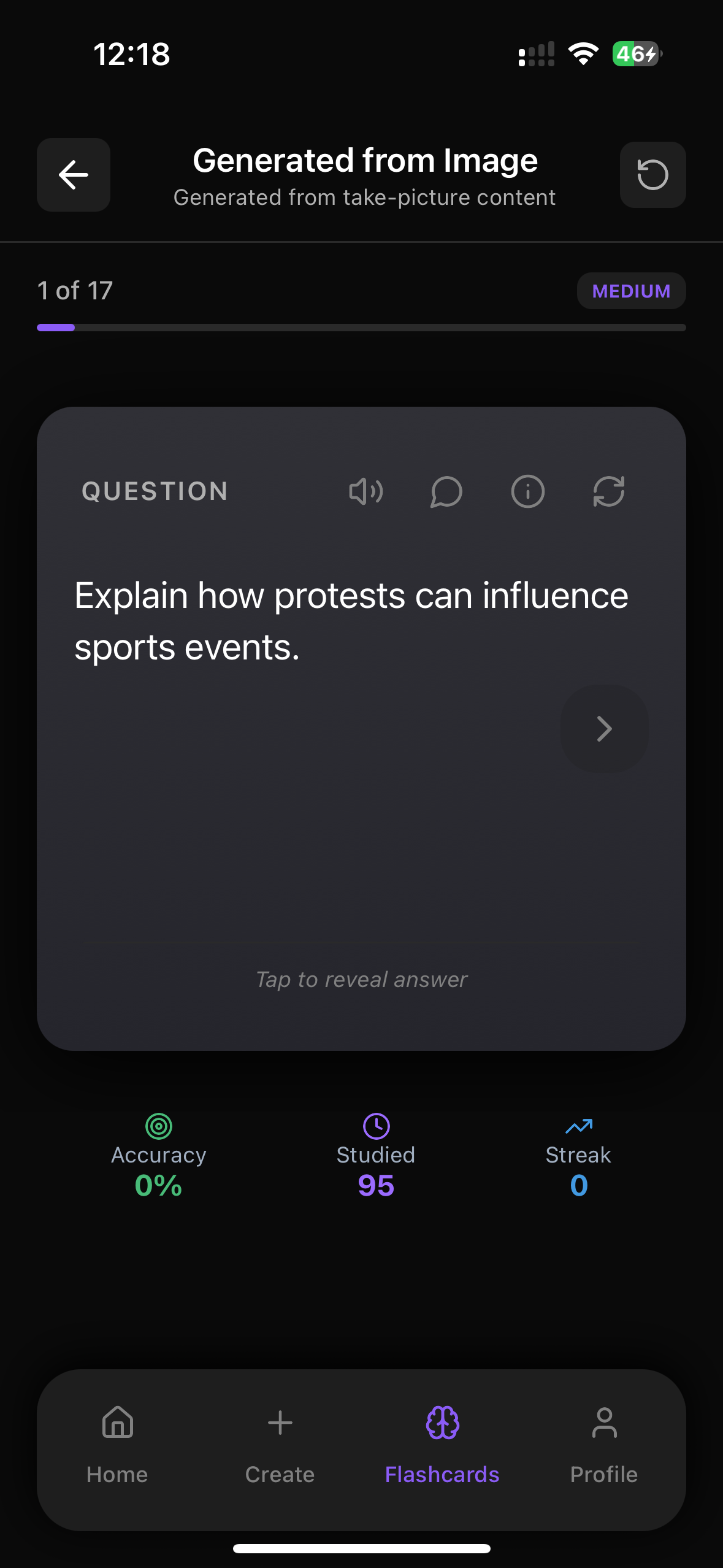
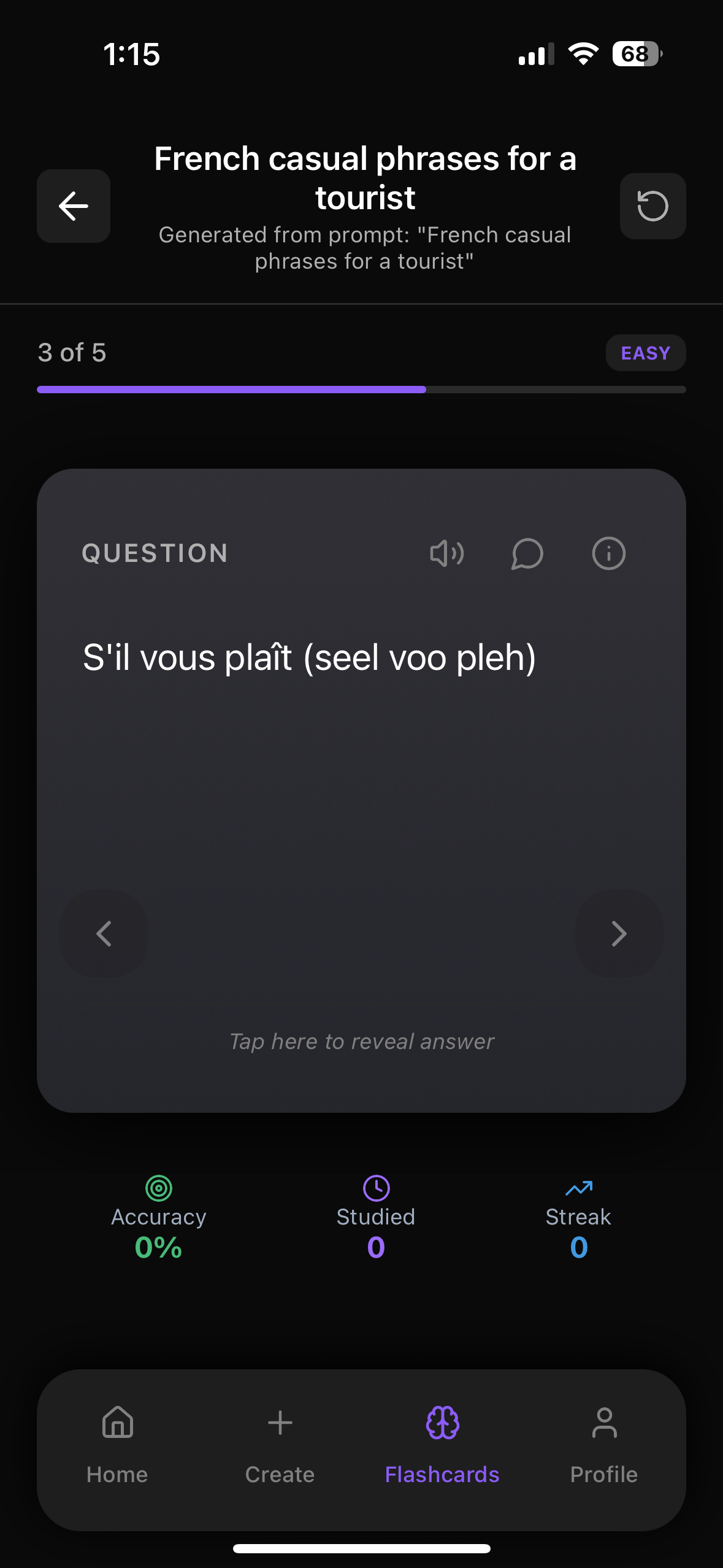
So, you know how division can be a bit tricky for kids to wrap their heads around? That's where division flash cards for kids come in, and they're honestly a lifesaver. These little cards make learning fun with their colorful images and simple words, keeping kiddos engaged like it's a game. And get this, Flashrecall makes it super easy for you to whip up custom flashcards from photos, drawings, or just text – perfect for when you're looking to make learning both fun and effective. Plus, with their nifty spaced repetition thing, your kid gets to review just when they need it most, without feeling like it's too much. If you're curious about more ways to help your kiddo rock those math facts, you might wanna check out our complete guide.
But if your kid can’t quickly answer stuff like `36 ÷ 6` or `81 ÷ 9`, everything in math gets harder:
- Long division
- Fractions
- Ratios
- Word problems
All of it slows down.
That’s where smart flashcards come in. And instead of carrying a stack of crumpled cards around, you can just use an app like Flashrecall on your iPhone or iPad:
👉 https://apps.apple.com/us/app/flashrecall-study-flashcards/id6746757085
Flashrecall basically turns division flash cards into:
- Quick daily practice
- Automatically scheduled reviews
- A game-like routine that doesn’t feel like torture
Let’s break down how to actually use division flash cards in a way that works (and how Flashrecall makes it way easier).
Step 1: Start With The Right Division Facts
Before you even touch flash cards, decide which division facts you’re focusing on.
A good order:
1. ÷1, ÷2, ÷5, ÷10 (easy wins, builds confidence)
2. ÷3, ÷4, ÷6
3. ÷7, ÷8, ÷9 (usually the hardest)
Example sets:
- Set 1: All facts with answers up to 10 (e.g., `18 ÷ 3`, `40 ÷ 5`, `72 ÷ 8`)
- Set 2: Larger numbers but still one-digit answers (e.g., `63 ÷ 7`, `81 ÷ 9`)
In Flashrecall, you can create one deck for each level:
- “Division – Easy Facts”
- “Division – Tricky 7s & 8s”
- “Mixed Division Challenge”
That way you’re not mixing super easy and super hard cards too early.
Step 2: Make Smarter Division Flash Cards (Not Just “Question / Answer”)
Paper flash cards are usually:
- Front: `42 ÷ 7`
- Back: `6`
That’s fine, but you can make them way more powerful.
In Flashrecall, each card can have:
- The division fact
- A quick hint
- A connection to multiplication
For example:
`42 ÷ 7 = ?`
_Hint: Think 7 × ? = 42_
`6`
_Because 7 × 6 = 42_
You can also:
- Add images (like groups of objects being divided)
- Add audio (saying the question out loud for younger kids)
- Turn a worksheet or textbook page into flashcards instantly by snapping a photo
Flashrecall can make flashcards automatically from:
- Images (like a photo of a math worksheet)
- Text
- PDFs
- Even YouTube videos (if there’s a division lesson you like)
So instead of typing 100 cards, you can:
1. Snap a photo
2. Let Flashrecall pull out the questions
3. Edit anything you want
4. Start practicing
Step 3: Use Active Recall (The One Thing That Actually Builds Speed)
The magic of flash cards isn’t the card — it’s active recall: forcing your brain to pull the answer out from memory.
With division flash cards, that means:
- Look at `56 ÷ 8`
- Say the answer before flipping or tapping
- Then check if you got it right
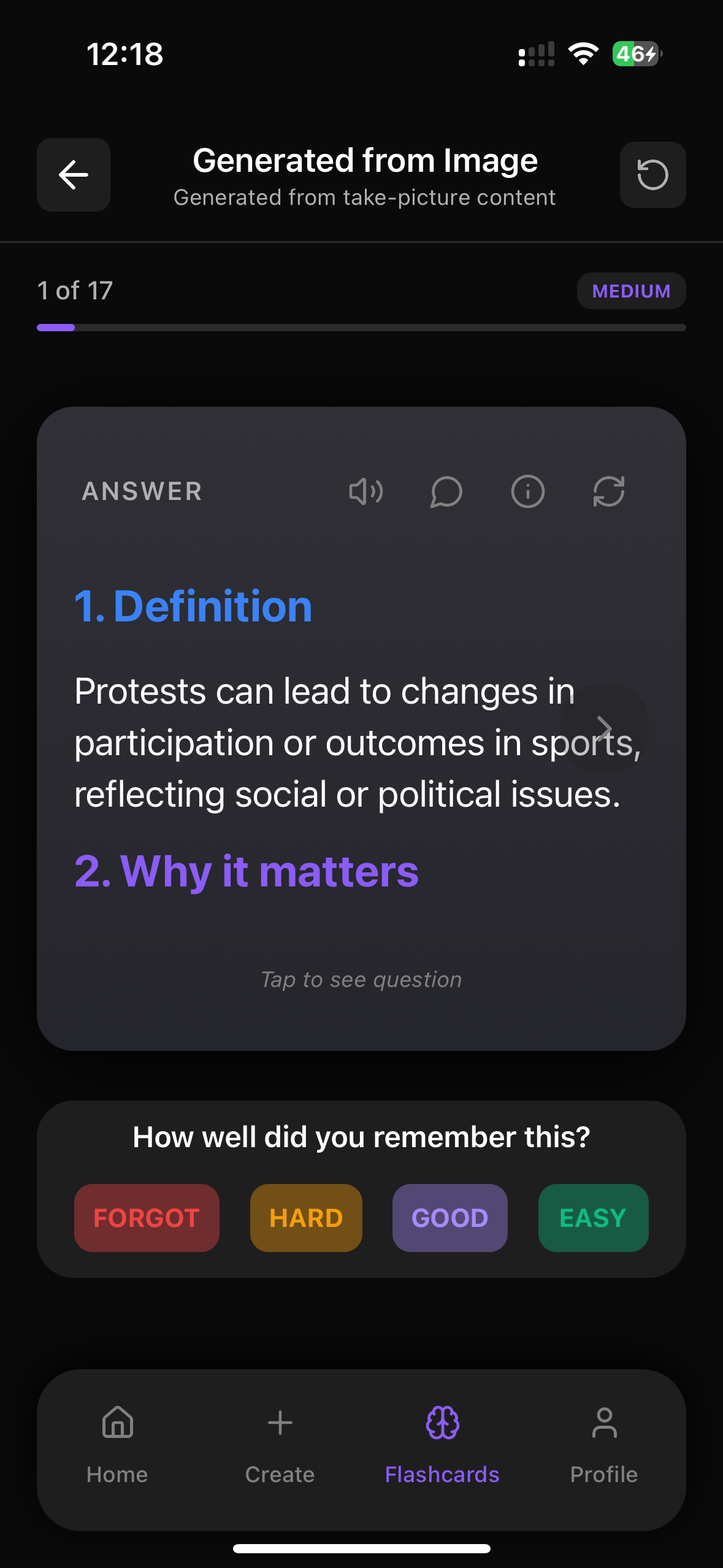
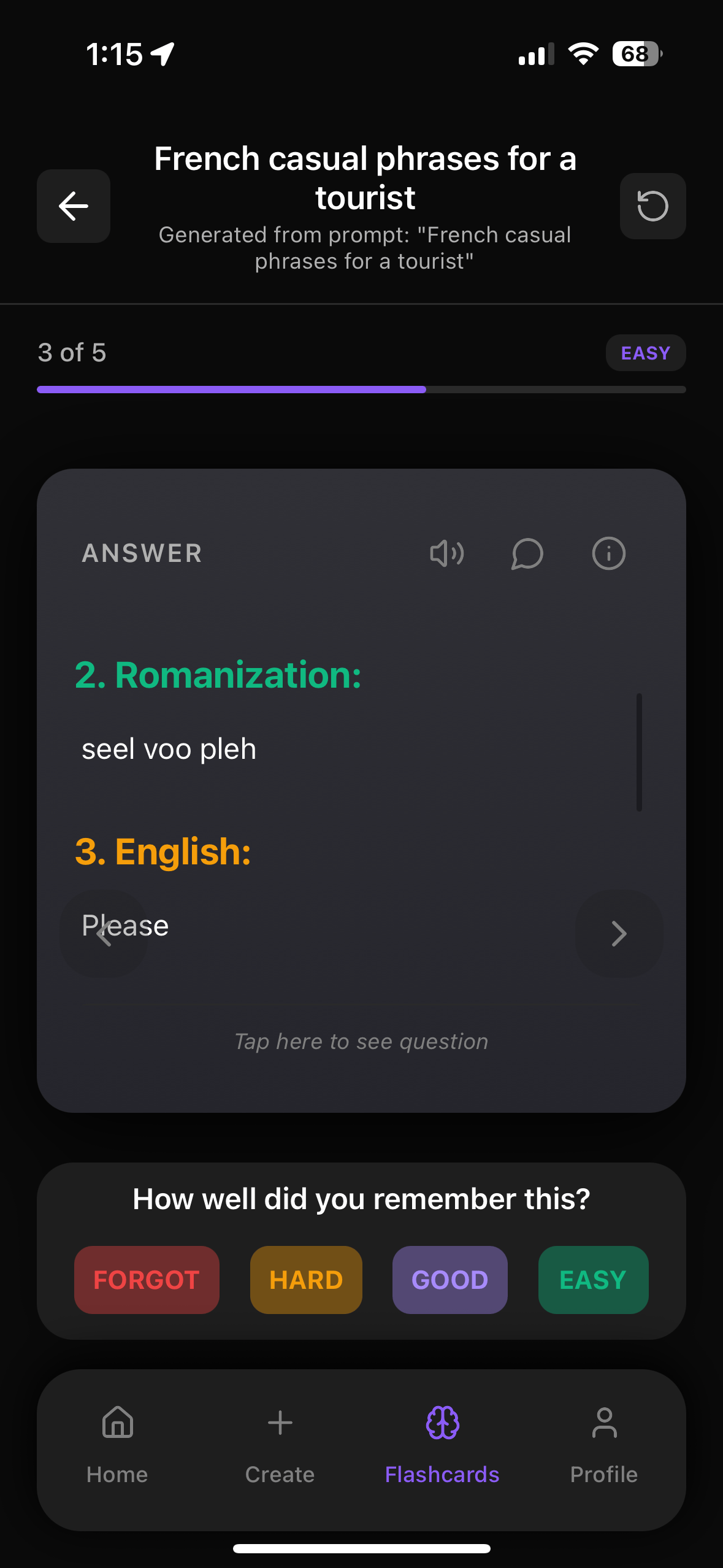
Flashrecall has built-in active recall, so:
- It shows you the question
- You think of the answer
- Then you tap to reveal it
- You rate how easy or hard it was
Flashrecall automatically keeps track and reminds you of the cards you don't remember well so you remember faster. Like this :
That “Was this hard or easy?” step matters a lot, because it tells the app when to show that card again.
Step 4: Let Spaced Repetition Do The Heavy Lifting
This is where digital beats paper, every time.
If you only use paper cards, you:
- Shuffle them randomly
- See the same easy cards over and over
- Rarely see the ones you keep forgetting
Spaced repetition flips that:
- Easy cards: shown less often
- Hard cards: shown more often
- Just before you’re about to forget them
Flashrecall has built-in spaced repetition with auto reminders, so:
- You don’t have to remember when to review
- The app schedules the perfect time to show each division fact
- You just open the app and follow the queue
Result:
Your kid spends less time drilling and remembers more.
Step 5: Turn Practice Into Short, Daily Routines (Not 1-Hour Torture Sessions)
With division, consistency beats intensity.
Instead of:
- One giant 45-minute battle over flash cards
Try:
- 5–10 minutes per day
- Right after school, before dinner, or in the car
In Flashrecall, you can:
- Set study reminders so you don’t forget
- Do a quick session whenever you have a spare moment
- Even practice offline (perfect for car rides, waiting rooms, flights)
A simple routine:
- Day 1–3: 10 new division facts + review
- Day 4–7: Review only, let spaced repetition choose what’s due
- End of week: Quick “test” session – see how many can be answered in 1 minute
Because Flashrecall is fast, modern, and super simple to use, kids don’t feel like they’re fighting the app just to get started.
Step 6: Use “Chat With Your Flashcard” When They Get Stuck
This is where Flashrecall gets really cool.
If your kid keeps missing something like `63 ÷ 7`, you can:
- Open that card in Flashrecall
- Chat with the flashcard and ask something like:
- “Explain 63 ÷ 7 in a simple way”
- “Show this as groups of objects”
- “How can I remember this fact?”
Flashrecall can:
- Break the problem down
- Give extra examples
- Help connect it to multiplication or real-life situations
So instead of just memorizing blindly, they actually understand what the division means.
Step 7: Mix Division With Other Math Skills
Division doesn’t live alone. Once the basic facts are solid, you can build more advanced decks in Flashrecall, like:
- Word Problems Deck
- “If 24 apples are shared equally among 6 kids, how many apples per kid?”
- Long Division Steps Deck
- Cards that remind them of each step in long division
- Fractions & Division Deck
- “What is 12 ÷ 4 as a fraction and as a simplified number?”
Flashrecall is great for:
- Elementary math
- Middle school
- High school
- University
- Even professional stuff like medicine, business, languages, anything
So those division decks can live alongside:
- Times tables
- Fractions
- Vocabulary
- Science facts
All in one place, on iPhone or iPad.
Paper Flash Cards vs Flashrecall: What’s Actually Better?
You can absolutely use physical division flash cards. They’re fine. But here’s the honest comparison:
- ✅ Cheap
- ✅ Hands-on
- ❌ Easy to lose
- ❌ Hard to organize by difficulty
- ❌ No reminders
- ❌ No spaced repetition
- ❌ No explanations when stuck
- ✅ Free to start
- ✅ Works on iPhone and iPad
- ✅ Automatically schedules reviews (spaced repetition)
- ✅ Study reminders built-in
- ✅ Works offline
- ✅ Can make cards from images, PDFs, text, YouTube, or manually
- ✅ You can chat with the flashcard when you don’t understand
- ✅ Easy to sort by topic/level
If you’re already using paper cards, you can literally:
1. Take a photo of them
2. Import into Flashrecall
3. Turn them into smart digital cards with reminders and spaced repetition
Best of both worlds.
Example: A Simple Division Flash Card Deck In Flashrecall
Here’s how you might set up a “Division by 6” deck:
Front: `12 ÷ 6 = ?`
Back: `2 – because 6 × 2 = 12`
Front: `36 ÷ 6 = ?`
Back: `6 – think 6 × 6 = 36`
Front: `54 ÷ 6 = ?`
Back: `9 – 6 × 9 = 54`
Front:
> There are 36 cookies shared equally among 6 friends.
> How many cookies does each friend get?
Back:
> 6 cookies each – this is 36 ÷ 6
You add these into Flashrecall (or let the app generate them from text), and then:
- Do a 5-minute session daily
- Let spaced repetition handle the rest
After a week, you’ll see a huge jump in speed and confidence.
How To Get Started With Division Flash Cards Today
You don’t need anything fancy to begin:
1. Pick one group of facts (like ÷2 or ÷5)
2. Create a small deck (10–20 cards)
3. Practice a few minutes every day
If you want to make it way easier on yourself, grab Flashrecall here:
👉 https://apps.apple.com/us/app/flashrecall-study-flashcards/id6746757085
Use it to:
- Instantly create division flash cards from worksheets or notes
- Get automatic spaced repetition and reminders
- Let your kid chat with the card when they’re confused
- Keep all their math (and other subjects) in one simple app
Division flash cards don’t have to be a battle. With the right setup, they’re just a quick daily habit that quietly makes math way less scary.
Frequently Asked Questions
What's the fastest way to create flashcards?
Manually typing cards works but takes time. Many students now use AI generators that turn notes into flashcards instantly. Flashrecall does this automatically from text, images, or PDFs.
Is there a free flashcard app?
Yes. Flashrecall is free and lets you create flashcards from images, text, prompts, audio, PDFs, and YouTube videos.
How do I start spaced repetition?
You can manually schedule your reviews, but most people use apps that automate this. Flashrecall uses built-in spaced repetition so you review cards at the perfect time.
Related Articles
- Division Flash Cards 0–12: The Essential Guide to Helping Kids Master Math Faster (Without Tears) – Use this simple strategy and a smart flashcard app to make division finally click for your kid.
- Division Flash Cards: 7 Powerful Ways To Help Kids Master Math Facts Faster
- Addition Flash Cards: 7 Powerful Ways To Help Kids Master Math Facts Faster
Research References
The information in this article is based on peer-reviewed research and established studies in cognitive psychology and learning science.
Cepeda, N. J., Pashler, H., Vul, E., Wixted, J. T., & Rohrer, D. (2006). Distributed practice in verbal recall tasks: A review and quantitative synthesis. Psychological Bulletin, 132(3), 354-380
Meta-analysis showing spaced repetition significantly improves long-term retention compared to massed practice
Carpenter, S. K., Cepeda, N. J., Rohrer, D., Kang, S. H., & Pashler, H. (2012). Using spacing to enhance diverse forms of learning: Review of recent research and implications for instruction. Educational Psychology Review, 24(3), 369-378
Review showing spacing effects work across different types of learning materials and contexts
Kang, S. H. (2016). Spaced repetition promotes efficient and effective learning: Policy implications for instruction. Policy Insights from the Behavioral and Brain Sciences, 3(1), 12-19
Policy review advocating for spaced repetition in educational settings based on extensive research evidence
Karpicke, J. D., & Roediger, H. L. (2008). The critical importance of retrieval for learning. Science, 319(5865), 966-968
Research demonstrating that active recall (retrieval practice) is more effective than re-reading for long-term learning
Roediger, H. L., & Butler, A. C. (2011). The critical role of retrieval practice in long-term retention. Trends in Cognitive Sciences, 15(1), 20-27
Review of research showing retrieval practice (active recall) as one of the most effective learning strategies
Dunlosky, J., Rawson, K. A., Marsh, E. J., Nathan, M. J., & Willingham, D. T. (2013). Improving students' learning with effective learning techniques: Promising directions from cognitive and educational psychology. Psychological Science in the Public Interest, 14(1), 4-58
Comprehensive review ranking learning techniques, with practice testing and distributed practice rated as highly effective

FlashRecall Team
FlashRecall Development Team
The FlashRecall Team is a group of working professionals and developers who are passionate about making effective study methods more accessible to students. We believe that evidence-based learning tec...
Credentials & Qualifications
- •Software Development
- •Product Development
- •User Experience Design
Areas of Expertise
Ready to Transform Your Learning?
Start using FlashRecall today - the AI-powered flashcard app with spaced repetition and active recall.
Download on App Store