Drug Cards For Nursing Students: 7 Powerful Tips To Learn Meds Faster (Without Losing Your Mind) – Learn how to make drug cards that actually stick in your brain and speed up your nursing exams and clinicals.
Drugs cards for nursing students don’t have to be a nightmare. See how paper vs digital cards stack up and how Flashrecall uses spaced repetition to lock med...
How Flashrecall app helps you remember faster. It's free
What Are Drug Cards For Nursing Students (And Why Everyone Talks About Them)?
Alright, let’s talk about drugs cards for nursing students – they’re basically quick-reference flashcards that help you remember meds: names, classes, dosages, side effects, nursing considerations, all that fun stuff. You use them so you’re not blanking during exams, clinicals, or when your instructor randomly asks, “So, what do you need to monitor with this med?” Instead of flipping through a giant drug book, you’ve got clean, simple cards with exactly what you need. And when you put those drug cards into an app like Flashrecall (https://apps.apple.com/us/app/flashrecall-study-flashcards/id6746757085), you can review them with spaced repetition so the info actually sticks long-term, not just for tomorrow’s quiz.
Why Drug Cards Matter So Much In Nursing School
You already know: nursing school throws a ridiculous amount of meds at you.
- Generic vs brand names
- Drug classes
- Indications and contraindications
- Side effects and adverse reactions
- Lab values to monitor
- Nursing responsibilities and patient teaching
Trying to memorize all of this by just reading a textbook is torture.
The trick is making good drug cards, not just copying your textbook word-for-word. And that’s where a smart flashcard app like Flashrecall helps — it forces you to focus on what actually matters and tests you with active recall and spaced repetition instead of passive rereading.
Paper vs Digital Drug Cards: What Actually Works Better?
You’ve probably seen both:
- People with stacks of index cards held together with rubber bands
- People flipping through flashcards on their phone before clinical
Paper Drug Cards
- Writing by hand can help you remember
- Easy to pull out during class
- No tech needed
- Easy to lose or damage
- Hard to organize when you have 200+ meds
- You can’t search them
- No reminders to review
- Rewriting = huge time sink
Digital Drug Cards (Using an App)
- Searchable by drug name, class, system
- Easy to edit and update
- You can study anywhere (bus, bed, break at work)
- Spaced repetition can automatically schedule reviews
- You can add images, PDFs, and even YouTube explanations
- You need your phone or tablet
- You need a good app that’s not clunky or outdated
This is where Flashrecall comes in. It’s a fast, modern flashcard app for iPhone and iPad that’s perfect for nursing drug cards. You can grab it here:
👉 https://apps.apple.com/us/app/flashrecall-study-flashcards/id6746757085
How Flashrecall Makes Drug Cards Way Easier
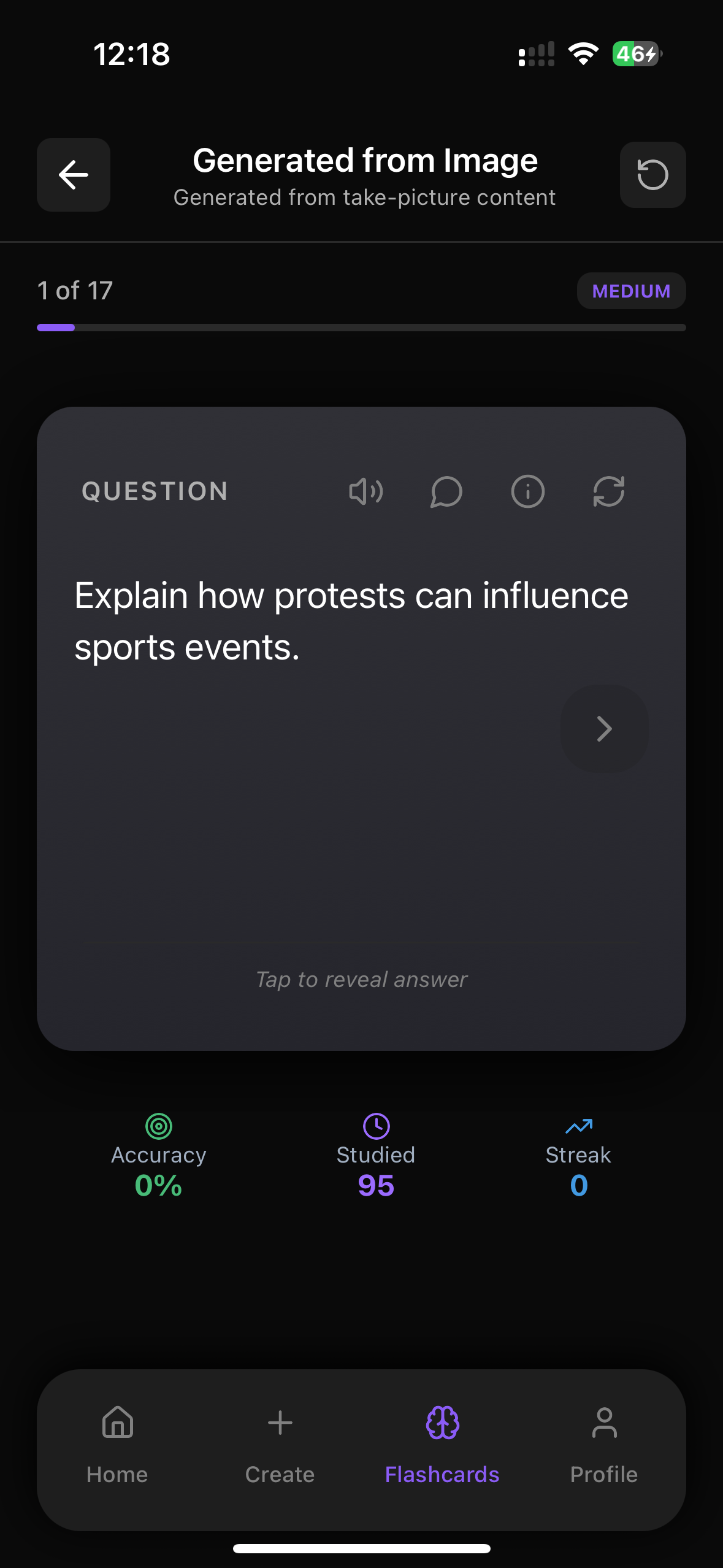
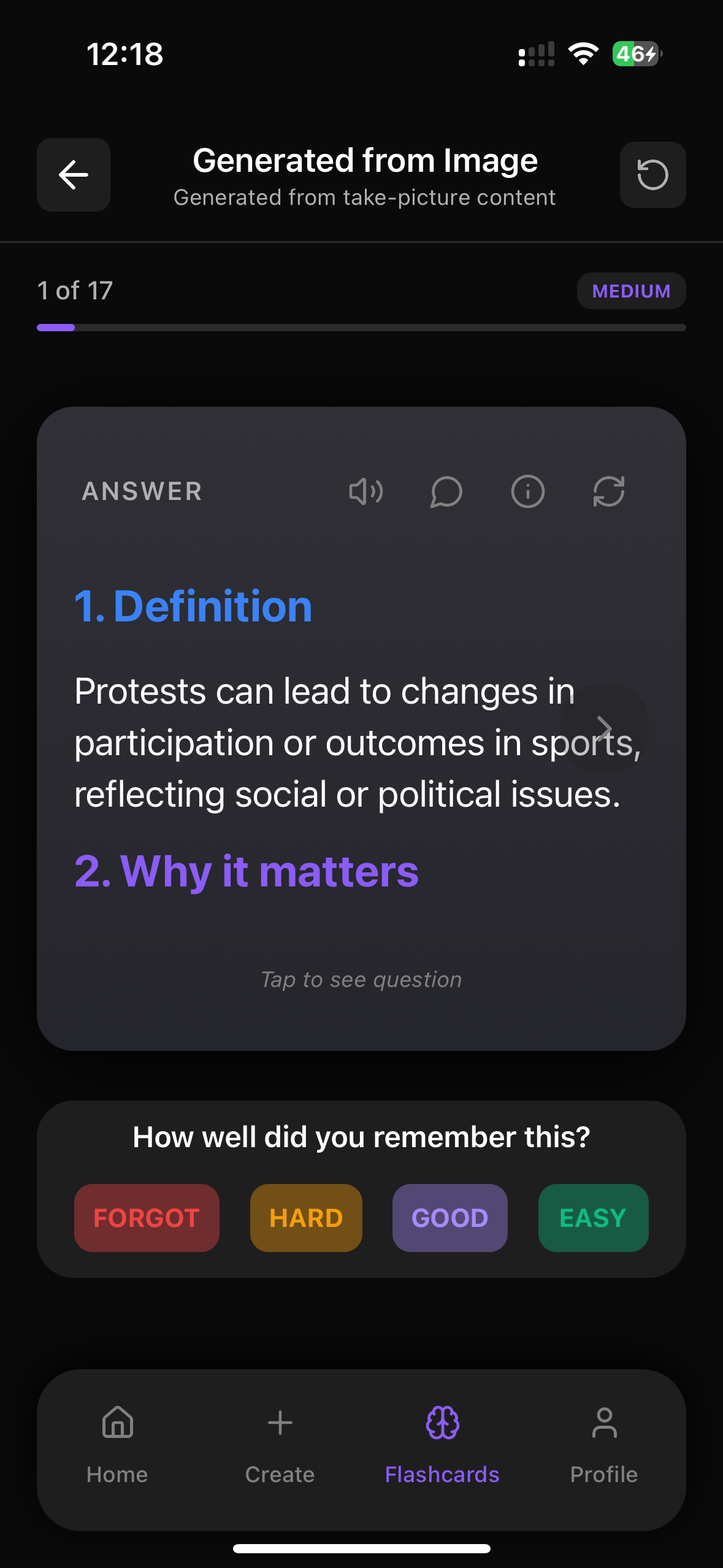
Instead of spending hours formatting cards, you can let the app do the heavy lifting. With Flashrecall, you can:
- Create cards instantly from images, PDFs, or text
- Take a photo of a drug table from your textbook → Flashrecall turns it into flashcards
- Import a PDF drug guide → auto-generate cards
- Make your own manual cards if you like to type things out
- Use built-in active recall so you’re always answering, not just rereading
- Get automatic spaced repetition + reminders so you don’t forget to review before exams
- Study offline (perfect for hospital basements with zero signal)
- Chat with your flashcards if you’re unsure — you can literally ask follow-up questions about a card
- Use it for any subject: meds, patho, labs, pharmacology, NCLEX prep, everything
And it’s free to start, so you can just try it with a few meds and see how it feels.
What To Put On Drug Cards (So They’re Actually Useful)
Here’s a simple structure you can use for every med. Don’t overcomplicate it.
- Drug name: “What should the nurse monitor for a patient taking furosemide?”
- Or: “What is the drug class and main use of metoprolol?”
Include the high-yield stuff:
- Generic / Brand name
- Drug class (e.g., loop diuretic, beta blocker)
- Mechanism (super short) – “Blocks beta-1 receptors in the heart”
- Indications – Why is this given?
- Key side effects / adverse effects – The “don’t forget this” ones
- Nursing considerations – Monitor BP? HR? Labs? I&Os?
- Patient teaching – “Change position slowly”, “Report weight gain”, etc.
You don’t need to write a novel. Short, punchy, testable info is what makes a great drug card.
In Flashrecall, you can even break one drug into multiple cards:
- Card 1: Name + class
- Card 2: Side effects
- Card 3: Nursing responsibilities
- Card 4: Patient teaching
Smaller chunks = easier recall.
Example: Turning One Med Into Great Drug Cards
Let’s take Furosemide (Lasix) as an example.
“Furosemide (Lasix) – what drug class is it and what is it used for?”
- Class: Loop diuretic
- Use: Treats edema (HF, liver, kidney disease) and hypertension
“Major side effects of furosemide the nurse should watch for?”
- Hypokalemia (low K+)
- Dehydration
- Hypotension
- Ototoxicity (high doses or rapid IV)
“Nursing considerations for a patient on furosemide?”
- Monitor BP, daily weight, I&Os
- Check potassium levels
- Assess for dehydration
- Give in the morning (to avoid nocturia)
You can create these manually in Flashrecall, or just snap a photo of your notes and let it help you turn that into cards.
7 Tips To Make Drug Cards For Nursing Students That Actually Work
1. Focus On Patterns, Not Just Individual Drugs
You’ll notice that drugs in the same class share similar:
- Side effects
- Uses
- Nursing considerations
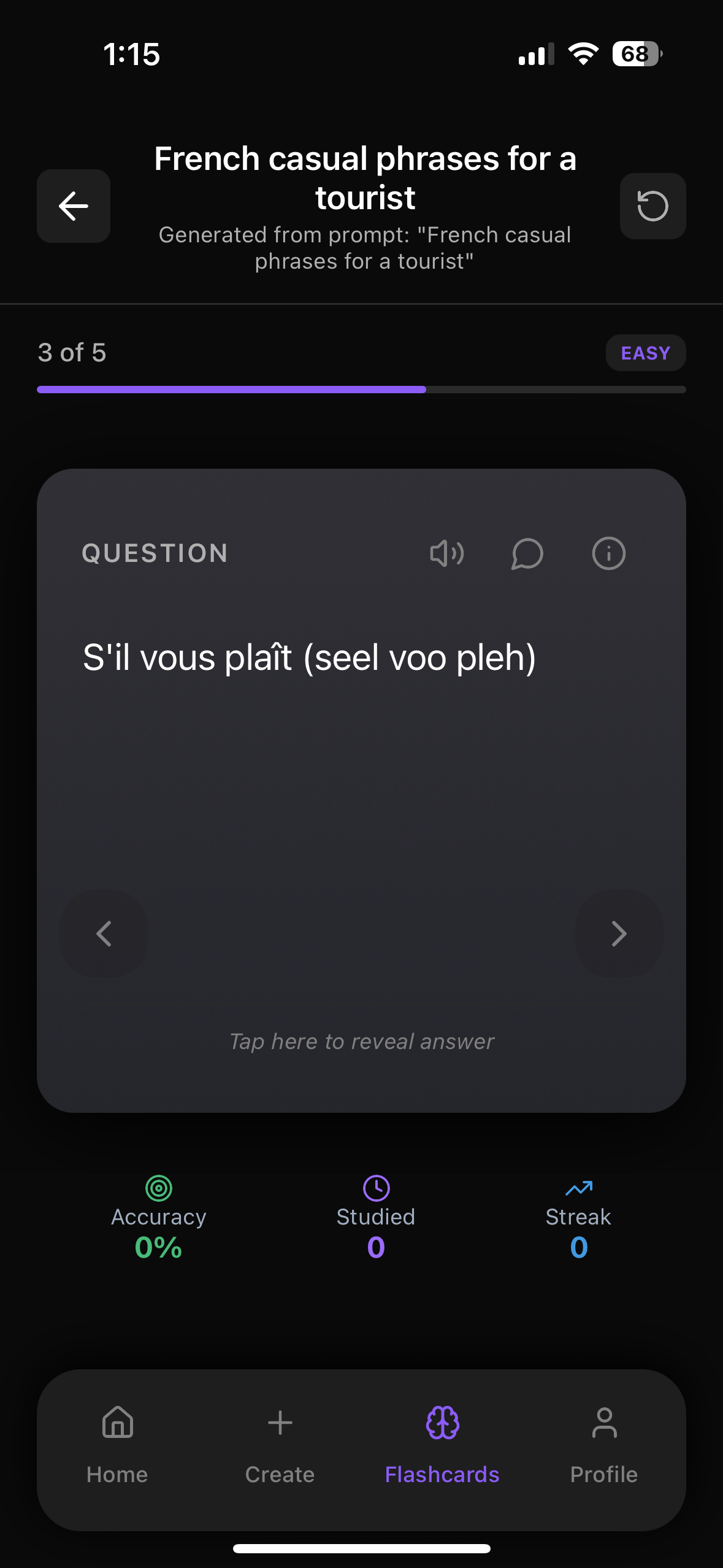
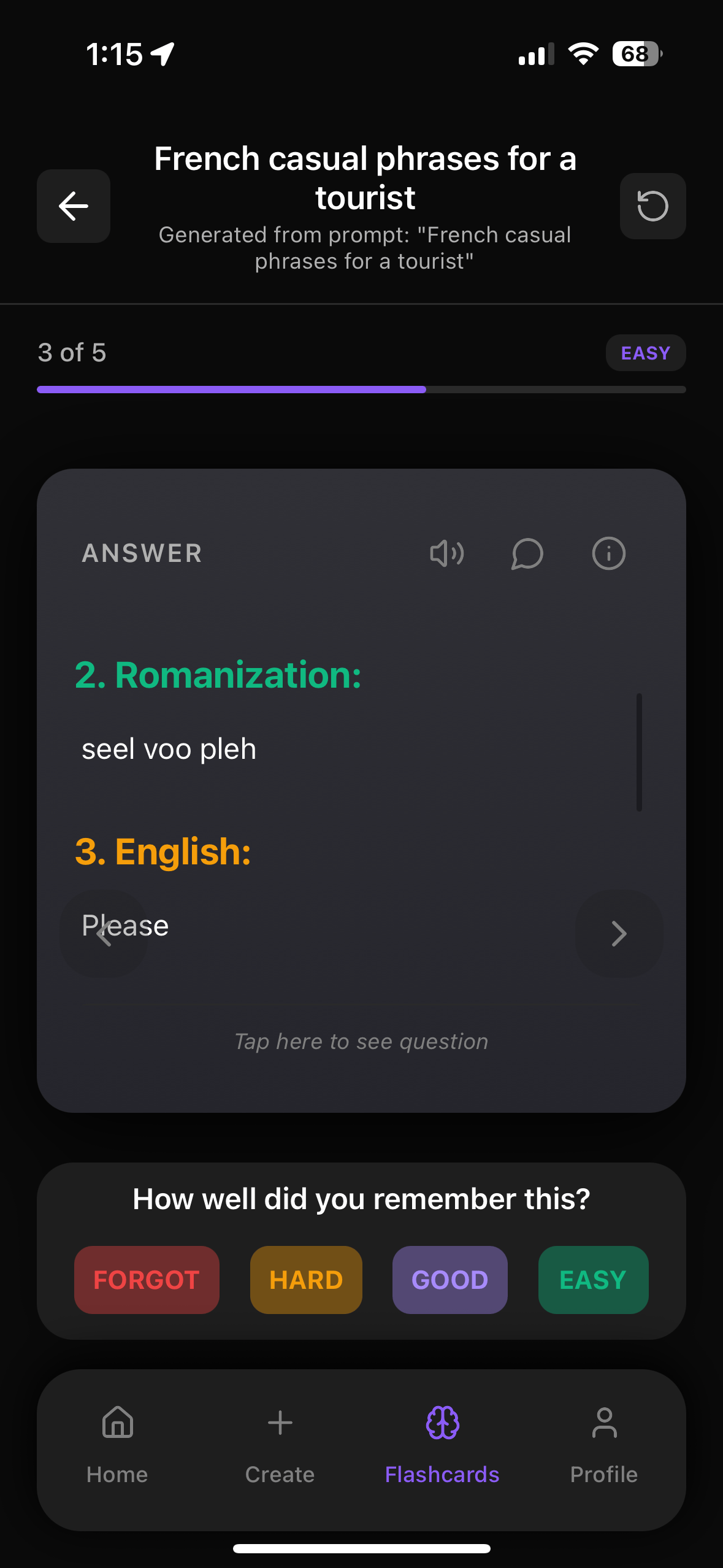
Flashrecall automatically keeps track and reminds you of the cards you don't remember well so you remember faster. Like this :
Example: Most beta blockers (ending in -lol) lower HR and BP and can cause bradycardia.
Make class-level cards in Flashrecall so you learn the pattern, not just random facts.
2. Use Questions, Not Just Facts
Instead of writing:
> “Metoprolol: beta blocker used for HTN, HR, angina”
Turn it into a question:
> “What is metoprolol used for and what vital sign should you monitor?”
This forces your brain to think, which is exactly how Flashrecall’s active recall is designed to work.
3. Keep Each Card Short
If your card looks like a paragraph from your textbook, it’s too long.
- One main idea per card
- Bullet points instead of sentences
- Highlight the must-know info, not everything possible
Your future self will thank you when you’re speed-reviewing before a pharm exam.
4. Add Images When It Helps
Some meds are easier to remember with visuals:
- A photo of a high-alert med label
- A chart of lab values to monitor
- A simple diagram of how a drug affects the body
In Flashrecall, you can:
- Add images directly
- Turn textbook images into flashcards by snapping a picture
5. Let Spaced Repetition Do The Heavy Lifting
The biggest mistake: making great drug cards… and then not reviewing them enough.
- New/weak cards more often
- Strong cards less often
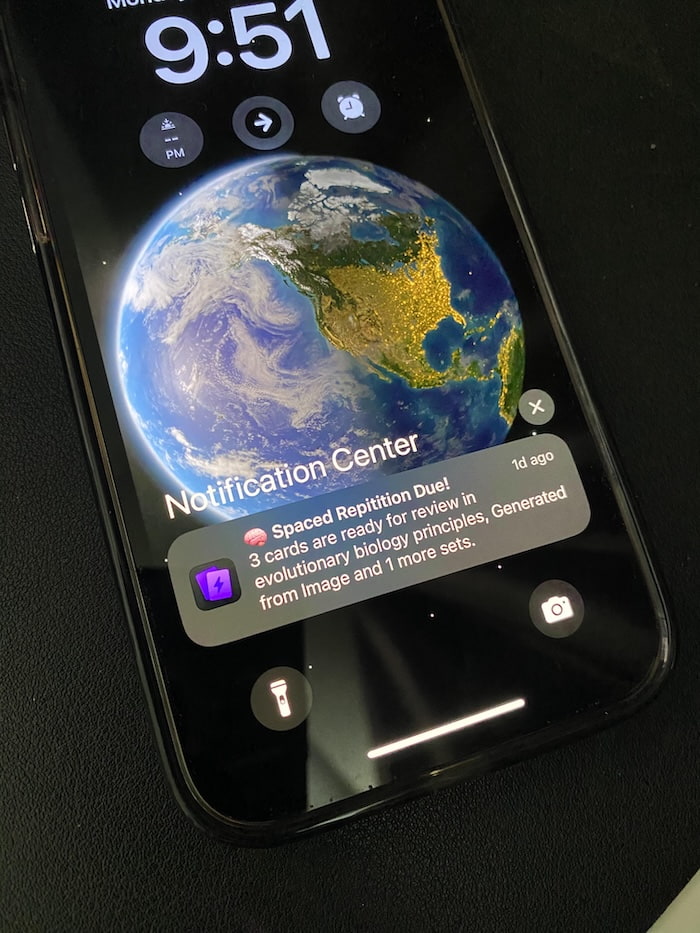
Flashrecall has built-in spaced repetition with auto reminders, so you don’t have to remember when to review — the app does that for you. You just open it, and it tells you what’s due today.
6. Use Study Reminders Around Your Schedule
You’re busy. Clinicals, lectures, assignments, life.
Set short, realistic study reminders in Flashrecall:
- 10 minutes after dinner
- 15 minutes before bed
- 5 minutes while you’re on the bus
Those tiny daily sessions add up way more than one giant cram before an exam.
7. Use “Chat With The Flashcard” When You’re Confused
Sometimes you look at a drug and think, “Okay but… why do we monitor this?”
With Flashrecall, you can actually chat with your flashcards:
- Ask follow-up questions
- Get clarifications
- Understand the reasoning, not just memorize words
That’s huge for nursing, because instructors love to ask “why?”
How Flashrecall Compares To Old-School Flashcard Apps
You might be thinking of using something like Anki or other generic flashcard apps. They work, but they can be:
- Clunky
- Ugly
- Hard to set up
- Overwhelming with settings
- Fast and modern
- Easy to use from day one
- Less “techy” and more “okay, I can actually do this tonight”
Plus, it’s perfect for nursing because you can:
- Create cards from images, PDFs, YouTube links, audio, or typed prompts
- Study offline at the hospital
- Use it on both iPhone and iPad
Grab it here and start turning your drug notes into cards in a few minutes:
👉 https://apps.apple.com/us/app/flashrecall-study-flashcards/id6746757085
Simple Study Routine For Drug Cards (You Can Steal This)
Here’s a realistic plan you can actually stick to:
- Take photos of the drugs you covered (slides, textbook, notes)
- Import them into Flashrecall and turn them into flashcards
- Do a 10–15 minute review session
- Mark which cards felt hard vs easy
- Let Flashrecall’s spaced repetition tell you what to review
- Add new meds as you go
- Filter by topic (cardiac meds, antibiotics, diuretics, etc.)
- Do quick, focused sessions instead of trying to read 40 pages of pharm at once
Final Thoughts: Make Drug Cards Work For You, Not Against You
Drugs cards for nursing students don’t have to be this huge, overwhelming project.
If you keep them short, focused, and question-based, and use an app that handles the scheduling and reminders, you’ll remember way more with less stress.
Try building your next set of drug cards in Flashrecall and let spaced repetition + active recall do the hard part for you:
👉 https://apps.apple.com/us/app/flashrecall-study-flashcards/id6746757085
Your future self during pharm exams (and in clinicals) is going to be very, very happy you started now.
Frequently Asked Questions
Is Anki good for studying?
Anki is powerful but requires manual card creation and has a steep learning curve. Flashrecall offers AI-powered card generation from your notes, images, PDFs, and videos, making it faster and easier to create effective flashcards.
What's the fastest way to create flashcards?
Manually typing cards works but takes time. Many students now use AI generators that turn notes into flashcards instantly. Flashrecall does this automatically from text, images, or PDFs.
How do I start spaced repetition?
You can manually schedule your reviews, but most people use apps that automate this. Flashrecall uses built-in spaced repetition so you review cards at the perfect time.
How can I study more effectively for this test?
Effective exam prep combines active recall, spaced repetition, and regular practice. Flashrecall helps by automatically generating flashcards from your study materials and using spaced repetition to ensure you remember everything when exam day arrives.
Related Articles
- Nursing Flashcards: 7 Powerful Study Tricks To Pass Exams Faster And Actually Remember What You Learn – Most Nursing Students Never Use Tip #4
- Flashcards For Nursing Students: 7 Powerful Study Hacks To Remember Everything For Clinicals And Exams Fast – Learn how to actually retain drug names, lab values, and procedures without burning out.
- Quizlet Nursing: 7 Powerful Study Secrets Most Nursing Students Never Learn Until It’s Too Late – Switch Your Flashcards Strategy Now and Make Exams Feel Easy
Research References
The information in this article is based on peer-reviewed research and established studies in cognitive psychology and learning science.
Cepeda, N. J., Pashler, H., Vul, E., Wixted, J. T., & Rohrer, D. (2006). Distributed practice in verbal recall tasks: A review and quantitative synthesis. Psychological Bulletin, 132(3), 354-380
Meta-analysis showing spaced repetition significantly improves long-term retention compared to massed practice
Carpenter, S. K., Cepeda, N. J., Rohrer, D., Kang, S. H., & Pashler, H. (2012). Using spacing to enhance diverse forms of learning: Review of recent research and implications for instruction. Educational Psychology Review, 24(3), 369-378
Review showing spacing effects work across different types of learning materials and contexts
Kang, S. H. (2016). Spaced repetition promotes efficient and effective learning: Policy implications for instruction. Policy Insights from the Behavioral and Brain Sciences, 3(1), 12-19
Policy review advocating for spaced repetition in educational settings based on extensive research evidence
Karpicke, J. D., & Roediger, H. L. (2008). The critical importance of retrieval for learning. Science, 319(5865), 966-968
Research demonstrating that active recall (retrieval practice) is more effective than re-reading for long-term learning
Roediger, H. L., & Butler, A. C. (2011). The critical role of retrieval practice in long-term retention. Trends in Cognitive Sciences, 15(1), 20-27
Review of research showing retrieval practice (active recall) as one of the most effective learning strategies
Dunlosky, J., Rawson, K. A., Marsh, E. J., Nathan, M. J., & Willingham, D. T. (2013). Improving students' learning with effective learning techniques: Promising directions from cognitive and educational psychology. Psychological Science in the Public Interest, 14(1), 4-58
Comprehensive review ranking learning techniques, with practice testing and distributed practice rated as highly effective

FlashRecall Team
FlashRecall Development Team
The FlashRecall Team is a group of working professionals and developers who are passionate about making effective study methods more accessible to students. We believe that evidence-based learning tec...
Credentials & Qualifications
- •Software Development
- •Product Development
- •User Experience Design
Areas of Expertise
Ready to Transform Your Learning?
Start using FlashRecall today - the AI-powered flashcard app with spaced repetition and active recall.
Download on App Store