Flash Cards For 3 Year Olds Guide: The Powerful Guide
Flashcards can help your 3-year-old learn colors, shapes, and more. Use the Flashrecall app to create visual cards from photos or drawings for engaging.
How Flashrecall app helps you remember faster. It's free
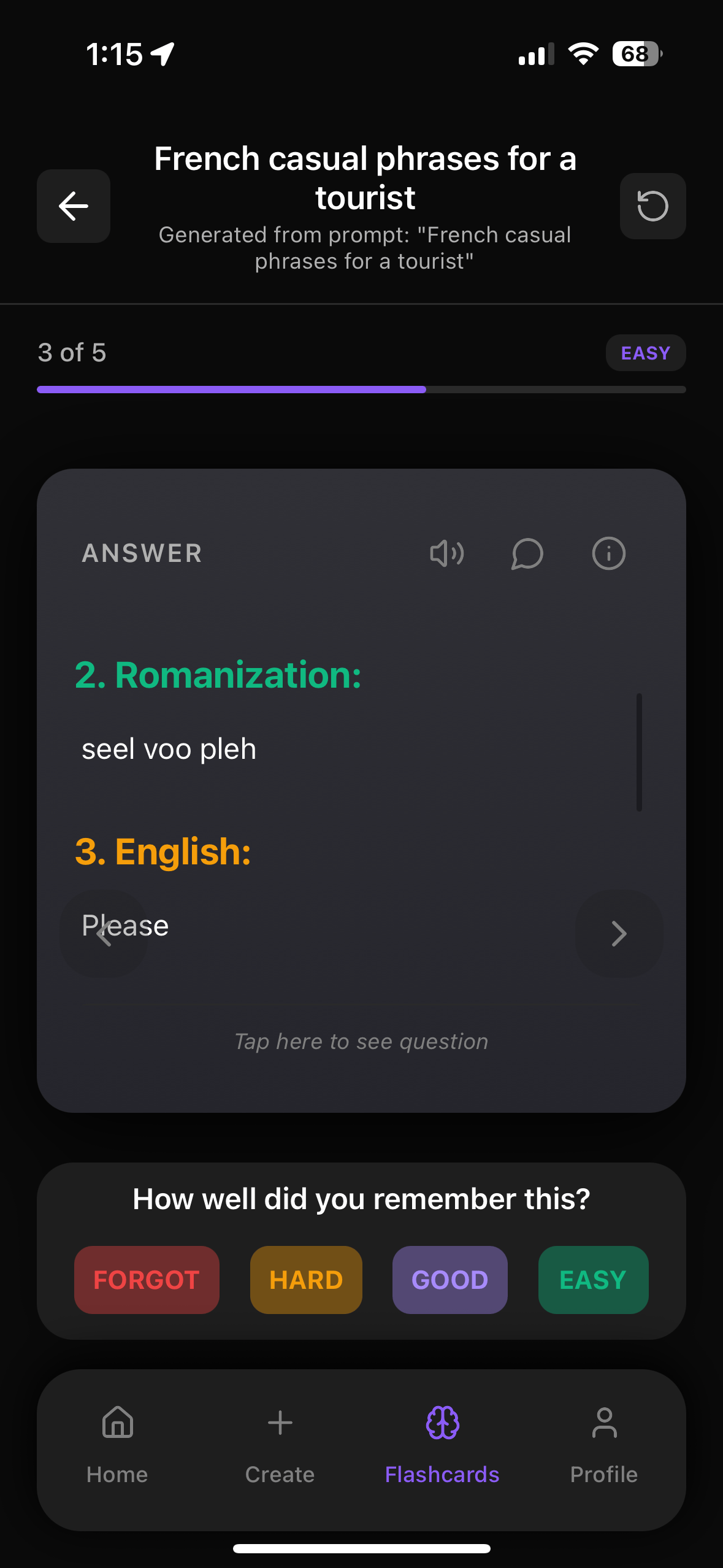
Why Flashcards For 3-Year-Olds Can Be A Game-Changer
Ever try figuring out the whole flash cards for 3 year olds guide and felt like you were basically solving a puzzle? You're not alone. The cool part is, using flashcards can seriously help your little one learn faster and remember stuff better—not just for school exams but for fun, too. It's all about breaking things down into bite-sized pieces so your kiddo isn't overwhelmed. And honestly, the secret sauce is in how you use them. You gotta mix in some active recall, spaced repetition, and keep at it regularly. That's where Flashrecall comes in handy. It automatically creates flashcards from your study material and sorts out the perfect times for review—kind of like having a study buddy who keeps track of everything for you. If you're looking for some awesome tips to make learning fun and stress-free, especially for those energetic 3-year-olds, check out our complete guide. Trust me, it's way simpler than
And you don’t even need a huge physical card collection anymore.
With an app like Flashrecall
👉 https://apps.apple.com/us/app/flashrecall-study-flashcards/id6746757085
you can create super simple, visual flashcards for your toddler in seconds – from photos, drawings, or even screenshots of their favorite animals or toys.
Let’s break down how to actually use flash cards with a 3-year-old so they’re fun, not frustrating.
What Can 3-Year-Olds Learn With Flashcards?
At around 3 years old, kids can start learning:
- Colors
- Shapes
- Animals and sounds
- Everyday objects (cup, car, shoes, ball)
- Simple numbers (1–5, then 1–10)
- Basic letters (especially the ones in their name)
- Emotions (happy, sad, angry, excited)
You don’t need to cram everything at once. Think tiny, fun moments throughout the day.
With Flashrecall, you can make little themed decks like:
- “Animals & Sounds”
- “My Toys”
- “Things in the Kitchen”
- “Family & Friends”
And because it works on iPhone and iPad, you can pull it out at restaurants, in the car, or waiting at the doctor’s office.
Tip #1: Use Real Photos, Not Just Cartoons
Three-year-olds connect best with things they actually see in real life.
Instead of only using generic clipart:
- Take a photo of your dog → turn it into a flashcard
- Snap a picture of their shoes, bed, favorite teddy
- Take photos of family members and add their names
With Flashrecall, this is ridiculously easy:
- Take a photo
- Import it into the app
- Type a word or short phrase
- Boom – instant flashcard deck
You can even grab images from PDFs or screenshots, or paste a YouTube link and let Flashrecall pull info for you. That way, if your kid is obsessed with a certain cartoon, you can turn that into a learning deck too.
Real photos = faster recognition + more excitement.
Tip #2: Keep Sessions Super Short (Like, 3–5 Minutes)
Attention span at 3 years old is… let’s say “limited.”
Don’t aim for 30-minute study sessions. That’s a battle you don’t need.
Aim for:
- 3–5 minutes
- 1–3 times a day
- Stop before they get bored
A simple routine could be:
- Morning: 5 animal cards
- Afternoon: 5 color cards
- Evening: 5 family or emotion cards
Flashrecall has built-in spaced repetition and study reminders, so you don’t have to remember when to review. The app automatically brings back cards at the right time so your kid sees things just often enough to remember them, without feeling repetitive.
Tip #3: Turn It Into A Game (Not A Test)
Kids hate feeling like they’re being quizzed.
But they love games.
Here are some easy ways to make flash cards fun:
“Can You Find…?”
Show 2–3 cards and say:
- “Can you find the dog?”
- “Where is the red one?”
- “Show me the circle!”
Let them point, tap, or shout it out.
“What Sound Does It Make?”
For animals and vehicles:
- Show a card: dog, cow, train, car
- Ask: “What sound does it make?”
- You make the sound too and laugh together
“You Be the Teacher”
Kids love pretending to be the adult.
- Give them the phone or iPad
- Ask them to “teach” you the words
- Let them flip through the flashcards and say what they are
Flashrecall is super simple and visual, so even a 3-year-old can tap through cards while you guide them.
Tip #4: Mix Digital And Physical (Best Of Both Worlds)
You don’t have to choose between paper and apps. Use both.
- Matching games on the floor
- Sorting by color or size
- Hiding them around the room for “flashcard treasure hunts”
- On-the-go moments (car, bus, waiting rooms)
- Quickly adding new words or photos
- Keeping everything organized without losing cards
- Letting spaced repetition handle the “when to review” part
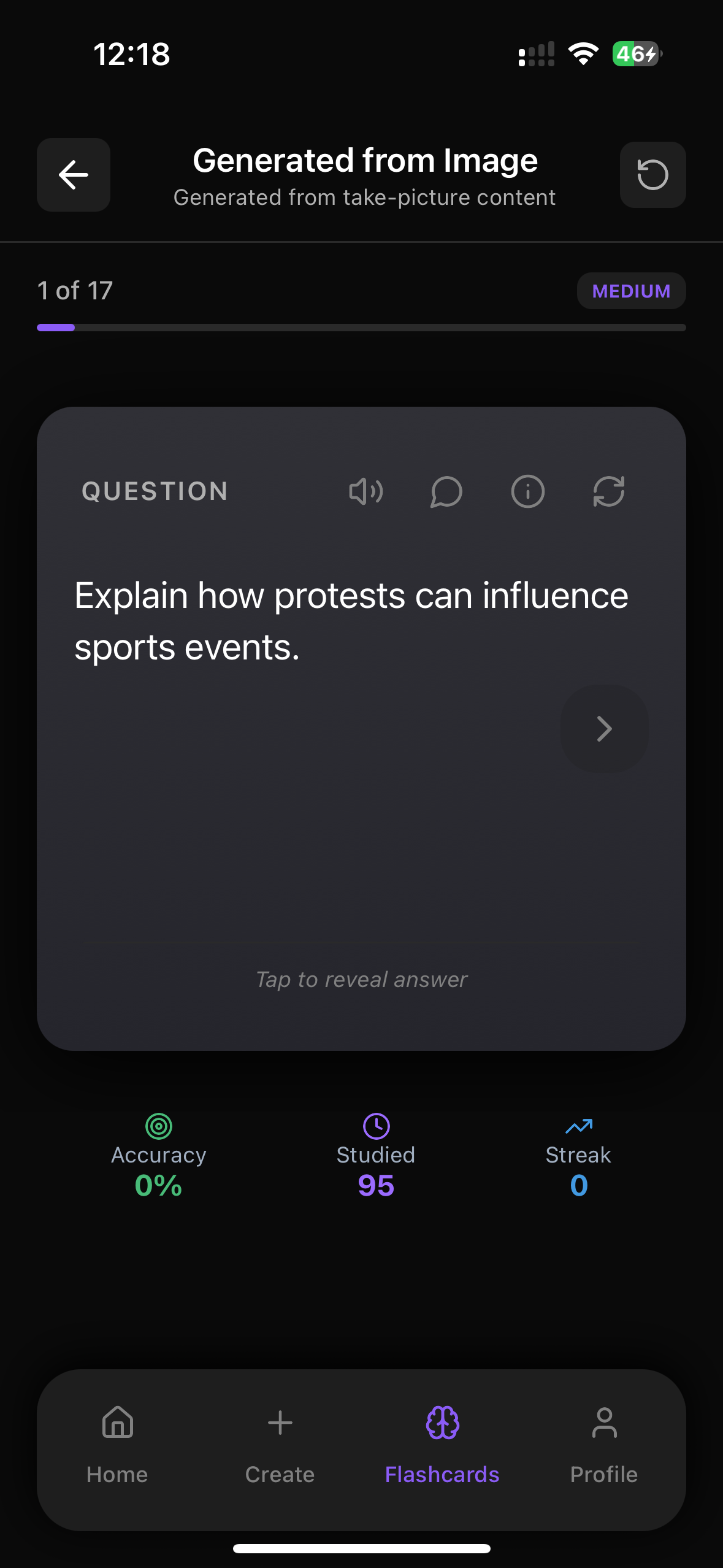
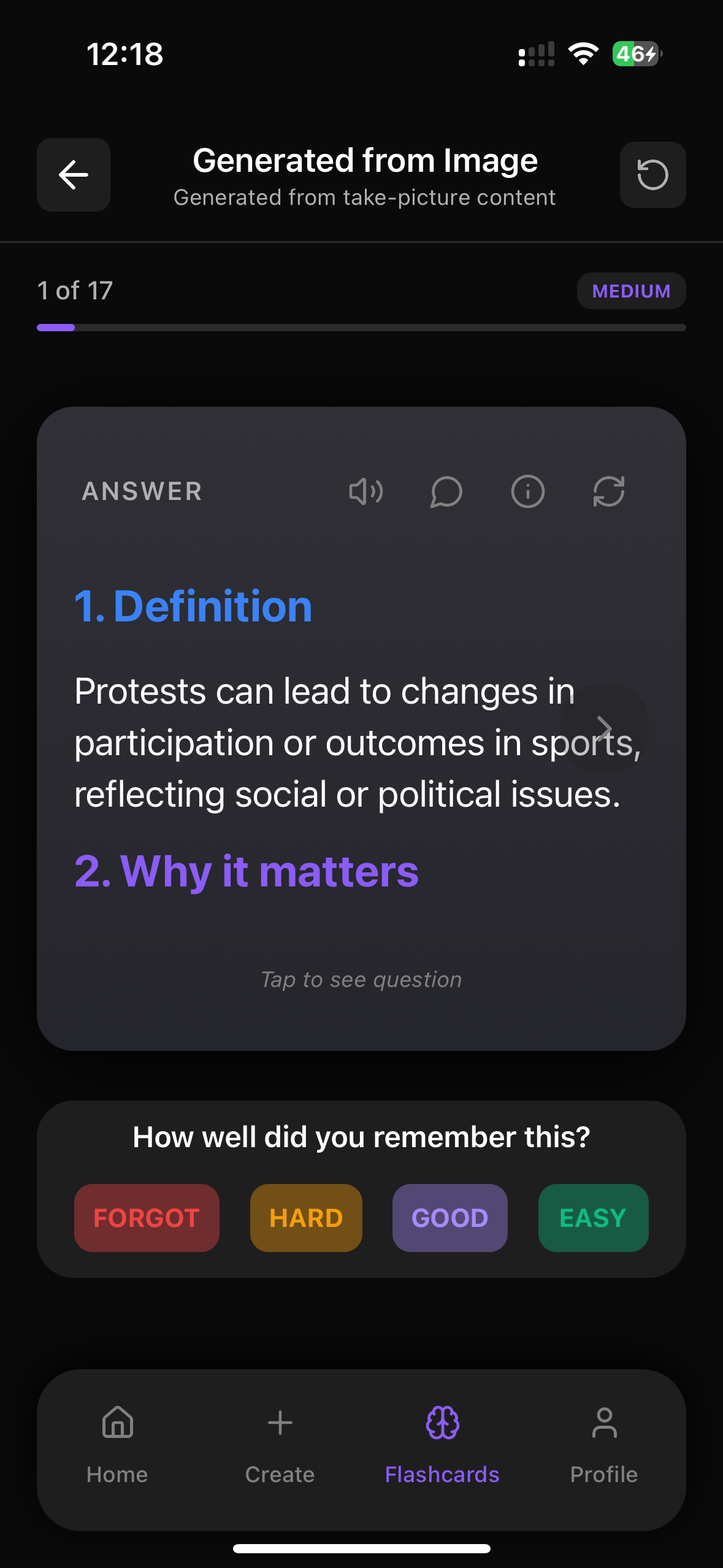
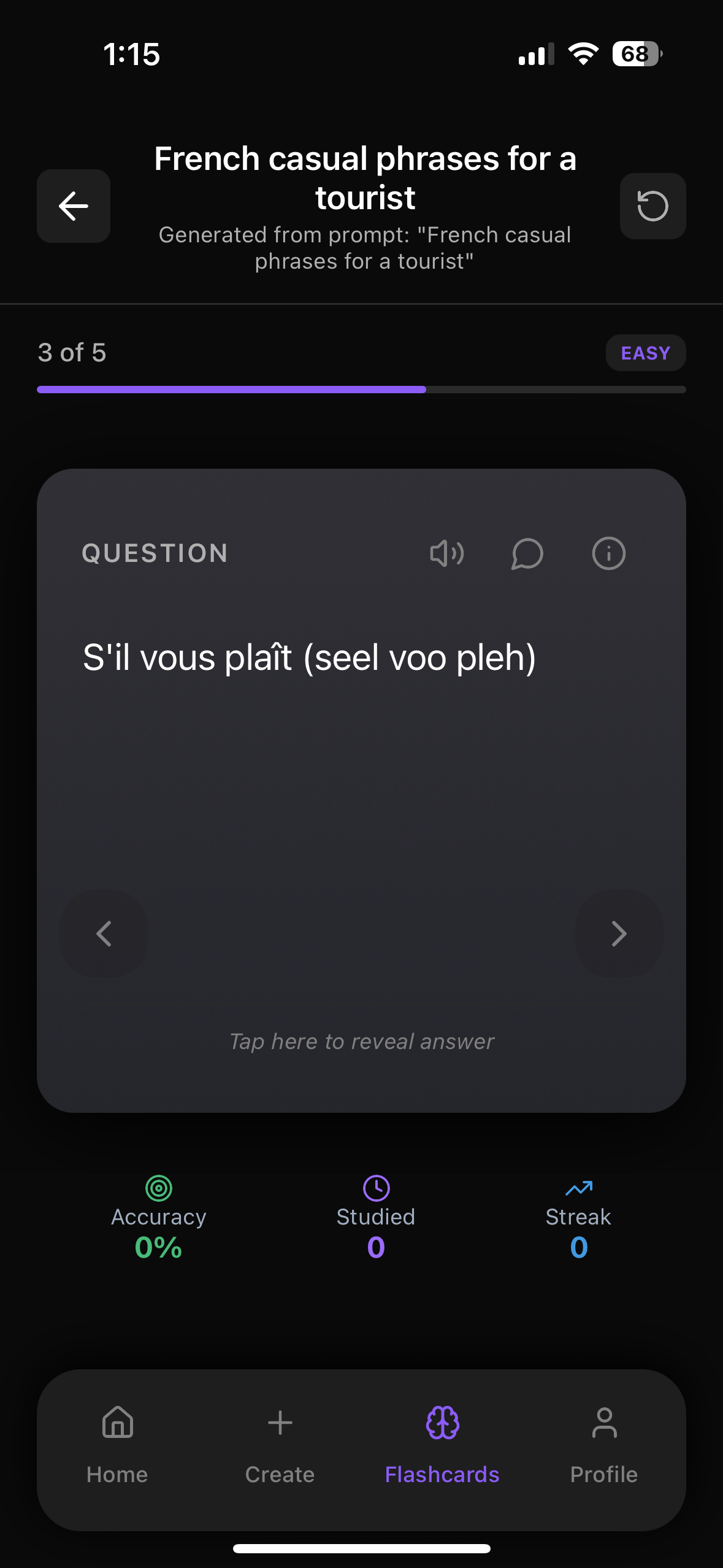
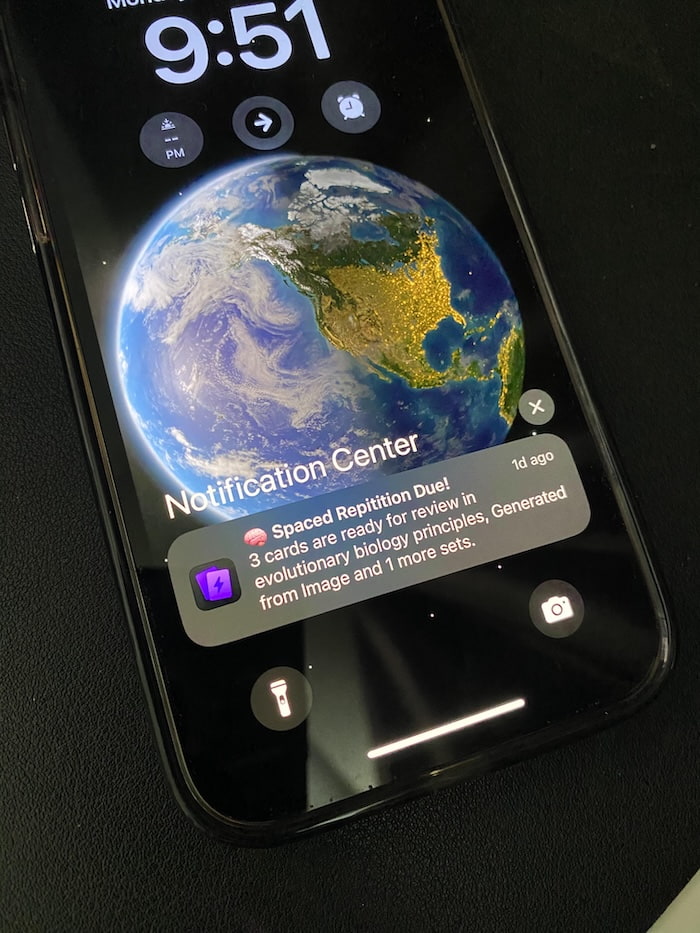
Flashrecall automatically keeps track and reminds you of the cards you don't remember well so you remember faster. Like this :
You can even:
1. Take photos of your physical cards
2. Import them into Flashrecall
3. Now you’ve got a backup digital deck that works with reminders and spaced repetition
Tip #5: Use Their Interests As Your Secret Weapon
If your 3-year-old is obsessed with:
- Dinosaurs
- Cars and trucks
- Princesses
- Animals
- Paw Patrol / Bluey / whatever the current obsession is
…use that.
In Flashrecall, you can:
- Grab images from the internet
- Screenshot their favorite characters
- Turn those into cards with simple labels: “truck”, “princess”, “dinosaur”, “cat”, etc.
Then build from there:
- “red truck”
- “big dinosaur”
- “happy princess”
Because Flashrecall lets you create cards from images, text, PDFs, YouTube links, audio, or just typed prompts, you can turn literally anything they love into a mini learning deck.
When learning is built around what they already love, they stay engaged way longer.
Tip #6: Keep Language Simple And Repetitive
At 3 years old, you don’t need complex sentences.
Short, clear phrases work best:
- “This is a cat.”
- “The cat is white.”
- “The cat says meow.”
Flashrecall is perfect for this because you can:
- Put the picture on the front
- Put the word or short phrase on the back
- Read it out loud together
And because Flashrecall has built-in active recall, it encourages you (and later, your kid) to think before flipping the card, not just passively stare at it.
Over time, you can level it up:
- From “cat” → “white cat” → “The cat is sleeping.”
Tip #7: Be Chill About “Wrong” Answers
At 3 years old, the goal is exposure, not perfection.
If they say “dog” when it’s a cat, you can gently correct:
- “Close! This one is a cat. The dog is this one.”
The nice thing about using an app like Flashrecall is that:
- You can repeat cards easily without it feeling like a big deal
- Spaced repetition will automatically bring harder cards back more often
- You’re not shuffling physical cards endlessly trying to review the “hard ones”
It’s all about positive vibes. Celebrate effort, not accuracy.
Why Use An App Like Flashrecall For A 3-Year-Old?
You might be thinking, “Do I really need an app for toddler flashcards?”
You don’t need one – but it makes your life way easier.
- ✅ Creates flashcards instantly from images, text, audio, PDFs, YouTube links, or typed prompts
- ✅ Lets you make cards manually if you want full control
- ✅ Has built-in active recall, so you’re prompted to think before flipping the card
- ✅ Uses spaced repetition with automatic reminders, so you don’t have to remember when to review
- ✅ Sends study reminders, so you can do 3–5 minute sessions during the day
- ✅ Works offline, perfect for travel or no-WiFi situations
- ✅ Lets you chat with the flashcard if you want to learn more about a topic (great for older siblings or for you to deepen cards later)
- ✅ Great for languages, school subjects, exams, medicine, business – so it grows with your child way beyond age 3
- ✅ Fast, modern, easy to use, and free to start
- ✅ Works on iPhone and iPad
Link again so you don’t have to scroll:
👉 https://apps.apple.com/us/app/flashrecall-study-flashcards/id6746757085
You can start with super simple toddler decks now, and later use the same app when your kid is learning to read, doing math, or even prepping for exams years down the line.
Example Deck Ideas For 3-Year-Olds (You Can Copy These)
Here are some easy starter decks you can build in Flashrecall:
1. Colors Deck
Cards like:
- Red
- Blue
- Yellow
- Green
- Purple
- Orange
Use real objects: red ball, blue car, yellow cup.
2. Animals & Sounds
Each card:
- Front: picture of the animal
- Back: “Dog – woof woof”
You can say:
- “What is this?”
- “What sound does it make?”
3. My Family
Use photos of:
- Mom
- Dad
- Siblings
- Grandparents
- Pets
Label them: “Mommy”, “Daddy”, “Grandma”, “Max the dog”.
4. Feelings
Photos or simple emojis:
- Happy
- Sad
- Angry
- Tired
- Excited
Talk about:
- “Show me happy.”
- “When do you feel sad?”
5. My Room / My Toys
Take photos around the house:
- Bed
- Chair
- Ball
- Car
- Doll
- Blocks
This helps them connect words to their real environment.
How Often Should You Use Flashcards With A 3-Year-Old?
A simple, realistic routine:
- Daily total: 10–15 minutes spread out
- Per session: 3–5 minutes
- Frequency: 2–4 mini sessions a day
Let Flashrecall handle the timing:
- Turn on study reminders
- Let the spaced repetition system decide which cards to show and when
- You just bring the fun and the snacks
Consistency beats intensity. Tiny, regular sessions will teach your 3-year-old way more than rare, long ones.
Final Thoughts: Keep It Light, Keep It Fun
Flashcards for 3-year-olds shouldn’t feel like school.
They should feel like playtime with a tiny bit of structure.
Use:
- Real photos
- Their favorite characters
- Short, fun sessions
- Lots of praise and silliness
And if you want an easy way to manage all of this without drowning in paper cards, try Flashrecall:
👉 https://apps.apple.com/us/app/flashrecall-study-flashcards/id6746757085
Start with a few simple decks today, keep it playful, and you’ll be amazed how quickly your 3-year-old starts pointing at things and proudly naming them.
Frequently Asked Questions
What's the fastest way to create flashcards?
Manually typing cards works but takes time. Many students now use AI generators that turn notes into flashcards instantly. Flashrecall does this automatically from text, images, or PDFs.
Is there a free flashcard app?
Yes. Flashrecall is free and lets you create flashcards from images, text, prompts, audio, PDFs, and YouTube videos.
How do I start spaced repetition?
You can manually schedule your reviews, but most people use apps that automate this. Flashrecall uses built-in spaced repetition so you review cards at the perfect time.
Related Articles
- 50 First Words Flashcards: 7 Powerful Tricks To Teach Vocabulary Faster (Most Parents Don’t Know) – Turn everyday moments into fun, smart learning sessions your kid will actually enjoy.
- Free Kindergarten Sight Words Flash Cards Printable With Pictures: 7 Powerful Ways To Make Learning To Read Fun (Plus a Free App Alternative)
- Flash Cards For Nursery: 7 Powerful Ways To Make Learning Fun, Fast, And Super Easy For Little Kids – Parents Love This Trick
Research References
The information in this article is based on peer-reviewed research and established studies in cognitive psychology and learning science.
Cepeda, N. J., Pashler, H., Vul, E., Wixted, J. T., & Rohrer, D. (2006). Distributed practice in verbal recall tasks: A review and quantitative synthesis. Psychological Bulletin, 132(3), 354-380
Meta-analysis showing spaced repetition significantly improves long-term retention compared to massed practice
Carpenter, S. K., Cepeda, N. J., Rohrer, D., Kang, S. H., & Pashler, H. (2012). Using spacing to enhance diverse forms of learning: Review of recent research and implications for instruction. Educational Psychology Review, 24(3), 369-378
Review showing spacing effects work across different types of learning materials and contexts
Kang, S. H. (2016). Spaced repetition promotes efficient and effective learning: Policy implications for instruction. Policy Insights from the Behavioral and Brain Sciences, 3(1), 12-19
Policy review advocating for spaced repetition in educational settings based on extensive research evidence
Karpicke, J. D., & Roediger, H. L. (2008). The critical importance of retrieval for learning. Science, 319(5865), 966-968
Research demonstrating that active recall (retrieval practice) is more effective than re-reading for long-term learning
Roediger, H. L., & Butler, A. C. (2011). The critical role of retrieval practice in long-term retention. Trends in Cognitive Sciences, 15(1), 20-27
Review of research showing retrieval practice (active recall) as one of the most effective learning strategies
Dunlosky, J., Rawson, K. A., Marsh, E. J., Nathan, M. J., & Willingham, D. T. (2013). Improving students' learning with effective learning techniques: Promising directions from cognitive and educational psychology. Psychological Science in the Public Interest, 14(1), 4-58
Comprehensive review ranking learning techniques, with practice testing and distributed practice rated as highly effective

FlashRecall Team
FlashRecall Development Team
The FlashRecall Team is a group of working professionals and developers who are passionate about making effective study methods more accessible to students. We believe that evidence-based learning tec...
Credentials & Qualifications
- •Software Development
- •Product Development
- •User Experience Design
Areas of Expertise
Ready to Transform Your Learning?
Start using FlashRecall today - the AI-powered flashcard app with spaced repetition and active recall.
Download on App Store