Flashcards For Language Learning App: The Powerful Guide
A flashcards for language learning app is your secret weapon. Flashrecall creates custom cards and uses spaced repetition to help you remember words faster.
How Flashrecall app helps you remember faster. It's free
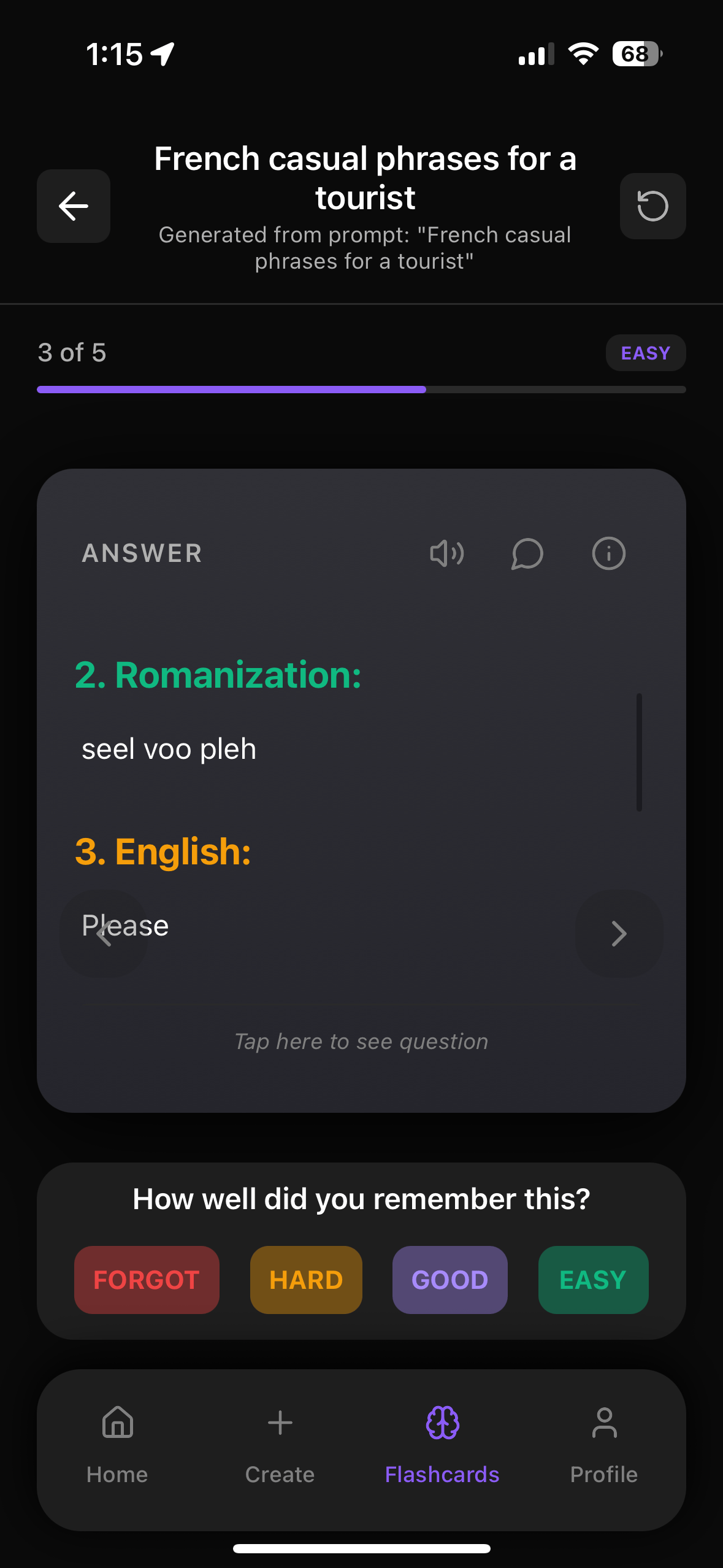
Why Flashcards Are So Good For Learning Languages
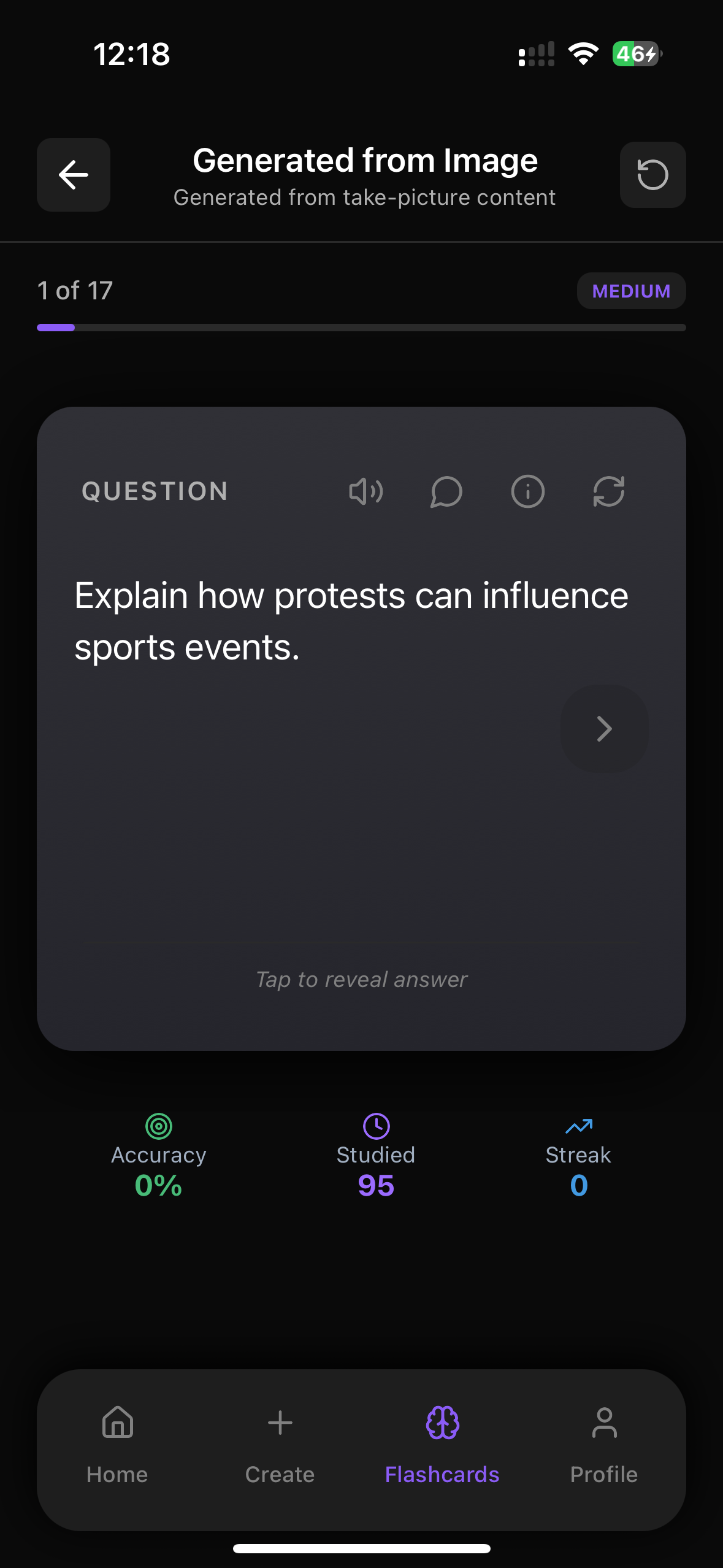
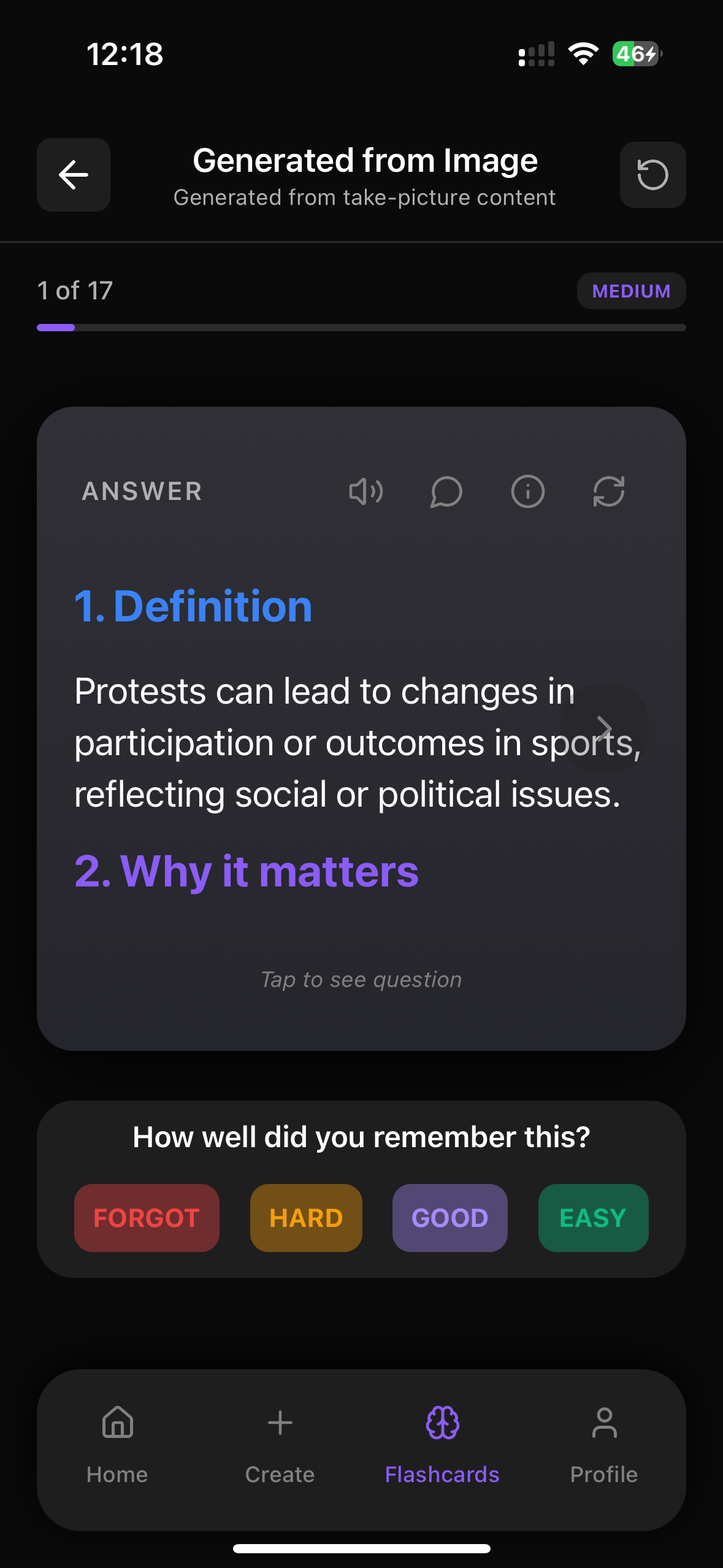
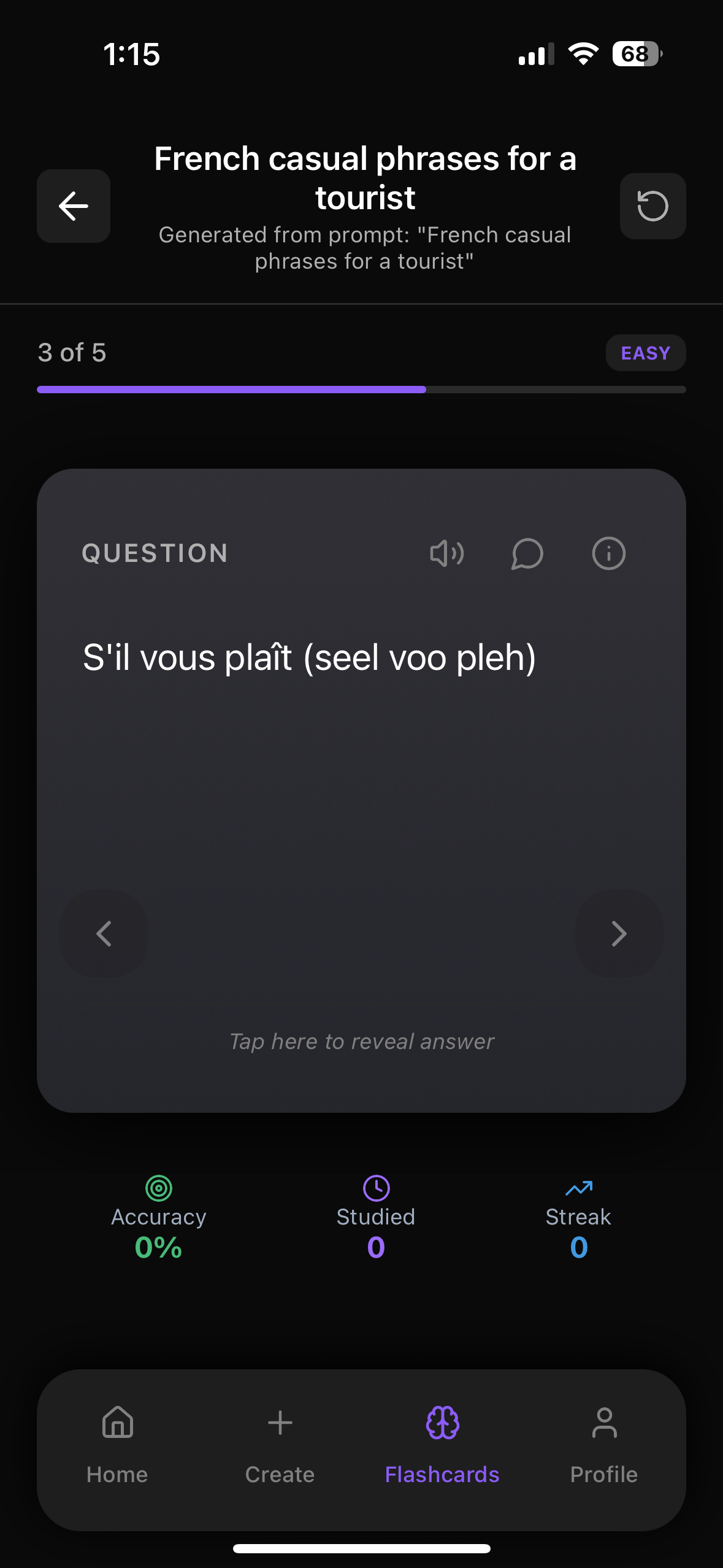
So you're diving into the world of language learning, huh? Let me tell you, a flashcards for language learning app can totally be your secret weapon. You know how sometimes you just need to break stuff down into bite-sized bits to really get it? Flashcards are perfect for that. They’re super handy for helping your brain hold onto all those new words and phrases. I mean, who doesn’t want to remember things faster, right? And here's the cool part: Flashrecall takes it up a notch by whipping up flashcards straight from your study materials and timing reviews when your brain is most ready to soak it all in. So, if you're curious about how to make the most of flashcards and really get those words to stick, check out our complete guide. Trust me, it'll be like having a study buddy right there with you!
- Makes cards instantly from text, images, PDFs, YouTube, audio, or just typing
- Has built‑in spaced repetition with auto reminders
- Lets you chat with your flashcards when you’re unsure
- Works great for languages (plus exams, uni, medicine, business… anything)
- Works on iPhone and iPad, and is free to start
Let’s go through how to actually use flashcards for language learning in a way that works, not just feels productive.
1. How To Set Up Language Flashcards The Right Way
Most people mess this up by making boring, overloaded cards.
Keep Each Card To One Idea
Bad card:
> Front: “to go, to leave, to depart, to set off”
> Back: 4 translations, 3 example sentences, plus notes
You’ll never remember all that.
Better:
- Card 1: “to go” → translation
- Card 2: “to leave” → translation
- Card 3: “to depart” → translation
Short, simple, one concept per card.
In Flashrecall, you can just:
- Paste your vocab list
- Or import from a PDF / text / screenshot
- Let it auto-generate flashcards for each word or phrase
No need to manually format everything.
2. Use Both Directions: Target Language → Native And Back
If you only do “foreign word → English meaning”, you’ll recognize words, but you won’t be able to produce them when speaking.
You want both directions:
- Card A: bonjour → “hello”
- Card B: “hello” → bonjour
In Flashrecall, you can:
- Create one card, then duplicate and flip it
- Or just paste a list like `bonjour – hello`, and let Flashrecall split it into front/back automatically
This way you train:
- Recognition (reading/listening)
- Production (speaking/writing)
Both matter if you actually want to talk to people.
3. Always Add Example Sentences (But Keep Them Short)
Single words are fine, but sentences are where you start to sound natural.
Instead of:
> Front: “run”
> Back: “correr”
Try:
> Front: “I run every morning.”
> Back: translation + highlight “run”
Or:
> Front: “I ___ every morning.”
> Back: “run” + translation in your target language
With Flashrecall you can:
- Paste a paragraph from a book, article, or chat
- Let it auto-generate flashcards from the text
- Or paste a YouTube link and make cards from the transcript
So you’re not just memorizing random words—you’re learning them in real context.
4. Use Images, Audio, And Real Content (Not Just Text)
Your brain loves images and sound. Use that.
Image-Based Flashcards
- Learning “apple”? Add a picture of an apple instead of your native word.
- Learning “left / right”? Use a diagram.
- Learning food, clothes, or objects? Photos are perfect.
In Flashrecall you can:
- Take a photo of a page / sign / menu → auto-extract text → turn into cards
- Or just add images directly to cards
This is especially good if you want to think in the language instead of constantly translating.
Audio-Based Flashcards
Pronunciation matters.
- Add audio for each word or sentence
- Or record yourself and compare
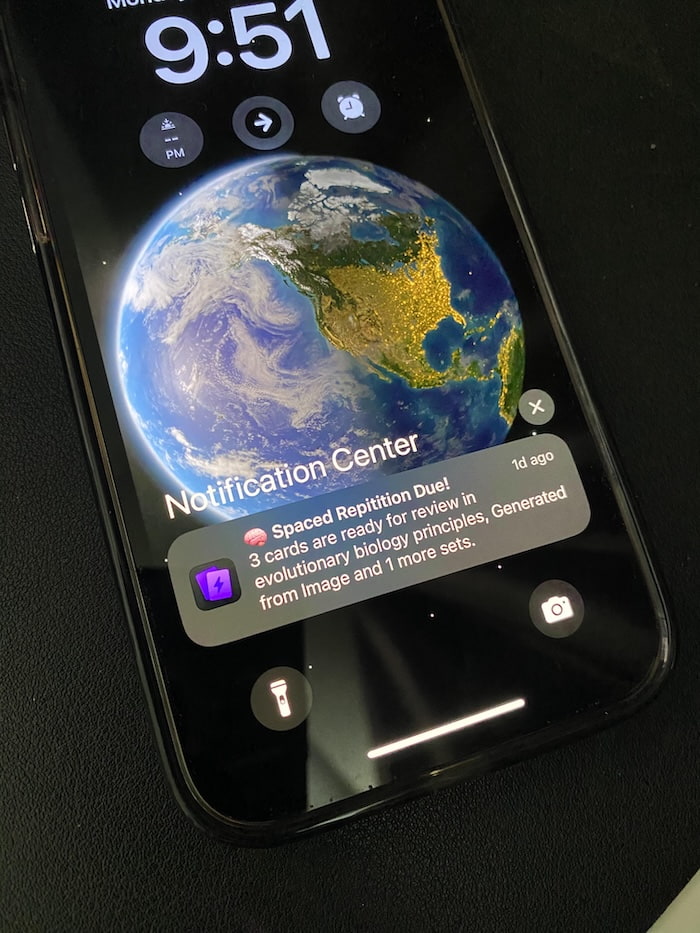
Flashrecall automatically keeps track and reminds you of the cards you don't remember well so you remember faster. Like this :
With Flashrecall, you can:
- Add audio to flashcards
- Create cards from audio clips
So you’re training listening + speaking, not just reading.
5. Let Spaced Repetition Do The Heavy Lifting
The real magic of flashcards isn’t the cards themselves—it’s when you review them.
Spaced repetition = show you a card right before you’re about to forget it. That timing massively boosts memory.
Doing this manually? Painful.
Doing it with Flashrecall? Automatic.
How It Works In Flashrecall
- You study your cards
- After each card, you rate how easy or hard it was
- Flashrecall’s built-in spaced repetition schedules your next review
- You get study reminders so you don’t forget to open the app
So instead of cramming the same 50 words every day, you’re:
- Seeing new words more often
- Seeing old, strong words less often
- Saving time and still remembering more
And yes, it works offline, so you can review on the train, plane, or in that one classroom with terrible Wi‑Fi.
6. Turn Anything Into Flashcards Instantly (So You Actually Keep Going)
One big reason people quit flashcards: making them feels like homework.
Flashrecall fixes that by letting you create cards from pretty much anything in seconds:
- Text – paste vocab lists, dialogues, notes → auto cards
- Images – photo of a textbook page or worksheet → text extracted → cards
- PDFs – upload notes / ebooks → highlight and convert to cards
- YouTube links – turn video transcripts into flashcards
- Audio – create cards from audio snippets
- Manual – of course, you can still type cards from scratch
Link again if you want to check it out:
👉 https://apps.apple.com/us/app/flashrecall-study-flashcards/id6746757085
Because it’s so quick, you’re more likely to:
- Turn your daily input (videos, articles, chats) into cards
- Review a little bit every day
- Actually stay consistent long term
7. Use Active Recall And “Chat With Your Flashcards”
Just flipping cards isn’t enough—you want to struggle a bit before you see the answer. That struggle = learning.
Flashrecall is built around active recall:
- You see the front of the card
- You try to remember the answer (no hints)
- Then you flip and rate how it went
But here’s the cool part:
If you’re confused by a card, you can chat with it.
Example:
You have a card with a sentence in Spanish and you’re not sure why a certain tense is used.
In Flashrecall, you can:
- Open that card
- Ask, “Why is this verb in the preterite, not the imperfect?”
- Get an explanation right there, tied to the card
It’s like having a mini tutor sitting inside your flashcards.
8. What Kind Of Language Flashcards Should You Make?
Here are some practical ideas you can steal.
1. Core Vocabulary Deck
Words you’ll use every day:
- I, you, he, she, we, they
- Common verbs: go, want, need, do, make, have, like
- Everyday nouns: food, house, time, day, work, friend
- Basic adjectives: big, small, good, bad, new, old
Make them with:
- Word on front, translation on back
- Plus a short example sentence
2. Phrase Deck For Real Conversations
Instead of only single words, add phrases you’ll actually say:
- “Can I get a coffee, please?”
- “Where is the train station?”
- “I’m learning [language], can you speak a bit slower?”
These are perfect for:
- Travel
- Moving abroad
- Talking to native speakers online
3. Grammar Pattern Cards
Don’t memorize grammar rules in isolation—turn them into patterns.
Example:
> Front: “I have been studying for 3 hours.”
> Back: Explanation of the tense + your translation in target language
Add 3–4 similar sentences over multiple cards to reinforce the pattern.
4. Listening / Pronunciation Decks
- Short audio clips on the front
- You write or say what you hear
- Flip to see the transcript + translation
Great for training your ear and accent.
9. How Often Should You Study Flashcards For A Language?
You don’t need 2‑hour sessions.
What works way better:
- 10–20 minutes a day
- Broken into small chunks (e.g., 5 minutes morning, 5 minutes afternoon, 5 minutes evening)
Because Flashrecall:
- Has study reminders
- And works offline
You can just:
- Review on the bus
- While waiting for coffee
- During a short break between classes or meetings
Consistency beats intensity every time.
10. Why Use Flashrecall Instead Of Old‑School Paper Cards?
Paper cards are fine, but:
- No spaced repetition algorithm
- No notifications
- Hard to shuffle, sort, and filter
- Can’t easily add audio, images, or real content
- You can’t chat with a paper card when you’re confused
With Flashrecall you get:
- Fast, modern, easy-to-use interface
- Automatic spaced repetition and active recall
- Instant cards from images, PDFs, YouTube, text, audio
- Works for languages, exams, school, uni, medicine, business—basically anything you need to remember
- Free to start, on iPhone and iPad
Try it here:
👉 https://apps.apple.com/us/app/flashrecall-study-flashcards/id6746757085
Final Thoughts: Flashcards Can Make Or Break Your Language Progress
Used badly, flashcards are just another procrastination tool.
Used well, they’re one of the fastest ways to build vocabulary and confidence in any language.
If you:
- Keep cards simple
- Use both directions
- Add real sentences, audio, and images
- Let spaced repetition handle the timing
- Study a little every day
You’ll be shocked how quickly words start to stick.
Flashrecall just makes all of that easier, faster, and way less annoying to manage—so you can spend more time actually learning the language, not organizing your study system.
Frequently Asked Questions
What's the fastest way to create flashcards?
Manually typing cards works but takes time. Many students now use AI generators that turn notes into flashcards instantly. Flashrecall does this automatically from text, images, or PDFs.
Is there a free flashcard app?
Yes. Flashrecall is free and lets you create flashcards from images, text, prompts, audio, PDFs, and YouTube videos.
How do I start spaced repetition?
You can manually schedule your reviews, but most people use apps that automate this. Flashrecall uses built-in spaced repetition so you review cards at the perfect time.
What is active recall and how does it work?
Active recall is the process of actively retrieving information from memory rather than passively reviewing it. Flashrecall forces proper active recall by making you think before revealing answers, then uses spaced repetition to optimize your review schedule.
What's the best way to learn a new language?
Research shows that combining flashcards with spaced repetition and active recall is highly effective. Flashrecall automates this process, generating cards from your study materials and scheduling reviews at optimal intervals.
Related Articles
- Flags Of The World Flashcards: 7 Powerful Ways To Actually Remember Every Country’s Flag Fast – Most People Just Guess, Here’s How To Lock Them In For Good
- Krazy Flash Cards: 7 Powerful Ways Smart Flashcards Help You Learn Faster (Without Burning Out) – Forget clunky decks and random apps; here’s how to turn “crazy” flashcards into a simple, powerful study system that actually sticks.
- Verb Cards: The Essential Trick To Master Any Language Faster (Most Learners Skip This) – Discover how smart verb flashcards can boost your speaking confidence in days, not months.
Research References
The information in this article is based on peer-reviewed research and established studies in cognitive psychology and learning science.
Cepeda, N. J., Pashler, H., Vul, E., Wixted, J. T., & Rohrer, D. (2006). Distributed practice in verbal recall tasks: A review and quantitative synthesis. Psychological Bulletin, 132(3), 354-380
Meta-analysis showing spaced repetition significantly improves long-term retention compared to massed practice
Carpenter, S. K., Cepeda, N. J., Rohrer, D., Kang, S. H., & Pashler, H. (2012). Using spacing to enhance diverse forms of learning: Review of recent research and implications for instruction. Educational Psychology Review, 24(3), 369-378
Review showing spacing effects work across different types of learning materials and contexts
Kang, S. H. (2016). Spaced repetition promotes efficient and effective learning: Policy implications for instruction. Policy Insights from the Behavioral and Brain Sciences, 3(1), 12-19
Policy review advocating for spaced repetition in educational settings based on extensive research evidence
Karpicke, J. D., & Roediger, H. L. (2008). The critical importance of retrieval for learning. Science, 319(5865), 966-968
Research demonstrating that active recall (retrieval practice) is more effective than re-reading for long-term learning
Roediger, H. L., & Butler, A. C. (2011). The critical role of retrieval practice in long-term retention. Trends in Cognitive Sciences, 15(1), 20-27
Review of research showing retrieval practice (active recall) as one of the most effective learning strategies
Dunlosky, J., Rawson, K. A., Marsh, E. J., Nathan, M. J., & Willingham, D. T. (2013). Improving students' learning with effective learning techniques: Promising directions from cognitive and educational psychology. Psychological Science in the Public Interest, 14(1), 4-58
Comprehensive review ranking learning techniques, with practice testing and distributed practice rated as highly effective

FlashRecall Team
FlashRecall Development Team
The FlashRecall Team is a group of working professionals and developers who are passionate about making effective study methods more accessible to students. We believe that evidence-based learning tec...
Credentials & Qualifications
- •Software Development
- •Product Development
- •User Experience Design
Areas of Expertise
Ready to Transform Your Learning?
Start using FlashRecall today - the AI-powered flashcard app with spaced repetition and active recall.
Download on App Store