Forgetting Curve Spaced Repetition - What Is It And How To Retain What You Studied Longer
Spaced repetition helps you combat the forgetting curve by reviewing material at smart intervals. Use Flashrecall to automate your study sessions for better.
How Flashrecall app helps you remember faster. It's free
Most people study hard… then forget everything a few days later. That’s not your fault — that’s the forgetting curve at work.
If you want to beat it and remember what you study for weeks, months, or even years, you need spaced repetition.
And the easiest way to use it daily is with Flashrecall, a fast, free flashcard app that automates spaced repetition for you.
Download here: https://apps.apple.com/us/app/flashrecall-study-flashcards/id6746757085
Let’s break down the forgetting curve in simple terms, how spaced repetition works, and why Flashrecall helps you retain what you study much longer.
What Is the Forgetting Curve? (Explained Simply)
The forgetting curve is a psychology concept discovered by Hermann Ebbinghaus.
In simple words:
- Right after studying, you remember a lot
- A day later, you forget most of it
- A week later, you remember almost nothing
- Unless you review at the right time
Your memory fades fast unless you remind your brain when to recall the information.
This is why students who “cram” forget everything right after the exam.
How Spaced Repetition Fixes the Forgetting Curve
Spaced repetition is the opposite of cramming.
Instead of reviewing everything at once, you review at longer and smarter intervals, which strengthens your memory each time.
Example:
- Learn something today
- Review tomorrow
- Review again 3 days later
- Then 7 days later
- Then 14 days later
Each review resets the forgetting curve and makes your memory stronger.
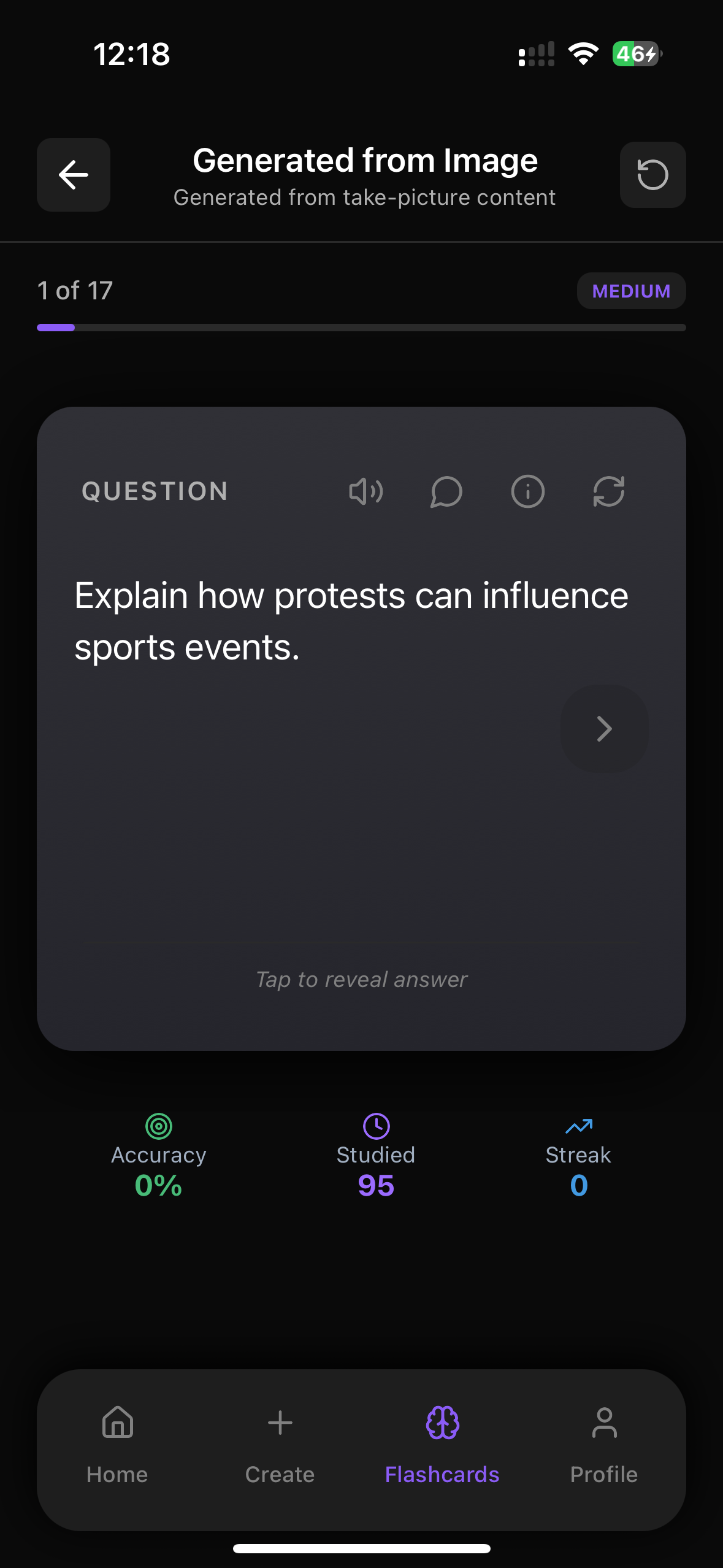
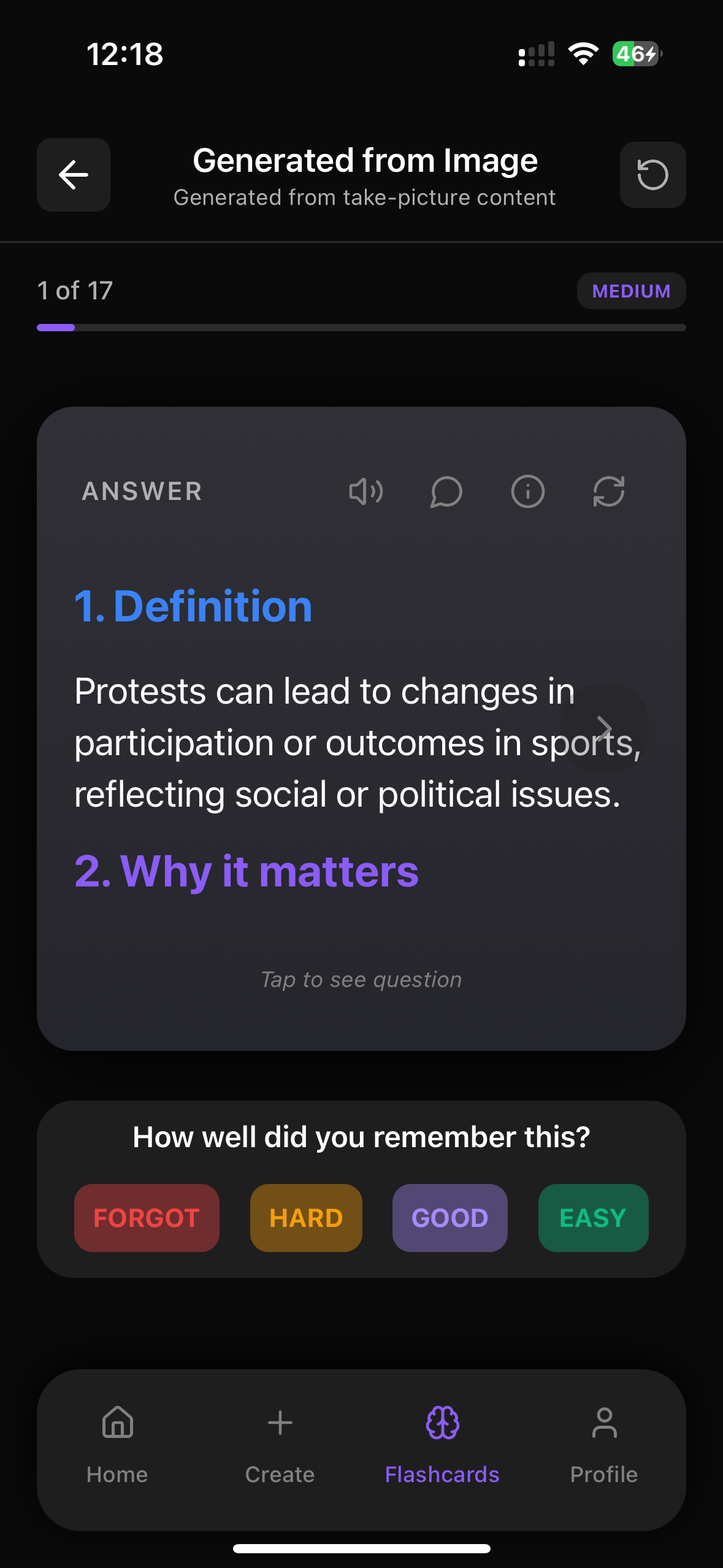
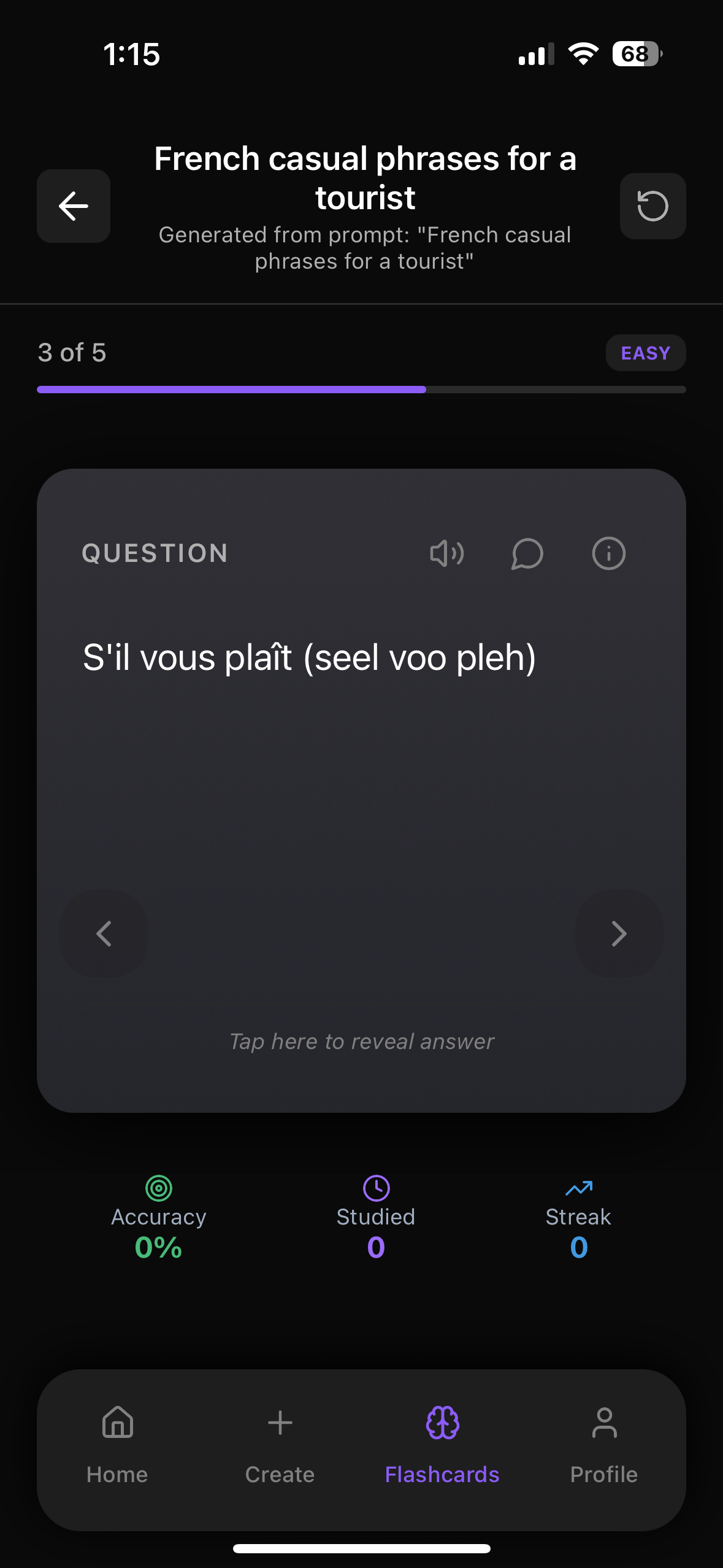
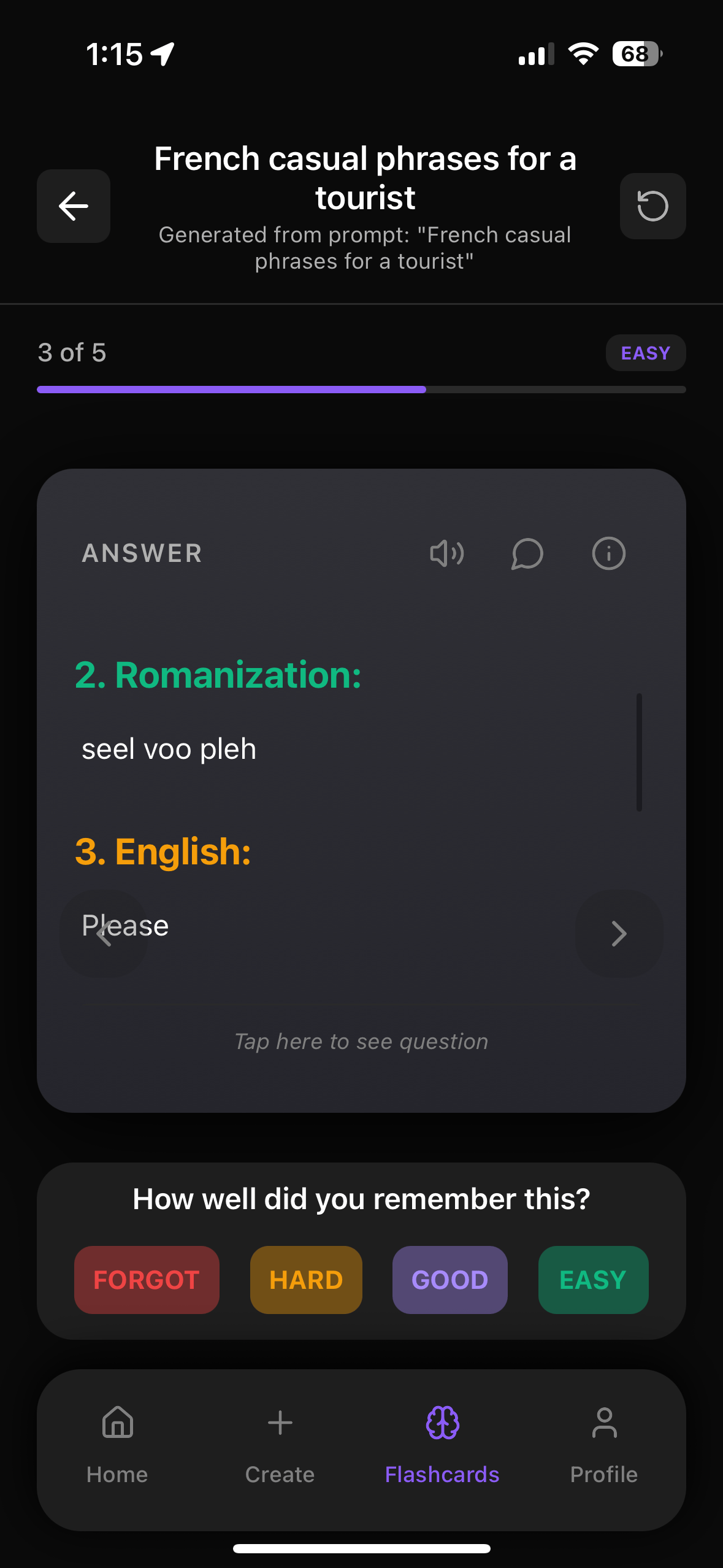
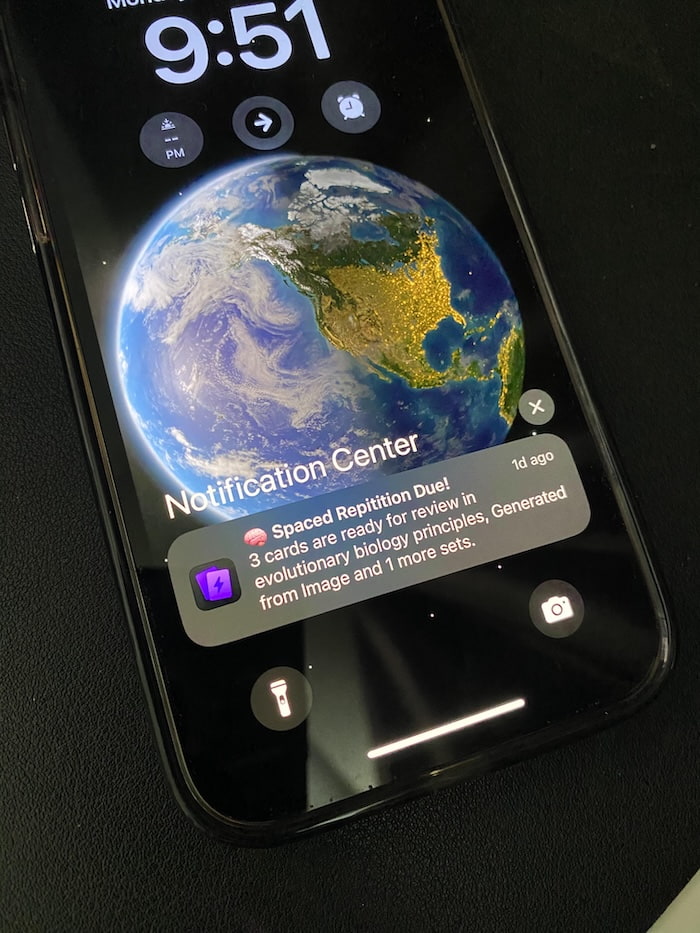
Flashrecall automatically keeps track and reminds you of the cards you don't remember well so you remember faster. Like this :
This is how you retain information long-term.
How Flashrecall Uses Spaced Repetition Automatically
Flashrecall removes all the guesswork.
You don’t need to track dates or intervals — the app handles everything.
Here’s how it works:
- Mark a card as Wrong → Flashrecall shows it again immediately
- Mark it Hard → it appears sooner
- Mark it Good → it’s spaced normally
- Mark it Easy → it gets pushed much later
The app studies your study patterns and adjusts automatically.
This is the easiest way to fight the forgetting curve every single day.
Why Spaced Repetition Works So Well
Spaced repetition strengthens your memory because:
- You recall the information right when your brain is about to forget
- Each review forces your brain to rebuild the memory
- The intervals get longer, so you don’t waste time reviewing what you already know
- Hard topics get more focus, easy topics fade out naturally
This creates long-term retention with minimal effort.
Why Flashrecall Makes Spaced Repetition So Effective
Flashrecall boosts spaced repetition by combining it with instant flashcard creation.
You can turn anything into flashcards:
- Photos of your notes
- PDFs
- Screenshots
- YouTube lessons
- Typed lists
- Audio clips
- Prompts like “Create 20 vocab flashcards”
The faster you can make cards, the faster you can start reviewing them at the perfect spacing.
That’s why Flashrecall helps you retain what you study way longer.
Examples: How Spaced Repetition Keeps Knowledge Alive
Review vocabulary daily → weekly → monthly → permanent memory.
Review anatomy terms with smart spacing → no burnout, stronger recall.
Turn notes into flashcards → spaced review prevents forgetting before the test.
If you space your reviews, your memory becomes stable and long-lasting.
Final Thoughts
If you want to beat the forgetting curve, spaced repetition is the best method — and Flashrecall makes it automatic, fast, and easy. Create flashcards instantly from any material and let the app schedule your review at the perfect time.
You’ll remember more with less effort.
Try Flashrecall free here:
https://apps.apple.com/us/app/flashrecall-study-flashcards/id6746757085
Related Articles
- Flashcards Spaced Repetition – What It Is and How Flashrecall’s Flashcards Help You Learn Faster With Spaced Repetition
- Spaced Repetition Program – What It Is, Examples, and How Flashrecall Helps You Learn Faster With a Spaced Repetition Program
- Spaced Repetition Schedule – What It Is, Examples, and How Flashrecall Helps You Learn Faster With Spaced Repetition Schedules
- Spaced Repetition Study Technique – What Is It and How Flashrecall Helps You Study Faster With the Spaced Repetition Technique
- Spaced Repetition Technique – What It Is, Examples, and How Flashrecall Helps You Learn Faster With Spaced Repetition Techniques
Frequently Asked Questions
What's the fastest way to create flashcards?
Manually typing cards works but takes time. Many students now use AI generators that turn notes into flashcards instantly. Flashrecall does this automatically from text, images, or PDFs.
Is there a free flashcard app?
Yes. Flashrecall is free and lets you create flashcards from images, text, prompts, audio, PDFs, and YouTube videos.
How do I start spaced repetition?
You can manually schedule your reviews, but most people use apps that automate this. Flashrecall uses built-in spaced repetition so you review cards at the perfect time.
Research References
The information in this article is based on peer-reviewed research and established studies in cognitive psychology and learning science.
Cepeda, N. J., Pashler, H., Vul, E., Wixted, J. T., & Rohrer, D. (2006). Distributed practice in verbal recall tasks: A review and quantitative synthesis. Psychological Bulletin, 132(3), 354-380
Meta-analysis showing spaced repetition significantly improves long-term retention compared to massed practice
Carpenter, S. K., Cepeda, N. J., Rohrer, D., Kang, S. H., & Pashler, H. (2012). Using spacing to enhance diverse forms of learning: Review of recent research and implications for instruction. Educational Psychology Review, 24(3), 369-378
Review showing spacing effects work across different types of learning materials and contexts
Kang, S. H. (2016). Spaced repetition promotes efficient and effective learning: Policy implications for instruction. Policy Insights from the Behavioral and Brain Sciences, 3(1), 12-19
Policy review advocating for spaced repetition in educational settings based on extensive research evidence
Ebbinghaus, H. (1885). Memory: A Contribution to Experimental Psychology. New York: Dover
Pioneering research on the forgetting curve and memory retention over time

FlashRecall Team
FlashRecall Development Team
The FlashRecall Team is a group of working professionals and developers who are passionate about making effective study methods more accessible to students. We believe that evidence-based learning tec...
Credentials & Qualifications
- •Software Development
- •Product Development
- •User Experience Design
Areas of Expertise
Ready to Transform Your Learning?
Start using FlashRecall today - the AI-powered flashcard app with spaced repetition and active recall.
Download on App Store