Gcse Revision Cards App: The Powerful Guide
The gcse revision cards app turns your notes into smart flashcards using spaced repetition, helping you remember key info without the hassle of handwritten.
How Flashrecall app helps you remember faster. It's free
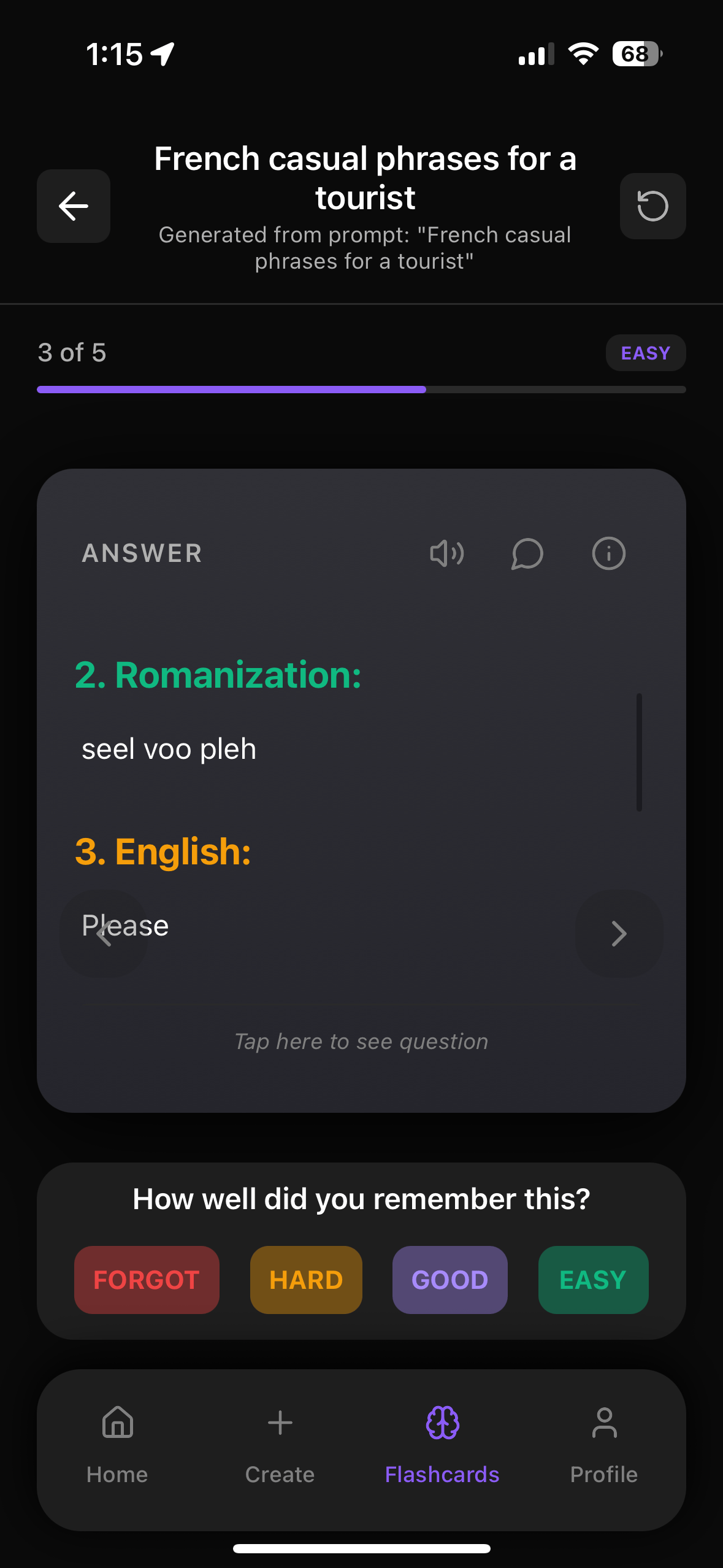
Stop Wasting Time on Pretty Notes – GCSE Revision Cards Done Right
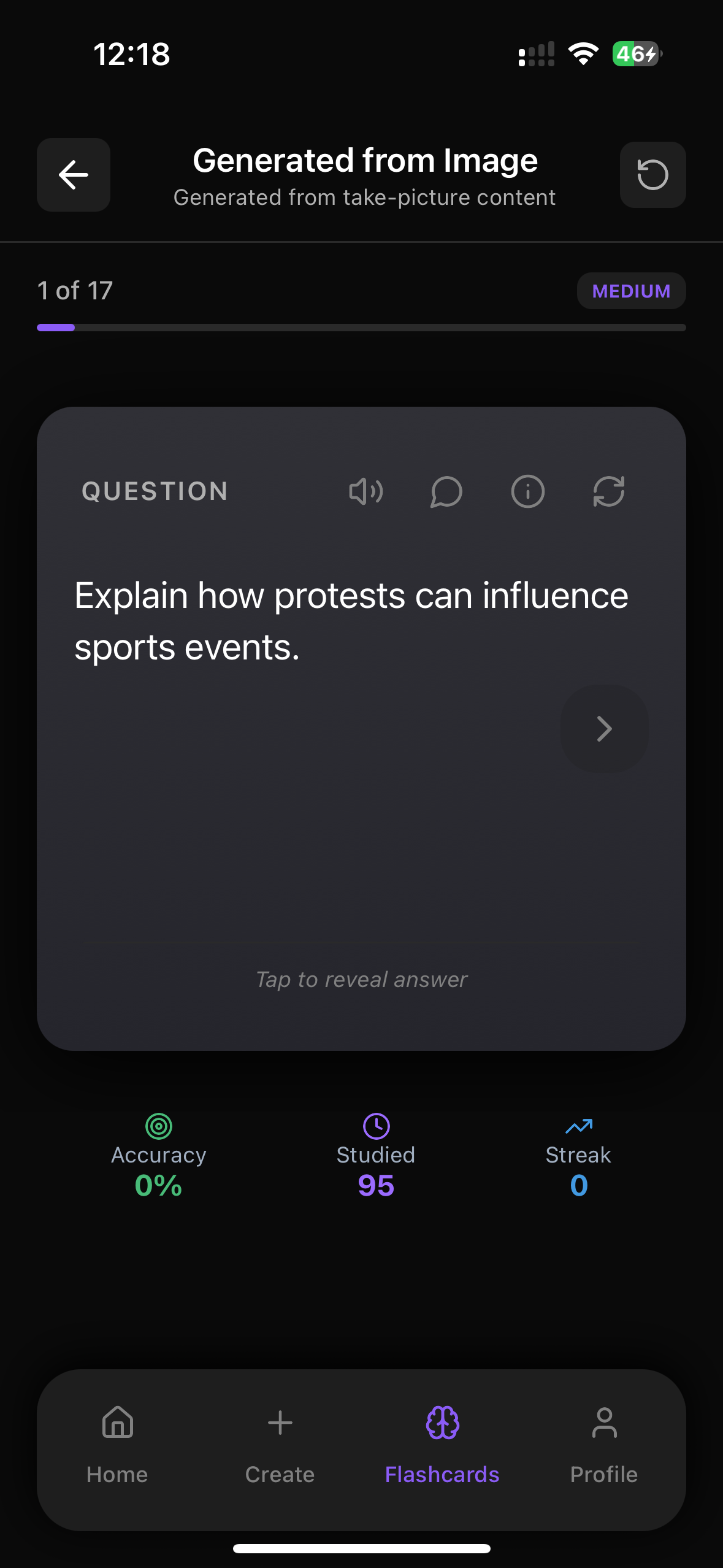
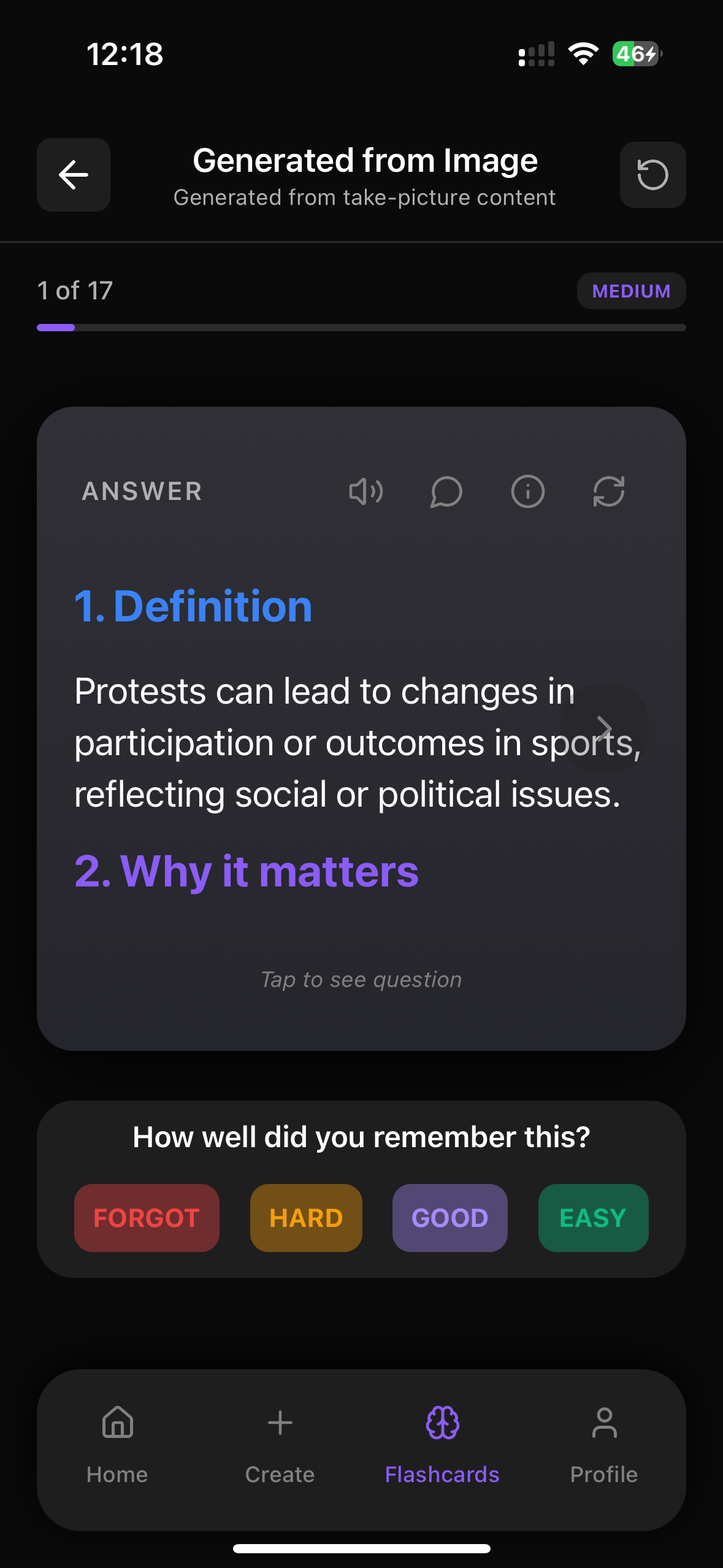
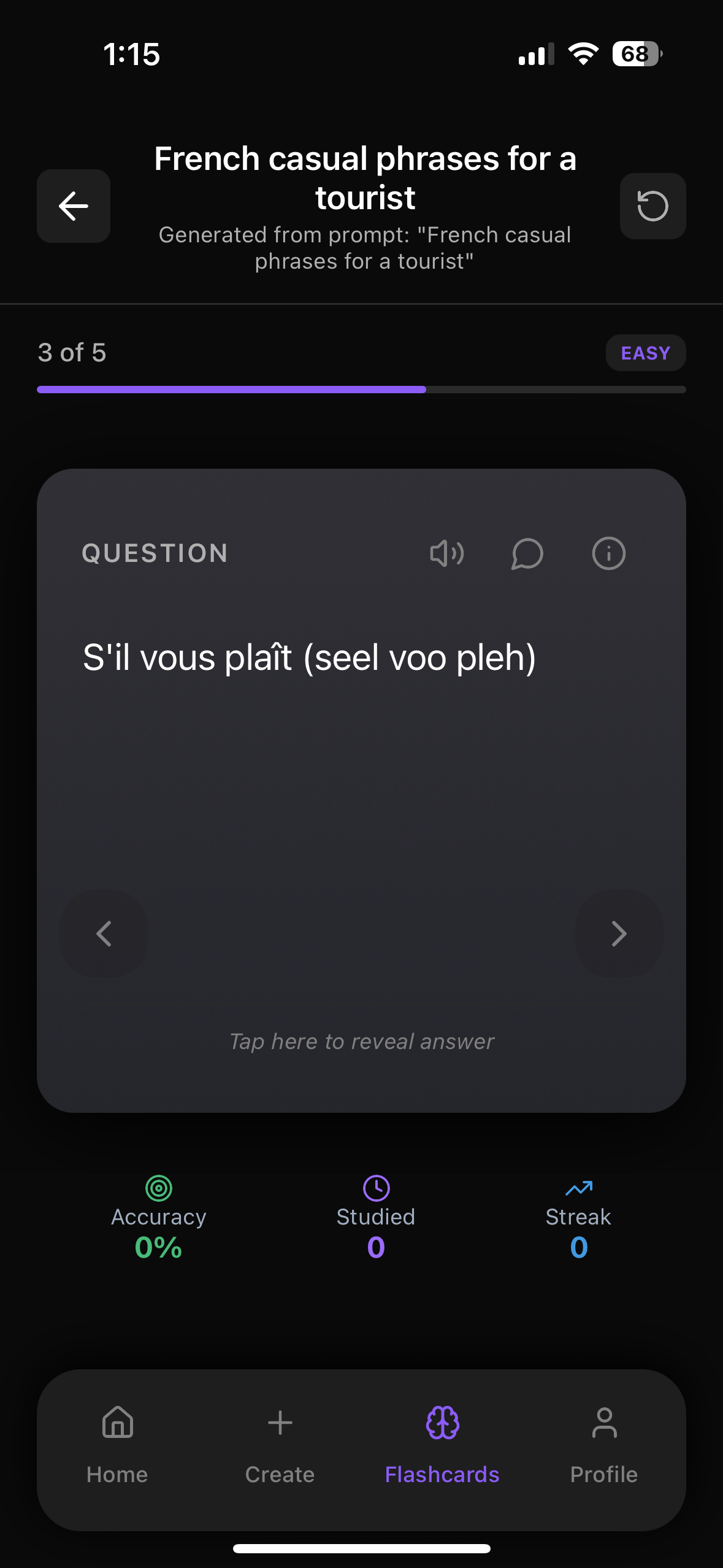
So here's the deal with the gcse revision cards app—it’s like having a little study buddy in your pocket. You know how sometimes you read something and then it just slips right out of your brain? Well, this app is all about helping you actually remember stuff without all that highlighting that doesn't really stick. Flashrecall jumps in and does the heavy lifting by turning your study materials into flashcards and figuring out the best times for you to review them. It's perfect if you're gearing up for exams and need to make all that info stick. You should definitely check out some cool tricks to use these cards more effectively. We've got a complete guide that breaks it all down. Trust me, it’s a game-changer for your study routine!
And honestly, most people do it wrong.
Instead of spending hours handwriting cards and never actually using them properly, you can let an app do the heavy lifting for you. That’s where Flashrecall comes in – it turns your notes, photos, PDFs, and even YouTube videos into smart flashcards with built‑in spaced repetition and active recall.
You can grab it here (free to start):
👉 https://apps.apple.com/us/app/flashrecall-study-flashcards/id6746757085
Let’s break down how to make GCSE revision cards that actually help you remember stuff – and how to do it 10x faster with Flashrecall.
Why GCSE Revision Cards Work So Well
GCSE content is dense: formulas, definitions, quotes, case studies, processes, dates… your brain can’t just “read and remember.”
Revision cards force you to:
- Use active recall – testing yourself instead of rereading
- Chunk information – breaking big topics into small, bite-sized pieces
- Repeat over time – spaced repetition so you don’t forget everything right before exams
That’s literally what Flashrecall is built around. It bakes active recall + spaced repetition into your revision automatically, so you’re not just making cards – you’re using them in the most efficient way.
1. What Makes a Good GCSE Revision Card?
A bad revision card is basically a mini textbook page. A good one is short, specific, and testable.
Keep Each Card to One Clear Question
Examples:
- Bad:
“Photosynthesis info” with a whole paragraph on the card.
- Good:
Front: “Write the balanced symbol equation for photosynthesis.”
Back: `6CO₂ + 6H₂O → C₆H₁₂O₆ + 6O₂`
- Bad:
“Romeo and Juliet themes” with a wall of text.
- Good:
Front: “Name 3 key themes in ‘Romeo and Juliet’.”
Back: `Love, conflict, fate (plus short bullet notes)`
In Flashrecall, you can keep cards super clean and focused, and if you’re unsure about something, you can literally chat with the flashcard to get more explanation. That’s insanely useful for tricky GCSE topics.
2. How to Turn Your Class Notes into GCSE Revision Cards (Fast)
You don’t need to rewrite your entire exercise book. Use this simple process:
Step 1: Identify “Testable” Info
Go through your notes and look for:
- Definitions
- Formulas
- Key dates
- Case studies
- Diagrams and labelled parts
- Quotes and techniques
- Processes / steps (e.g., “How does natural selection work?”)
Step 2: Turn Each Into a Question
- “Definition of osmosis” →
- “1945 – end of WW2” →
- “An Inspector Calls – responsibility quote” →
Step 3: Let Flashrecall Do the Boring Part
Instead of typing every card from scratch, you can:
- Take a photo of your notes or textbook
- Upload a PDF of a revision guide
- Paste text from a website or document
- Drop in a YouTube link to a GCSE explainer video
Flashrecall will automatically generate flashcards from that content. You can edit them, add your own, or keep them as they are. That saves hours compared to handwriting cards.
Download it here and try it on one topic:
👉 https://apps.apple.com/us/app/flashrecall-study-flashcards/id6746757085
3. Using GCSE Revision Cards for Different Subjects
Science (Biology, Chemistry, Physics)
Flashcards are perfect for:
- Definitions: “What is a pathogen?”
- Equations: “State the equation linking voltage, current and resistance.”
- Required practicals: “Describe the method for the osmosis in potato practical.”
Flashrecall automatically keeps track and reminds you of the cards you don't remember well so you remember faster. Like this :
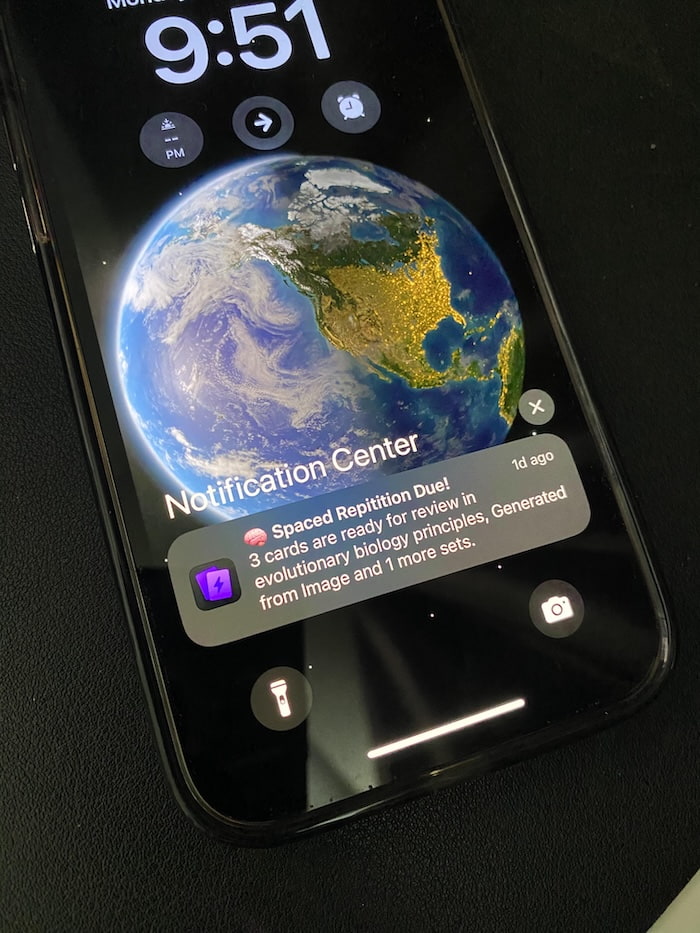
With Flashrecall, you can snap a photo of your required practical sheet and turn it into cards in seconds. Or upload a PDF of your revision guide and let the app do the work.
Maths
Maths isn’t just about memorising; it’s about methods.
Use cards for:
- Formulas: “Area of a trapezium?”
- Methods: “Steps to solve simultaneous equations by elimination?”
- Keywords: “What does ‘congruent’ mean?”
You can even create cards with worked examples on the back, then try to solve them yourself before flipping.
English Literature & Language
For English, go heavy on:
- Quotes
- Themes
- Techniques
- Context
Examples:
- Front: “Give a quote showing Scrooge’s change in ‘A Christmas Carol’.”
Back: `"I am not the man I was."`
- Front: “What is dramatic irony?”
Back: Short, clear definition + example.
You can paste a chunk of text or your essay into Flashrecall, and it can help you generate smart cards from it. Great for poems, plays, and key scenes.
Humanities (History, Geography, RE)
Lots of facts + explanations = flashcard heaven.
- History: dates, events, causes, consequences, key people
- Geography: case studies, definitions, processes
- RE: beliefs, teachings, quotes, comparisons between religions
Example History card:
- Front: “Give two causes of WW1.”
- Back: `Militarism, alliances (plus short notes)`
You can also upload case study sheets as PDFs or images into Flashrecall and auto-generate cards instead of rewriting everything.
4. Active Recall + Spaced Repetition: The Secret Sauce
Making GCSE revision cards is only half the game. The real magic is how often and how you review them.
Active Recall
Active recall = trying to remember the answer before you see it.
- Look at the front of the card
- Say or write the answer
- Then flip and check
Flashrecall is literally built around this. Every study session is just active recall over and over, which is exactly what your brain needs to actually remember.
Spaced Repetition
Spaced repetition = seeing cards again right before you’re about to forget them.
Instead of you trying to track what to review and when, Flashrecall:
- Schedules reviews automatically
- Sends study reminders so you don’t forget to revise
- Shows you harder cards more often, and easy ones less often
So you’re always revising the right stuff at the right time, without needing a revision timetable spreadsheet.
5. A Simple GCSE Revision Card Routine (That Actually Fits in Your Day)
Here’s a realistic routine you can follow:
Weekdays
- Morning (5–10 mins):
Quick review session on Flashrecall while on the bus / before school.
- After school (20–30 mins):
- Add new cards from today’s lessons (or just snap your notes and auto-generate)
- Do one focused session on a single subject
Weekends
- One longer session (45–60 mins):
- Review all due cards
- Add new cards for topics you’re behind on
- Use the chat with flashcard feature if you’re stuck on anything and need more explanation
Because Flashrecall works offline on iPhone and iPad, you can revise anywhere: train, car, kitchen table, whatever.
6. Digital GCSE Revision Cards vs Paper: Which Is Better?
Both can work, but digital has some big advantages, especially under exam pressure.
Paper Cards
- Feels satisfying to write
- No screens
- Easy to lose or damage
- Hard to organise by topic
- No reminders
- No automatic spaced repetition
- Takes ages to make neatly
Flashrecall (Digital Cards)
- Instant cards from images, text, PDFs, YouTube, audio, or typed prompts
- Built-in spaced repetition and active recall – no planning
- Study reminders so you don’t “forget to revise”
- Works offline
- You can chat with the card when you don’t understand something
- Fast, modern, easy to use
- Great for every GCSE subject – and beyond (A-levels, uni, medicine, business, languages)
- Free to start
- You have to download the app (takes like 10 seconds)
If you want to actually stick to revision, lowering the friction matters. Having all your GCSE revision cards on your phone means you can squeeze in 5–10 minute sessions anytime.
7. Example GCSE Revision Card Sets You Can Build Today
Here are some quick ideas you can set up in Flashrecall:
Set 1: “Biology – Required Practicals”
- Card for each practical:
- Aim
- Method
- Variables
- Risks
- Improvements
Set 2: “Maths – Formula Bank”
- Area formulas
- Trig formulas
- Probability rules
- Speed/distance/time
- Interest formulas (if relevant)
Set 3: “English Lit – Quote Bank”
- One deck per text:
- An Inspector Calls
- A Christmas Carol
- Shakespeare play
- Poetry anthology
Each card:
Front – Theme or character prompt
Back – quote + tiny explanation.
Set 4: “History – Key Dates & Events”
- One card per event:
- Date
- What happened
- Why it matters
You can build all of these manually if you like, but it’s so much faster to:
- Paste from your revision notes
- Upload PDFs
- Snap photos of revision guides
- Drop in YouTube revision videos
…and let Flashrecall auto-generate the first version of your cards, then tweak what you need.
Final Thoughts: GCSE Revision Cards Don’t Need to Be Complicated
GCSE revision cards work if you:
1. Keep them short and specific
2. Use active recall (test yourself properly)
3. Use spaced repetition (don’t cram everything at the end)
4. Make it easy to stick to (so you actually do it)
Flashrecall basically wraps all of that into one app:
- Makes flashcards instantly from your notes, PDFs, images, YouTube, or manual input
- Built-in active recall and spaced repetition with auto reminders
- Works offline on iPhone and iPad
- Free to start, fast, and simple to use
If you’re serious about boosting your GCSE grades without burning out, set up your first deck today:
👉 https://apps.apple.com/us/app/flashrecall-study-flashcards/id6746757085
Turn your revision cards into an actual system, not just a pile of paper on your desk.
Frequently Asked Questions
What's the fastest way to create flashcards?
Manually typing cards works but takes time. Many students now use AI generators that turn notes into flashcards instantly. Flashrecall does this automatically from text, images, or PDFs.
Is there a free flashcard app?
Yes. Flashrecall is free and lets you create flashcards from images, text, prompts, audio, PDFs, and YouTube videos.
How do I start spaced repetition?
You can manually schedule your reviews, but most people use apps that automate this. Flashrecall uses built-in spaced repetition so you review cards at the perfect time.
What is active recall and how does it work?
Active recall is the process of actively retrieving information from memory rather than passively reviewing it. Flashrecall forces proper active recall by making you think before revealing answers, then uses spaced repetition to optimize your review schedule.
Related Articles
- GCSE Flashcards: The Essential Guide To Remembering More In Less Time (Most Students Don’t Know This) – Turn Your Notes Into Powerful Flashcards That Actually Stick
- Creating Flashcards: 7 Powerful Tricks To Make Cards That Actually Stick In Your Memory Fast – Most Students Skip These Simple Steps And Forget Everything
- Flashcard App: The Ultimate Way To Learn Faster, Remember More, And Actually Stick To Studying – Most Students Don’t Know These Simple Tricks
Research References
The information in this article is based on peer-reviewed research and established studies in cognitive psychology and learning science.
Cepeda, N. J., Pashler, H., Vul, E., Wixted, J. T., & Rohrer, D. (2006). Distributed practice in verbal recall tasks: A review and quantitative synthesis. Psychological Bulletin, 132(3), 354-380
Meta-analysis showing spaced repetition significantly improves long-term retention compared to massed practice
Carpenter, S. K., Cepeda, N. J., Rohrer, D., Kang, S. H., & Pashler, H. (2012). Using spacing to enhance diverse forms of learning: Review of recent research and implications for instruction. Educational Psychology Review, 24(3), 369-378
Review showing spacing effects work across different types of learning materials and contexts
Kang, S. H. (2016). Spaced repetition promotes efficient and effective learning: Policy implications for instruction. Policy Insights from the Behavioral and Brain Sciences, 3(1), 12-19
Policy review advocating for spaced repetition in educational settings based on extensive research evidence
Karpicke, J. D., & Roediger, H. L. (2008). The critical importance of retrieval for learning. Science, 319(5865), 966-968
Research demonstrating that active recall (retrieval practice) is more effective than re-reading for long-term learning
Roediger, H. L., & Butler, A. C. (2011). The critical role of retrieval practice in long-term retention. Trends in Cognitive Sciences, 15(1), 20-27
Review of research showing retrieval practice (active recall) as one of the most effective learning strategies
Dunlosky, J., Rawson, K. A., Marsh, E. J., Nathan, M. J., & Willingham, D. T. (2013). Improving students' learning with effective learning techniques: Promising directions from cognitive and educational psychology. Psychological Science in the Public Interest, 14(1), 4-58
Comprehensive review ranking learning techniques, with practice testing and distributed practice rated as highly effective

FlashRecall Team
FlashRecall Development Team
The FlashRecall Team is a group of working professionals and developers who are passionate about making effective study methods more accessible to students. We believe that evidence-based learning tec...
Credentials & Qualifications
- •Software Development
- •Product Development
- •User Experience Design
Areas of Expertise
Ready to Transform Your Learning?
Start using FlashRecall today - the AI-powered flashcard app with spaced repetition and active recall.
Download on App Store