Gifted Learning Flash Cards For Kids: The Powerful Guide
Gifted learning flash cards for kids help them retain info through colorful visuals and spaced repetition. Create custom cards with Flashrecall to.
How Flashrecall app helps you remember faster. It's free
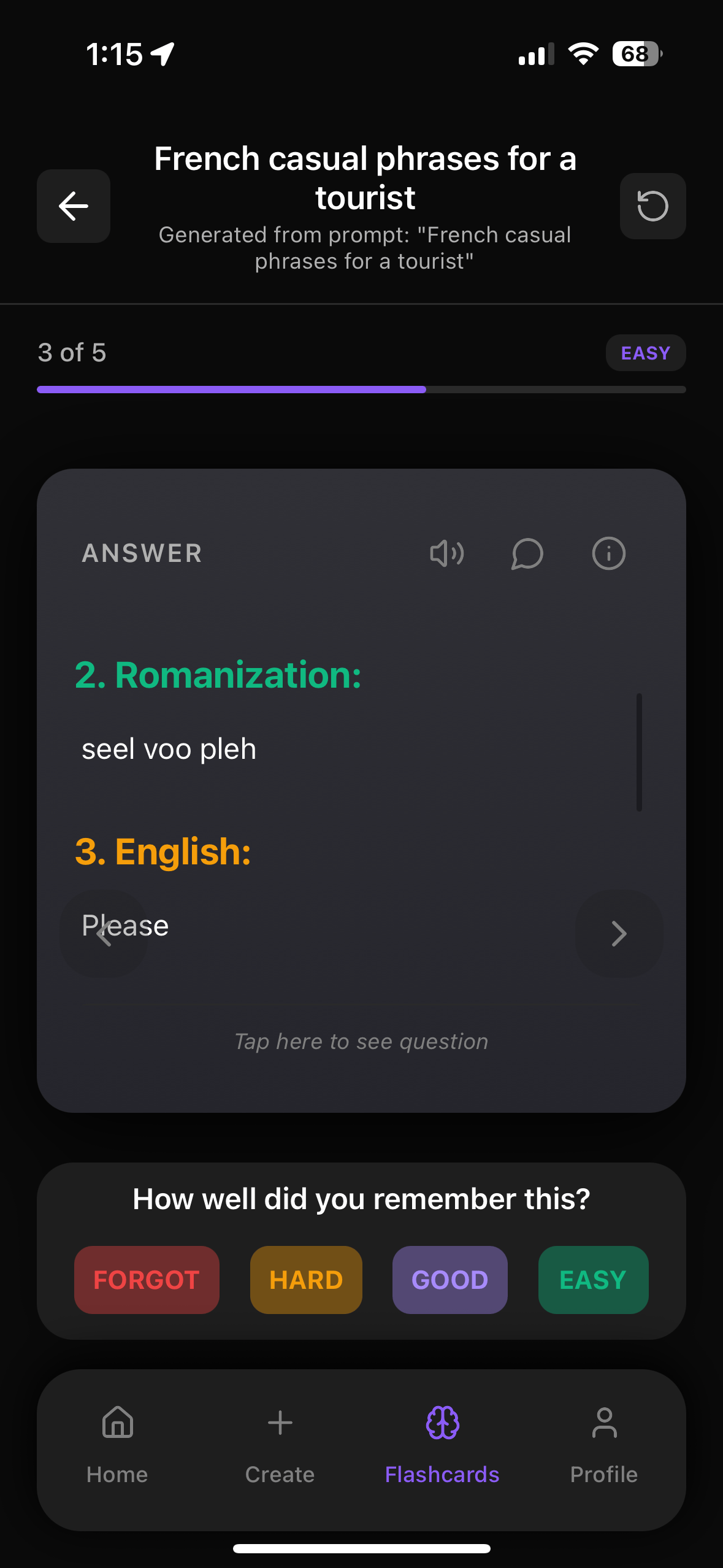
Why Flashcards Work So Well For Gifted Learners (When Used Right)
So, you know how we're always looking for fun ways to help the kids learn? Well, gifted learning flash cards for kids could be just the thing. They're like little bursts of awesomeness for young minds, using colorful pics and simple words to make stuff stick. Think of them as brain snacks that keep kids engaged without feeling like they're stuck in a study session. And with Flashrecall, whipping up your own custom flashcards is a breeze—you can use photos, drawings, or text to create something that really clicks with your kiddo. Plus, it sneaks in spaced repetition to make memory magic happen without overwhelming them. If you're curious about how these flashcards can make learning a total blast, you might want to dive into our complete guide. Trust me, it's packed with handy tips most folks miss—but not you, because you're in the know!
- Go deeper than school content
- Move at the child’s natural pace
- Stretch their thinking instead of just drilling facts
That’s exactly where an app like Flashrecall shines. Instead of you spending hours making and sorting physical cards, Flashrecall lets you create smart digital flashcards in seconds and then automatically schedules them with spaced repetition so your gifted kid reviews at the perfect time.
You can grab it here (free to start):
👉 https://apps.apple.com/us/app/flashrecall-study-flashcards/id6746757085
Let’s walk through how to actually use flashcards in a way that challenges gifted learners instead of boring them.
1. Stop Using “Baby Flashcards” – Go Deeper, Not Just Faster
A lot of people think:
> “My kid is gifted, I’ll just give them more flashcards or move through them faster.”
That usually backfires. Gifted kids don’t just want more — they want deeper.
Instead of:
- “What’s 7 × 8?”
Try:
- “7 × 8 = 56. What are two different multiplication facts that also equal 56?”
- “If 7 × 8 = 56, what’s 56 ÷ 7 and 56 ÷ 8?”
With Flashrecall, you can turn one idea into multiple layered cards:
- Basic fact
- Reverse problem
- “Explain why” card
- Real-life application card
Because you can make cards manually or generate them from text, PDFs, or even YouTube links, you can quickly go from “simple fact” to “big idea” without spending your whole weekend cutting index cards.
2. Use Higher-Order Questions, Not Just Memorization
Gifted learners thrive on thinking, not just remembering.
When you’re making gifted learning flash cards, mix in question types like:
- Why?
- “Why do we need a circulatory system?”
- What if…?
- “What would happen if the Earth rotated twice as fast?”
- Compare and contrast
- “How is mitosis different from meiosis?”
- Explain it to a 5-year-old
- “Explain photosynthesis as if you’re talking to a kindergartener.”
In Flashrecall, you can:
- Type these questions in manually
- Or paste in a textbook paragraph and quickly pull key concepts into cards
- Or even snap a photo of a worksheet and turn it into flashcards instantly
Then your gifted kid isn’t just memorizing — they’re practicing explaining, analyzing, and reasoning.
3. Let Them Create Their Own Flashcards (This Is Huge)
One of the best ways to challenge a gifted learner:
Instead of you making all the cards, ask them to:
- Read a chapter / watch a lesson
- Decide what they think is important
- Turn that into flashcards
This forces them to:
- Summarize
- Prioritize
- Organize ideas
- Think about how they’d test someone else
With Flashrecall, this is super quick:
- They can type their own cards
- Or highlight text in a PDF and turn it into cards
- Or use a YouTube video link and pull key ideas into questions
This turns “flashcard time” into a creative, higher-level thinking activity instead of passive drilling.
4. Use Spaced Repetition So They Don’t Get Stuck Relearning
Gifted kids often get things fast and then… forget them months later because they never review.
That’s where spaced repetition is a game changer.
Spaced repetition = reviewing information right before you’re about to forget it.
Flashrecall automatically keeps track and reminds you of the cards you don't remember well so you remember faster. Like this :
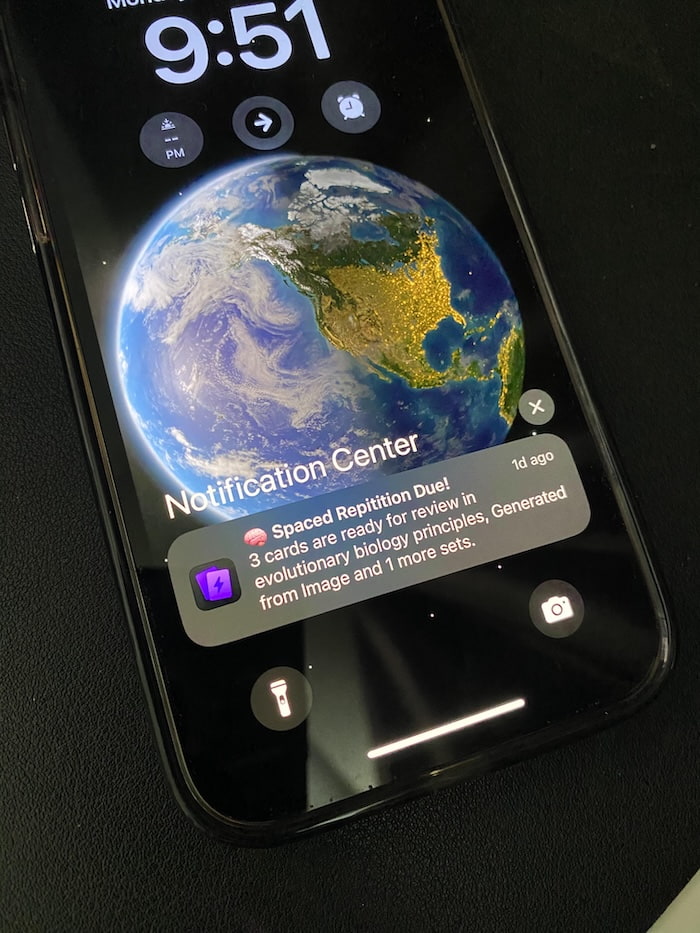
Done right, this makes long-term memory insanely strong with very little time.
Flashrecall has spaced repetition built in:
- It automatically schedules cards for review
- It reminds your kid to study so you don’t have to nag
- Hard cards appear more often, easy ones less often
So your gifted learner can move quickly through new content and keep older material fresh without doing hours of unnecessary review.
5. Make Flashcards Multisensory (Perfect for Curious Minds)
Gifted kids are often super curious and love exploring in different ways — visual, verbal, logical, etc.
Flashrecall lets you build flashcards from:
- Images – diagrams, maps, artworks, graphs
- Text – notes, textbook excerpts, definitions
- Audio – perfect for language learning, music theory, pronunciation
- PDFs – school handouts, practice tests, articles
- YouTube links – lectures, educational channels
- Or just typed prompts
Examples:
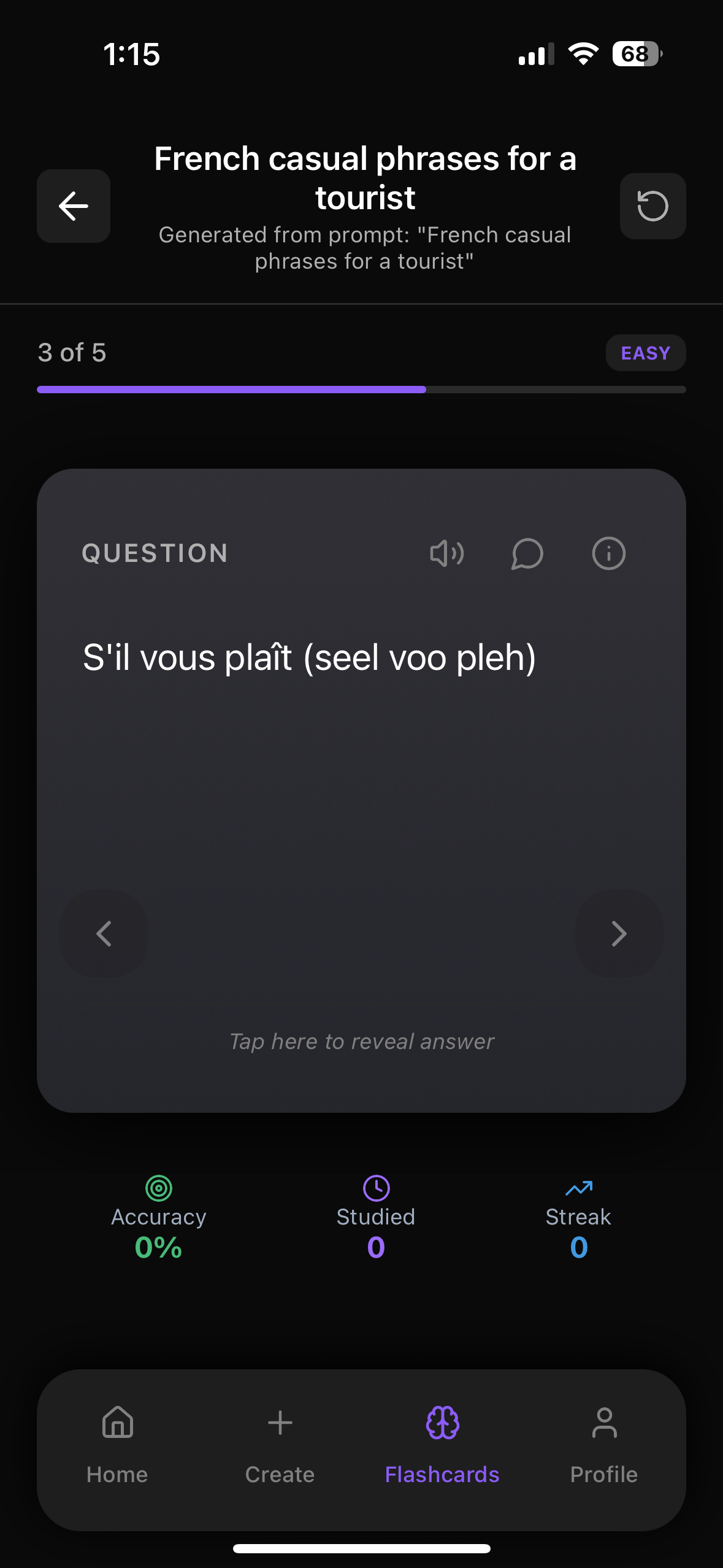
- Language: front = audio of a phrase, back = translation + written form
- Science: front = diagram of the heart, back = “Label these parts + explain what this part does”
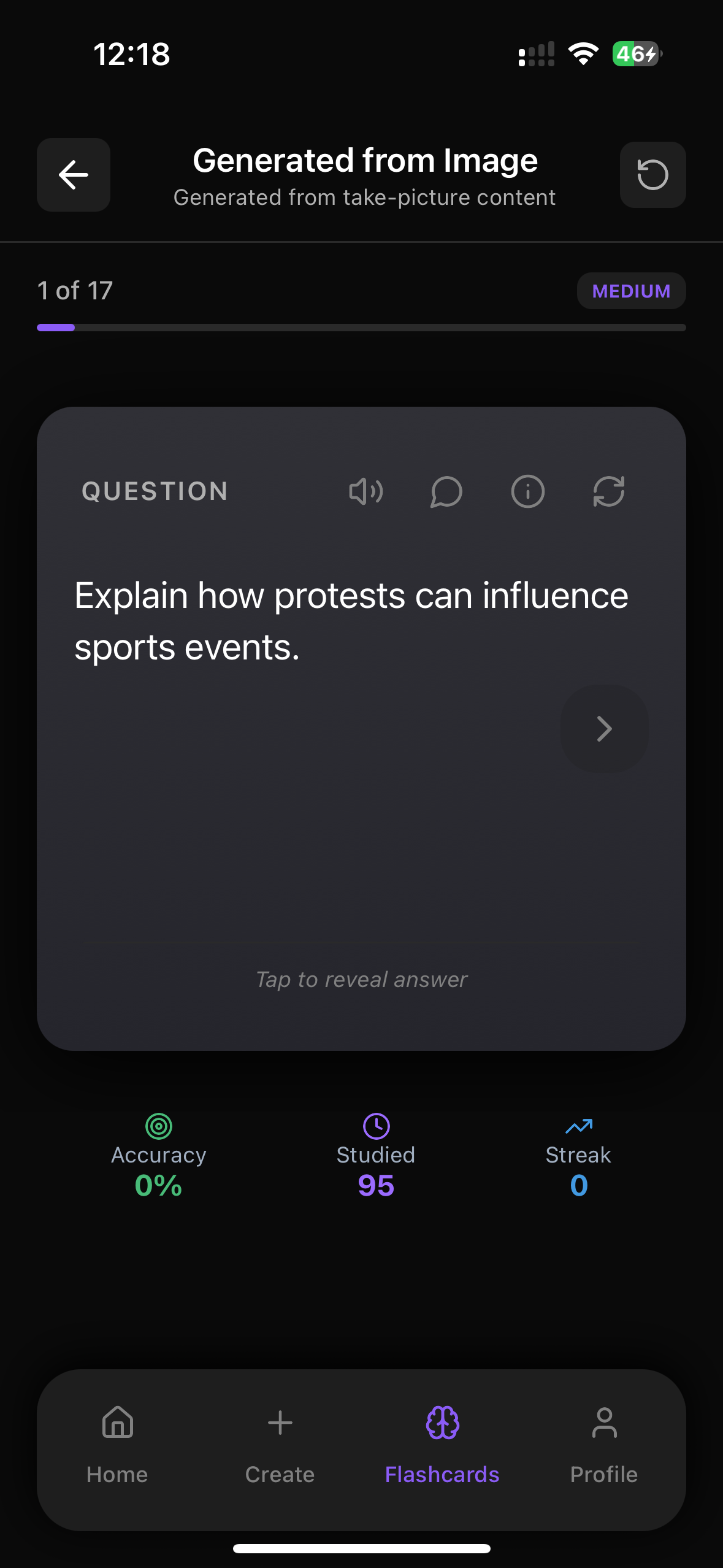
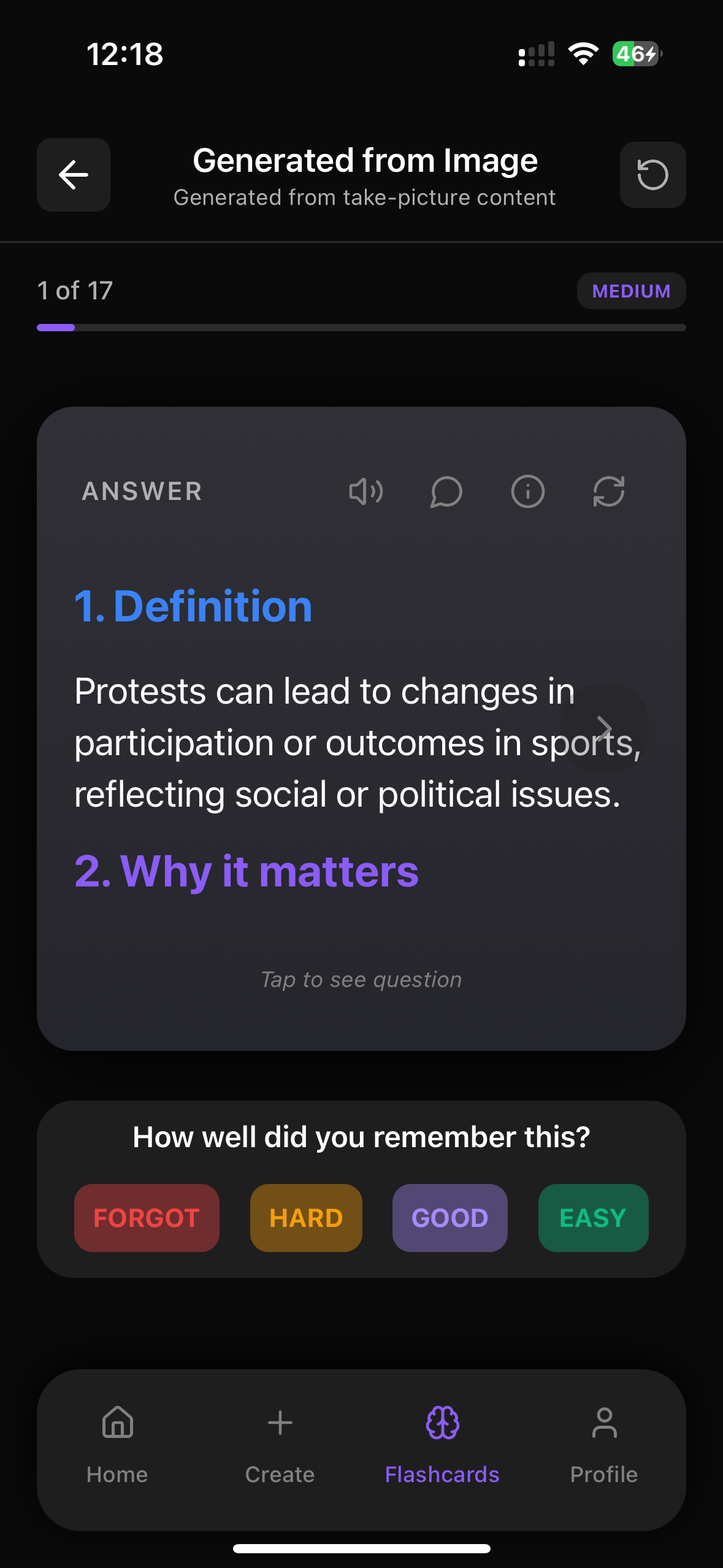
- History: front = image of a historical event, back = “What’s happening here and why does it matter?”
This keeps learning interesting and lets gifted kids connect ideas across formats instead of just reading black-and-white text.
6. Add Challenge Levels So They Don’t Get Bored
Gifted kids often blow through easy material and then lose interest.
One trick: tier your flashcards by difficulty.
You can do this in Flashrecall by:
- Creating different decks like:
- “Chemistry – Basics”
- “Chemistry – Challenge Questions”
- “Chemistry – Explain Like a Teacher”
- Or tagging cards mentally as:
- Level 1 – simple recall
- Level 2 – application
- Level 3 – explain / analyze / compare
Examples of “challenge” cards:
- Math: “Here’s the answer: 42. Create a word problem that has this as the solution.”
- History: “Argue why this event was more important than [another event].”
- Literature: “How would the story change if this character made the opposite decision?”
Because Flashrecall works offline on iPhone and iPad, they can work through these decks anywhere — car rides, waiting rooms, between activities — without needing Wi‑Fi.
7. Use “Chat With Your Flashcards” to Go Deeper on Tough Topics
Sometimes gifted kids don’t want more flashcards — they want to discuss the topic.
Flashrecall has a really cool feature for that:
You can chat with the flashcard.
So if your child is stuck or curious, they can:
- Ask follow-up questions
- Get explanations in simpler words
- Ask for more examples
- Explore a concept from different angles
This is especially powerful for:
- Advanced science concepts
- Philosophy / ethics questions
- Complex math reasoning
- Literature analysis
Instead of hitting a wall when they don’t understand something, they can explore it interactively right inside the app.
Great Subjects for Gifted Flashcard Learning
Flashcards aren’t just for vocab drills. With the right design, they’re perfect for gifted learners in:
- Languages – vocab, grammar patterns, idioms, example sentences, verb conjugations
- Math – formulas, theorems, problem types, proofs, mental math strategies
- Science – processes (like cell division), definitions, diagrams, cause-effect chains
- History – timelines, cause & effect, “who did what and why it mattered”
- Literature – quotes, themes, character motivations, symbolism
- Music – note reading, intervals, chords, theory terms
- Business / Coding / Medicine – jargon, concepts, frameworks, algorithms, anatomy
Flashrecall is built to handle all of that:
- Works for any subject
- Fast, modern, and easy to use
- Free to start
- Works on both iPhone and iPad
So your gifted learner can build decks across all their interests in one place.
How to Get Started With Gifted Learning Flash Cards in 10 Minutes
Here’s a simple way to start today:
1. Pick one topic your child is already interested in
- Dinosaurs, space, Greek myths, algebra, anatomy — anything.
2. Download Flashrecall
👉 https://apps.apple.com/us/app/flashrecall-study-flashcards/id6746757085
3. Create 10–20 cards that are:
- A mix of basic recall + “why / how / what if” questions
- Some image-based, some text-based
- Maybe one or two “explain this to a 5-year-old” cards
4. Let your child add 5 of their own cards
- Ask: “What do you think is important or interesting about this topic?”
5. Turn on study reminders
- So they get a gentle nudge to review instead of you having to remind them.
6. Watch how they handle it
- If they’re bored → add more challenge cards
- If they’re excited → expand into new decks or subjects
Because Flashrecall uses spaced repetition automatically, even a few minutes a day adds up to serious long-term learning without burnout.
The Bottom Line: Flashcards Can Supercharge Gifted Learning (If You Use Them Smartly)
For gifted kids, flashcards shouldn’t be about mindless drilling.
They should be about:
- Deeper thinking
- Faster progress
- Long-term retention
- Letting them explore what they’re really capable of
Flashrecall makes that way easier:
- Instantly create flashcards from images, text, PDFs, audio, YouTube, or manual input
- Built-in active recall and spaced repetition with auto reminders
- Works offline on iPhone and iPad
- Lets your child chat with their flashcards when they’re stuck or curious
- Great for languages, exams, school, university, medicine, business — literally anything they want to master
If you’ve got a gifted learner and you want to actually challenge them (without drowning in paper cards), give Flashrecall a try:
👉 https://apps.apple.com/us/app/flashrecall-study-flashcards/id6746757085
Use flashcards the smart way, and you’re not just helping them memorize — you’re helping them think, explore, and grow.
Frequently Asked Questions
What's the fastest way to create flashcards?
Manually typing cards works but takes time. Many students now use AI generators that turn notes into flashcards instantly. Flashrecall does this automatically from text, images, or PDFs.
Is there a free flashcard app?
Yes. Flashrecall is free and lets you create flashcards from images, text, prompts, audio, PDFs, and YouTube videos.
How do I start spaced repetition?
You can manually schedule your reviews, but most people use apps that automate this. Flashrecall uses built-in spaced repetition so you review cards at the perfect time.
Related Articles
- Educational Flash Cards: 7 Powerful Ways To Study Smarter And Actually Remember More – Most Students Use Flashcards Wrong… Here’s How To Fix It Fast
- Flash Card Of Noun: 7 Powerful Ways To Learn Grammar Faster (Most Students Don’t Know These) – Turn boring noun drills into quick, fun wins with smart flashcards that actually stick.
- Miles Kelly Flashcards: The Complete Guide To Smarter Learning (And A Better Digital Alternative Most Students Don’t Know About) – Before You Buy Another Box Of Cards, Read This And See How To Upgrade Your Study Game
Research References
The information in this article is based on peer-reviewed research and established studies in cognitive psychology and learning science.
Cepeda, N. J., Pashler, H., Vul, E., Wixted, J. T., & Rohrer, D. (2006). Distributed practice in verbal recall tasks: A review and quantitative synthesis. Psychological Bulletin, 132(3), 354-380
Meta-analysis showing spaced repetition significantly improves long-term retention compared to massed practice
Carpenter, S. K., Cepeda, N. J., Rohrer, D., Kang, S. H., & Pashler, H. (2012). Using spacing to enhance diverse forms of learning: Review of recent research and implications for instruction. Educational Psychology Review, 24(3), 369-378
Review showing spacing effects work across different types of learning materials and contexts
Kang, S. H. (2016). Spaced repetition promotes efficient and effective learning: Policy implications for instruction. Policy Insights from the Behavioral and Brain Sciences, 3(1), 12-19
Policy review advocating for spaced repetition in educational settings based on extensive research evidence
Karpicke, J. D., & Roediger, H. L. (2008). The critical importance of retrieval for learning. Science, 319(5865), 966-968
Research demonstrating that active recall (retrieval practice) is more effective than re-reading for long-term learning
Roediger, H. L., & Butler, A. C. (2011). The critical role of retrieval practice in long-term retention. Trends in Cognitive Sciences, 15(1), 20-27
Review of research showing retrieval practice (active recall) as one of the most effective learning strategies
Dunlosky, J., Rawson, K. A., Marsh, E. J., Nathan, M. J., & Willingham, D. T. (2013). Improving students' learning with effective learning techniques: Promising directions from cognitive and educational psychology. Psychological Science in the Public Interest, 14(1), 4-58
Comprehensive review ranking learning techniques, with practice testing and distributed practice rated as highly effective

FlashRecall Team
FlashRecall Development Team
The FlashRecall Team is a group of working professionals and developers who are passionate about making effective study methods more accessible to students. We believe that evidence-based learning tec...
Credentials & Qualifications
- •Software Development
- •Product Development
- •User Experience Design
Areas of Expertise
Ready to Transform Your Learning?
Start using FlashRecall today - the AI-powered flashcard app with spaced repetition and active recall.
Download on App Store