Grammar Flashcards Tips: The Powerful Guide
Grammar flashcards tips help break down complex rules into bite-sized pieces. Use Flashrecall for quick card creation and automatic spaced repetition reviews.
How Flashrecall app helps you remember faster. It's free
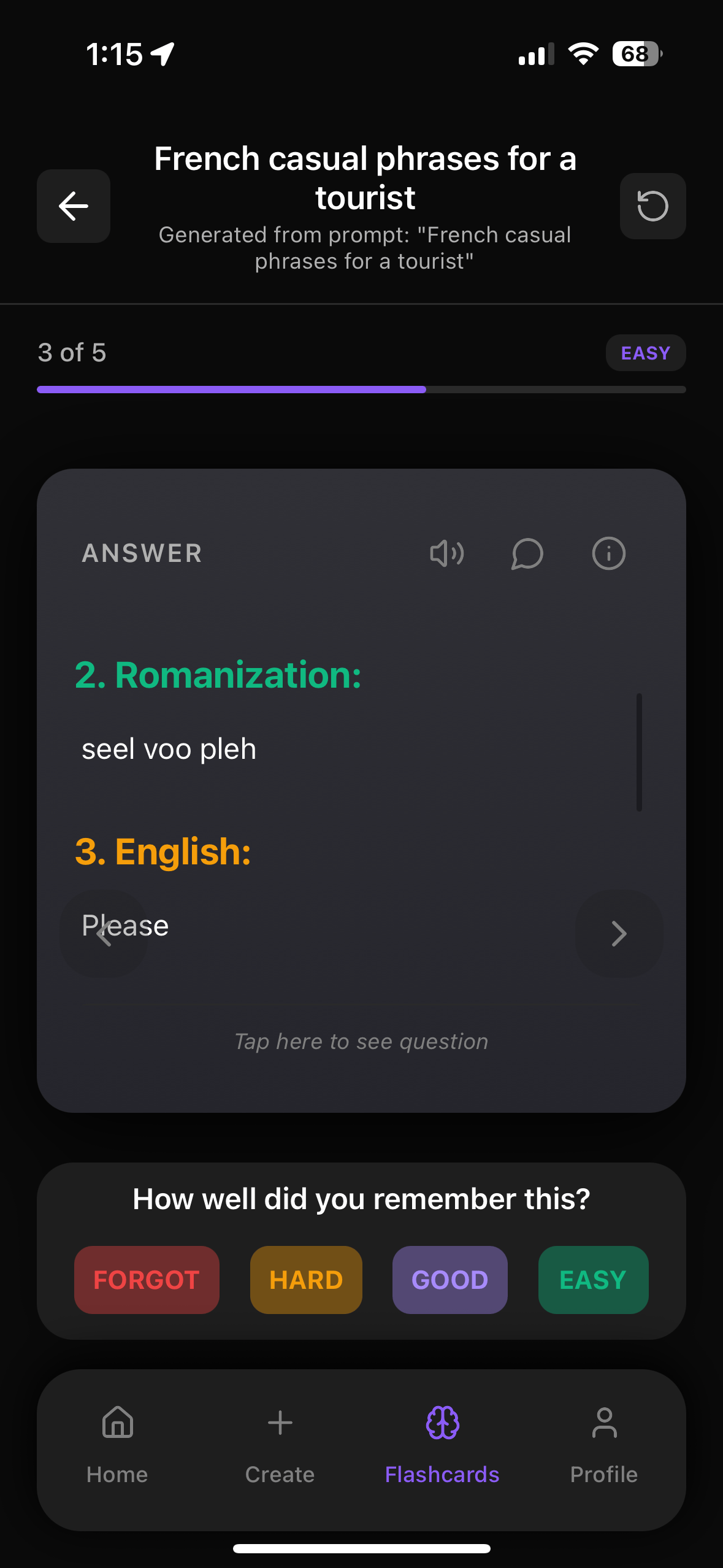
Why Grammar Flashcards Work (If You Actually Use Them Right)
So, you ever feel like grammar is this big, scary monster you can't quite tame? Honestly, I get it. But here’s where grammar flashcards tips come into play. It's like breaking down that monster into little, manageable pieces, kinda like training a puppy instead of a dragon. With the right tips, you’re not just memorizing rules—you’re making them stick in your brain for the long haul.
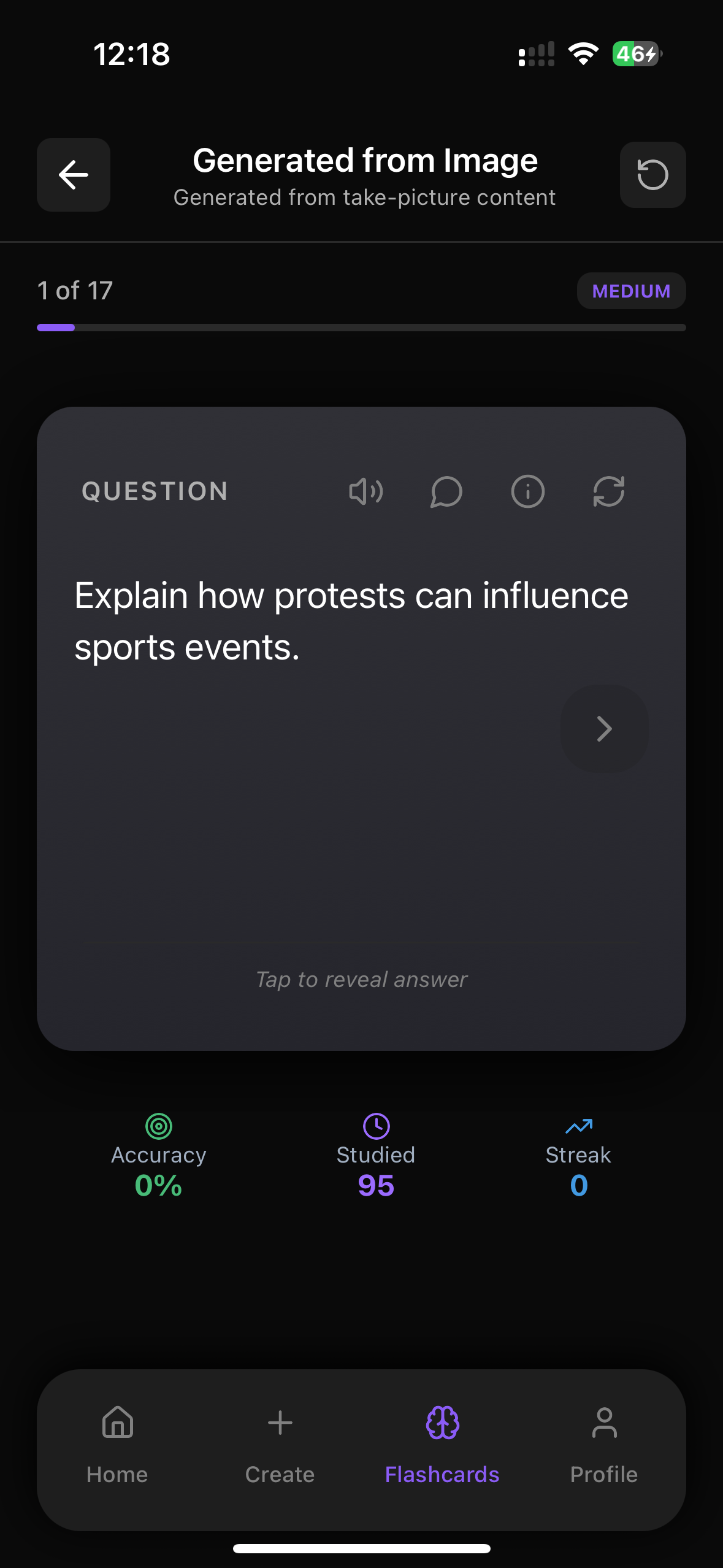
Now, I don’t know about you, but I love anything that makes studying a bit less of a chore, and this is where Flashrecall comes in like a superhero. It helps you make flashcards from your materials and even nudges you when it’s time to review them again. It’s like having a personal coach in your pocket! And if you’re curious to dive deeper into these grammar flashcards tips and really make grammar click, swing by our complete guide for the full scoop.
But the key is using them smartly, not just dumping random cards into a deck you’ll never open again.
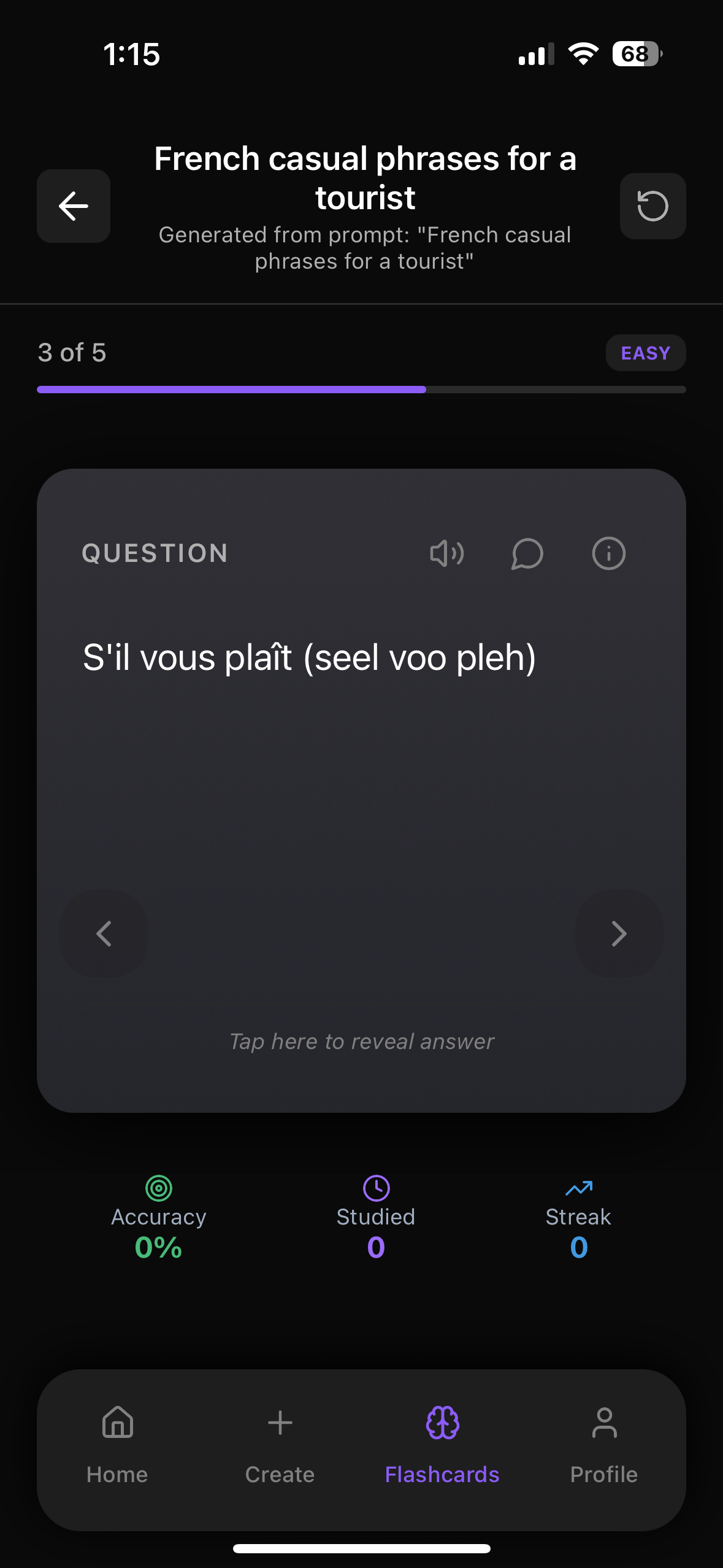
That’s where an app like Flashrecall makes a huge difference. It lets you create grammar flashcards in seconds from text, images, PDFs, YouTube videos, or just by typing — and then it automatically schedules reviews with spaced repetition so you actually remember the rules long-term.
You can grab it here (free to start):
https://apps.apple.com/us/app/flashrecall-study-flashcards/id6746757085
Let’s break down how to use grammar flashcards in a way that actually sticks.
1. What Grammar Flashcards Are Actually Good For
Grammar flashcards aren’t just for “school grammar nerds.” They’re useful for:
- Language learners (English, Spanish, French, etc.)
- Students preparing for exams (IELTS, TOEFL, SAT, GRE, Cambridge, etc.)
- Professionals writing emails, reports, or presentations
- Writers and content creators trying to sound more polished
You can use grammar flashcards to remember:
- Confusing word pairs: affect vs effect, who vs whom, than vs then
- Tenses: present perfect vs past simple
- Sentence structures: relative clauses, conditionals
- Punctuation rules: commas, semicolons, colons
- Common mistakes: its vs it’s, your vs you’re, fewer vs less
With Flashrecall, you can create cards for all of these in seconds and review them on your iPhone or iPad, even offline.
2. How To Structure Effective Grammar Flashcards
Most people mess this part up. They put too much info on one card and then wonder why nothing sticks.
Keep Each Card Focused On ONE Thing
Bad card:
> When do we use “who” and “whom”? Explain the full rule with examples.
Good set of cards:
- Card 1:
- Card 2:
- Card 3:
Make It Active, Not Passive
Instead of just definitions, force your brain to do something.
Examples:
- Fill in the blank
- Front: She has lived here ___ 2010. (for/since)
- Back: since
- Correct the mistake
- Front: I have went to the store yesterday. What’s wrong?
- Back: Should be: I went to the store yesterday. (“went” not “have went”)
- Choose the right option
- Front: Which is correct? “Less people” or “fewer people”?
- Back: “Fewer people” (use “fewer” with countable nouns)
Flashrecall is perfect for this because it’s built around active recall — every card forces you to think before you flip.
3. Using Flashrecall To Build Grammar Flashcards Fast
You don’t want to spend hours making cards. You want to spend minutes making them… and then actually study.
Here’s how Flashrecall helps:
1. Turn Text Or Notes Into Cards Instantly
- Copy a list of grammar rules or examples from your notes or a website
- Paste into Flashrecall
- Generate flashcards automatically from that text
Great for:
- Class notes
- Grammar blog posts
- PDF grammar guides
2. Make Cards From PDFs Or Worksheets
Got a grammar workbook or teacher handout?
- Import the PDF into Flashrecall
- Highlight key examples or explanations
- Turn them into cards with a couple of taps
Perfect for exam prep or language courses.
3. Create Cards From YouTube Grammar Videos
Watching grammar explanations on YouTube?
- Drop the YouTube link into Flashrecall
- Pull key points or timestamps as cards
- Review later instead of rewatching the whole video
4. Add Your Own Examples Manually
You can always create cards by hand:
- Front: “It’s” vs “its” – which one shows possession?
- Back: “its” shows possession. “it’s” = “it is” or “it has”.
Or:
- Front: Fix the sentence: Its a beautiful day.
- Back: It’s a beautiful day.
And if you’re not sure if your example is correct, you can literally chat with the flashcard in Flashrecall and ask for more explanations or examples. Super handy when grammar rules get weird.
4. Spaced Repetition: The Secret Sauce For Grammar
The problem with grammar is you understand it when you see the explanation… and forget it a week later.
Spaced repetition fixes that.
How It Works (In Normal-Person Terms)
- You see a card.
- If it’s hard, Flashrecall shows it to you again soon.
- If it’s easy, Flashrecall waits longer before showing it again.
- Over time, the gap between reviews grows — just before you’re about to forget.
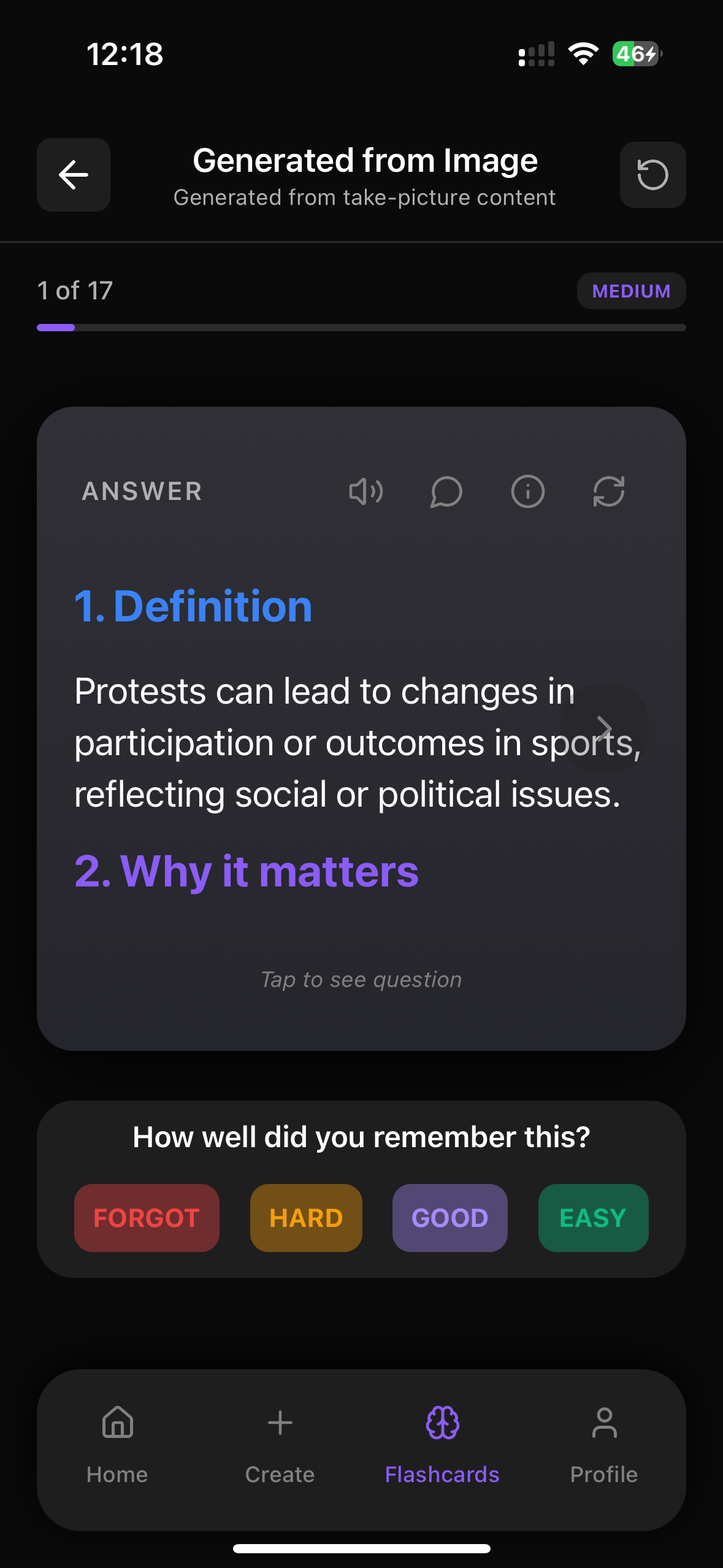
Flashrecall automatically keeps track and reminds you of the cards you don't remember well so you remember faster. Like this :
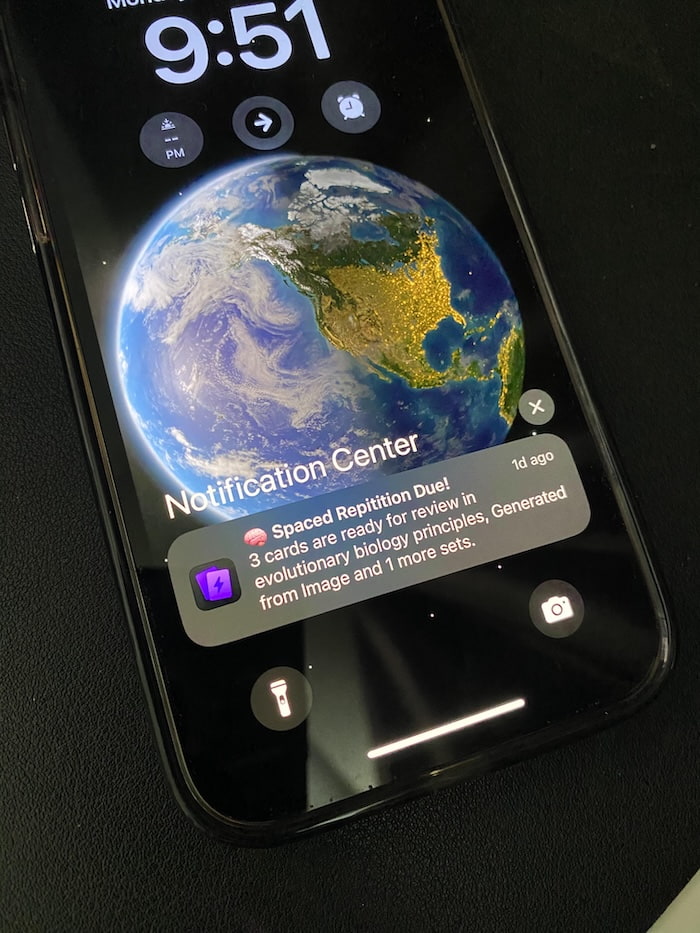
You don’t have to plan anything. Flashrecall has built-in spaced repetition with auto reminders, so you just open the app, and it tells you what to review today.
No calendar. No “I’ll do it later” chaos. Just:
> Open app → Review today’s cards → Done.
This is especially good for grammar because you need to see patterns again and again before they become automatic.
5. Example Grammar Flashcard Decks You Can Create
Here are some ideas you can literally copy and build in Flashrecall.
Deck 1: Tricky Word Pairs (English)
- affect vs effect
- who vs whom
- than vs then
- lay vs lie
- fewer vs less
- among vs between
- imply vs infer
Example card:
- Front: Choose the correct word: The news will definitely (affect/effect) your plans.
- Back: affect – it’s a verb meaning “to influence”.
Deck 2: Tenses
- Present simple vs present continuous
- Present perfect vs past simple
- Past perfect vs past simple
- “Will” vs “going to”
Example card:
- Front: I ___ (live) here for five years. Choose the best tense.
- Back: I have lived here for five years. (present perfect for duration until now)
Deck 3: Punctuation
- Comma rules
- Semicolons
- Colons
- Quotation marks
- Apostrophes
Example card:
- Front: Add commas if needed: When I get home I’ll cook dinner and watch a movie.
- Back: When I get home, I’ll cook dinner and watch a movie.
Deck 4: Common Mistakes (Custom To You)
This is the most powerful deck.
Every time you:
- Make a mistake in an essay
- Get corrected by a teacher
- See a grammar error you always forget
Turn it into a card.
Example:
- Front: I didn’t used to like coffee. Correct if needed.
- Back: I didn’t use to like coffee. (“didn’t” already shows past)
Flashrecall makes this super quick: you can just open the app, add a card manually, and it’s instantly part of your spaced repetition schedule.
6. How To Actually Stick With Grammar Flashcards (Without Burning Out)
A grammar deck is useless if you never open it. Here’s how to make it sustainable.
1. Keep Sessions Short
Aim for:
- 5–15 minutes a day
- Instead of 1-hour monster sessions you’ll avoid
Flashrecall is fast and modern, so you can knock out a review session:
- While commuting
- Between classes
- On a break at work
- Before bed
2. Let The App Remind You
Flashrecall has study reminders built in.
Set a time (e.g., 8 pm), and your phone will gently nudge you to review. No guilt, just a quick “hey, remember those grammar cards?”
3. Mix Grammar With Other Stuff
You don’t have to only study grammar.
In Flashrecall, you can have decks for:
- Grammar
- Vocabulary
- Exam practice questions
- Business phrases
- School subjects (history, biology, medicine, etc.)
Same app, same system, all using spaced repetition.
7. Why Use Flashrecall Instead Of Just Paper Cards Or Random Apps?
You could use paper flashcards or a basic notes app… but you’ll hit limits fast.
Here’s what makes Flashrecall a better fit for grammar flashcards:
- Instant card creation
From text, images, PDFs, YouTube, audio, or just typing. No more copying everything by hand.
- Built-in active recall & spaced repetition
It’s designed for learning, not just storing info. You see what you need, when you need it.
- Study reminders
So you don’t forget your grammar… or to open the app.
- Works offline
Perfect for flights, trains, or bad Wi‑Fi.
- Chat with your flashcards
Stuck on a grammar point? Ask the app for more examples or explanations based on the card.
- Great for anything, not just grammar
Languages, exams, university, medicine, business, school subjects — one place for all your learning.
- Free to start
You can test it out without committing to anything.
Available on iPhone and iPad here:
https://apps.apple.com/us/app/flashrecall-study-flashcards/id6746757085
Quick Start Plan: Build Your First Grammar Deck Today
If you want a simple way to start today, here’s a 10–minute plan:
1. Download Flashrecall
Open: https://apps.apple.com/us/app/flashrecall-study-flashcards/id6746757085
2. Create a deck called “Grammar – My Mistakes”
3. Add 10 cards:
- 5 confusing word pairs you always mix up
- 3 tense mistakes you often make
- 2 punctuation rules you’re unsure about
4. Turn on daily reminders (5–10 minutes is enough).
5. Review every day for one week.
You’ll be surprised how quickly those “I always mess this up” rules start to feel… easy.
Grammar doesn’t have to be this big scary thing. With smart flashcards and spaced repetition, it becomes just another habit — like brushing your teeth, but for your writing.
And Flashrecall makes the whole process way faster, easier, and honestly kind of satisfying.
Frequently Asked Questions
What's the fastest way to create flashcards?
Manually typing cards works but takes time. Many students now use AI generators that turn notes into flashcards instantly. Flashrecall does this automatically from text, images, or PDFs.
Is there a free flashcard app?
Yes. Flashrecall is free and lets you create flashcards from images, text, prompts, audio, PDFs, and YouTube videos.
How do I start spaced repetition?
You can manually schedule your reviews, but most people use apps that automate this. Flashrecall uses built-in spaced repetition so you review cards at the perfect time.
What is active recall and how does it work?
Active recall is the process of actively retrieving information from memory rather than passively reviewing it. Flashrecall forces proper active recall by making you think before revealing answers, then uses spaced repetition to optimize your review schedule.
Related Articles
- Kidpid Flashcards: Why Most Students Outgrow Them And The Powerful Upgrade You Need Next – Discover a smarter flashcard app that actually helps you remember long‑term, not just cram for today.
- Tenses Flashcards: 7 Powerful Tricks To Finally Master English Grammar Fast – Most Learners Get This Wrong, But You Don’t Have To
- Evolution Flashcards: 7 Powerful Study Tricks To Finally Understand Natural Selection Fast – Stop rereading your notes and use flashcards the way top biology students do.
Research References
The information in this article is based on peer-reviewed research and established studies in cognitive psychology and learning science.
Cepeda, N. J., Pashler, H., Vul, E., Wixted, J. T., & Rohrer, D. (2006). Distributed practice in verbal recall tasks: A review and quantitative synthesis. Psychological Bulletin, 132(3), 354-380
Meta-analysis showing spaced repetition significantly improves long-term retention compared to massed practice
Carpenter, S. K., Cepeda, N. J., Rohrer, D., Kang, S. H., & Pashler, H. (2012). Using spacing to enhance diverse forms of learning: Review of recent research and implications for instruction. Educational Psychology Review, 24(3), 369-378
Review showing spacing effects work across different types of learning materials and contexts
Kang, S. H. (2016). Spaced repetition promotes efficient and effective learning: Policy implications for instruction. Policy Insights from the Behavioral and Brain Sciences, 3(1), 12-19
Policy review advocating for spaced repetition in educational settings based on extensive research evidence
Karpicke, J. D., & Roediger, H. L. (2008). The critical importance of retrieval for learning. Science, 319(5865), 966-968
Research demonstrating that active recall (retrieval practice) is more effective than re-reading for long-term learning
Roediger, H. L., & Butler, A. C. (2011). The critical role of retrieval practice in long-term retention. Trends in Cognitive Sciences, 15(1), 20-27
Review of research showing retrieval practice (active recall) as one of the most effective learning strategies
Dunlosky, J., Rawson, K. A., Marsh, E. J., Nathan, M. J., & Willingham, D. T. (2013). Improving students' learning with effective learning techniques: Promising directions from cognitive and educational psychology. Psychological Science in the Public Interest, 14(1), 4-58
Comprehensive review ranking learning techniques, with practice testing and distributed practice rated as highly effective

FlashRecall Team
FlashRecall Development Team
The FlashRecall Team is a group of working professionals and developers who are passionate about making effective study methods more accessible to students. We believe that evidence-based learning tec...
Credentials & Qualifications
- •Software Development
- •Product Development
- •User Experience Design
Areas of Expertise
Ready to Transform Your Learning?
Start using FlashRecall today - the AI-powered flashcard app with spaced repetition and active recall.
Download on App Store