
Hindi Flashcards Study Method: The Essential Guide
The hindi flashcards study method boosts retention through active recall. Use Flashrecall to schedule reviews and make memorizing Hindi words stick better.
How Flashrecall app helps you remember faster. It's free
Stop Struggling With Hindi Vocab – Flashcards Can Actually Be Fun
Alright, so you know how sometimes learning a new language feels like trying to juggle while riding a unicycle? Well, the hindi flashcards study method is like having a buddy who keeps tossing you just one ball at a time until you're a pro. Basically, it's all about actively pulling info from your memory bank at just the right moments, and believe it or not, that really makes the info stick. Forget about cramming or flipping through your notes endlessly—this method has your brain playing the long game.
And here's the cool part: Flashrecall does all the reminder stuff for you. It's like having a personal assistant who nudges you to review stuff at the perfect time, so you can focus on actually soaking in the knowledge. So if you're curious about diving into the nitty-gritty of this method and learning some awesome ways to remember Hindi words quicker, you should totally check out our complete guide. Let's make this language thing
Let’s break down how to actually use Hindi flashcards effectively, and how to make the whole process way easier with Flashrecall.
Why Hindi Flashcards Work So Well (When Done Right)
Hindi has a few challenges:
- New script: Devanagari (देवनागरी)
- Different sounds (retroflex consonants, aspirated sounds, etc.)
- Gendered nouns (लड़का vs लड़की)
- Formal vs informal speech (तुम, आप, तू)
Flashcards help because they force active recall (pulling the answer from your memory) instead of just re-reading lists.
Combine that with spaced repetition (reviewing just before you forget), and you basically get a cheat code for vocab.
Flashrecall bakes both of these into the app automatically:
- You rate how well you remembered a card
- It schedules the next review for you
- You get study reminders, so you don’t forget to… not forget
No spreadsheets. No “which deck should I study today?” stress. Just open the app and go.
What Should You Put On Your Hindi Flashcards?
Don’t overcomplicate it. Start with these types of cards:
1. Basic Word Cards
Front:
> घर
Back:
> house, home
> Example: मैं घर जा रहा हूँ। (I am going home.)
Tips:
- Always add an example sentence, even a simple one
- Add gender for nouns:
- लड़का (m) – boy
- लड़की (f) – girl
2. Script + Pronunciation Cards
Especially if you’re new to Devanagari, make cards that focus on reading and sounds.
Front:
> ख
Back:
> “kha” (aspirated sound)
> As in: खाना (to eat)
You can even add audio in Flashrecall so you hear the real sound when you study.
3. Phrase Cards (Super Useful For Speaking)
Front:
> How do you say "water" in Hindi?
Back:
> पानी
> Example: मुझे पानी चाहिए। (I need water.)
Or the other way around:
Front:
> मुझे पानी चाहिए।
Back:
> I need water.
> “I need water.”
These help you think in Hindi instead of translating word by word.
How Flashrecall Makes Hindi Flashcards Way Easier
You can make paper flashcards or use basic apps… but you’ll probably quit fast because it’s too much manual work.
Flashrecall is built to remove that friction:
1. Make Hindi Flashcards Instantly From Almost Anything
With Flashrecall you can create cards from:
- Images – screenshot a vocab list, textbook page, or Instagram Hindi post
- Text – paste vocab lists, dialogues, phrases
- PDFs – import study guides or class materials
- YouTube links – turn videos into learnable flashcards
- Audio – great for pronunciation practice
- Or just type them manually if you like control
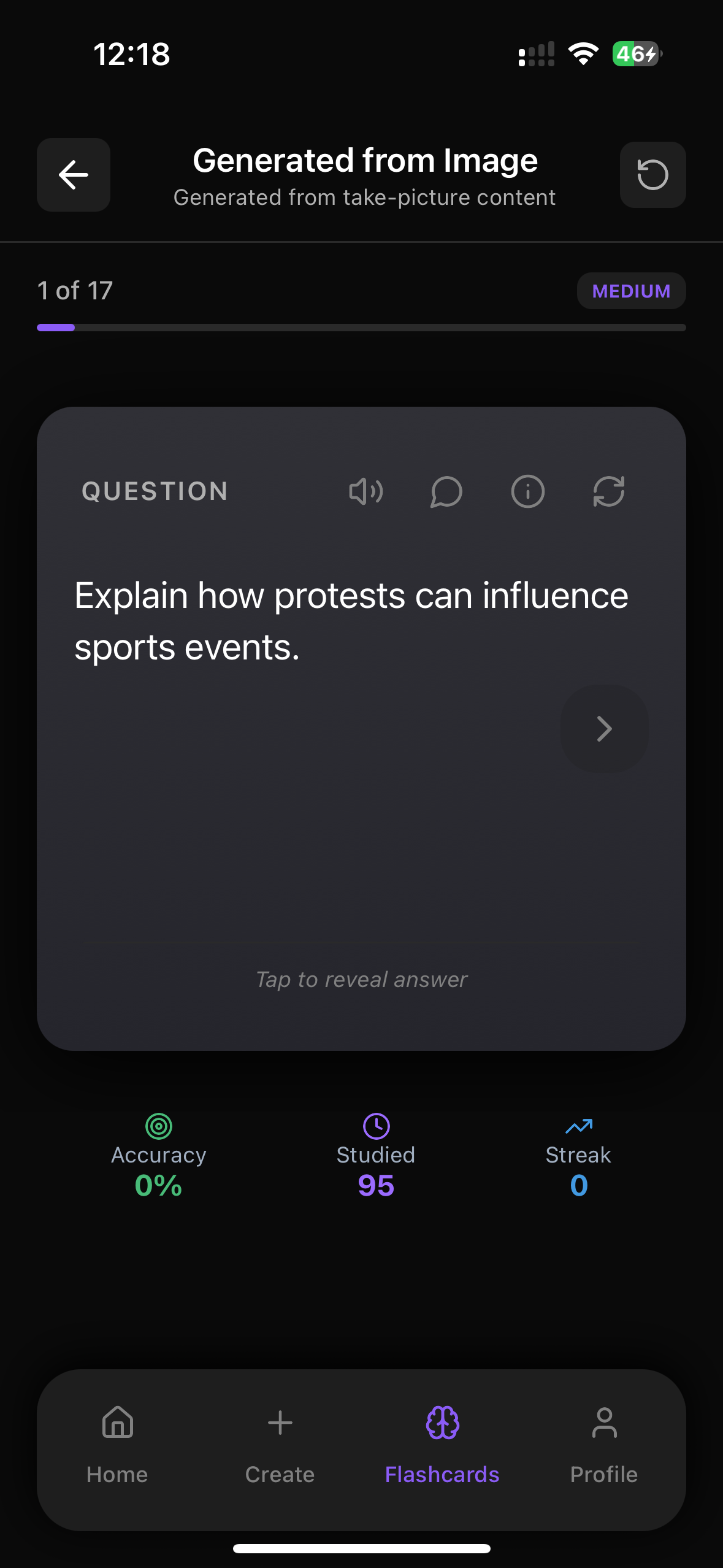
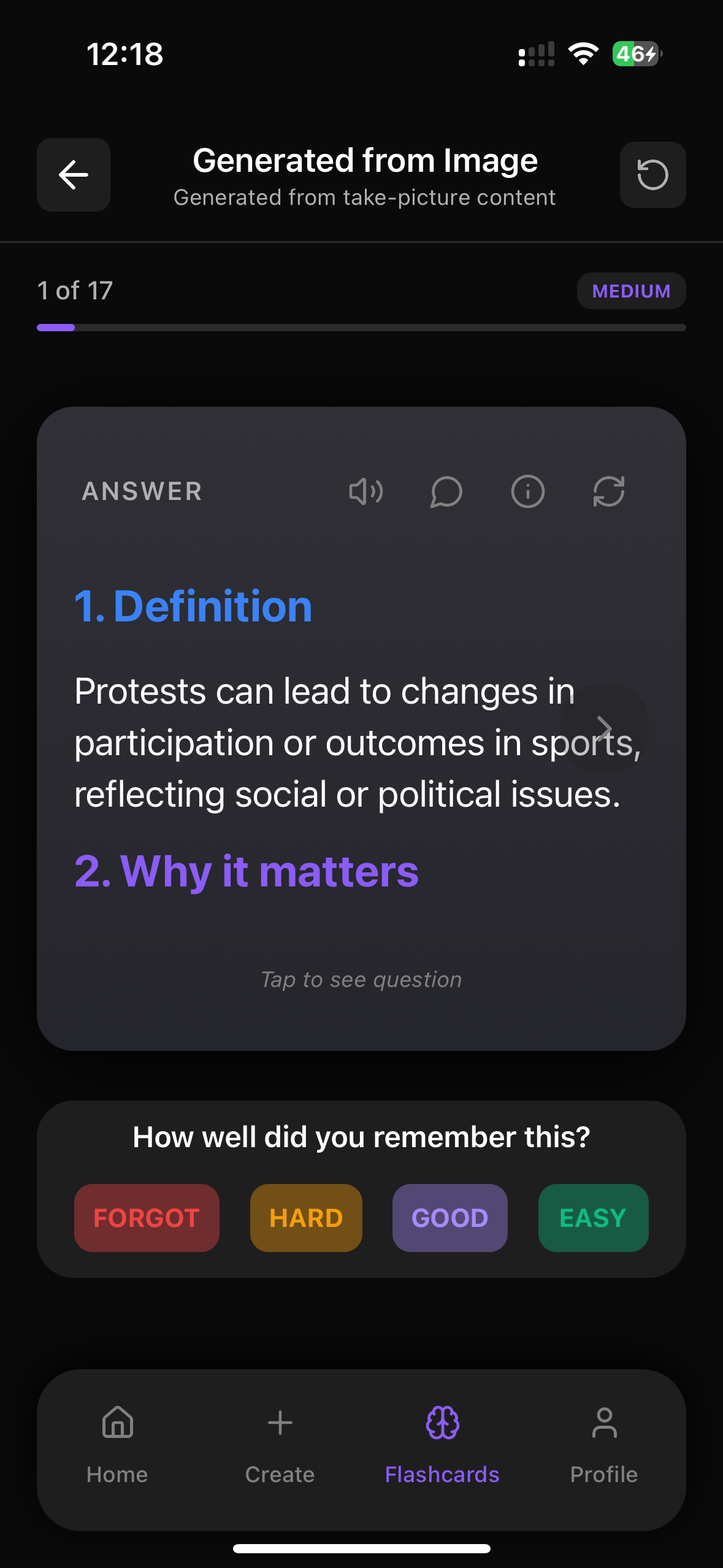
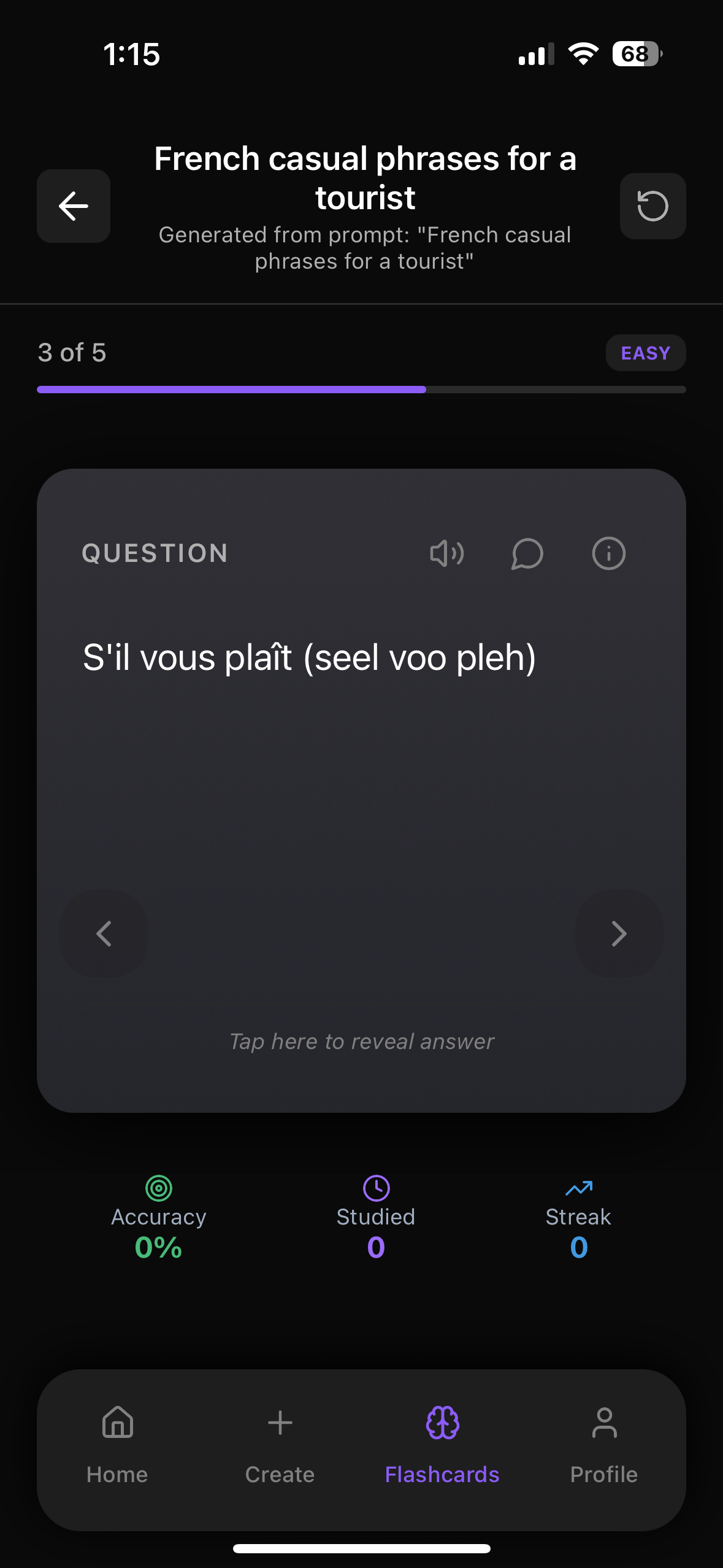
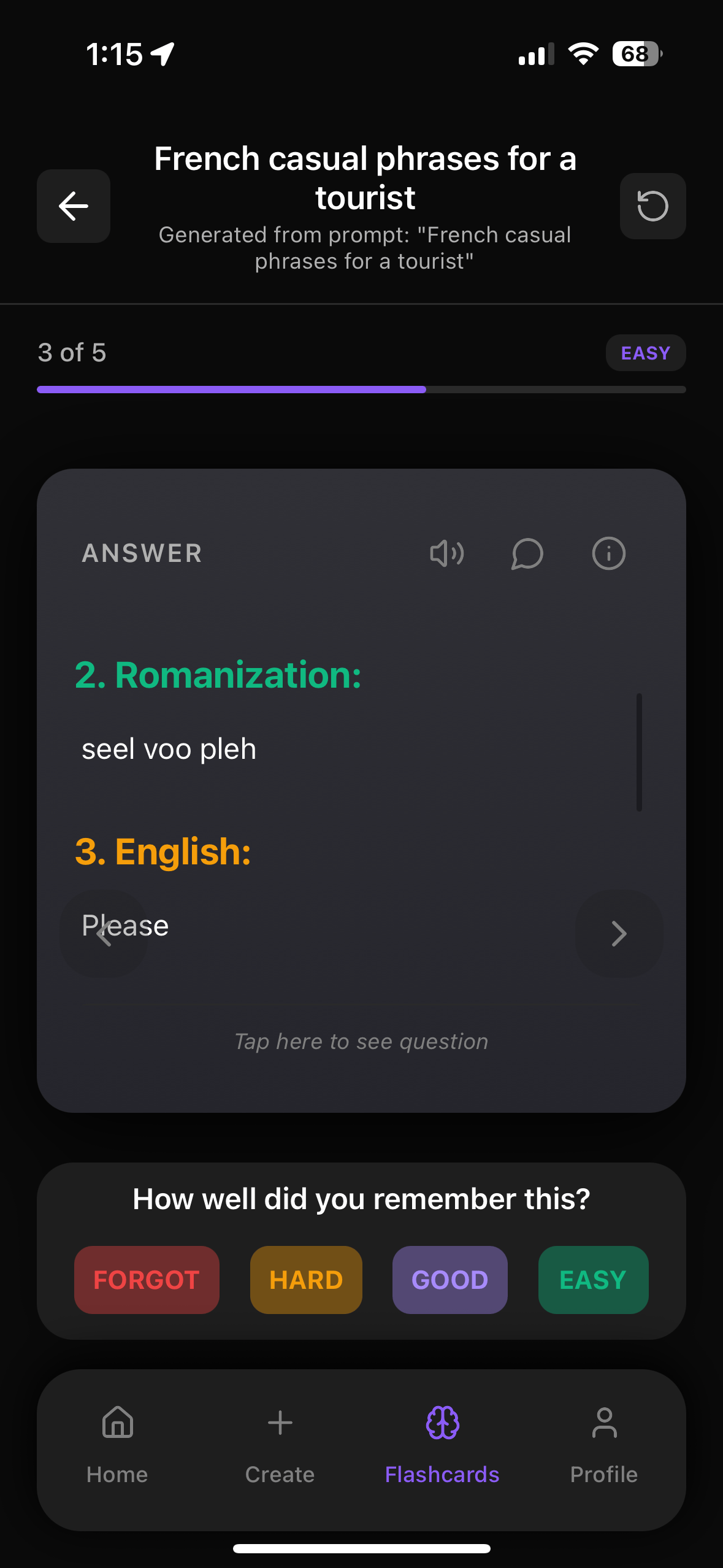
Flashrecall automatically keeps track and reminds you of the cards you don't remember well so you remember faster. Like this :
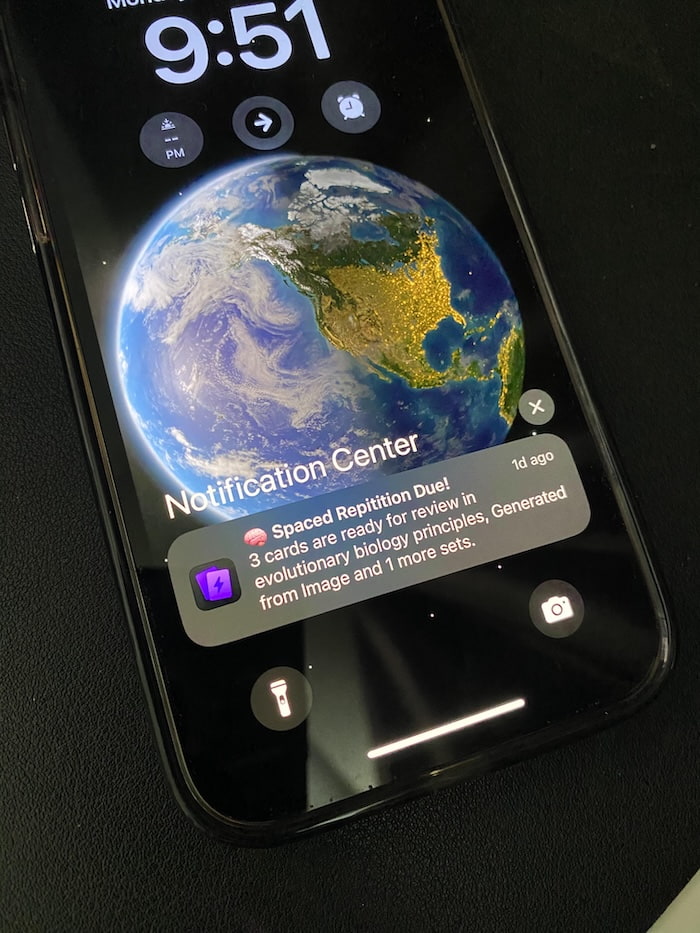
So instead of retyping everything, you can literally snap a photo of your Hindi workbook and turn it into cards.
👉 Try it here (free to start):
https://apps.apple.com/us/app/flashrecall-study-flashcards/id6746757085
2. Built-In Spaced Repetition (No Extra Setup)
You don’t have to understand the math behind spaced repetition.
In Flashrecall it just works:
- You see a card
- You try to recall the answer (active recall)
- You rate how easy or hard it was
- Flashrecall schedules the next review at the best time
This is perfect for Hindi, because you’ll naturally see tricky words like सुधारना (to improve) more often than easy ones like नमस्ते.
3. Study Reminders So You Actually Stay Consistent
Consistency beats intensity.
10 minutes a day > 2 hours once a week.
Flashrecall sends gentle reminders to review, so Hindi stays in your daily routine without feeling like a huge task.
Set a time that works for you (like right after dinner), and let the app nudge you.
4. Works Offline (Perfect For Commutes)
On a train, plane, or in a spot with bad signal?
Flashrecall works offline on iPhone and iPad, so you can review Hindi vocab anywhere.
Train rides become vocab sessions. Waiting rooms become speaking practice. No excuses.
5. Chat With Your Flashcards When You’re Confused
This is honestly one of the coolest features.
If you’re unsure about a word, phrase, or grammar point, you can chat with the flashcard inside Flashrecall:
- Ask for more example sentences
- Ask for a simpler explanation
- Ask how it changes in past/future tense
- Ask about formal vs informal versions
It’s like having a mini Hindi tutor built into your deck.
How To Structure Your Hindi Flashcard Decks
You don’t need a crazy system, but a bit of structure helps.
Option 1: By Topic
Great for beginners and travelers:
- Greetings & Introductions
- Numbers & Time
- Food & Restaurants
- Directions & Travel
- Daily Routine
- Emotions
Example topic card:
Front:
> मुझे भूख लगी है।
Back:
> I am hungry.
> Literally: “Hunger has attached to me.”
Option 2: By Level
- Hindi – Beginner
- Hindi – Intermediate
- Hindi – Advanced
You can move cards between decks as you improve.
Option 3: By Skill
- Reading (Devanagari focus)
- Listening (with audio)
- Speaking (phrases you want to use)
- Grammar (tenses, postpositions, etc.)
In Flashrecall, you can quickly create multiple decks and switch between them depending on what you want to focus on that day.
Example: A Mini Hindi Flashcard Set You Can Copy
Here’s a simple starter set you could drop into Flashrecall:
1.
- Front: नमस्ते
- Back: Hello / Hi (formal or respectful)
2.
- Front: धन्यवाद
- Back: Thank you
3.
- Front: माफ कीजिए
- Back: Excuse me / I’m sorry (formal)
4.
- Front: पानी
- Back: Water
Example: मुझे पानी चाहिए। (I need water.)
5.
- Front: आप कैसे हैं?
- Back: How are you? (to a man or general polite)
6.
- Front: आप कैसी हैं?
- Back: How are you? (to a woman, polite)
7.
- Front: मेरा नाम ____ है।
- Back: My name is ____.
8.
- Front: मैं हिंदी सीख रहा हूँ।
- Back: I am learning Hindi. (speaker is male)
9.
- Front: मैं हिंदी सीख रही हूँ।
- Back: I am learning Hindi. (speaker is female)
10.
- Front: अभी कितने बजे हैं?
- Back: What time is it now?
You can throw all of these into a deck in Flashrecall, add audio, and you’ve got a solid beginner set.
How Flashrecall Compares To Other Hindi Flashcard Options
You might be thinking: “Why not just use any flashcard app or paper cards?”
Here’s where Flashrecall really shines:
- Faster card creation
- Turn images, PDFs, YouTube links, audio, or text into cards
- Most apps make you type everything manually
- Built-in smart learning
- Active recall + spaced repetition are built in
- Auto reminders so you don’t have to plan review schedules
- Interactive learning
- You can chat with your flashcards when you’re unsure
- Ask for grammar help or extra examples on the spot
- Flexible use cases
- Great for languages, exams, school subjects, university, medicine, business — anything
- So once you’re done with Hindi vocab, you can use it for literally every other subject in your life
- Fast, modern, easy to use
- No clunky UI, no confusing menus
- Free to start, so you can try it without committing
Again, here’s the link if you want to test it out:
👉 https://apps.apple.com/us/app/flashrecall-study-flashcards/id6746757085
Daily Routine To Actually Learn Hindi With Flashcards
Here’s a simple routine that works really well:
1. 10–15 Minutes Of Review (Every Day)
- Open Flashrecall
- Do your scheduled reviews (spaced repetition will handle the order)
- Don’t cram, just be consistent
2. Add 5–10 New Cards
Ideas:
- Words from a Hindi YouTube video you watched
- Phrases from a show, song, or conversation
- New vocab from your textbook or class
You can:
- Screenshot a subtitle or vocab list
- Import a PDF
- Paste text
- Or quickly type them in
3. Use “Chat With Flashcard” When Stuck
If a card feels confusing:
- Ask for more examples
- Ask for a breakdown of each word
- Ask when to use it (formal/informal, spoken/written, etc.)
This turns your flashcard review into an actual learning session, not just memorization.
Final Thoughts: Hindi Flashcards Don’t Have To Be Boring
Hindi is such a beautiful language, and flashcards are one of the fastest ways to actually use it in real life instead of just recognizing words.
If you:
- Use active recall (don’t peek)
- Let spaced repetition handle the timing
- Build cards from what you actually watch, read, and hear
- Stay consistent with short daily sessions
…you’ll be shocked how quickly your Hindi vocab grows.
Flashrecall just makes all of that smoother, faster, and a lot less annoying:
- Instant cards from images, text, PDFs, YouTube, audio
- Built-in spaced repetition + reminders
- Chat with your flashcards when you’re unsure
- Works offline on iPhone and iPad
- Free to start
If you’re serious about learning Hindi with flashcards, try it out:
👉 https://apps.apple.com/us/app/flashrecall-study-flashcards/id6746757085
Set up one small Hindi deck today, and tomorrow-you will be very grateful you did.
Frequently Asked Questions
What's the fastest way to create flashcards?
Manually typing cards works but takes time. Many students now use AI generators that turn notes into flashcards instantly. Flashrecall does this automatically from text, images, or PDFs.
Is there a free flashcard app?
Yes. Flashrecall is free and lets you create flashcards from images, text, prompts, audio, PDFs, and YouTube videos.
How do I start spaced repetition?
You can manually schedule your reviews, but most people use apps that automate this. Flashrecall uses built-in spaced repetition so you review cards at the perfect time.
What is active recall and how does it work?
Active recall is the process of actively retrieving information from memory rather than passively reviewing it. Flashrecall forces proper active recall by making you think before revealing answers, then uses spaced repetition to optimize your review schedule.
Related Articles
- Irish Flashcards: The Essential Guide To Learning Irish Faster (What Most Learners Miss) – Discover a smarter way to build Irish vocab, phrases, and grammar without getting overwhelmed.
- English Alphabet Flashcards: 7 Powerful Ways To Help You (Or Your Kid) Learn Faster And Actually Remember
- Free Printable Flashcards: The Essential Guide Plus a Smarter Free App Alternative Most Students Don’t Know About
Research References
The information in this article is based on peer-reviewed research and established studies in cognitive psychology and learning science.
Cepeda, N. J., Pashler, H., Vul, E., Wixted, J. T., & Rohrer, D. (2006). Distributed practice in verbal recall tasks: A review and quantitative synthesis. Psychological Bulletin, 132(3), 354-380
Meta-analysis showing spaced repetition significantly improves long-term retention compared to massed practice
Carpenter, S. K., Cepeda, N. J., Rohrer, D., Kang, S. H., & Pashler, H. (2012). Using spacing to enhance diverse forms of learning: Review of recent research and implications for instruction. Educational Psychology Review, 24(3), 369-378
Review showing spacing effects work across different types of learning materials and contexts
Kang, S. H. (2016). Spaced repetition promotes efficient and effective learning: Policy implications for instruction. Policy Insights from the Behavioral and Brain Sciences, 3(1), 12-19
Policy review advocating for spaced repetition in educational settings based on extensive research evidence
Karpicke, J. D., & Roediger, H. L. (2008). The critical importance of retrieval for learning. Science, 319(5865), 966-968
Research demonstrating that active recall (retrieval practice) is more effective than re-reading for long-term learning
Roediger, H. L., & Butler, A. C. (2011). The critical role of retrieval practice in long-term retention. Trends in Cognitive Sciences, 15(1), 20-27
Review of research showing retrieval practice (active recall) as one of the most effective learning strategies
Dunlosky, J., Rawson, K. A., Marsh, E. J., Nathan, M. J., & Willingham, D. T. (2013). Improving students' learning with effective learning techniques: Promising directions from cognitive and educational psychology. Psychological Science in the Public Interest, 14(1), 4-58
Comprehensive review ranking learning techniques, with practice testing and distributed practice rated as highly effective

FlashRecall Team
FlashRecall Development Team
The FlashRecall Team is a group of working professionals and developers who are passionate about making effective study methods more accessible to students. We believe that evidence-based learning tec...
Credentials & Qualifications
- •Software Development
- •Product Development
- •User Experience Design
Areas of Expertise
Ready to Transform Your Learning?
Start using FlashRecall today - the AI-powered flashcard app with spaced repetition and active recall.
Download on App Store