How to Convert Google Forms Quizzes into Flashcards for Effective Studying
Convert Google Forms quizzes into flashcards effortlessly with Flashrecall. This app uses spaced repetition to enhance your study sessions and boost retention.
How Flashrecall app helps you remember faster. It's free
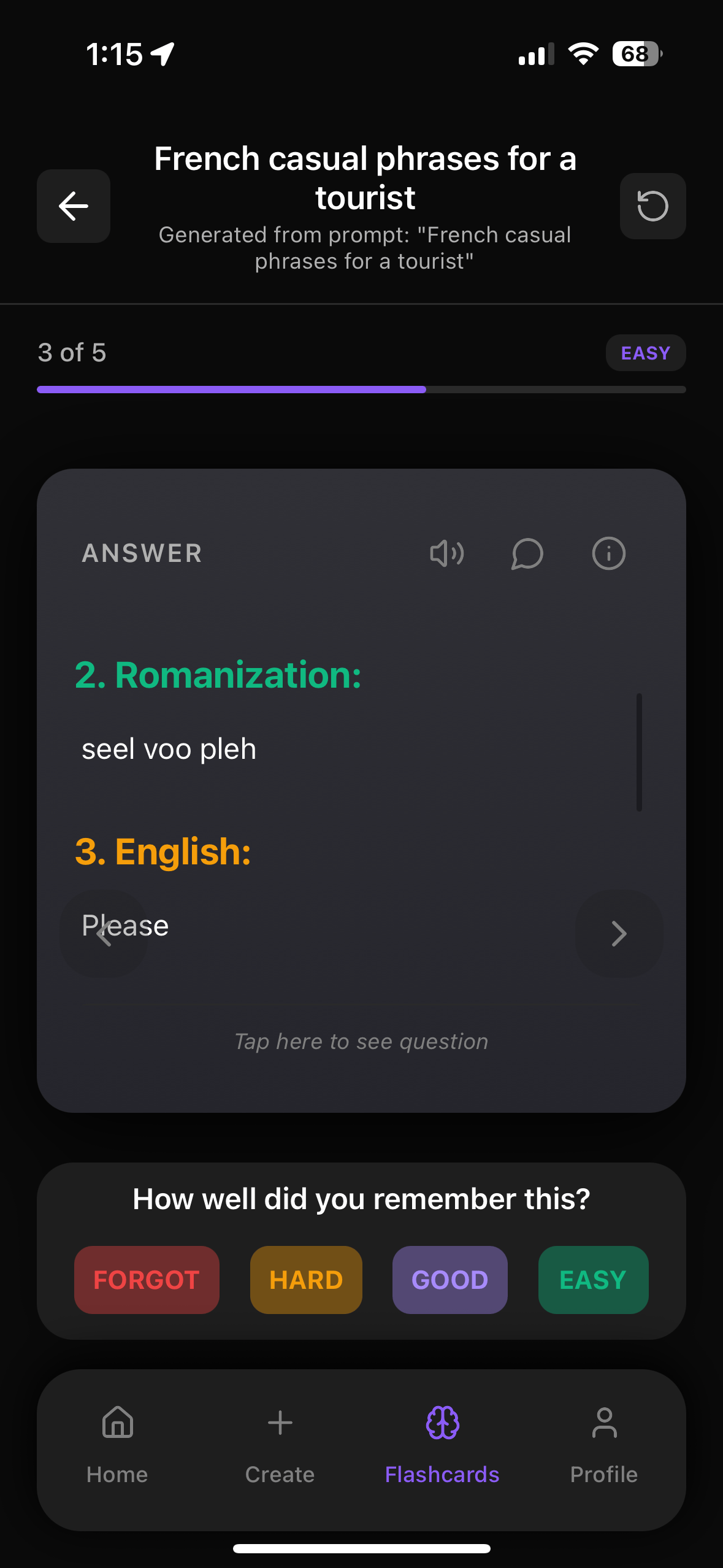
google forms quizlet
Users searching for Google Forms Quizlet may want to convert Google Forms quizzes into flashcards or integrate the two tools. There’s no native integration between Google Forms and Quizlet.
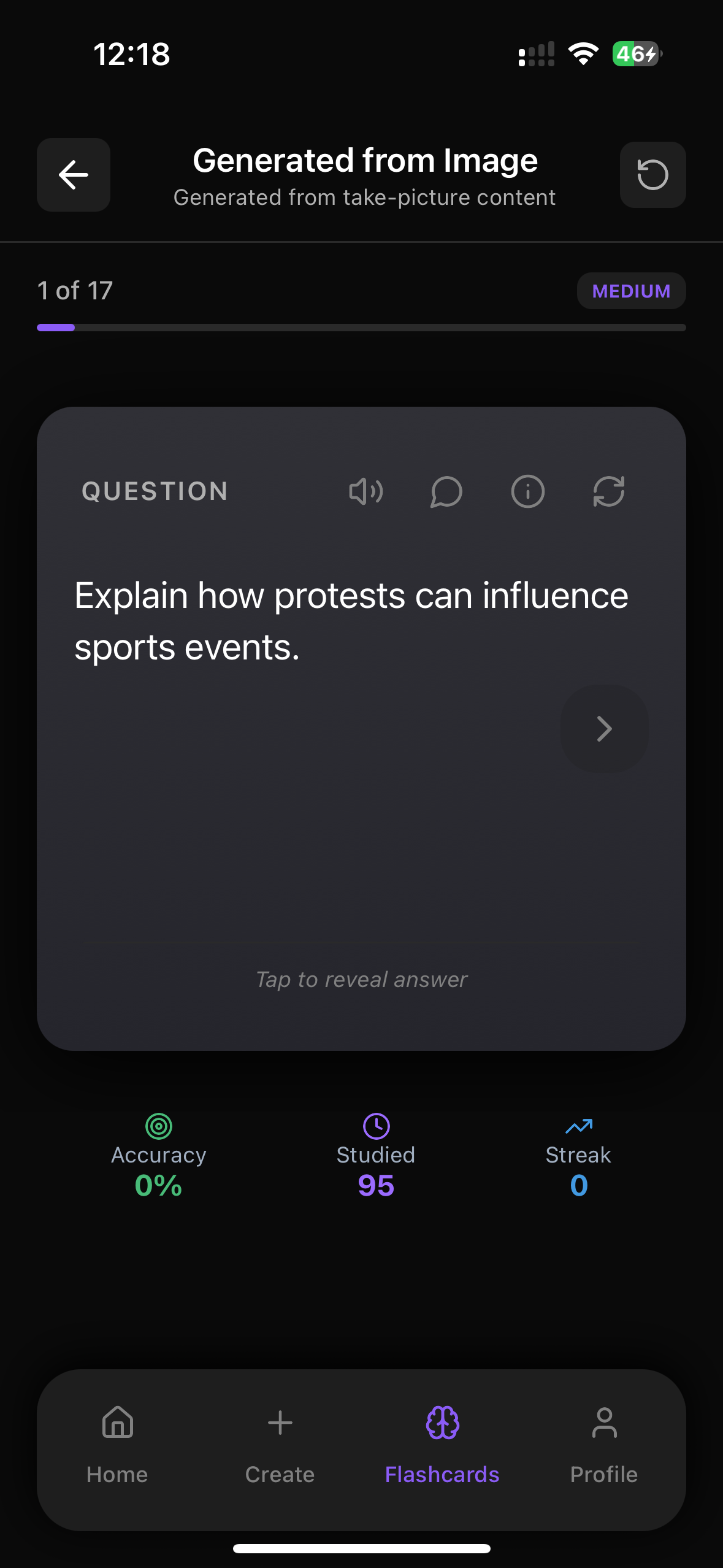
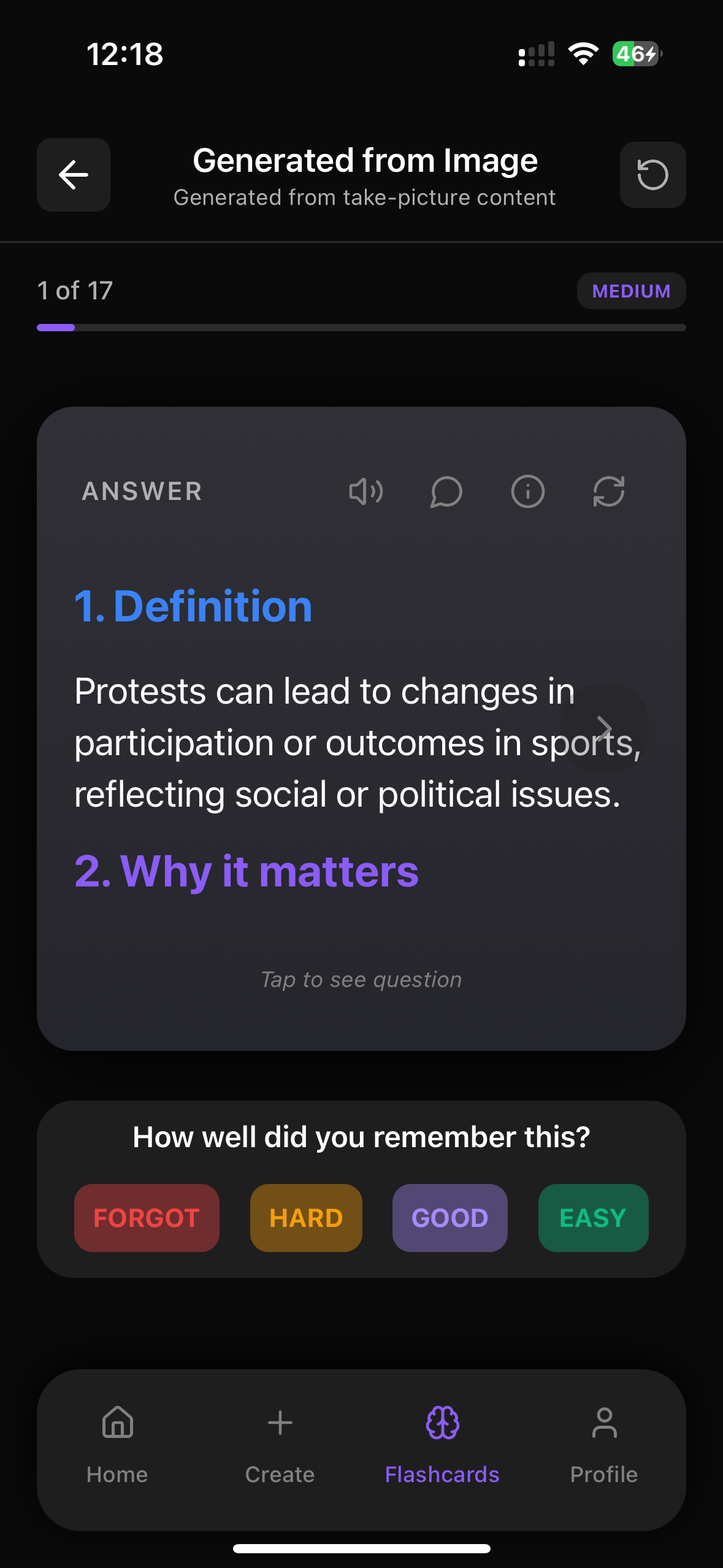
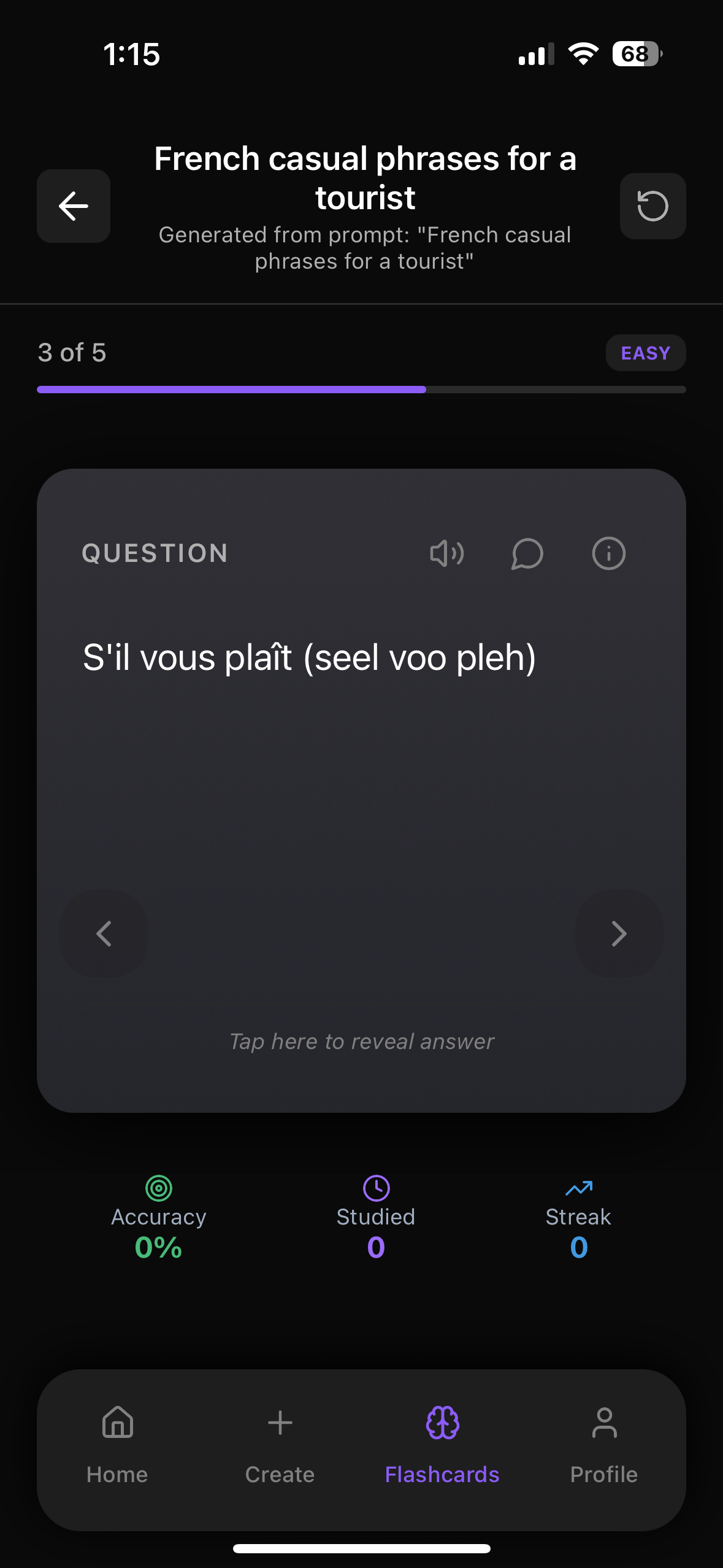
Instead, export your Google Forms data (questions and answers) and import it into Flashrecall
. The app will automatically create flashcards from the questions
Flashrecall automatically keeps track and reminds you of the cards you don't remember well so you remember faster. Like this :
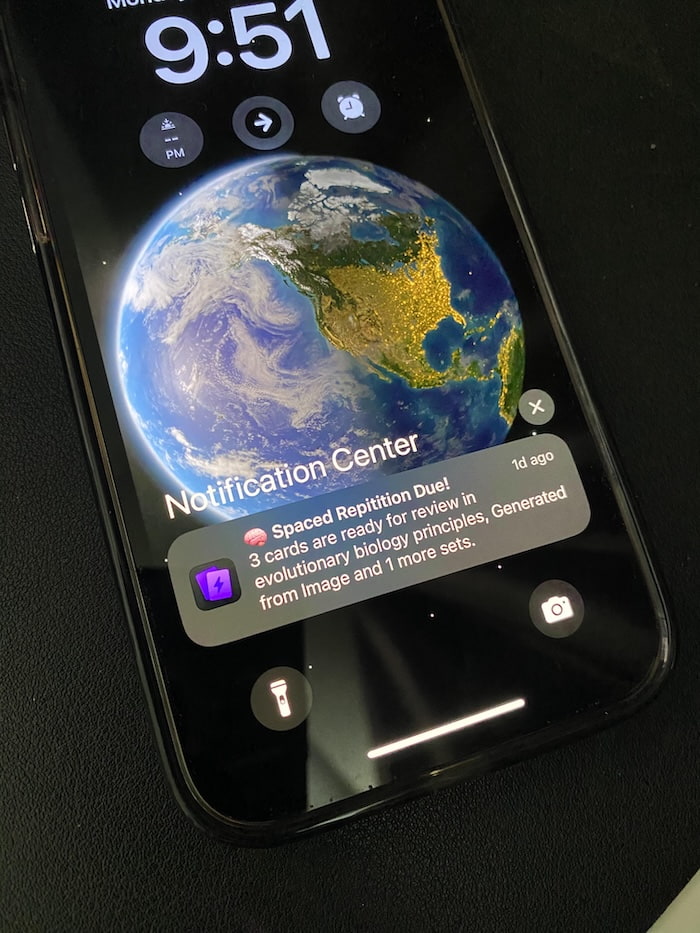
flashrecall.app
. With spaced‑repetition and active recall
flashrecall.app
en.wikipedia.org
, you can use your own quiz questions as an effective study tool.
Frequently Asked Questions
Is Quizlet good for studying?
Quizlet helps with basic reviewing, but its active recall tools are limited. If you want proper spacing and strong recall practice, tools like Flashrecall automate the memory science for you so you don't forget your notes.
What's the fastest way to create flashcards?
Manually typing cards works but takes time. Many students now use AI generators that turn notes into flashcards instantly. Flashrecall does this automatically from text, images, or PDFs.
How do I start spaced repetition?
You can manually schedule your reviews, but most people use apps that automate this. Flashrecall uses built-in spaced repetition so you review cards at the perfect time.
What is active recall and how does it work?
Active recall is the process of actively retrieving information from memory rather than passively reviewing it. Flashrecall forces proper active recall by making you think before revealing answers, then uses spaced repetition to optimize your review schedule.
Related Articles
Research References
The information in this article is based on peer-reviewed research and established studies in cognitive psychology and learning science.
Cepeda, N. J., Pashler, H., Vul, E., Wixted, J. T., & Rohrer, D. (2006). Distributed practice in verbal recall tasks: A review and quantitative synthesis. Psychological Bulletin, 132(3), 354-380
Meta-analysis showing spaced repetition significantly improves long-term retention compared to massed practice
Carpenter, S. K., Cepeda, N. J., Rohrer, D., Kang, S. H., & Pashler, H. (2012). Using spacing to enhance diverse forms of learning: Review of recent research and implications for instruction. Educational Psychology Review, 24(3), 369-378
Review showing spacing effects work across different types of learning materials and contexts
Kang, S. H. (2016). Spaced repetition promotes efficient and effective learning: Policy implications for instruction. Policy Insights from the Behavioral and Brain Sciences, 3(1), 12-19
Policy review advocating for spaced repetition in educational settings based on extensive research evidence

FlashRecall Team
FlashRecall Development Team
The FlashRecall Team is a group of working professionals and developers who are passionate about making effective study methods more accessible to students. We believe that evidence-based learning tec...
Credentials & Qualifications
- •Software Development
- •Product Development
- •User Experience Design
Areas of Expertise
Ready to Transform Your Learning?
Start using FlashRecall today - the AI-powered flashcard app with spaced repetition and active recall.
Download on App Store