IMAT General Knowledge Flashcards: 7 Powerful Study Hacks Most Applicants Don’t Use – Turn Random Trivia Into Easy Points and Boost Your Score Fast
IMAT general knowledge flashcards don’t need to be random trivia. Use Flashrecall, spaced repetition and smart mini‑decks to stack reliable exam points fast.
How Flashrecall app helps you remember faster. It's free
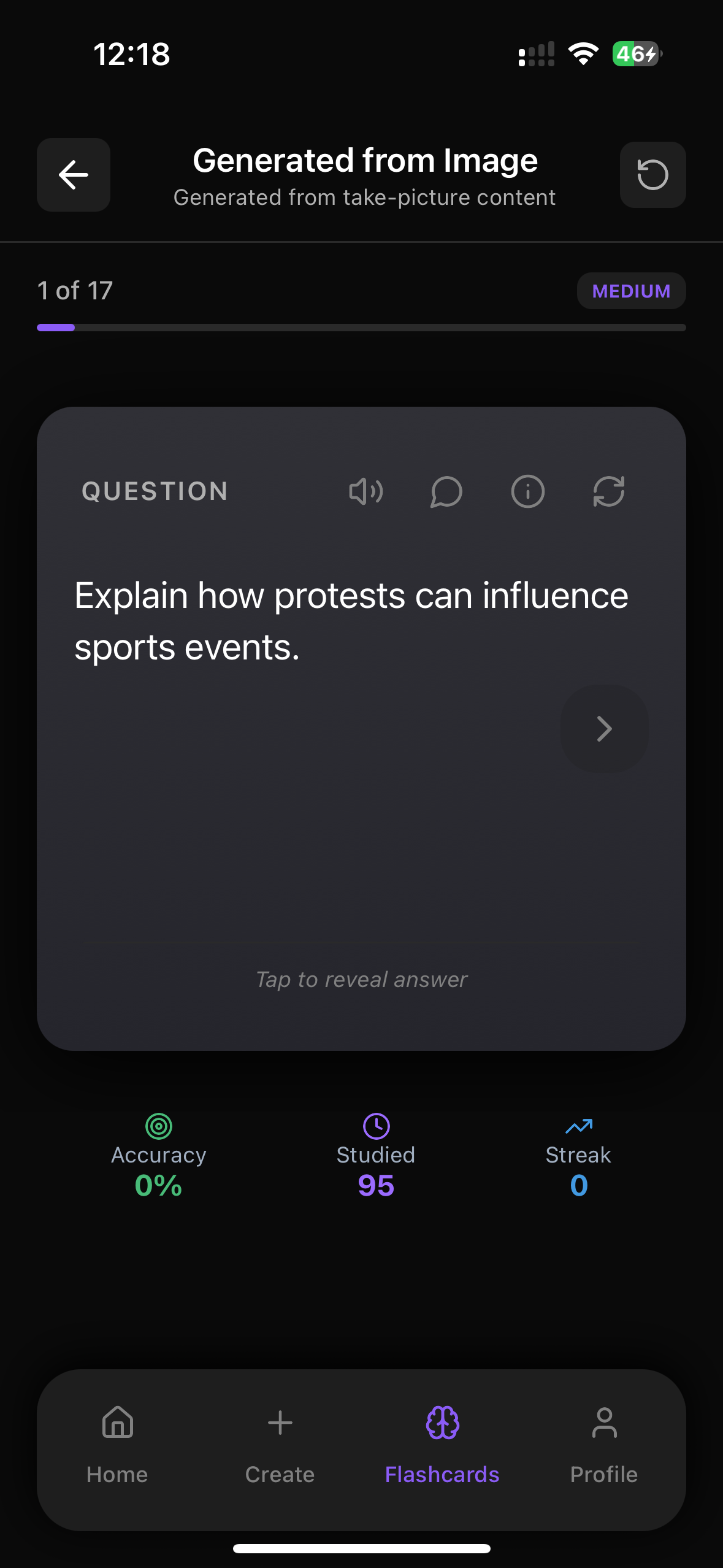
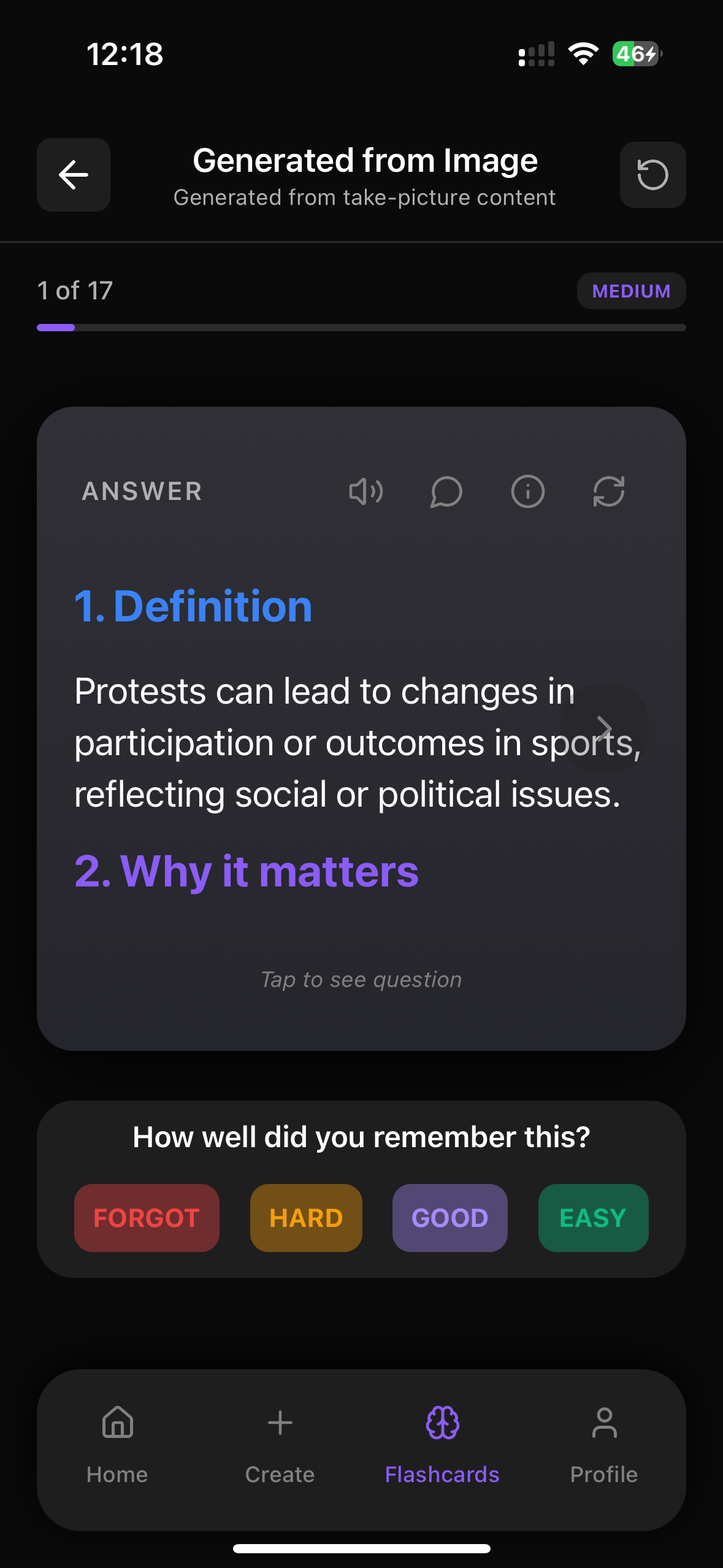
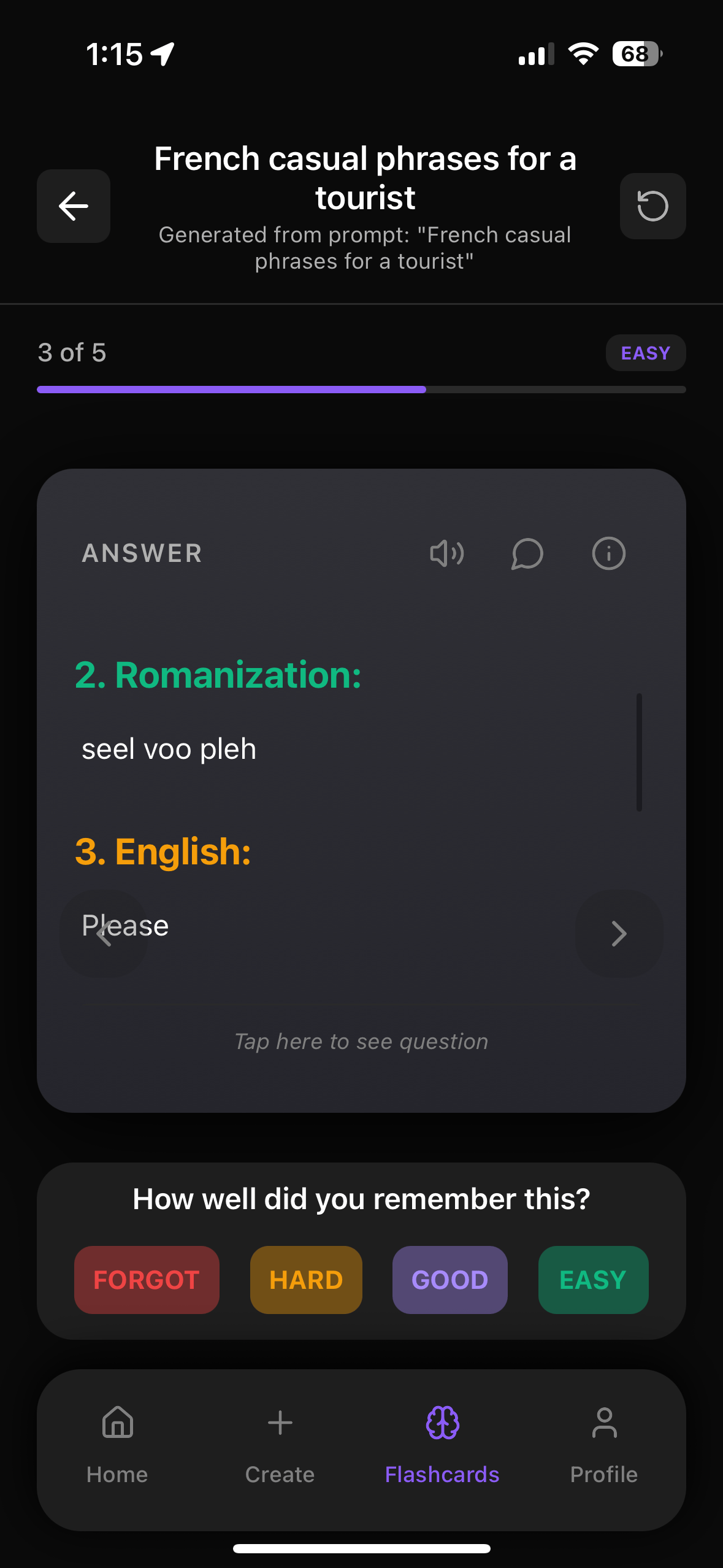
Stop Letting IMAT General Knowledge Be “Random Luck”
IMAT general knowledge feels like this chaotic mix of history, art, politics, science, philosophy, random news… and somehow you’re supposed to “just know it.”
You don’t need to. You just need a system.
That’s where flashcards – and especially an app like Flashrecall – change everything. Instead of passively scrolling articles and hoping some fact sticks, you can turn every useful detail into a fast, targeted flashcard deck and actually remember it.
You can grab Flashrecall here (free to start):
👉 https://apps.apple.com/us/app/flashrecall-study-flashcards/id6746757085
Let’s break down how to use IMAT general knowledge flashcards properly, so you’re not just memorising random facts, but stacking easy points on exam day.
Why Flashcards Work So Well For IMAT General Knowledge
IMAT general knowledge questions are brutal because:
- The topics are super broad
- The questions are specific
- Most people “skim and hope” instead of training recall
Flashcards hit all the weak spots:
- Active recall – You’re forced to pull the answer from memory, like in the exam
- Spaced repetition – You see cards again right before you’d forget them
- Chunking – You break huge topics (e.g. EU institutions, art history) into tiny, bite-size questions
Flashrecall bakes this into the app automatically:
- Built‑in active recall and spaced repetition
- Auto reminders so you don’t have to remember when to review
- Works offline on iPhone and iPad
- Free to start, fast, and actually nice to use (no 2008‑style UI pain)
So instead of “I’ll read a Wikipedia page about the UN,” you turn it into 20 sharp flashcards and watch your retention skyrocket.
Step 1: Know What IMAT General Knowledge Actually Covers
“General knowledge” doesn’t mean “everything ever.” You can be strategic.
Common areas:
- History & politics – major wars, revolutions, constitutions, EU, UN, NATO
- Philosophy & culture – major philosophers, movements, art periods, literature
- Science & society – famous discoveries, ethics, environment, public health
- Current affairs – big global events from the last few years
- Geography – capitals, organisations, treaties, international institutions
Your goal: turn each of these into mini‑decks in Flashrecall, not one giant “IMAT GK” monster deck.
Example deck structure in Flashrecall:
- IMAT – EU & International Organisations
- IMAT – Major Wars & Revolutions
- IMAT – Art, Literature & Philosophy
- IMAT – Science, Medicine & Ethics
- IMAT – Current Events (2022–2025)
Organised decks = faster reviews = less overwhelm.
Step 2: Build IMAT Flashcards Fast (Without Typing Everything)
Manually typing every card is… ambitious. You don’t need to. Flashrecall lets you make cards instantly from:
- Text – paste notes, articles, PDFs
- Images – screenshots of tables, timelines, infographics
- YouTube links – turn lecture videos into flashcards
- PDFs – past papers, study guides
- Typed prompts – just tell it what you’re studying
- Audio – great if you record explanations or lectures
Example: Turning an Article Into Cards in Minutes
Say you’re reading an article on “European Union Institutions”:
1. Copy the text or save it as a PDF
2. Import it into Flashrecall
3. Flashrecall auto‑generates flashcards like:
- Q: What is the main role of the European Commission?
- A: Proposes legislation, enforces EU laws, manages EU policies and budget.
Then you can edit, delete, or add your own cards on top.
Instead of an hour of typing, you’ve built a full IMAT deck in a few taps.
Download it here if you haven’t yet:
👉 https://apps.apple.com/us/app/flashrecall-study-flashcards/id6746757085
Step 3: Use Smart Card Formats (Not Just “Question → Answer”)
Most people only use basic Q&A cards. For IMAT, you can do better.
1. Basic Fact Cards
Good for dates, names, definitions.
- Q: In which year did the Berlin Wall fall?
- Q: Who wrote “The Social Contract”?
2. “What’s The Odd One Out?” Cards
Great for categories and quick recognition.
- Q: Which of these is NOT an EU institution?
– European Commission
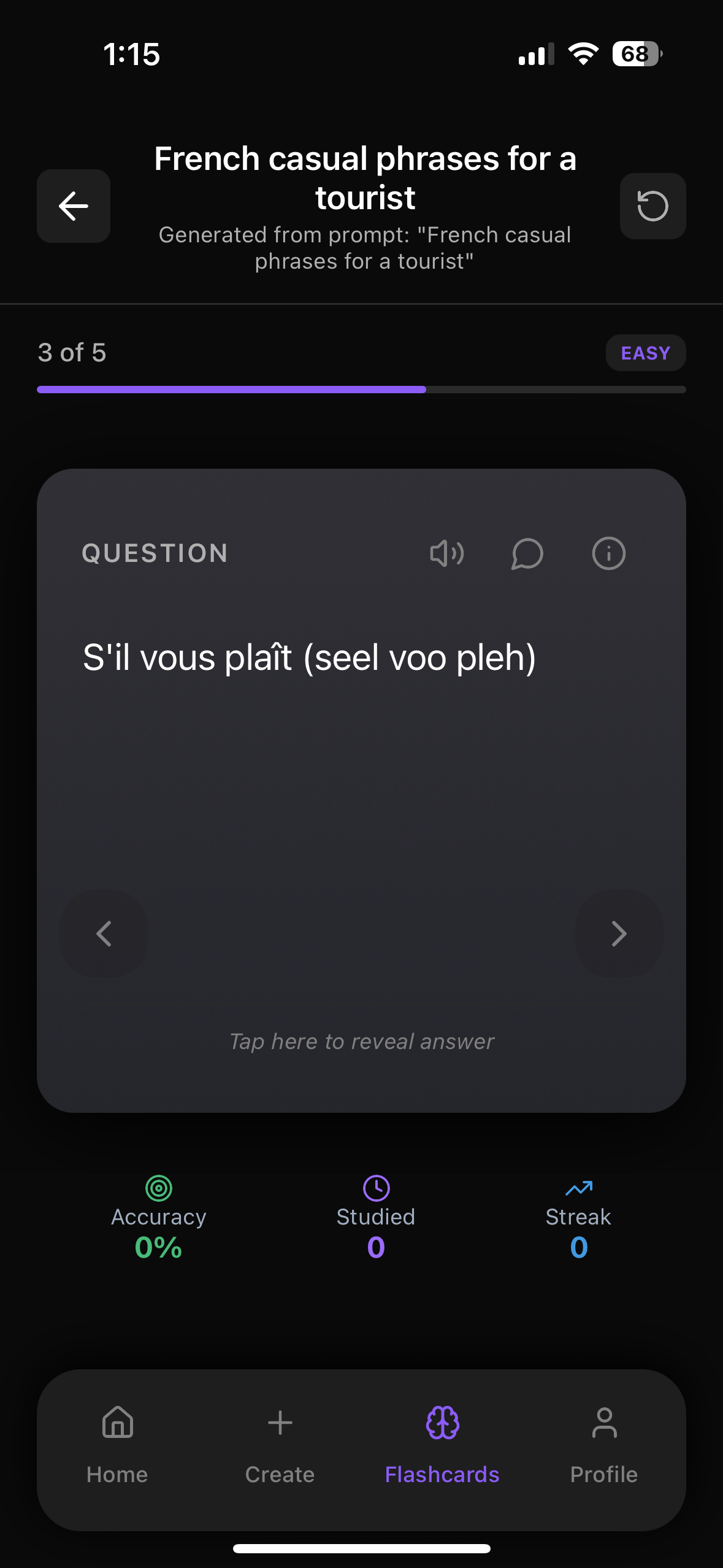
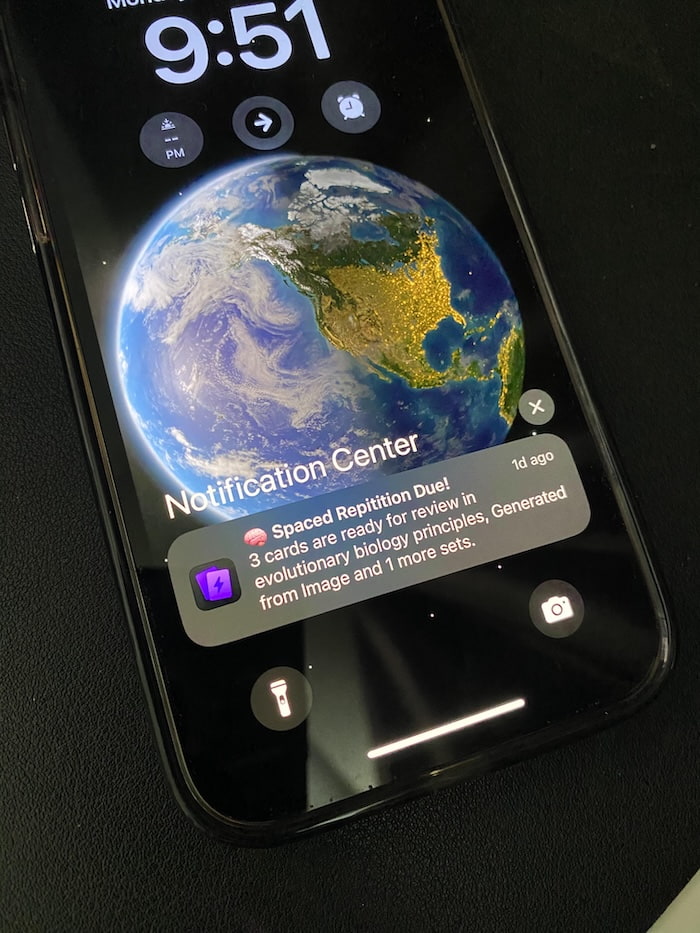
Flashrecall automatically keeps track and reminds you of the cards you don't remember well so you remember faster. Like this :
– European Parliament
– NATO
– Council of the European Union
3. Cause → Effect Cards
Perfect for history and politics.
- Q: What was a major consequence of the 1917 Russian Revolution?
4. “Fill The Gap” Cards
Helps you remember specific words or dates.
- Q: The Treaty of ______ (year: 1992) formally created the European Union.
With Flashrecall, you can create all of these manually or generate them from text, then tweak them so they match how you think.
Step 4: Let Spaced Repetition Do the Heavy Lifting
Cramming IMAT general knowledge the week before the exam is pain.
Spaced repetition = less time, more memory.
Flashrecall handles this automatically:
- You study a deck
- It shows you what you’re weak on more often
- It brings back older cards just before you’re about to forget them
- It sends study reminders, so you don’t ghost your revision for 10 days
You don’t have to set intervals or schedules. Just open the app, and it tells you:
“Here are today’s cards. Do these, and you’re covered.”
This is exactly how you turn random facts into long‑term recall instead of “I saw this once on a YouTube video.”
Step 5: Turn Past IMAT Questions Into Targeted Flashcards
One of the smartest things you can do:
Use past IMAT general knowledge questions as a blueprint.
For every question you see, ask:
> “What’s the fact behind this question, and how do I turn that into a card?”
Example:
IMAT‑style question:
> Which philosopher is associated with the phrase “I think, therefore I am”?
Flashcards you could make:
- Q: Who said “I think, therefore I am”?
- Q: What is the original Latin phrase for “I think, therefore I am”?
- Q: René Descartes is mainly associated with which philosophical movement?
You’re not just memorising one answer; you’re building a mini‑web of knowledge around it.
Import a PDF of past IMAT questions into Flashrecall, auto‑generate cards, then refine. Super fast, super targeted.
Step 6: Use “Chat With Your Flashcards” When You’re Confused
This is where Flashrecall gets really cool.
If you don’t fully understand something on a card, you can literally chat with the card.
Example:
You have a card:
- Q: What is the main role of UNESCO?
You’re like, “Okay… but what does that actually look like in real life?”
In Flashrecall you can:
- Open the card
- Ask follow‑up questions like:
- “Give me 3 concrete examples of UNESCO projects.”
- “Explain this to me like I’m 15.”
- “How could this show up in an IMAT question?”
Now your deck isn’t just facts; it’s a mini‑tutor.
Way better than staring at a sentence you don’t really get.
Step 7: Make General Knowledge a Daily 10–15 Minute Habit
You don’t need 3‑hour study marathons every day.
For IMAT general knowledge, consistency beats intensity.
Here’s a simple routine using Flashrecall:
1. Open Flashrecall → do “Today’s cards” (spaced repetition)
2. Add 5–10 new cards from:
- A news article
- A past IMAT question
- A YouTube video on history, politics, philosophy, etc.
- Do a longer review session
- Clean your decks: delete bad cards, merge duplicates, add missing details
- Chat with a few tricky cards until they feel easy
Because Flashrecall works offline, you can squeeze this in:
- On the bus
- Between classes
- On breaks at work
- Waiting in random lines
Tiny chunks of time = a huge pile of remembered facts by exam day.
Why Use Flashrecall Instead Of Other Flashcard Apps?
There are lots of flashcard apps out there, but for IMAT general knowledge, Flashrecall has some big advantages:
- Instant card creation from PDFs, YouTube, images, text, audio
- Built‑in spaced repetition and reminders (no need to configure anything)
- Chat with your flashcards when you’re stuck or curious
- Works offline on both iPhone and iPad
- Free to start, with a clean, modern interface that doesn’t feel like homework
It’s basically built for exactly what you need for IMAT:
Grab it here and start building your IMAT general knowledge decks today:
👉 https://apps.apple.com/us/app/flashrecall-study-flashcards/id6746757085
Quick Recap: How To Crush IMAT General Knowledge With Flashcards
- Don’t treat general knowledge as “random luck” – target the common themes
- Break topics into small, focused decks (EU, history, philosophy, current events…)
- Use Flashrecall to auto‑generate flashcards from articles, PDFs, and videos
- Let spaced repetition + reminders handle the scheduling
- Turn past IMAT questions into flashcards and expand around each fact
- Use chat with flashcards to actually understand, not just memorise
- Study 10–20 minutes a day, not 3 hours once a week
Do this consistently, and IMAT general knowledge goes from “scary lottery” to “easy points I’ve already seen on my cards.”
Frequently Asked Questions
Is Quizlet good for studying?
Quizlet helps with basic reviewing, but its active recall tools are limited. If you want proper spacing and strong recall practice, tools like Flashrecall automate the memory science for you so you don't forget your notes.
What's the fastest way to create flashcards?
Manually typing cards works but takes time. Many students now use AI generators that turn notes into flashcards instantly. Flashrecall does this automatically from text, images, or PDFs.
How do I start spaced repetition?
You can manually schedule your reviews, but most people use apps that automate this. Flashrecall uses built-in spaced repetition so you review cards at the perfect time.
How can I study more effectively for this test?
Effective exam prep combines active recall, spaced repetition, and regular practice. Flashrecall helps by automatically generating flashcards from your study materials and using spaced repetition to ensure you remember everything when exam day arrives.
Related Articles
- General Psychology Final Exam Quizlet: 7 Powerful Study Hacks Most Students Don’t Know – Stop Mindless Scrolling And Actually Remember The Material
- Evolution Flashcards: 7 Powerful Study Tricks To Finally Understand Natural Selection Fast – Stop rereading your notes and use flashcards the way top biology students do.
- Consumer Behaviour Quizlet: 7 Powerful Study Hacks Most Marketing Students Never Use – But Should
Research References
The information in this article is based on peer-reviewed research and established studies in cognitive psychology and learning science.
Cepeda, N. J., Pashler, H., Vul, E., Wixted, J. T., & Rohrer, D. (2006). Distributed practice in verbal recall tasks: A review and quantitative synthesis. Psychological Bulletin, 132(3), 354-380
Meta-analysis showing spaced repetition significantly improves long-term retention compared to massed practice
Carpenter, S. K., Cepeda, N. J., Rohrer, D., Kang, S. H., & Pashler, H. (2012). Using spacing to enhance diverse forms of learning: Review of recent research and implications for instruction. Educational Psychology Review, 24(3), 369-378
Review showing spacing effects work across different types of learning materials and contexts
Kang, S. H. (2016). Spaced repetition promotes efficient and effective learning: Policy implications for instruction. Policy Insights from the Behavioral and Brain Sciences, 3(1), 12-19
Policy review advocating for spaced repetition in educational settings based on extensive research evidence
Karpicke, J. D., & Roediger, H. L. (2008). The critical importance of retrieval for learning. Science, 319(5865), 966-968
Research demonstrating that active recall (retrieval practice) is more effective than re-reading for long-term learning
Roediger, H. L., & Butler, A. C. (2011). The critical role of retrieval practice in long-term retention. Trends in Cognitive Sciences, 15(1), 20-27
Review of research showing retrieval practice (active recall) as one of the most effective learning strategies
Dunlosky, J., Rawson, K. A., Marsh, E. J., Nathan, M. J., & Willingham, D. T. (2013). Improving students' learning with effective learning techniques: Promising directions from cognitive and educational psychology. Psychological Science in the Public Interest, 14(1), 4-58
Comprehensive review ranking learning techniques, with practice testing and distributed practice rated as highly effective

FlashRecall Team
FlashRecall Development Team
The FlashRecall Team is a group of working professionals and developers who are passionate about making effective study methods more accessible to students. We believe that evidence-based learning tec...
Credentials & Qualifications
- •Software Development
- •Product Development
- •User Experience Design
Areas of Expertise
Ready to Transform Your Learning?
Start using FlashRecall today - the AI-powered flashcard app with spaced repetition and active recall.
Download on App Store