Immunology Flashcards: The Proven Way To Finally Remember Cytokines, CD Markers & Pathways Without Going Crazy – Most Med Students Don’t Know This Simple Study System
Immunology flashcards work way better when you target cytokines, CD markers, and complement with spaced repetition and active recall instead of rereading notes.
How Flashrecall app helps you remember faster. It's free
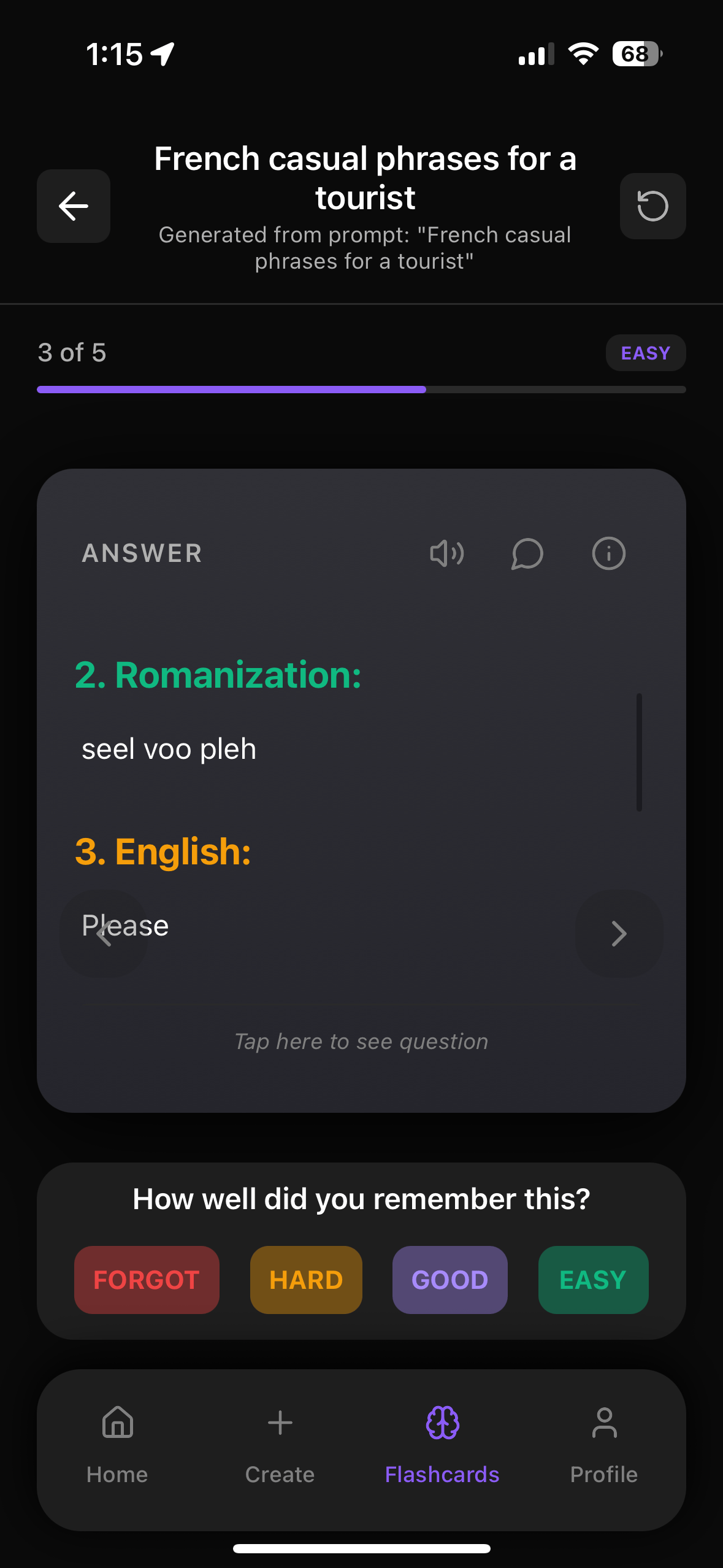
Why Immunology Feels Impossible (And How Flashcards Fix It Fast)
Immunology is one of those subjects where everything sounds the same:
- IL-1, IL-2, IL-6, TNF-α…
- CD4, CD8, CD19, CD28…
- Classical vs alternative complement…
- Th1, Th2, Th17, Treg…
Miss one tiny detail and suddenly the whole pathway falls apart in your head.
That’s exactly why immunology flashcards are so powerful.
You don’t need to “read more” – you need to actively pull info out of your brain over and over until it sticks.
And that’s where Flashrecall makes life way easier:
👉 [https://apps.apple.com/us/app/flashrecall-study-flashcards/id6746757085](https://apps.apple.com/us/app/flashrecall-study-flashcards/id6746757085)
It’s a fast, modern flashcard app that:
- Uses built-in spaced repetition (with auto reminders)
- Has active recall baked in
- Lets you instantly turn lecture slides, PDFs, images, and YouTube videos into cards
- Works great for immunology, medicine, exams, and literally any subject
Let’s break down how to actually use immunology flashcards in a smart way, not just spam yourself with random cards.
Step 1: What Should You Put On Immunology Flashcards?
Don’t try to flashcard everything. Focus on the stuff your brain naturally wants to forget.
1. Cytokines (The “Who Does What” Cards)
Make cards like:
> Front: IL-2 – main function?
> Back: Stimulates growth of T cells (especially CD4+ and CD8+), crucial for T cell proliferation.
> Front: IL-4 – secreted by which cells and what does it do?
> Back: Secreted by Th2 cells; promotes B cell class switching to IgE/IgG, stimulates Th2 differentiation.
You can also group them:
> Front: Th1 cytokines – list main ones and key roles
> Back: IFN-γ, IL-2; activate macrophages, cytotoxic responses, cell-mediated immunity.
In Flashrecall, you can:
- Paste your cytokine table from your notes or PDF
- Let the app auto-generate flashcards from the text
- Edit them quickly into nice Q&A format
So instead of typing every single cytokine card manually, you let Flashrecall do the heavy lifting and just clean it up.
2. CD Markers (The “Identity Badges” Cards)
These are classic exam traps.
Examples:
> Front: CD3 – found on which cells?
> Back: All T cells.
> Front: CD4 vs CD8 – main difference in function?
> Back: CD4: helper T cells (MHC II); CD8: cytotoxic T cells (MHC I).
> Front: CD19 and CD20 – associated with what cell type?
> Back: B cells.
Pro tip: Use “one fact per card”. Don’t do huge paragraphs. One marker, one concept.
With Flashrecall, you can:
- Take a photo of your immunology marker chart
- The app reads the text from the image and helps you turn it into cards
- Perfect when you’re tired of retyping tables
3. Complement System (The Pathway Nightmares)
This is where students usually melt.
Turn it into bite-sized cards:
> Front: C3b – main role?
> Back: Opsonization (tags pathogens for phagocytosis).
> Front: Classical pathway – what triggers it?
> Back: Antibody-antigen complexes (IgG or IgM bound to antigen).
> Front: MAC complex – which components?
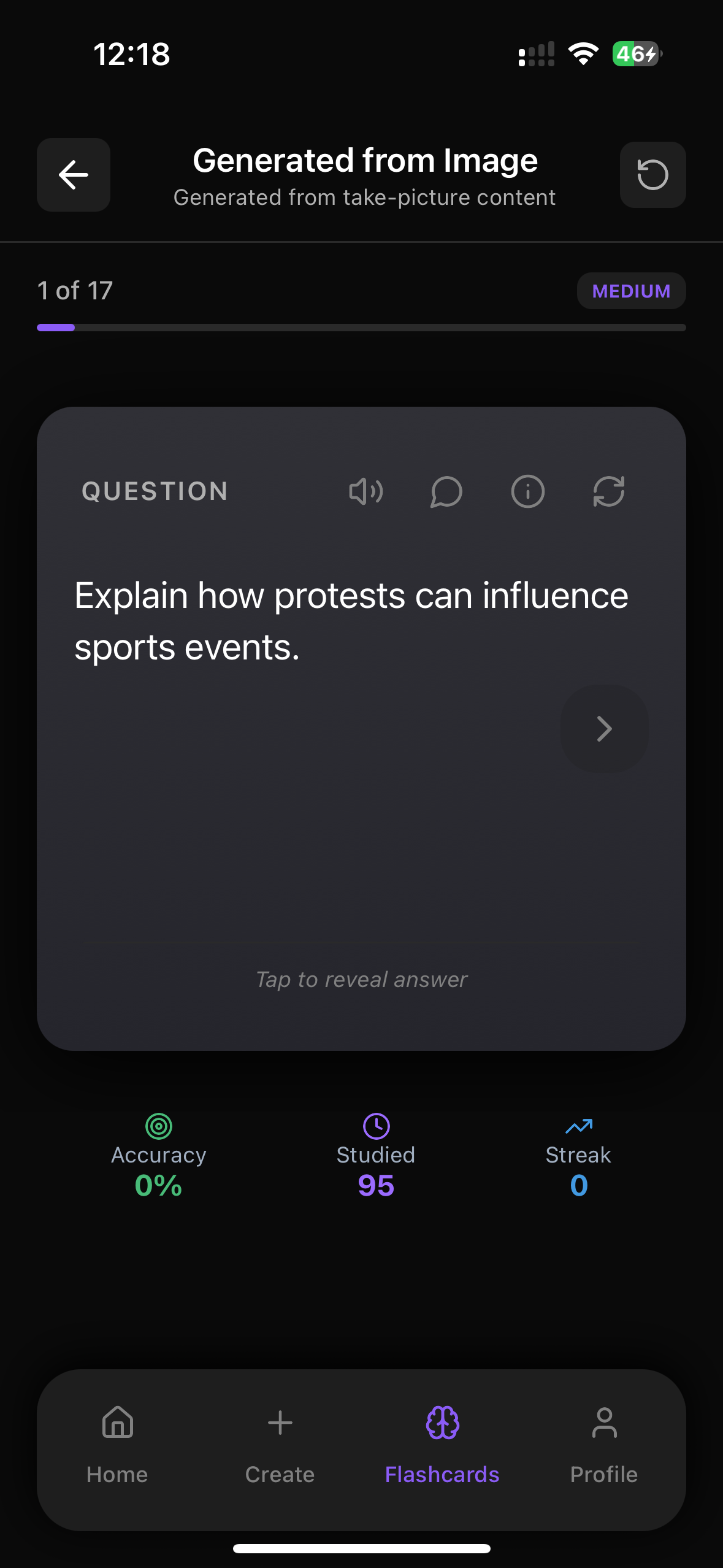
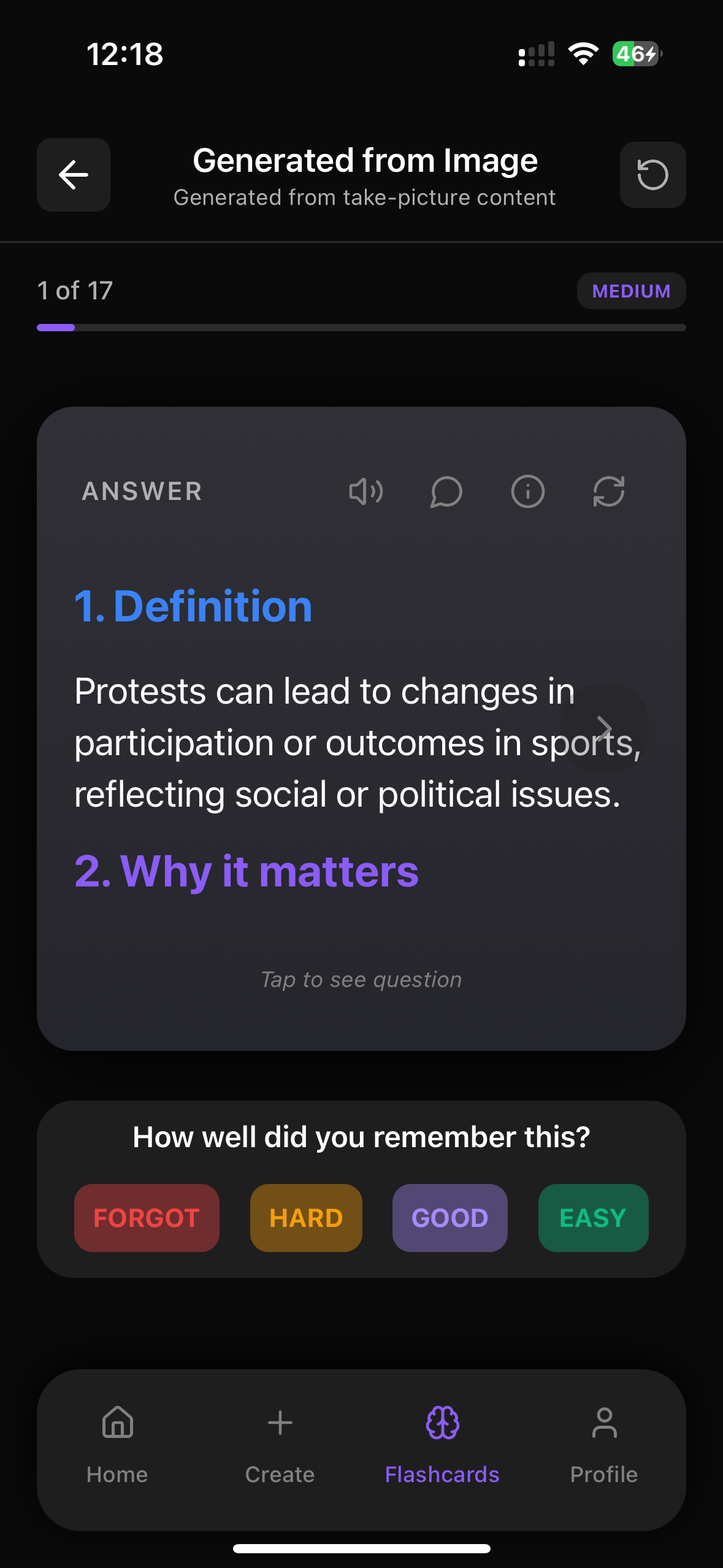
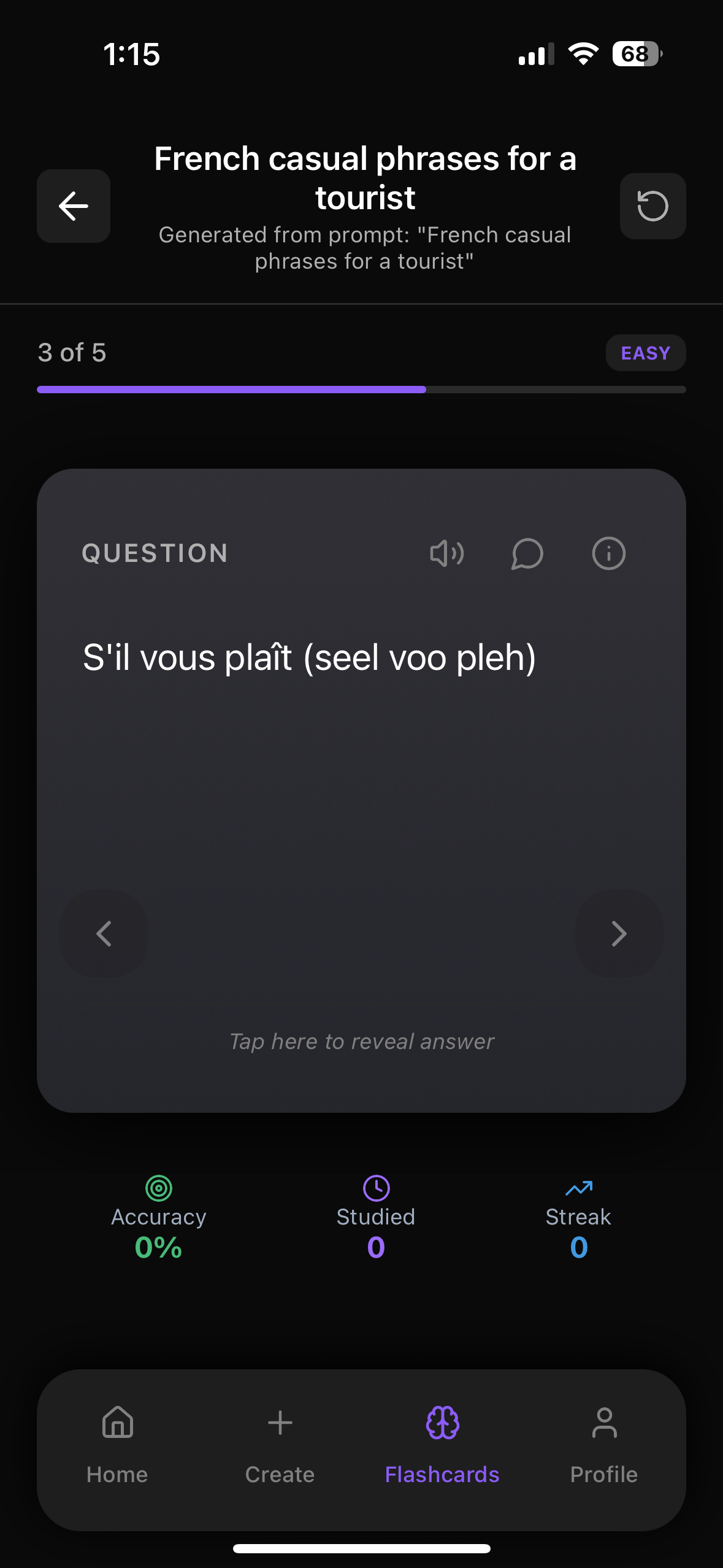
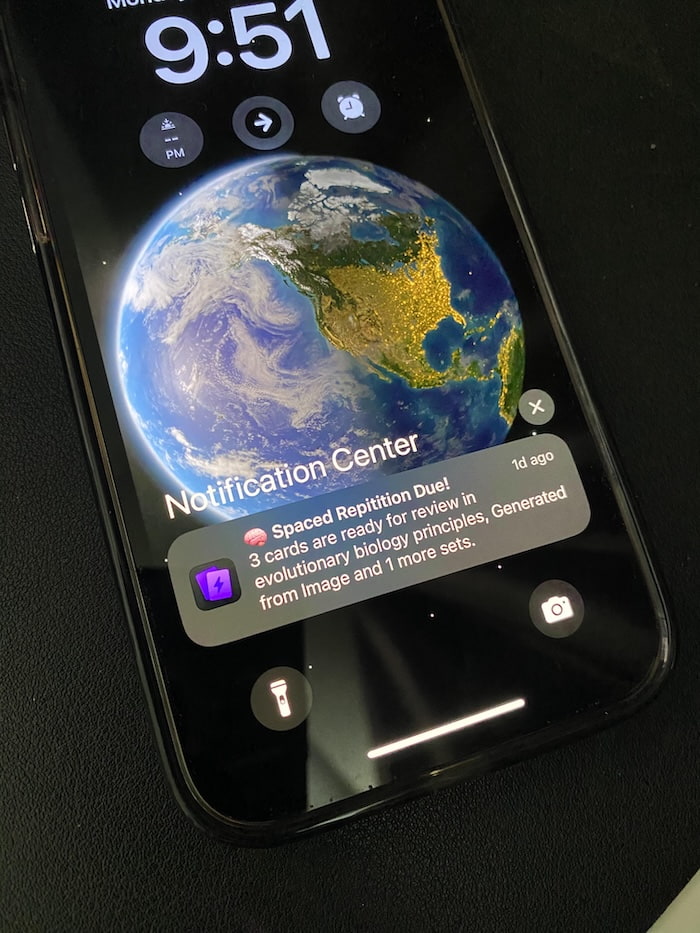
Flashrecall automatically keeps track and reminds you of the cards you don't remember well so you remember faster. Like this :
> Back: C5b, C6, C7, C8, C9.
You can even make sequence cards:
> Front: Order of complement pathways (from trigger to MAC)?
> Back: Classical/lectin/alternative → C3 convertase → C5 convertase → MAC formation.
If you have a good YouTube video explaining complement, you can:
- Drop the YouTube link into Flashrecall
- Pull key points and timestamps into cards
- Study them later with spaced repetition
4. Hypersensitivity Reactions (Types I–IV)
These are perfect flashcard material.
Examples:
> Front: Type I hypersensitivity – mechanism and example
> Back: IgE-mediated, immediate; mast cell degranulation. Example: anaphylaxis, allergic rhinitis.
> Front: Type II hypersensitivity – what’s happening?
> Back: Antibodies bind to cell surface antigens → cell destruction, inflammation. Example: autoimmune hemolytic anemia.
> Front: Type III vs Type II – key difference?
> Back: Type III: immune complexes deposit in tissues. Type II: antibodies target cells directly.
Step 2: Use Active Recall (Not Passive Reading)
Reading your immunology notes again and again feels productive, but your brain is mostly just… sliding over the words.
Flashcards are literally built on this idea.
In Flashrecall, every card:
- Shows you the question
- Makes you answer from memory
- Then you rate how hard it was
- The app automatically decides when to show it again
No need to manually schedule reviews. The spaced repetition engine does it for you.
Step 3: Let Spaced Repetition Do the Boring Work
Immunology is dense. You’re not going to remember everything after one session.
That’s why spaced repetition is so important:
- You see new cards more often at first
- As you get them right, the gap between reviews increases
- You review right before you’re about to forget
Flashrecall has this built in by default, with:
- Automatic scheduling
- Study reminders, so you don’t forget to review
- Works offline, so you can review cytokines on the train, in bed, wherever
This is way better than random cramming because you’re always hitting the forgetting curve at the right time.
Step 4: Turn Your Actual Study Material Into Cards (Fast)
Instead of starting from a blank screen, let your existing resources do half the work.
With Flashrecall, you can create immunology flashcards from:
- PDFs (lecture notes, review books)
- Images (slides, handwritten notes, screenshots)
- Text (copy-paste from your notes)
- YouTube links (lectures, explanations)
- Audio (recorded lectures)
- Or just type them manually if you prefer full control
Example workflow:
1. You get a PDF of “Innate vs Adaptive Immunity” from your professor.
2. Import it into Flashrecall.
3. Highlight key bits like:
- Cells involved
- Speed of response
- Memory vs no memory
4. Turn each key point into a flashcard with one tap.
Result: You go from overwhelming PDF to clean deck of cards in minutes.
👉 Try it here: [https://apps.apple.com/us/app/flashrecall-study-flashcards/id6746757085](https://apps.apple.com/us/app/flashrecall-study-flashcards/id6746757085)
Step 5: Use “Chat With Your Flashcards” When You’re Confused
Sometimes you know pieces of a concept but not the full picture.
Flashrecall has a really cool feature:
You can chat with your flashcards.
So if you’re like:
> “I keep mixing up Th1 vs Th2 – can you explain it simply and quiz me?”
You can literally ask that inside the app, and it will:
- Explain the concept in simple terms
- Ask you follow-up questions
- Help you build better flashcards for your weak spots
This is insanely useful for topics like:
- Th1/Th2/Th17/Treg
- MHC I vs MHC II
- Central vs peripheral tolerance
- Autoimmune disease mechanisms
It’s like having a mini tutor built into your flashcard deck.
Example Immunology Deck Structure You Can Copy
Here’s a simple structure you can use inside Flashrecall:
Deck: Immunology – Foundations
- Innate vs adaptive
- Cells of the immune system
- Organs (thymus, spleen, lymph nodes, bone marrow)
- MHC I vs MHC II
Deck: Immunology – Cytokines
- IL-1 to IL-10 (and beyond)
- Th1, Th2, Th17, Treg cytokines
- Pro- vs anti-inflammatory cytokines
Deck: Immunology – CD Markers
- T cell markers
- B cell markers
- NK cell markers
- Important clinical markers (CD20, CD34, etc.)
Deck: Immunology – Pathways
- Complement (classical, alternative, lectin)
- B cell activation
- T cell activation
- Antigen processing and presentation
Deck: Immunology – Clinical
- Hypersensitivity types I–IV
- Autoimmune diseases
- Immunodeficiencies
- Transplant rejection types
You can build these up gradually instead of all at once. Flashrecall’s spaced repetition will mix old and new cards so you’re constantly reinforcing.
Why Flashrecall Works So Well For Immunology (Compared To Generic Apps)
There are a bunch of flashcard apps out there, but for immunology specifically, Flashrecall hits a sweet spot:
- Fast card creation from PDFs, images, YouTube, and text
- Built-in spaced repetition – no need to fiddle with settings or custom algorithms
- Active recall by design – you’re always being asked, not just shown
- Chat with your flashcards when a topic doesn’t click
- Works offline – perfect for quick review on the go
- Free to start, so you can test it on one topic like cytokines or complement first
- Works on iPhone and iPad, so you can review anywhere
And it’s not just for immunology. You can use the same system for:
- Pathology
- Pharmacology
- Microbiology
- Anatomy
- Languages, business, anything you want to memorize long-term
How To Start Today (In 10 Minutes)
If you want a simple starting plan:
1. Download Flashrecall
👉 [https://apps.apple.com/us/app/flashrecall-study-flashcards/id6746757085](https://apps.apple.com/us/app/flashrecall-study-flashcards/id6746757085)
2. Pick ONE immunology topic
- Cytokines
- CD markers
- Hypersensitivity types
3. Create 20–30 cards
- Use a PDF, slide screenshot, or your notes
- Turn them into Q&A cards (short and focused)
4. Study 10–15 minutes a day
- Let spaced repetition handle the rest
- Don’t cram 200 cards in one go
5. Add more topics gradually
- Complement
- Th subsets
- Immunodeficiencies
In a few weeks, you’ll notice something weird:
Immunology stops feeling like random noise and starts feeling… organized.
If immunology is currently that subject you “just hope to pass,” using targeted flashcards with spaced repetition can genuinely flip it into one of your strongest topics.
Set up your first deck, let Flashrecall handle the scheduling, and you’ll finally remember which cytokine does what without constantly re-reading the same pages.
👉 Try Flashrecall here: [https://apps.apple.com/us/app/flashrecall-study-flashcards/id6746757085](https://apps.apple.com/us/app/flashrecall-study-flashcards/id6746757085)
Frequently Asked Questions
Is Quizlet good for studying?
Quizlet helps with basic reviewing, but its active recall tools are limited. If you want proper spacing and strong recall practice, tools like Flashrecall automate the memory science for you so you don't forget your notes.
What's the fastest way to create flashcards?
Manually typing cards works but takes time. Many students now use AI generators that turn notes into flashcards instantly. Flashrecall does this automatically from text, images, or PDFs.
How do I start spaced repetition?
You can manually schedule your reviews, but most people use apps that automate this. Flashrecall uses built-in spaced repetition so you review cards at the perfect time.
What is active recall and how does it work?
Active recall is the process of actively retrieving information from memory rather than passively reviewing it. Flashrecall forces proper active recall by making you think before revealing answers, then uses spaced repetition to optimize your review schedule.
Related Articles
- Medical Terminology Flash Cards Free: 7 Powerful Ways To Finally Remember Every Term Fast – Even If You’re Overwhelmed
- Miles Kelly Flashcards: The Complete Guide To Smarter Learning (And A Better Digital Alternative Most Students Don’t Know About) – Before You Buy Another Box Of Cards, Read This And See How To Upgrade Your Study Game
- Corporate Finance Quizlet: 7 Powerful Study Hacks Most Business Students Don’t Know Yet – Learn Faster, Score Higher, And Actually Remember The Formulas
Research References
The information in this article is based on peer-reviewed research and established studies in cognitive psychology and learning science.
Cepeda, N. J., Pashler, H., Vul, E., Wixted, J. T., & Rohrer, D. (2006). Distributed practice in verbal recall tasks: A review and quantitative synthesis. Psychological Bulletin, 132(3), 354-380
Meta-analysis showing spaced repetition significantly improves long-term retention compared to massed practice
Carpenter, S. K., Cepeda, N. J., Rohrer, D., Kang, S. H., & Pashler, H. (2012). Using spacing to enhance diverse forms of learning: Review of recent research and implications for instruction. Educational Psychology Review, 24(3), 369-378
Review showing spacing effects work across different types of learning materials and contexts
Kang, S. H. (2016). Spaced repetition promotes efficient and effective learning: Policy implications for instruction. Policy Insights from the Behavioral and Brain Sciences, 3(1), 12-19
Policy review advocating for spaced repetition in educational settings based on extensive research evidence
Karpicke, J. D., & Roediger, H. L. (2008). The critical importance of retrieval for learning. Science, 319(5865), 966-968
Research demonstrating that active recall (retrieval practice) is more effective than re-reading for long-term learning
Roediger, H. L., & Butler, A. C. (2011). The critical role of retrieval practice in long-term retention. Trends in Cognitive Sciences, 15(1), 20-27
Review of research showing retrieval practice (active recall) as one of the most effective learning strategies
Dunlosky, J., Rawson, K. A., Marsh, E. J., Nathan, M. J., & Willingham, D. T. (2013). Improving students' learning with effective learning techniques: Promising directions from cognitive and educational psychology. Psychological Science in the Public Interest, 14(1), 4-58
Comprehensive review ranking learning techniques, with practice testing and distributed practice rated as highly effective

FlashRecall Team
FlashRecall Development Team
The FlashRecall Team is a group of working professionals and developers who are passionate about making effective study methods more accessible to students. We believe that evidence-based learning tec...
Credentials & Qualifications
- •Software Development
- •Product Development
- •User Experience Design
Areas of Expertise
Ready to Transform Your Learning?
Start using FlashRecall today - the AI-powered flashcard app with spaced repetition and active recall.
Download on App Store