Kado Flashcards: The Essential Guide To Smarter Studying (And A Better Alternative Most Students Don’t Know About) – Before you commit to Kado, read this and see why many learners are quietly switching to a faster, easier flashcard app.
Kado flashcards feel too basic? See how spaced repetition, active recall, and AI-made cards in Flashrecall can help you remember more with less effort.
How Flashrecall app helps you remember faster. It's free
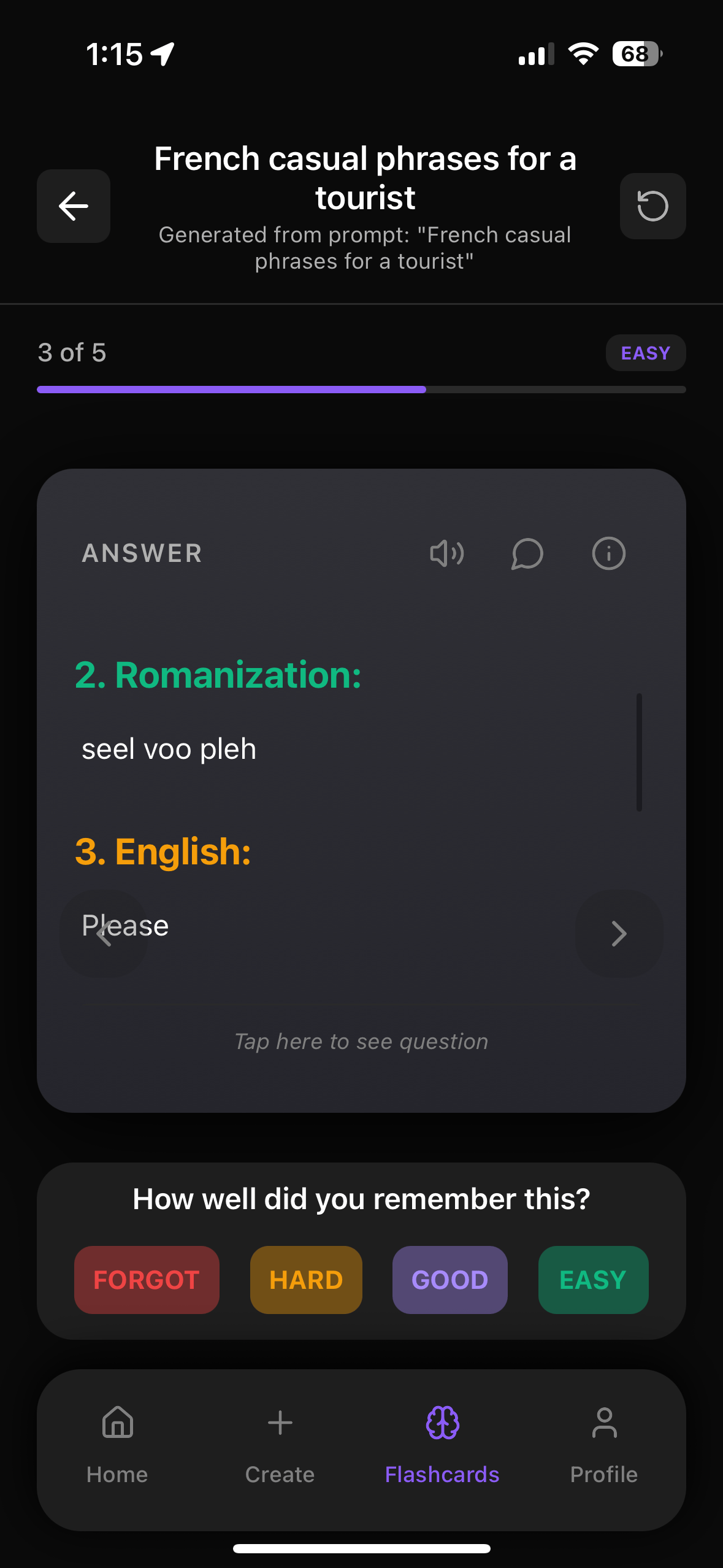
Kado Flashcards vs Better Options: What Actually Helps You Learn Faster?
Let’s skip the fluff: you’re looking up Kado flashcards because you want an easy way to study and remember more in less time.
Totally fair.
But here’s the thing nobody really tells you:
the specific flashcard app you pick matters a lot for how fast you learn, how long you remember, and whether you actually stick with it.
That’s where Flashrecall comes in – a modern flashcard app that does what people wish Kado did:
it makes cards for you from almost anything, reminds you to study at the right time, and helps you remember stuff without you micromanaging your reviews.
👉 You can check it out here:
Let’s break down how Kado-style flashcards compare to a more powerful setup with Flashrecall, and how you can build a system that actually sticks.
What Are Kado-Style Flashcards, Really?
When people say “Kado flashcards,” they’re usually talking about:
- Simple digital flashcards
- Basic question/answer format
- Often used for vocab, exams, or quick facts
- Focused more on making cards than on how your brain actually remembers
Nothing wrong with that.
But if you’re serious about learning efficiently, you want more than just “digital index cards.”
You want:
- Active recall (forcing your brain to remember, not just reread)
- Spaced repetition (reviewing right before you forget)
- Smart automation (so you don’t have to schedule everything yourself)
- Fast card creation (so you don’t waste hours typing every tiny thing)
That’s exactly where Flashrecall shines.
Why Flashcards Work (And Why Some Apps Waste Your Time)
Flashcards work because they hit two science-backed study methods:
1. Active Recall
Instead of rereading notes, you test yourself.
Your brain has to pull the answer out from memory – that’s what actually strengthens it.
2. Spaced Repetition
You review stuff right before you’re about to forget it.
Not too soon (waste of time), not too late (you’ve already forgotten).
A lot of basic flashcard apps (and many Kado-style tools) give you digital cards…
but don’t truly build in spaced repetition or smart scheduling.
You end up either:
- Reviewing too much
- Reviewing too little
- Or giving up because it’s annoying to manage
Flashrecall fixes that by baking the science in from the start.
How Flashrecall Improves On Kado-Style Flashcards
Instead of just being “another flashcard app,” Flashrecall is built around actually remembering things long-term.
Here’s how it’s different.
1. Spaced Repetition Built-In (No Manual Scheduling)
With Flashrecall, every card you create is automatically fed into a spaced repetition system:
- You review a card
- You rate how hard it was
- Flashrecall schedules the next review for you
No calendars. No “which deck do I do today?” stress.
You also get study reminders, so the app literally taps you on the shoulder and goes,
“Hey, review now or you’ll forget this.”
Perfect if you’re juggling school, work, or life and don’t want to think about timing.
2. Make Flashcards From Almost Anything (In Seconds)
One big pain with Kado-style flashcards: you type… and type… and type.
Flashrecall lets you create cards instantly from:
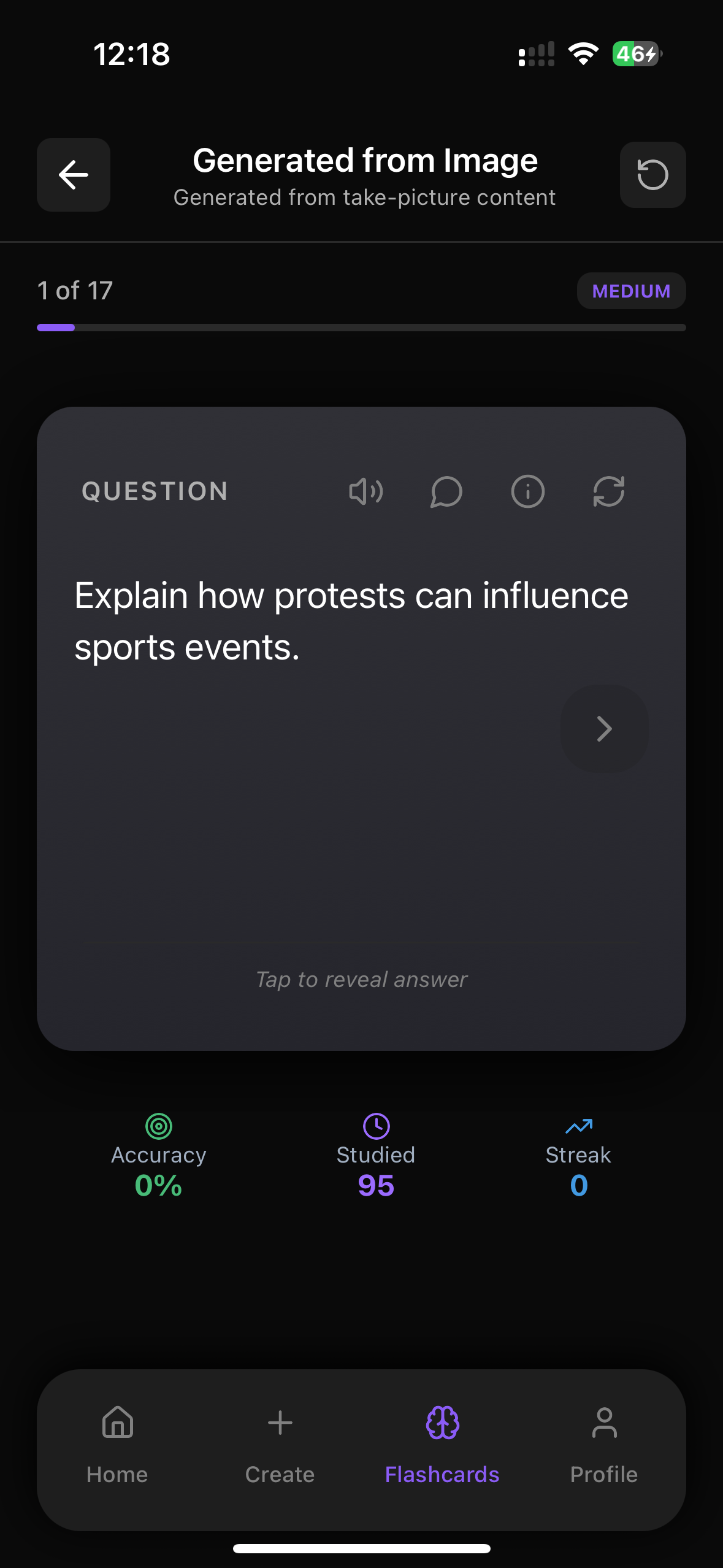
- 📸 Images – snap a photo of textbook pages, slides, whiteboards
- 📄 PDFs – upload lecture notes, handouts, study guides
- 🔗 YouTube links – turn videos into flashcards
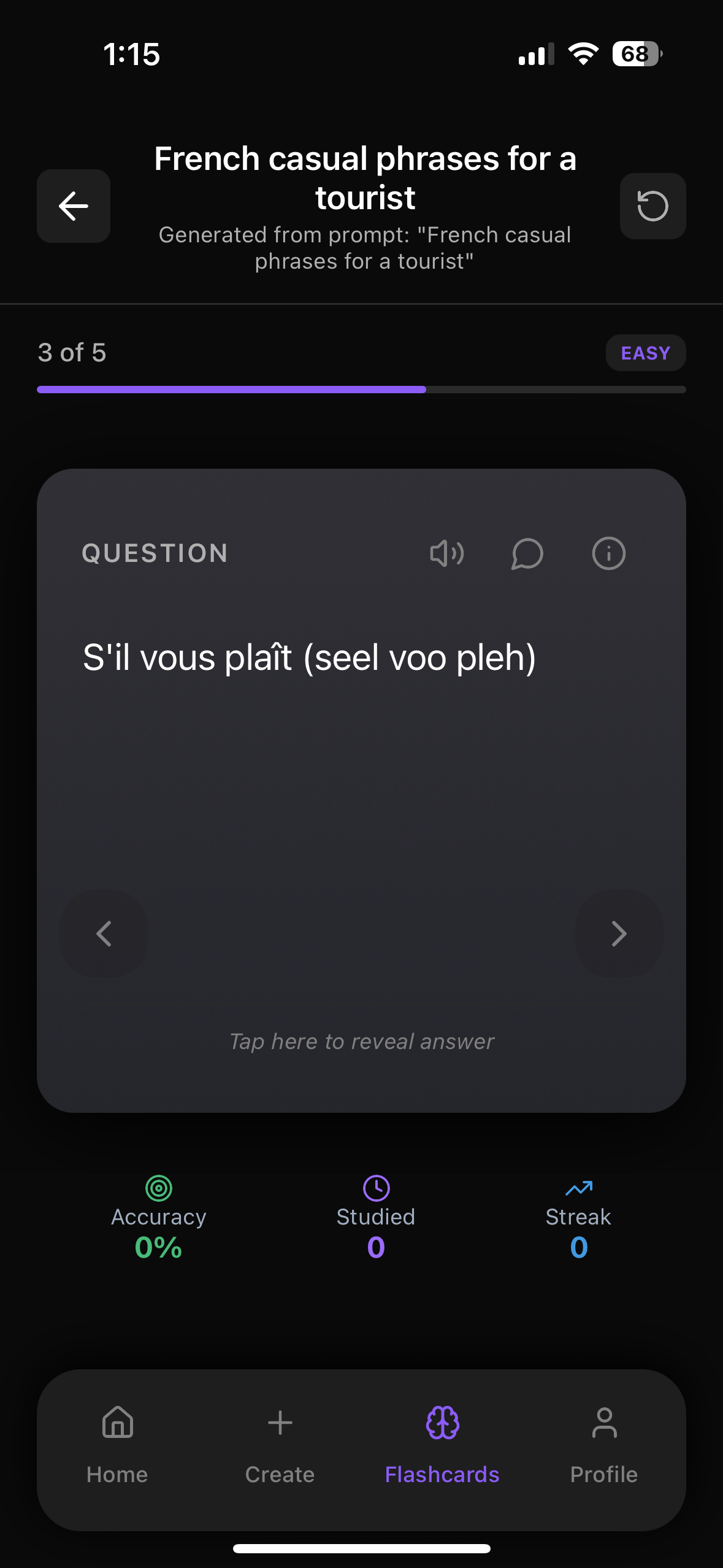
- 🔊 Audio – great for language learning or lectures
- ✍️ Typed prompts – paste a chunk of text and let it generate cards
- 📝 Manual cards – of course, you can still write your own
So instead of spending an hour making cards, you can:
- Upload your notes
- Let Flashrecall suggest / generate cards
- Start studying in minutes
That’s a huge upgrade over basic flashcard tools.
3. Active Recall Done Right
Every study session in Flashrecall is built around active recall:
- You see the question / front of the card
- You think of the answer (no cheating)
- Then you flip and check yourself
You can also:
- Mark cards as Easy, Medium, or Hard
- Let the algorithm adapt to your memory
- Focus more on the cards you keep forgetting
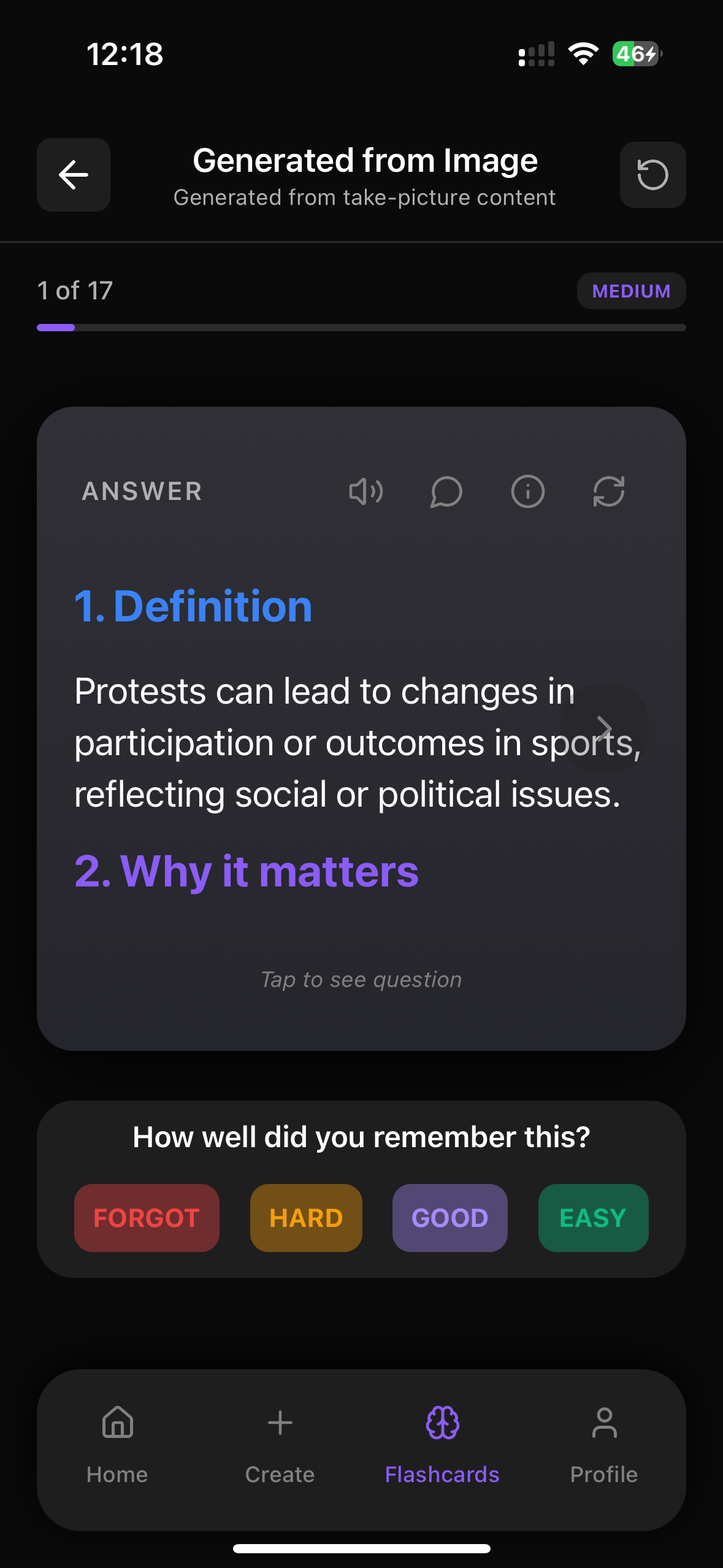
Flashrecall automatically keeps track and reminds you of the cards you don't remember well so you remember faster. Like this :
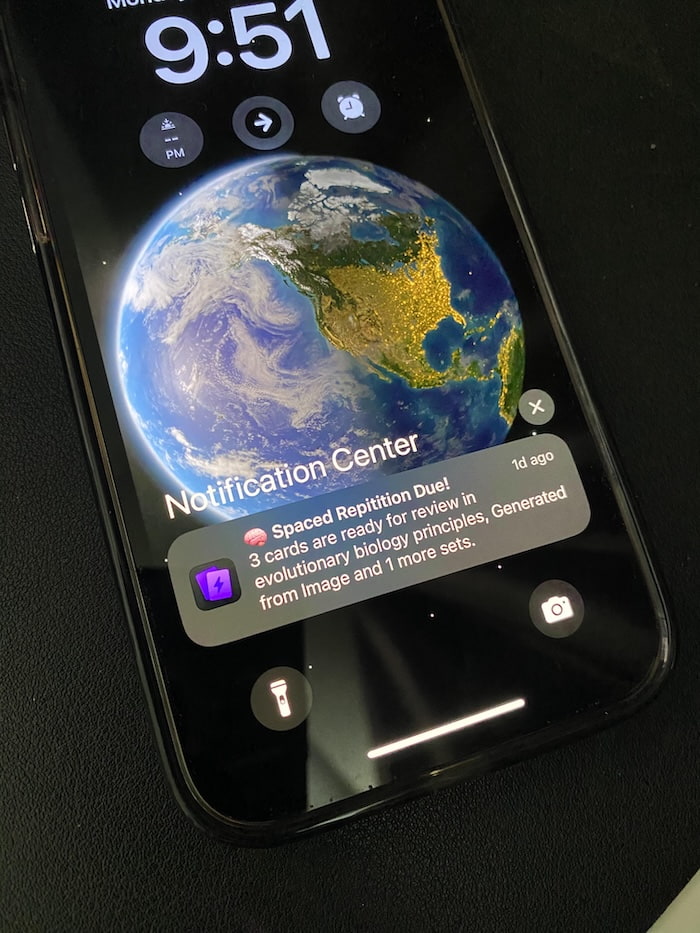
It’s like having a personal memory coach that knows exactly what you struggle with.
4. You Can Chat With Your Flashcards (Seriously)
This is where Flashrecall really pulls ahead of older-style apps like Kado.
If you’re unsure about a concept, you can chat with the content:
- Don’t understand a definition? Ask it to explain it more simply.
- Need another example? Ask for one.
- Studying medicine, law, or business? Ask follow-up questions to go deeper.
Instead of just “right/wrong,” you can actually learn around the card, not just memorize it.
5. Works Offline, On The Go, And Feels Modern
Flashrecall is built to actually fit your life:
- Works on iPhone and iPad
- Offline support – perfect for commutes, flights, bad WiFi
- Clean, fast, modern interface (no clunky 2009 UI)
- Free to start – you can test it without committing to anything
Here’s the link again if you want to try it while you read:
Flashrecall vs Kado Flashcards: Side‑By‑Side
Here’s a quick comparison so you can see the difference clearly:
| Feature | Kado-Style Flashcards | Flashrecall |
|---|---|---|
| Basic flashcards | ✅ | ✅ |
| Active recall focus | ⚠️ depends how you use it | ✅ built-in |
| Spaced repetition | ❓ not always integrated well | ✅ automatic |
| Study reminders | ❓ sometimes / basic | ✅ smart reminders |
| Make cards from images | ❓ limited or manual | ✅ instant extraction |
| PDFs → flashcards | ❌ or manual copy-paste | ✅ automatic |
| YouTube → flashcards | ❌ usually not | ✅ supported |
| Audio → flashcards | ❌ or very limited | ✅ supported |
| Chat with your flashcards | ❌ | ✅ yes |
| Works offline | varies | ✅ yes |
| Great for languages & exams | ✅ | ✅ but with more tools |
| Free to start | usually | ✅ yes |
If you’re just dabbling, any flashcard app works.
If you’re serious about remembering a lot of info without burning out, Flashrecall gives you way more leverage.
Real-Life Ways To Use Flashrecall (Instead Of Basic Kado-Style Cards)
Here are some concrete examples to show how this looks in practice.
1. Language Learning
Instead of just typing vocab one by one:
- Screenshot or import vocab lists
- Let Flashrecall turn them into cards
- Add audio for pronunciation
- Use spaced repetition to keep words fresh
You can even chat with your deck to get example sentences or grammar explanations.
2. University / School Exams
For subjects like biology, history, chemistry, psychology:
- Import lecture PDFs or slides
- Auto-generate question/answer cards
- Highlight the hardest concepts and review them more often
- Study in small bursts with reminders so you’re not cramming the night before
Flashrecall is especially good for medicine, nursing, law, and other heavy-memorization fields where you have hundreds (or thousands) of facts.
3. Professional & Business Learning
Learning:
- Marketing frameworks
- Coding concepts
- Finance terms
- Sales scripts or pitches
You can:
- Paste docs, SOPs, or training material
- Turn them into flashcards for your team or yourself
- Use offline mode to review on the train, plane, or between meetings
4. Self-Study & Personal Growth
Books, podcasts, YouTube lectures – instead of forgetting everything 2 days later:
- Paste notes or transcripts into Flashrecall
- Generate key idea cards
- Review once in a while with spaced repetition
- Actually keep what you learn long-term
How To Switch From Kado-Style Flashcards To Flashrecall (Without Starting Over)
If you’ve already been using Kado or another flashcard app, you don’t have to throw everything away.
Here’s a simple way to transition:
1. Identify your most important decks
– Exams coming up, active language decks, core subjects.
2. Rebuild only what matters
– Instead of manually remaking every card, use:
- PDFs of your notes
- Screenshots of your old cards
- Text exports if you have them
3. Let Flashrecall help generate cards
– Paste chunks of text or upload files
– Edit the generated cards quickly instead of starting from scratch.
4. Start small, then expand
– Move one subject at a time
– Get used to the spaced repetition + reminders
– Once you feel the difference, you’ll naturally want everything in there.
When Is Kado Enough, And When Should You Upgrade?
Kado-style flashcards might be fine if:
- You only have a tiny amount to memorize
- You don’t mind scheduling and managing reviews yourself
- You’re okay with a very basic system
You’ll be much happier with Flashrecall if:
- You’re prepping for big exams (SAT, MCAT, USMLE, bar exam, finals, etc.)
- You’re learning a language seriously
- You’re in medicine, law, engineering, or business with tons of content
- You want an app that reminds you when to study and does the memory science for you
- You like the idea of turning PDFs, images, YouTube videos, and notes into cards automatically
If that sounds like you, it’s honestly worth giving Flashrecall a shot.
👉 Download it here (free to start):
Final Thoughts: Don’t Just Make Flashcards. Make Them Work For You.
Flashcards themselves aren’t the magic.
Kado-style flashcards give you the basics.
Flashrecall gives you:
- Smart spaced repetition
- Automatic reminders
- Instant card creation from almost anything
- Chat-based explanations when you’re stuck
- A fast, modern experience on iPhone and iPad, even offline
If you’re going to spend hours studying anyway, you might as well use a tool that squeezes the most learning out of every minute.
Try Flashrecall, build a deck for just one subject, and see how it feels compared to your current setup:
Frequently Asked Questions
Is Anki good for studying?
Anki is powerful but requires manual card creation and has a steep learning curve. Flashrecall offers AI-powered card generation from your notes, images, PDFs, and videos, making it faster and easier to create effective flashcards.
What's the fastest way to create flashcards?
Manually typing cards works but takes time. Many students now use AI generators that turn notes into flashcards instantly. Flashrecall does this automatically from text, images, or PDFs.
How do I start spaced repetition?
You can manually schedule your reviews, but most people use apps that automate this. Flashrecall uses built-in spaced repetition so you review cards at the perfect time.
What is active recall and how does it work?
Active recall is the process of actively retrieving information from memory rather than passively reviewing it. Flashrecall forces proper active recall by making you think before revealing answers, then uses spaced repetition to optimize your review schedule.
Related Articles
- ABC Flash: The Complete Guide To Smarter Flashcards On iPhone (And The Powerful Alternative Most Students Don’t Know About) – Before you download yet another basic flashcard app, read this and see how much faster you could be learning.
- Gurukanth Flashcards: The Complete Guide To A Faster, Smarter Way To Study On Your Phone – Why Most Students Are Switching To Modern Apps Like Flashrecall
- H5P Flashcards: Why Most Students Outgrow Them And The Best Faster Alternative – Before You Build Another Set, Read This And Save Hours
Research References
The information in this article is based on peer-reviewed research and established studies in cognitive psychology and learning science.
Cepeda, N. J., Pashler, H., Vul, E., Wixted, J. T., & Rohrer, D. (2006). Distributed practice in verbal recall tasks: A review and quantitative synthesis. Psychological Bulletin, 132(3), 354-380
Meta-analysis showing spaced repetition significantly improves long-term retention compared to massed practice
Carpenter, S. K., Cepeda, N. J., Rohrer, D., Kang, S. H., & Pashler, H. (2012). Using spacing to enhance diverse forms of learning: Review of recent research and implications for instruction. Educational Psychology Review, 24(3), 369-378
Review showing spacing effects work across different types of learning materials and contexts
Kang, S. H. (2016). Spaced repetition promotes efficient and effective learning: Policy implications for instruction. Policy Insights from the Behavioral and Brain Sciences, 3(1), 12-19
Policy review advocating for spaced repetition in educational settings based on extensive research evidence
Karpicke, J. D., & Roediger, H. L. (2008). The critical importance of retrieval for learning. Science, 319(5865), 966-968
Research demonstrating that active recall (retrieval practice) is more effective than re-reading for long-term learning
Roediger, H. L., & Butler, A. C. (2011). The critical role of retrieval practice in long-term retention. Trends in Cognitive Sciences, 15(1), 20-27
Review of research showing retrieval practice (active recall) as one of the most effective learning strategies
Dunlosky, J., Rawson, K. A., Marsh, E. J., Nathan, M. J., & Willingham, D. T. (2013). Improving students' learning with effective learning techniques: Promising directions from cognitive and educational psychology. Psychological Science in the Public Interest, 14(1), 4-58
Comprehensive review ranking learning techniques, with practice testing and distributed practice rated as highly effective

FlashRecall Team
FlashRecall Development Team
The FlashRecall Team is a group of working professionals and developers who are passionate about making effective study methods more accessible to students. We believe that evidence-based learning tec...
Credentials & Qualifications
- •Software Development
- •Product Development
- •User Experience Design
Areas of Expertise
Ready to Transform Your Learning?
Start using FlashRecall today - the AI-powered flashcard app with spaced repetition and active recall.
Download on App Store