Korean Flashcards With Pictures: 7 Powerful Tricks To Learn Faster And Actually Remember Words – Stop Memorizing Lists And Start Seeing Korean Everywhere
Korean flashcards with pictures work better when you use real-life photos, one clear concept per card, and spaced repetition. See how to set them up fast in...
How Flashrecall app helps you remember faster. It's free
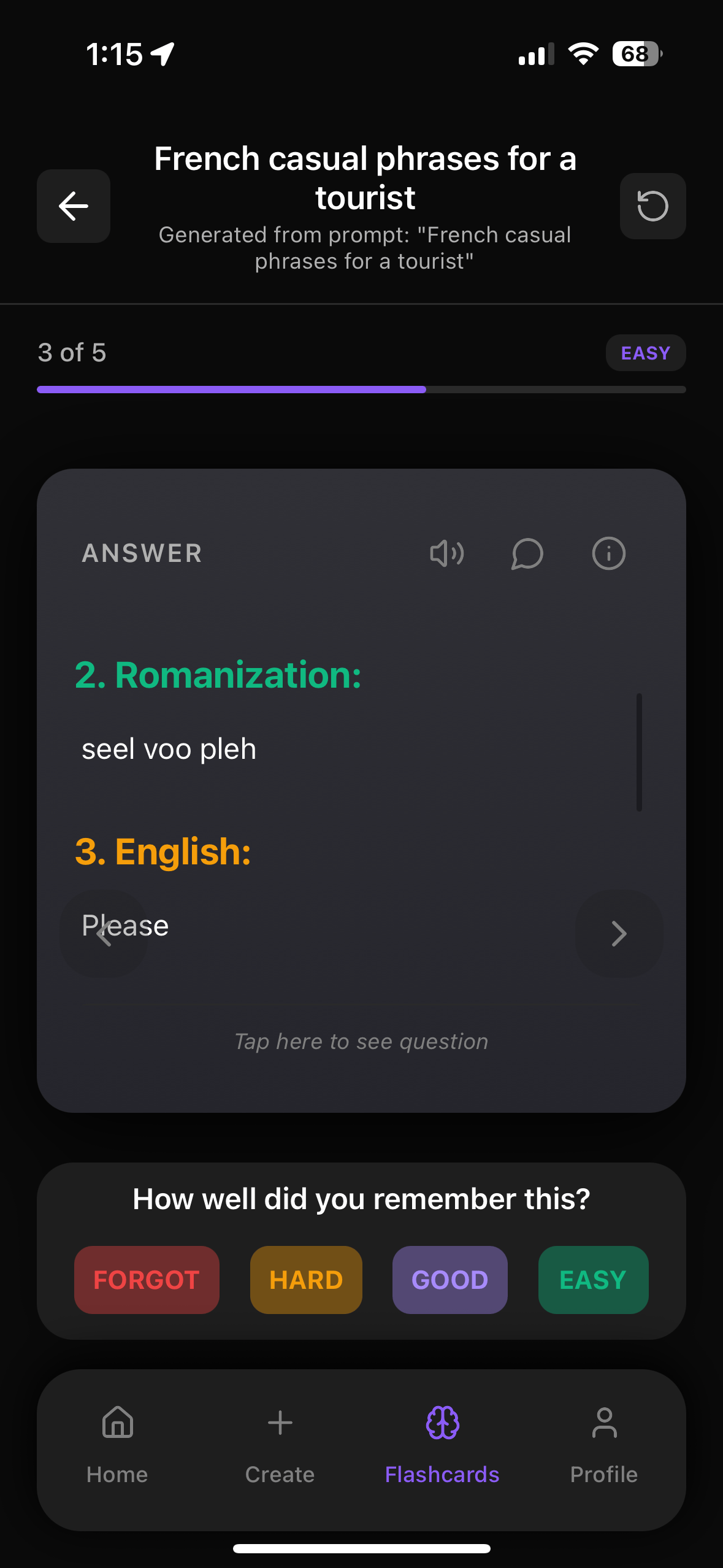
Why Picture Flashcards Make Korean So Much Easier
If you’re trying to learn Korean and your brain is melting from word lists… yeah, same.
Plain text vocab is boring, and your brain just doesn’t like it.
That’s where Korean flashcards with pictures come in.
Images make words stick way faster, and it feels way more natural—like how you learned your first language.
And instead of spending hours making cards one by one, you can let an app do the heavy lifting.
👉 Flashrecall (iPhone & iPad):
https://apps.apple.com/us/app/flashrecall-study-flashcards/id6746757085
Flashrecall lets you:
- Turn images, text, PDFs, YouTube links, audio, or typed prompts into flashcards instantly
- Add pictures to your Korean cards in seconds
- Use built-in spaced repetition + active recall so you actually remember stuff
- Study on the go, even offline, with reminders so you don’t forget to review
Let’s break down how to use picture flashcards the smart way for Korean.
1. Why Pictures Work So Well For Korean Vocabulary
Your brain loves visuals. When you see a picture + a word + maybe a sentence, you’re giving your brain three hooks to remember it instead of one.
For Korean, this is huge because:
- Hangul (한글) is new for most learners
- Lots of words can feel abstract at first
- You want to think in Korean, not translate from English every time
Instead of:
> “사과 – apple”
Use a card like:
- Front: Big clear picture of an apple 🍎 + “사과”
- Back: “apple”, example sentence: “나는 사과를 좋아해요.” (I like apples.)
Now you’re:
- Seeing the object
- Reading Korean
- Connecting it to a real sentence
That’s way more powerful than just memorizing a list.
With Flashrecall, you can literally take a photo of your own apple, import it, and boom—instant card.
2. How To Make Korean Picture Flashcards (The Smart Way)
You don’t need to overcomplicate this. Here’s a simple setup that works really well.
A. Use Real-Life Photos Whenever Possible
Real objects > stock images > plain text.
Some ideas:
- Take photos of items in your kitchen: 컵 (cup), 접시 (plate), 냉장고 (fridge)
- Around your room: 책 (book), 침대 (bed), 창문 (window)
- Out in the city: 버스 (bus), 지하철 (subway), 가게 (store)
In Flashrecall, you can:
- Snap a photo directly or import from your gallery
- Turn that photo into a flashcard in seconds
- Add Korean on the front or back, however you like
B. Use One Clear Concept Per Card
Don’t cram five words into one image. Keep it simple.
✅ Good:
- Front: Picture of a single cup
- Text: “컵”
- Back: “cup”, maybe a sentence
❌ Bad:
- One messy picture with cup, plate, spoon, fork, knife, table, cat, fridge…
Your brain remembers clean, clear associations better.
3. The Best Flashcard Structure For Korean Picture Cards
Here’s a format that works really well for most people.
Option 1: Picture → Korean Word (Best For Thinking In Korean)
- Front: Picture only
- Back: Korean word + English + example sentence
Example:
- Front: Picture of a bus
- Back:
- “버스”
- “bus”
- “나는 버스를 타고 학교에 가요.” (I go to school by bus.)
This forces your brain to:
- See the picture
- Recall the Korean word first (not English)
- Then confirm with English on the back
Option 2: Korean Word → Picture + Meaning (Good For Reading Practice)
- Front: “버스”
- Back: Picture of a bus + “bus”
Use this when you want to get faster at reading and recognizing Korean words.
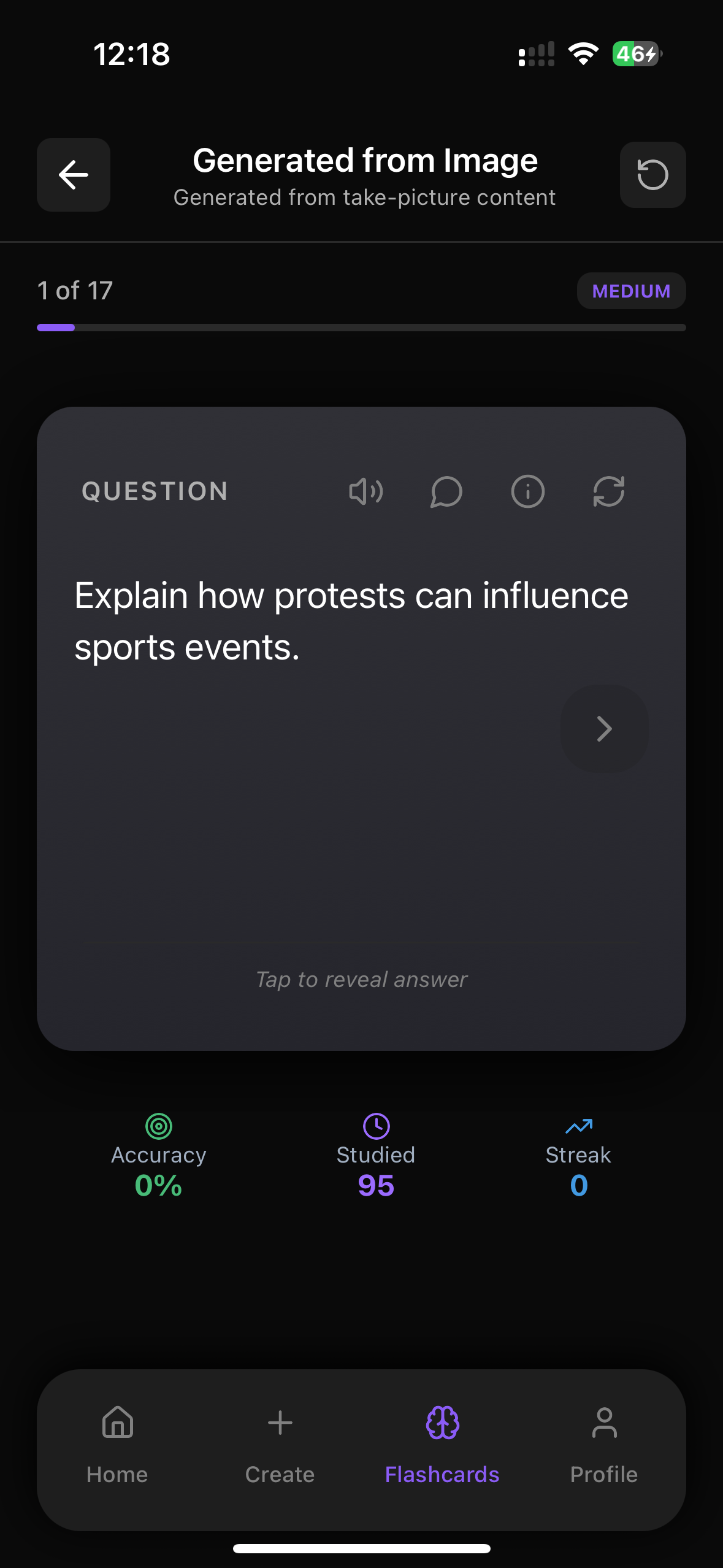
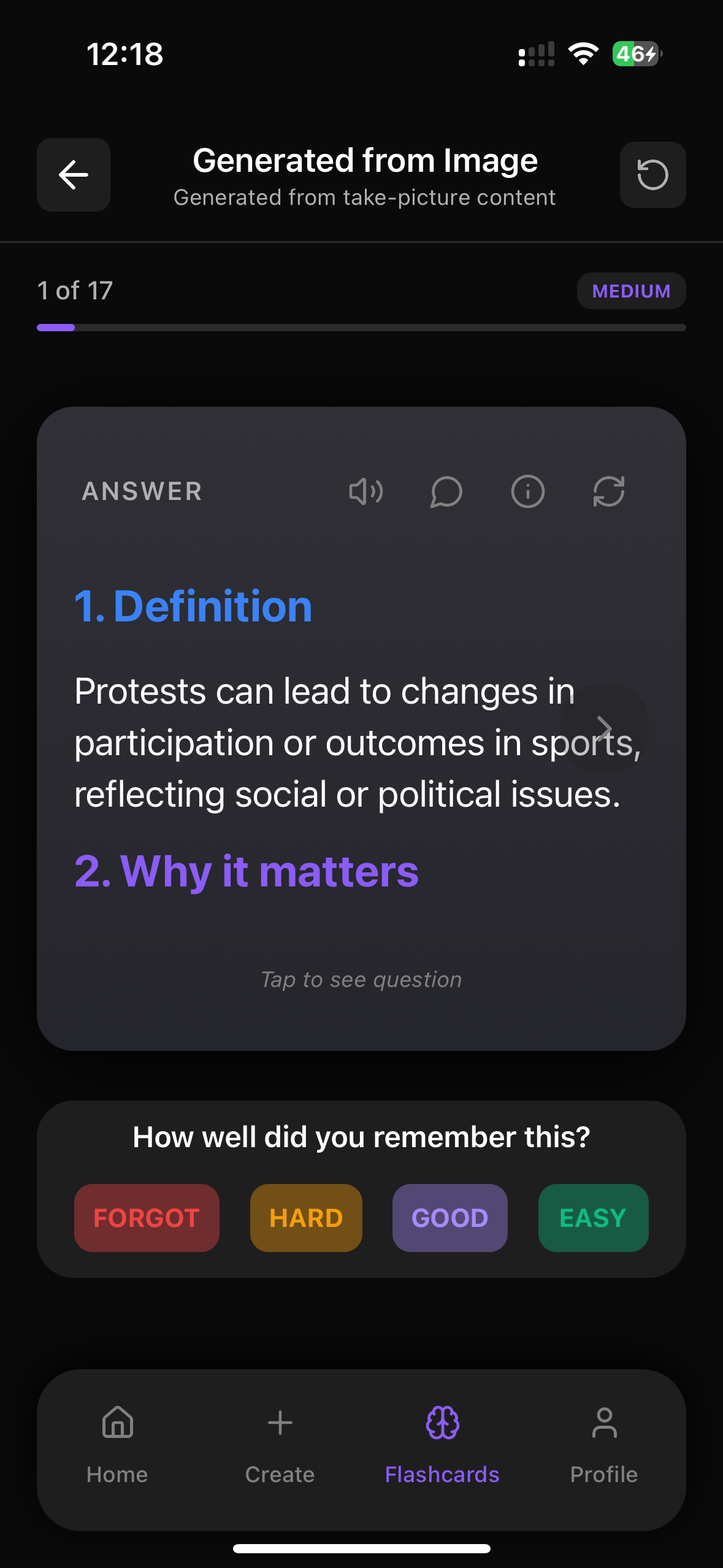
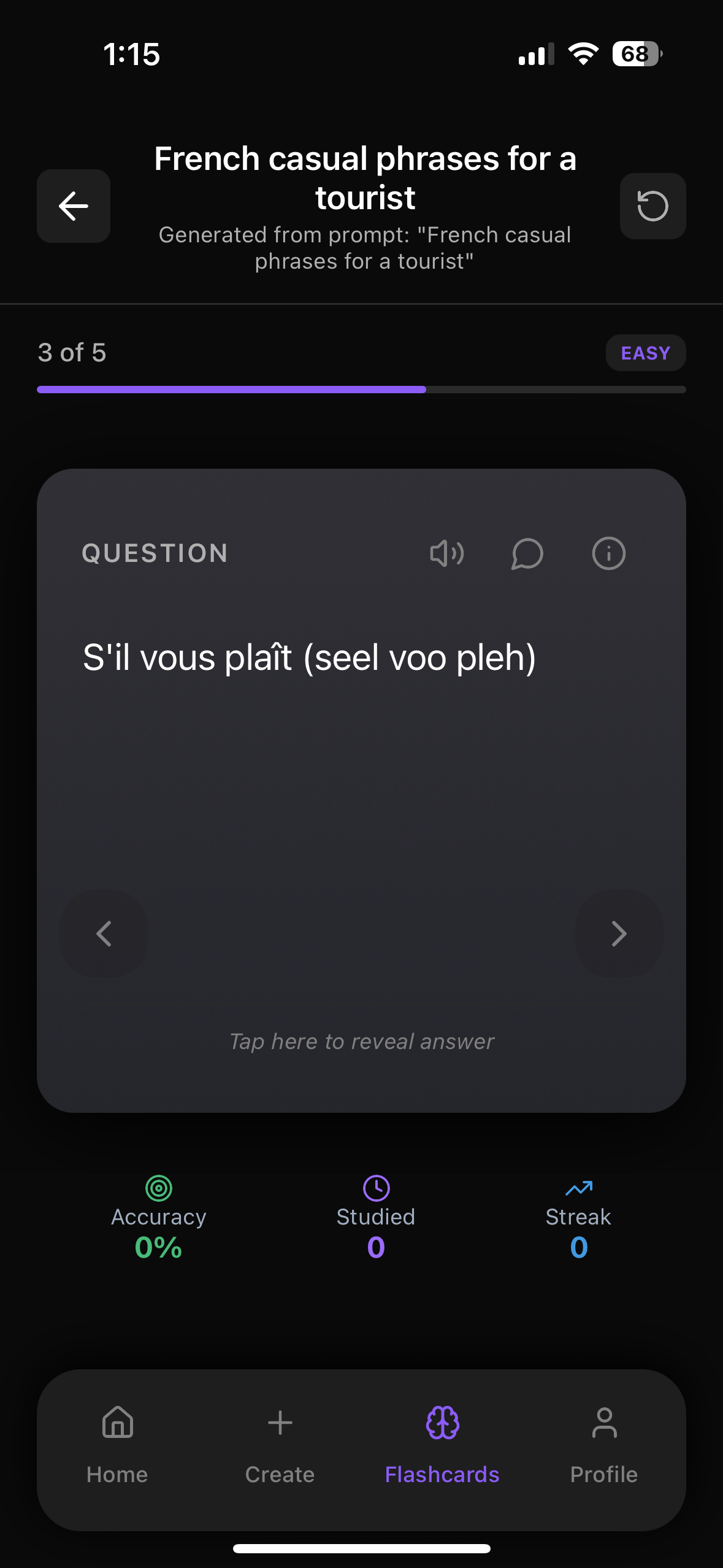
Flashrecall automatically keeps track and reminds you of the cards you don't remember well so you remember faster. Like this :
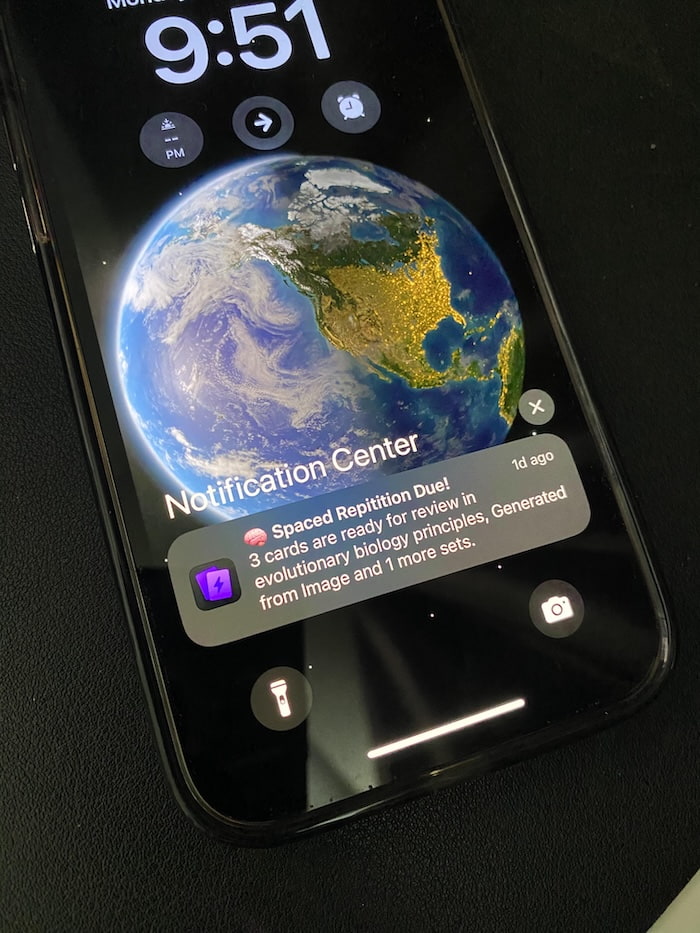
In Flashrecall, you can easily make both directions if you want:
- Card 1: Picture → Korean
- Card 2: Korean → Picture
The built-in active recall makes sure you’re not just looking—you’re actually trying to remember before you flip.
4. Use Spaced Repetition So You Don’t Forget Everything
Making cards is only half the game. The other half is reviewing them at the right time.
That’s where spaced repetition comes in:
You review cards just before you’re about to forget them. It’s insanely effective for vocab.
Flashrecall has:
- Built-in spaced repetition (no settings to mess with)
- Auto reminders so you don’t have to remember to review
- A simple “How hard was this?” style system so the app schedules your next review automatically
So instead of:
- “Oh no, I haven’t studied Korean in 2 weeks…”
You get:
- “Hey, time to review 18 cards” — quick session, high impact
That consistency is what actually gets you fluent.
5. Turning Anything Into Picture Flashcards (Fast)
You don’t need to manually create every single card. Flashrecall can speed up the boring parts.
Here’s how you can build Korean decks quickly:
A. From Images And Screenshots
- Screenshot a Korean vocab list with pictures
- Import into Flashrecall
- Turn them into cards in a few taps
Or:
- Download image sets (e.g., “Korean food vocabulary images”)
- Use them to build your own themed decks: 음식 (food), 집 (home), 교통 (transportation)
B. From YouTube Videos
Watching Korean YouTube or K-dramas?
With Flashrecall, you can:
- Paste a YouTube link
- Pull out key phrases or screenshots
- Turn them into cards with context
For example:
- Screenshot a scene with food
- Card: picture of 김밥 (gimbap) + “김밥” + sentence from the show
Now your flashcards are tied to stuff you actually watch and enjoy.
C. From Text, PDFs, Or Prompts
Got a Korean textbook PDF?
You can:
- Import the PDF into Flashrecall
- Pull vocab from it
- Add your own images or simple icons to make them visual
Or just:
- Type a prompt like “20 common Korean words for kitchen items”
- Make cards from that list and attach your own photos over time
6. Practice Speaking And Understanding With Your Flashcards
Flashcards aren’t just for reading.
With Flashrecall, you can chat with your flashcards if you’re unsure or want more examples. That’s super useful for Korean, where context and politeness levels matter.
Example:
- You have a card with “먹다” (to eat)
- You’re not sure how to use it politely
- You can ask in the app:
> “Give me 3 polite example sentences using 먹다”
- Add the best one to your card
You can also:
- Say the word out loud before flipping the card
- Try to make your own sentence using the picture
So for a picture of a bus:
- You: “버스를 타요… 학교에 가요?”
- Flip card: “나는 버스를 타고 학교에 가요.”
- Adjust your sentence next time
This way, you’re not just memorizing—you’re actually practicing.
7. Example Korean Picture Decks You Can Build
Here are some deck ideas to get you started with picture flashcards in Flashrecall:
A. Everyday Objects
- 컵 (cup)
- 접시 (plate)
- 의자 (chair)
- 책상 (desk)
- 창문 (window)
Take photos around your house and make them real.
B. Food & Drinks
- 김치 (kimchi)
- 밥 (rice)
- 물 (water)
- 커피 (coffee)
- 라면 (ramen)
Use restaurant photos, delivery app screenshots, or your own meals.
C. Places Around Town
- 학교 (school)
- 병원 (hospital)
- 은행 (bank)
- 공원 (park)
- 지하철역 (subway station)
Take photos when you’re outside and turn your day into study material.
D. Verbs With Actions
Have someone act it out or find images:
- 먹다 (to eat)
- 마시다 (to drink)
- 자다 (to sleep)
- 읽다 (to read)
- 걷다 (to walk)
Action + picture + Korean word = super sticky memory.
Why Flashrecall Is Perfect For Korean Picture Flashcards
Just to recap why it fits this style of learning so well:
- 📸 Instant card creation from images, text, PDFs, YouTube, audio, or manual input
- 🧠 Active recall + spaced repetition built-in — no extra setup, just study
- ⏰ Smart study reminders so you don’t fall off the habit
- 📶 Works offline — review Korean anywhere
- 💬 Chat with your flashcards when you’re unsure or want more examples
- 🌍 Great for languages, exams, school, uni, medicine, business — not just Korean
- ⚡ Fast, modern, easy to use, and free to start
- 📱 Works on iPhone and iPad
You can grab it here:
https://apps.apple.com/us/app/flashrecall-study-flashcards/id6746757085
How To Start Today (In 10 Minutes)
If you want a simple starting plan:
1. Download Flashrecall
2. Create a deck called “Korean – Picture Basics”
3. Take 10 photos around your room or kitchen
4. Add the Korean word + English translation + 1 simple sentence
5. Do a 5–10 minute review every day when the app reminds you
Do that for a week and you’ll be shocked how many Korean words you just… know.
No more scrolling vocab lists, no more forgetting everything after two days.
You’re basically turning your real life into a Korean classroom, one picture flashcard at a time.
Frequently Asked Questions
What's the fastest way to create flashcards?
Manually typing cards works but takes time. Many students now use AI generators that turn notes into flashcards instantly. Flashrecall does this automatically from text, images, or PDFs.
Is there a free flashcard app?
Yes. Flashrecall is free and lets you create flashcards from images, text, prompts, audio, PDFs, and YouTube videos.
How do I start spaced repetition?
You can manually schedule your reviews, but most people use apps that automate this. Flashrecall uses built-in spaced repetition so you review cards at the perfect time.
What's the best way to learn vocabulary?
Research shows that combining flashcards with spaced repetition and active recall is highly effective. Flashrecall automates this process, generating cards from your study materials and scheduling reviews at optimal intervals.
Related Articles
- Best Flashcards For Language Learning: 7 Powerful Tips To Learn Faster And Actually Remember Words – Stop forgetting vocab and start speaking sooner with the right flashcard setup.
- Factmonster Com Flashcards: 7 Powerful Reasons To Switch To A Smarter Study App Today – Stop Wasting Time On Basic Flashcards And Upgrade Your Learning Game
- COA Flashcards: The Essential Guide To Passing Faster With Smarter Study Tricks – Stop Wasting Time On Inefficient Notes And Start Using Flashcards That Actually Stick
Research References
The information in this article is based on peer-reviewed research and established studies in cognitive psychology and learning science.
Cepeda, N. J., Pashler, H., Vul, E., Wixted, J. T., & Rohrer, D. (2006). Distributed practice in verbal recall tasks: A review and quantitative synthesis. Psychological Bulletin, 132(3), 354-380
Meta-analysis showing spaced repetition significantly improves long-term retention compared to massed practice
Carpenter, S. K., Cepeda, N. J., Rohrer, D., Kang, S. H., & Pashler, H. (2012). Using spacing to enhance diverse forms of learning: Review of recent research and implications for instruction. Educational Psychology Review, 24(3), 369-378
Review showing spacing effects work across different types of learning materials and contexts
Kang, S. H. (2016). Spaced repetition promotes efficient and effective learning: Policy implications for instruction. Policy Insights from the Behavioral and Brain Sciences, 3(1), 12-19
Policy review advocating for spaced repetition in educational settings based on extensive research evidence
Karpicke, J. D., & Roediger, H. L. (2008). The critical importance of retrieval for learning. Science, 319(5865), 966-968
Research demonstrating that active recall (retrieval practice) is more effective than re-reading for long-term learning
Roediger, H. L., & Butler, A. C. (2011). The critical role of retrieval practice in long-term retention. Trends in Cognitive Sciences, 15(1), 20-27
Review of research showing retrieval practice (active recall) as one of the most effective learning strategies
Dunlosky, J., Rawson, K. A., Marsh, E. J., Nathan, M. J., & Willingham, D. T. (2013). Improving students' learning with effective learning techniques: Promising directions from cognitive and educational psychology. Psychological Science in the Public Interest, 14(1), 4-58
Comprehensive review ranking learning techniques, with practice testing and distributed practice rated as highly effective

FlashRecall Team
FlashRecall Development Team
The FlashRecall Team is a group of working professionals and developers who are passionate about making effective study methods more accessible to students. We believe that evidence-based learning tec...
Credentials & Qualifications
- •Software Development
- •Product Development
- •User Experience Design
Areas of Expertise
Ready to Transform Your Learning?
Start using FlashRecall today - the AI-powered flashcard app with spaced repetition and active recall.
Download on App Store