Learning By Repetition - What Is It And How To Memorise FAST With Repetition
Learning by repetition helps lock in information faster. Use active recall with flashcards to boost your memory retention and study effectively.
How Flashrecall app helps you remember faster. It's free
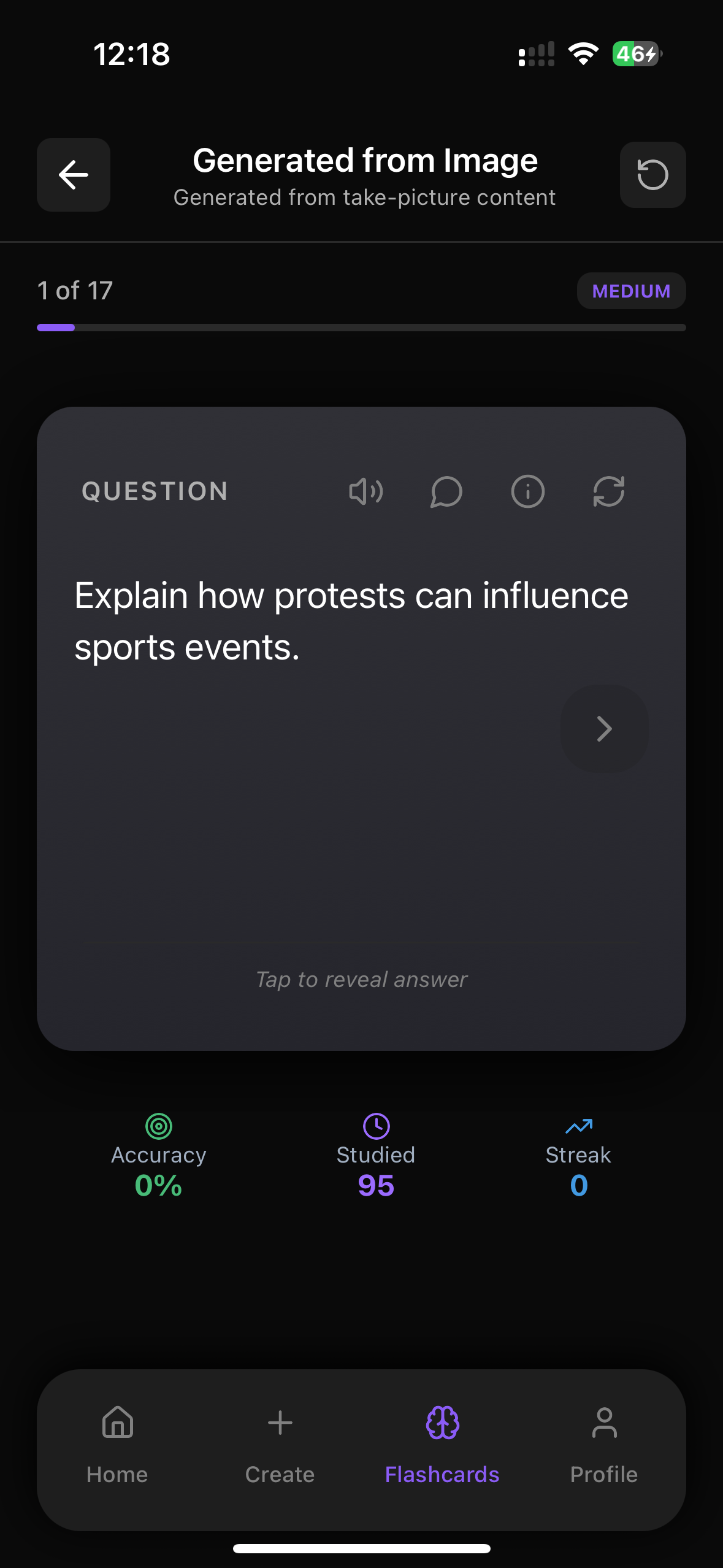
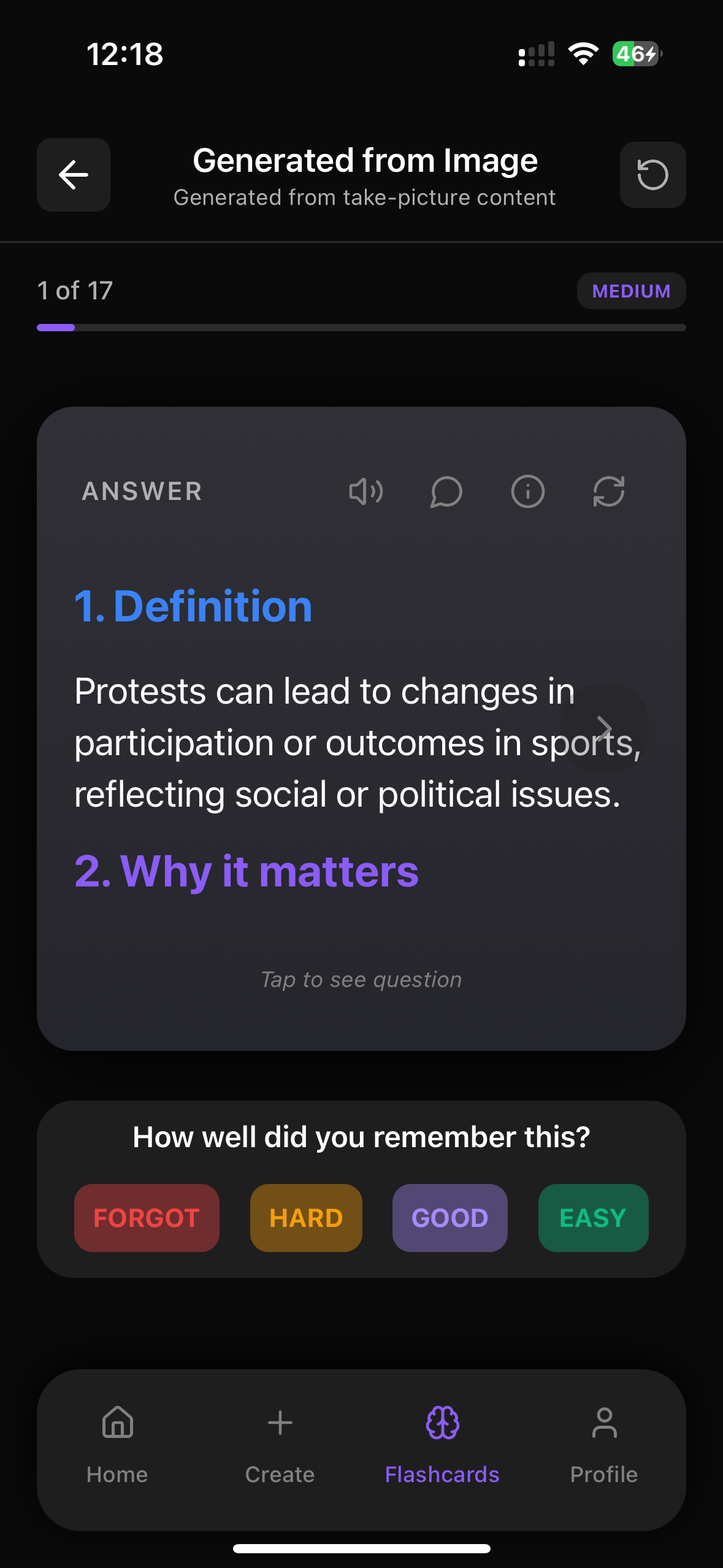
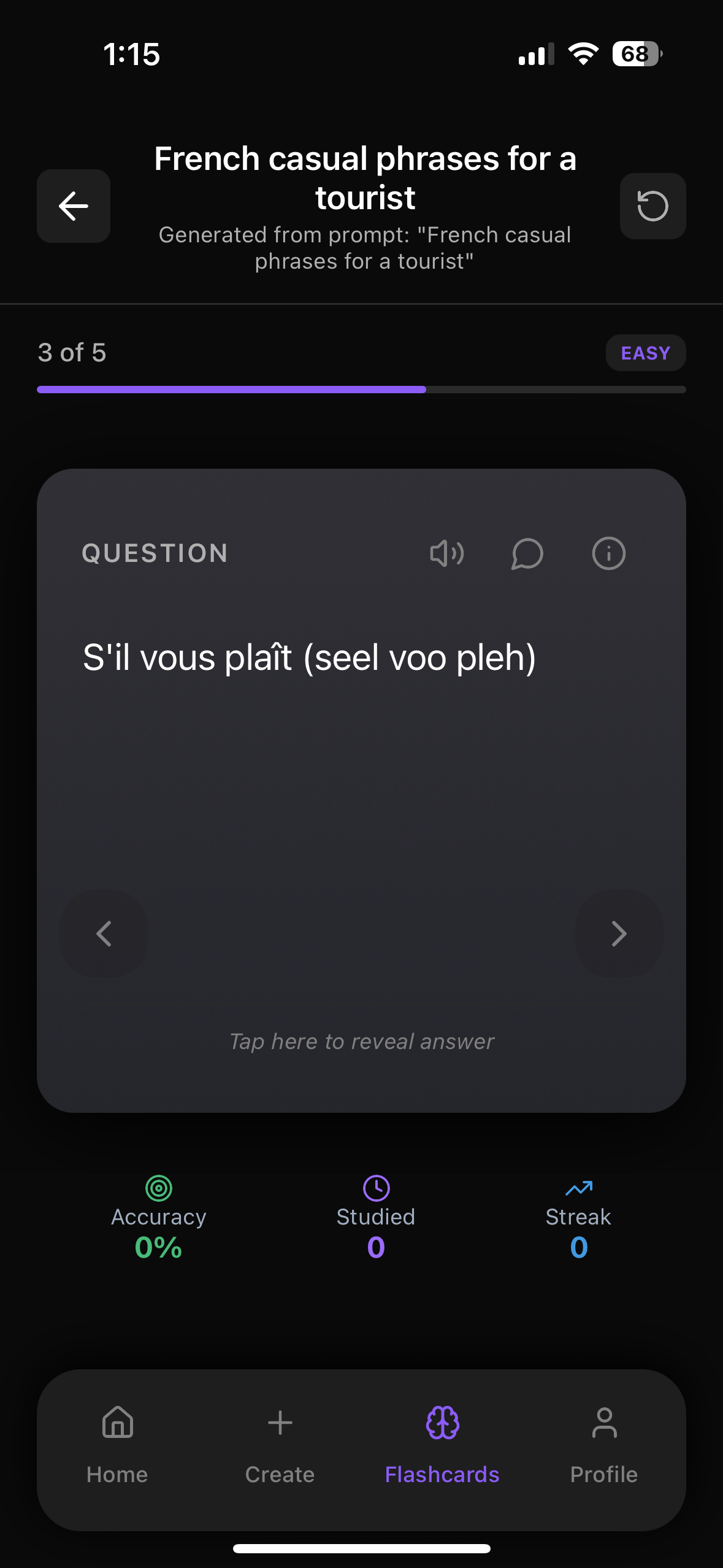
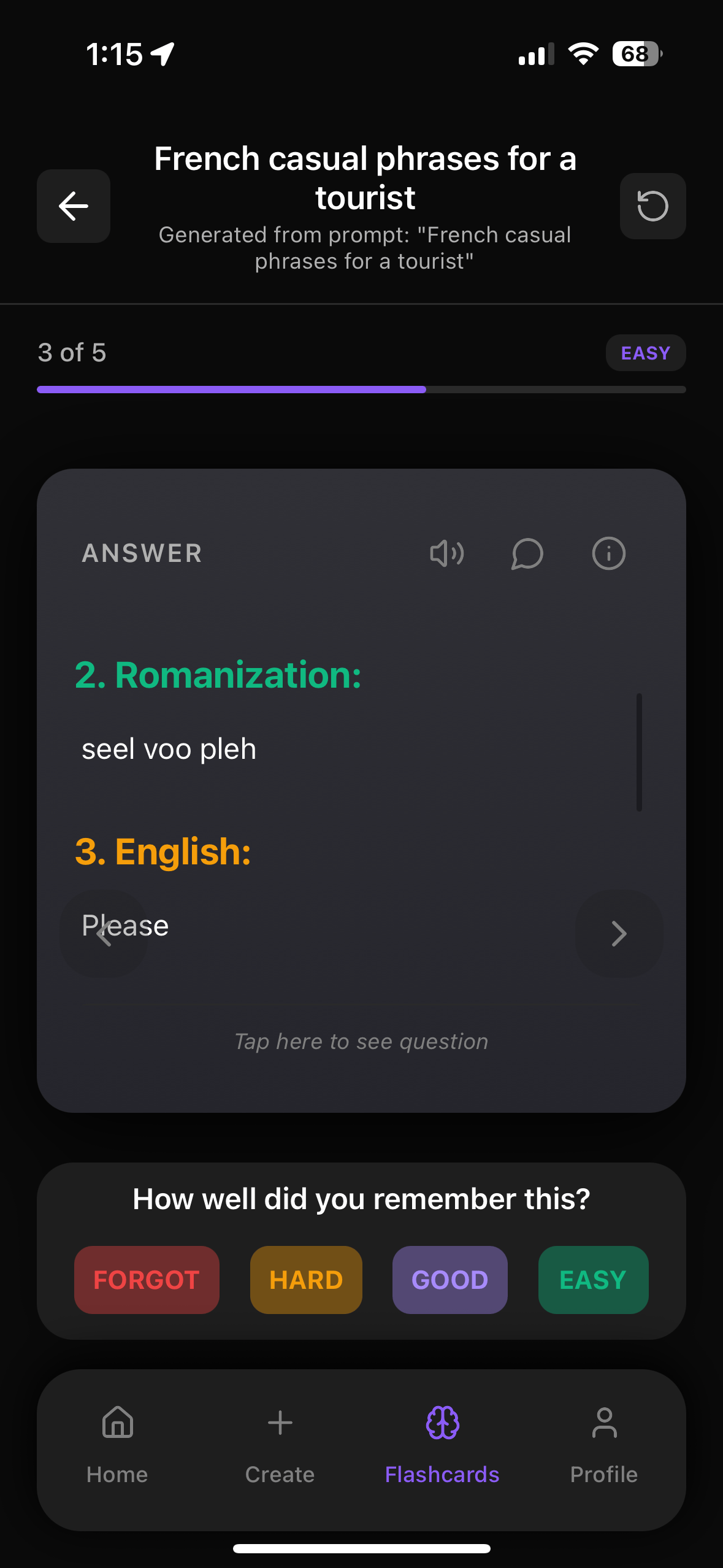
If you’ve ever wondered why repeating something over and over helps you remember it, that’s basically “learning by repetition.” And when you pair repetition with the right technique, you can memorise things much faster — vocabulary, formulas, definitions, concepts, anything.
One of the easiest ways to use repetition the smart way is with Flashrecall, a free flashcard app that automates repetition and makes memorisation way faster.
Download: https://apps.apple.com/us/app/flashrecall-study-flashcards/id6746757085
Let’s break this down in simple English.
What Is Learning By Repetition? (Explained Simply)
Learning by repetition means you review the same information multiple times until your brain locks it in.
Your brain learns through:
- Exposure
- Reinforcement
- Recall
- Repetition
But here’s the thing:
Reading something 10 times doesn’t help nearly as much as recalling it 3 times.
This is where the right method matters.
Why Repetition Works
Your brain has two jobs:
1. Decide what information is important
2. Decide what can be forgotten
When your brain sees the same info again and again, it says:
> “Oh, this must matter. Keep it.”
That’s why repetition feels like magic for memorisation.
The Problem: Most People Repeat the WRONG Way
Most students repeat by:
- Rereading notes
- Highlighting paragraphs
- Watching videos again
- Cramming everything in one night
This feels productive… but your brain doesn’t actually recall anything.
To memorise fast, you need active repetition, not passive repetition.
The FAST Way To Memorise Using Repetition
Here’s the method:
Flashcards are perfect for this.
Single facts, definitions, or questions work best.
Flashrecall automatically keeps track and reminds you of the cards you don't remember well so you remember faster. Like this :
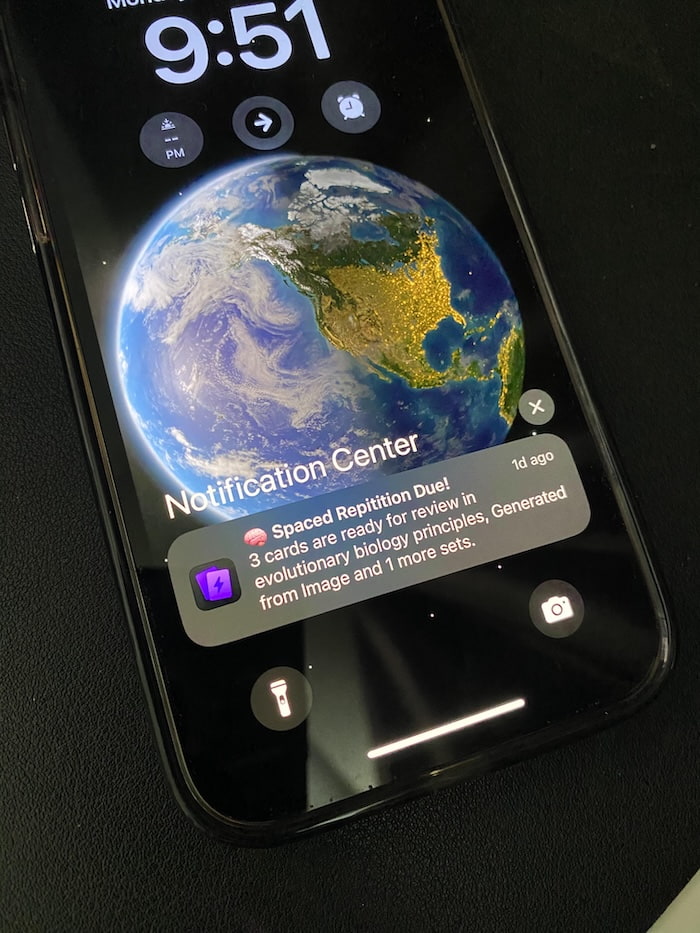
Ask your brain to retrieve the answer.
This is how memories form.
Not too soon, not too late — perfectly spaced.
This is where most people mess up. They don’t know when to repeat.
How Flashrecall Makes Repetition Much Faster
Flashrecall takes the repetition process and automates the smart parts.
You can create flashcards instantly from:
- Images
- PDFs
- YouTube links
- Typed notes
- Screenshots
- Audio
- Prompts
Then, Flashrecall uses smart spaced repetition:
- Hard cards → shown more often
- Wrong answers → repeat immediately
- Easy cards → spaced out so you don’t waste time
You memorise faster with less repetition because the timing is perfect.
Download: https://apps.apple.com/us/app/flashrecall-study-flashcards/id6746757085
Why Smart Repetition Beats Traditional Repetition
Regular repetition = “read again and again”
Smart repetition = “review right before you forget”
This is how you memorise FAST.
Your brain gets challenged at the perfect moment, which strengthens the memory much more effectively.
What You Can Memorise With Repetition
Pretty much anything:
- Language vocabulary
- Exam content
- Math formulas
- Science concepts
- History facts
- Professional certifications
- Definitions
- Quotes
- Processes
- Coding syntax
Repetition works for all ages, all subjects, all levels.
Example: Memorising Vocabulary Fast
Let’s say you want to learn the word “ephemeral”.
Bad repetition:
Read it 10 times.
Smart repetition using Flashrecall:
1. See the card
2. Guess the meaning
3. Flip to check
4. Rate it (Hard/Good/Easy)
5. Flashrecall schedules the next review automatically
Result: you’ll remember it long-term.
Final Thoughts
Learning by repetition works — but only if you do it the right way.
Active recall + spaced repetition = fast, strong memorisation.
Flashrecall makes this incredibly easy since it creates cards instantly and handles all the repetition timing for you.
Try it free:
https://apps.apple.com/us/app/flashrecall-study-flashcards/id6746757085
Related Articles
- Flashcards Spaced Repetition – What It Is and How Flashrecall’s Flashcards Help You Learn Faster With Spaced Repetition
- Spaced Repetition Program – What It Is, Examples, and How Flashrecall Helps You Learn Faster With a Spaced Repetition Program
- Spaced Repetition Schedule – What It Is, Examples, and How Flashrecall Helps You Learn Faster With Spaced Repetition Schedules
- Spaced Repetition Study Technique – What Is It and How Flashrecall Helps You Study Faster With the Spaced Repetition Technique
- Spaced Repetition Technique – What It Is, Examples, and How Flashrecall Helps You Learn Faster With Spaced Repetition Techniques
Frequently Asked Questions
What's the fastest way to create flashcards?
Manually typing cards works but takes time. Many students now use AI generators that turn notes into flashcards instantly. Flashrecall does this automatically from text, images, or PDFs.
Is there a free flashcard app?
Yes. Flashrecall is free and lets you create flashcards from images, text, prompts, audio, PDFs, and YouTube videos.
What is active recall and how does it work?
Active recall is the process of actively retrieving information from memory rather than passively reviewing it. Flashrecall forces proper active recall by making you think before revealing answers, then uses spaced repetition to optimize your review schedule.
What's the best way to learn vocabulary?
Research shows that combining flashcards with spaced repetition and active recall is highly effective. Flashrecall automates this process, generating cards from your study materials and scheduling reviews at optimal intervals.
Research References
The information in this article is based on peer-reviewed research and established studies in cognitive psychology and learning science.
Karpicke, J. D., & Roediger, H. L. (2008). The critical importance of retrieval for learning. Science, 319(5865), 966-968
Research demonstrating that active recall (retrieval practice) is more effective than re-reading for long-term learning
Roediger, H. L., & Butler, A. C. (2011). The critical role of retrieval practice in long-term retention. Trends in Cognitive Sciences, 15(1), 20-27
Review of research showing retrieval practice (active recall) as one of the most effective learning strategies
Dunlosky, J., Rawson, K. A., Marsh, E. J., Nathan, M. J., & Willingham, D. T. (2013). Improving students' learning with effective learning techniques: Promising directions from cognitive and educational psychology. Psychological Science in the Public Interest, 14(1), 4-58
Comprehensive review ranking learning techniques, with practice testing and distributed practice rated as highly effective
Ebbinghaus, H. (1885). Memory: A Contribution to Experimental Psychology. New York: Dover
Pioneering research on the forgetting curve and memory retention over time

FlashRecall Team
FlashRecall Development Team
The FlashRecall Team is a group of working professionals and developers who are passionate about making effective study methods more accessible to students. We believe that evidence-based learning tec...
Credentials & Qualifications
- •Software Development
- •Product Development
- •User Experience Design
Areas of Expertise
Ready to Transform Your Learning?
Start using FlashRecall today - the AI-powered flashcard app with spaced repetition and active recall.
Download on App Store