Make Custom Flashcards: 7 Powerful Ways To Study Faster And Actually Remember Stuff
Make custom flashcards that match your brain, not generic decks. Turn notes into smart questions, use your own words, and let spaced repetition do the boring...
How Flashrecall app helps you remember faster. It's free
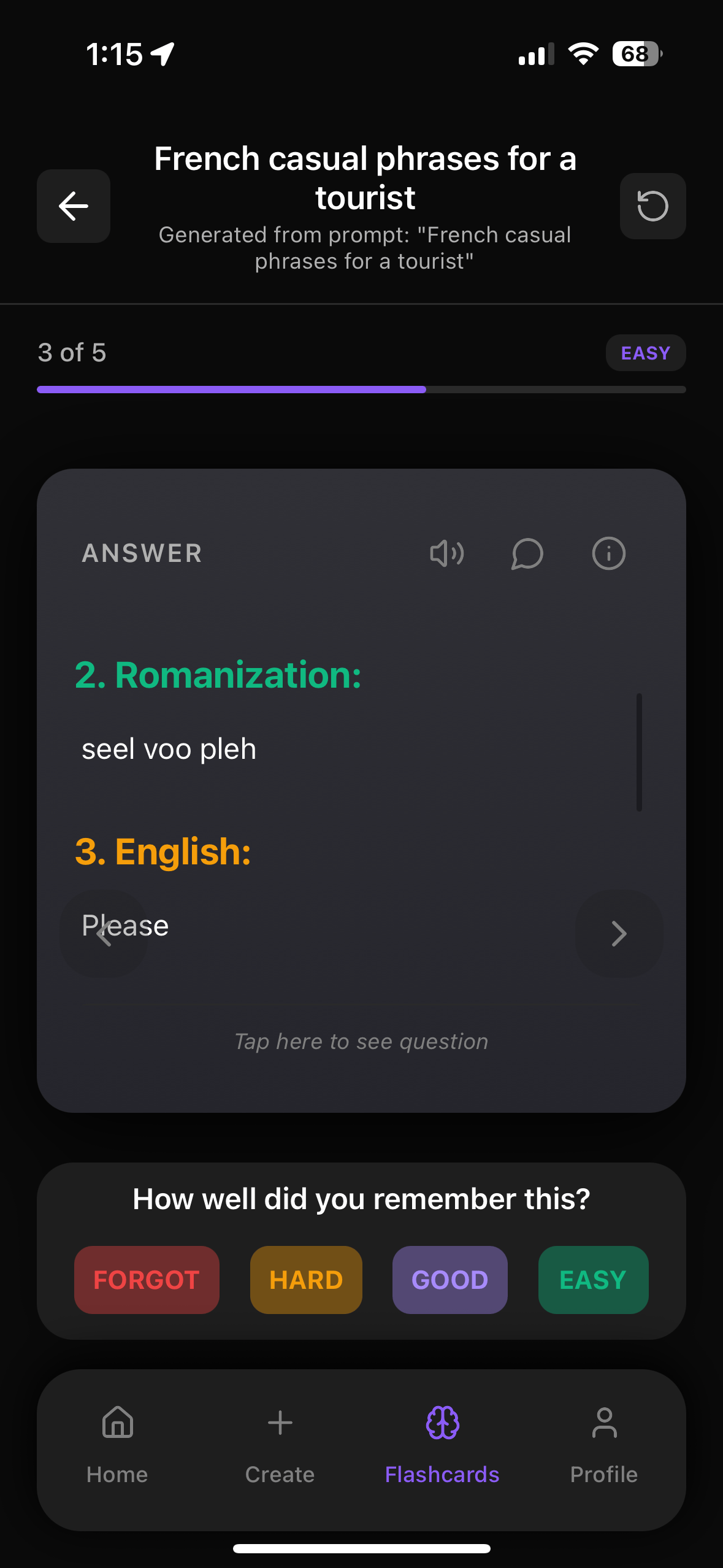
What Does It Really Mean To Make Custom Flashcards?
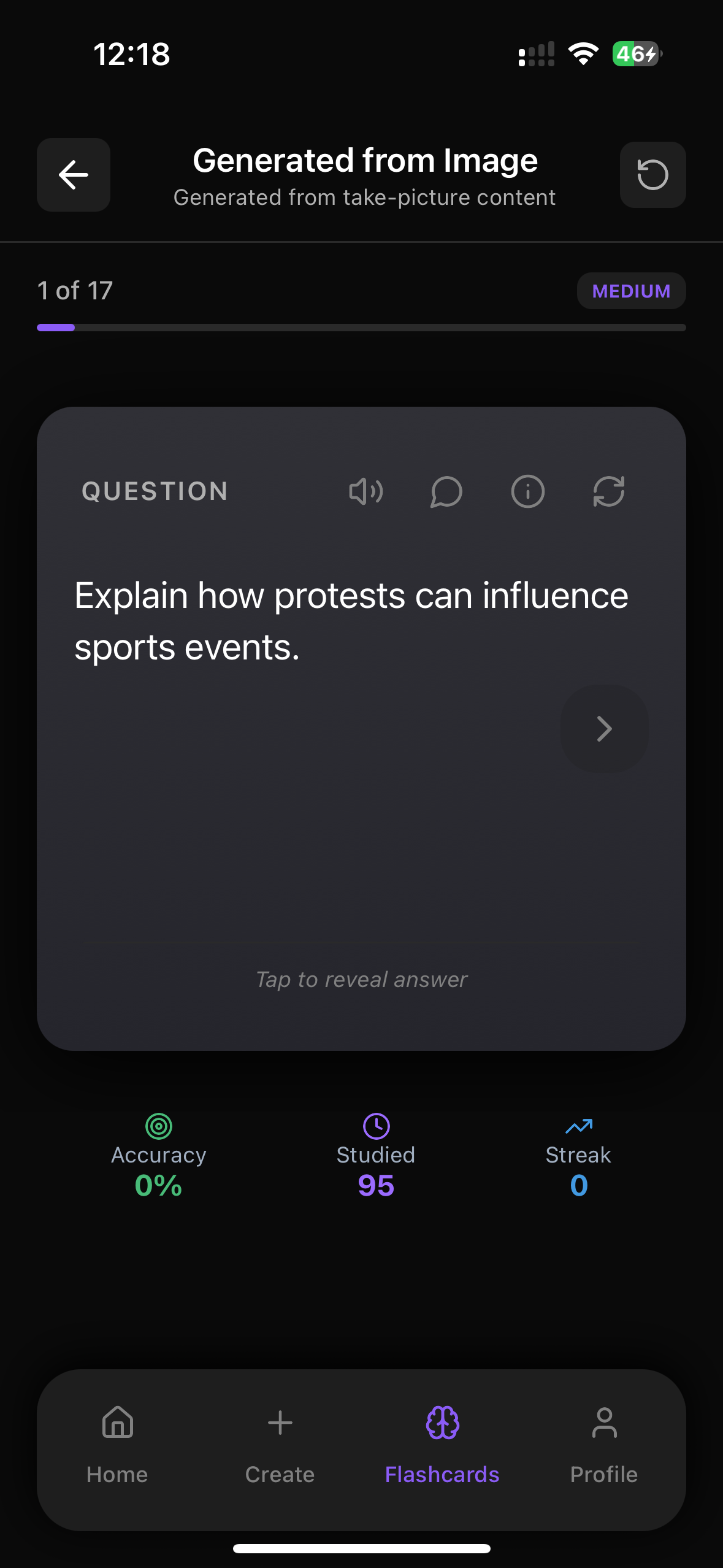
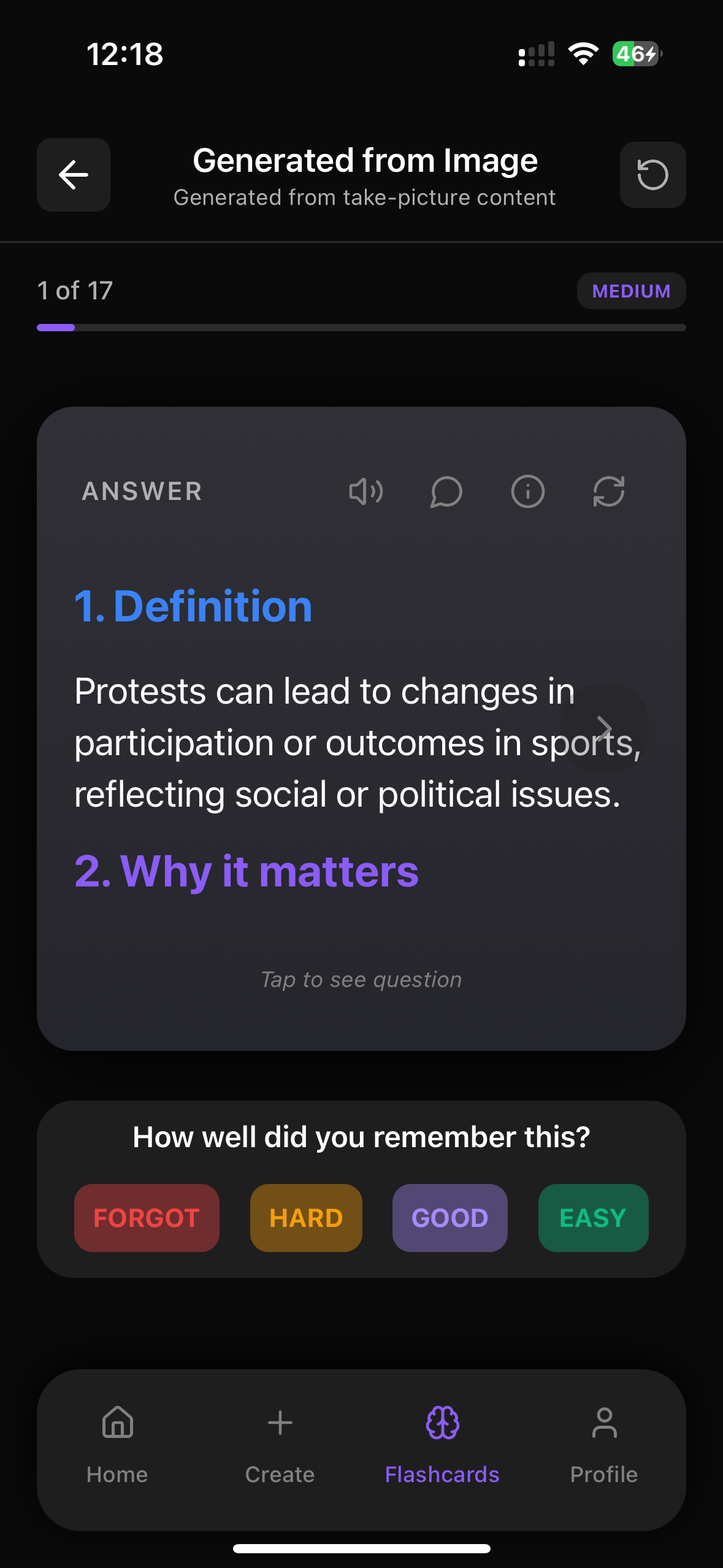
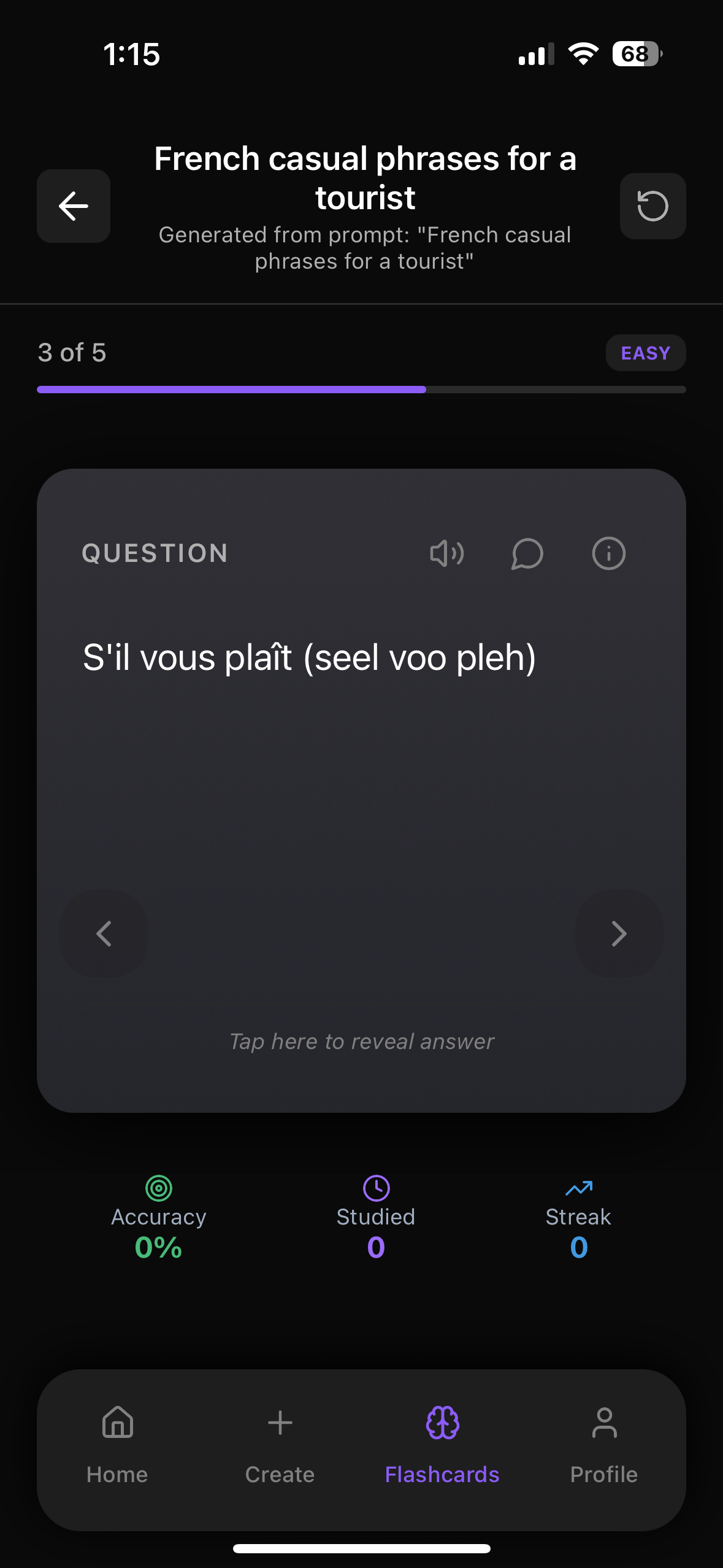
Alright, let’s talk about what it actually means to make custom flashcards. Making custom flashcards just means you create cards that are tailored to you—your class, your exam, your language, your weak spots—instead of using some random pre-made deck that doesn’t quite fit. When you customize cards, you control the wording, examples, images, and difficulty so they match how your brain understands things. That’s why they work so well: your cards stop being generic trivia and start being little memory shortcuts built exactly for your needs. Apps like Flashrecall) make custom flashcards super fast by letting you build them from text, images, PDFs, YouTube links, and more in just a few taps.
Why Custom Flashcards Work So Much Better Than Generic Ones
You know what’s frustrating? Downloading a big “top 1000” deck and realizing:
- Half the stuff isn’t relevant
- The wording is weird
- The examples don’t match how you think
Custom flashcards fix that because:
- You choose what matters – Only the concepts, formulas, vocab, or definitions you actually need.
- You phrase things in your own words – Your brain remembers your own phrasing way better than textbook-speak.
- You can add your own context – Screenshots from slides, diagrams from class, examples your teacher used.
- You control difficulty – You can split hard topics into smaller, easier questions instead of one massive, confusing card.
That’s exactly the vibe of Flashrecall: it’s built to help you make custom flashcards fast and then handle the annoying part (scheduling reviews) for you.
Flashrecall on the App Store →)
How To Make Custom Flashcards That Don’t Suck
Let’s break down how to actually make good cards, not just more cards.
1. One Question, One Idea
Try to keep each card about one thing. Instead of:
> Q: What are the causes, symptoms, and treatments of asthma?
Split it into:
- Q: What are the main causes of asthma?
- Q: What are common asthma symptoms?
- Q: What are common treatments for asthma?
This way, when you miss something, you know exactly what part you don’t understand.
2. Turn Notes Into Questions, Not Just Facts
Instead of copying notes like:
> “Photosynthesis happens in chloroplasts.”
Make a question:
- Q: Where does photosynthesis happen in plant cells?
- A: In the chloroplasts.
Your brain has to think and recall, not just reread. That’s active recall—built into how Flashrecall works by default.
3. Use Your Own Words
If your textbook says:
> “Homeostasis is the tendency to maintain internal stability.”
You might remember it better as:
- Q: What is homeostasis in simple words?
- A: Your body keeping things stable (like temperature, pH, etc.).
Custom flashcards = your language, your style, your memory.
Different Ways To Make Custom Flashcards (From Super Manual To Super Lazy)
1. Old-School: Paper Flashcards
Still works, just slower:
- Write the question on the front
- Answer on the back
- Shuffle and review
Good for small topics, but a pain when you have 500+ cards or want to reshuffle, tag, or search them.
2. Manual Digital Cards
Most flashcard apps let you type cards one by one. In Flashrecall, you can:
- Create a deck
- Tap to add a card
- Type question + answer
- Add images if you want
This is nice when you want to be very intentional about each card.
3. Semi-Automatic: Turn Notes Into Cards
Here’s where it gets fun. With Flashrecall, you can make custom flashcards from:
- Text – Paste your notes, and it can help turn them into cards
- Images – Slides, textbook pages, handwritten notes
- PDFs – Lecture notes, study guides
- YouTube links – Turn video content into cards
- Audio – Record explanations and make cards from them
Flashrecall automatically keeps track and reminds you of the cards you don't remember well so you remember faster. Like this :
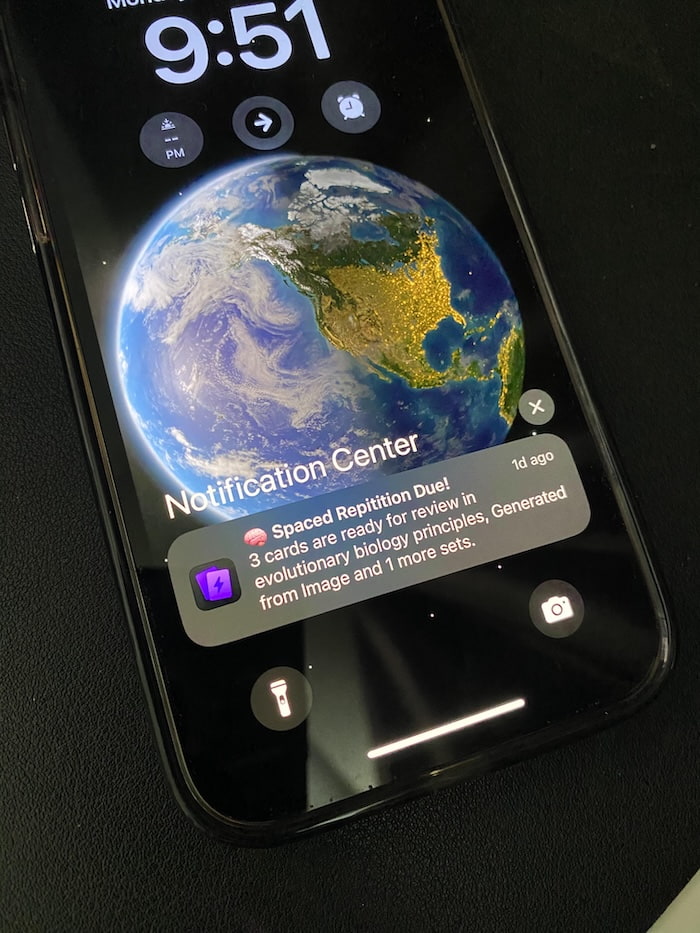
Instead of rewriting everything, you just feed your study material into Flashrecall and then tweak or add to the cards it creates. Way faster than starting from a blank card every time.
Grab it here if you want to try that workflow:
https://apps.apple.com/us/app/flashrecall-study-flashcards/id6746757085
How Flashrecall Makes Custom Flashcards Way Less Painful
If you like the idea of custom cards but hate the time it takes, this is where Flashrecall really helps.
Fast Ways To Create Cards
With Flashrecall, you can:
- Make cards instantly from images – Snap a pic of a textbook page or slide, and turn key points into cards.
- Use YouTube links – Studying from a video? Turn the content into flashcards instead of rewatching it 5 times.
- Use PDFs – Upload your notes or lecture slides and build cards from them.
- Type or paste text – Dump your notes in, then turn each key point into a Q&A card.
- Create cards manually – Still totally an option if you like full control.
So you still make custom flashcards, but the app does like 70% of the boring part.
Built-In Spaced Repetition (So You Don’t Have To Plan Anything)
Flashcards only work if you review them at the right times. Flashrecall uses spaced repetition with auto reminders:
- Shows you cards right before you’re about to forget them
- Adjusts timing based on how easy or hard each card feels
- Sends study reminders so you don’t fall off the wagon
You just open the app, hit study, and it serves up the right cards. No schedules, no spreadsheets, no “what should I review today?” decisions.
Active Recall By Default
Every session in Flashrecall is built around:
1. You seeing a question
2. Trying to recall the answer from memory
3. Then checking how you did
That combo of active recall + spaced repetition is exactly what makes flashcards so strong for long-term memory.
Smart Ways To Customize Cards For Different Subjects
Languages
When you make custom flashcards for languages, don’t just do “word = translation”.
Try:
- Front: Word in target language → Back: Meaning + example sentence
- Front: Sentence with a blank → Back: Correct word to fill in
- Front: Image → Back: Word (for vocab like food, objects, places)
Flashrecall is great here because you can:
- Add audio or record pronunciation
- Use images for visual vocab
- Chat with the card if you’re unsure and want more explanation
Exams (SAT, MCAT, medical, law, etc.)
For tough exams, custom flashcards shine when you:
- Turn practice questions you got wrong into cards
- Break long explanations into multiple, smaller cards
- Add mnemonics or shortcuts in the answer side
Example:
- Q: What’s the difference between type 1 and type 2 diabetes?
- A: Type 1 = no insulin (autoimmune), Type 2 = insulin resistance.
You can then add extra cards for risk factors, symptoms, and treatments separately.
School & University Subjects
For math, science, history, business, whatever:
- Formulas → question: “Formula for X?” answer: the formula + when to use it
- Concepts → question: “Explain X in simple terms”
- Dates & events → question: “What happened in [year/event]?”
And since Flashrecall works offline on iPhone and iPad, you can review on the bus, in line, or when Wi‑Fi is trash.
Pro Tips For Making Custom Flashcards That Actually Stick
1. Make The Back Side More Than Just One Word (When It Matters)
Sometimes a one-word answer is fine (like vocab). But for concepts, add:
- A short explanation
- An example
- Maybe a tiny mnemonic
That extra context makes it easier to remember next time.
2. Add Images When Possible
Visuals are insanely helpful:
- Diagrams for biology
- Graphs for economics
- Screenshots of code snippets
- Maps for geography
Flashrecall lets you drop images into cards easily, especially from photos, slides, or PDFs.
3. Don’t Be Afraid To Delete Or Edit Cards
If a card is:
- Confusing
- Too long
- Annoying
Edit it or delete it. Custom flashcards should feel like they’re helping, not punishing you. Flashrecall makes editing cards quick, so your deck stays clean.
Why Use Flashrecall Instead Of Just Any Flashcard App?
There are tons of flashcard apps out there, but here’s what makes Flashrecall especially nice when you want to make custom flashcards without wasting time:
- Super fast card creation from images, PDFs, text, audio, and YouTube links
- Built-in spaced repetition with automatic scheduling and reminders
- Active recall baked into every session
- Chat with the flashcard if you’re stuck and want more explanation
- Works offline so you can study anywhere
- Free to start, modern, and simple to use on iPhone and iPad
If you like the idea of personalized decks but hate spending hours building them, it’s honestly one of the easiest ways to get started:
Download Flashrecall on the App Store)
Quick Recap
To make custom flashcards that actually help you learn:
- Focus on one idea per card
- Turn your notes into questions, not just copied text
- Use your own words and add examples
- Take advantage of tools like Flashrecall to turn text, PDFs, images, and YouTube videos into cards quickly
- Let spaced repetition + active recall handle the memory side
Do that, and your flashcards stop being busywork and start being one of the easiest ways to remember…pretty much anything.
Frequently Asked Questions
What's the fastest way to create flashcards?
Manually typing cards works but takes time. Many students now use AI generators that turn notes into flashcards instantly. Flashrecall does this automatically from text, images, or PDFs.
Is there a free flashcard app?
Yes. Flashrecall is free and lets you create flashcards from images, text, prompts, audio, PDFs, and YouTube videos.
How do I start spaced repetition?
You can manually schedule your reviews, but most people use apps that automate this. Flashrecall uses built-in spaced repetition so you review cards at the perfect time.
What's the best way to learn vocabulary?
Research shows that combining flashcards with spaced repetition and active recall is highly effective. Flashrecall automates this process, generating cards from your study materials and scheduling reviews at optimal intervals.
How can I study more effectively for this test?
Effective exam prep combines active recall, spaced repetition, and regular practice. Flashrecall helps by automatically generating flashcards from your study materials and using spaced repetition to ensure you remember everything when exam day arrives.
Related Articles
- Create Custom Flashcards: 7 Powerful Ways To Learn Faster And Actually Remember Stuff – Stop wasting time on generic decks and build cards that match your brain.
- Computer Flashcards: The Essential Guide To Learning Tech Faster With Powerful Digital Cards – Stop Re‑reading Notes And Actually Remember What You Study
- Custom Flash Cards: 7 Powerful Ways To Study Smarter (And Actually Remember Stuff) – Stop wasting time on boring notes and build custom flashcards that finally stick.
Research References
The information in this article is based on peer-reviewed research and established studies in cognitive psychology and learning science.
Cepeda, N. J., Pashler, H., Vul, E., Wixted, J. T., & Rohrer, D. (2006). Distributed practice in verbal recall tasks: A review and quantitative synthesis. Psychological Bulletin, 132(3), 354-380
Meta-analysis showing spaced repetition significantly improves long-term retention compared to massed practice
Carpenter, S. K., Cepeda, N. J., Rohrer, D., Kang, S. H., & Pashler, H. (2012). Using spacing to enhance diverse forms of learning: Review of recent research and implications for instruction. Educational Psychology Review, 24(3), 369-378
Review showing spacing effects work across different types of learning materials and contexts
Kang, S. H. (2016). Spaced repetition promotes efficient and effective learning: Policy implications for instruction. Policy Insights from the Behavioral and Brain Sciences, 3(1), 12-19
Policy review advocating for spaced repetition in educational settings based on extensive research evidence
Karpicke, J. D., & Roediger, H. L. (2008). The critical importance of retrieval for learning. Science, 319(5865), 966-968
Research demonstrating that active recall (retrieval practice) is more effective than re-reading for long-term learning
Roediger, H. L., & Butler, A. C. (2011). The critical role of retrieval practice in long-term retention. Trends in Cognitive Sciences, 15(1), 20-27
Review of research showing retrieval practice (active recall) as one of the most effective learning strategies
Dunlosky, J., Rawson, K. A., Marsh, E. J., Nathan, M. J., & Willingham, D. T. (2013). Improving students' learning with effective learning techniques: Promising directions from cognitive and educational psychology. Psychological Science in the Public Interest, 14(1), 4-58
Comprehensive review ranking learning techniques, with practice testing and distributed practice rated as highly effective

FlashRecall Team
FlashRecall Development Team
The FlashRecall Team is a group of working professionals and developers who are passionate about making effective study methods more accessible to students. We believe that evidence-based learning tec...
Credentials & Qualifications
- •Software Development
- •Product Development
- •User Experience Design
Areas of Expertise
Ready to Transform Your Learning?
Start using FlashRecall today - the AI-powered flashcard app with spaced repetition and active recall.
Download on App Store