Make Notecards Like A Pro: 7 Powerful Tricks To Study Faster And Actually Remember Stuff – Stop rewriting notes and learn how to turn anything into smart, effective notecards that actually stick.
Make notecards that actually stick: turn notes into sharp Q&A cards, use active recall, spaced repetition, and apps like Flashrecall to remember way more.
How Flashrecall app helps you remember faster. It's free
So, You Want To Make Notecards That Actually Work
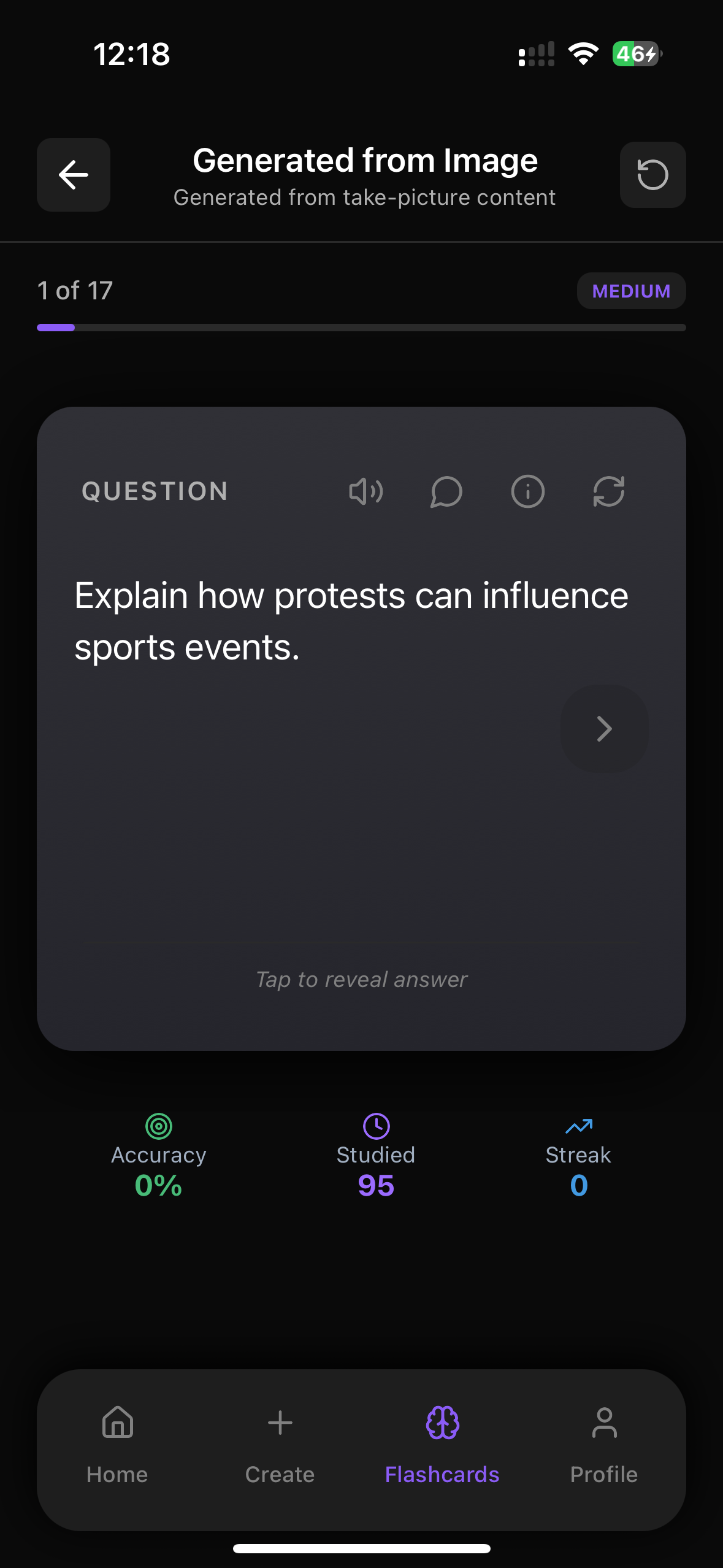
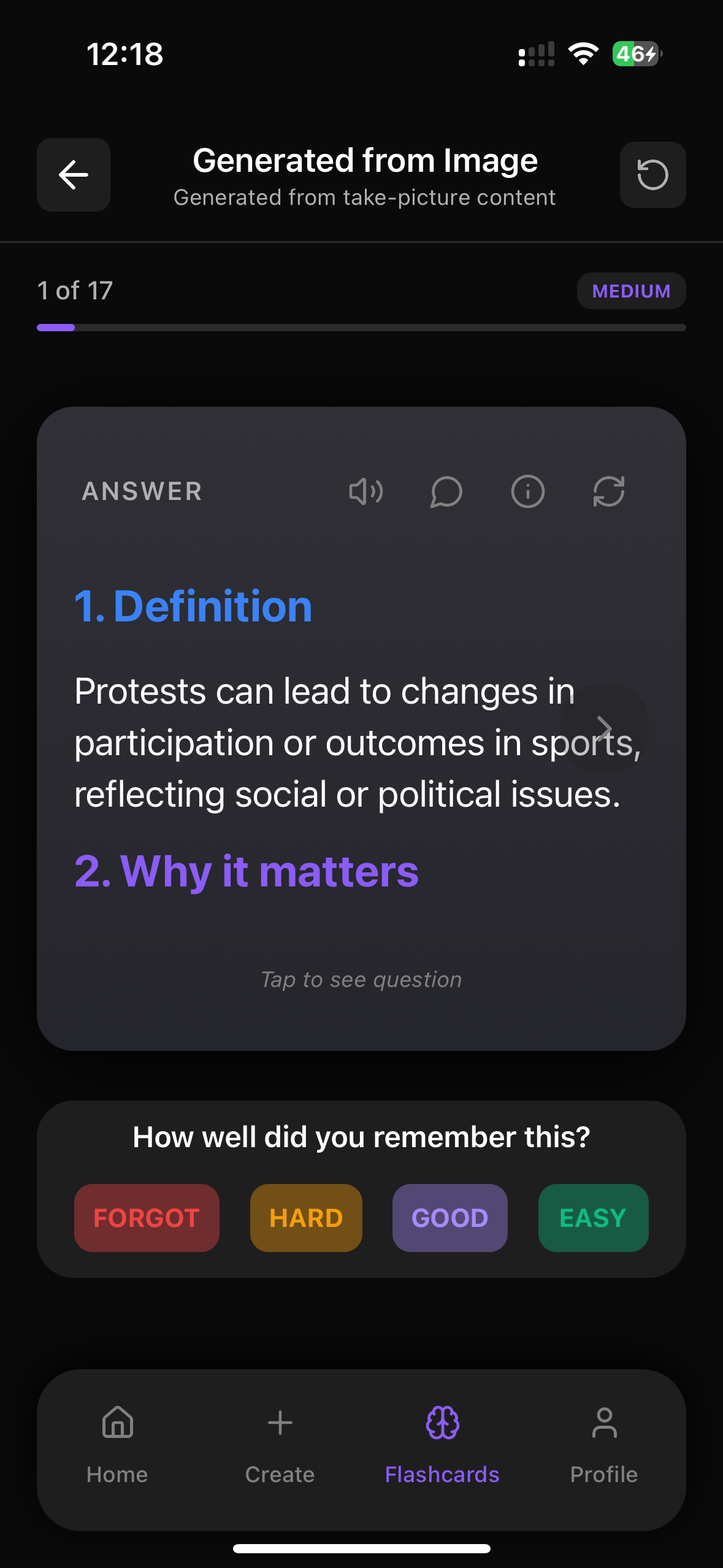
Alright, let’s talk about how to make notecards in a way that actually helps you remember stuff, not just feel “productive.” To make notecards properly, you take the key ideas from your notes or textbook and turn them into small, focused question‑and‑answer cards that force your brain to recall information, not just reread it. That’s the whole point: active recall + repetition. For example, instead of copying a whole paragraph about photosynthesis, you’d make a notecard that asks, “What is photosynthesis?” on the front and the short, clear answer on the back. Apps like Flashrecall do this for you super fast and then use spaced repetition to remind you exactly when to review so the info actually sticks:
https://apps.apple.com/us/app/flashrecall-study-flashcards/id6746757085
Why Notecards Work Way Better Than Just Rereading
You know how you can reread a page three times and still not remember anything? That’s passive learning.
Notecards flip that around:
- Front of the card = question / prompt
- Back of the card = answer / explanation
Your brain has to pull the answer out (active recall), and that’s what builds real memory.
When you make notecards the right way and review them at spaced intervals (like after 1 day, 3 days, a week, etc.), you’re basically training your brain to say, “Oh yeah, I know this” instead of “I’ve seen this before but… no idea.”
This is exactly what Flashrecall automates for you with built‑in spaced repetition and study reminders, so you don’t need to track anything manually.
Digital vs Paper: What’s The Best Way To Make Notecards?
You can totally use paper notecards, but here’s the honest breakdown.
Paper Notecards – Pros & Cons
- Feels nice and “real”
- Good if you like handwriting
- No screens, no distractions
- Easy to lose or damage
- Hard to reorganize or search
- You have to remember on your own when to review
- Takes forever to rewrite when you make mistakes
Digital Notecards – Pros & Cons
- Super fast to create and edit
- Searchable (no more “where did I put that card?”)
- Can include images, screenshots, even audio
- Spaced repetition and reminders can be automatic
- Syncs across devices (phone, tablet)
- On your phone = potential distractions if you’re not disciplined
- Takes a minute to get used to if you’ve only used paper
If you want the benefits of both, Flashrecall is a really nice middle ground: it’s quick and modern, but still feels simple and focused, not bloated or complicated.
👉 Try it here (free to start):
https://apps.apple.com/us/app/flashrecall-study-flashcards/id6746757085
Step‑By‑Step: How To Make Notecards That Don’t Suck
Let’s keep this simple. Here’s a clean process you can follow.
1. Start With Your Source
This could be:
- Class notes
- Textbook pages
- Lecture slides
- PDFs
- YouTube videos
- Practice questions
In Flashrecall, you can literally just:
- Paste text
- Upload PDFs
- Paste a YouTube link
- Use images or screenshots
…and it can help you turn that into flashcards automatically. That alone saves a ton of time.
2. Turn Notes Into Questions
When you make notecards, don’t just copy sentences. Ask:
> “What question would make me think hard and pull this idea from memory?”
Examples:
- Instead of:
“Mitochondria are the powerhouse of the cell.”
Make:
- Instead of copying a whole definition:
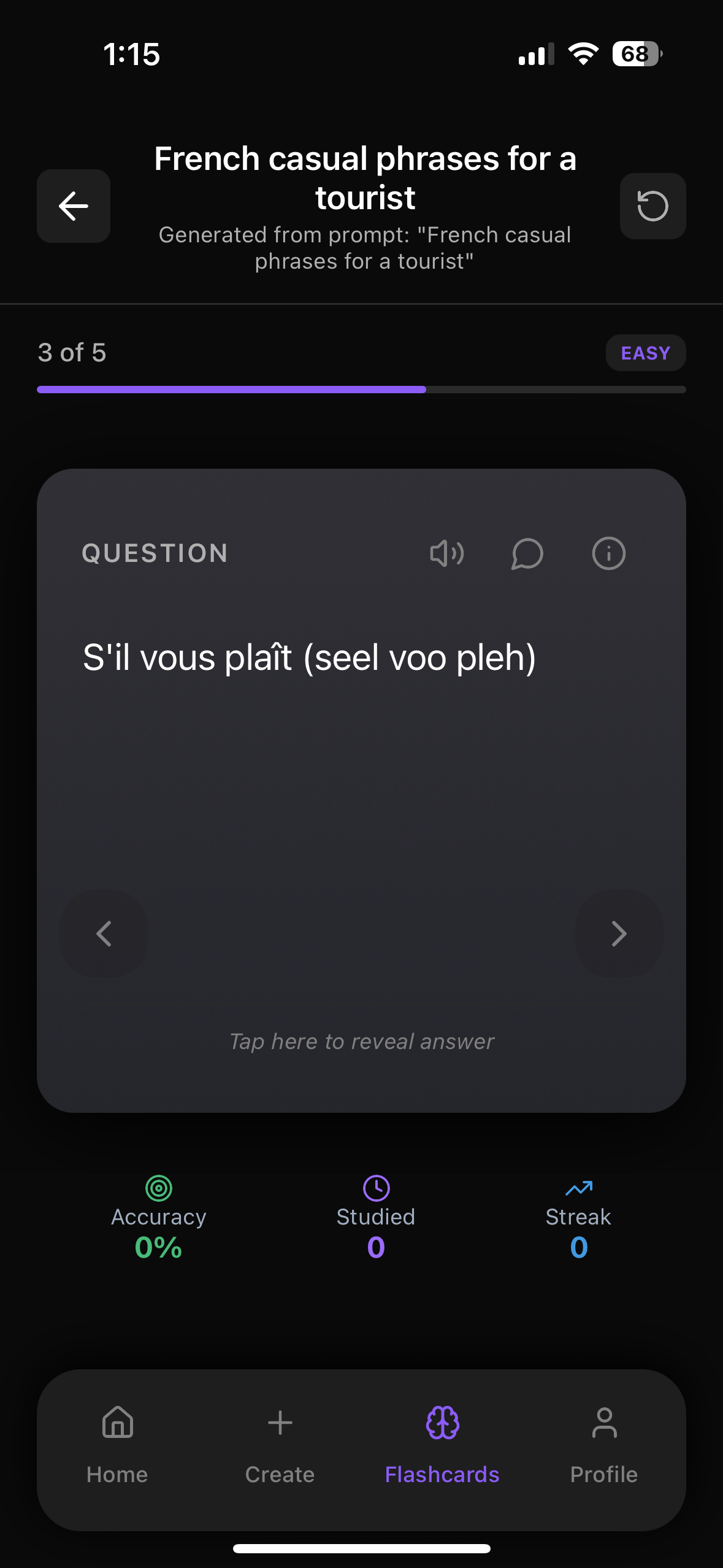
- For languages:
Short, sharp questions > long, vague ones.
3. One Idea Per Card
This is huge. Don’t cram multiple concepts onto a single card.
Bad card:
> “What are the causes, symptoms, and treatments of depression?”
That’s like three cards fighting each other.
Better:
- Card 1: Causes of depression
- Card 2: Symptoms of depression
- Card 3: Common treatments for depression
In Flashrecall, it’s super easy to duplicate and tweak cards, so splitting big ideas into several small cards only takes a few seconds.
4. Use Your Own Words
When you make notecards, try to rewrite stuff in your own language instead of copying the textbook word‑for‑word.
- It forces you to actually understand it.
- It makes it easier to remember.
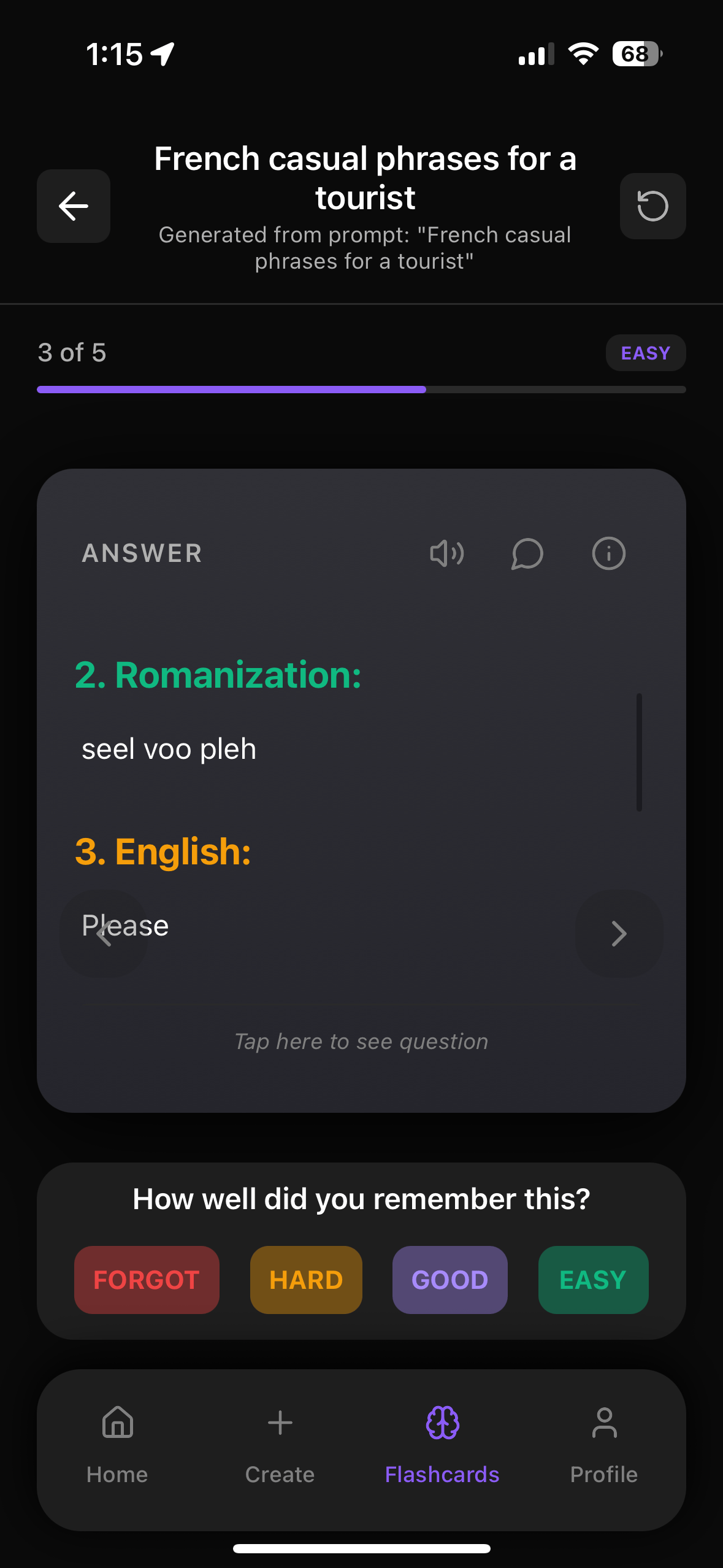
Flashrecall automatically keeps track and reminds you of the cards you don't remember well so you remember faster. Like this :
Example:
Textbook:
> “Photosynthesis is the process by which green plants and some other organisms use sunlight to synthesize foods from carbon dioxide and water.”
Your card:
Still correct, but simpler and more “you.”
7 Powerful Tips To Make Notecards Way More Effective
1. Mix In Images Where It Helps
For anatomy, geography, diagrams, math graphs—pictures help a lot.
In Flashrecall you can:
- Snap a photo from your notes or textbook
- Upload an image or screenshot
- Generate cards from that image
Example:
- Front: a picture of a heart labeled with letters
- Back: “A = left atrium, B = right ventricle…”
Your brain loves visuals.
2. Turn “Passive” Stuff Into Questions
Watching a YouTube lecture? Reading slides?
Instead of just watching, pause and ask:
> “What could I turn into a question right now?”
With Flashrecall, you can paste the YouTube link or upload slides/PDFs and quickly generate cards from that content, then edit them to fit how you think.
3. Make Notecards For Mistakes
Every time you:
- Get a question wrong on a quiz
- Mess up a practice exam
- Forget something in class
Turn that specific mistake into a flashcard.
Example:
You forgot the formula for the area of a circle.
This way your notecards are laser‑focused on your weak spots.
4. Use Spaced Repetition (Don’t Just Shuffle Randomly)
Random review is better than nothing, but spaced repetition is next‑level.
The idea:
- Review new cards soon after you learn them
- Then slowly increase the gap between reviews if you keep getting them right
- Review tricky cards more often
Flashrecall does this automatically:
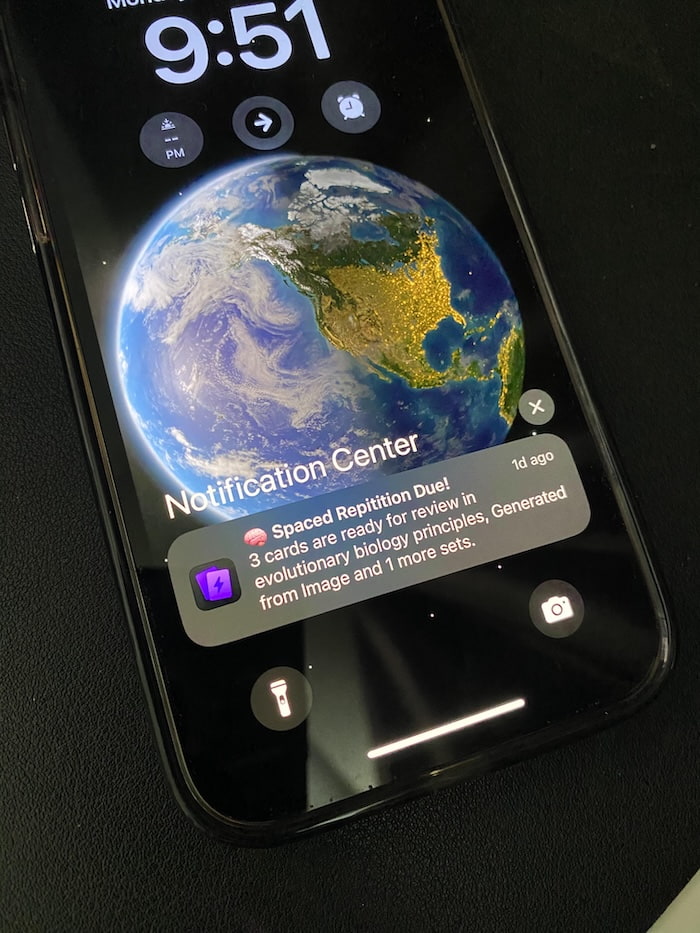
- You rate how well you remembered a card
- It schedules the next review for you
- You get study reminders so you don’t forget to come back
No spreadsheets, no calendars, no mental math.
5. Keep Cards Short And Clean
If the back of your card looks like a paragraph, your brain will want to skip it.
Try:
- Bullet points
- Short sentences
- Bold key terms (if you’re using digital)
Example:
- Legislative (makes laws)
- Executive (enforces laws)
- Judicial (interprets laws)
Much easier to scan and remember.
6. Tag And Organize Your Decks
You’ll thank yourself during exam season.
Organize by:
- Course (e.g., “Bio 101”, “French A2”)
- Chapter or unit
- Topic (e.g., “Cardio”, “Organic Chem”, “Vocabulary – Food”)
Flashrecall lets you keep everything in neat decks on your iPhone or iPad, works offline, and you can quickly jump into the exact topic you need before a test.
7. Actually Quiz Yourself (Don’t Just Flip Fast)
When you make notecards, the magic isn’t in creating them—it’s in how you review them.
Each time you see the front:
1. Look away for a second
2. Say the answer in your head (or out loud)
3. Then flip and check
In Flashrecall, you can:
- Use active recall by hiding the answer until you tap
- Rate how well you knew it (again, this powers the spaced repetition)
- Even chat with the flashcard if you’re confused and want more explanation or context
How Flashrecall Makes Notecards Stupidly Easy
If you like the idea of notecards but hate the idea of spending hours making them, this is where Flashrecall really shines.
Here’s what it does for you:
- Create cards instantly from:
- Text you paste
- PDFs
- Images / screenshots
- YouTube links
- Typed prompts
- Or just manually if you prefer full control
- Built‑in spaced repetition
- Auto‑schedules reviews
- Shows you the right cards at the right time
- Study reminders
- Gentle nudges so you don’t fall behind
- Works offline
- Perfect for studying on the bus, in class, or anywhere
- Chat with your flashcards
- Unsure why an answer is right? Ask and get more explanation.
- Great for literally anything
- Languages
- Exams (SAT, MCAT, USMLE, bar, etc.)
- School & university courses
- Medicine, business, coding, whatever you’re learning
- Fast, modern, and free to start
- No clunky, ancient interface
- Works on iPhone and iPad
If you’re going to put in the effort to make notecards, you might as well have an app that does the boring parts for you and reminds you when to study.
👉 You can grab Flashrecall here:
https://apps.apple.com/us/app/flashrecall-study-flashcards/id6746757085
Quick Recap: How To Make Notecards That Actually Help You Learn
- Turn your notes into questions, not copied sentences
- One idea per card so your brain doesn’t get overloaded
- Use your own words to prove you actually understand
- Make cards from your mistakes, not just your lectures
- Use spaced repetition instead of random cramming
- Keep cards short, clean, and focused
- Use a good app like Flashrecall to handle the scheduling, reminders, and instant card creation
If you start making notecards this way and review a little bit every day, you’ll be shocked at how much more you remember—and how much less you need to panic before exams.
Frequently Asked Questions
What's the fastest way to create flashcards?
Manually typing cards works but takes time. Many students now use AI generators that turn notes into flashcards instantly. Flashrecall does this automatically from text, images, or PDFs.
Is there a free flashcard app?
Yes. Flashrecall is free and lets you create flashcards from images, text, prompts, audio, PDFs, and YouTube videos.
How do I start spaced repetition?
You can manually schedule your reviews, but most people use apps that automate this. Flashrecall uses built-in spaced repetition so you review cards at the perfect time.
What is active recall and how does it work?
Active recall is the process of actively retrieving information from memory rather than passively reviewing it. Flashrecall forces proper active recall by making you think before revealing answers, then uses spaced repetition to optimize your review schedule.
How can I study more effectively for this test?
Effective exam prep combines active recall, spaced repetition, and regular practice. Flashrecall helps by automatically generating flashcards from your study materials and using spaced repetition to ensure you remember everything when exam day arrives.
Related Articles
- Study Cards: 7 Powerful Ways To Use Digital Flashcards To Learn Faster (Most Students Don’t Know These) – Turn boring notes into smart, auto-quizzing study cards that actually stick in your brain.
- Learning Cards Online: 7 Powerful Ways To Study Smarter And Actually Remember Stuff – Skip the paper mess and turn your notes into smart digital flashcards that remind you when to study.
- Make Flashcards To Print: 7 Powerful Tricks To Design, Study, And Remember More (Without Wasting Time) – Turn any notes into printable flashcards in minutes and actually use them to learn faster.
Research References
The information in this article is based on peer-reviewed research and established studies in cognitive psychology and learning science.
Cepeda, N. J., Pashler, H., Vul, E., Wixted, J. T., & Rohrer, D. (2006). Distributed practice in verbal recall tasks: A review and quantitative synthesis. Psychological Bulletin, 132(3), 354-380
Meta-analysis showing spaced repetition significantly improves long-term retention compared to massed practice
Carpenter, S. K., Cepeda, N. J., Rohrer, D., Kang, S. H., & Pashler, H. (2012). Using spacing to enhance diverse forms of learning: Review of recent research and implications for instruction. Educational Psychology Review, 24(3), 369-378
Review showing spacing effects work across different types of learning materials and contexts
Kang, S. H. (2016). Spaced repetition promotes efficient and effective learning: Policy implications for instruction. Policy Insights from the Behavioral and Brain Sciences, 3(1), 12-19
Policy review advocating for spaced repetition in educational settings based on extensive research evidence
Karpicke, J. D., & Roediger, H. L. (2008). The critical importance of retrieval for learning. Science, 319(5865), 966-968
Research demonstrating that active recall (retrieval practice) is more effective than re-reading for long-term learning
Roediger, H. L., & Butler, A. C. (2011). The critical role of retrieval practice in long-term retention. Trends in Cognitive Sciences, 15(1), 20-27
Review of research showing retrieval practice (active recall) as one of the most effective learning strategies
Dunlosky, J., Rawson, K. A., Marsh, E. J., Nathan, M. J., & Willingham, D. T. (2013). Improving students' learning with effective learning techniques: Promising directions from cognitive and educational psychology. Psychological Science in the Public Interest, 14(1), 4-58
Comprehensive review ranking learning techniques, with practice testing and distributed practice rated as highly effective

FlashRecall Team
FlashRecall Development Team
The FlashRecall Team is a group of working professionals and developers who are passionate about making effective study methods more accessible to students. We believe that evidence-based learning tec...
Credentials & Qualifications
- •Software Development
- •Product Development
- •User Experience Design
Areas of Expertise
Ready to Transform Your Learning?
Start using FlashRecall today - the AI-powered flashcard app with spaced repetition and active recall.
Download on App Store